Sunspots 07-09-2023 Video
Video of the Sun this morning 07-09-2023. The large Sunspot is so big that it is reported to be clearly seen in photographs taken by the Perseverance rover on Mars. Palm Springs California.
Sunspots 07-06-2023
Photographed this morning 07-06-2023. Sunspot activity with newly seen single dark Sunspot AR3363 at the South. Palm Springs California.

Super Moon 07-02-2023
Super Moon last night 07-02-2023. 225,000 miles from Earth. Palm Springs California.

Super Moon Video
Video of last night’s Super Moon 07-02-2023. A Super Moon is when the Moon moves in it’s orbit closer in distance to the Earth. Here at approximately 225,000 miles. Palm Springs California.
Sunspots 06-28-2023
The Sun photographed this morning. The large sunspot region indentified as AR3354, which has exhibited substantial growth. In the last 24 hours it has produced 8 solar flares. Palm Springs California.
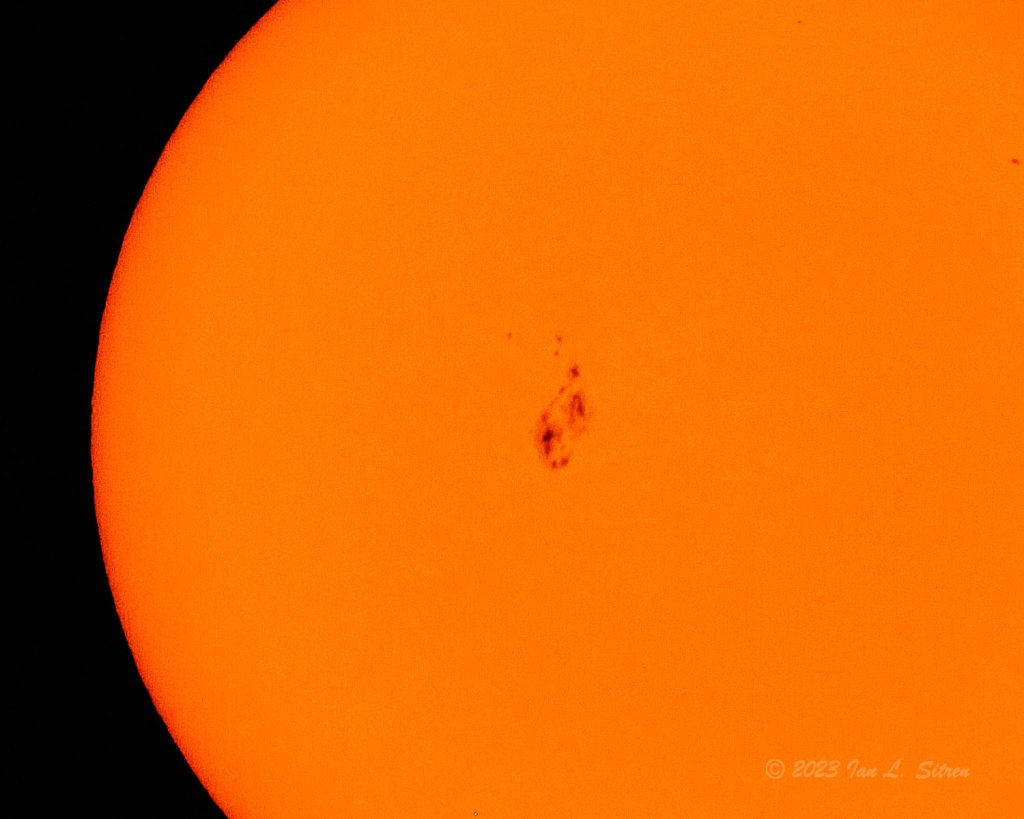
Sunspots 06-27-2023
Sunspot activity this morning with a large region that produced 8 solar flares and a minor radio blackout over the Atlantic Ocean north of Puerto Rico. Palm Springs California

Moon 06-26-2023
The Moon last night in Waxing Gibbous phase only a few days from a Super Moon. Distance to Earth here at 244,809,600 miles. Palm Springs California.

Moon 06-25-2023
The Moon in the Waxing Crescent phase. Photographed last night 06-25-2023. Palm Springs California.

Sunspots 06-25-2023
Sunspots today Sunday, June 25 2023. Sunspot activity was high with 14 active regions in the last 24 hours. It looks like many had rotated out of view before I photographed the Sun this morning. Palm Springs California.

Increased Sunspot Activity
Increased sunspot activity as compared to earlier this week. Photographed this morning 06-17-2023 in Palm Springs California.

Sunspots 06-14-2023
Photographed this morning 06-14-2023. Solar activity has been low the last few days. Some sunspots. Activity is going to be on the increase.
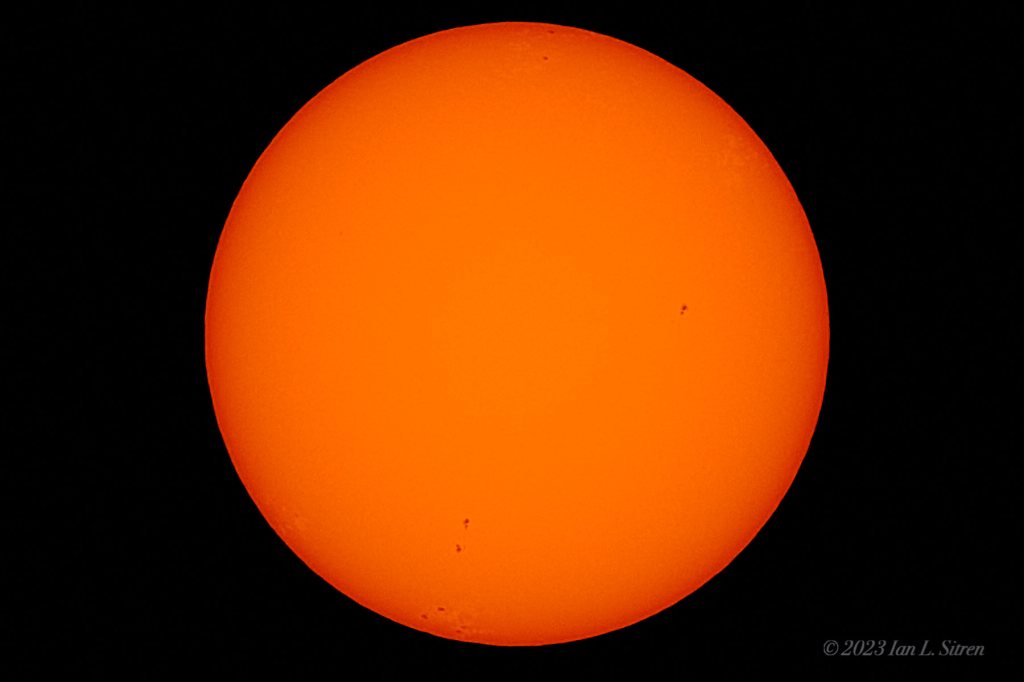
Sunspots 06-03-2023
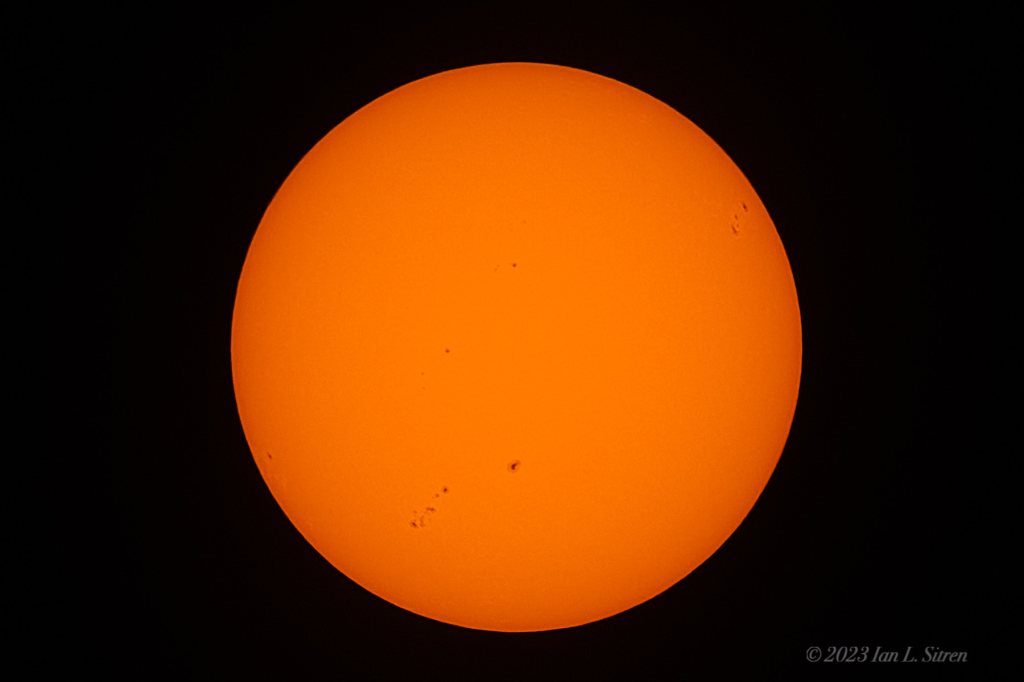
The Sun photographed this morning in Palm Springs at 0820hrs PST. The Sunspots are actually assigned a number and they are tracked. Sunspots are the origins for Solar flares and coronal mass ejections.
From NOAA (National Oceanic and Atmospheric Administration)… Solar Cycle 25 has ramped up much faster than scientists predicted producing more sunspots and eruptions than experts had forecast. Tracking and predicting the Sun’s solar cycles gives a rough idea of the frequency of space weather storms of all types – from radio blackouts to geomagnetic storms and solar radiation storms – and it’s used by many industries to gauge the potential impact of space weather on Earth. Though we are seeing increased activity on the Sun, we expect this solar cycle to be average compared to solar cycles in the past century. Solar Cycle began in December 2019.
Traveling Sunspots
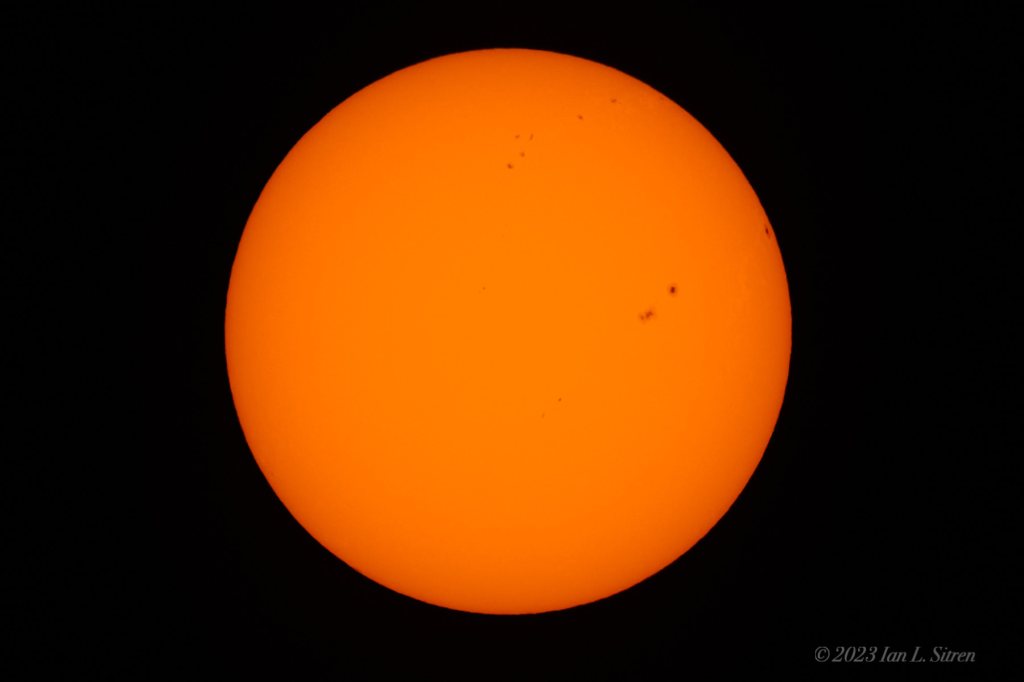
Photographed this morning, 18 hours after the photograph I shot of the Sun in a post below. The sunspots on the right appear to have traveled approximately 481,000 miles during that time.

Photography Beginnings
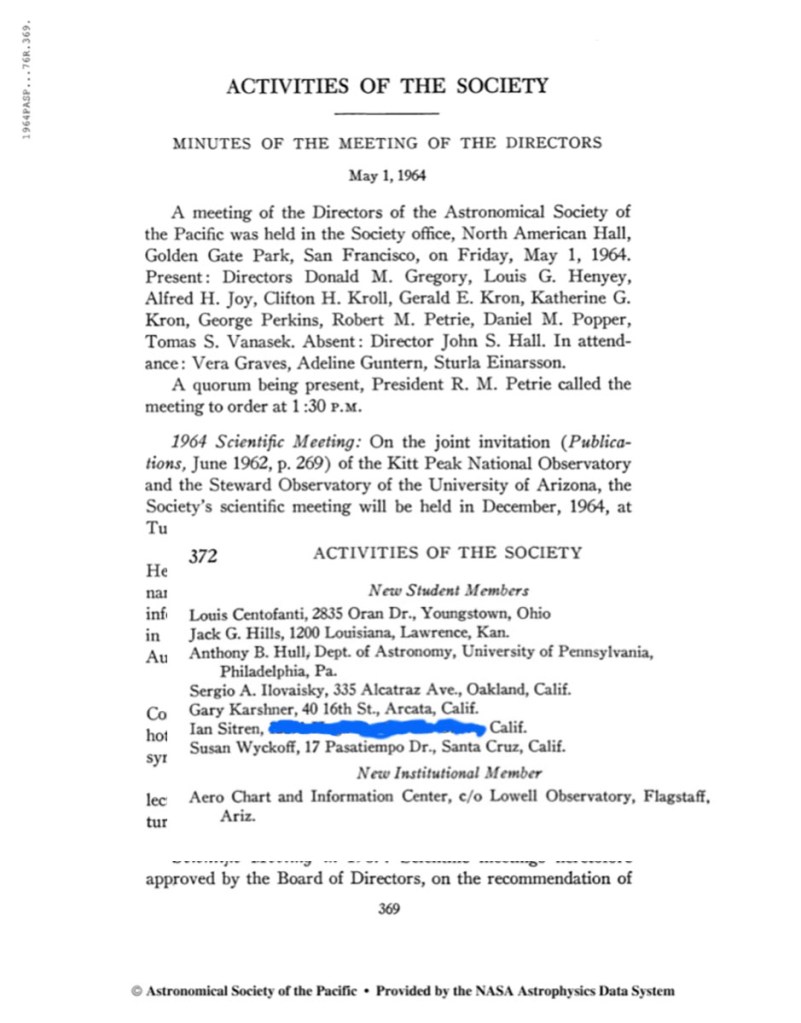
The beginnings of my photography has it’s roots in my interest in Astronomy. In 1964 I became a member of the Astronomical Society of the Pacific, founded in 1889. I had built my own 8 inch reflector telescope on an equatorial mount and used a 35mm Miranda camera to shoot through it. Coming full circle I am now interested in Astrophotography again.
Cold Moon 2020
The last full Moon of the year 2020, photographed December 29. Known as the “Cold Moon” because it occurs in the Winter of December. The camera was a Fujifilm X-H1 and the XF100-400 lens.

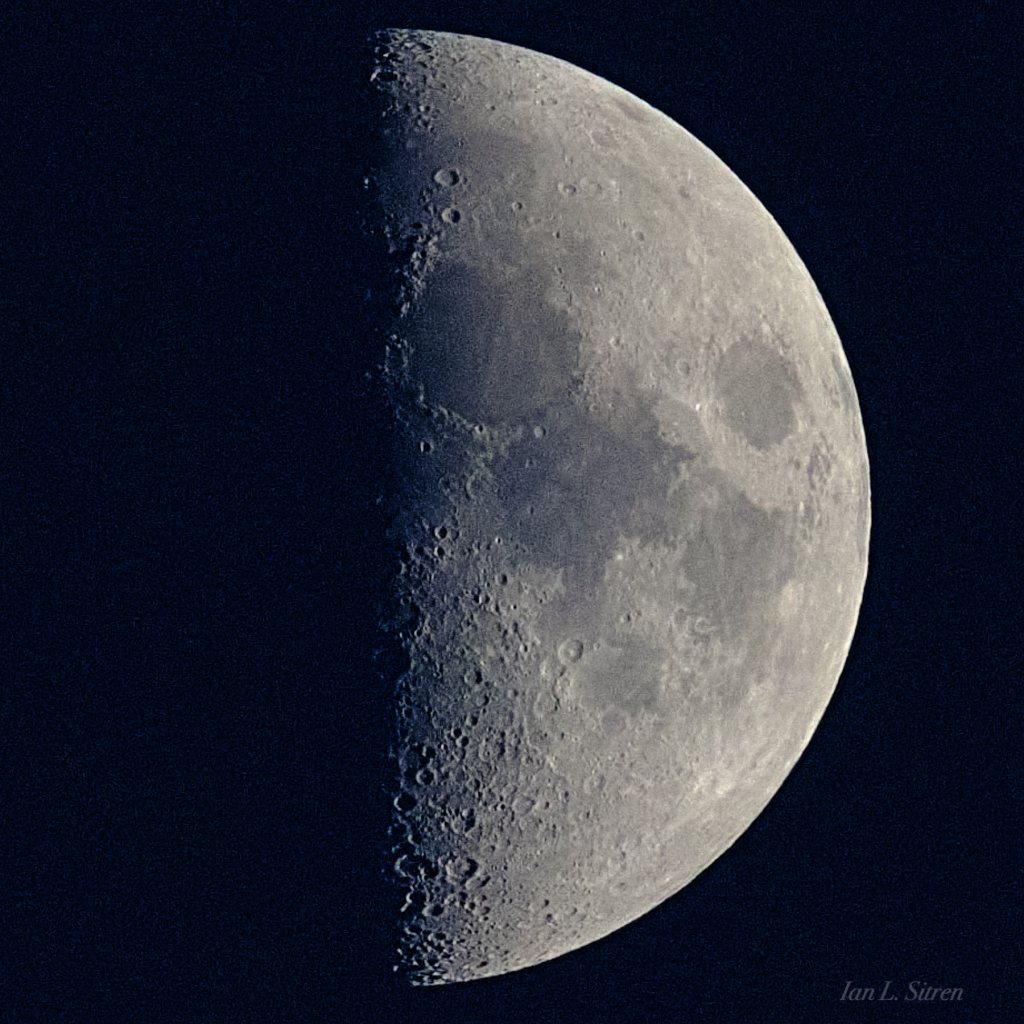
Half Moon
Half Moon on the evening of the Winter Solstice 2020. Fujifilm X-H1 camera and XF100-400 lens.
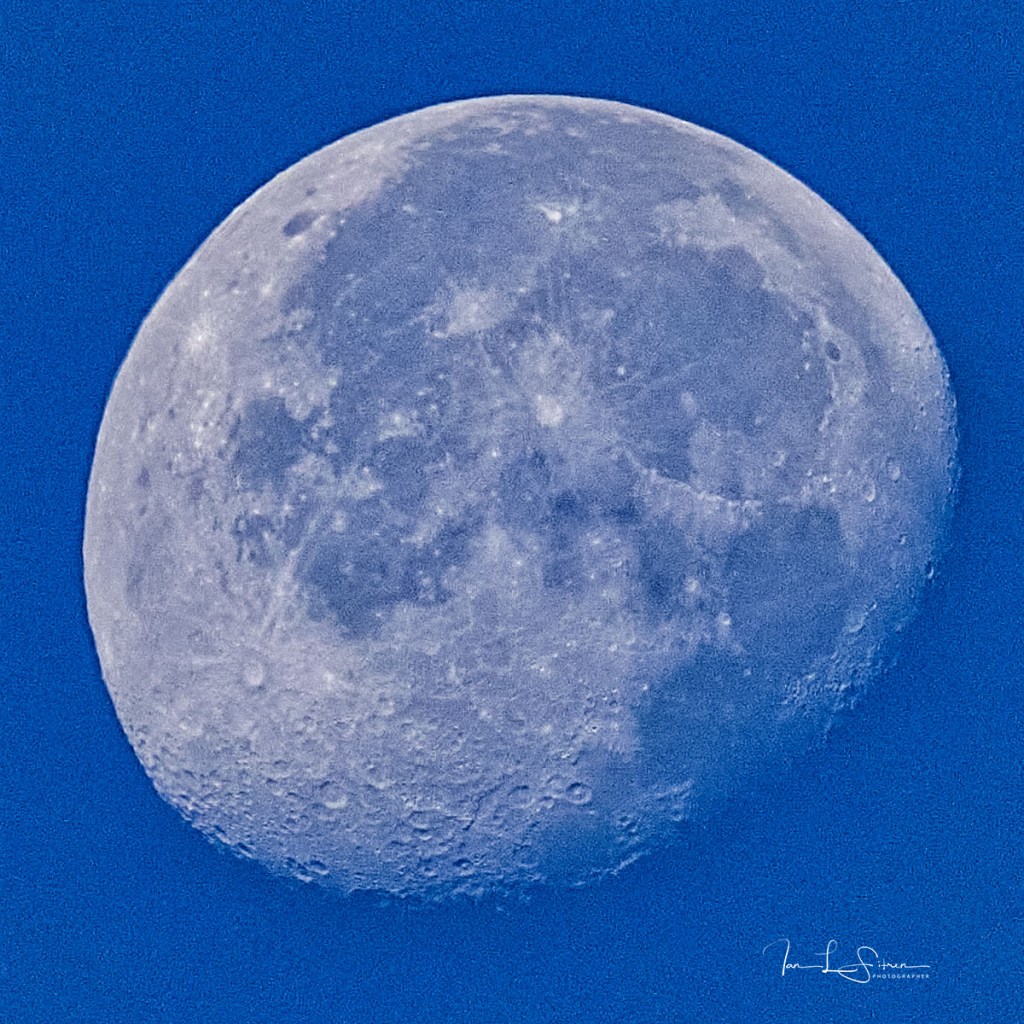
Morning Moon
The Moon photographed in the morning at 8:04am on November 4 2020 here in Palm Springs from my backyard. Fujifilm X-H1 camera and the Fujifilm XF100-400 lens, handheld.
Actually it was shooting photographs through my homemade eight inch reflecting telescope at the night skies back when I was 12 years old that really got me first interested in photography. Back then I had a Miranda 35mm camera that I had bought for $35.00. Funny thing that I remember.
I was the youngest member ever of the Astronomical Society Of The Pacific.
Lunar Eclipse As Sport
Almost at it’s maximum the other night for a total Lunar Eclipse and as advertised “blood red” color. Sky conditions still had some cloudy haze. Photographed with a Fujifilm X-H1 camera and Fujifilm 100-400mm lens. On an Induro tripod with a FOBA ball head.
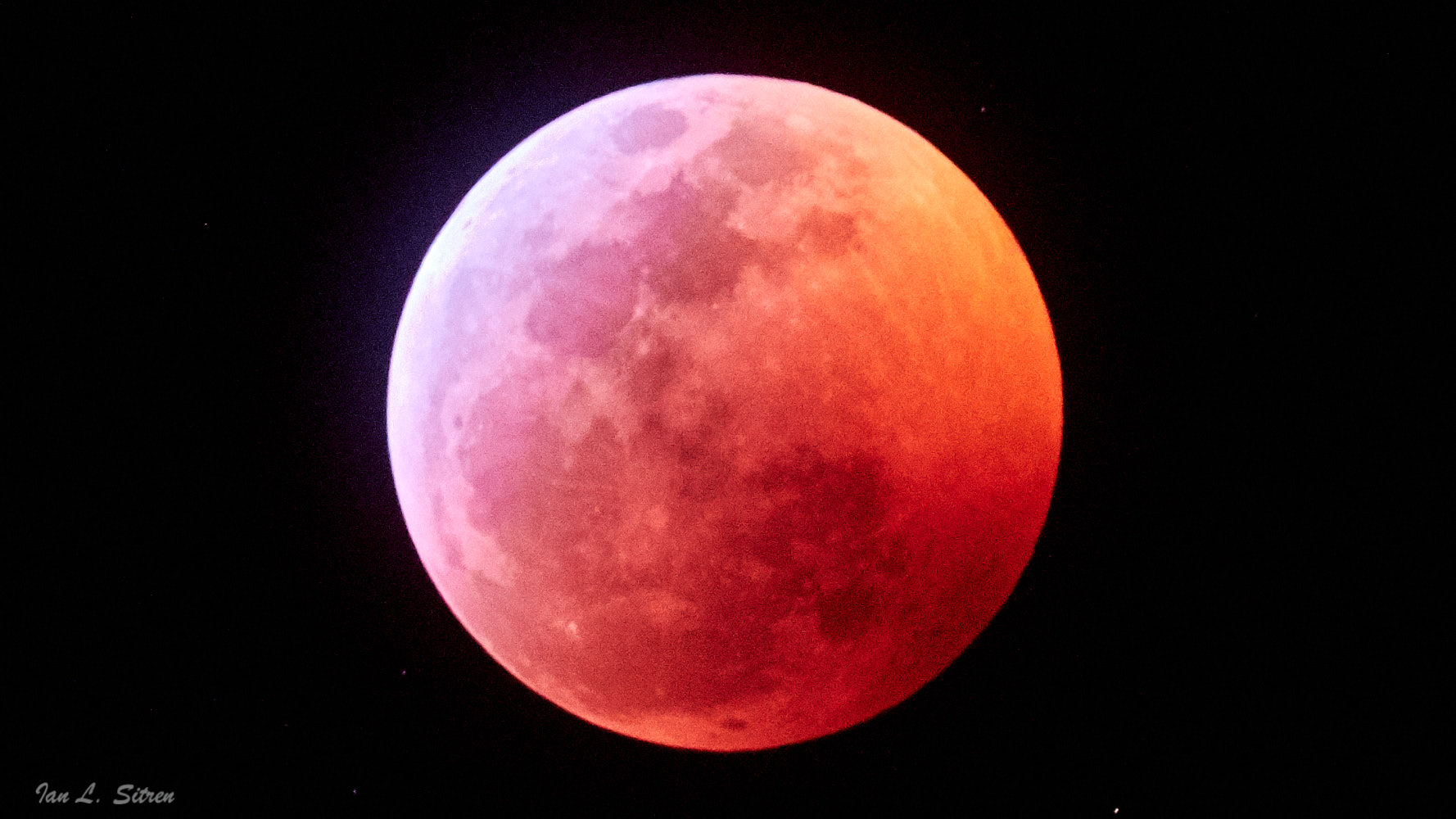
Red Bull Sports likes the photo too. Funny thing, I didn’t know it was a sport…

 SecondFocus Blog