A Kodachrome Moment with Tonisha Mills
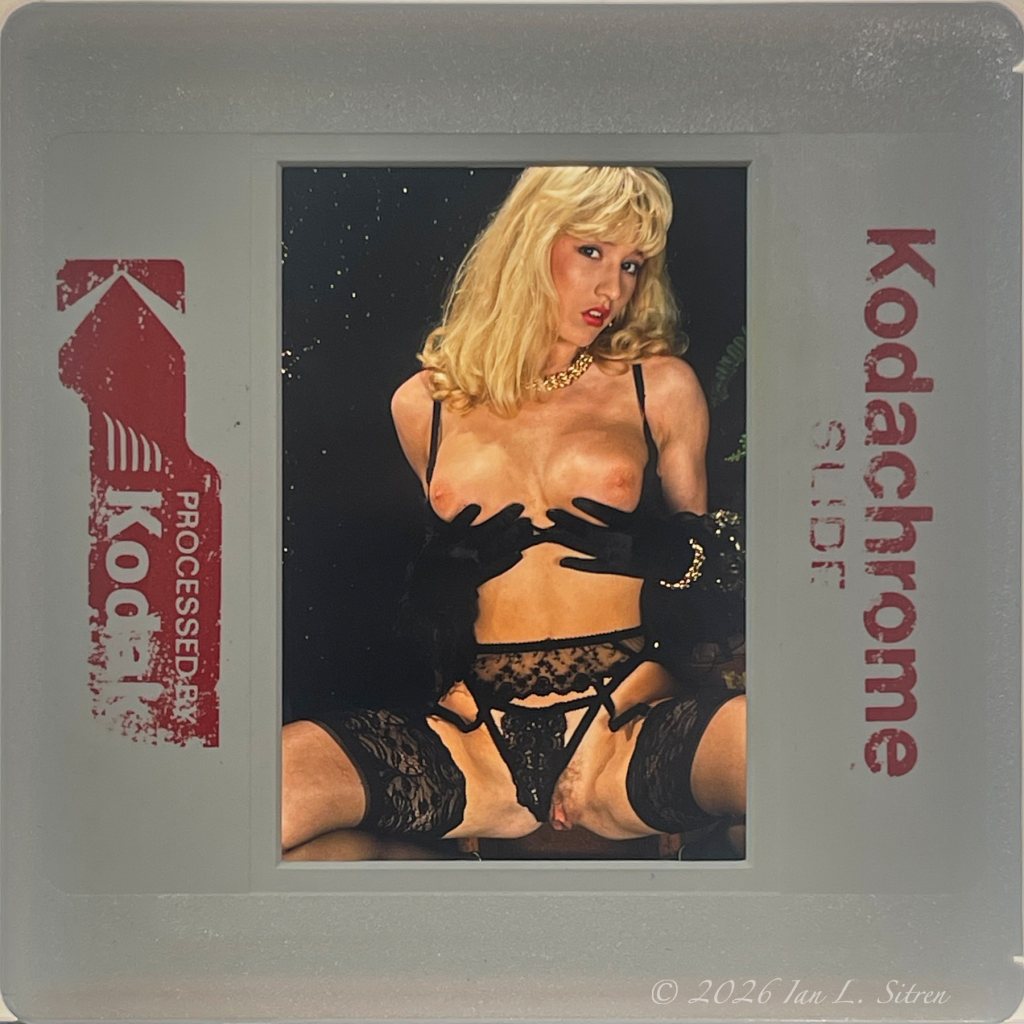
One of the things I enjoy most about collecting photographs is finding original pieces that represent a particular moment in the history of photography. This Kodachrome transparency of model Tonisha Mills is one of those photographs.
Unlike many vintage photographs that circulate today as digital scans or magazine reproductions, this is the original 35mm color transparency. It still carries its Kodak processing marks along with the handwritten filing numbers that were added when it became part of a photographer’s or studio’s working archive.
Tonisha Mills was one of the best known models to appear in men’s magazines during the 1990s, a period when this style of photography was changing. As magazines became more competitive, photographers gradually moved beyond the traditional pin up style that had dominated earlier decades.
That’s what first caught my attention about this slide.
When I first looked at it, I immediately thought about where it fit in that progression. By the 1990s, photographs revealing what lay between a model’s legs were becoming increasingly common, but they were still usually presented with some restraint. Looking back now, this transparency represents an interesting point in the evolution of men’s magazine photography before completely explicit images became commonplace.
The Kodachrome film adds another layer of interest. By the time this photograph was made, digital photography was beginning to appear on the horizon, but professional photographers were still relying heavily on color transparencies for publication and reproduction. Looking at this original slide on a light table is much the same experience the photographer, editor, or magazine art director would have had when deciding whether it was the image they wanted.
That connection to the photographic process is one of the reasons I enjoy collecting original transparencies. They are more than just pictures. They are the original photographs that passed through the hands of the people who created and published them.
If you enjoy discovering unusual pieces of photographic history, take a look through my From My Collections gallery. While you’re there, you’ll also find my editorial, aviation, food, fashion, and fine art photography, my growing Motionpage, and regularly updated Blog. Everything is available at https://www.secondfocus.com

