A Kodachrome Moment with Tonisha Mills
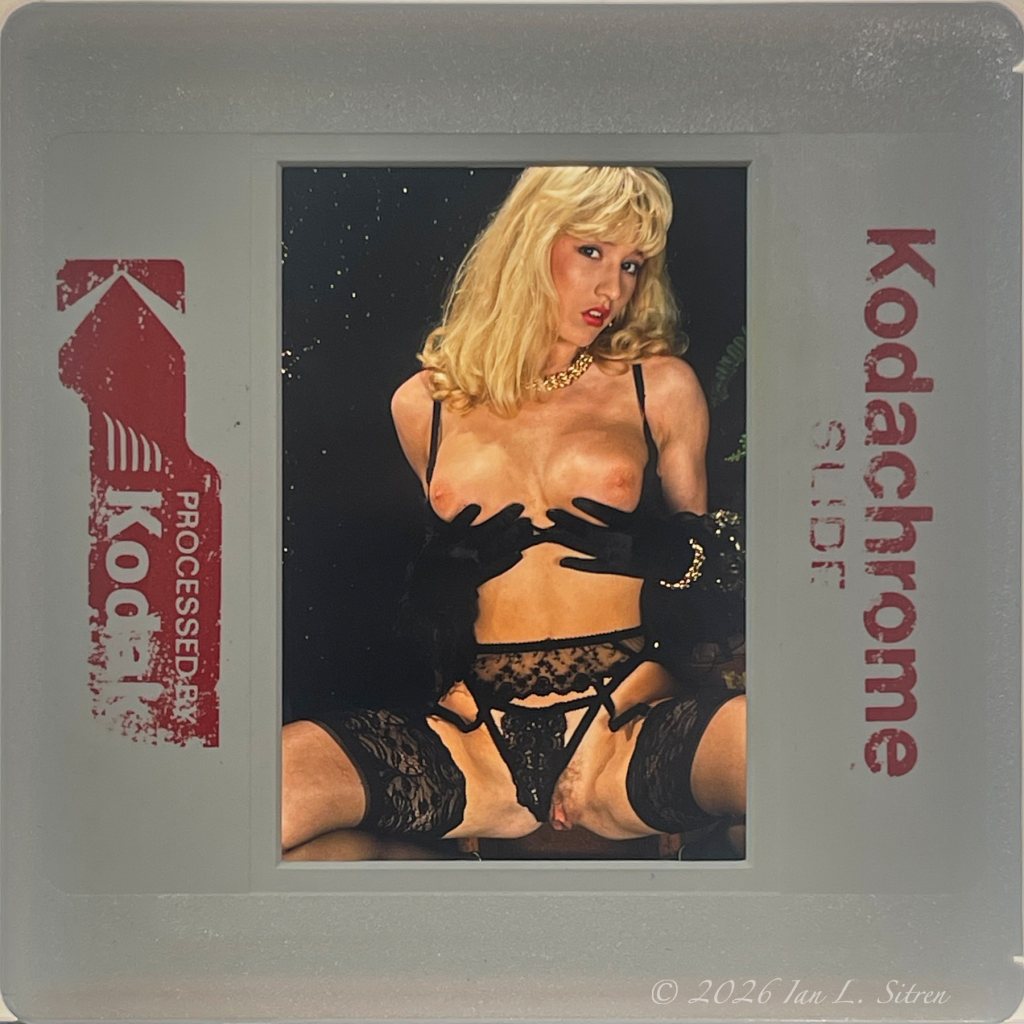
One of the things I enjoy most about collecting photographs is finding original pieces that represent a particular moment in the history of photography. This Kodachrome transparency of model Tonisha Mills is one of those photographs.
Unlike many vintage photographs that circulate today as digital scans or magazine reproductions, this is the original 35mm color transparency. It still carries its Kodak processing marks along with the handwritten filing numbers that were added when it became part of a photographer’s or studio’s working archive.
Tonisha Mills was one of the best known models to appear in men’s magazines during the 1990s, a period when this style of photography was changing. As magazines became more competitive, photographers gradually moved beyond the traditional pin up style that had dominated earlier decades.
That’s what first caught my attention about this slide.
When I first looked at it, I immediately thought about where it fit in that progression. By the 1990s, photographs revealing what lay between a model’s legs were becoming increasingly common, but they were still usually presented with some restraint. Looking back now, this transparency represents an interesting point in the evolution of men’s magazine photography before completely explicit images became commonplace.
The Kodachrome film adds another layer of interest. By the time this photograph was made, digital photography was beginning to appear on the horizon, but professional photographers were still relying heavily on color transparencies for publication and reproduction. Looking at this original slide on a light table is much the same experience the photographer, editor, or magazine art director would have had when deciding whether it was the image they wanted.
That connection to the photographic process is one of the reasons I enjoy collecting original transparencies. They are more than just pictures. They are the original photographs that passed through the hands of the people who created and published them.
If you enjoy discovering unusual pieces of photographic history, take a look through my From My Collections gallery. While you’re there, you’ll also find my editorial, aviation, food, fashion, and fine art photography, my growing Motionpage, and regularly updated Blog. Everything is available at https://www.secondfocus.com
From Playboy to the Nightclub Floor: Tracing a Newton Muse
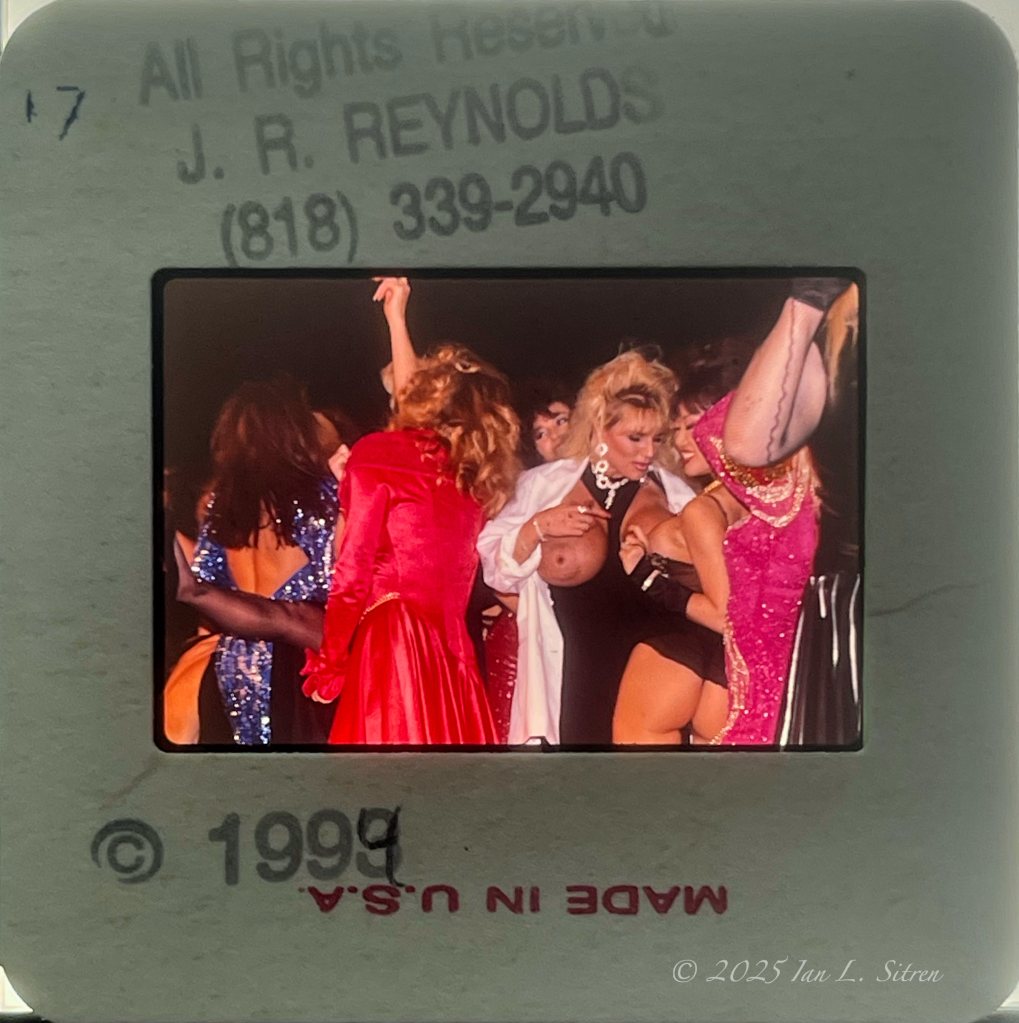
In building my collection, I often come across images that carry stories far beyond what the frame alone reveals. One recent addition is a 35mm slide by Los Angeles photographer J.R. Reynolds, stamped ©1993 and later altered to read 1994. It captures a nightclub scene in the Los Angeles area, crowded and alive with the sexually charged atmosphere of the era. Sequined dresses, lingerie, and theatrical costumes catch the light, while the air itself feels heavy with erotic energy. At the center stands a striking blonde woman, partially undressed, commanding attention on the crowded dance floor with a presence that is both raw and magnetic.
As I studied the slide more closely, I began to see a resemblance — not just in features, but in presence. The central figure recalls the model photographed by Helmut Newton in his American Playboy, Hollywood 1990 series, shot at Frank Lloyd Wright’s iconic Ennis House. Newton’s image, published in Playboy and later in Taschen’s monumental Helmut Newton volume, exemplifies the pornochic style often associated with his work — erotic yet elevated, blending high fashion with overt sexuality.

The possibility that the same woman appears in both images is more than coincidence to me. The timeframes align — Newton’s photograph in 1990, and Reynolds’ slide just a few years later in 1993/94. The locations overlap — Hollywood’s fashion and photography scene blurred easily into the Los Angeles area’s adult-entertainment clubs. And the visual resemblance is compelling. While to date I have not yet found definitive information linking the two, the comparison highlights how a single subject might move between the worlds of pornochic fashion photography and candid adult-industry nightlife.
Placed side by side, the images form a fascinating dialogue. Newton’s carefully staged black-and-white composition turns the model into an icon of erotic fashion, framed by architecture and artifice. Reynolds’ candid color slide, by contrast, immerses her in a sexually charged nightclub floor — sequins flashing, costumes colliding, bodies pressed together in an atmosphere of provocation. One is meant for international publication; the other was likely circulated among promoters, magazines, or simply archived.
Together they suggest how porous the boundaries were in Los Angeles during the early 1990s — between art and entertainment, fashion and adult industry, studio and nightclub. For me, this slide becomes more than just a fragment of nightlife history. It may connect directly to one of the most recognizable pornochic photographs of the era.
The J.R. Reynolds slide remains in my collection exactly as it was found, complete with its original mount and overwritten date stamp. The Helmut Newton image is reproduced here as photographed from Taschen’s Helmut Newton book, contextualizing the comparison. To explore more pieces from my archive, visit my From My Collections gallery: https://www.secondfocus.com/gallery/From-My-Collections-Cultural-Erotic/G0000h1LWkCCepcc

