A Kodachrome Moment with Tonisha Mills
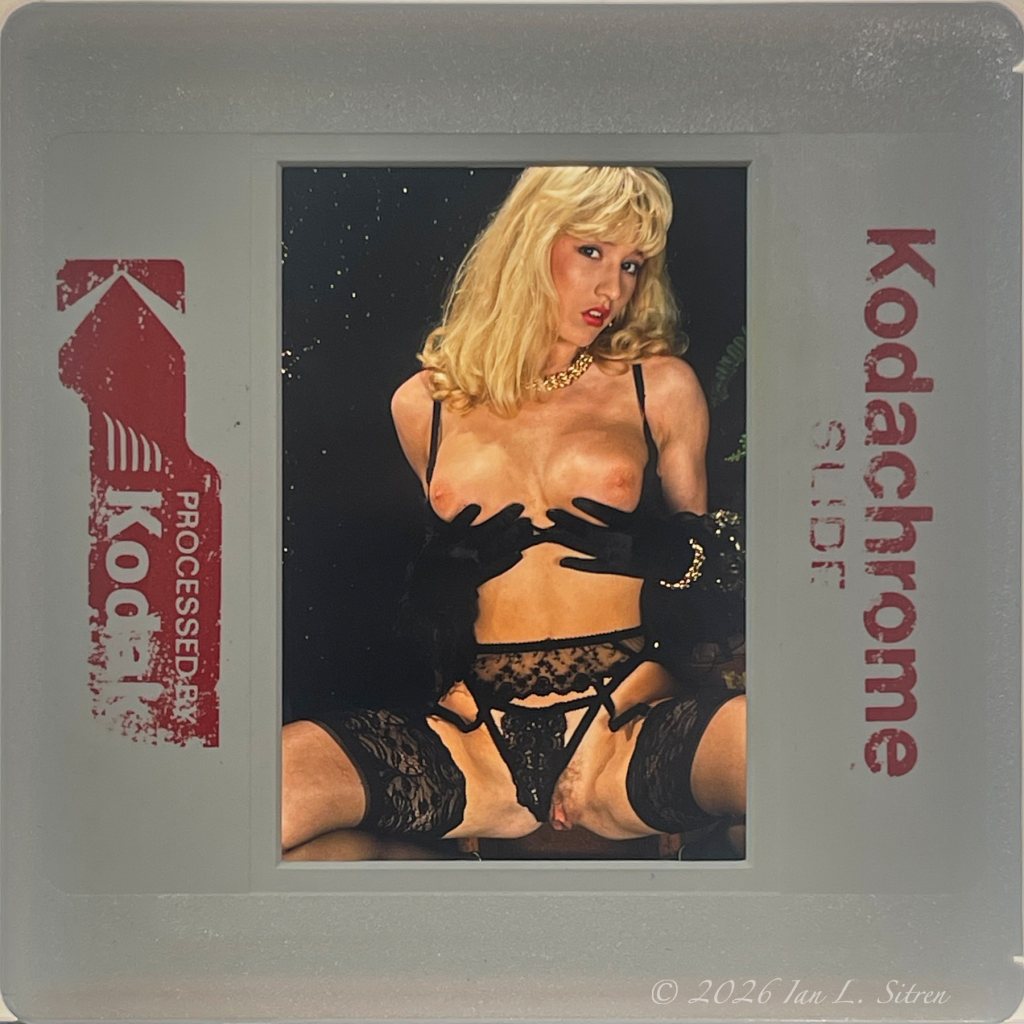
One of the things I enjoy most about collecting photographs is finding original pieces that represent a particular moment in the history of photography. This Kodachrome transparency of model Tonisha Mills is one of those photographs.
Unlike many vintage photographs that circulate today as digital scans or magazine reproductions, this is the original 35mm color transparency. It still carries its Kodak processing marks along with the handwritten filing numbers that were added when it became part of a photographer’s or studio’s working archive.
Tonisha Mills was one of the best known models to appear in men’s magazines during the 1990s, a period when this style of photography was changing. As magazines became more competitive, photographers gradually moved beyond the traditional pin up style that had dominated earlier decades.
That’s what first caught my attention about this slide.
When I first looked at it, I immediately thought about where it fit in that progression. By the 1990s, photographs revealing what lay between a model’s legs were becoming increasingly common, but they were still usually presented with some restraint. Looking back now, this transparency represents an interesting point in the evolution of men’s magazine photography before completely explicit images became commonplace.
The Kodachrome film adds another layer of interest. By the time this photograph was made, digital photography was beginning to appear on the horizon, but professional photographers were still relying heavily on color transparencies for publication and reproduction. Looking at this original slide on a light table is much the same experience the photographer, editor, or magazine art director would have had when deciding whether it was the image they wanted.
That connection to the photographic process is one of the reasons I enjoy collecting original transparencies. They are more than just pictures. They are the original photographs that passed through the hands of the people who created and published them.
If you enjoy discovering unusual pieces of photographic history, take a look through my From My Collections gallery. While you’re there, you’ll also find my editorial, aviation, food, fashion, and fine art photography, my growing Motionpage, and regularly updated Blog. Everything is available at https://www.secondfocus.com
The Photograph That Forgot Its Name
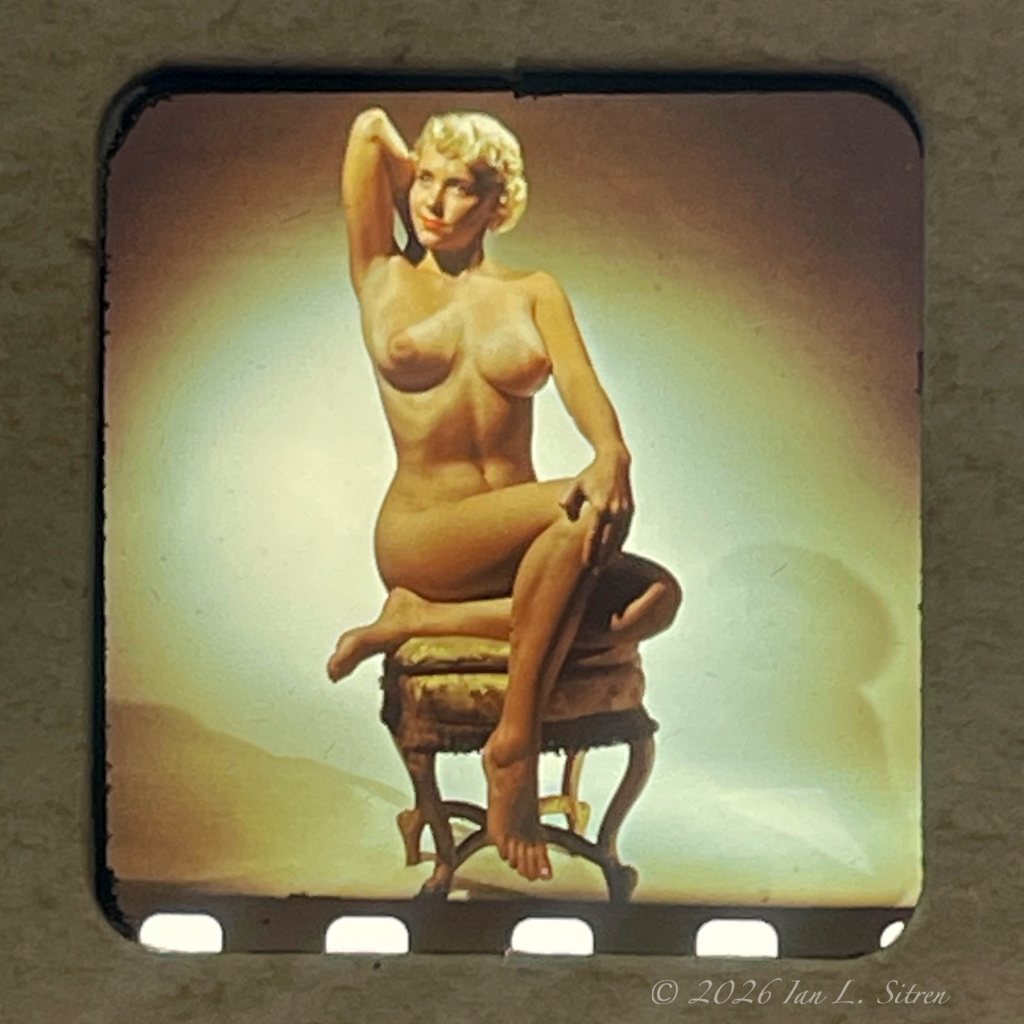
I bought this 35mm color slide simply because it interested me.
It came mounted in an ordinary cardboard slide carrier with absolutely no identifying information. There is no photographer’s name, no date, no studio stamp, no model identification, and not even a handwritten note to suggest where it came from.
What remains is the photograph itself.
The image shows an unidentified blonde model seated on what appears to be a Louis XV-style stool in a carefully lit studio. The hairstyle, lighting, and the fact that it is a color transparency all suggest it was probably photographed sometime during the 1950s or early 1960s, although without any documentation that can only be an educated guess.
One of the things that attracted me is that it represents a period when glamour photography was changing. Earlier artistic nudes were often presented in black and white, while color transparency film was becoming practical enough for professional photographers and serious amateurs willing to invest in it. Every exposure had to count. There was no instant review, no deleting mistakes, and no Photoshop waiting at the end of the process.
We’ll probably never know whether this was made by a commercial glamour photographer, a camera club member, or simply someone who enjoyed creating carefully crafted studio photographs.
Photography has produced millions, perhaps even billions, of images over the years, but surprisingly few remain connected to the people who created them. Slides become separated from their boxes, handwritten notes disappear, studios close, and estates are dispersed. Eventually an image survives while everything that once explained it is gone.
This transparency is one of those survivors.
If you enjoy discovering unusual pieces of photographic history, take a look through my From My Collections gallery. While you’re there, you’ll also find my editorial, aviation, food, fashion, and fine art photography, my growing Motion page, and regularly updated Blog. Everything is available at https://www.secondfocus.com
National Camera Day, The Look of Film Never Left
Today is National Camera Day.
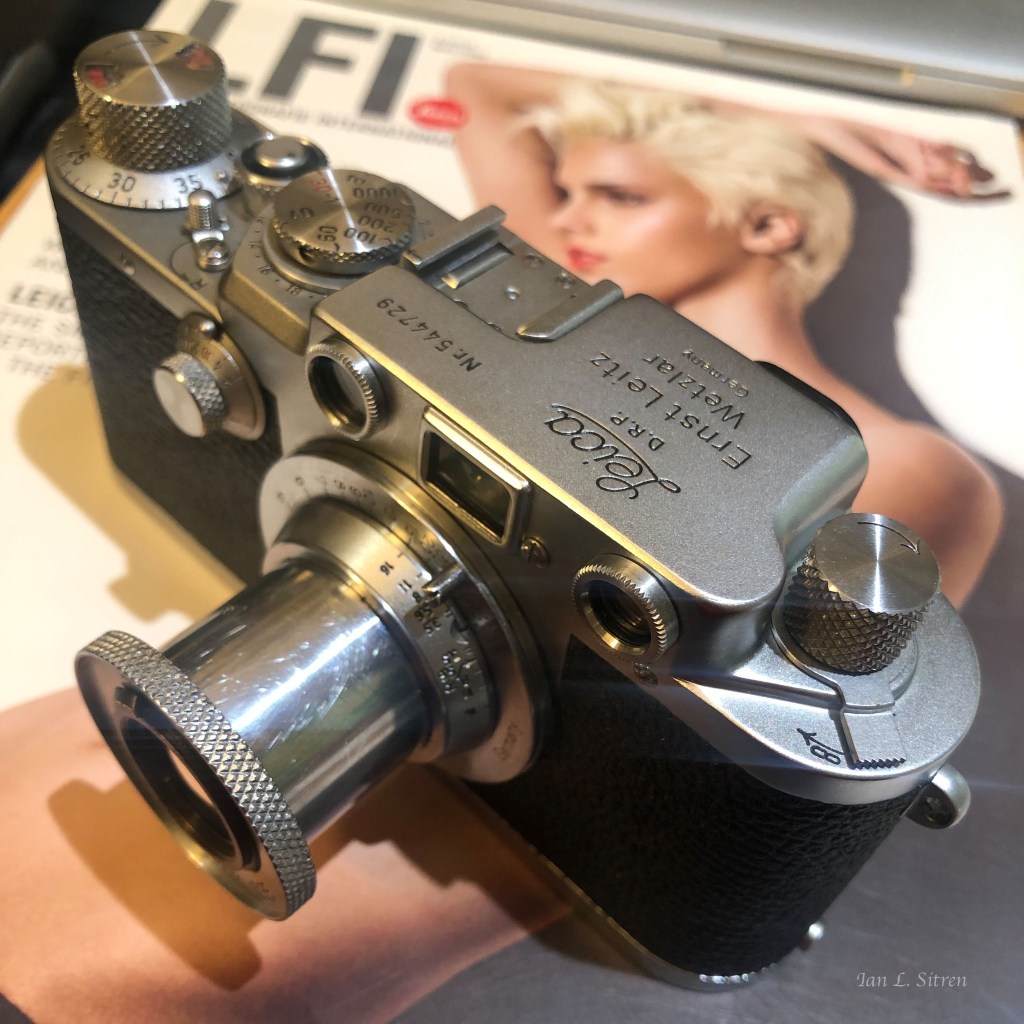
I pulled out my Leica IIIf again. It’s been photographed before, and it still holds its place. Not because it’s old, but because it represents a way of working that hasn’t changed as much as people think. And I still have a love of the look of film.
Leica’s origins go back to Oskar Barnack, who took 35mm motion picture film and turned it into a still photography format. That decision made cameras smaller, faster, and far more usable in real-world situations. It shifted photography away from being staged and into something more immediate.
What followed wasn’t just a camera system, it was a look. The color palette you see in Leica work, and hinted at in the LFI Magazine cover behind this camera, is controlled rather than exaggerated. Skin tones stay natural. Colors separate instead of competing.
Then there’s Hasselblad, working at a different pace. Medium format, larger negatives, more deliberate compositions. Where Leica moves quickly, Hasselblad slows everything down. The result is depth, tonal range, and structure.
That carries forward directly into my own work. My long-time preference has been Hasselblad digital, particularly the CCD sensor versions. There’s a specific color palette that comes out of those files that still stands apart. It’s not overly processed, not chasing saturation, just clean, controlled color with depth. It feels closer to film than most modern digital systems.
There’s a reason NASA chose Hasselblad for the Apollo 11 Moon landing. Those images required reliability and the ability to hold detail across extreme conditions. The same qualities show up in controlled studio work, just applied differently.
Film ties all of this together. It forces decisions early. Exposure, contrast, color balance, all set before you ever see the result. That constraint shapes the outcome. Grain becomes texture. Highlights roll instead of breaking. Blacks hold information.
This photograph isn’t about nostalgia. The Leica sits there with its mechanical dials and engraved markings, built to do one thing well. The magazine behind it points to the result, what all of that engineering was built to produce.
And even now, with everything available, that way of seeing still carries through.
More of my photography, from fast food to everything in between, at https://www.secondfocus.com
National Camera Day with my Leica IIIf
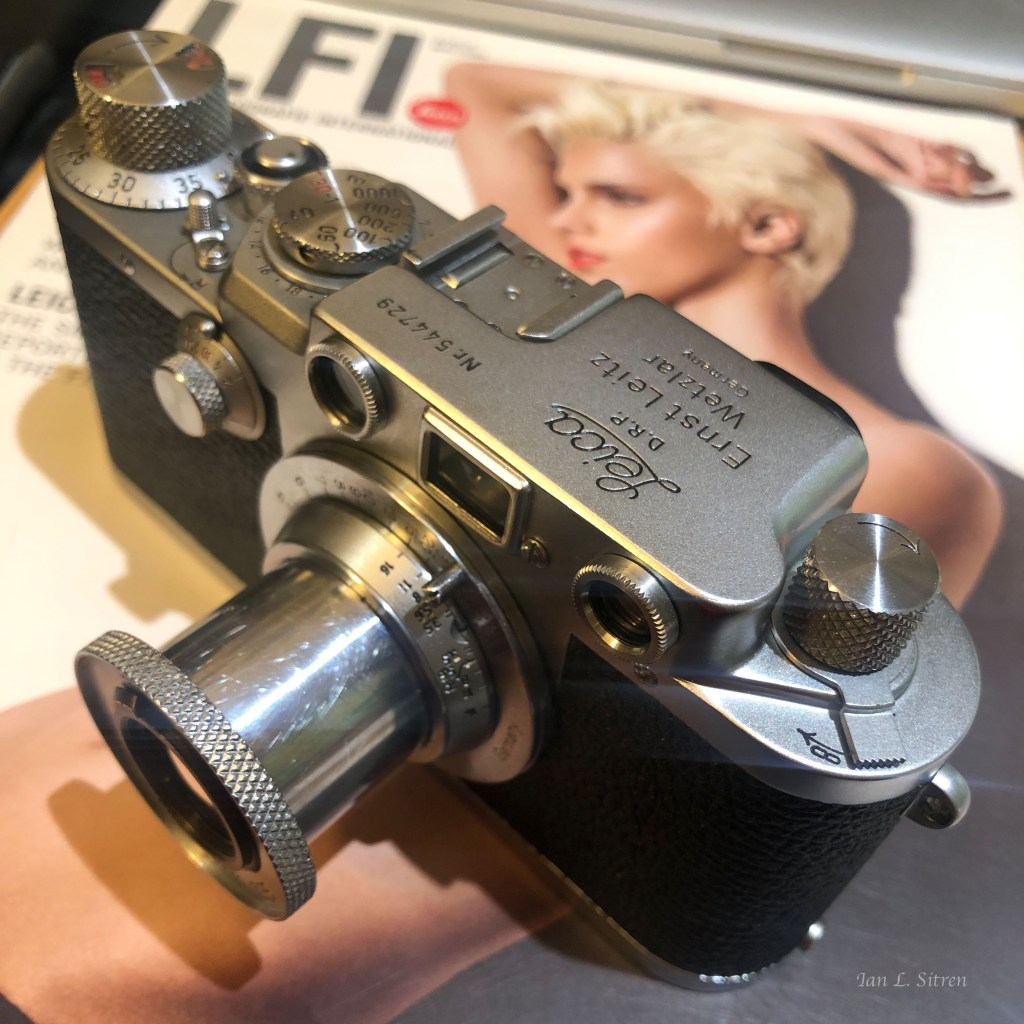
A beautiful woman on the cover of Leica’s LFI magazine. A classic Leica camera on top. It’s National Camera Day, and one of my favorite subjects to photograph is beautiful women.
This is my Leica IIIf, a 35mm rangefinder produced between 1950 and 1957 in Wetzlar, Germany. Leica began making 35mm cameras in the 1920s, and these cameras have documented much of the world’s history through the eyes of photographers who carried them.
The IIIf is fully mechanical. No batteries, no screens. You wind the film, set the exposure, and press the shutter. It’s simple, and it still works. Its solid construction means it keeps working long after many other cameras have been set aside.
Photographs seen through a Leica have something special about them. It’s a combination of the lenses, the viewfinder, and the way using a camera like this slows you down to see the frame with intention. See more of my photography at https://www.secondfocus.com
Economical
When shooting film, I have learned that it is more economical to photograph with two models at the same time. I will have to remember to do that more often.

Windy
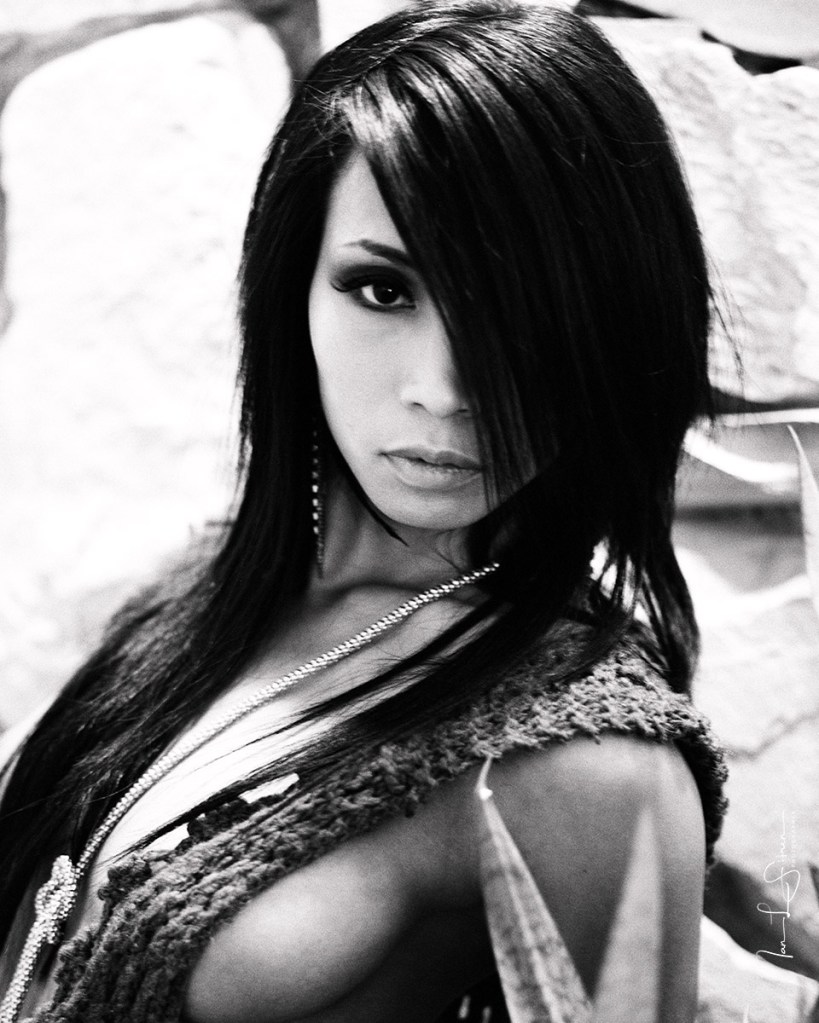
Photographing Windy. For you photographers out there; medium format Tri-X 400.
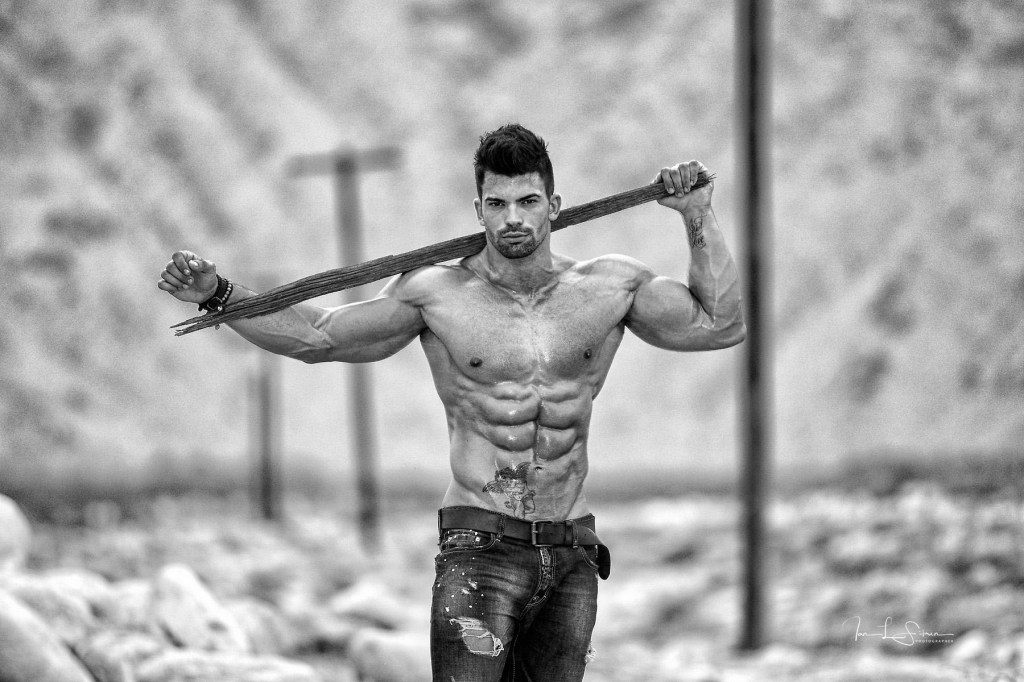
Sergi
From my photo shoot with bodybuilder Sergi Constance, here in the desert near Palm Springs California.
A photo shoot that would work in today’s social distancing. Just myself and Sergi in the desert with no one around at all. Also simply done with a Canon 1V camera body, Canon 50mm f/1.4 lens and Kodak Tri-X film. Thanks!
Andy Summers – The Police
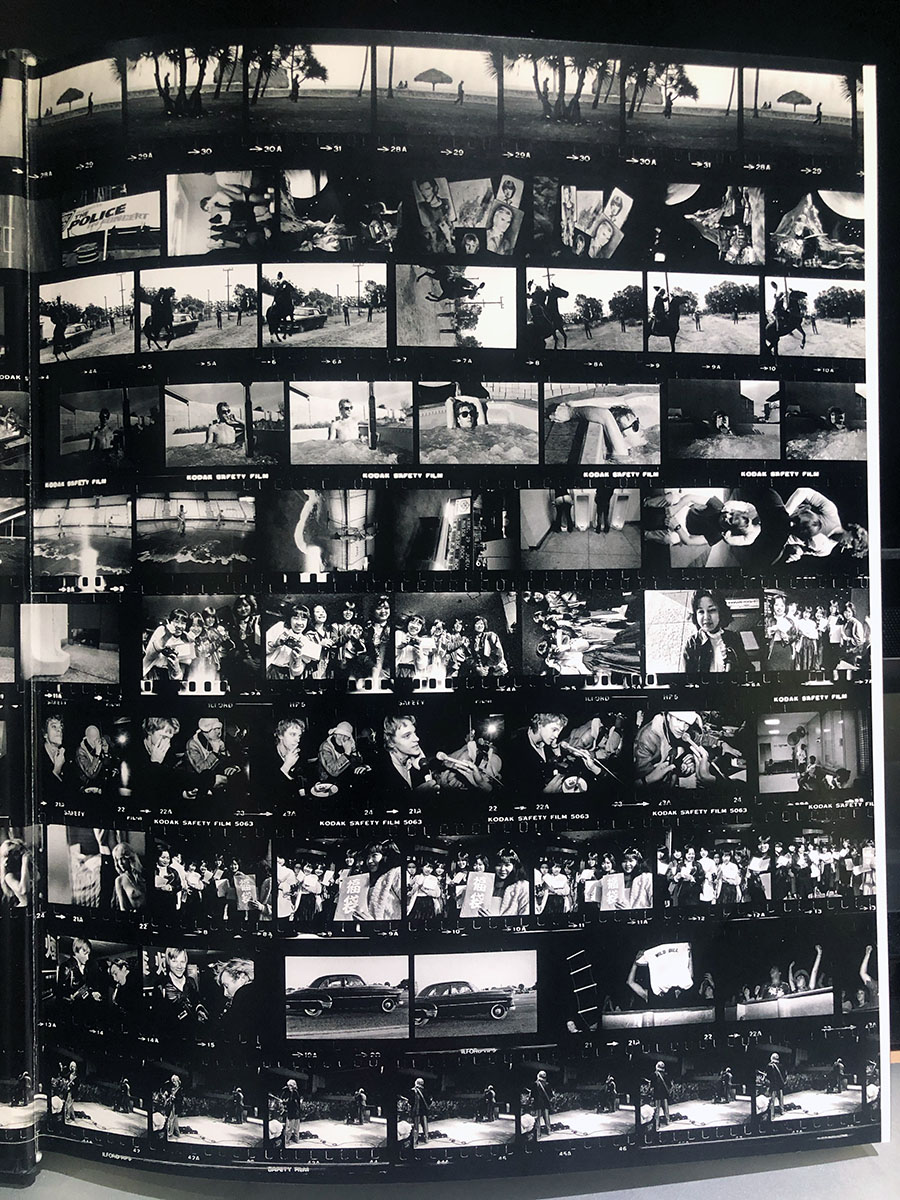
Jeff Dunas, the founder of the Palm Springs Photo Festival, kept announcing that we would have a surprise evening presenter back in 2009. A surprise it was, Andy Summers of the Police! Not only a rock star but a very talented photographer with a great eye for the moment.
It really was a great presentation that was a highlight of the all of the Palm Springs Photo Festivals I have attended since 2005. A part of his experience was something I often experience. Andy said he always had shot film but then decided to try digital. But he found that digital kind of left him empty and his photography went into a decline. He started with film again and Leica as I recall, and went back to his creativity and enthusiasm.
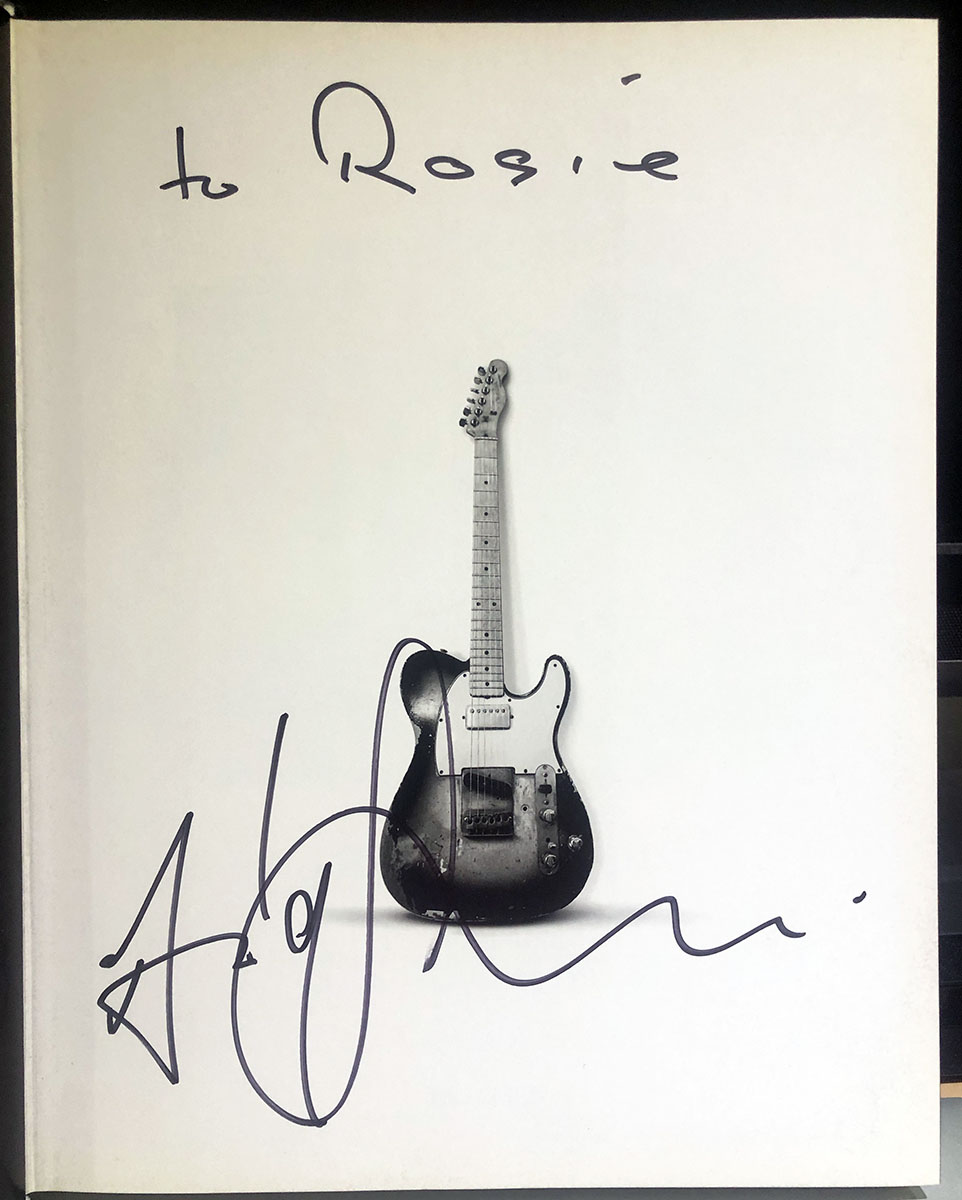
I got a copy of his book afterwards at the Festival party and talked with him briefly. I had him sign it to Rosie because she would have loved to have been there.

The Leica Film Look
Going a different direction for some of my photography. Will be shooting some film in a Leica lllf camera. This camera was manufactured in 1952 or 1953. All manual and not even a light meter. I always loved the look of film shot in Leica cameras.

Velvia
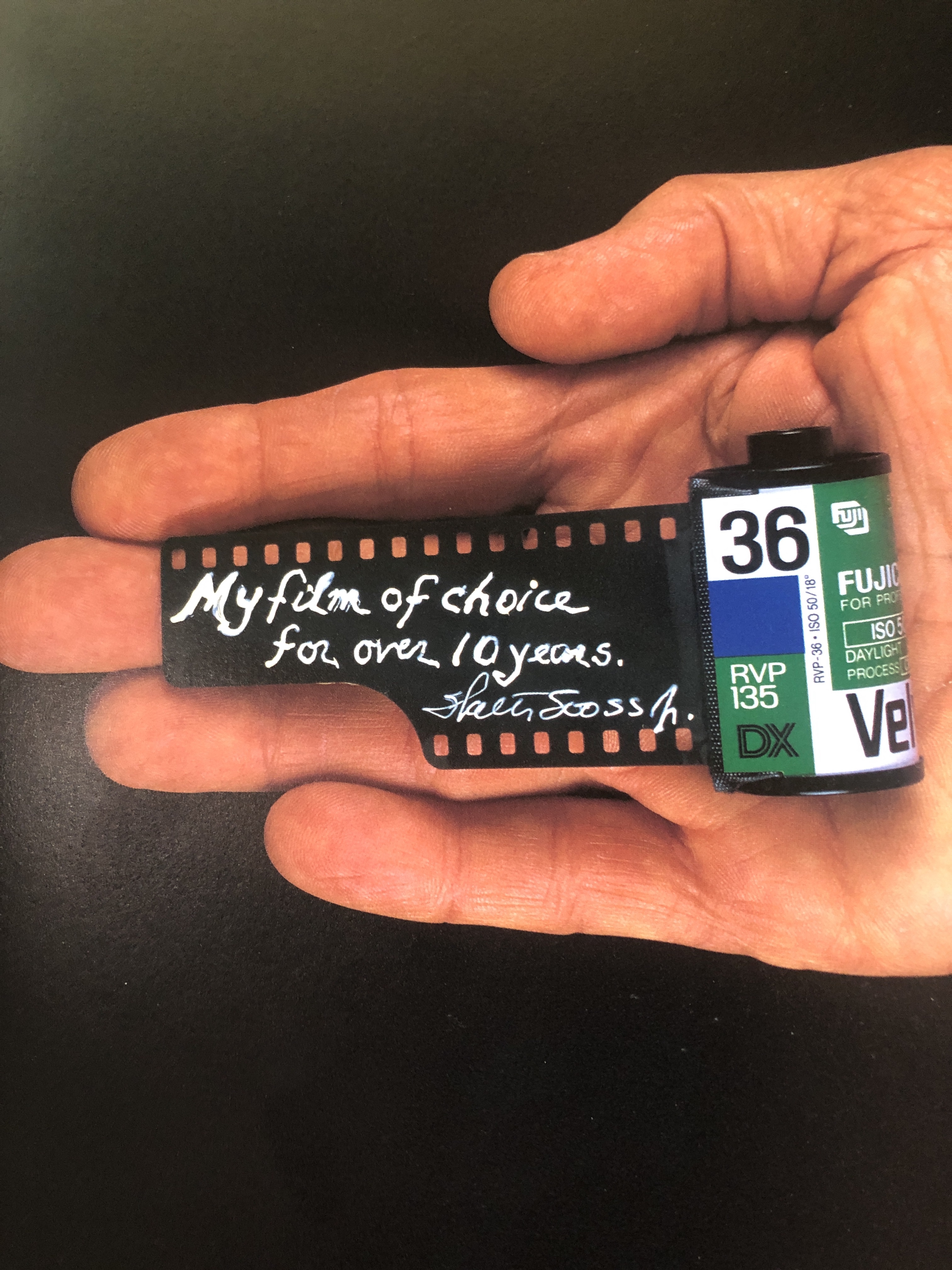
Fujifilm Velvia has been one of my favorite films. Even when I shoot my Fujifilm X-Series digital cameras, I shoot RAW and Velvia film emulation. It was because of the photographs in this book that got me into it. I like the saturated colors and high contrast. And I will be shooting the film again too.
Walter Iooss is a long time photographer for Sports Illustrated. And the man who shot the Sports Illustrated Swimsuit edition for years.

Film Again
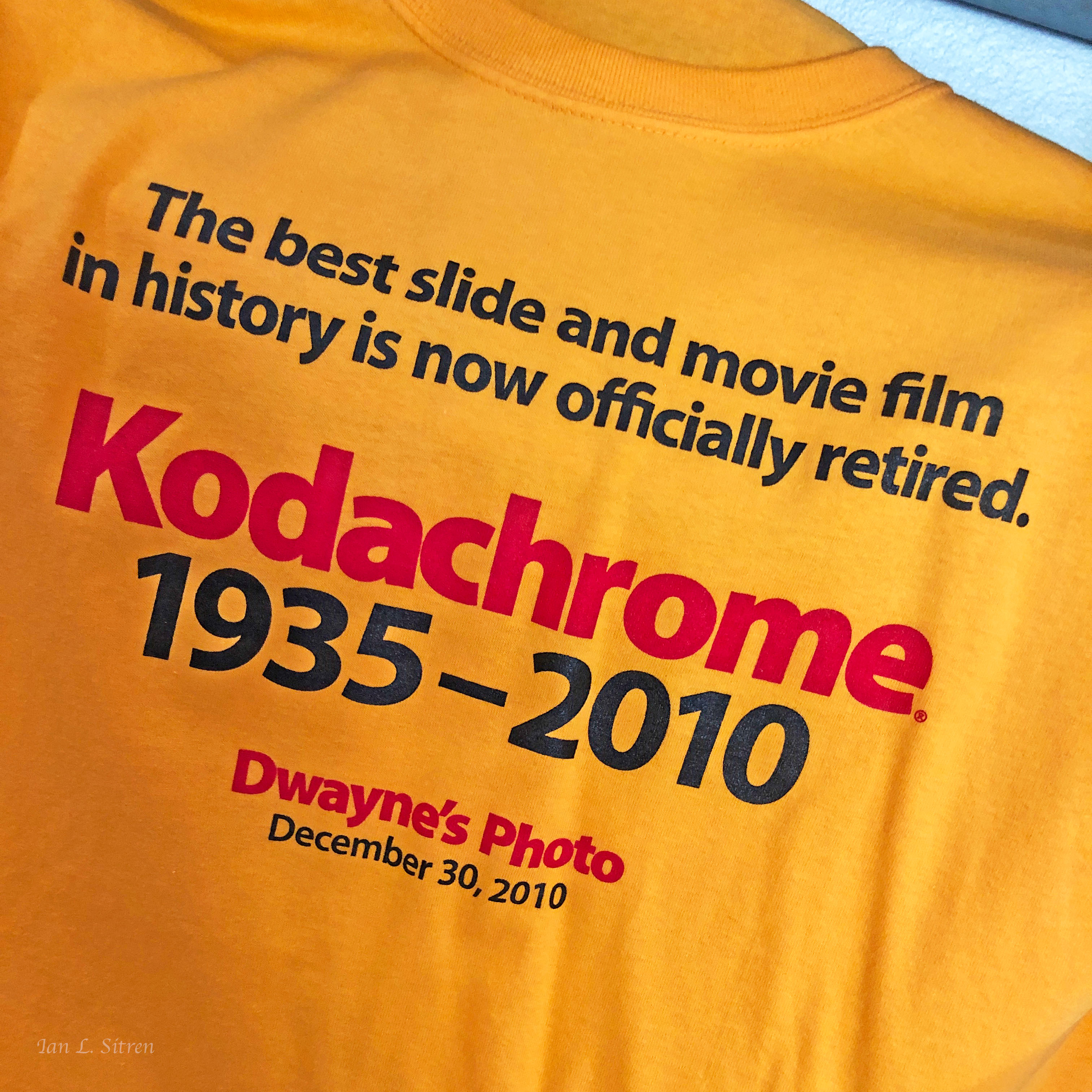
I always liked shooting film. Dwayne’s was the only film lab left still processing Kodachrome. I like many photographers saved our last rolls to get into Dwayne’s to be a small part of photography history.
Now in these changing times, I am going back to shooting some film for a change of pace and for the idea of going back to the history of photography. There is no more Kodachrome or Kodachrome processing but many films are in production and have been brought back in to production.
Lomo Need Some Film
Sometimes I forget what I have. Have to get some film, I have not one roll left!

On The Rocks
On the rocks is often my choice. Windy Nguyen makes for a wonderful yard accessory don’t you think! From our photo shoot.

Photobomb Or Not?
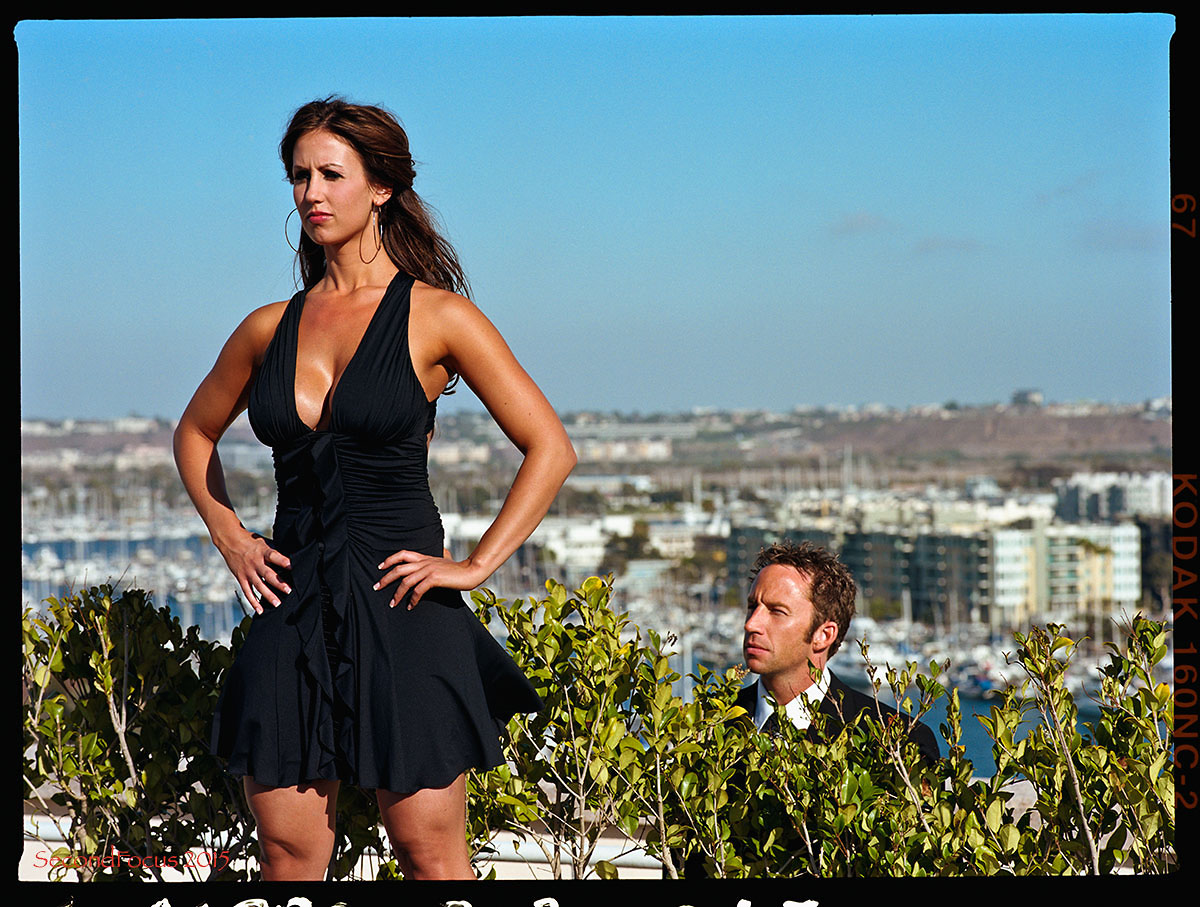
Photobomb or not? Maybe she is just ignoring him. Above the bay in Marina Del Rey California for a photo shoot.
My Relationship With Keira Knightly
Well other than thinking that she is just gorgeous and I very much enjoy seeing her in movies and photographs, I do not have a relationship with Keira Knightly. Except for perhaps in agreement with some of her views about photography. She was recently photographed by famous fashion photographer Patrick Demarchelier for Interview Magazine. And she also was the interviewer of Demarchelier for the feature. More below…
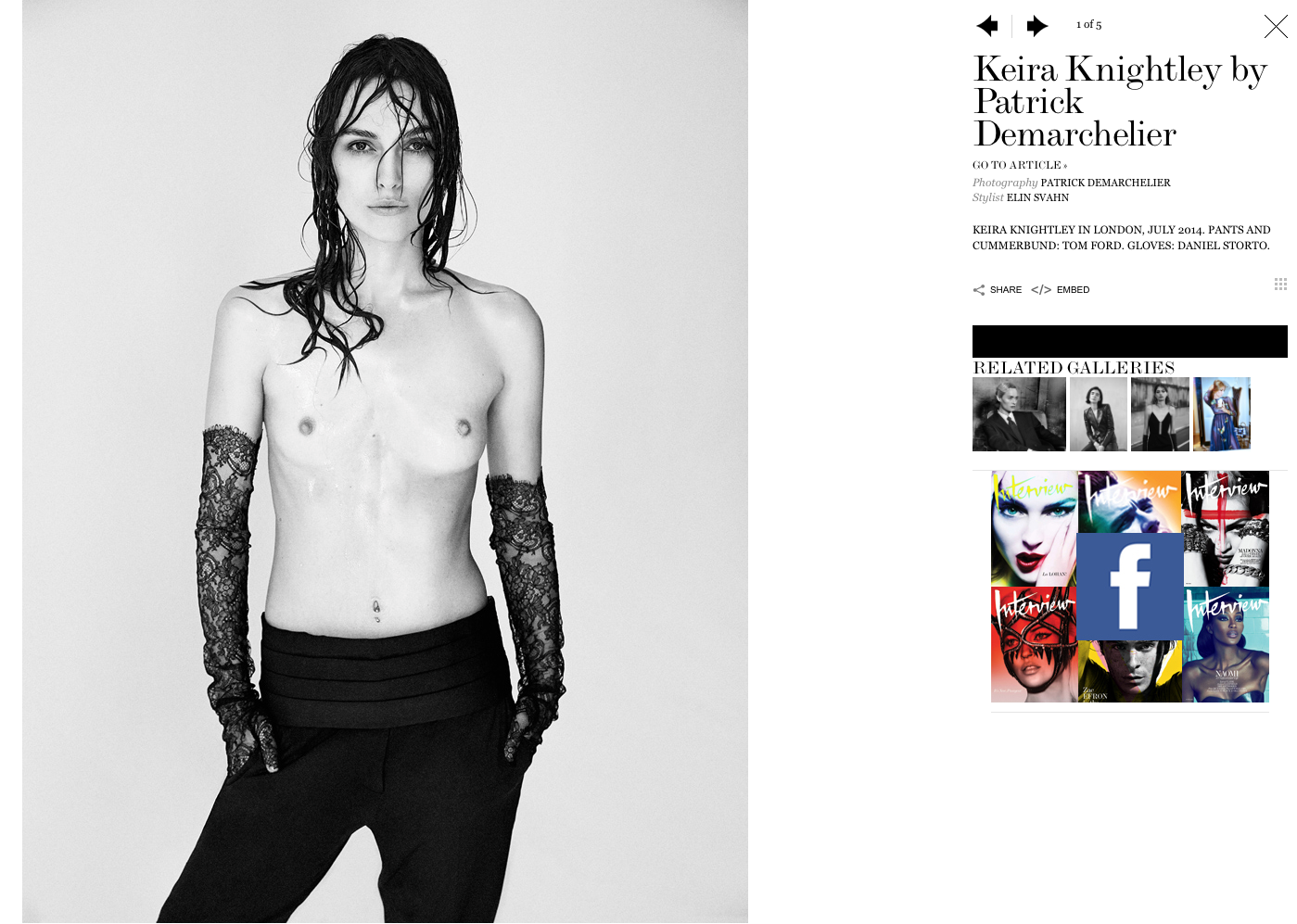
Keira Knightley by Patrick Demarchelier For Interview Magazine
In the interview Keira brings up a few points and asks questions of Demarchelier about shooting film versus shooting digital as she sees a difference in how photographers relate to the subject or model. Here are a few of those questions…
KNIGHTLEY: I’ve noticed that the people who started on film still have the ability to see the person in front of them. Whereas for a lot of photographers who have only ever worked in digital, the relationship between the photographer and the person who they’re taking a picture of sort of doesn’t exist anymore. They’re looking at a computer screen as opposed to the person.
DEMARCHELIER: Exactly. I love digital, but the only problem is less intimacy. People look at the screen right away. Before, nobody saw the picture before you saw the final picture. There was more privacy in a way.
KNIGHTLEY: Do you miss any of the physicality of it? I think I’m a horrific kind of romantic about film. There’s something about that single shot that was one moment in time, and something about the physical process of the light hitting the lens and the dark room. I find it difficult to see the romance in digital.
DEMARCHELIER: It can do that too, actually. I do a Polaroid before shooting. A Polaroid you do one picture, three pictures, it’s really a moment. Capturing that moment with those pictures is interesting.
I want to say that I really understand what Keira Knightly is saying. By example when I am shooting on location in bright sun and shooting digital, you can’t see the screen on the back of the camera anyway. So I do find myself shooting more like when I do shoot film. Less as an observer and more working directly with the model. There is more of a connection, kind of an eye to eye thing. I have caught myself lately making that digital mistake. I see other photographers, younger photographers who have not shot film. being totally detached like they are watching selfies on an Instagram feed. As a consequence their photos are truly uninspired.
So what have I done to stay connected? Simple things that make me slow down. You might see me shoot with the camera on a tripod. Let’s me pay more attention to the model and details. I do shoot way fewer photos than other photographers. I hear models tell me that they shot with some photographer and they shot thousands of photos in a photo shoot. That usually only means you have a whole bunch of mediocre photos to look through and the photographer is just being a button pusher and watching.
To paraphrase a story about the great photographer Helmut Newton; it is said that for the cover assignment for a very prominent fashion magazine he only shot three photographs as the selections. When confronted by the very famous editor that he only sent in three, Newton responded “Well you only need one”. That “one” was always a work of art and not just one of many photographs.
And from time to time you might see me shoot film. When you only have 12, 16 or 36 frames before you have to reload the camera that will slow you down. Especially when you consider that each roll of film will cost $35 – $50 each to be developed and scanned. Every now and then some of you may have even seen me bring out the Polaroid cameras. I intend to do that more as well. For many of you it will be a new experience. No screen to look at not he back of the camera. One model I worked with was very confused by it and she said “Is that like movies?”. Don’t worry I won’t make fun of you. It’s all fun!
Well I hope Keira Knightly sees this and stops by to do a shoot on film with me. Maybe she or Interview Magazine did call me about this feature and I was at the gym or something. I will just keep telling myself that. Thanks!
Fitness Is Also Looking Good Naked
Lots of reasons to be fit and healthy! And if you want it that way, looking good naked is one of them. All the better! From my photo shoot with Melyssa.

Classic Photography – Not Digital…
I am always amazed and gratified that my skills as a photographer can equal the great looking people I get to photograph. Jake Sawyer works very hard to sculpt his physique so even better that we get to shoot at fun locations in a classic photographic style. Most of you will have no idea what I am talking about when I say that this was shot on medium format film. A film that is actually of historical importance, Kodak Tri-X. Anyway, one of my favorite ever photo shoots! Thanks!