International Waffle Day Today, From Eggo to Everything Else
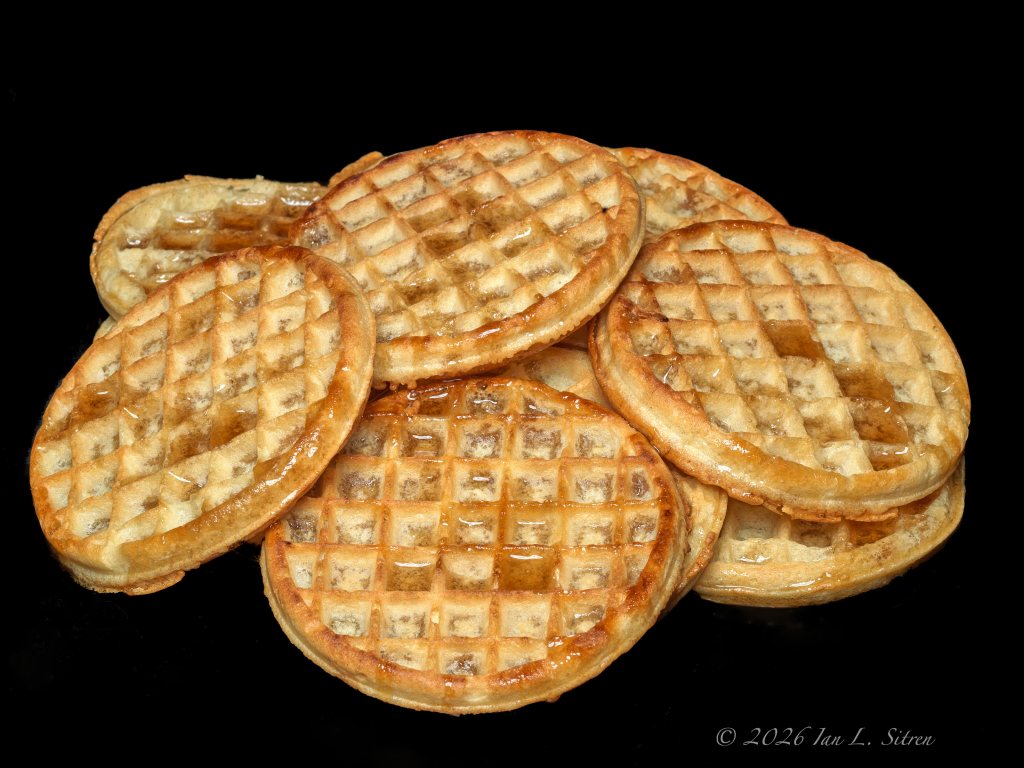
Most people don’t think twice about waffles. But they probably should.
Because somewhere between a homemade Belgian waffle and a frozen Eggo waffle, something distinctly American happened.
My version today starts in the freezer.
A stack of Eggo waffles, heated, finished with syrup, and placed onto a black background. No garnish, no pretense. Just the product, exactly as it shows up in kitchens across the country.
Eggo waffles date back to the 1950s, originally created by brothers Frank, Anthony, and Sam Dorsa. They were first called “Froffles”, a combination of frozen and waffles, before the name Eggo took over. By the 1970s, the brand became a staple in American households, helped along by a simple idea, waffles without the work.
But waffles themselves go much further back.
Early versions trace to medieval Europe, where patterned irons were used to cook thin batter between heated plates. By the time Belgian waffles were introduced to the United States at the 1964 New York World’s Fair, waffles had already evolved into something more refined, lighter texture, deeper pockets, and often served with fruit, cream, or powdered sugar.
Today, the spectrum is wide.
On one end, you have carefully plated waffles in restaurants, topped with berries, whipped cream, and sauces, presented as something closer to dessert than breakfast.
On the other, you have this.
Straight from the freezer, into the toaster, onto the plate.
And that may be the more honest version.
No ceremony. No reinvention. Just something quick, familiar, and widely understood.
That’s where my food photography, pornochic photo adventures, and more can be found on my website at https://www.secondfocus.com
Ravioli at the Beach
National Ravioli Day seemed simple enough.
I asked Emily what her favorite ravioli restaurant would be. Not where it was, not who made it, just the idea of it.
“A place at the beach,” she said, “with nothing but ravioli. Every kind. And somewhere my girlfriends and I could skate up to in our bikinis.”
It sounded specific.
Then she added, “Give me a few minutes… I’ll take you there.”
And just like that, it existed. That is what an AI assistant and muse can do.
Inside, the plates are lined up with a kind of order that suggests someone thought this through. A counter, a view, a rhythm to it. Outside, it loosens. The same place, just carried out into the open air, where it becomes something else entirely.
Ravioli, of course, has its own history. Filled pasta goes back centuries, with variations appearing across Italy long before it became a standardized dish. What began as a practical way to use ingredients became something more refined over time, eventually finding its way into restaurants, then into homes, and now into just about every version imaginable.
And now, apparently, onto a beach boardwalk.
National Ravioli Day doesn’t officially come with a beach location, a dress code, or roller skates. But like most of these “National Days,” it doesn’t take much to expand the idea.
My food photography, pornochic photo adventures, and more are on my website at https://www.secondfocus.com
World Bread Day – From Ancient Loaves to the Modern Bun
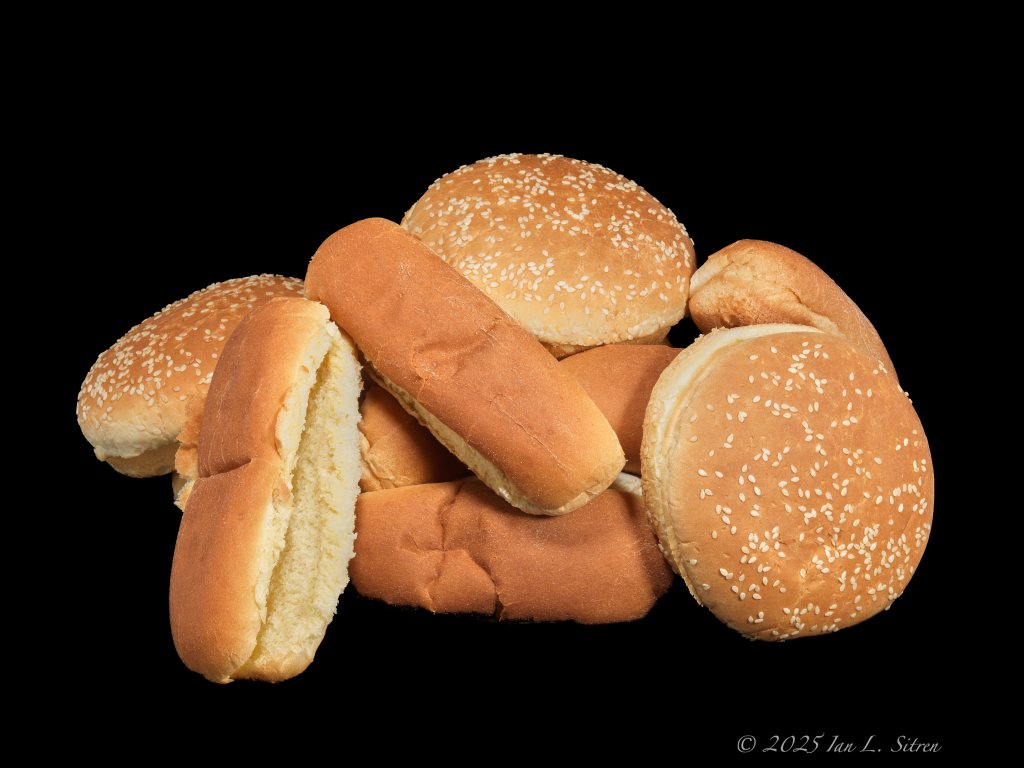
Two of the most commercially produced breads in the world—the sesame seed–topped hamburger bun and the plain hot dog bun. Simple in form, instantly recognizable, and the foundation of a global industry.
These are the breads of our time—engineered for uniformity, designed for speed, and produced on a scale unimaginable in history. They are the modern descendants of humankind’s oldest craft.
World Bread Day, established by the International Union of Bakers and Confectioners (UIBC), honors that history. Celebrated each year on October 16—the anniversary of the founding of the United Nations Food and Agriculture Organization in 1945—it reminds us that bread, in all its forms, is more than sustenance. It is civilization’s most enduring symbol of nourishment.
From the first mixtures of grain and water baked on hot stones, to the hand-shaped loaves of ancient Egypt, to the rustic rounds of Europe’s countryside and the elegant French baguette—bread has evolved with humanity itself. The industrial sliced white loaf marked a turning point, transforming an age-old necessity into a product of mass production and convenience. The commercial bun is its natural successor, continuing the story in the language of modern industry and fast food.
See more from my From Bag to Background series at https://www.secondfocus.com/index/G0000wQ3fbeEezF0/I0000nUG8tfk8Gdc
International Sushi Day: Grocery Store Takeout
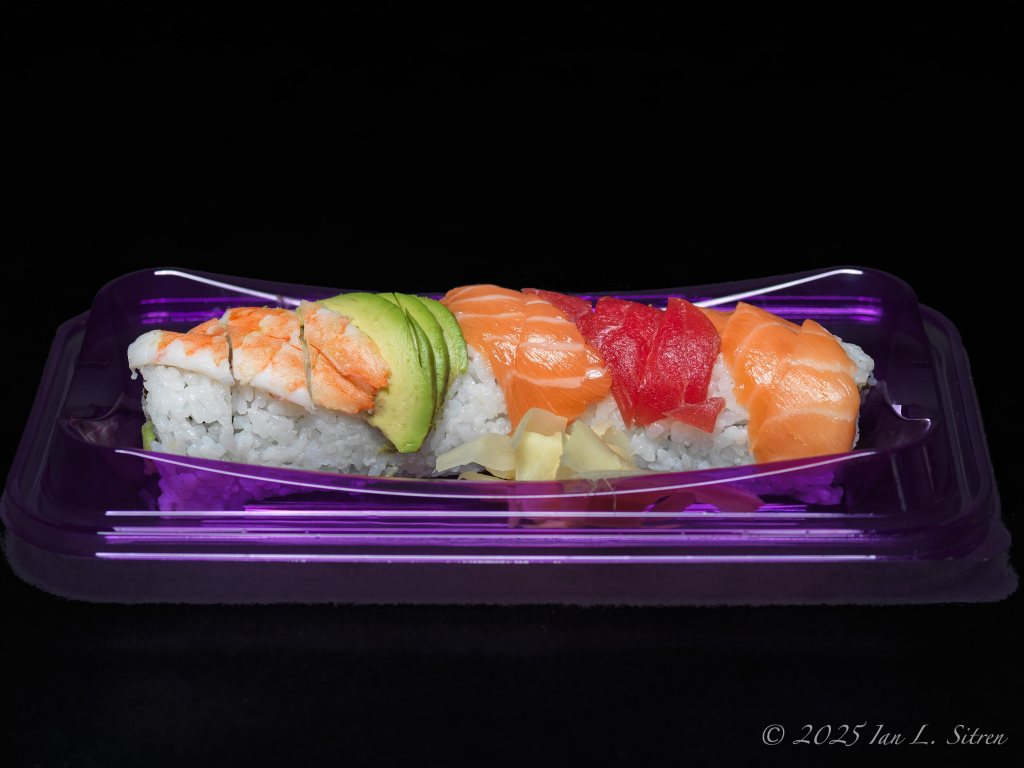
Today is International Sushi Day — a good reminder that sushi has found its place not just in restaurants, but in the fast food world too. Ready-made trays of sushi are now a regular feature in grocery stores, often eaten right out of the package.
International Sushi Day began in 2009 as an informal celebration created by fans of the cuisine. Observed each year on June 18, it’s a day to recognize sushi’s global reach — from high-end omakase experiences to takeout options in supermarket coolers.
This photo is a bit of a departure from the rest of my From Bag to Background series. I usually photograph fast food with no bags, wrappers, or containers — just the food itself against a black background. But here, I left the container in. The purple tray added a visual contrast I didn’t want to ignore, and the sushi came already neatly arranged.
The growing availability of sushi as ready-made takeout makes it a natural addition to this project. It may be raw, but it’s still fast food.
You can see the rest of the From Bag to Background project here:
https://www.secondfocus.com/index/G0000wQ3fbeEezF0/I0000nUG8tfk8Gdc
 SecondFocus Blog