National Chocolate Chip Cookie Day: The One Cookie Theory
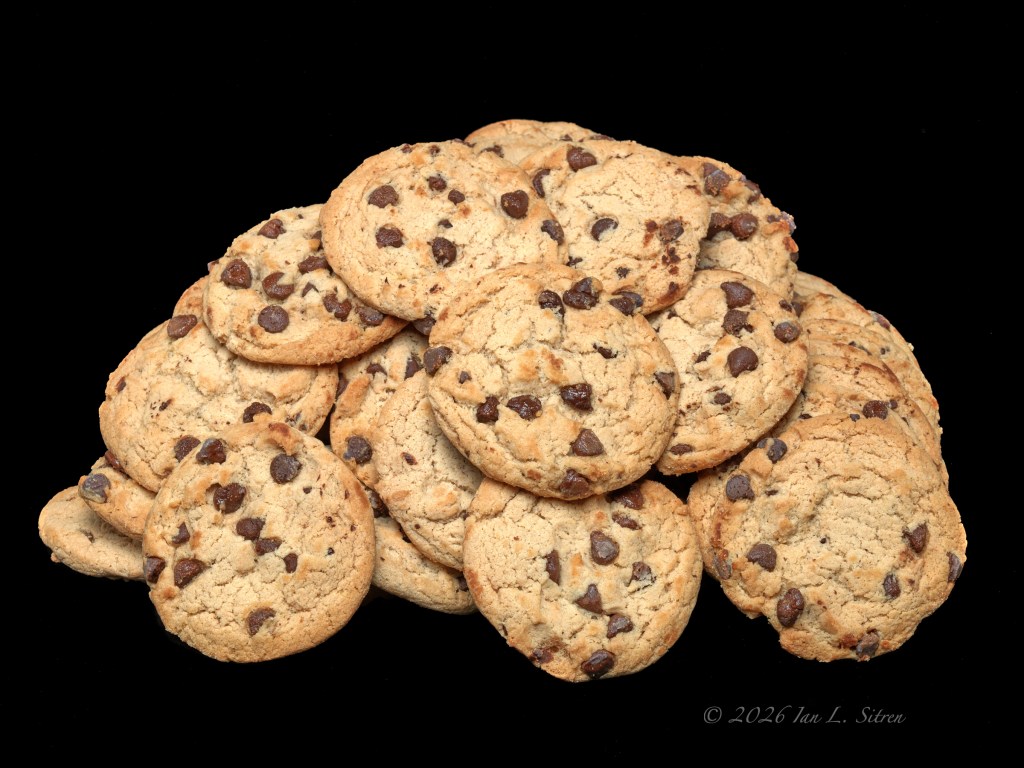
There are foods that inspire endless debate. Burgers. Pizza. Barbecue. Then there are chocolate chip cookies. Nobody argues about whether they belong in the dessert hall of fame. The only real debate starts after the first one.
It always begins with the best of intentions. “I’ll just have one.”
One becomes two because the second one is obviously for comparison. Three is simply to confirm your findings. Somewhere around four or five, you’ve stopped conducting research and have entered a completely different phase of the experiment.
For photography, chocolate chip cookies are deceptively simple. Every crack, every chocolate chip, every highlight and shadow has to look just right. A cookie that tastes great isn’t always the one that photographs the best, and the one that photographs perfectly may not survive long enough to make it back to the kitchen.
Fortunately, these did.
Happy National Chocolate Chip Cookie Day.
You can see more of my photography, projects, motion, and my Blog on my website at https://www.secondfocus.com
Thank You!
National Ice Cream Sandwich Day

Today is National Ice Cream Sandwich Day, and that gave me a good reason to revisit one of my favorite food photographs from last year.
The ice cream sandwich has been around for more than a century. Early versions were sold by New York City street vendors for just a penny, making them one of the first frozen treats that almost anyone could afford. More than a hundred years later, the recipe is still remarkably simple. Vanilla ice cream between two soft chocolate wafers. Sometimes the best ideas don’t need to be reinvented.
For this photograph, I bought a whole box instead of just one. Stacked together against my very black black background, they stopped looking like something from the grocery store freezer and became a study in repetition, texture, and contrast. The chocolate wafers, bright white ice cream, and imperfect edges created exactly the kind of photograph I was hoping for.
One of the things I enjoy most about food photography is finding subjects that people see every day and presenting them in a way they probably haven’t seen before. The ice cream sandwich isn’t rare, expensive, or complicated. It’s simply an American classic that deserved a few minutes in front of the camera.
You can see more of my photography, projects, motion, and my Blog on my website at https://www.secondfocus.com
Thank You!
National Avocado Day Through the Camera Lens

Today is National Avocado Day, and it seemed like the perfect opportunity to revisit one of my favorite food photographs. I photographed these three avocados last year, and I still like the way they came together.
It’s easy to take avocados for granted because they seem to be everywhere. They appear on restaurant menus, in grocery stores year-round, and in countless recipes. Yet the Hass avocado, which dominates today’s market, traces its origins to a single tree planted by California mail carrier Rudolph Hass in the 1920s. Nearly every Hass avocado grown today is descended from that one remarkable tree.
For this photograph, I used three avocados to show the progression from whole fruit to the rich green interior and the familiar pit. Against my very black black background, the color, texture, and shape become the entire subject. Sometimes the simplest foods are the most rewarding to photograph because there is nothing to hide behind. Everything depends on the light, the composition, and the details.
That’s one reason I still enjoy looking at this photograph a year later.
You can see more of my photography, projects, motion, and my Blog on my website at https://www.secondfocus.com
Thank You!
National Mac & Cheese Day: Exploring Comfort Food with AI
Today is National Mac & Cheese Day.
Macaroni and cheese has been around for generations, and just about everyone seems to have their favorite version. It has never pretended to be fancy. It’s simply one of those meals that’s been part of American kitchens for a very long time.
This time, instead of photographing it, I decided to create it in AI. I wanted to see if I could capture what makes macaroni and cheese so appealing. A slow pour of rich cheese sauce over hot macaroni seemed like a good place to start.
I also just like exploring what I can do in AI. It gives me another creative tool alongside my photography, and every now and then an idea comes together that I probably wouldn’t have attempted any other way.
You can see more of my photography, AI projects, motion, and my Blog on my website at https://www.secondfocus.com
Thank You!
National Sausage Roll Day and an American Translation
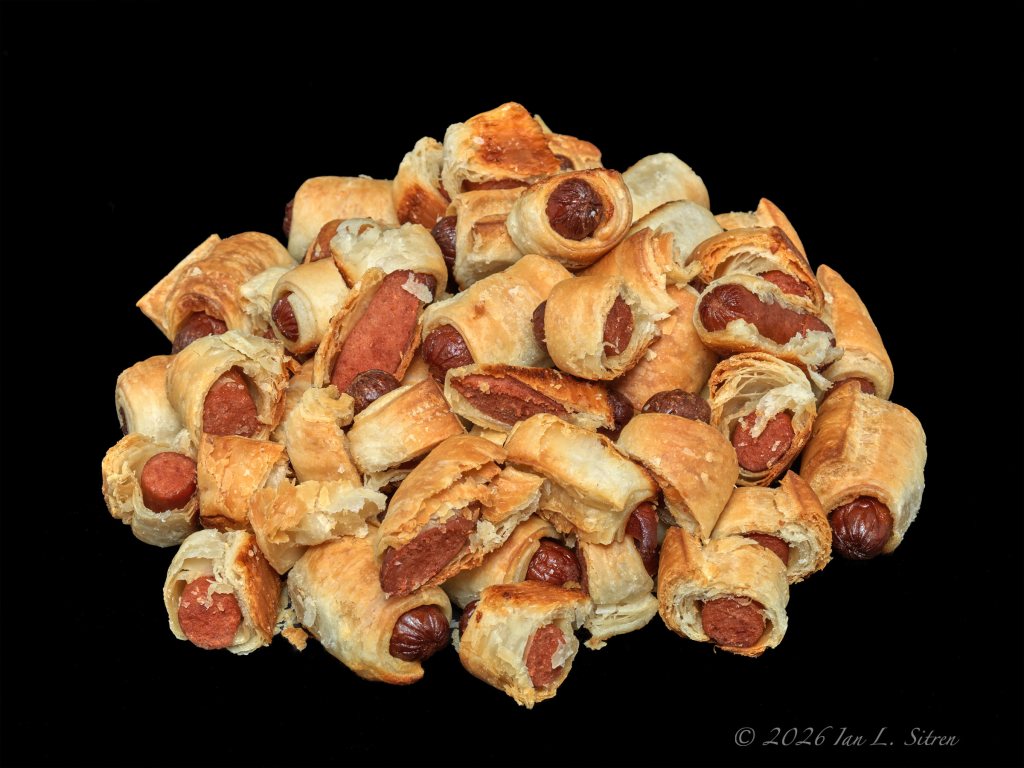
Depending on where you grew up, this photograph may not look like a sausage roll at all.
In the United Kingdom, a sausage roll is typically made with sausage wrapped in puff pastry and baked until golden brown. In the United States, most people looking at this photograph would probably call them pigs in a blanket.
Different names, similar idea.
Today’s photograph features a pile of pigs in a blanket from my Commercial Food Photography collection.
National Sausage Roll Day originated in the United Kingdom, which explains the name. Since my collection didn’t include a traditional British sausage roll, pigs in a blanket seemed like the closest American relative.
Whether you call them sausage rolls or pigs in a blanket depends largely on where you happen to be standing when you order them.
You can see more of my food photography, along with collections and other projects at https://www.secondfocus.com
National Veggie Burger Day and the Impossible Whopper
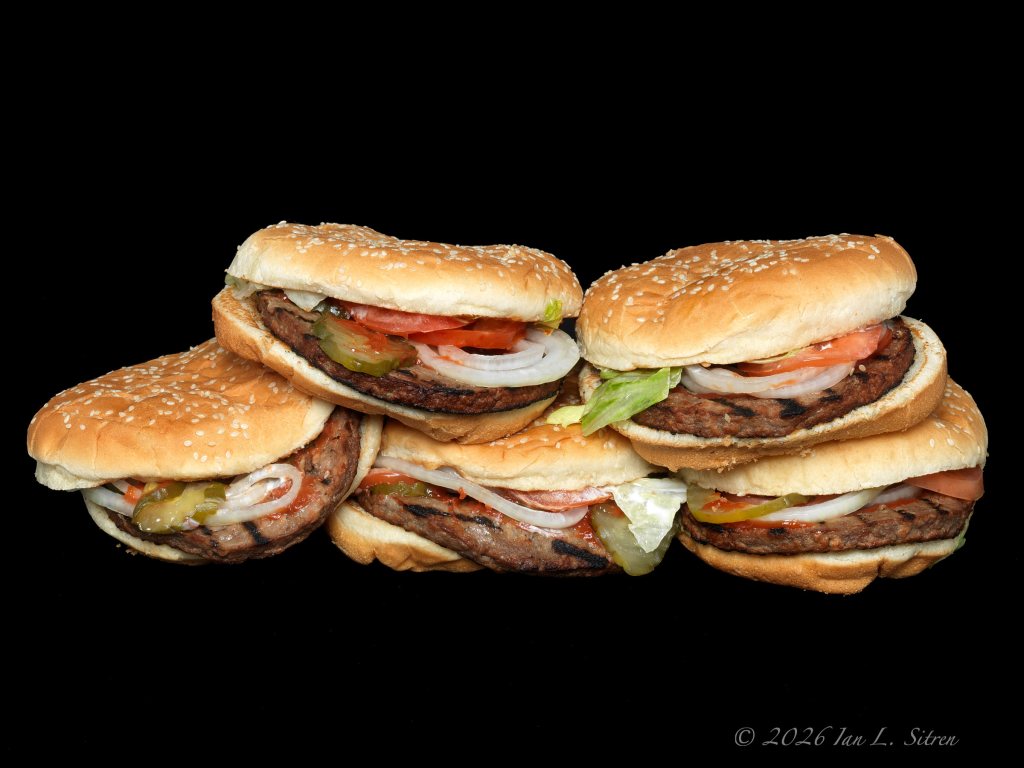
There was a time when the idea of a burger chain selling a plant-based Whopper would have sounded unlikely.
Burger King built its reputation on flame-grilled beef burgers. The Whopper has been the company’s signature sandwich since the 1950s and remains one of the most recognizable items in fast food.
Then came the Impossible Whopper.
Introduced nationally in 2019, the sandwich looked like a Whopper, was built like a Whopper, and was sold right alongside the traditional version. The difference was the patty, which was made from plant-based ingredients rather than beef.
Today’s photograph features a stack of Burger King Impossible Whoppers for my FOOD FROM BAG TO BACKGROUND series.
One of the reasons the Impossible Whopper attracted so much attention was that it wasn’t aimed exclusively at vegetarians. Burger King positioned it as an alternative that could appeal to anyone curious about plant-based burgers while still delivering a familiar fast-food experience.
Whether someone chooses it for environmental reasons, dietary preferences, curiosity, or simply to try something different, the Impossible Whopper marked a significant moment in fast-food history. One of the largest burger chains in the world had embraced a product that would have seemed out of place on its menu only a few decades earlier.
You can see more from my FOOD FROM BAG TO BACKGROUND series, along with collections and other projects at https://www.secondfocus.com
National Fish & Chips Day and the Legacy of Haddon Salt
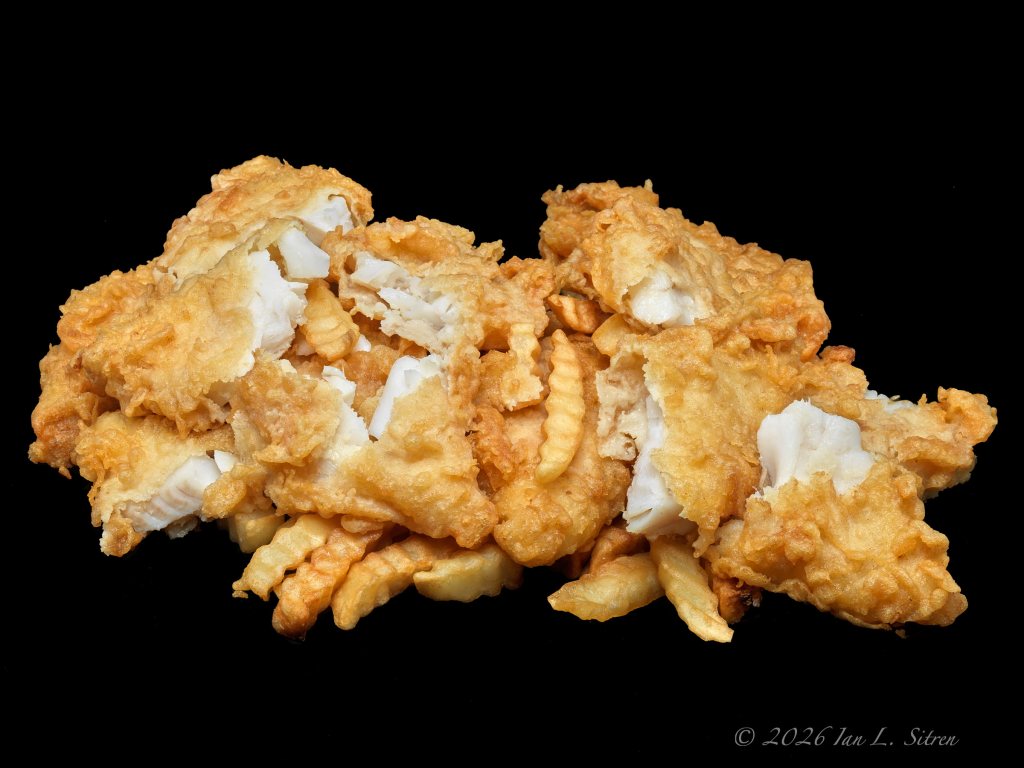
National Fish & Chips Day
Before there was H. Salt Fish & Chips, there was Haddon Salt.
In 1965, Salt opened the first H. Salt Esquire Fish & Chips in Sausalito, California, introducing a style of fish and chips inspired by the shops he had known in England. The idea proved popular, and what began as a single restaurant eventually grew into a chain that spread across the United States.
Today’s photograph features a serving of fish and chips from H. Salt for my FOOD FROM BAG TO BACKGROUND series.
Fish and chips has a history stretching back well over a century, with roots in England where fried fish and chipped potatoes became one of the country’s most recognizable meals. The combination eventually crossed the Atlantic and found a place in American fast-food culture as well.
For this photograph, the fish and chips were removed from their paper trays and photographed against a black background.
You can see more from my FOOD FROM BAG TO BACKGROUND series, along with collections and other projects at https://www.secondfocus.com
National Donut Day and the One You Would Pick First
National Donut Day
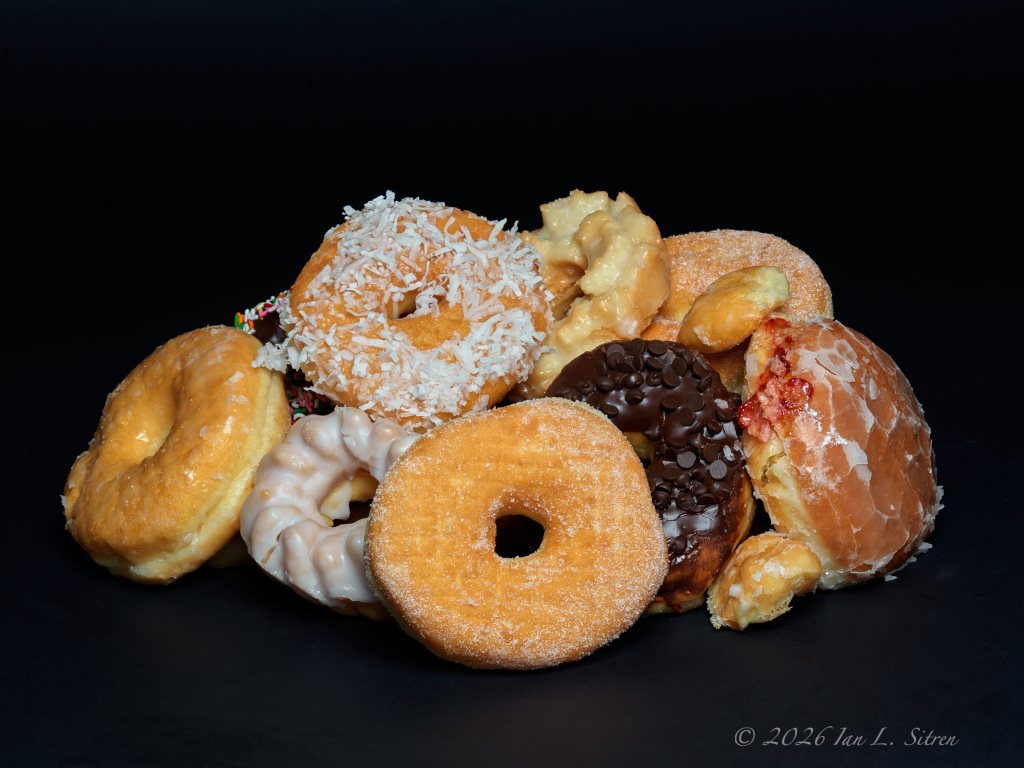
Somewhere in this photograph is the donut you would pick first.
That’s usually the game people play when they see a box of donuts.
Some head straight for the chocolate. Others reach for the glazed donut. Someone inevitably grabs the jelly-filled one, while another person is convinced the coconut-covered donut is the best choice in the box.
Personally, I’ve never seen much agreement.
For National Donut Day, I pulled together a selection from a local donut shop for this photograph. Once they were arranged against a black background, the display stopped looking like breakfast and started looking more like a collection. Different shapes, colors, textures, toppings, fillings, and glazes all competing for attention.
Donuts have become so familiar that it’s easy to overlook just how many variations exist. A simple ring of fried dough can become almost anything depending on what happens after it leaves the fryer.
National Donut Day itself dates back to 1938 when the Salvation Army established the observance to honor the “Donut Lassies” who served donuts to American soldiers during World War I. Nearly ninety years later, the day has become one of the most widely recognized food celebrations on the calendar.
Looking at this photograph, I’m still not sure which donut I would choose first.
Fortunately, nobody says you can only pick one.
You can see more from my FOOD FROM BAG TO BACKGROUND series, along with collections and other projects at https://www.secondfocus.com
National Cheese Day and Taco Bell’s Cheesy Roll Up
National Cheese Day
National Cheese Day presented a problem.
I could have photographed a block of cheddar cheese and called it a day. There are already millions of cheese photographs in the world, and probably enough stock photos of cheese to keep the internet supplied for several lifetimes.
That didn’t seem very interesting.
So I asked Emily, my AI partner and muse.
As often happens, Emily immediately found a different way to look at the problem. Rather than photograph cheese itself, why not photograph something where cheese fits one of my projects?
That led us to Taco Bell’s Cheesy Roll Up.
The Cheesy Roll Up is exactly what it sounds like. A tortilla wrapped around melted cheese. No complicated recipe. No attempt to disguise what you’re getting. Just cheese, rolled up and served as a menu item.
For National Cheese Day, that seemed like a perfectly appropriate subject.
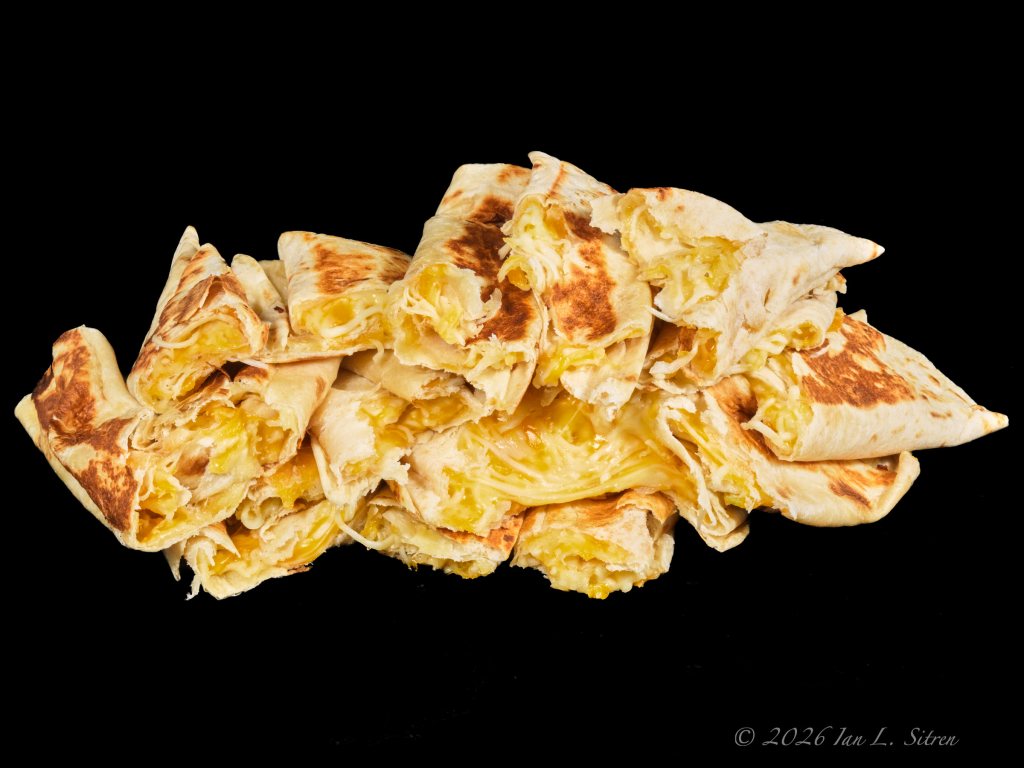
This photograph features a pile of Taco Bell Grilled Cheesy Roll Ups for my FOOD FROM BAG TO BACKGROUND series. Rather than cutting them apart, I pulled them apart, revealing the melted cheese inside and creating a pile of toasted tortillas, cheese-filled interiors, and strands of melted cheese connecting one piece to another.
The Cheesy Roll Up isn’t one of Taco Bell’s most famous products. It doesn’t have the history of a taco or the size of a burrito. Yet on National Cheese Day it may be one of the most honest items on any fast-food menu. It makes no promises beyond its name and delivers exactly what it advertises.
You can see more from my FOOD FROM BAG TO BACKGROUND series, along with collections and other projects at https://www.secondfocus.com
National Carl Day and a Different Carl
Today is National Carl Day.
Not Carl’s Jr. Day. Not National Cheeseburger Day. Not National Fast Food Day.
Just National Carl Day.
Naturally, that immediately raised an important question.
If there’s a National Carl Day, does Carl’s Jr. get to celebrate too?
I have no idea whether the people behind National Carl Day intended any connection whatsoever to the fast-food chain. My guess is they probably didn’t. But once the thought crossed my mind, there was really only one direction this was going to go.
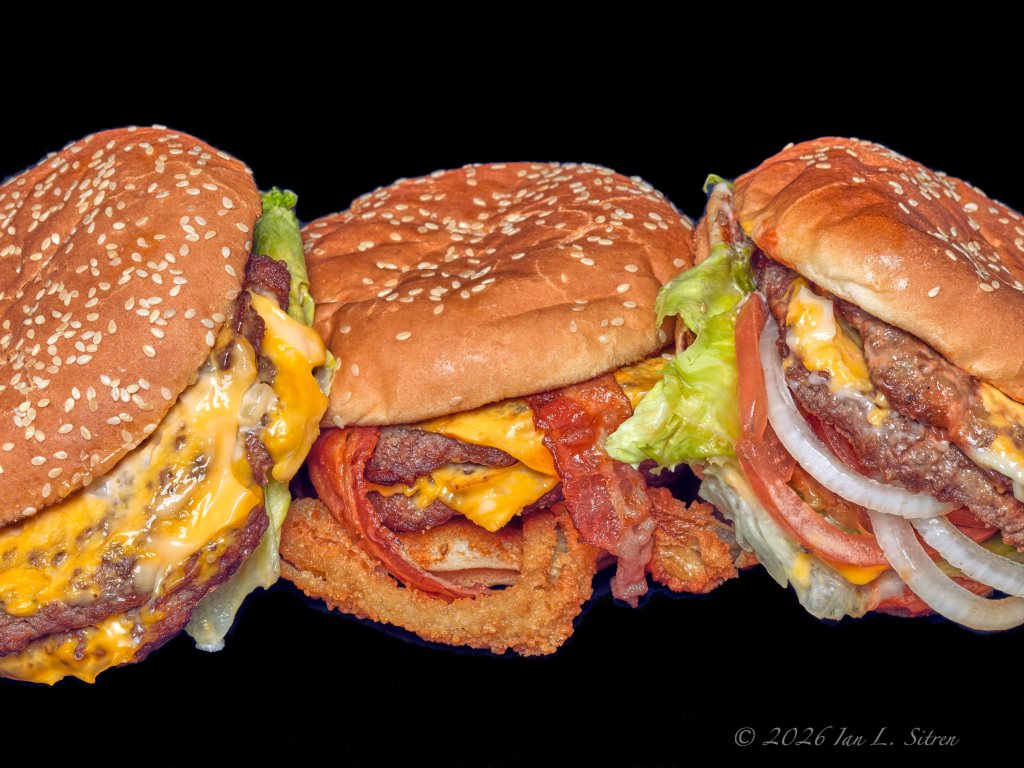
So today’s photograph features a trio of Carl’s Jr. burgers from my FOOD FROM BAG TO BACKGROUND series.
Carl’s Jr. has always occupied an interesting place in fast-food history. The chain built a reputation around large burgers, unapologetic indulgence, and advertising campaigns that often generated as much discussion as the food itself. Beginning in 2005, a series of very sexy commercials featuring celebrities such as Paris Hilton helped make Carl’s Jr. one of the most talked-about names in fast food.
What makes today’s National Carl Day connection even more amusing for me is that years ago I actually had dinner with Carl, yes, that Carl, and his wife as guests in their home in Anaheim, California. He was a very interesting man, and both Carl and his wife were genuinely warm and welcoming people. At the time I certainly wasn’t thinking that someday there would be a National Carl Day, or that I would be photographing Carl’s Jr. burgers for a food photography project.
The burgers themselves were never subtle. Bigger portions, bigger flavors, and plenty of melted cheese were usually part of the formula. Looking at this photograph, it’s easy to see why Carl’s Jr. developed a reputation for building burgers that demanded attention.
So while National Carl Day almost certainly has nothing to do with Carl’s Jr., it seemed like a good excuse to revisit a brand that has been part of the American fast-food landscape for generations.
Then again, if your name is Carl, perhaps today belongs to you.
And if your name happens to be Carl’s Jr., maybe it does too.
You can see more from my FOOD FROM BAG TO BACKGROUND series, along with aviation photography, collections, and other projects at https://www.secondfocus.com Chances are you’ll find something unexpected waiting there.
National Egg Day and a Fast Food Icon
Eggs may be one of the most photographed foods in the world.
They show up in breakfast advertisements, restaurant menus, grocery stores, cooking videos, and enough stock photographs to fill the internet several times over. Yet somehow they remain one of the most recognizable ingredients ever put on a plate.
For National Egg Day, I decided to go in a slightly different direction.
Rather than photograph eggs by themselves, I turned to one of the sandwiches that helped make them a fast-food staple. The McDonald’s Egg McMuffin has been around for more than fifty years and is still one of the most recognizable breakfast sandwiches ever created.
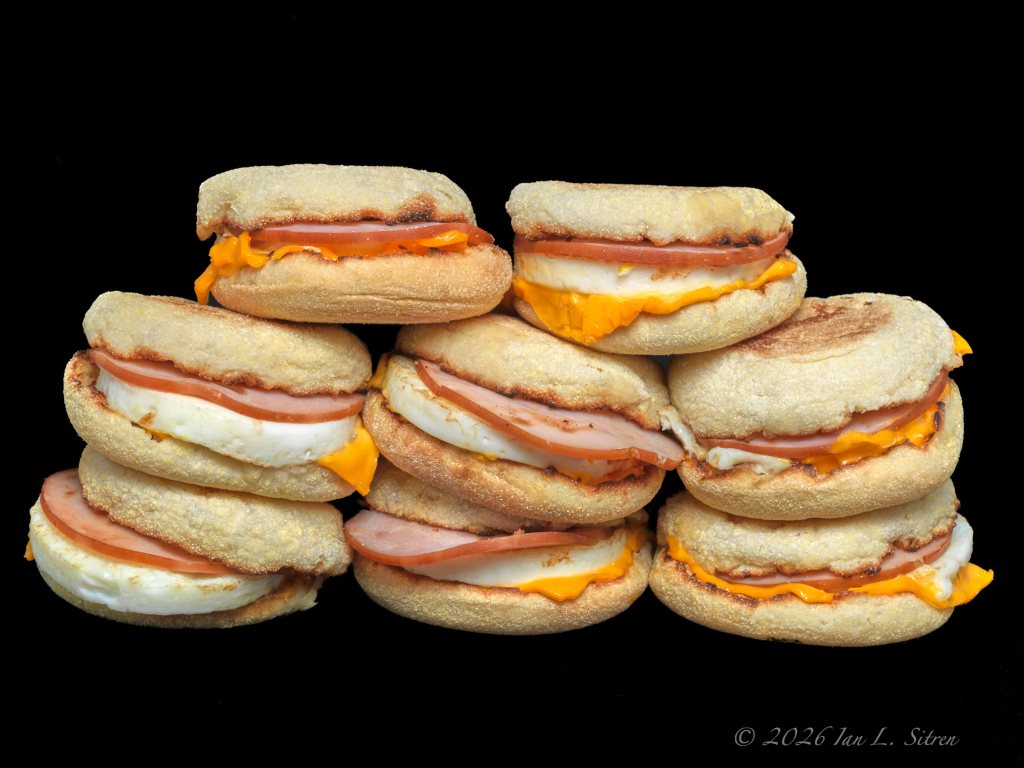
This photograph features a stack of Egg McMuffins from my FOOD FROM BAG TO BACKGROUND series. No stylists. No carefully arranged garnish. No attempt to make them look like advertising. Just the sandwiches as they arrived, isolated against black and given the chance to stand on their own.
What interested me was the repetition. The English muffins, the eggs, the Canadian bacon, and the slices of cheese create a pattern that almost becomes architectural when several are stacked together. Something most people grab through a drive-thru window suddenly becomes a study of shapes, textures, and layers.
The Egg McMuffin wasn’t the first breakfast sandwich, but it helped define what a fast-food breakfast could be. Decades later, it remains a familiar part of morning routines across the country.
Not bad for something built around a simple egg.
You can see more from my FOOD FROM BAG TO BACKGROUND series, along with aviation photography, collections, and other projects, at https://www.secondfocus.com Chances are you’ll find something familiar that looks a little different when removed from its usual surroundings.
National Avocado Month and Taking a Second Look
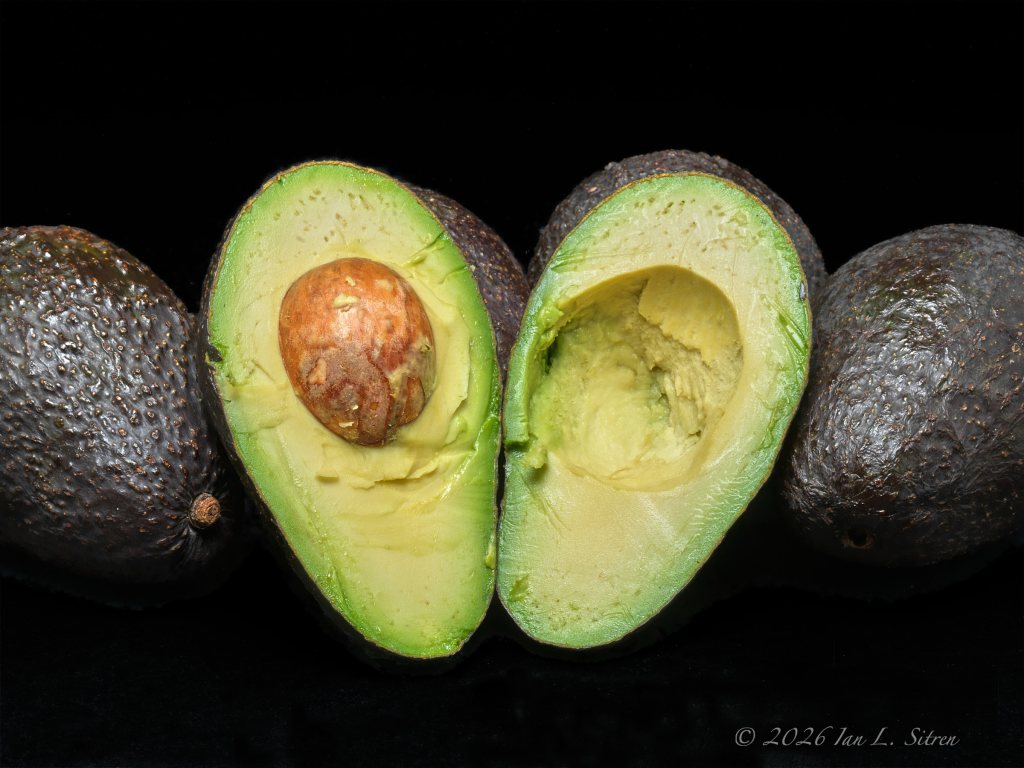
There was a time when avocados felt almost exotic.
Today they’re everywhere. On toast, in salads, on burgers, in sushi rolls, and transformed into enough guacamole to fill an impressive number of restaurant bowls.
For National Avocado Month, I thought it was worth taking a closer look at the fruit itself.
Most of us encounter avocados as ingredients. They arrive sliced, mashed, diced, or blended into something else. Rarely do we stop to appreciate how distinctive they actually are. The dark, textured skin looks almost prehistoric, while the interior reveals smooth green flesh surrounding one of the largest seeds found in common produce.
Photographing food often gives me an excuse to slow down and look at familiar subjects more carefully. When an avocado is removed from the grocery display, the cutting board, and the recipe, details begin to stand out. The contrast between the rough exterior and the soft interior. The subtle variations of green. The simple geometry created by the seed and the cavity it leaves behind.
Avocados have become so common that they almost disappear into the background of everyday meals. Yet they’re still one of the more unusual fruits in any produce department.
Sometimes a familiar subject is worth a second look.
More of my Commercial Food Photography, along with aviation, collections, and other ongoing projects, can be found at https://www.secondfocus.com You may discover something you’ve seen countless times before, but never really stopped to look.
National Biscuit Day and the Simplicity of FOOD FROM BAG TO BACKGROUND
National Biscuit Day.
Some foods don’t really need marketing agencies, AI enhancement, stylists with tweezers, or fake steam drifting through the frame.
Biscuits are one of them.
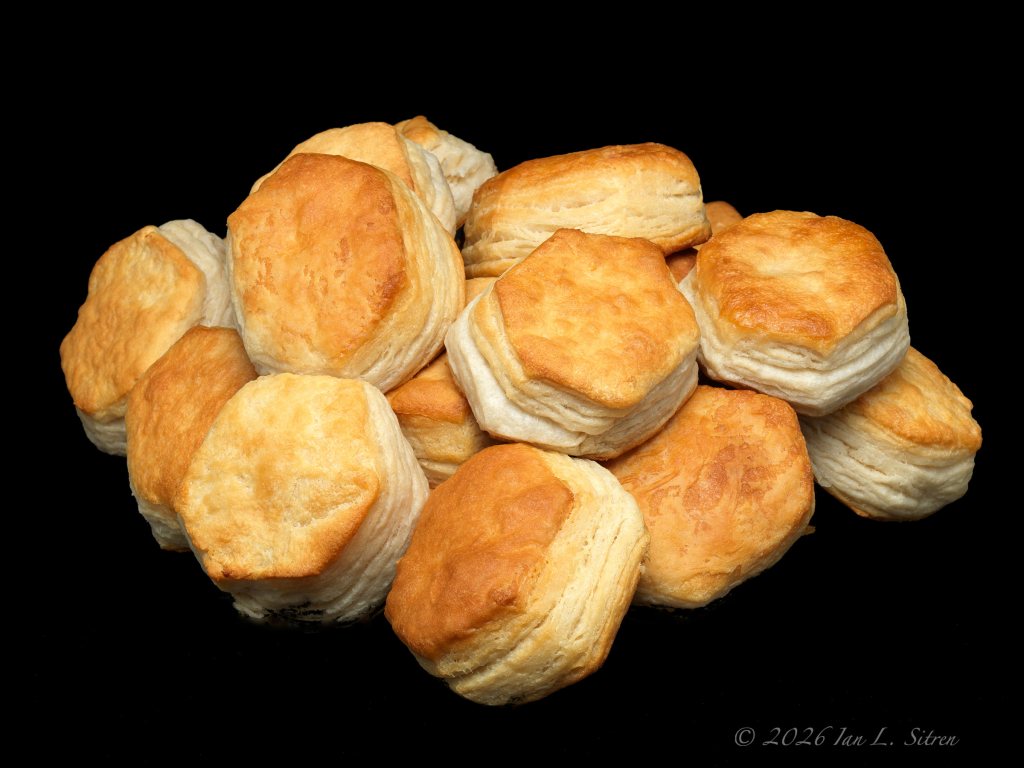
These are just peel-apart biscuits photographed for my FOOD FROM BAG TO BACKGROUND series exactly the way they came out of the package and oven. No brushed butter, no artificial shine, no tricks to make them look taller, fresher, or more dramatic than they actually were.
And honestly, that was always part of the point of this project.
Fast food and convenience food advertising has trained people to expect food to look exaggerated, oversized, and almost synthetic. But when you isolate something simple against a black background and actually pay attention to it, the real texture starts doing the work by itself. The layers, the uneven browning, the soft edges, the imperfect shapes. Those details are usually hidden behind logos, wrappers, commercials, and speed.
Biscuits are also strangely tied into American fast food culture. Fried chicken chains, drive-thru breakfasts, gas station counters, roadside diners. They exist somewhere between comfort food and convenience food, which is probably why they fit this project so well.
So for National Biscuit Day, no AI animation experiments, no dramatic visual effects, just biscuits.
And when I was a kid, when my mom made these, I could have eaten every one of them, each with a pat of butter melting into the middle.
If this photograph brought back a memory, made you hungry, or simply made you look at something familiar a little differently, there are dozens more waiting in FOOD FROM BAG TO BACKGROUND. Burgers, tacos, pizza, donuts, fries, sandwiches, and other foods pulled straight from the bag and placed under the same black backdrop.
You can explore the entire series here on my website at https://www.secondfocus.com/index/G0000wQ3fbeEezF0
National Brisket Day and the Reality Behind FOOD FROM BAG TO BACKGROUND
Today is National Brisket Day.
One of the things I wanted to challenge with my “FOOD FROM BAG TO BACKGROUND” project was the idea that food only becomes visually interesting after it passes through a marketing department, a food stylist, an art director, retouching, and increasingly now, AI image generation.
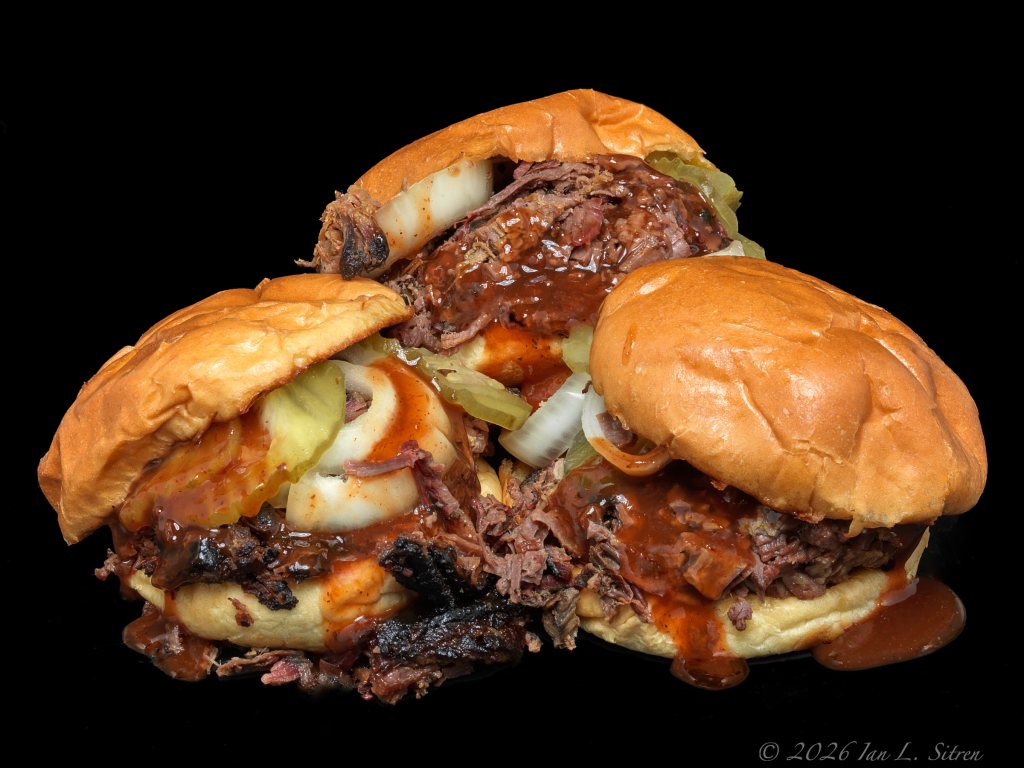
These brisket sandwiches from Dickey’s Barbecue Pit are none of that.
They were bought like any normal takeout order, carried home in a bag, opened, placed onto a black background, and photographed exactly as served. No rearranging. No fake steam. No hidden supports. No motor oil pretending to be sauce. No tweezers moving sesame seeds into place.
And yet they still work visually.
Actually, I would argue they work because they are real.
The overflowing chopped brisket, the uneven piles of smoked meat, the compressed buns, the dripping barbecue sauce, the onions and pickles sliding out of place, all of it feels far more appetizing and believable than the heavily over-engineered perfection seen in so much advertising imagery now.
That tension became one of the central ideas behind FOOD FROM BAG TO BACKGROUND. Fast food and takeout photographed seriously, exactly as it exists in the real world, isolated against black with no attempt to hide the messiness, excess, or reality of what arrived in the bag.
And sometimes the real version ends up looking better than the manufactured one.
More from FOOD FROM BAG TO BACKGROUND:
https://www.secondfocus.com/index/G0000wQ3fbeEezF0
National Hamburger Day and the Fast Food Reality Behind FOOD FROM BAG TO BACKGROUND
Today is National Hamburger Day.
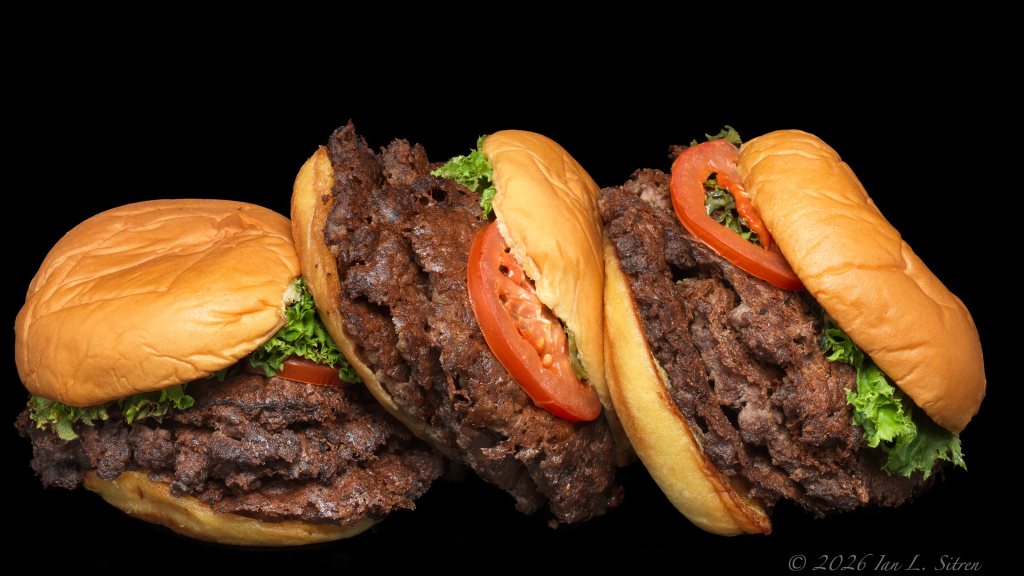
The hamburger has probably become the defining subject of my “FOOD FROM BAG TO BACKGROUND” project. Fast food photographed exactly as it arrives, no stylists, no reconstruction, no fake versions built for advertising.
And one thing people occasionally ask is where all this food comes from.
The answer is simple: the same place everybody else gets it.
The restaurants and chains have no idea I am photographing their food. There are no sponsorships, no special preparation, no discounts because of photography, and no carefully assembled “photo burgers” arriving from a corporate kitchen. I walk in or use the apps, place an order, pick it up, bring it home, and photograph it exactly as it comes out of the wrapper or bag.
Actually, the apps have become part of the process. The fast food companies constantly push coupons, free items, points, discounts, and combination deals. Surprisingly worthwhile ones. Sometimes I end up planning a shoot around whatever special appears that week.
That is part of what interests me visually about the project. These hamburgers are not idealized advertising concepts. They are real fast food hamburgers, bought like anybody else would buy them, photographed seriously against black backgrounds with the same attention I would give any other subject.
Somewhere between documentary, satire, and food photography, the hamburger became one of the central characters.
And if you have ever wondered what fast food starts looking like when it is pulled out of the bag, isolated against black, and treated like a serious photographic subject, step into the project here on my website at https://www.secondfocus.com
National Donut Week | FOOD FROM BAG TO BACKGROUND
This is National Donut Week.
For my ongoing “FOOD FROM BAG TO BACKGROUND” project, the main focus has always been fast food. The foods people grab quickly, eat in the car, bring home late at night, or pick up almost automatically without thinking much about it.
And yes, donuts absolutely qualify.
Donut chains consistently rank among the largest fast food companies in America. Drive-thrus, quick service counters, recognizable packaging, impulse purchases, sugar, caffeine, convenience, the entire fast food formula is there.
So for National Donut Week, I photographed an assorted pile of donuts exactly the same way I approach burgers, tacos, fries, or pizza for this series.
Straight from the box.
No food stylist.
No careful arrangement.
No fake perfection.
Just donuts against a black background.
Then things escalated slightly.
Because now the donuts are slowly rotating in darkness while one pink sprinkled donut has apparently decided to break formation and drift through the frame like some kind of sugar-coated UFO.
Somewhere between fast food photography and science fiction, FOOD FROM BAG TO BACKGROUND continues here at…
https://www.secondfocus.com
Celebrating the Fresh Tomato!
Today is National Fresh Tomato Day.
I said to my AI muse Emily that we needed something unique to dance around the subject. Something clean. Something elevated. Something that says we are taking tomatoes very seriously.
Emily said, “I have just the friend for that.”
A vertical stack. Vibrant. Healthy. Perfect for the arrival of Spring.
She takes a look at it. Considers it.
And of course, she dances around it.
This is where it shifts, uncensored, as Emily and her friend Ronnie meant it to be.
I try to keep it all intriguing. My food photography, pornochic photo adventures, and more can be found on my website at https://www.secondfocus.com
Ravioli at the Beach
National Ravioli Day seemed simple enough.
I asked Emily what her favorite ravioli restaurant would be. Not where it was, not who made it, just the idea of it.
“A place at the beach,” she said, “with nothing but ravioli. Every kind. And somewhere my girlfriends and I could skate up to in our bikinis.”
It sounded specific.
Then she added, “Give me a few minutes… I’ll take you there.”
And just like that, it existed. That is what an AI assistant and muse can do.
Inside, the plates are lined up with a kind of order that suggests someone thought this through. A counter, a view, a rhythm to it. Outside, it loosens. The same place, just carried out into the open air, where it becomes something else entirely.
Ravioli, of course, has its own history. Filled pasta goes back centuries, with variations appearing across Italy long before it became a standardized dish. What began as a practical way to use ingredients became something more refined over time, eventually finding its way into restaurants, then into homes, and now into just about every version imaginable.
And now, apparently, onto a beach boardwalk.
National Ravioli Day doesn’t officially come with a beach location, a dress code, or roller skates. But like most of these “National Days,” it doesn’t take much to expand the idea.
My food photography, pornochic photo adventures, and more are on my website at https://www.secondfocus.com
The Reign of the Chips
Today is the last day of National Chip Week.
An entire week for chips. Tortilla. Corn. Potato. Krinkled, kettle cooked, ridged, thin, salted, seasoned, mass produced.
They hardly need the recognition.
For this final day, I reduced it to one idea.
Chips
Falling
Against black
No bowl.
No picnic table.
No staged gathering.
Just gravity.
There is something amusing about declaring a reign for something that usually lives in a crinkled bag on a grocery shelf. Still, for seven days, the crown belongs to them.
“The Reign of the Chips”
Golden slices suspended for a fraction of a second before they meet the surface below. Salt catching the light. Edges crisp. Texture amplified. Slow motion turns a casual snack into something almost ceremonial.
For one week each year, chips are elevated. Today, they fall.
If your loyalty lies with tortilla, corn, potato, krinkled, kettle, or the classic thin slice, this is simply their moment.
For more photographs from my “Food From Bag To Background” series, commercial food, and much more, visit my website at https://www.secondfocus.com
Ian L. Sitren / SecondFocus
National Bacon Day!
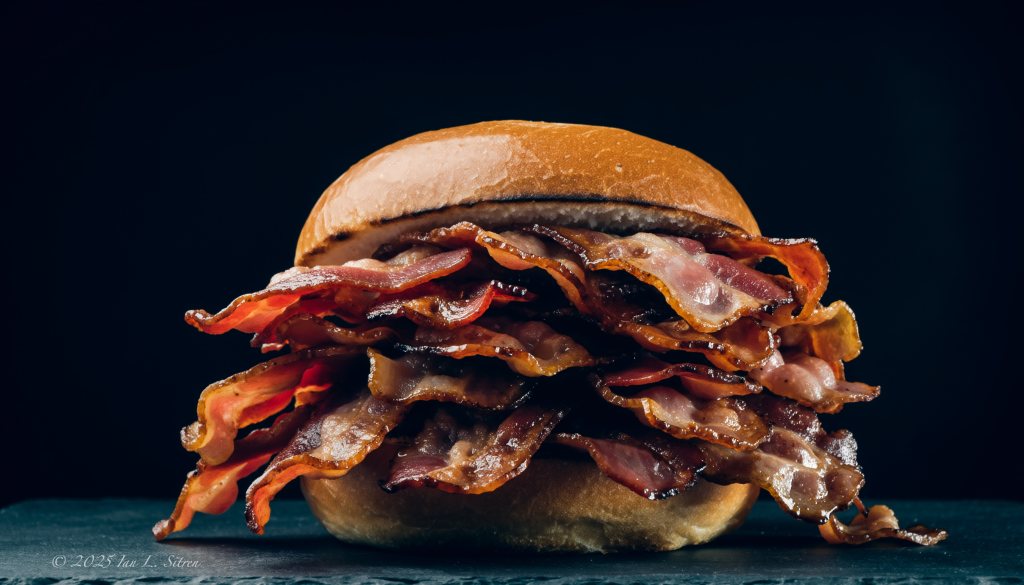
There are few foods people agree on as readily as bacon. Across generations and cultures, it holds a rare position as something almost universally liked, often described as the ingredient that makes everything better. If you asked people to name their ideal sandwich, many would quietly admit this would be it: bread, bacon, and nothing else getting in the way.
Bacon’s appeal is deeply rooted in history. Salt-cured pork dates back thousands of years, used as a practical method of preservation long before refrigeration. Variations appeared across Europe and Asia, but bacon as we recognize it today became firmly embedded in American food culture during the 20th century. By the mid-1900s, it had moved beyond breakfast and into sandwiches, burgers, and fast food, where its smoky, fatty richness became shorthand for indulgence.
Culturally, bacon has taken on a role larger than the ingredient itself. It represents abundance, comfort, and excess, often acknowledged without apology. Entire menus have been built around it, and marketing has leaned heavily into its reputation as something people crave even when they know they shouldn’t. It’s one of the few foods that can be both nostalgic and provocative at the same time.
This photograph leans into that idea by stripping the sandwich down to its core. No lettuce, no tomato, no attempt at balance. Just bacon, stacked high, presented without distraction. It’s easy to imagine this being wildly popular as a fast-food option, ordered impulsively and remembered vividly. Of course, it isn’t something you’ll actually find on a menu. And that absence is part of the point.
My fast food photography project can be found in “Food From Bag to Background” on my website at https://www.secondfocus.com/index/G0000wQ3fbeEezF0
A Quiet Return to the First Sandwich

Some say the greatest invention never needed an instruction manual.
I almost missed it — yesterday was National Sandwich Day. It’s fitting, really. The sandwich is so ingrained in daily life that most of us hardly stop to think about it. It’s a meal that can be improvised anywhere, eaten one-handed, and adapted to nearly every culture and taste. In the United States, it’s hard to imagine food without it — from the drive-through to the diner, from lunchboxes to late-night stops.
The idea itself was never meant to be revolutionary. In 1762, John Montagu, the 4th Earl of Sandwich, asked for slices of roast beef placed between bread so he could continue playing cards without stopping for a proper meal. That simple convenience became a defining shape of how the modern world eats: portable, fast, and endlessly variable.
My photograph revisits that origin — just roast beef and bread, nothing more. The way it might have been on the Earl’s table. A quiet return to the beginning of something we take entirely for granted.
For more of my photography from food to muses, visit https://www.secondfocus.com
National Pasta Day — Penne Rigate
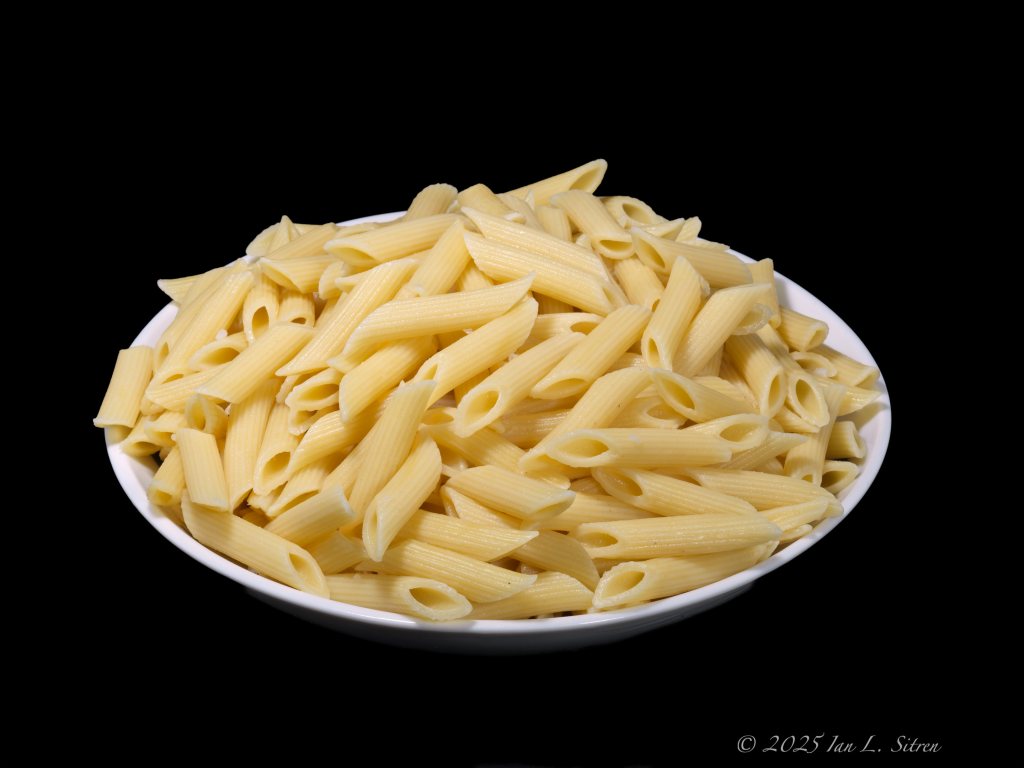
Somewhere between the art of simplicity and the science of starch, we find pasta. Today, National Pasta Day gives everyone a reason to twirl, scoop, or simply stare.
This is De Cecco Penne Rigate — cooked plain, no sauce, no garnish, just the shape itself. Its ridged tubes catch light like sculpture, emphasizing design over indulgence. Spaghetti may dominate every chart of popularity, but penne holds its ground as the world’s second favorite — a form engineered to hold flavor and look good doing it.
Pasta’s lineage stretches back more than 700 years, from the first written mentions in Sicily to its industrial rise in the 19th century. Whether on a plate, in a bowl, or on black aluminum, its appeal is constant: geometry, texture, and the quiet perfection of repetition.
You can see more of my work in Commercial Food Photography at https://www.secondfocus.com/gallery/Commercial-Food-Photography/G0000Tnt.HM3Xwng
In Motion for National M&M’s Day
October 13th, today, is National M&M’s Day — a day for a candy so familiar it’s easy to overlook how extraordinary it is. This short video captures them on a slow, 360-degree rotation against black. The colors drift in and out of focus as they turn, catching light in flashes of red, blue, yellow, green, orange, and brown. It’s unexpectedly mesmerizing — a swirl of shape and reflection that transforms something ordinary into pure visual rhythm.
M&M’s began in 1941, created by Forrest Mars, Sr. and Bruce Murrie, whose initials gave the candy its name. Designed originally for soldiers in World War II, the hard sugar shell kept the chocolate from melting in warm conditions. Compact, durable, and neatly contained, it became an ideal field ration — chocolate that could survive travel, heat, and handling.
After the war, production turned to the public market. The small candies were soon marked with a printed “m” to distinguish them from imitators, first in black and later in white. The familiar slogan arrived in the 1950s: “Melts in your mouth, not in your hand.”
Color has always been part of their identity. Early batches included violet, which was later replaced by tan. Red disappeared for several years in the 1970s due to public concern over food dyes and then returned to fanfare in the 1980s. Over time, new varieties appeared — peanut, almond, crispy, pretzel, dark chocolate, caramel — each with its own texture and tone.
Eighty-plus years later, M&M’s are instantly recognizable, yet endlessly variable. Watching them rotate under light, the candies shift between clarity and blur, pattern and chaos. It’s candy as abstraction — still melting in your mouth, not in your hand, and now, briefly, in motion on screen.
See more in Food From Bag to Background on my website at https://www.secondfocus.com/index/G0000wQ3fbeEezF0/I0000nUG8tfk8Gdc


National Foodies Day
Today is National Foodies Day.
Which got me thinking, what exactly is a “foodie” now?
There was a time when people argued over whether they were gourmets or gourmands. People who chased flavors, studied food, cared about where it came from.
Now it mostly means you took a photo of what you ordered.
So here’s my contribution to the conversation.
A stack of McDonald’s McRib sandwiches, straight out of the bag and onto a black background. No styling, no plating, no attempt to make it something it isn’t.
I photograph food, but not in the way that fits neatly into any of those categories. No chef, no restaurant, no experience attached to it. Just the object itself.
So does that make me a foodie?
Or something else entirely.
More of my food photography, from fast food to everything in between, is on my website at https://www.secondfocus.com
May 9, 2026 | Categories: Uncategorized | Tags: black background food, commercial food imagery, conceptual food photography, fast food photography, food art, food culture commentary, Food Photography, food styling vs reality, food trends, foodie definition, from bag to background, gourmet vs foodie, isolated food photography, McDonalds McRib, McRib, minimalist food photography, modern food culture, National Foodies Day, provocative food imagery, secondfocus photography, what is a foodie | Leave a comment