International Waffle Day Today, From Eggo to Everything Else
Most people don’t think twice about waffles. But they probably should.
Because somewhere between a homemade Belgian waffle and a frozen Eggo waffle, something distinctly American happened.
My version today starts in the freezer.
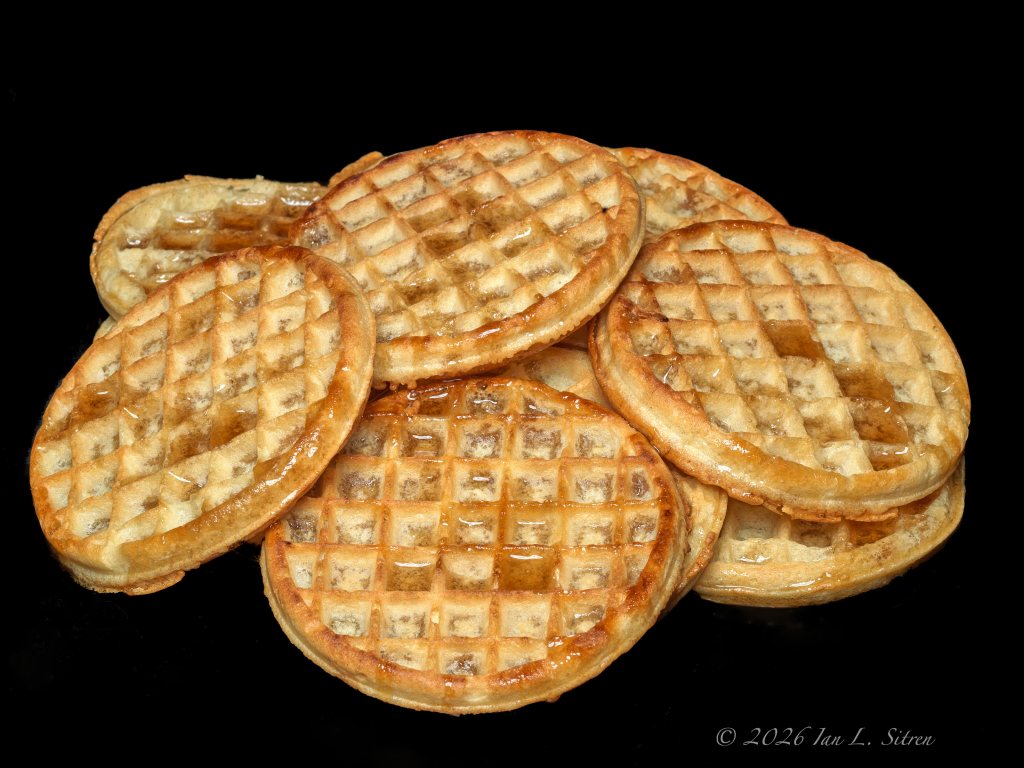
A stack of Eggo waffles, heated, finished with syrup, and placed onto a black background. No garnish, no pretense. Just the product, exactly as it shows up in kitchens across the country.
Eggo waffles date back to the 1950s, originally created by brothers Frank, Anthony, and Sam Dorsa. They were first called “Froffles”, a combination of frozen and waffles, before the name Eggo took over. By the 1970s, the brand became a staple in American households, helped along by a simple idea, waffles without the work.
But waffles themselves go much further back.
Early versions trace to medieval Europe, where patterned irons were used to cook thin batter between heated plates. By the time Belgian waffles were introduced to the United States at the 1964 New York World’s Fair, waffles had already evolved into something more refined, lighter texture, deeper pockets, and often served with fruit, cream, or powdered sugar.
Today, the spectrum is wide.
On one end, you have carefully plated waffles in restaurants, topped with berries, whipped cream, and sauces, presented as something closer to dessert than breakfast.
On the other, you have this.
Straight from the freezer, into the toaster, onto the plate.
And that may be the more honest version.
No ceremony. No reinvention. Just something quick, familiar, and widely understood.
That’s where my food photography, pornochic photo adventures, and more can be found on my website at https://www.secondfocus.com
National Hash Brown Day
Today is National Hash Brown Day, which seems like a perfectly reasonable excuse to cook a pile of them.
Hash browns have been part of the American breakfast for more than a century. The name comes from the French word “hacher”, meaning to chop. In the late nineteenth century restaurants began serving what were called “hashed brown potatoes,” chopped or shredded potatoes fried until crisp. They appeared on hotel breakfast menus and quickly spread to diners and restaurants across the country.
The modern hash brown patty, however, is a much newer development.
Many people associate the familiar patty with McDonald’s, where the crisp rectangular hash brown became one of the most recognizable breakfast sides in America.
But the frozen food industry actually got there first.
In the 1960s frozen potato company Ore-Ida introduced frozen hash brown patties as part of the expanding frozen convenience food market. Shredded potatoes were formed into patties that could go directly from the freezer to the oven or pan. When McDonald’s launched its national breakfast program in the early 1970s, the frozen patty format worked perfectly for restaurant kitchens and quickly became associated with the chain.
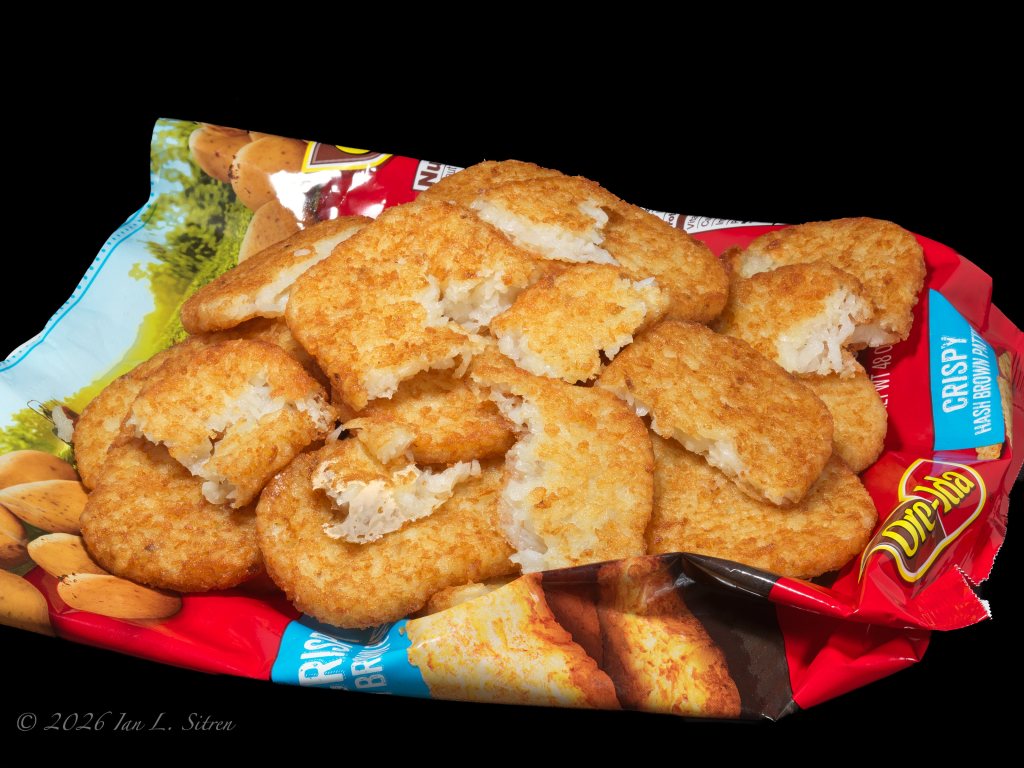
For this photograph I cooked a batch of frozen hash brown patties and piled them onto their packaging, a small nod to their frozen food origins. A few broken pieces reveal the soft shredded potato interior beneath the crisp exterior.
Not bad for something that started as chopped potatoes in a hotel kitchen and ended up in the frozen food aisle.
You can see more of my Commercial Food Photography on my website at…
https://www.secondfocus.com/index/G0000WFAqDJQOgKU
National Bagel and Lox Day
Today is National Bagel and Lox Day, centered on one of the most enduring deli combinations: a bagel layered with cream cheese and lox. I have always known this as Lox and Bagels and Cream Cheese. I do not know where it got reversed in the title for the “Day Of”. Also it appears on product labels as “Smoked Salmon”. I didn’t know Salmon smoked.
The word lox comes from the Yiddish laks, itself rooted in Scandinavian words for salmon. Long before refrigeration, salmon was cured with salt as a way to preserve it, resulting in the rich, silky fish that became a staple in Jewish deli culture after Eastern European immigrants arrived in the United States. Smoked and cured fish traveled well, kept reliably, and paired naturally with bread and dairy.
Over time, the bagel and lox became a deli favorite, especially in cities like New York, where appetizing shops specialized in cured fish, cream cheese, and bagels baked daily. It evolved into a familiar breakfast and brunch standard, still tied closely to tradition.
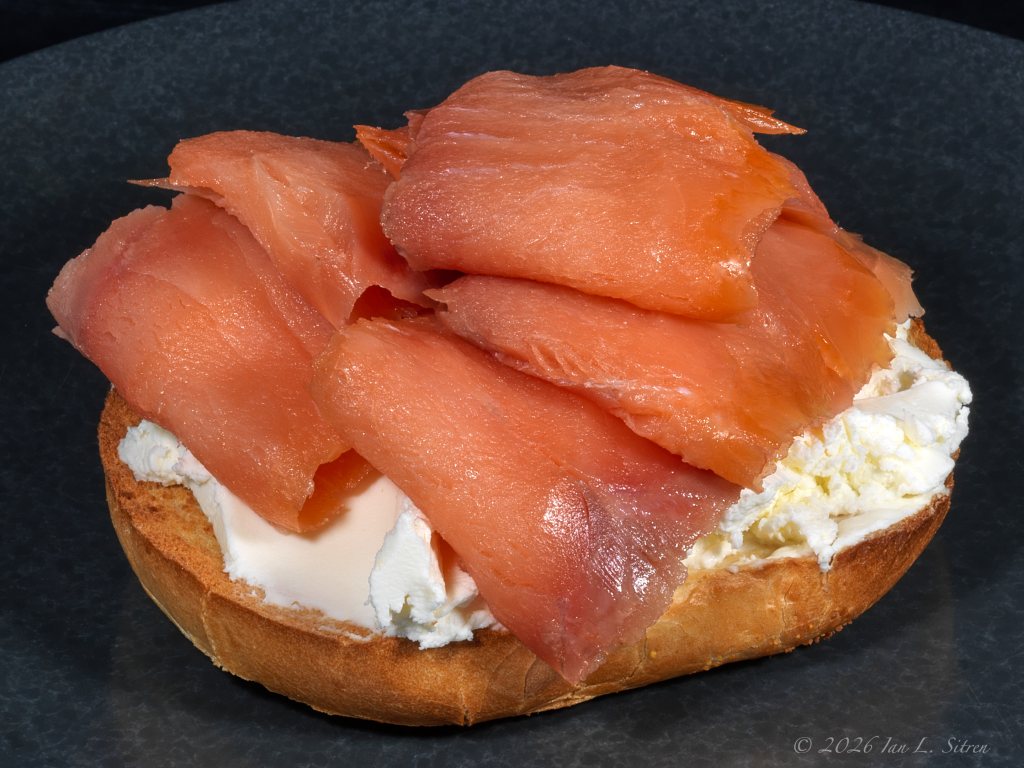
This is how those of us who love it would prefer it: a bagel, cream cheese spread thick, and lox stacked high. So that is how I made it. Red onion sliced thin on the side, but I will photograph that by itself.
You can see more food photographs in my Commercial Food Photography gallery here:
https://www.secondfocus.com/index/G0000WFAqDJQOgKU
National French Toast Day Fast!

Today is National French Toast Day, and I wanted to photograph something that fit the way I shoot food, especially fast food. So instead of the usual bread, eggs, and frying pan, I went looking for a version that lined up with my approach.
That search took me to the freezer aisle and to something I didn’t know existed: boxed French toast sticks. Straight from the oven and onto a plate, they matched my black-background style with no styling and no extras. Looks like fast food to me.
French toast itself goes back centuries. Versions of it appear in early European cookbooks as a way to use leftover bread, long before it became a diner and home-kitchen staple in the United States. The idea has stayed the same: bread soaked in egg and cooked until crisp on the outside and soft inside.
There is much more food to see on my website at SecondFocus.com Thanks!
National Bacon Lovers Day
Today is National Bacon Lovers Day, the unofficial holiday where logic takes a back seat and bacon worship takes center stage. People put it on donuts, add it to milkshakes, and even buy bacon-scented candles just to keep the smell lingering. Entire restaurant menus have been built on the premise that if you slap bacon on it, people will line up. If aliens tuned into Earth’s food culture, they’d probably assume bacon was our national currency.
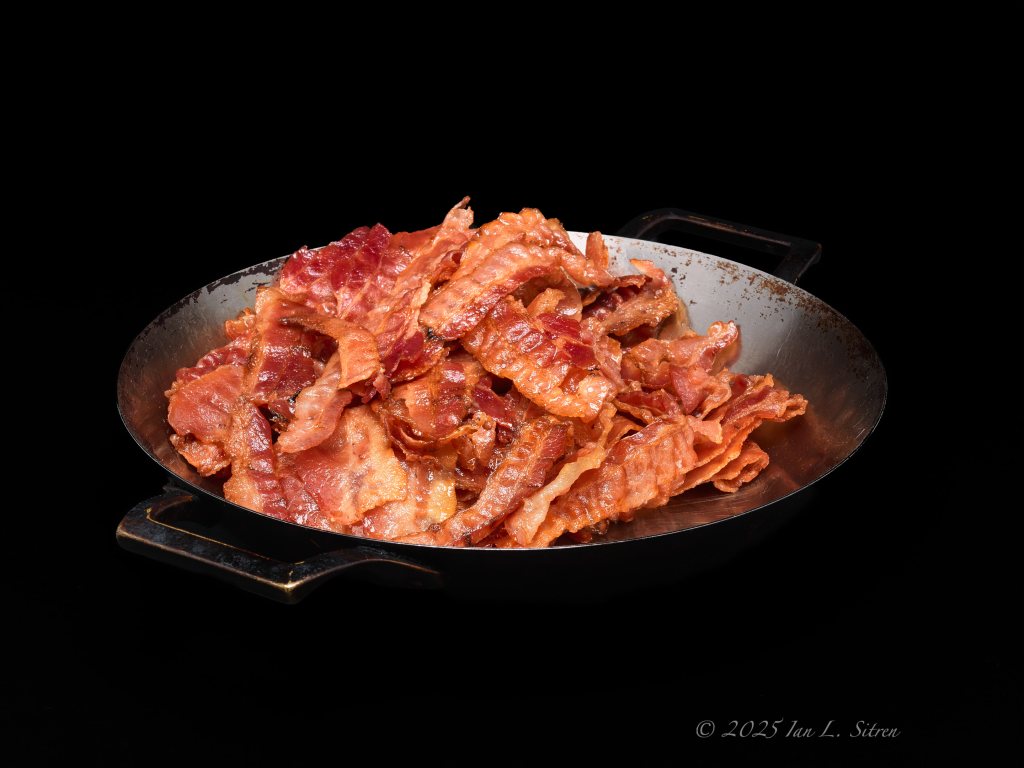
This photograph presents a generous pile of bacon arranged in a metal pan against my signature black background. Each strip, glossy and rippled, catches the light in a way that emphasizes both texture and indulgence. It’s less about restraint and more about the abundance that makes bacon an enduring favorite.
From diners and drive-thrus to fast food chains with signature creations like the Wendy’s Baconator or the Jack in the Box Ultimate Bacon Cheeseburger, bacon continues to hold its own as a cultural staple. National Bacon Lovers Day is the moment to acknowledge that popularity — and perhaps to ask whether there can ever be too much bacon.
You can see this and more in my Commercial Food Photography gallery:
https://www.secondfocus.com/index/G0000WFAqDJQOgKU
Today is International Waffle Day!

My photograph of Eggo waffles, arranged in a casual stack and drizzled with maple syrup. The waffles are straight from the freezer, oven toasted, and set against a black background—no styling, no props, just the familiar grid pattern and glossy syrup doing what they do.
Waffles date back to medieval Europe, but Eggo brought them to American freezers in 1953. Invented by Frank Dorsa in San Jose, California, they were originally called “Froffles.” When people started asking for “those egg waffles,” the name changed to Eggo. Dorsa also built a machine to mass-produce them—an early example of kitchen innovation meeting industrial design. By the 1970s, “L’eggo my Eggo” had taken hold.
More in my “From Bag to Background” gallery at http://SecondFocus.com Thanks!
 SecondFocus Blog