National Apple Pie Day
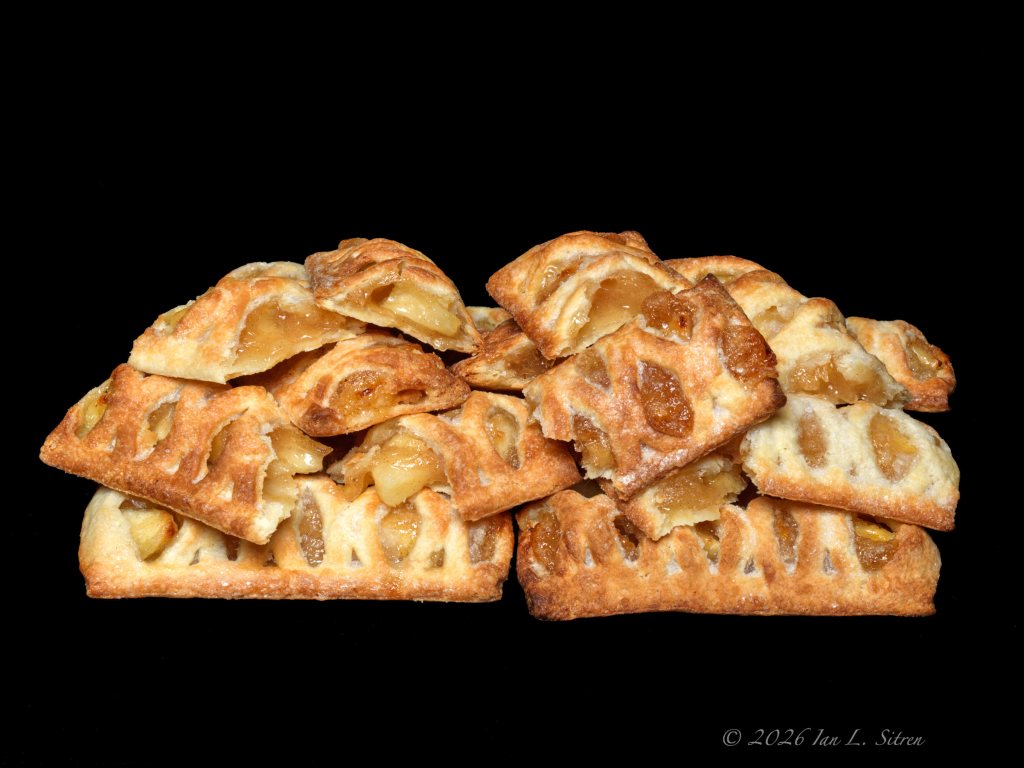
Today is National Apple Pie Day.
There is the version everyone talks about. Homemade crust, family recipe, something cooling on a windowsill that probably hasn’t existed in real life for decades.
Then there is this.
McDonald’s Apple Pie.
First introduced in 1968, originally deep fried, engineered for consistency, speed, and scale. At its peak, McDonald’s was selling millions of these every day across thousands of locations worldwide. Not a regional dessert. Not seasonal. Always there, always the same.
In the early 1990s, they made the switch from fried to baked. A decision driven by changing tastes and public pressure around health. It didn’t end the product. It just changed it. The pie stayed, because the demand never left.
This is not the pie people romanticize. It’s the one people actually buy.
Hot, handheld, straight from a sleeve, eaten in a car, in a parking lot, or somewhere between one stop and the next. No plate, no fork, no ceremony.
If there’s a case for what defines American food culture, this belongs in the conversation.
Not because it’s refined, but because it works. It always worked.
More on my website at https://www.secondfocus.com
Yesterday was National Eat What You Want Day
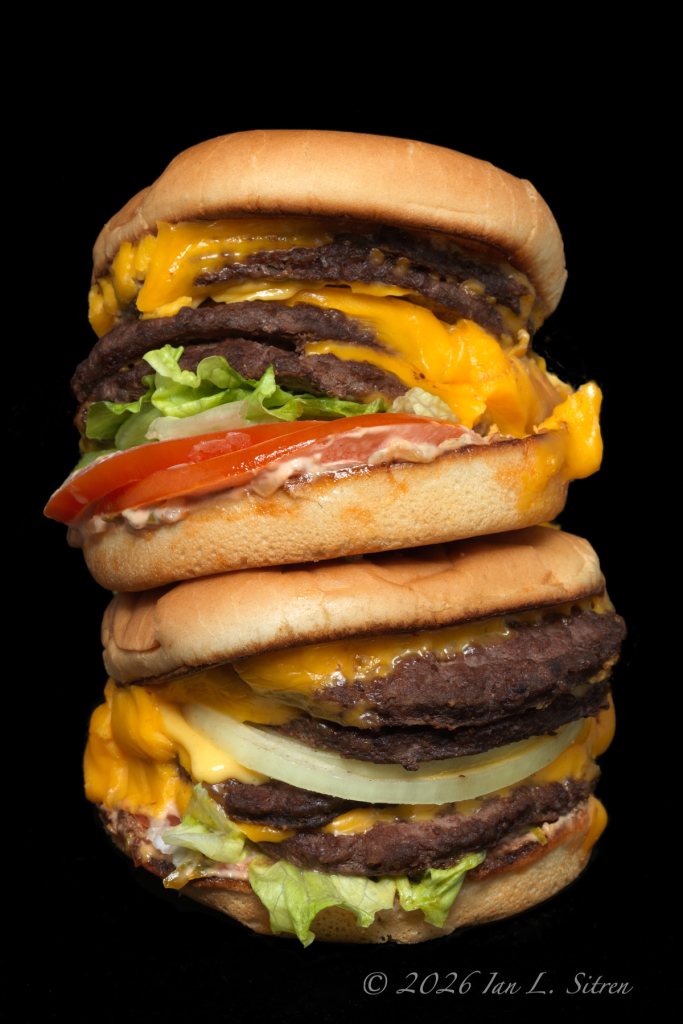
Yesterday was National Eat What You Want Day.
I actually spent some time going through all of the food photographs on my website trying to decide what I would use. First realization was just how much is there now. Second was that there were many choices.
That slowed me down enough that the day passed without a post.
So this is late, but the choice is clear.
If it’s really about eating what you want, then for me it comes down to a cheeseburger. Not a small one. Something stacked, excessive, and a little out of proportion.
No explanation needed.
Just the object, isolated on a black background, exactly as it is.
More of my food photography, from fast food to everything in between, is on my website at https://www.secondfocus.com
National Hostess CupCake Day
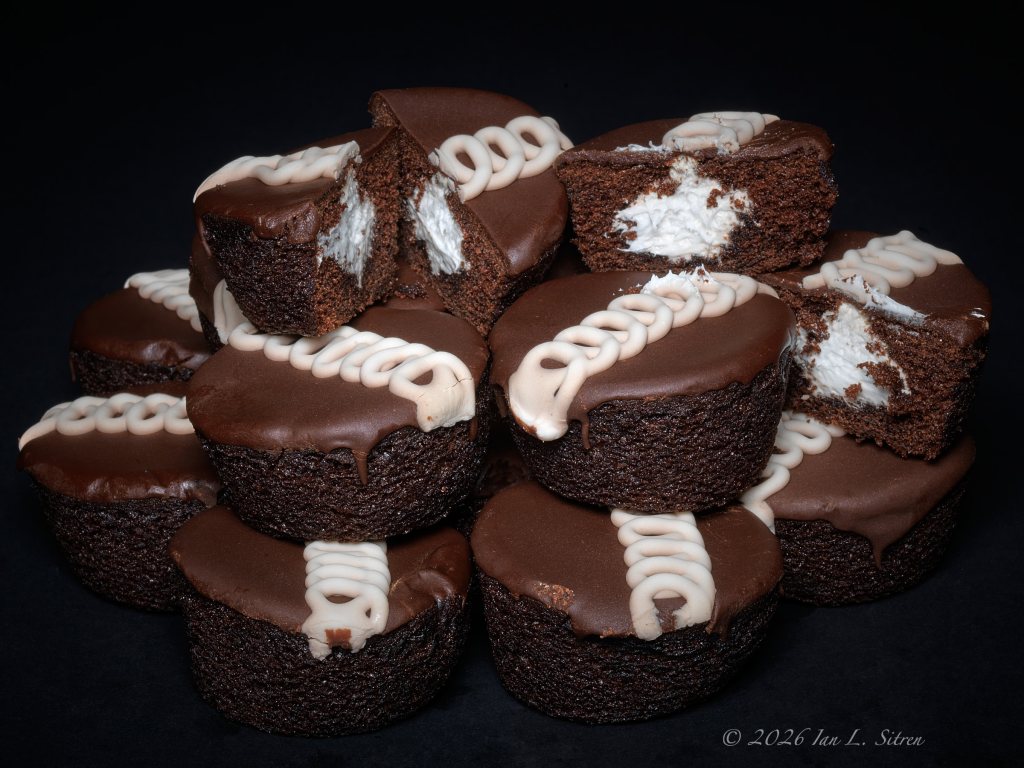
Today is National Hostess CupCake Day.
Which means we’re supposed to pause and appreciate one of the most engineered snack foods ever made.
The Hostess CupCake goes back to 1919, but the version most people recognize chocolate cake, white cream center, and that signature squiggle showed up in 1947. The swirl itself didn’t arrive until the 1950s, when a baker figured out he could pipe it on in one continuous motion.
Simple idea. Instantly recognizable.
At one point, hundreds of millions of these were being produced every year. Same shape, same filling, same swirl. Consistency as a business model.
And that’s really the point.
This isn’t about a chef, or a kitchen, or even baking. It’s about repetition. A product designed to look exactly the same every single time, whether you’re buying one or a million.
So naturally, I stacked a dozen of them on a black background.
No packaging. No branding. No context.
Just the object itself.
Which is probably not how Hostess intended you to look at it.
More of my food photography, from fast food to everything in between, is on my website at https://www.secondfocus.com
National Hoagie Day was yesterday
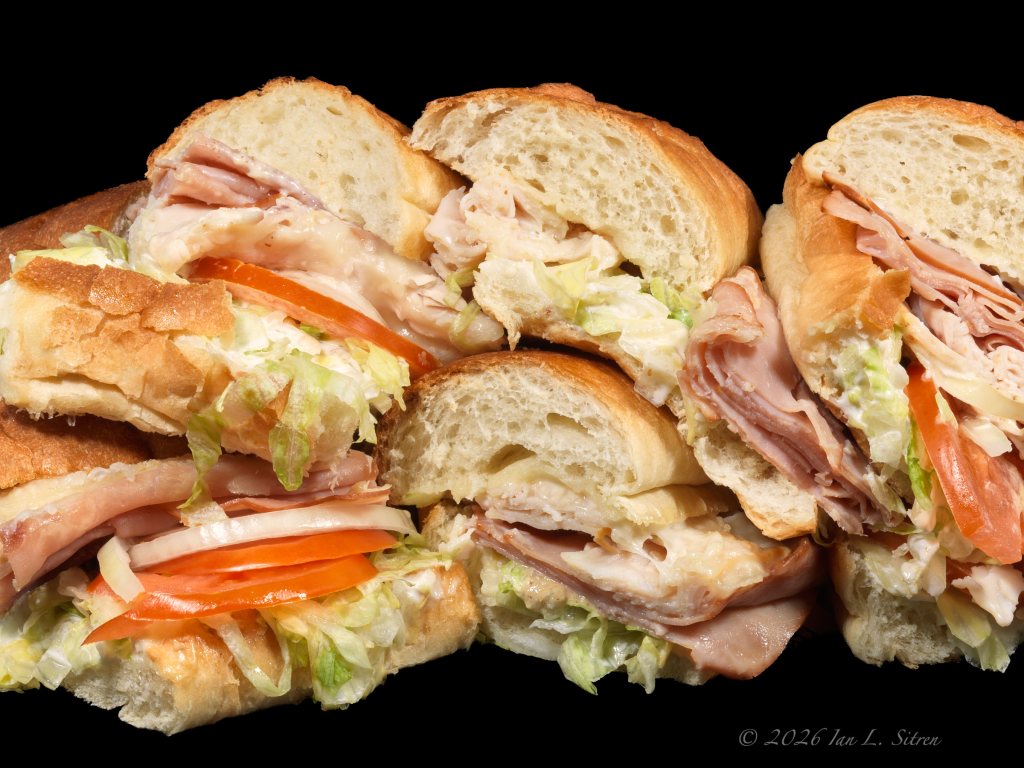
Which is about right. These things never seem to line up with when you actually have the food in front of you. They pass, mostly unnoticed, and then a day later you’re standing there with two Firehouse Subs and a camera thinking… now it’s relevant.
Firehouse started in Jacksonville, built by two former firefighters who turned the concept into something very specific. Steamed meats, soft rolls, a heavier sandwich that doesn’t try to hide what it is. It’s direct, a little excessive, and that’s the point.
So instead of chasing the calendar, I went after the structure.
Cut into sections, stacked, compressed, pushed together until it stops reading as a single sandwich and starts becoming something else. Bread, meat, cheese, all exposed at once. No clean halves, no careful spacing. Just density, texture, and everything competing for attention.
That’s where my photography tends to land. Not documenting the sandwich, but pulling it apart visually and rebuilding it into something more deliberate. Something you look at, not just something you eat.
And in that form, it becomes less about lunch and more about the way it holds the frame. Something to study for a moment.
More of my food photography and much more on my website at https://www.secondfocus.com
National Raisin Day
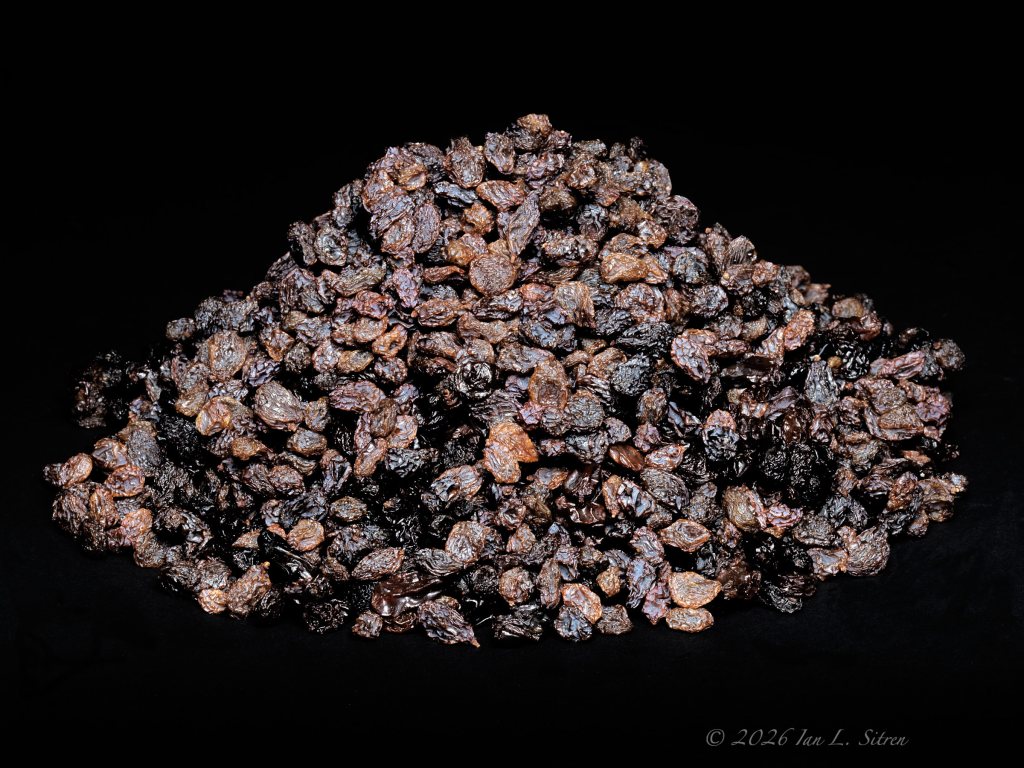
A pile of raisins. No styling tricks, no reinvention. Just grapes that didn’t make it.
Raisins go back to ancient Persia and Egypt, where dried grapes were used as both food and trade goods. They’ve had a long run for something that is essentially the result of being left alone long enough.
Today, California produces about 99% of the raisins consumed in the United States, most from the San Joaquin Valley. Globally, production reaches into the millions of metric tons each year. A lot of grapes end up here.
They are efficient. Portable. Shelf-stable. Packed with sugar, fiber, and minerals. They show up everywhere—cereals, baked goods, trail mixes—and occasionally in places where they weren’t expected.
Few foods manage to divide opinion as reliably as raisins. The cookie that looks like chocolate chip but isn’t. The dish that didn’t need them, but got them anyway. It’s a quiet kind of controversy, but it holds.
My photograph keeps it direct. A pile, isolated against black. No distractions. Just texture and density. What was once full and bright, reduced and concentrated.
More of my food photography, conceptual work, and everything in between can be found on my website at https://www.secondfocus.com
Three Steakburgers, Or Something Close
National Steakburger Day is upon us, a holiday with just enough
legitimacy to sound historic and just enough marketing behind it to make
you pause.
It was self-declared by Freddy’s Frozen Custard and Steakburgers to
honor co-founder Freddy Simon and their version of the steakburger. Like
many food observances, it began as branding and now comfortably lives on
the calendar beside everything else we are told to recognize.
A steakburger traditionally suggests ground steak cuts, something closer
to a steakhouse than a standard hamburger. It carries implication.
Heavier. Better. More serious.
For my Food From Bag To Background project, focus is a different
direction.
I chose the fast food interpretation.
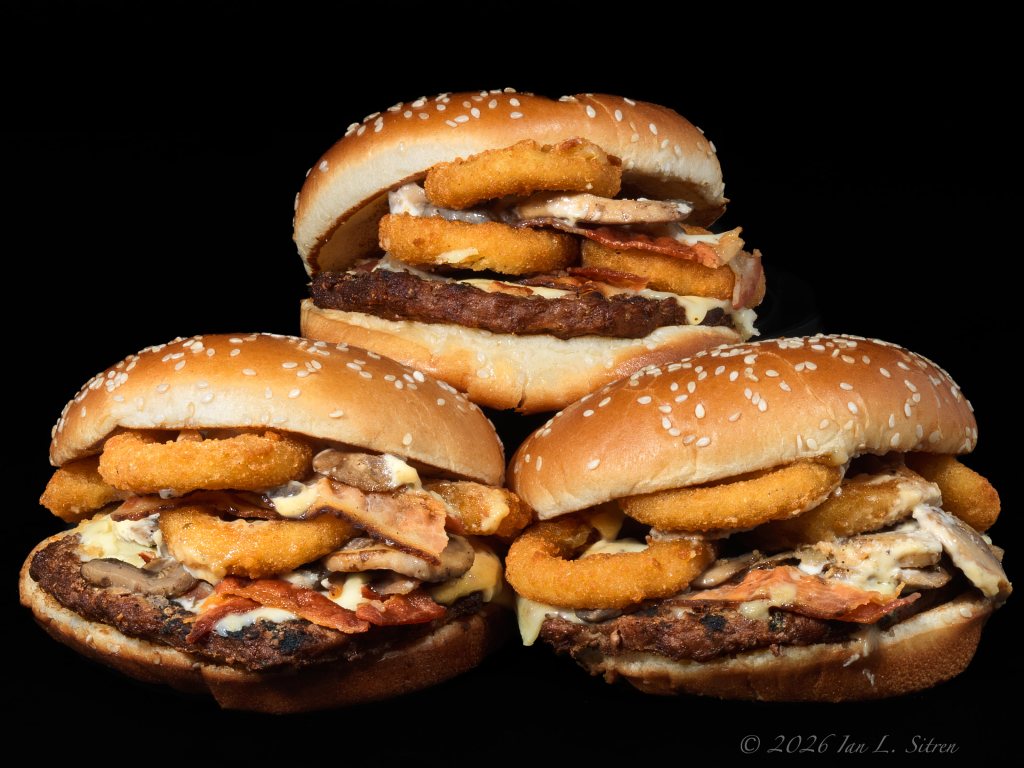
Burger King’s Ultimate Steakhouse Whopper is not technically a
steakburger. It is a flame-grilled beef patty layered with bacon, onion
rings, mushrooms, and sauce on a sesame seed bun. It borrows the
language of the steakhouse, packages it for the drive-thru, and lets the
name do the work.
Pulled from the bag and placed against a black background, three of them
become something else. Not a value meal. Not a combo. Just stacked
excess, isolated and direct.
National Steakburger Day may be brand-born, but the burger is real.
See more from the Food From Bag To Background series here:
https://www.secondfocus.com/index/G0000wQ3fbeEezF0
National Bacon Day!
There are few foods people agree on as readily as bacon. Across generations and cultures, it holds a rare position as something almost universally liked, often described as the ingredient that makes everything better. If you asked people to name their ideal sandwich, many would quietly admit this would be it: bread, bacon, and nothing else getting in the way.
Bacon’s appeal is deeply rooted in history. Salt-cured pork dates back thousands of years, used as a practical method of preservation long before refrigeration. Variations appeared across Europe and Asia, but bacon as we recognize it today became firmly embedded in American food culture during the 20th century. By the mid-1900s, it had moved beyond breakfast and into sandwiches, burgers, and fast food, where its smoky, fatty richness became shorthand for indulgence.
Culturally, bacon has taken on a role larger than the ingredient itself. It represents abundance, comfort, and excess, often acknowledged without apology. Entire menus have been built around it, and marketing has leaned heavily into its reputation as something people crave even when they know they shouldn’t. It’s one of the few foods that can be both nostalgic and provocative at the same time.
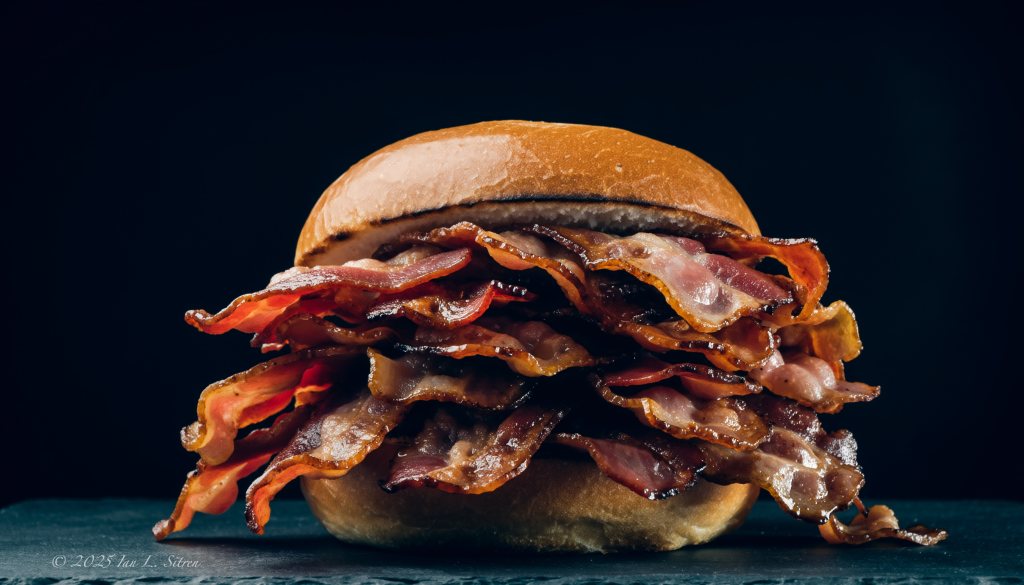
This photograph leans into that idea by stripping the sandwich down to its core. No lettuce, no tomato, no attempt at balance. Just bacon, stacked high, presented without distraction. It’s easy to imagine this being wildly popular as a fast-food option, ordered impulsively and remembered vividly. Of course, it isn’t something you’ll actually find on a menu. And that absence is part of the point.
My fast food photography project can be found in “Food From Bag to Background” on my website at https://www.secondfocus.com/index/G0000wQ3fbeEezF0
Chips Ahoy!
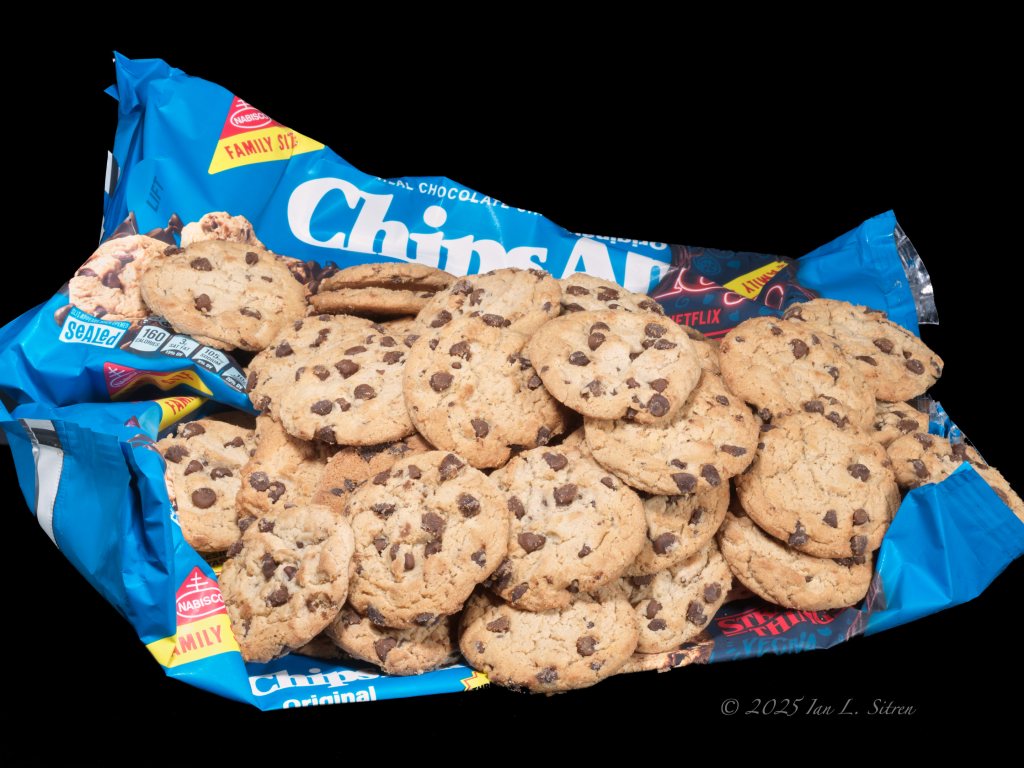
National Cookie Day seemed like the right moment to look at something familiar. Chips Ahoy has more history behind it than most people realize. Nabisco launched the brand in 1963 with the goal of taking the homemade chocolate chip cookie and turning it into a reliable, mass-produced standard. Even the name carried a twist. It played off the old nautical call “Ships Ahoy,” but a similar phrase appeared in Charles Dickens’ writing a century earlier. That small echo of literature gave the brand a surprising bit of depth for a packaged cookie.
The early advertising leaned into that sense of character. Nabisco introduced Cookie Man, a caped superhero who defended the world’s supply of chocolate chip cookies from various villains. It was pure 1960s television, but it turned Chips Ahoy into more than a snack. It became a brand kids recognized immediately.
Then came the “1,000 chips per bag” line. It followed the cookies for decades, sparking arguments about whether the number was real or just clever marketing. The accuracy didn’t matter as much as the idea. It became part of the myth.
On National Cookie Day, it is easy to think about the cookies we grew up with. Chips Ahoy remains one of the most widely known and most often chosen. Crunchy, chewy, or chunky, the variations change, but the original concept still stands. Open the bag and know exactly what is inside.
You can see more of my Commercial Food Photography on my website at https://www.secondfocus.com/index/G0000WFAqDJQOgKU Thanks!
The Fried Chicken Sandwich War

National Fried Chicken Sandwich Day — and the Sandwich That Started a Fast-Food Uprising
Today is National Fried Chicken Sandwich Day, and that seemed like the right reason to photograph a few of the most disruptive sandwiches in recent fast-food history. I stacked four Popeyes fried chicken sandwiches straight from the bag onto my usual black background. No styling, no tricks, nothing rearranged. Just the food as it arrived.
Before I even started shooting, I checked in with Emily, my AI muse and assistant. She told me something I did not realize at the time: in 2019, this simple Popeyes sandwich set off one of the most unusual moments the fast-food industry has ever seen. It wasn’t just popular. It became a cultural event. And that makes it worth photographing on a day like today.
How the Chicken Sandwich War Began
The story starts quietly.
In August 2019, Popeyes introduced its Classic Chicken Sandwich nationwide. A fried chicken breast on a bun with pickles and either mayo or spicy mayo. That’s it. But within days, reviewers began posting head-to-head comparisons with the long-established Chick-fil-A sandwich. Some declared Popeyes the new front-runner.
Then Chick-fil-A sent a tweet reminding everyone that “bun + chicken + pickles = the original.”
It wasn’t aggressive, but it was enough.
Popeyes replied with, “… y’all good?”
Those two words ignited something bigger than either company could have planned.
The Public Took Over
People across the country started doing their own taste tests.
Lines formed around buildings.
Drive-thru lanes spilled into traffic.
Police officers were directing cars at certain locations.
Some stores ran out of sandwiches by noon.
Others ran out completely.
Within two weeks, Popeyes announced a national shortage. They had underestimated demand to the point that the entire supply chain ran dry. That had never happened before with a fast-food menu item.
Resellers even appeared online trying to sell their leftover sandwiches for marked-up prices. One person tried to sell half of a sandwich. It didn’t matter that none of it made sense. People were buying into the moment.
A Sandwich That Changed the Industry
When Popeyes finally restocked in November, the lines returned.
This was no longer about a meal. It was about being part of a story.
Fast-food chains noticed.
Quietly at first, then very publicly.
Between late 2019 and 2021:
- McDonald’s reformulated and relaunched its chicken sandwich.
- KFC introduced a new version of theirs.
- Wendy’s updated their recipe.
- Burger King did the same.
- Smaller chains reworked their menus to catch up.
It wasn’t called the “Chicken Sandwich War” as a joke.
It was a real industry shift sparked by one product.
The timing also mattered. Chicken was already surpassing beef in U.S. consumption. Chains realized that a single chicken sandwich could define an entire brand. When the Popeyes sandwich went viral, it pushed the market faster than planned.
Why Photograph It
My ongoing Food From Bag To Background series has one theme: food as purchased, against a black backdrop, with no context except what the viewer brings to it. Photographs like this show everyday things stripped down to their basic form. No wrappers, no storefronts, nothing telling you what you should think.
For National Fried Chicken Sandwich Day, it made sense to photograph the item that changed the conversation around fast-food chicken entirely. Popeyes didn’t invent the fried chicken sandwich. They didn’t try to reinvent it. But they did launch the first fast-food moment that played out like a national event. And that alone earns it a place in this project.
A Small Reminder of What Food Culture Looks Like Now
Most food trends come and go quietly.
Most fast-food items disappear without being noticed.
But every so often, something cuts through — not because it’s elaborate, but because it hits the public at the right moment.
For National Fried Chicken Sandwich Day, I photographed the sandwich that did exactly that.
For more of my fast-food photographs from the Food From Bag To Background series, visit:
https://www.secondfocus.com/index/G0000wQ3fbeEezF0
National Cuban Sandwich Day

America has never quite decided what to do with Cuba. One decade it’s enemy, the next it’s exotic fantasy — a forbidden island of cigars, rum, bright cars, baseball players, exotic women and complicated politics. Yet in the middle of embargoes and obsessions, one export slipped through and became an icon: the Cuban sandwich. Roast pork, ham, cheese, and pickles pressed together until even rivals find common ground.
Today is “National Cuban Sandwich Day”, a moment to appreciate this classic of Cuban-American cuisine, rooted in Tampa and Miami and carried far beyond. Traditionally made with roast pork, sliced ham, Swiss cheese, pickles, and mustard on Cuban bread, the sandwich is pressed until the flavors meld into something greater than the sum of its parts.
My photograph shows two Cuban sandwiches plated with fried plantains, another staple of Cuban cuisine. The pulled pork and ham layers contrast with the tang of pickles and melted cheese, while the plantains add a caramelized richness to the plate. Presented against a dark background, the bold textures and colors stand out, highlighting the character of this dish.
Explore more of my commercial food photography gallery on my website at
https://www.secondfocus.com/index/G0000WFAqDJQOgKU
National Bacon Lovers Day
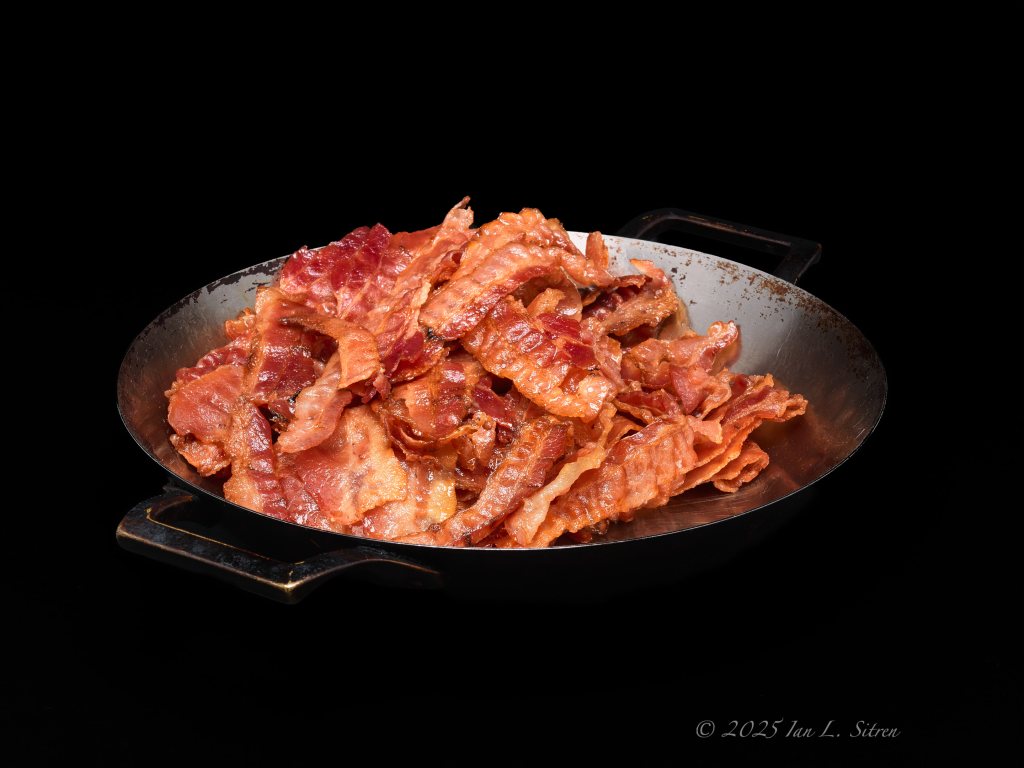
Today is National Bacon Lovers Day, the unofficial holiday where logic takes a back seat and bacon worship takes center stage. People put it on donuts, add it to milkshakes, and even buy bacon-scented candles just to keep the smell lingering. Entire restaurant menus have been built on the premise that if you slap bacon on it, people will line up. If aliens tuned into Earth’s food culture, they’d probably assume bacon was our national currency.
This photograph presents a generous pile of bacon arranged in a metal pan against my signature black background. Each strip, glossy and rippled, catches the light in a way that emphasizes both texture and indulgence. It’s less about restraint and more about the abundance that makes bacon an enduring favorite.
From diners and drive-thrus to fast food chains with signature creations like the Wendy’s Baconator or the Jack in the Box Ultimate Bacon Cheeseburger, bacon continues to hold its own as a cultural staple. National Bacon Lovers Day is the moment to acknowledge that popularity — and perhaps to ask whether there can ever be too much bacon.
You can see this and more in my Commercial Food Photography gallery:
https://www.secondfocus.com/index/G0000WFAqDJQOgKU


National Foodies Day
Today is National Foodies Day.
Which got me thinking, what exactly is a “foodie” now?
There was a time when people argued over whether they were gourmets or gourmands. People who chased flavors, studied food, cared about where it came from.
Now it mostly means you took a photo of what you ordered.
So here’s my contribution to the conversation.
A stack of McDonald’s McRib sandwiches, straight out of the bag and onto a black background. No styling, no plating, no attempt to make it something it isn’t.
I photograph food, but not in the way that fits neatly into any of those categories. No chef, no restaurant, no experience attached to it. Just the object itself.
So does that make me a foodie?
Or something else entirely.
More of my food photography, from fast food to everything in between, is on my website at https://www.secondfocus.com
May 9, 2026 | Categories: Uncategorized | Tags: black background food, commercial food imagery, conceptual food photography, fast food photography, food art, food culture commentary, Food Photography, food styling vs reality, food trends, foodie definition, from bag to background, gourmet vs foodie, isolated food photography, McDonalds McRib, McRib, minimalist food photography, modern food culture, National Foodies Day, provocative food imagery, secondfocus photography, what is a foodie | Leave a comment