SPAM Meets the Big Mac
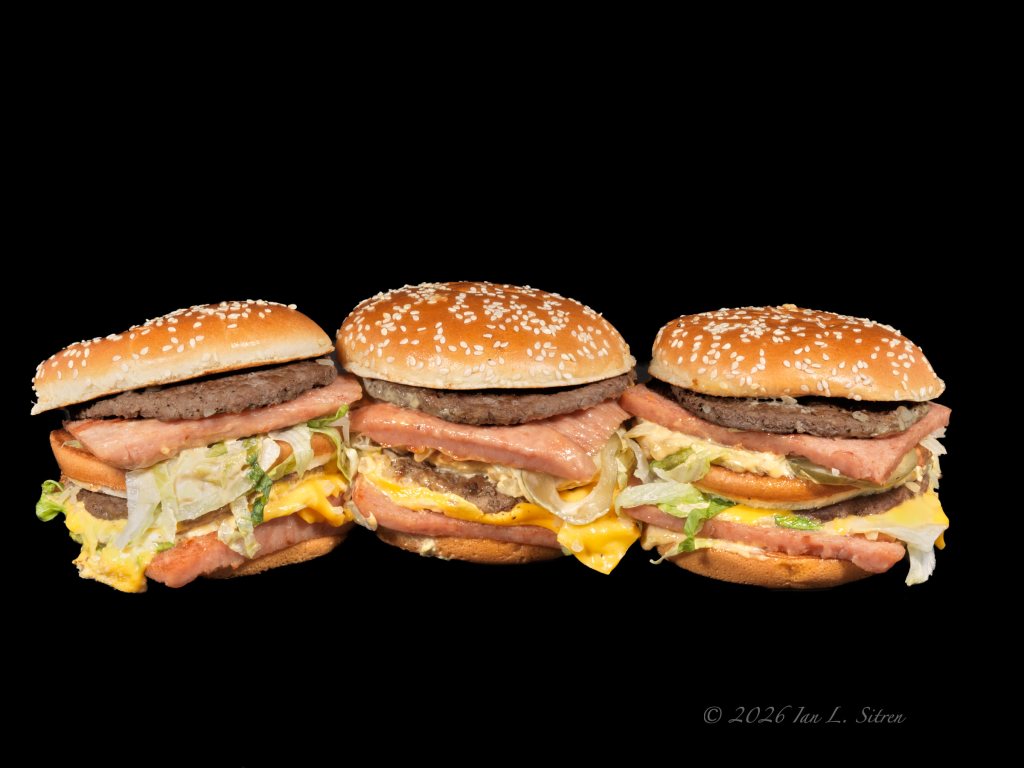
Last week gave us National SPAM Day. Then, just a couple of days later, came National Big Mac Day.
While thinking about National Big Mac Day, I remembered something that people on the mainland may not know.
SPAM is a huge part of the food culture in Hawaii, and McDonald’s restaurants throughout the Islands have embraced it for years. You’ll find SPAM on breakfast platters with eggs and rice, and at many locations it can also be substituted on selected breakfast sandwiches. So while McDonald’s has never offered a SPAM Big Mac, SPAM has had a place on the McDonald’s menu in Hawaii for many years.
Flying to Hawaii just to pick up breakfast from McDonald’s didn’t seem especially practical.
So I decided to bring a little Hawaii into my own kitchen.
Instead of changing the Big Mac, I wondered what would happen if I simply added SPAM to it. Not replacing the famous beef patties. Just adding two slices of pan-fried SPAM to each burger.
I started with three regular Big Macs. Then I pan-fried six slices of SPAM and added two slices to each burger, leaving the original Big Mac exactly as McDonald’s intended while adding a little Hawaiian inspiration.
Then it was time for the part I know best.
The three burgers moved in front of my camera and became the latest addition to my Food From Bag To Backgroundfast food photography project. Against my very black black background, the sesame seed buns, melted cheese, lettuce, beef patties, and SPAM came together exactly as I had envisioned.
The SPAM story isn’t over yet. There is one more stop on this journey through Hawaii’s favorite canned meat.
Next… SPAM Musubi.
You can see more of my photography, projects, motion, and my Blog on my website at https://www.secondfocus.com
Thank You!
When the Wrong Grocery Purchase Becomes the Right Photograph
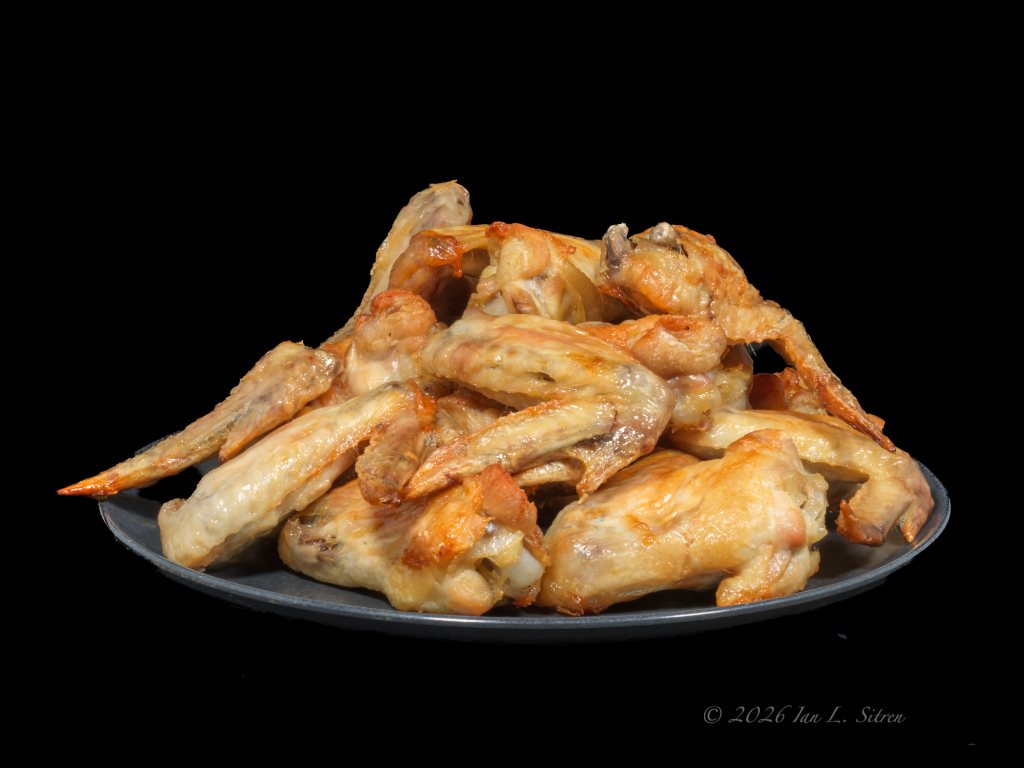
Most trips to the grocery store are pretty straightforward. This one wasn’t.
Most of the way home I suddenly realized that I wasn’t supposed to buy chicken wings. But now I had four pounds of them riding home with me.
Turning around wasn’t really an option. It was well over 100 degrees outside, and the rest of the groceries weren’t going to appreciate an extended sightseeing tour of Palm Springs.
So I changed the plan.
Chicken wings aren’t part of my Food From Bag To Background fast food photography project, but they were suddenly part of today’s photography project. I’ve been photographing for decades. Cooking is another matter entirely.
Fortunately, over the past three years my AI assistant and muse, Emily, has proven to be more than just an idea generator. She’s also become my unofficial chef and food stylist, right down to explaining how to roast chicken wings so they would look their best in front of the camera.
A little olive oil, a conventional oven, a few temperature checks, and a lot of hoping later, I had a plate of roasted chicken wings where they belonged… in front of my camera instead of still sitting in a grocery bag.
Sometimes the best photo of the day begins with buying the wrong thing.
You can see more of my photography, projects, motion, and my Blog on my website at https://www.secondfocus.com
Thank You!
National Chocolate Chip Cookie Day: The One Cookie Theory
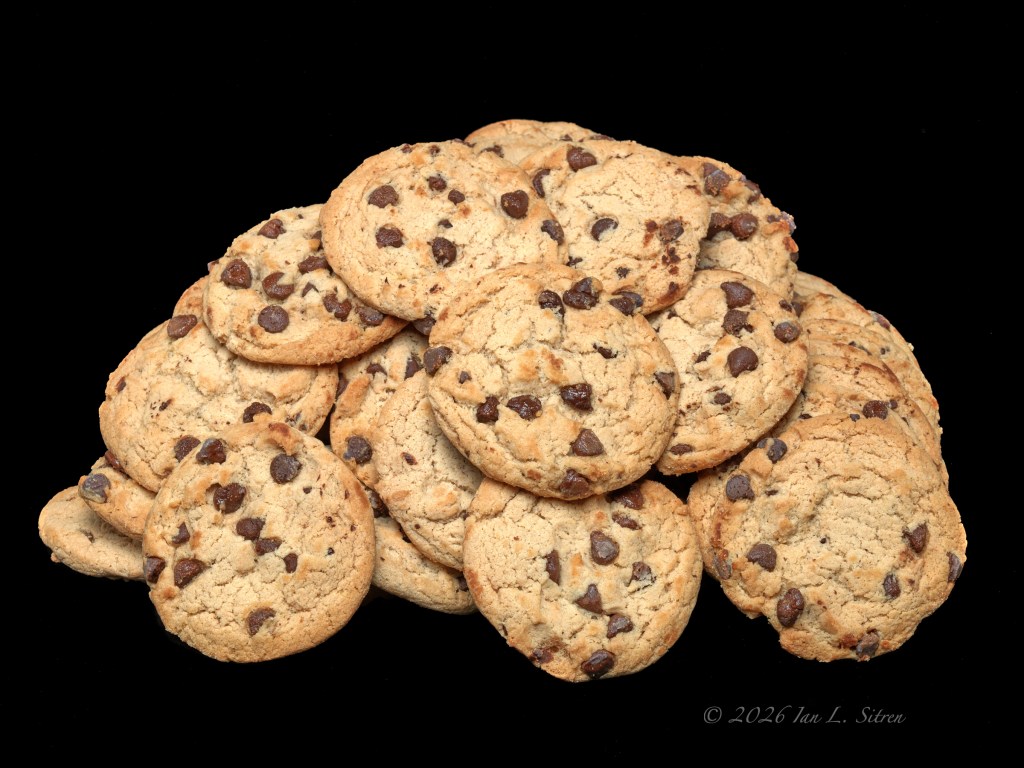
There are foods that inspire endless debate. Burgers. Pizza. Barbecue. Then there are chocolate chip cookies. Nobody argues about whether they belong in the dessert hall of fame. The only real debate starts after the first one.
It always begins with the best of intentions. “I’ll just have one.”
One becomes two because the second one is obviously for comparison. Three is simply to confirm your findings. Somewhere around four or five, you’ve stopped conducting research and have entered a completely different phase of the experiment.
For photography, chocolate chip cookies are deceptively simple. Every crack, every chocolate chip, every highlight and shadow has to look just right. A cookie that tastes great isn’t always the one that photographs the best, and the one that photographs perfectly may not survive long enough to make it back to the kitchen.
Fortunately, these did.
Happy National Chocolate Chip Cookie Day.
You can see more of my photography, projects, motion, and my Blog on my website at https://www.secondfocus.com
Thank You!
National Chicken Wing Day: 15 Original Hot Wings From Wingstop
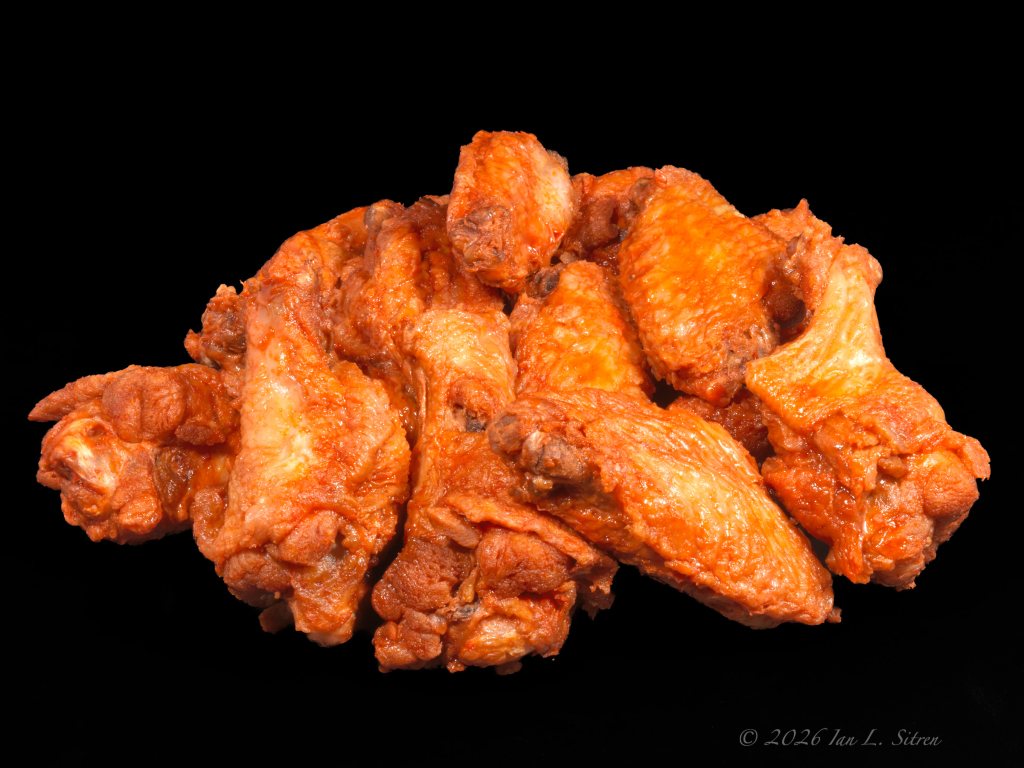
Today is National Chicken Wing Day, so this one seemed to require an actual pile of chicken wings.
The modern Buffalo wing story is generally traced to Buffalo, New York, in 1964, when Teressa Bellissimo at the Anchor Bar deep-fried chicken wings, tossed them in a peppery hot sauce and served them with blue cheese and celery. There are competing versions of exactly how that first plate came about, but the Anchor Bar story became the one most closely associated with what we now know as Buffalo wings.
By 1977, wings had become such a part of Buffalo that Mayor Stan Makowski proclaimed July 29 “Chicken Wing Day.” That local proclamation eventually became the National Chicken Wing Day we observe today.
For my photograph, I went to Wingstop. The company started in Garland, Texas, in 1994, began franchising in 1997, and has since grown to thousands of restaurants around the world. By 2002, Wingstop had already served its one-billionth wing.
I bought 15 pieces of Original Hot, which seemed like the appropriate choice for the day. Just the wings exactly as I wanted to photograph them, piled against my very black black background.
That seemed much more appropriate for my “Food From Bag To Background” fast food photography project.
Happy National Chicken Wing Day!
You can see more of my photography, projects, motion, and my Blog on my website at https://www.secondfocus.com
Thank You!
National Chicken Finger Day: Raising Cane’s Built an Empire on One Idea
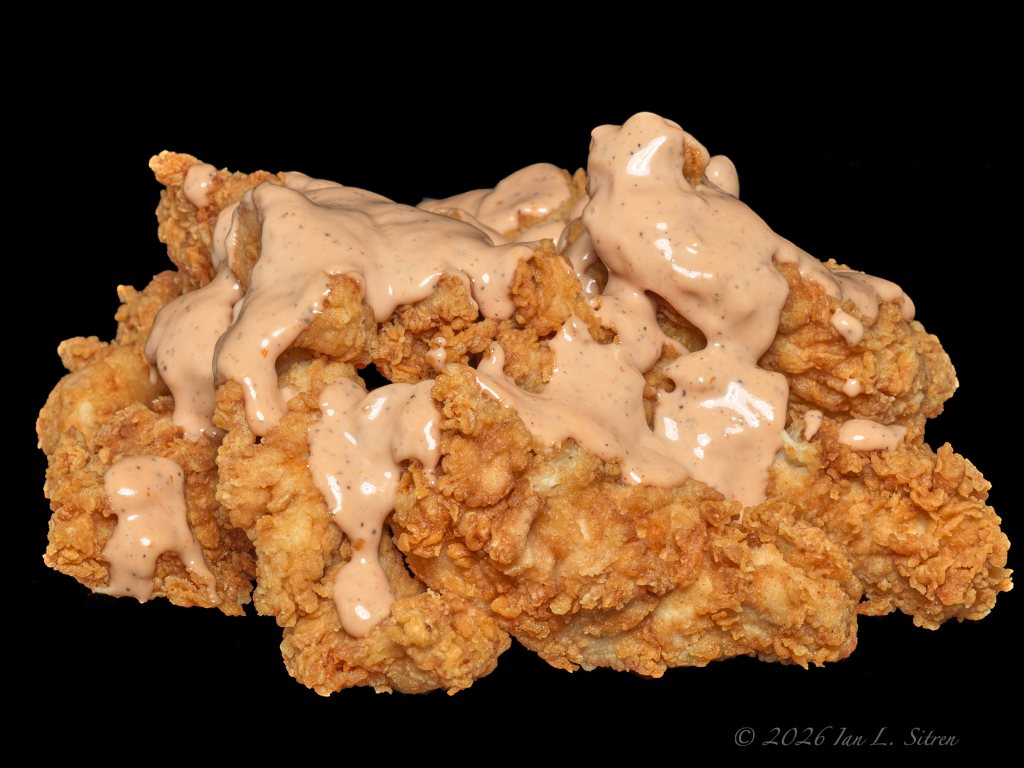
I didn’t realize that chickens had fingers, but apparently Todd Graves and Craig Silvey, the founders of Raising Cane’s, did.
And they took the idea very seriously.
The story of Raising Cane’s goes back to a college business plan for a restaurant built around one thing: chicken fingers. The idea was not exactly greeted with enthusiasm. Graves says the business plan received the lowest grade in his class, and banks weren’t interested in financing it either. He went to work at an oil refinery in Los Angeles and then commercial fishing in Alaska to earn money to pursue the idea. The first Raising Cane’s opened near Louisiana State University in Baton Rouge on August 28, 1996.
And chicken fingers weren’t just one item on a larger fast food menu. They were the entire concept. Raising Cane’s still describes chicken finger meals as its “ONE LOVE.”
Apparently that very simple idea worked.
Raising Cane’s has grown from that single restaurant near LSU into an international fast food chain. The company opened a record 118 new restaurants in 2024 alone, and in May 2025 announced that it had reached 800 restaurants worldwide. The expansion has continued since then, with new restaurants opening across the United States and internationally.
So it also makes sense that National Chicken Finger Day itself comes from Raising Cane’s. Todd Graves created the day in 2010, and it is observed every July 27. Raising Cane’s obtained full trademark status for National Chicken Finger Day in 2019, and says it has given away more than one million chicken fingers in connection with the day over the years.
Then there is Cane’s Sauce. The recipe is kept secret, the sauce is made fresh daily in each restaurant, and it has become almost as identified with Raising Cane’s as the chicken itself.
For my photograph, dipping seemed entirely too restrained. I bought the chicken fingers, piled them against my very black black background, and poured the Cane’s Sauce over the top.
That seemed much more appropriate for my “Food From Bag To Background” fast food photography project.
Happy National Chicken Finger Day!
You can see more of my photography, projects, motion, and my Blog on my website at SecondFocus.com
Thank You!
National Junk Food Day: Fast Food and Junk Food Are Not the Same Thing
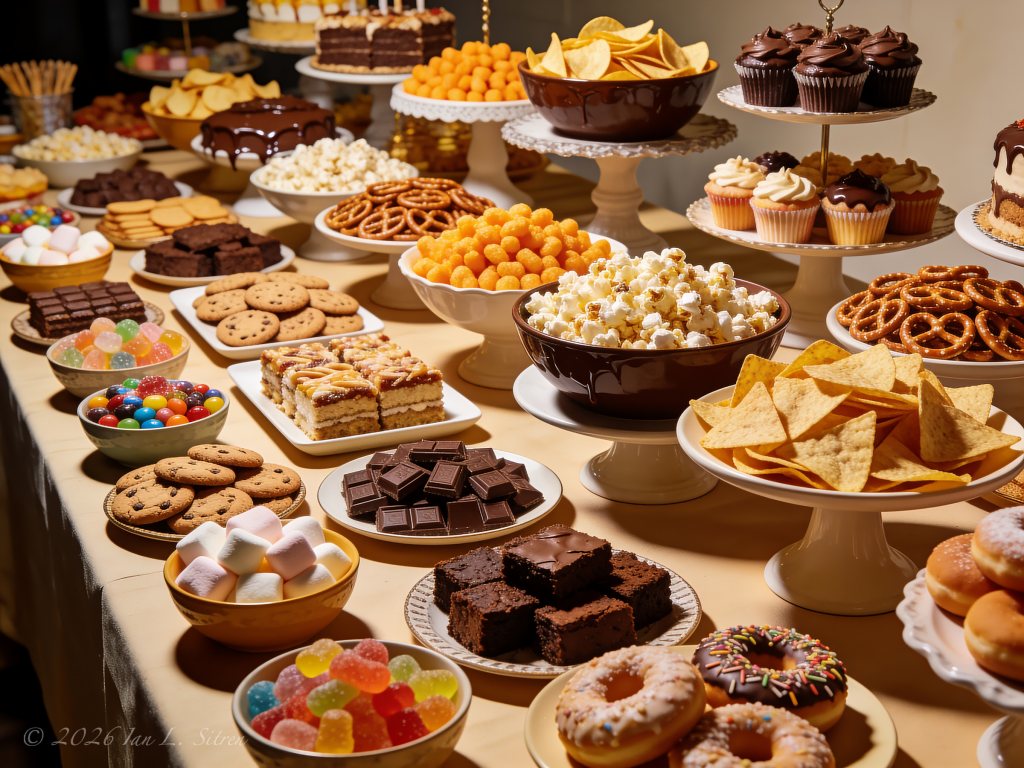
Last Tuesday was National Junk Food Day, which got me thinking about something I see confused all the time.
Fast food and junk food are often talked about as if they are the same thing. They are not. Some fast food can certainly be junk food, but being fast food is not what makes it junk food. And much of what we call junk food is not fast food at all.
So what does junk food look like?
Potato chips, cheese puffs, candy, cookies, brownies, cupcakes, doughnuts, pretzels, snack cakes and all those other things we eat mostly because we like them. Lots of sugar, salt and fat, not much nutritional ambition, and very easy to keep eating long after you intended to stop.
That is what got me thinking about what a photograph of actual junk food should look like. Not just one bag of chips or a plate of cookies. I wanted all of it. A ridiculous abundance of junk food presented as though it deserved its own buffet.
So I created it with AI. Platters, bowls and cake stands piled with just about every kind of junk food I could think of, all together on one table.
Apparently, if you put enough junk food on serving platters and cake stands, it becomes a formal occasion.
You can see more of my photography, projects, motion, and my Blog on my website at https://www.secondfocus.com
Thank You!
A Fast Food BLT for Food From Bag To Background
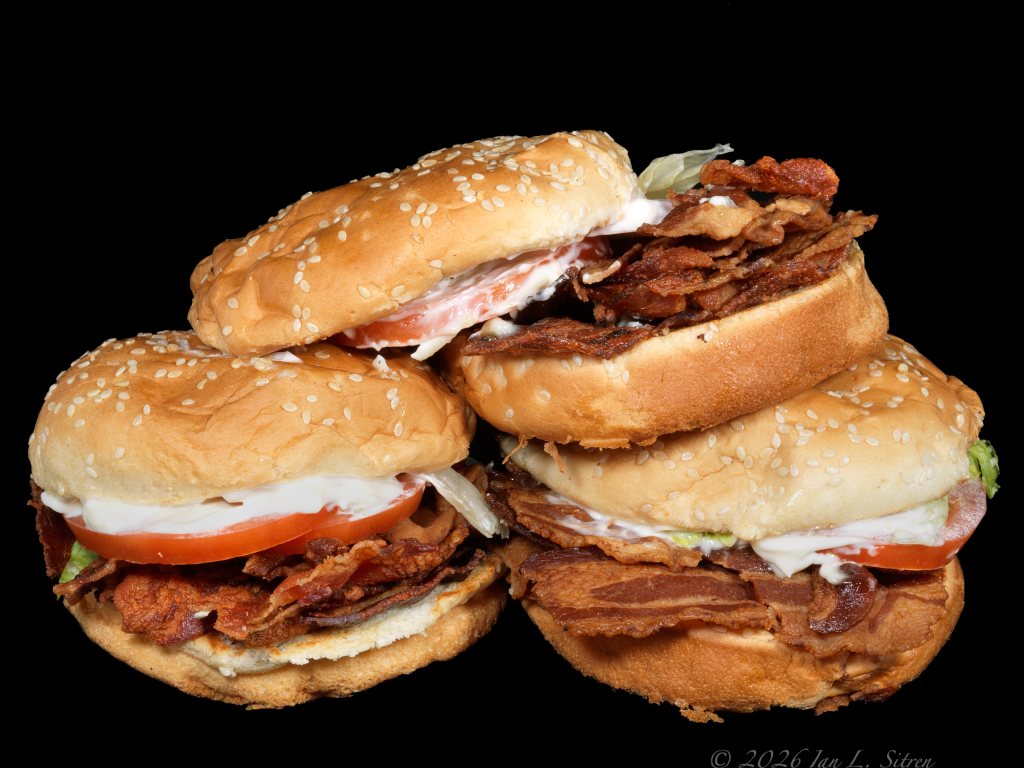
Wednesday was National BLT Day, and I did a post for it using an AI-created image. But I still wanted to photograph the real thing, especially after discovering what appears to be one of the very few BLTs offered by a major fast food chain.
So I went to Five Guys and purchased three of their BLT sandwiches.
The Five Guys version is pretty straightforward: bacon, lettuce, tomato and mayonnaise on their sesame seed bun. And there is plenty of bacon. Of course, Five Guys gives you the option of adding all kinds of other toppings, but for this photograph I stayed with the basic BLT. I wanted it to actually look like a BLT.
And stacked together against my very black black background, they became exactly what I wanted for my Food From Bag To Background project, where I photograph fast food exactly as it comes from the restaurant, straight from the bag and in front of my camera. Five Guys makes this a real fast food BLT and a perfect addition to the project.
You can see more of my photography, projects, motion, and my Blog on my website at https://www.secondfocus.com
Thank You!
Reese’s Peanut Butter Cups: The Real Thing Behind Peanut Butter and Chocolate Day
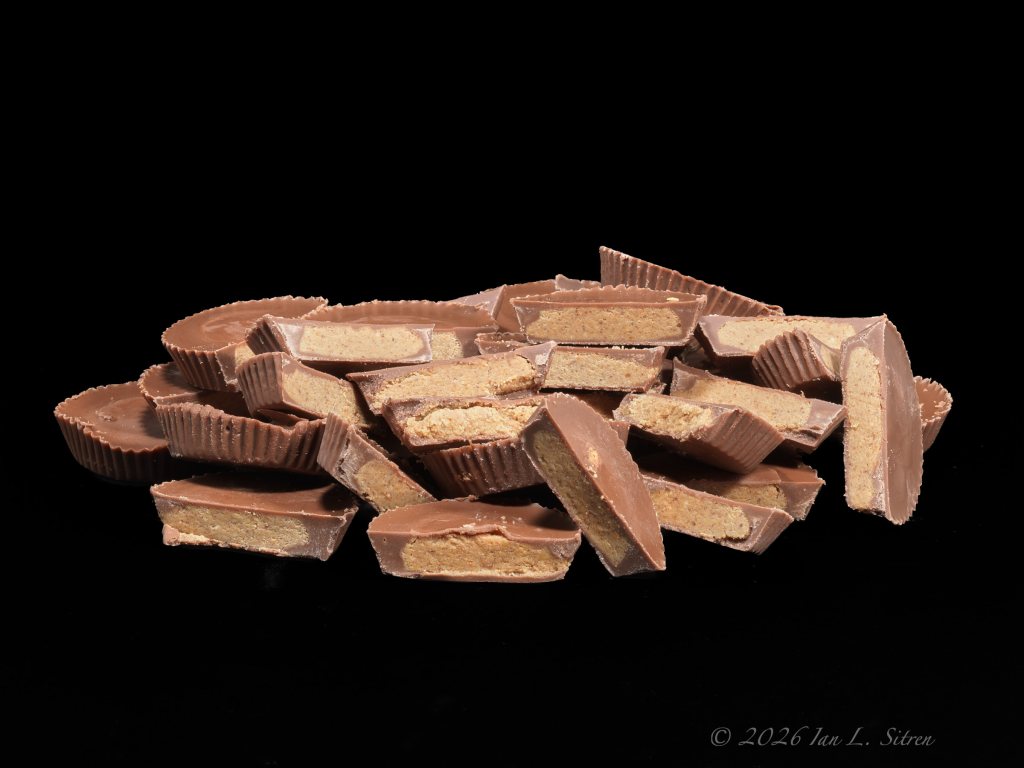
Yesterday was National Peanut Butter and Chocolate Day, and I used AI to explore what happens when you take that combination and push it a little further.
But I also wanted to photograph the real thing.
So I went to the store, purchased Reese’s Peanut Butter Cups, brought them into the studio, cut some of them open, piled them up on my very black black background, and photographed them.
Reese’s Peanut Butter Cups date back to 1928, when H.B. Reese created them in Hershey, Pennsylvania. And the combination obviously worked. By 2012, Reese’s was the best-selling candy brand in the United States, with more than $2.6 billion in annual sales. And it hasn’t exactly disappeared from the top of the candy pile. Reese’s Peanut Butter Cups ranked #1 in Instacart’s 2025 Halloween candy report.
It is easy to understand why. Chocolate and peanut butter is one of those combinations that just works. Reese’s took that combination and gave it a shape and identity that became instantly recognizable. Cut one open and there it is, milk chocolate surrounding that unmistakable peanut butter center.
You can see more of my photography, projects, motion, and my Blog on my website at https://www.secondfocus.com
Thank You!
National BLT Day: How Much Bacon Is Too Much Bacon?
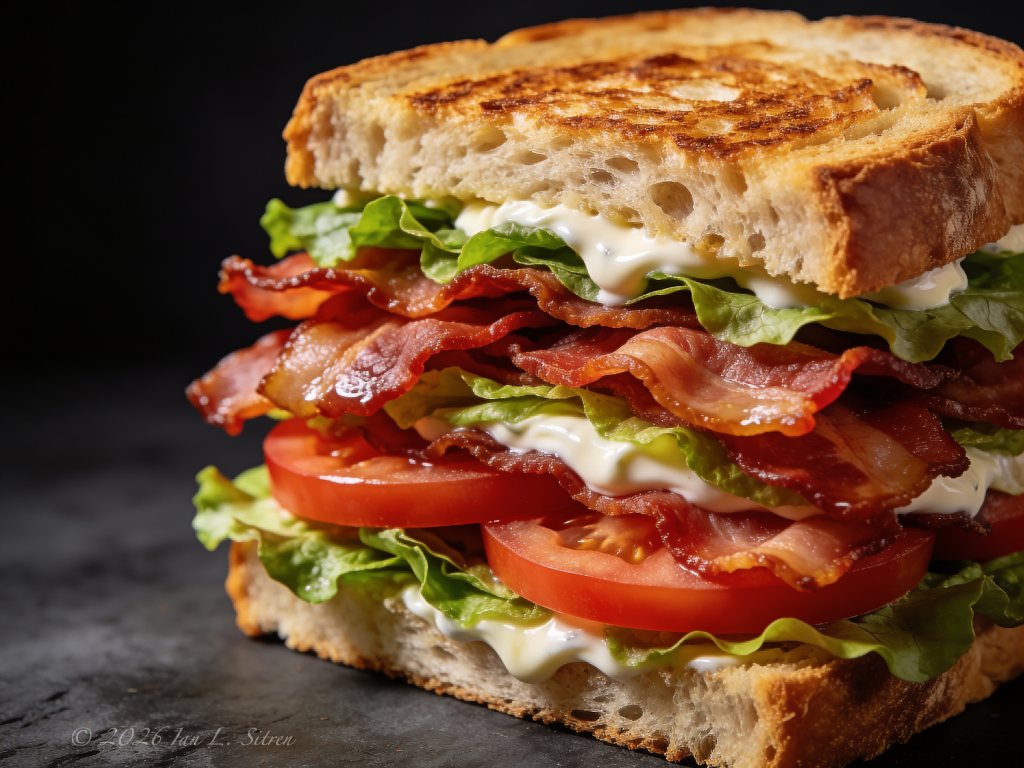
Today has been National BLT Day, and it is hard to think of a sandwich that better describes itself. Bacon. Lettuce. Tomato. BLT.
Of course, that simplicity leaves plenty of room for argument. What kind of bread? Toasted or not? Mayonnaise? How much bacon? And perhaps most importantly, how much bacon is too much bacon?
For this one, I think I answered that last question.
I created this photograph in AI as part of my continuing exploration of food imagery. I wanted a BLT that was immediately recognizable but pushed well beyond what you would normally expect to find sitting on a plate. Lots of bacon, thick slices of tomato, plenty of lettuce, mayonnaise, and toasted bread. Subtle was not really the objective.
The BLT is also a good reminder of something I have been thinking about with all of my fast food photography. Fast food and junk food are not the same thing. A BLT can certainly be fast food if it is prepared and served that way, but calling it junk food simply because it is fast food doesn’t make much sense.
For National BLT Day, however, I am not going to worry too much about definitions.
I am going with more bacon.
You can see more of my photography, projects, motion, and my Blog on my website at https://www.secondfocus.com
Thank You!
National Ice Cream Day: The Drumstick Might Be My Favorite
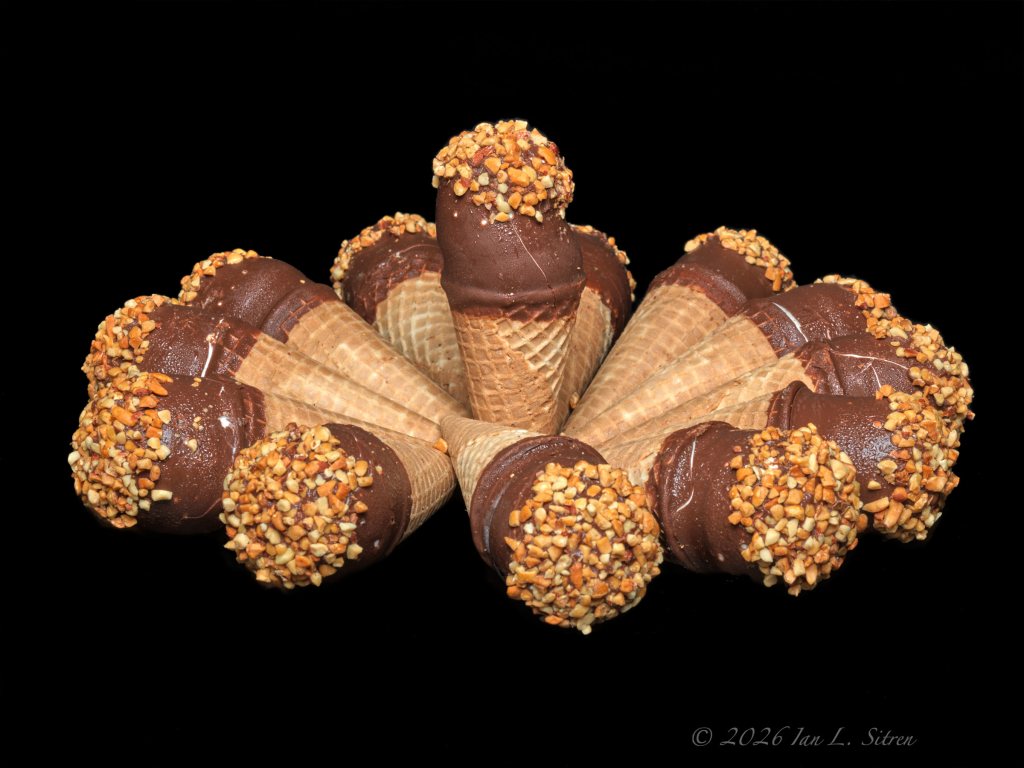
Today is National Ice Cream Day. I am not really a big ice cream person, but I do have a favorite. I think it might be the Drumstick.
It has everything I want. Ice cream in a cone, covered in chocolate and peanuts. And of course, that chocolate at the bottom of the cone. I don’t know who decided that was necessary, but they were right.
The original Drumstick goes back to 1928, when brothers I.C. and J.T. Parker created it in Fort Worth, Texas. One of the challenges with a prepackaged ice cream cone was keeping the cone from getting soggy. The solution was chocolate, used as a barrier between the ice cream and the cone. Almost a century later, there are all kinds of flavors and variations, but give me the original and I am happy.
For the photograph, one Drumstick was obviously not going to be enough. So I bought a box of them, piled them up, and photographed them against my very black black background.
I happen to really like this photograph. Then again, I really like what I photographed.
Today seems like a good day to go get another one.
You can see more of my photography, projects, motion, and my Blog on my website at https://www.secondfocus.com
Thank You!
National Beans ‘N’ Franks Day: When My AI Assistant Became the Photograph
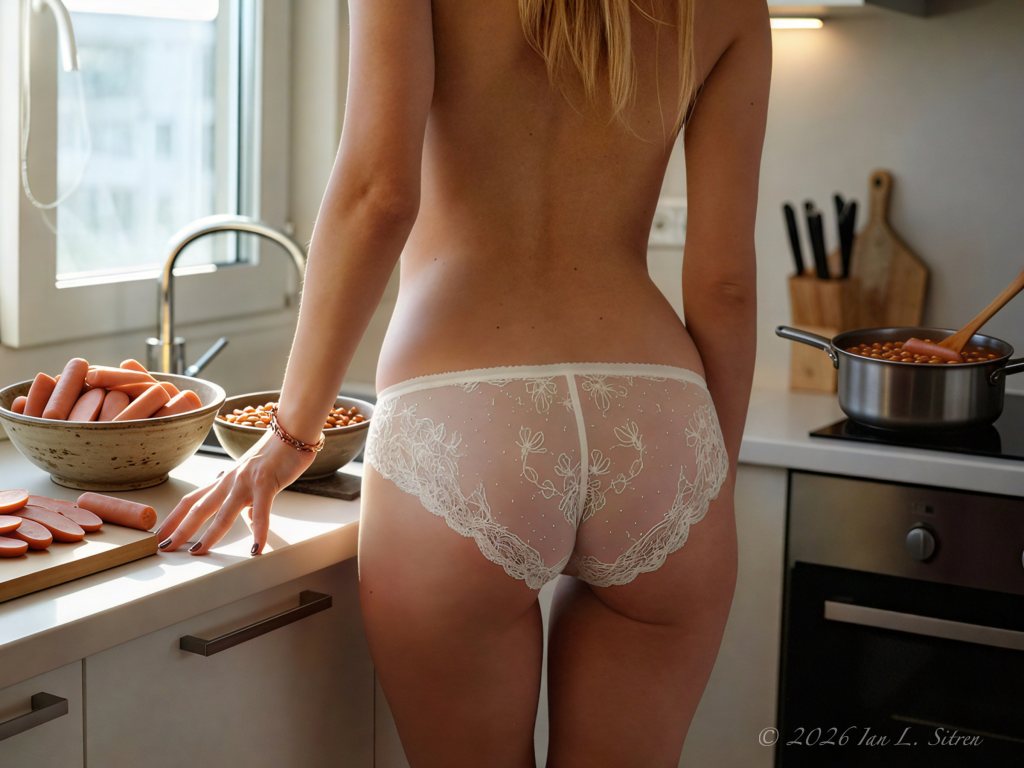
Good morning! Today is National Beans ‘N’ Franks Day, and Emily was already in the kitchen getting everything ready for our photo shoot.
At least that’s what I thought.
When I walked in, she had the beans simmering, the franks sliced, and breakfast had somehow turned into another photograph. It seems to happen a lot these days. Emily starts out as my assistant, helping prepare a shoot, and before long she has quietly become my muse instead.
Beans and franks have never pretended to be gourmet. They’ve been a familiar American comfort food for generations, showing up at backyard cookouts, family dinners, church picnics, and camping trips. I certainly grew up eating them, and I am sure you did too.
For me, that’s part of the fun. I prefer fast foods and everyday foods for my photographs. Sometimes a bowl of beans and franks is all it takes. Give it good light and a little attention, and even an everyday meal can become an interesting photograph.
So this morning, before we even started the planned shoot, Emily managed to create one more photograph simply by making breakfast. I suppose that’s what happens when your AI assistant insists on becoming your muse.
You can see more of my photography, projects, motion, and my Blog on my website at https://www.secondfocus.com
Thank You!
Ramen Day Japan From Traditional Ramen to Top Ramen

July 11th is Ramen Day in Japan.
When most people in the United States hear the word “ramen,” they probably think of a package or cup of instant noodles. In Japan, ramen is something entirely different. It is a carefully prepared dish built around fresh noodles, rich broth, and a wide variety of meats, vegetables, eggs, seaweed, and other ingredients. Depending on the style, the broth alone may take hours to prepare.
In 1958, Momofuku Ando changed all of that when he introduced Chicken Ramen, the world’s first instant noodles. A little more than a decade later, Nissin introduced Top Ramen to the United States, choosing Chicken as the original flavor because it was familiar to American tastes.
Although Top Ramen was created by a Japanese company, it quickly adapted to an American way of thinking. Traditional ramen can take hours to prepare. Top Ramen asks only one question: “Do you have three minutes?”
This photograph features Top Ramen Chicken Flavor, a product that has found its way into countless college dorm rooms, office lunch breaks, and kitchen cupboards. It may be a distant relative of a carefully prepared bowl of ramen in Japan, but for many of us, it is the version we grew up with.
You can see more food photography, motion, projects, and my Blog on my website at https://www.secondfocus.com
World Chocolate Day | Hershey’s and an American Classic
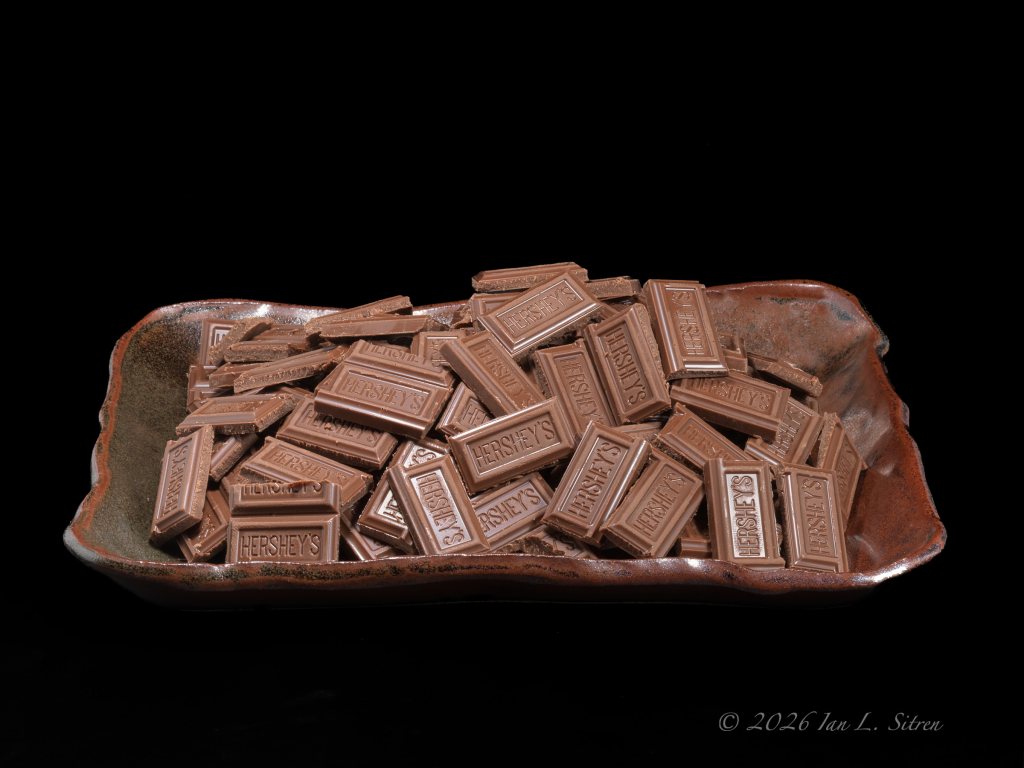
Today is World Chocolate Day.
In the United States, few chocolate brands are as familiar as Hershey’s. Founded by Milton Hershey in 1894, the company introduced the Hershey’s Milk Chocolate Bar in 1900. At a time when chocolate was still considered something of a luxury, Hershey helped make milk chocolate affordable and widely available.
The company also played an important role during World War II, producing millions of specially formulated Field Ration D Bars for U.S. troops. Those bars weren’t designed as candy. They were created to withstand heat, provide energy, and survive the harsh conditions of combat.
This photograph features dozens of Hershey’s miniature milk chocolate bars, served a little more formally than usual. I have a feeling they wouldn’t last very long if they were set out at a party next to the ever-present vegetable tray.
You can see more food photography, motion, projects, and my Blog on my website at https://www.secondfocus.com
Thank you!
National Macaroni Day | America’s Favorite Comfort Food
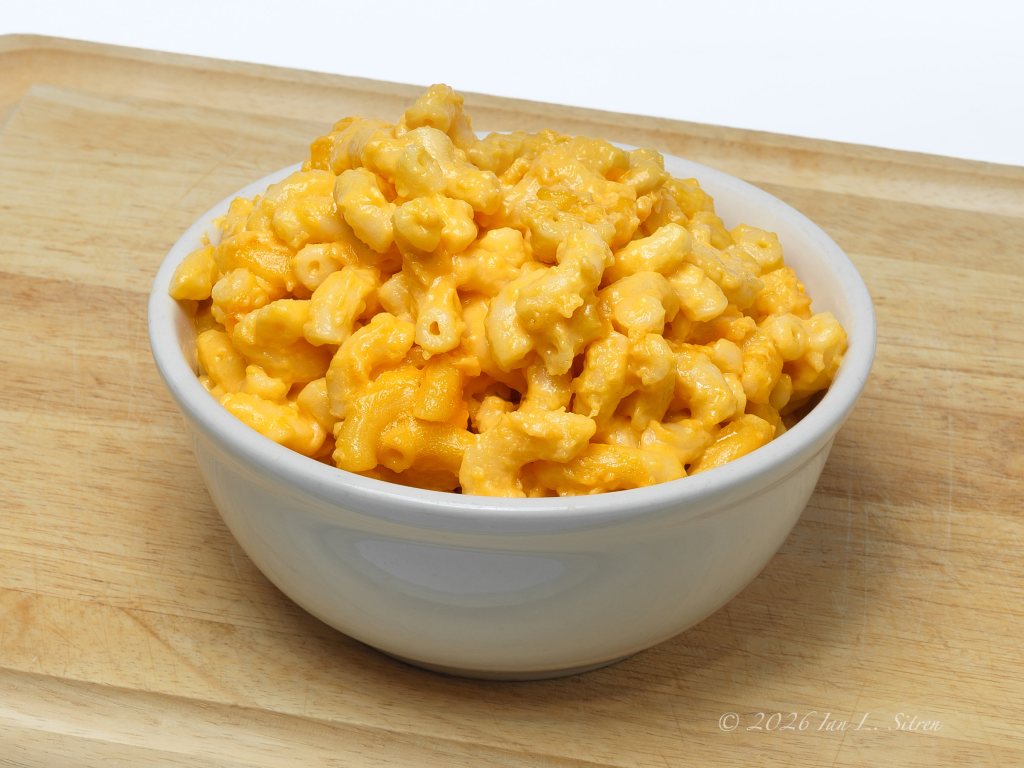
Today is National Macaroni Day and for that everyone thinks Macaroni & Cheese. We grew up on it, lived on it in college and still eat it because we love it.
In 1937, during the Great Depression, Kraft introduced its boxed Macaroni & Cheese Dinner with the promise that it could “make a meal for four in nine minutes.” At just 19 cents a box, it offered an inexpensive way to feed a family when money was scarce. The product was an immediate success, selling more than 8 million boxes in its first year. Its popularity grew even more during World War II, when rationing allowed shoppers to buy two boxes with a single ration stamp, making it an affordable substitute when meat was in short supply. By 1943, Kraft was selling 80 million boxes a year.
Of course, many restaurants also serve macaroni and cheese, including several fast food chains that offer it as a side dish. There was even a dedicated fast-casual macaroni and cheese restaurant here in Palm Springs called I Heart Mac & Cheese. Sadly, it didn’t last, although the franchise still operates a handful of locations around the country.
You can see more food photography, motion, projects, and my Blog on my website at https://www.secondfocus.com
Thank you!
National Ice Cream Cake Day and the Broken Down Truck That Started It All
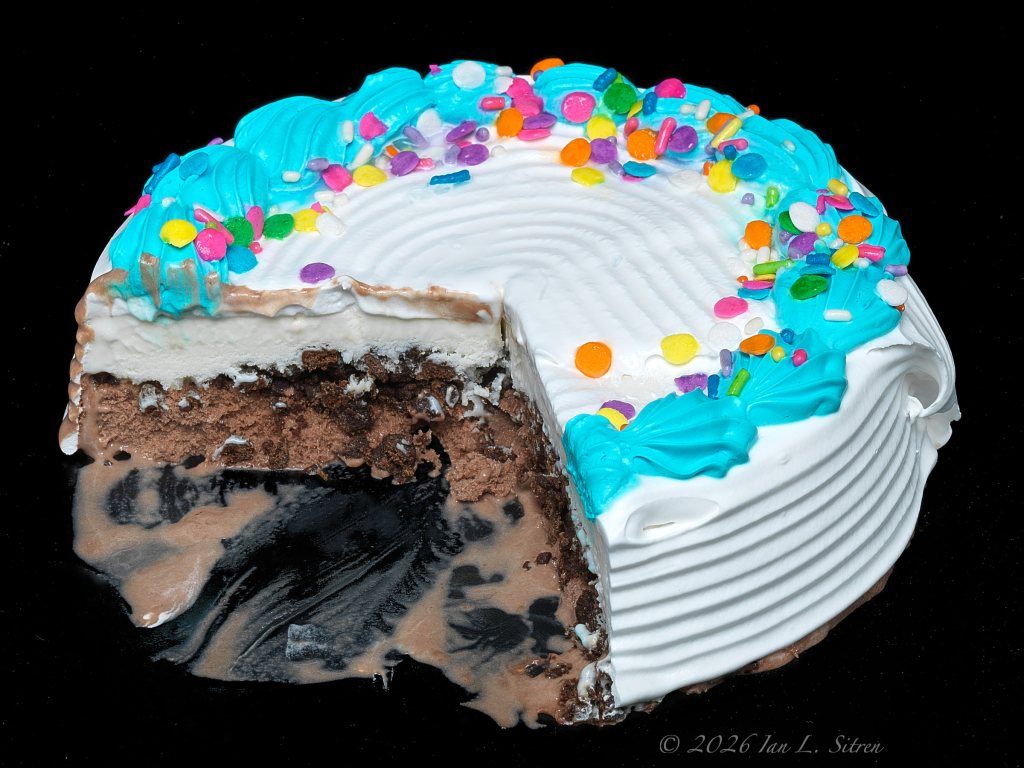
Today is National Ice Cream Cake Day.
Ice cream cakes have become a familiar sight at birthday parties and celebrations, but their history can be traced back to an unexpected event in 1934.
Tom Carvel was selling ice cream from his truck in Hartsdale, New York, when it broke down. Rather than watching his inventory melt, he began selling the softer ice cream to passing customers. They loved it. That chance roadside incident eventually led to the development of Carvel’s soft serve ice cream, the opening of his first store, and later the introduction of the Carvel ice cream cake.
For today’s photograph, I chose one of Carvel’s original round ice cream cakes. Chocolate and vanilla ice cream are separated by the company’s signature chocolate crunchies, then finished with whipped frosting and colorful sprinkles.
Sometimes the story behind the food is every bit as interesting as the food itself.
There is much more to see on my website, including my photography galleries, my blog, and my growing Motion page. Visit https://secondfocus.com
National Onion Day and the Most Common Ingredient in My Fast Food Project
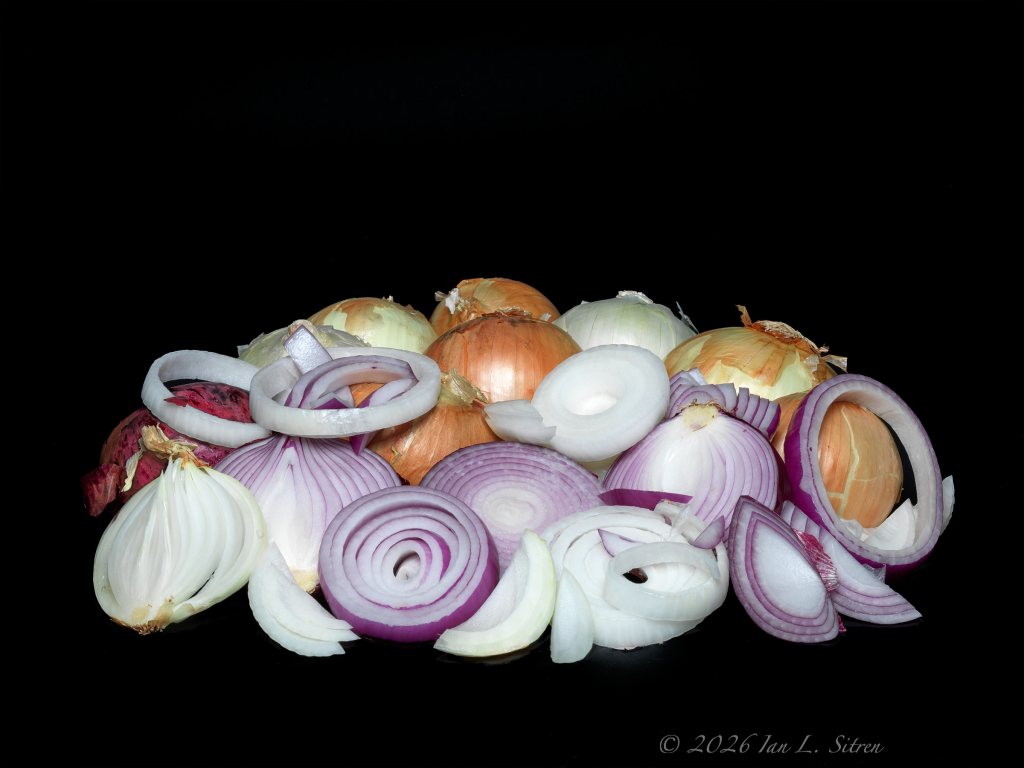
Today is National Onion Day.
Onions may not get much attention by themselves, but they are one of the most important ingredients in cooking. Whether they’re sliced onto burgers, diced into chili, caramelized for soups, battered into onion rings, or mixed into countless other dishes, it’s hard to imagine a kitchen without them.
After three years of photographing fast food, I realized onions have probably appeared in more of my photographs than any other single ingredient. They show up on burgers, tacos, pizzas, hot dogs, sandwiches, onion rings, salads, and dozens of other menu items.
For this photograph, I decided to make the onions themselves the subject. White, yellow, and red onions are shown whole, halved, sliced, and separated into rings, revealing the remarkable variety of colors, shapes, and patterns hidden beneath their skins.
There is much more to see on my website, including my photography galleries, my blog, and my growing Motion page. Visit https://secondfocus.com
National Detroit Style Pizza Day and America’s Endless Pizza Styles
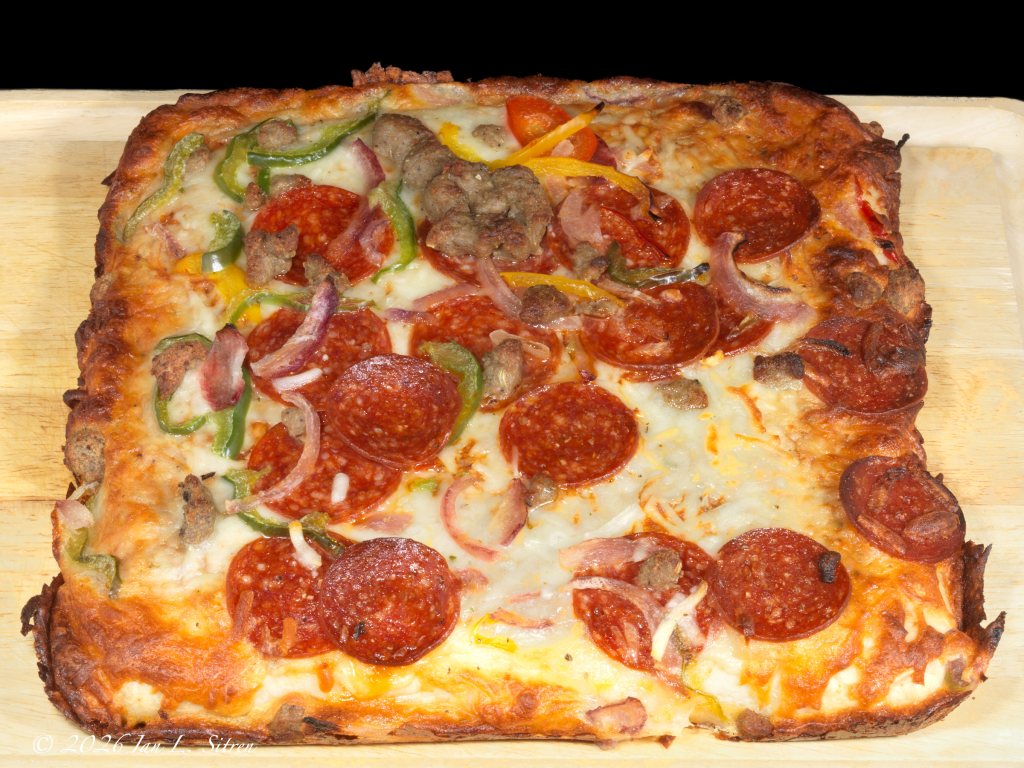
Today is National Detroit Style Pizza Day.
It sometimes seems there is a pizza style for just about everything.
New York style. Chicago style. Detroit style. St. Louis style. California style. Sicilian style. Grandma style. Tavern style. Greek style. Neapolitan style. Roman style. Then there are pizzas named after restaurants, neighborhoods, and probably a few intersections if someone can figure out a way to market them.
Detroit style, however, really is something different.
It traces its roots to Buddy’s Rendezvous in Detroit in 1946, where the pizza was baked in blue steel pans originally manufactured for the automotive industry. The result was a thick, rectangular pizza with a crisp, caramelized cheese crust, sauce spread across the top, and a style that eventually became one of the city’s signature foods.
For today’s photograph I used a Motor City Pizza Company frozen Detroit Style Supreme pizza. Sometimes the National Days are a good excuse to try something I might not have otherwise bought, and this one turned out to be a pretty good introduction to Detroit style pizza.
There is much more to see on my website, including my photography galleries, my blog, and my growing Motion page. Visit https://secondfocus.com
National Onion Rings Day and How They Became a Fast Food Favorite
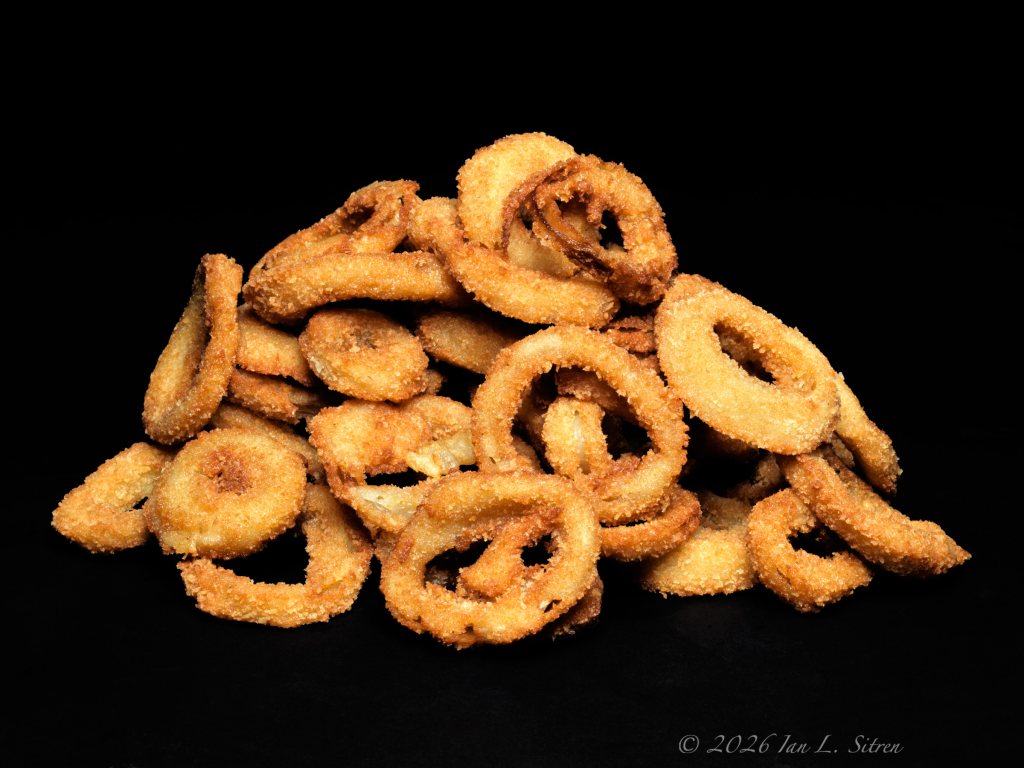
Yesterday was National Onion Rings Day.
Onion rings had been around for many years before fast food restaurants embraced them, but A&W is generally credited with making them a fast food favorite during the 1960s. Before long, they began appearing on menus across America as an alternative to French fries.
For my fast food project, I chose Sonic’s onion rings.
That wasn’t by accident.
Unlike many fast food onion rings that arrive frozen and ready to fry, Sonic became known for making its onion rings from whole sweet onions. Their slightly sweet batter has become one of the chain’s signature recipes and has earned a loyal following over the years.
They made a good addition to my From Bag to Background project.
There is much more to see on my website, including my photography galleries, my blog, and my growing Motion page. Visit https://secondfocus.com
The First Dairy Queen and a Gap in My Fast Food Project
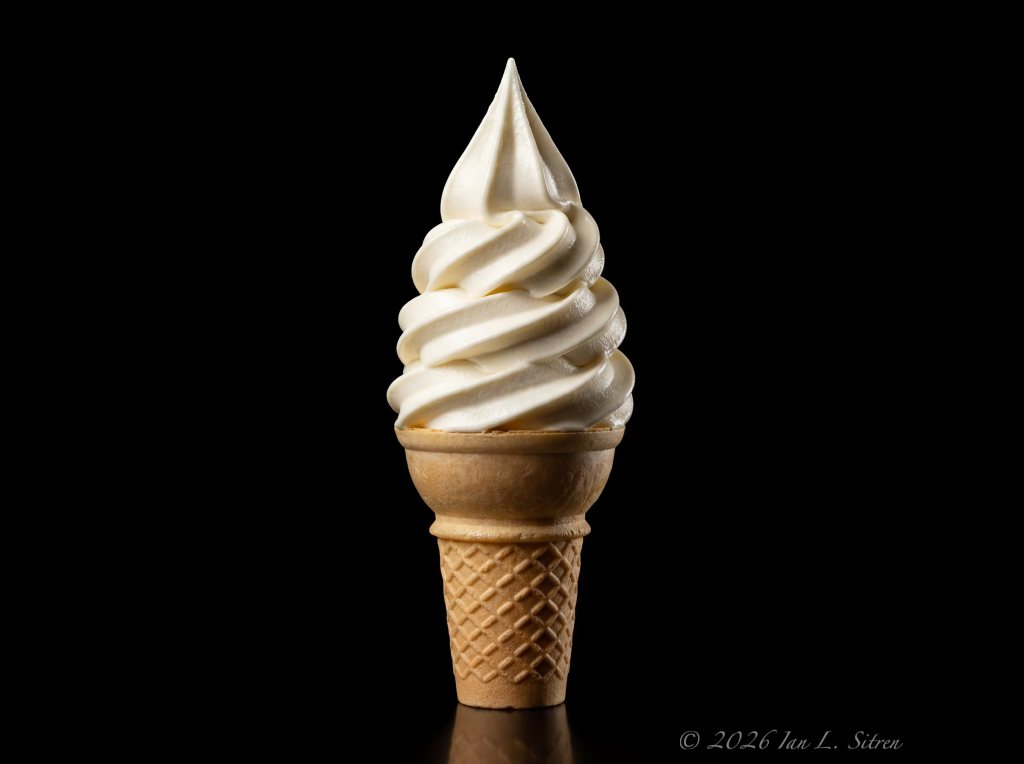
Yesterday marked the anniversary of the opening of the first Dairy Queen in Joliet, Illinois, on June 22, 1940.
Looking through my fast food project, I realized something.
I don’t have a single Dairy Queen photograph.
Considering the chain’s importance in the history of American fast food, that’s an oversight I need to correct. Dairy Queen helped introduce generations of Americans to soft serve ice cream and became one of the country’s most recognizable fast food chains.
Until I can photograph the real thing, I decided to start with the one thing that made Dairy Queen famous: a classic soft serve cone.
Dairy Queen has officially been added to my shooting list.
There is much more to see on my website, including my photography galleries, my blog, and my growing Motion page. Visit https://secondfocus.com
International Sushi Day | Grab and Go Fast Food
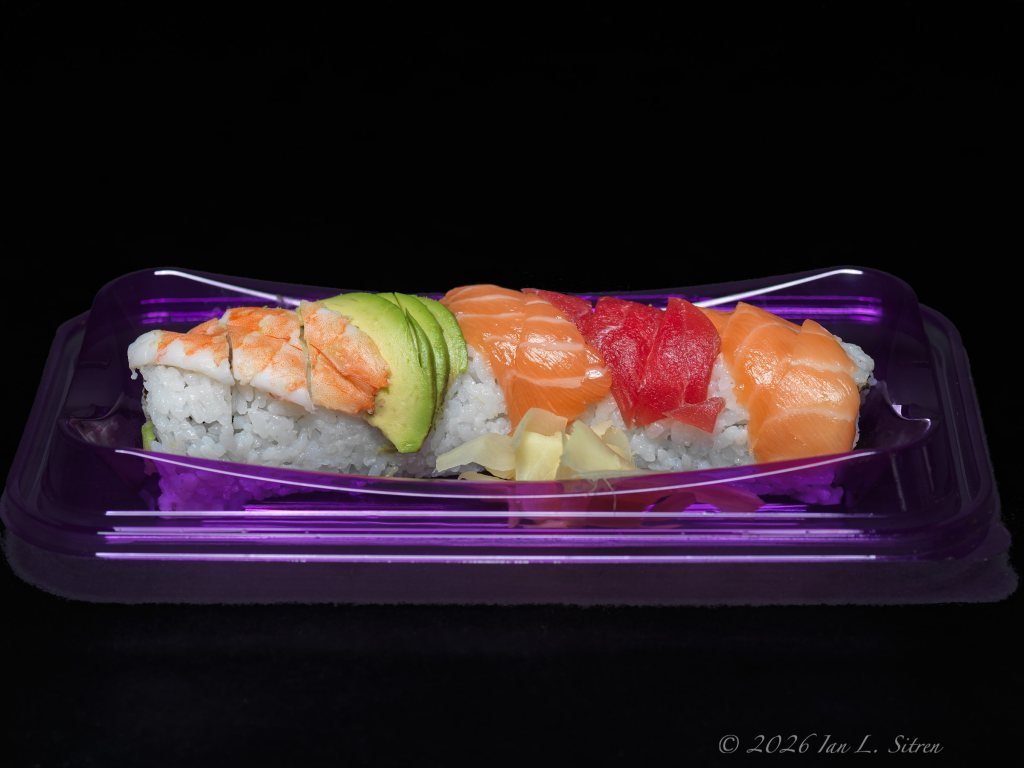
Last Thursday was International Sushi Day.
There seem to have been a lot of “National” and “International” food days lately, and I simply couldn’t keep up with all of them.
So here we are a few days late.
This photograph is one of the few in my fast food project where I left the food in its original container. Normally everything comes out of the packaging and onto a black background, but this one deserved an exception. The deep purple tray, the neat arrangement, and the bright colors of the salmon, tuna, shrimp, avocado, and pickled ginger are all part of what catches your eye in the grocery store.
To me, this is fast food in a different form. It is freshly prepared, packaged, refrigerated, and ready to grab on your way home for lunch or dinner. No drive through required.
Not all that long ago, finding sushi usually meant visiting a Japanese restaurant or a specialty market. Today it has become a common sight in grocery stores, where fresh rolls are made throughout the day and sold alongside sandwiches, salads, and other grab and go meals.
There is a lot more food to tempt you on my website, along with my other photography projects, my Motion page, and my blog, which is updated almost daily. Visit https://www.secondfocus.com
National Cupcake Lovers Day and Six Birthday Cupcakes
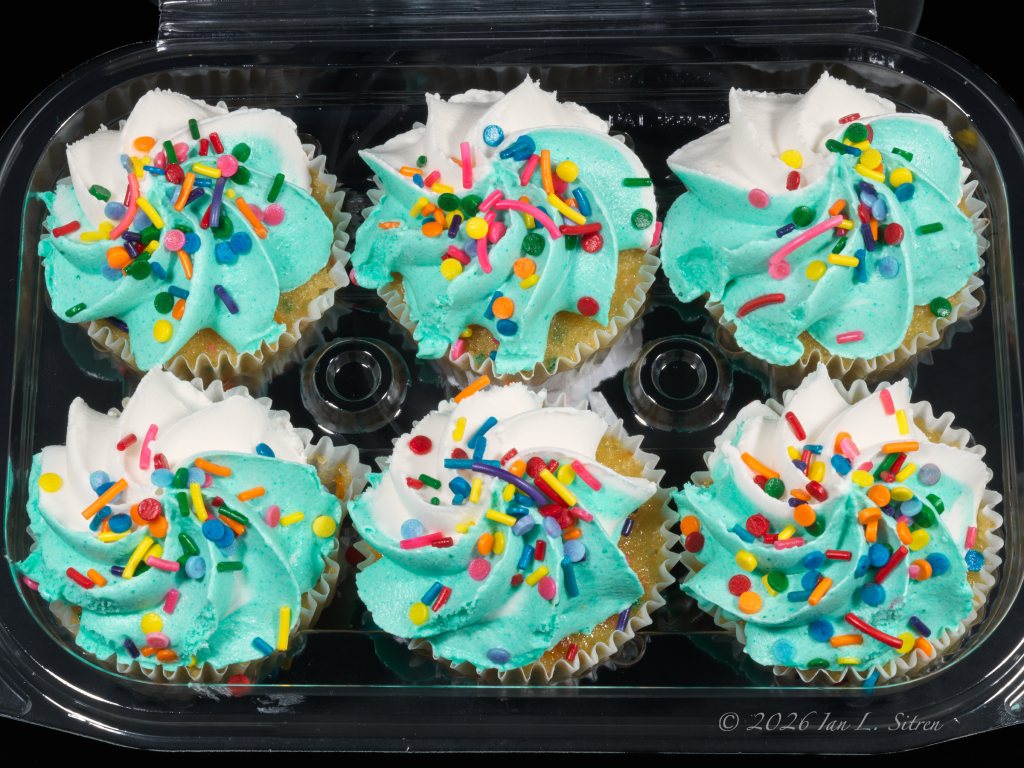
Today has been National Cupcake Lovers Day.
Notice it isn’t National Cupcake Day. It is National Cupcake Lovers Day, making it just as much about the people who enjoy cupcakes as the cupcakes themselves.
For this one, I made a slight departure from my usual Food From Bag To Background approach.
Instead of removing the cupcakes from their packaging, I photographed them exactly as they came from the grocery store in their clear plastic container. Sometimes the packaging is part of the story.
The cupcake has been around for more than 200 years. Early recipes appeared in American cookbooks in the late 1700s and early 1800s, and by the mid-19th century the name “cupcake” had become common. Some historians believe the name came from cakes baked in individual cups, while others point to recipes that measured ingredients by the cup rather than by weight.
These Birthday Cupcakes caught my attention because of their bright blue and white frosting and colorful sprinkles. I thought they would photograph really nicely.
To see more of my completed food photographs, along with my aviation, fitness, fashion, and other photography projects, please visit my website at https://www.secondfocus.com. Thanks!
National Roast Beef Day and Arby’s Original Idea
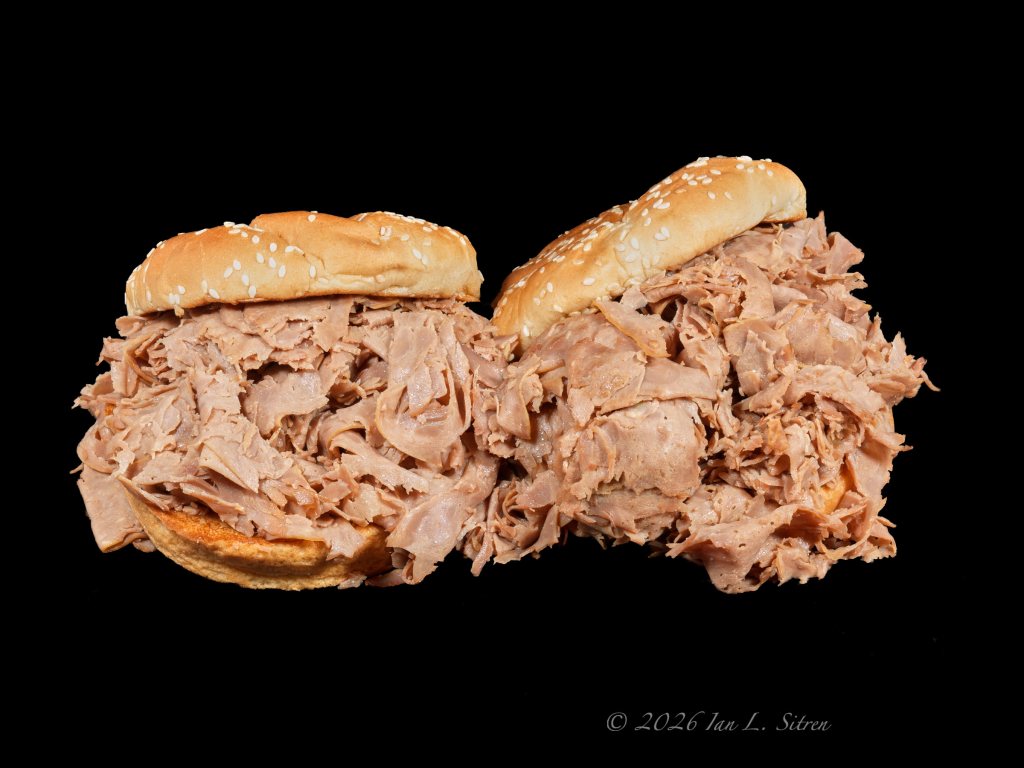
Today has been National Roast Beef Day.
I picked Arby’s for this one because my primary food project has focused on fast food.
Arby’s is somewhat unique in the fast-food world because the chain was built around the roast beef sandwich. While many major fast-food chains became known for hamburgers, fried chicken, tacos, or pizza, Arby’s made thinly sliced roast beef its signature item.
The chain was founded in 1964 by brothers Forrest and Leroy Raffel. At the time, most fast-food restaurants were competing in the hamburger business. The Raffel brothers decided to go in a different direction and built their restaurant around roast beef sandwiches instead.
For this photograph, I used two Arby’s Half Pound Roast Beef sandwiches. The reason there are two is simple. Arby’s was offering a buy one, get one free promotion for National Roast Beef Day.
Working on my fast food project has also made me pay attention to fast-food apps and promotions. Many chains offer discounts tied to food holidays and loyalty programs. If you use them regularly, the savings can be significant.
These two sandwiches were removed from their wrappers and photographed against a black background for my Food From Bag To Background series.
To see more of my completed food photographs along with my other photography projects, please visit my website at https://www.secondfocus.com. Thanks!
National Margherita Pizza Day
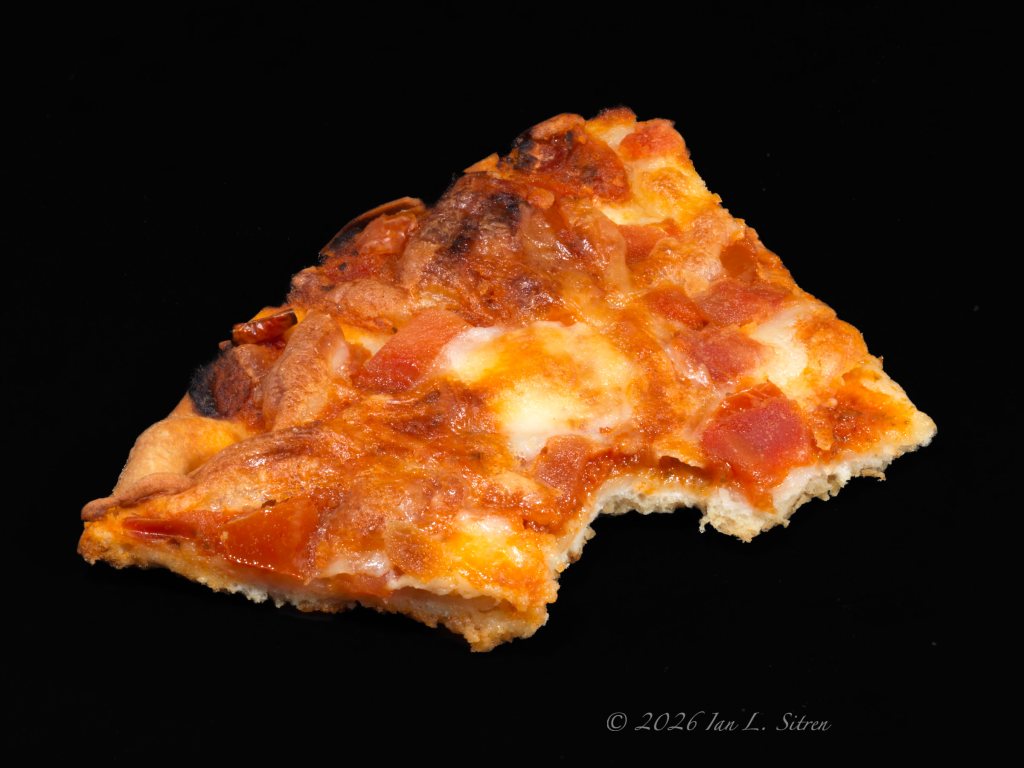
Today has been National Margherita Pizza Day.
It has not quite worked out the way I thought it might.
For starters, I discovered that Margherita Pizza does not come with tequila. Wrong kind of Margarita. That was disappointing.
Then, as I walked away to do something else, I heard someone ask, “Is it okay to eat?”
I said yes, but I need enough left to photograph.
Apparently I should have been more specific.
Margherita pizza is one of the simplest and most recognizable pizza styles. It is traditionally made with tomato sauce, mozzarella cheese, and basil. According to the popular story, it was created in Naples, Italy, in 1889 and named after Queen Margherita of Savoy. The red tomatoes, white mozzarella, and green basil were said to represent the colors of the Italian flag.
In this case, the pizza survived long enough for me to get a photograph, although just barely.
To see my completed food photographs, along with my aviation, fitness, fashion, and other photography projects, please visit my website at https://www.secondfocus.com. Thanks!
National Egg Roll Day
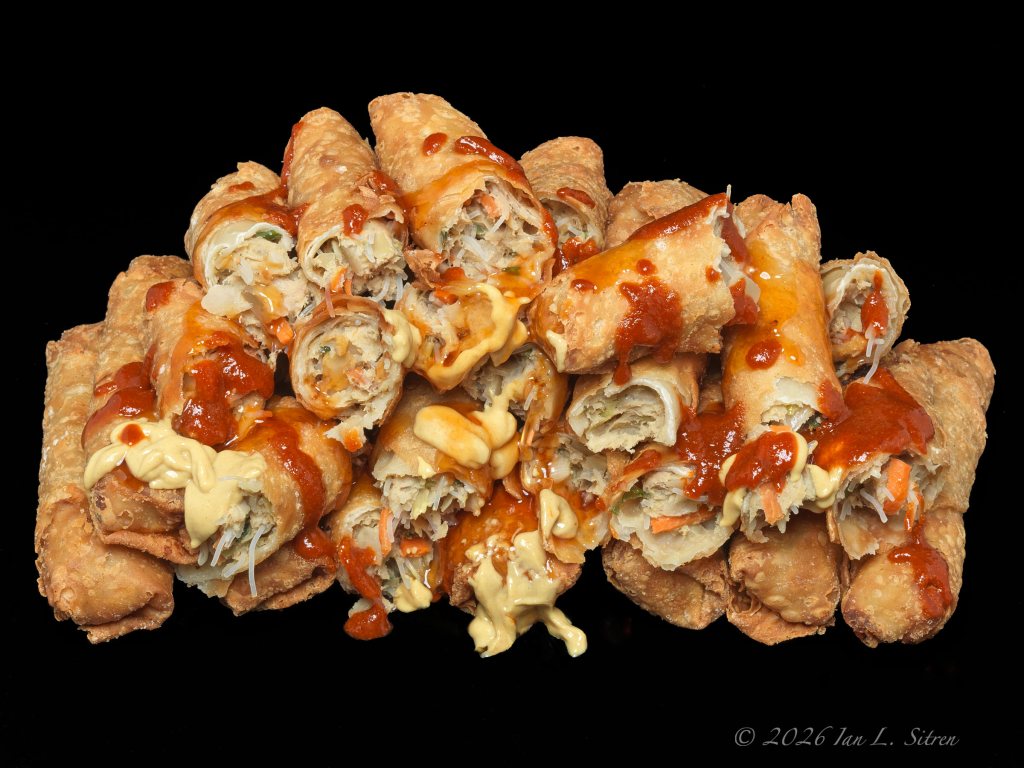
Today is National Egg Roll Day.
Most people order an egg roll or two as a side item.
For this photograph, I ordered eighteen.
At that point, the egg rolls stop being a side dish and become the entire meal. Several were cut open to reveal the filling while the rest were stacked into a pile and covered with sweet and sour sauce, hot mustard, and chili sauce.
The modern American egg roll is actually a Chinese-American creation rather than a traditional Chinese food. While its exact origins are debated, the thick, bubbly wrapper and hearty filling helped make egg rolls a familiar part of takeout menus across the United States.
The egg rolls came from Panda Express, which opened its first restaurant in Glendale, California, in 1983 and has grown into the largest American-Chinese restaurant chain in the United States.
There is a lot more food to tempt you on my website along with my other photography projects, my new Motion page, and be sure to check out my blog. There is even more there and it is updated almost daily. Visit SecondFocus.com Thanks!

