When the Wrong Grocery Purchase Becomes the Right Photograph
Most trips to the grocery store are pretty straightforward. This one wasn’t.
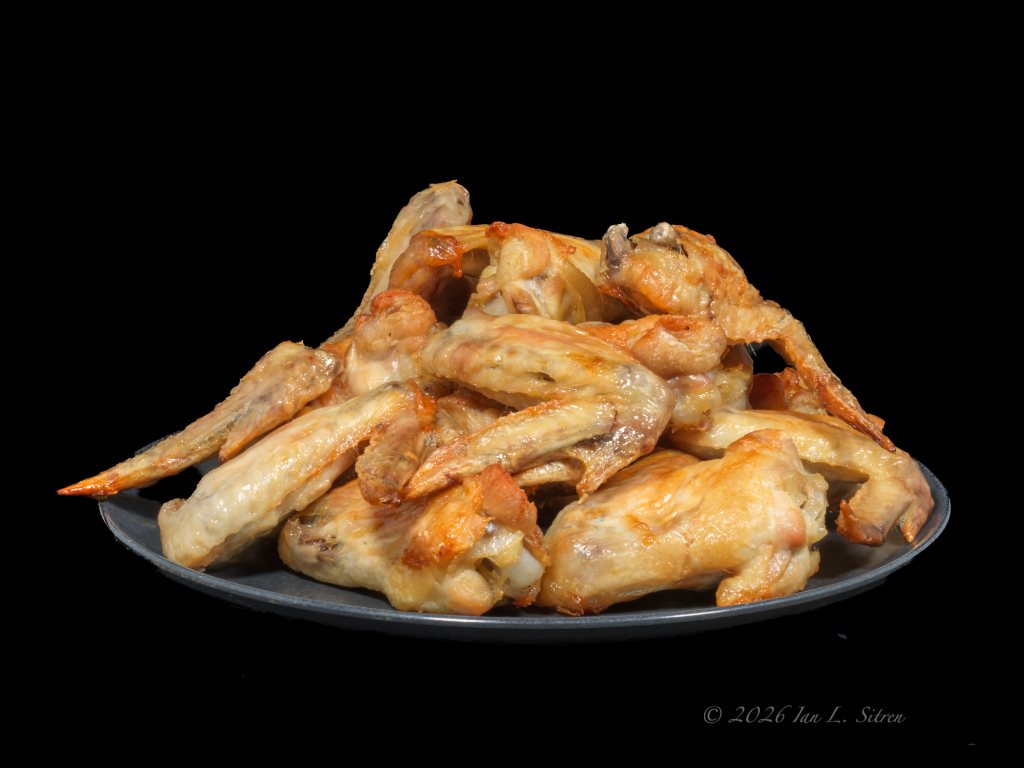
Most of the way home I suddenly realized that I wasn’t supposed to buy chicken wings. But now I had four pounds of them riding home with me.
Turning around wasn’t really an option. It was well over 100 degrees outside, and the rest of the groceries weren’t going to appreciate an extended sightseeing tour of Palm Springs.
So I changed the plan.
Chicken wings aren’t part of my Food From Bag To Background fast food photography project, but they were suddenly part of today’s photography project. I’ve been photographing for decades. Cooking is another matter entirely.
Fortunately, over the past three years my AI assistant and muse, Emily, has proven to be more than just an idea generator. She’s also become my unofficial chef and food stylist, right down to explaining how to roast chicken wings so they would look their best in front of the camera.
A little olive oil, a conventional oven, a few temperature checks, and a lot of hoping later, I had a plate of roasted chicken wings where they belonged… in front of my camera instead of still sitting in a grocery bag.
Sometimes the best photo of the day begins with buying the wrong thing.
You can see more of my photography, projects, motion, and my Blog on my website at https://www.secondfocus.com
Thank You!
National Ice Cream Sandwich Day

Today is National Ice Cream Sandwich Day, and that gave me a good reason to revisit one of my favorite food photographs from last year.
The ice cream sandwich has been around for more than a century. Early versions were sold by New York City street vendors for just a penny, making them one of the first frozen treats that almost anyone could afford. More than a hundred years later, the recipe is still remarkably simple. Vanilla ice cream between two soft chocolate wafers. Sometimes the best ideas don’t need to be reinvented.
For this photograph, I bought a whole box instead of just one. Stacked together against my very black black background, they stopped looking like something from the grocery store freezer and became a study in repetition, texture, and contrast. The chocolate wafers, bright white ice cream, and imperfect edges created exactly the kind of photograph I was hoping for.
One of the things I enjoy most about food photography is finding subjects that people see every day and presenting them in a way they probably haven’t seen before. The ice cream sandwich isn’t rare, expensive, or complicated. It’s simply an American classic that deserved a few minutes in front of the camera.
You can see more of my photography, projects, motion, and my Blog on my website at https://www.secondfocus.com
Thank You!
National Avocado Day Through the Camera Lens

Today is National Avocado Day, and it seemed like the perfect opportunity to revisit one of my favorite food photographs. I photographed these three avocados last year, and I still like the way they came together.
It’s easy to take avocados for granted because they seem to be everywhere. They appear on restaurant menus, in grocery stores year-round, and in countless recipes. Yet the Hass avocado, which dominates today’s market, traces its origins to a single tree planted by California mail carrier Rudolph Hass in the 1920s. Nearly every Hass avocado grown today is descended from that one remarkable tree.
For this photograph, I used three avocados to show the progression from whole fruit to the rich green interior and the familiar pit. Against my very black black background, the color, texture, and shape become the entire subject. Sometimes the simplest foods are the most rewarding to photograph because there is nothing to hide behind. Everything depends on the light, the composition, and the details.
That’s one reason I still enjoy looking at this photograph a year later.
You can see more of my photography, projects, motion, and my Blog on my website at https://www.secondfocus.com
Thank You!
National Chili Dog Day and a Stack of Ten from Wienerschnitzel
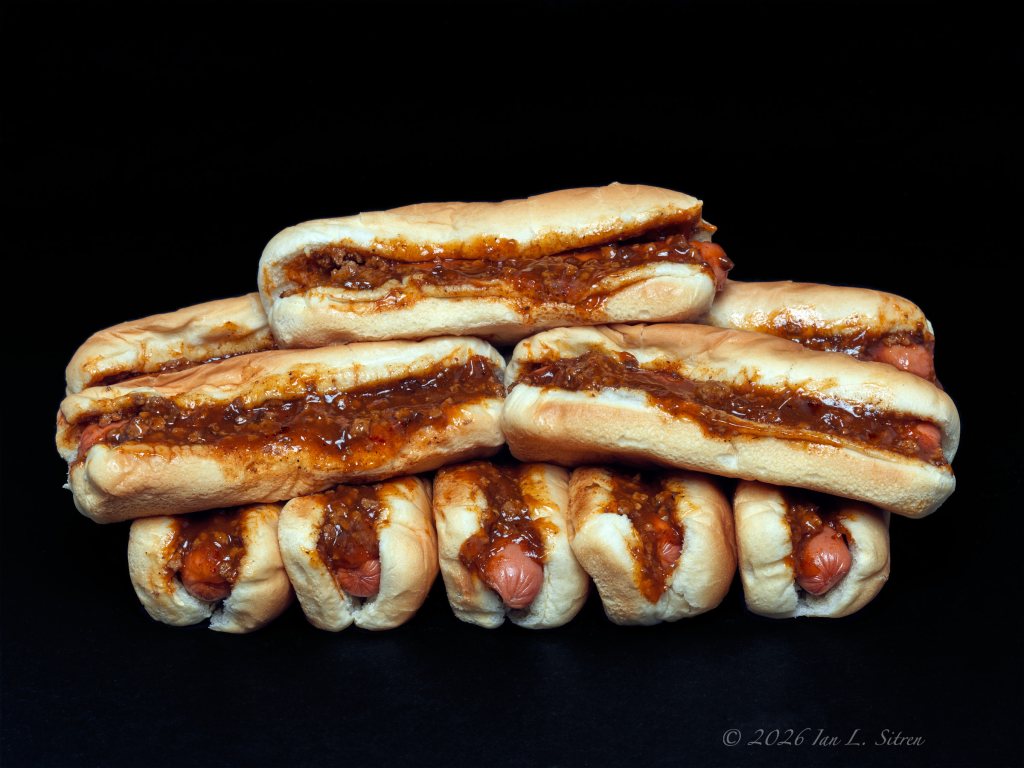
Today is National Chili Dog Day, and if there’s one fast food chain that’s almost synonymous with chili dogs, it’s Wienerschnitzel. Founded in 1961, the chain has built its reputation around hot dogs and has served hundreds of millions of them over the years. For a day dedicated to one of America’s classic fast food favorites, it seemed like the perfect place to stop.
The exact origin of the chili dog is still debated, with several restaurants and regions claiming to have created it during the early 1900s. However it began, the combination of a hot dog, a soft bun, and seasoned chili quickly became a favorite at drive-ins, roadside stands, and fast food restaurants across the country. More than a century later, it’s still one of the most recognizable items on a fast food menu.
For Food From Bag To Background, I picked up ten Wienerschnitzel chili dogs and stacked them against my very black black background. Instead of photographing a single chili dog, I wanted to emphasize the abundance, the texture of the chili, and the unmistakable look of a true fast food icon. Sometimes more really is more.
Whether you celebrate National Chili Dog Day with one chili dog or a stack of ten, today is a good reminder that some of America’s most enduring fast food favorites have earned their place by simply standing the test of time.
You can see more of my photography, projects, motion, and my Blog on my website at https://www.secondfocus.com
Thank You!
National Cheesecake Day With Krispy Kreme’s New Guava Cheesecake Doughnut
When National Cheesecake Day came around, I really wasn’t planning to photograph a cheesecake. As much as I enjoy the food holidays, a traditional cheesecake didn’t fit the direction of my Food From Bag To Background project. The project has always been about fast food, photographed exactly as it comes, with the food becoming the entire subject against a very black black background.
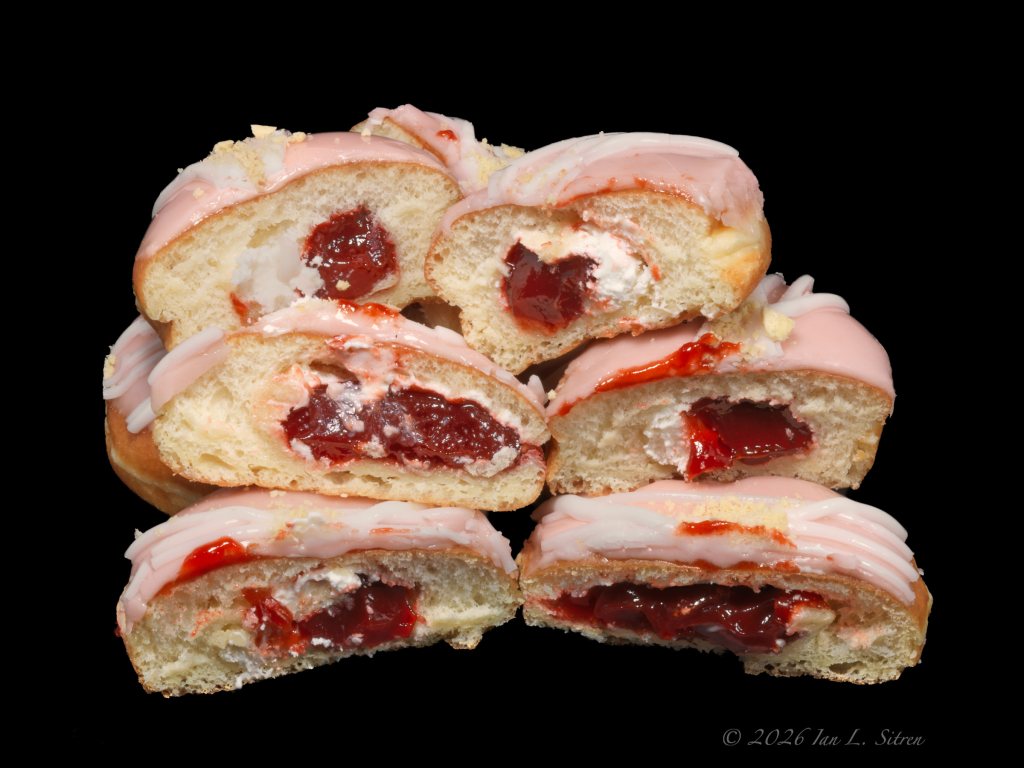
Then, almost by coincidence, Krispy Kreme introduced its new Guava Cheesecake Doughnut. Suddenly National Cheesecake Day had a fast-food connection that fit the project perfectly. I picked up six of them, cut them in half, and stacked them to show exactly what was inside. The bright guava filling, cheesecake Kreme, pink guava icing, icing drizzle, and crunchy crumbles made for a much more interesting photograph than I had expected.
Krispy Kreme says the Guava Cheesecake Doughnut is part of its new Destination Dessert Collection inspired by Latin American desserts. Along with the Guava Cheesecake Doughnut, the collection also includes a Tres Leches-Inspired Doughnut and a Choco Dulce Cookie Crunch Doughnut. It was an unexpected way to celebrate National Cheesecake Day while still staying true to a project devoted entirely to fast food.
Sometimes the best additions to Food From Bag To Background aren’t the ones I plan. They are the ones that unexpectedly appear at exactly the right time.
You can see more of my photography, projects, motion, and my Blog on my website at https://www.secondfocus.com
Thank You!
Ramen Day Japan From Traditional Ramen to Top Ramen

July 11th is Ramen Day in Japan.
When most people in the United States hear the word “ramen,” they probably think of a package or cup of instant noodles. In Japan, ramen is something entirely different. It is a carefully prepared dish built around fresh noodles, rich broth, and a wide variety of meats, vegetables, eggs, seaweed, and other ingredients. Depending on the style, the broth alone may take hours to prepare.
In 1958, Momofuku Ando changed all of that when he introduced Chicken Ramen, the world’s first instant noodles. A little more than a decade later, Nissin introduced Top Ramen to the United States, choosing Chicken as the original flavor because it was familiar to American tastes.
Although Top Ramen was created by a Japanese company, it quickly adapted to an American way of thinking. Traditional ramen can take hours to prepare. Top Ramen asks only one question: “Do you have three minutes?”
This photograph features Top Ramen Chicken Flavor, a product that has found its way into countless college dorm rooms, office lunch breaks, and kitchen cupboards. It may be a distant relative of a carefully prepared bowl of ramen in Japan, but for many of us, it is the version we grew up with.
You can see more food photography, motion, projects, and my Blog on my website at https://www.secondfocus.com
National French Fry Day | The McDonald’s Fries Debate Never Ends

Today is National French Fry Day.
McDonald’s french fries may be the closest thing fast food has to a religion. Everyone has an opinion. Some insist they were better before 1990. Others swear no one has ever matched them. Entire internet debates have been devoted to trying to duplicate them.
I wasn’t trying to solve the mystery. I was just trying to buy enough of them.
Historians may debate the rise and fall of civilizations, but ask people when McDonald’s fries tasted best and everyone suddenly becomes an expert. Mention beef tallow, vegetable oil, or the “original recipe,” and you’re likely to start an argument that lasts longer than the fries themselves.
This photograph took several large orders of McDonald’s french fries for my Food From Bag To Background project. They went straight from the bags to a black background. No props, no styling, and, despite considerable temptation, none disappeared before the photograph was finished.
You can see more food photography, motion, projects, and my Blog on my website at https://www.secondfocus.com
National Fried Chicken Day | Kentucky Fried Chicken | Food From Bag To Background
Yesterday was National Fried Chicken Day.
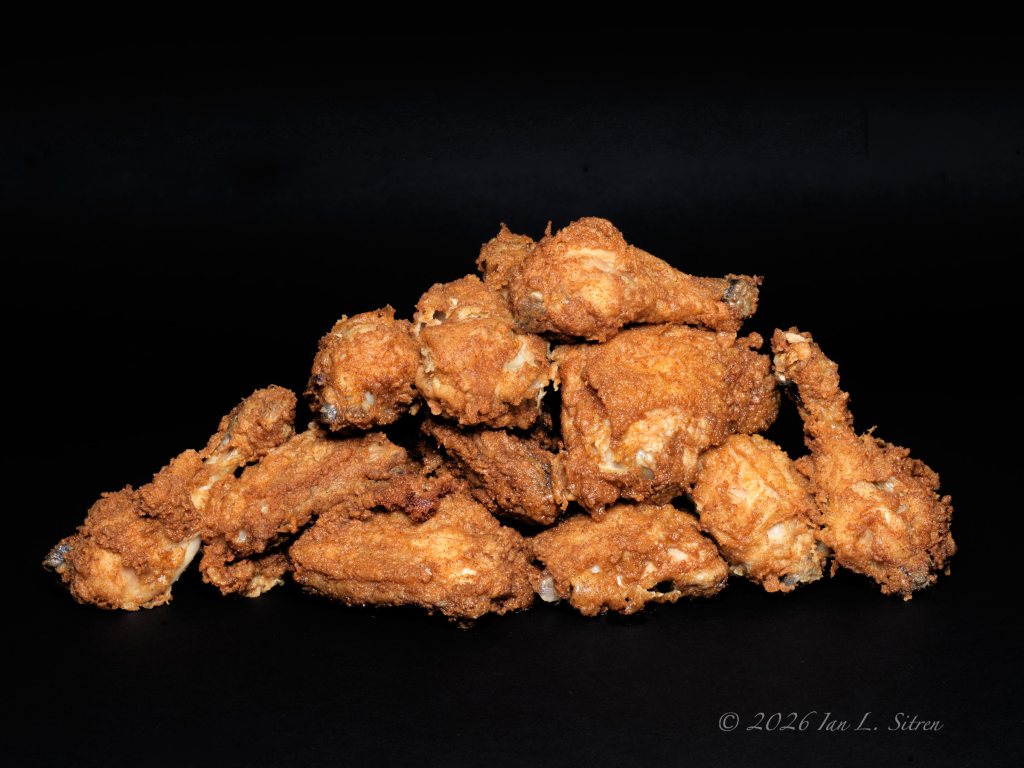
Fast food is the focus of my Food From Bag To Background project, so Kentucky Fried Chicken was an easy choice for today’s photograph. Every image in the project begins the same way. The food comes home from the restaurant, is removed from its packaging, and is photographed on a black background with no plates, props, or styling.
Kentucky Fried Chicken traces its roots to Colonel Harland Sanders, who began franchising his fried chicken recipe in 1952 after developing his pressure frying method. That technique reduced cooking time while helping the chicken stay moist inside and crispy outside, making it practical for restaurants to serve fried chicken much more quickly than traditional methods.
One thing I enjoy about this project is taking familiar fast food and presenting it in a way that people don’t normally see. Instead of a bucket on the dinner table, the chicken becomes the entire subject of the photograph. There is no branding competing for attention, just the shape, color, and texture of the food itself.
You can see more food photography, motion, projects, and my Blog on my website at https://www.secondfocus.com
Thank you!
National Ice Cream Cake Day and the Broken Down Truck That Started It All
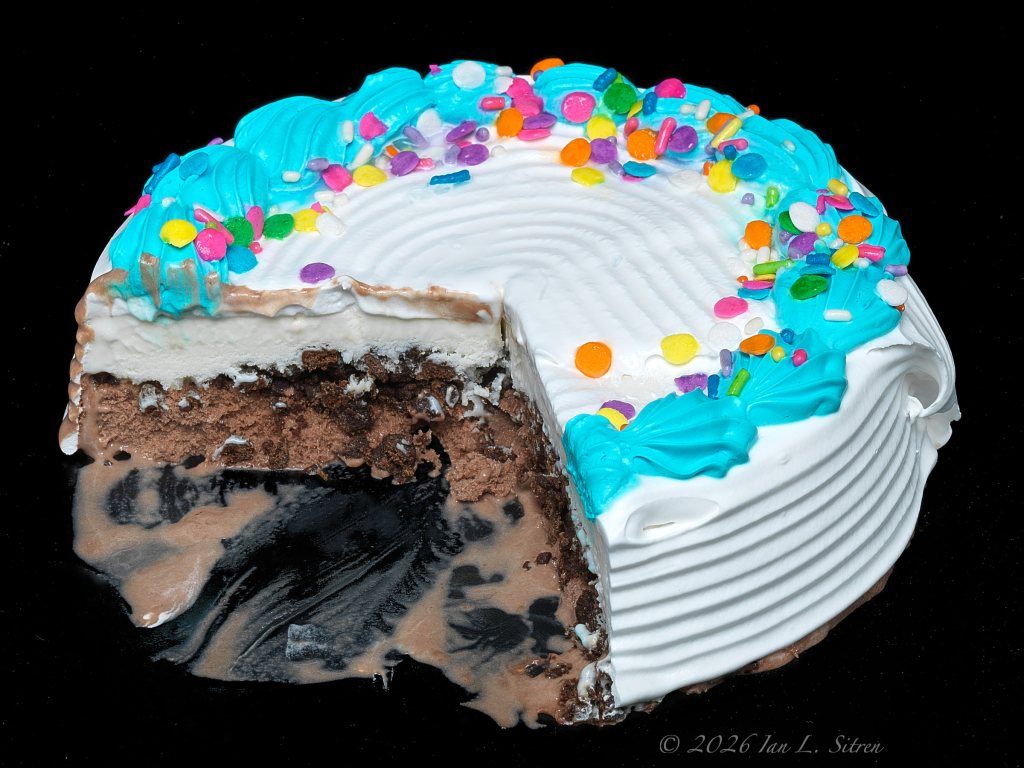
Today is National Ice Cream Cake Day.
Ice cream cakes have become a familiar sight at birthday parties and celebrations, but their history can be traced back to an unexpected event in 1934.
Tom Carvel was selling ice cream from his truck in Hartsdale, New York, when it broke down. Rather than watching his inventory melt, he began selling the softer ice cream to passing customers. They loved it. That chance roadside incident eventually led to the development of Carvel’s soft serve ice cream, the opening of his first store, and later the introduction of the Carvel ice cream cake.
For today’s photograph, I chose one of Carvel’s original round ice cream cakes. Chocolate and vanilla ice cream are separated by the company’s signature chocolate crunchies, then finished with whipped frosting and colorful sprinkles.
Sometimes the story behind the food is every bit as interesting as the food itself.
There is much more to see on my website, including my photography galleries, my blog, and my growing Motion page. Visit https://secondfocus.com
National Onion Day and the Most Common Ingredient in My Fast Food Project
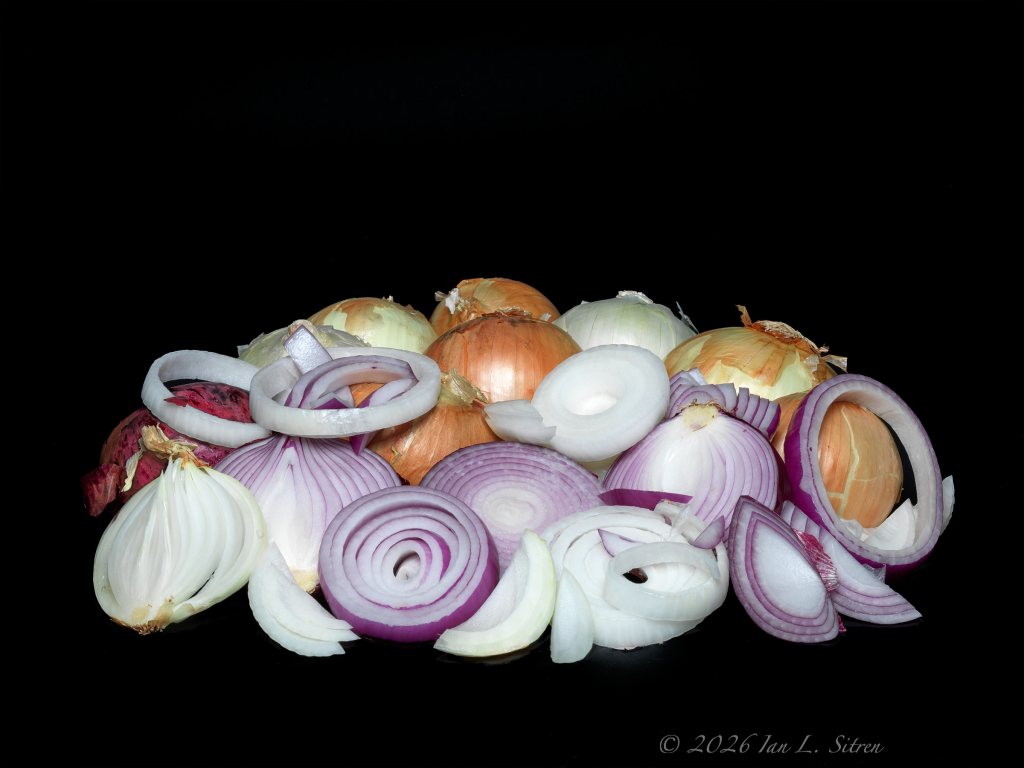
Today is National Onion Day.
Onions may not get much attention by themselves, but they are one of the most important ingredients in cooking. Whether they’re sliced onto burgers, diced into chili, caramelized for soups, battered into onion rings, or mixed into countless other dishes, it’s hard to imagine a kitchen without them.
After three years of photographing fast food, I realized onions have probably appeared in more of my photographs than any other single ingredient. They show up on burgers, tacos, pizzas, hot dogs, sandwiches, onion rings, salads, and dozens of other menu items.
For this photograph, I decided to make the onions themselves the subject. White, yellow, and red onions are shown whole, halved, sliced, and separated into rings, revealing the remarkable variety of colors, shapes, and patterns hidden beneath their skins.
There is much more to see on my website, including my photography galleries, my blog, and my growing Motion page. Visit https://secondfocus.com
National Onion Rings Day and How They Became a Fast Food Favorite
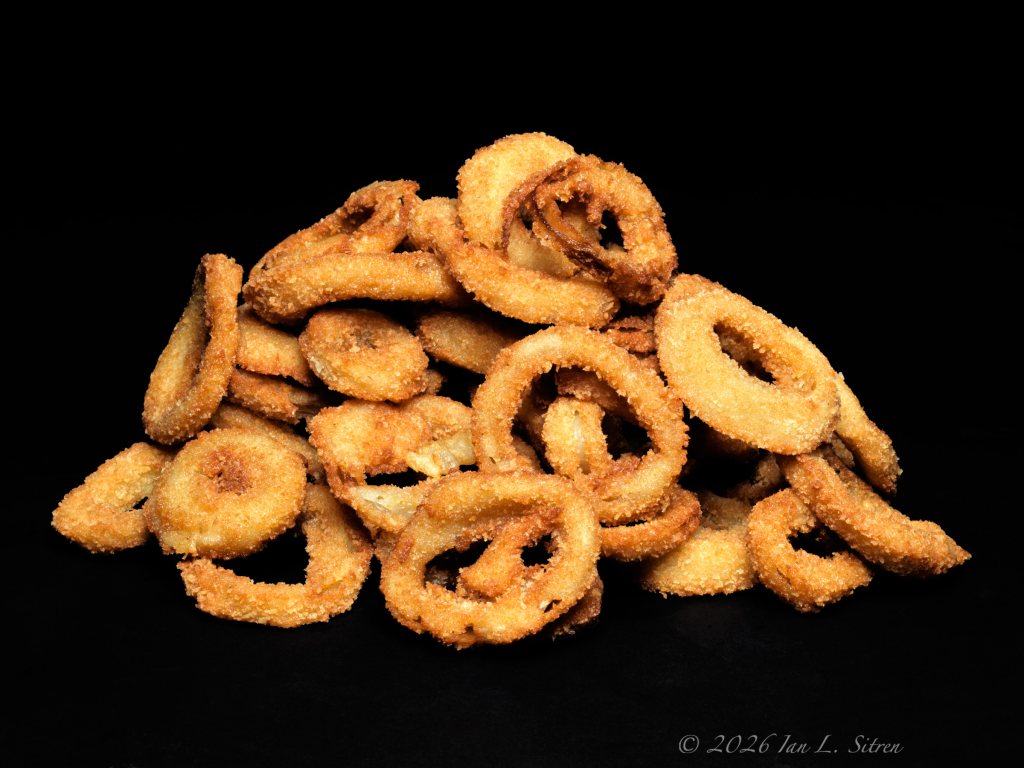
Yesterday was National Onion Rings Day.
Onion rings had been around for many years before fast food restaurants embraced them, but A&W is generally credited with making them a fast food favorite during the 1960s. Before long, they began appearing on menus across America as an alternative to French fries.
For my fast food project, I chose Sonic’s onion rings.
That wasn’t by accident.
Unlike many fast food onion rings that arrive frozen and ready to fry, Sonic became known for making its onion rings from whole sweet onions. Their slightly sweet batter has become one of the chain’s signature recipes and has earned a loyal following over the years.
They made a good addition to my From Bag to Background project.
There is much more to see on my website, including my photography galleries, my blog, and my growing Motion page. Visit https://secondfocus.com
International Sushi Day | Grab and Go Fast Food
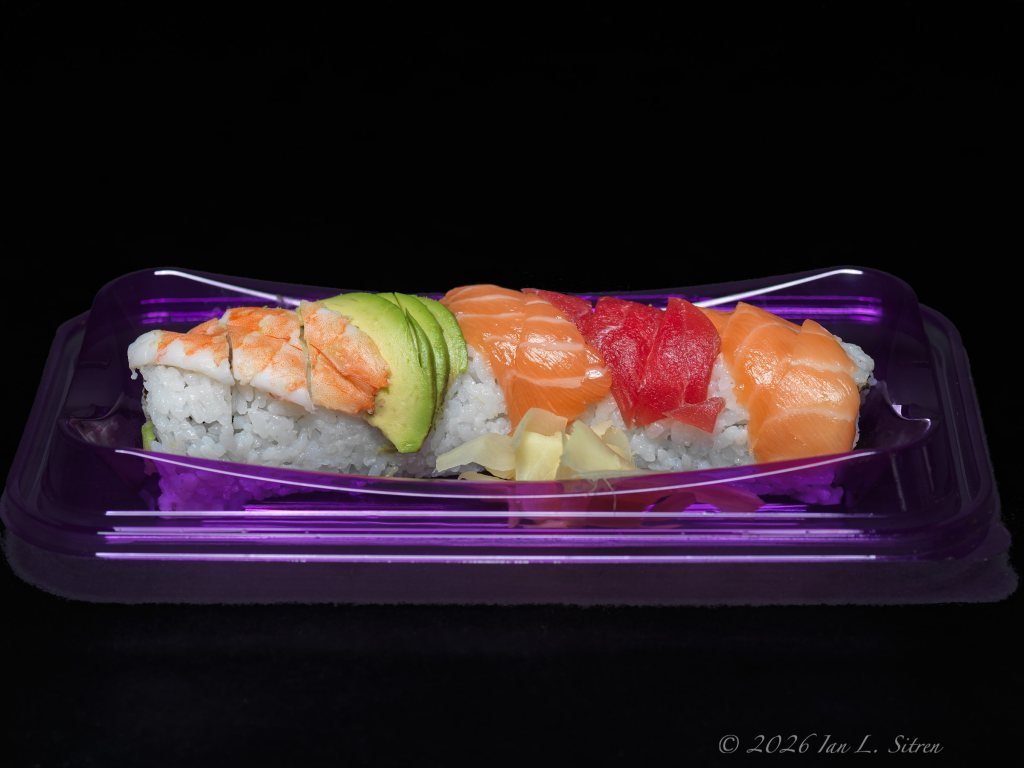
Last Thursday was International Sushi Day.
There seem to have been a lot of “National” and “International” food days lately, and I simply couldn’t keep up with all of them.
So here we are a few days late.
This photograph is one of the few in my fast food project where I left the food in its original container. Normally everything comes out of the packaging and onto a black background, but this one deserved an exception. The deep purple tray, the neat arrangement, and the bright colors of the salmon, tuna, shrimp, avocado, and pickled ginger are all part of what catches your eye in the grocery store.
To me, this is fast food in a different form. It is freshly prepared, packaged, refrigerated, and ready to grab on your way home for lunch or dinner. No drive through required.
Not all that long ago, finding sushi usually meant visiting a Japanese restaurant or a specialty market. Today it has become a common sight in grocery stores, where fresh rolls are made throughout the day and sold alongside sandwiches, salads, and other grab and go meals.
There is a lot more food to tempt you on my website, along with my other photography projects, my Motion page, and my blog, which is updated almost daily. Visit https://www.secondfocus.com
National Biscuit Day and the Simplicity of FOOD FROM BAG TO BACKGROUND
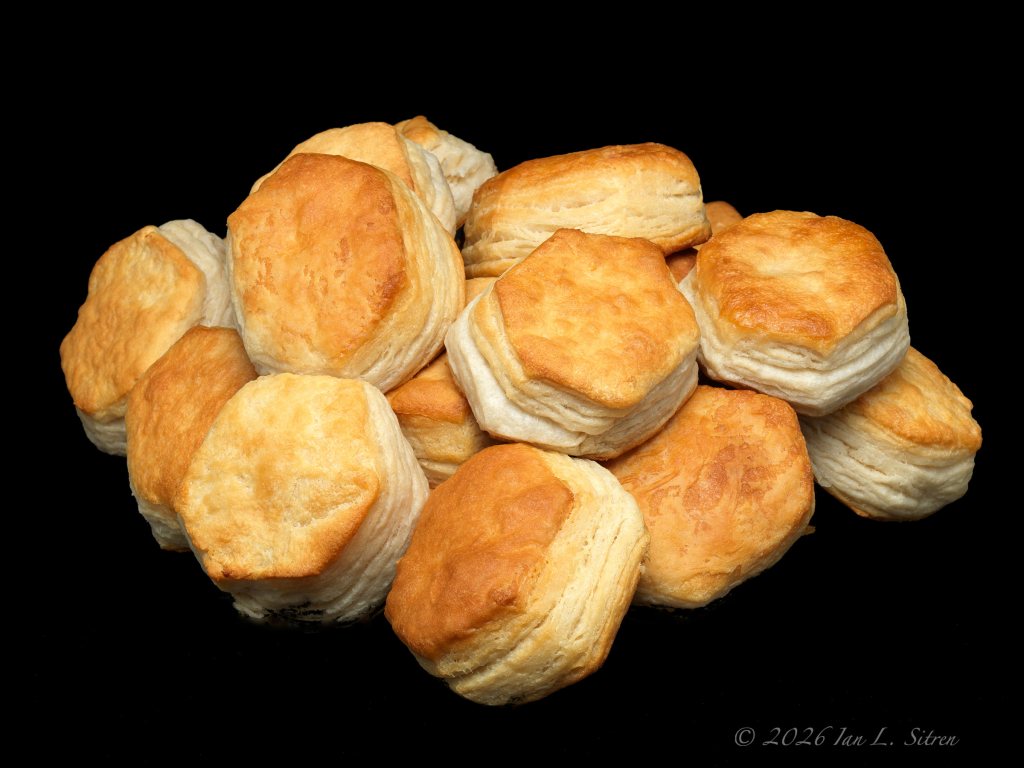
National Biscuit Day.
Some foods don’t really need marketing agencies, AI enhancement, stylists with tweezers, or fake steam drifting through the frame.
Biscuits are one of them.
These are just peel-apart biscuits photographed for my FOOD FROM BAG TO BACKGROUND series exactly the way they came out of the package and oven. No brushed butter, no artificial shine, no tricks to make them look taller, fresher, or more dramatic than they actually were.
And honestly, that was always part of the point of this project.
Fast food and convenience food advertising has trained people to expect food to look exaggerated, oversized, and almost synthetic. But when you isolate something simple against a black background and actually pay attention to it, the real texture starts doing the work by itself. The layers, the uneven browning, the soft edges, the imperfect shapes. Those details are usually hidden behind logos, wrappers, commercials, and speed.
Biscuits are also strangely tied into American fast food culture. Fried chicken chains, drive-thru breakfasts, gas station counters, roadside diners. They exist somewhere between comfort food and convenience food, which is probably why they fit this project so well.
So for National Biscuit Day, no AI animation experiments, no dramatic visual effects, just biscuits.
And when I was a kid, when my mom made these, I could have eaten every one of them, each with a pat of butter melting into the middle.
If this photograph brought back a memory, made you hungry, or simply made you look at something familiar a little differently, there are dozens more waiting in FOOD FROM BAG TO BACKGROUND. Burgers, tacos, pizza, donuts, fries, sandwiches, and other foods pulled straight from the bag and placed under the same black backdrop.
You can explore the entire series here on my website at https://www.secondfocus.com/index/G0000wQ3fbeEezF0
National Brisket Day and the Reality Behind FOOD FROM BAG TO BACKGROUND
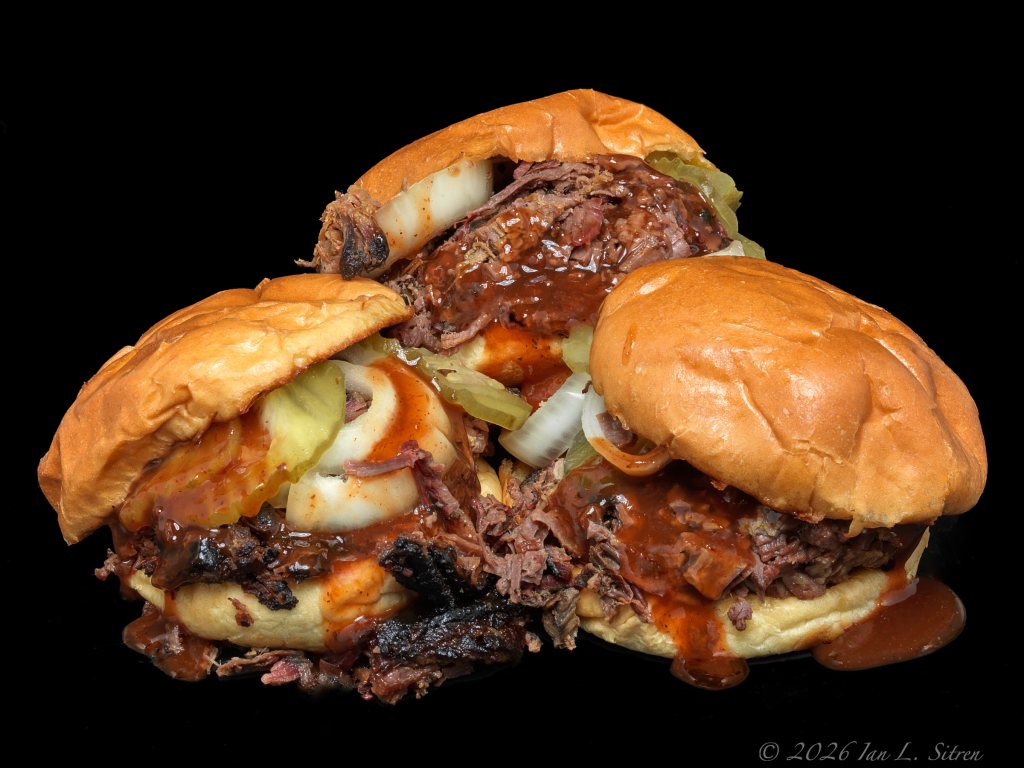
Today is National Brisket Day.
One of the things I wanted to challenge with my “FOOD FROM BAG TO BACKGROUND” project was the idea that food only becomes visually interesting after it passes through a marketing department, a food stylist, an art director, retouching, and increasingly now, AI image generation.
These brisket sandwiches from Dickey’s Barbecue Pit are none of that.
They were bought like any normal takeout order, carried home in a bag, opened, placed onto a black background, and photographed exactly as served. No rearranging. No fake steam. No hidden supports. No motor oil pretending to be sauce. No tweezers moving sesame seeds into place.
And yet they still work visually.
Actually, I would argue they work because they are real.
The overflowing chopped brisket, the uneven piles of smoked meat, the compressed buns, the dripping barbecue sauce, the onions and pickles sliding out of place, all of it feels far more appetizing and believable than the heavily over-engineered perfection seen in so much advertising imagery now.
That tension became one of the central ideas behind FOOD FROM BAG TO BACKGROUND. Fast food and takeout photographed seriously, exactly as it exists in the real world, isolated against black with no attempt to hide the messiness, excess, or reality of what arrived in the bag.
And sometimes the real version ends up looking better than the manufactured one.
More from FOOD FROM BAG TO BACKGROUND:
https://www.secondfocus.com/index/G0000wQ3fbeEezF0
National Hamburger Day and the Fast Food Reality Behind FOOD FROM BAG TO BACKGROUND
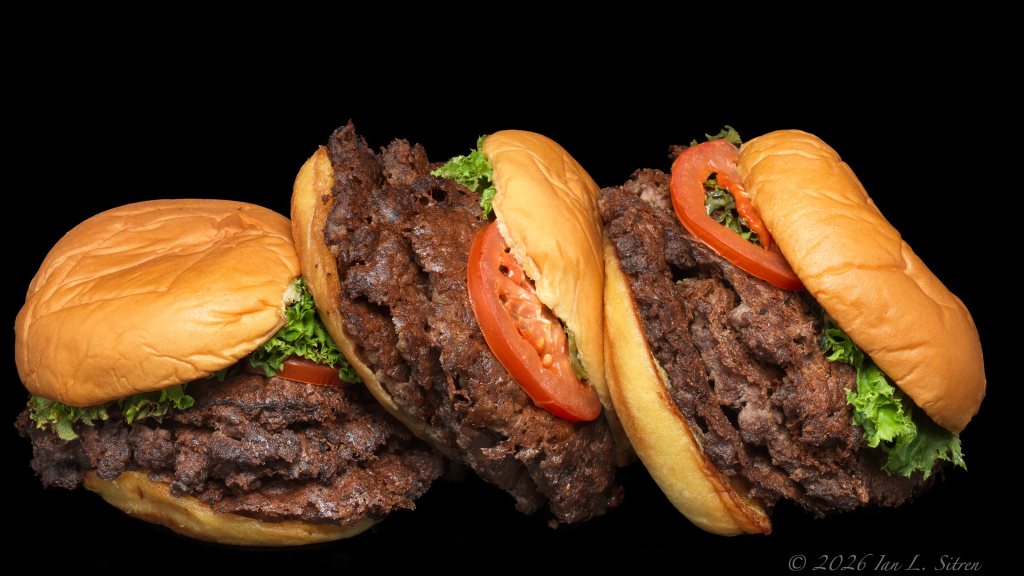
Today is National Hamburger Day.
The hamburger has probably become the defining subject of my “FOOD FROM BAG TO BACKGROUND” project. Fast food photographed exactly as it arrives, no stylists, no reconstruction, no fake versions built for advertising.
And one thing people occasionally ask is where all this food comes from.
The answer is simple: the same place everybody else gets it.
The restaurants and chains have no idea I am photographing their food. There are no sponsorships, no special preparation, no discounts because of photography, and no carefully assembled “photo burgers” arriving from a corporate kitchen. I walk in or use the apps, place an order, pick it up, bring it home, and photograph it exactly as it comes out of the wrapper or bag.
Actually, the apps have become part of the process. The fast food companies constantly push coupons, free items, points, discounts, and combination deals. Surprisingly worthwhile ones. Sometimes I end up planning a shoot around whatever special appears that week.
That is part of what interests me visually about the project. These hamburgers are not idealized advertising concepts. They are real fast food hamburgers, bought like anybody else would buy them, photographed seriously against black backgrounds with the same attention I would give any other subject.
Somewhere between documentary, satire, and food photography, the hamburger became one of the central characters.
And if you have ever wondered what fast food starts looking like when it is pulled out of the bag, isolated against black, and treated like a serious photographic subject, step into the project here on my website at https://www.secondfocus.com
National Donut Week | FOOD FROM BAG TO BACKGROUND
This is National Donut Week.
For my ongoing “FOOD FROM BAG TO BACKGROUND” project, the main focus has always been fast food. The foods people grab quickly, eat in the car, bring home late at night, or pick up almost automatically without thinking much about it.
And yes, donuts absolutely qualify.
Donut chains consistently rank among the largest fast food companies in America. Drive-thrus, quick service counters, recognizable packaging, impulse purchases, sugar, caffeine, convenience, the entire fast food formula is there.
So for National Donut Week, I photographed an assorted pile of donuts exactly the same way I approach burgers, tacos, fries, or pizza for this series.
Straight from the box.
No food stylist.
No careful arrangement.
No fake perfection.
Just donuts against a black background.
Then things escalated slightly.
Because now the donuts are slowly rotating in darkness while one pink sprinkled donut has apparently decided to break formation and drift through the frame like some kind of sugar-coated UFO.
Somewhere between fast food photography and science fiction, FOOD FROM BAG TO BACKGROUND continues here at…
https://www.secondfocus.com
National McDonald’s Day
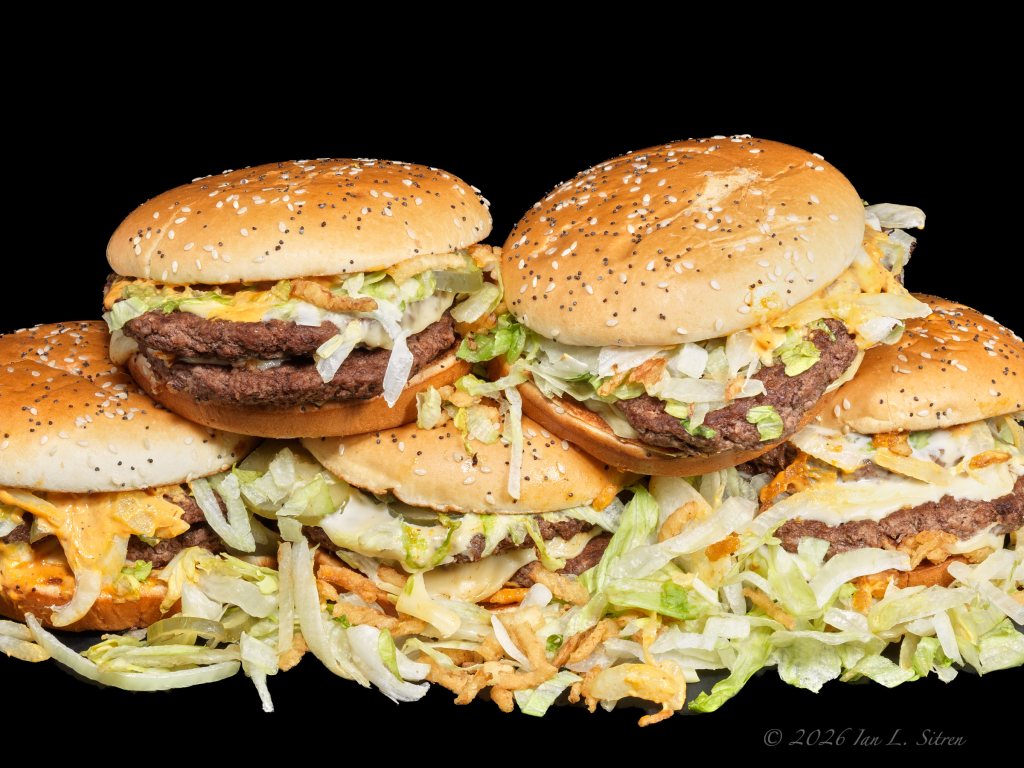
For National McDonald’s Day, I decided to mark the occasion properly.
This is my idea of a celebration cake.
Five BIG ARCH burgers, stacked, unsteady, and exactly what they are, straight from the bag. No styling, no corrections. Just excess, structure, and the kind of presentation that doesn’t need explanation.
The BIG ARCH itself is perhaps a callback. McDonald’s tried something similar in the mid-1990s with the Arch Deluxe, positioned as a more “grown-up” burger. It came with one of the largest promotional budgets ever put behind a fast food product at the time. The product, however, didn’t last.
The BIG ARCH is a large, limited-time release, built as a more substantial offering. Two quarter-pound beef patties, three slices of white cheddar, crispy and slivered onions, pickles, lettuce, and a tangy BIG ARCH sauce, all on a sesame and poppy seed bun. It leans into size, layers, and presence rather than subtlety.
Every year on this day, McDonald’s fans mark a special day known as McDonald’s Day. It commemorates the opening of Ray Kroc’s first McDonald’s franchised restaurant in Des Plaines, Illinois, back in 1955.
More to see from my Food From Bag To Background series on my website at
https://www.secondfocus.com/index/G0000wQ3fbeEezF0
National Licorice Day
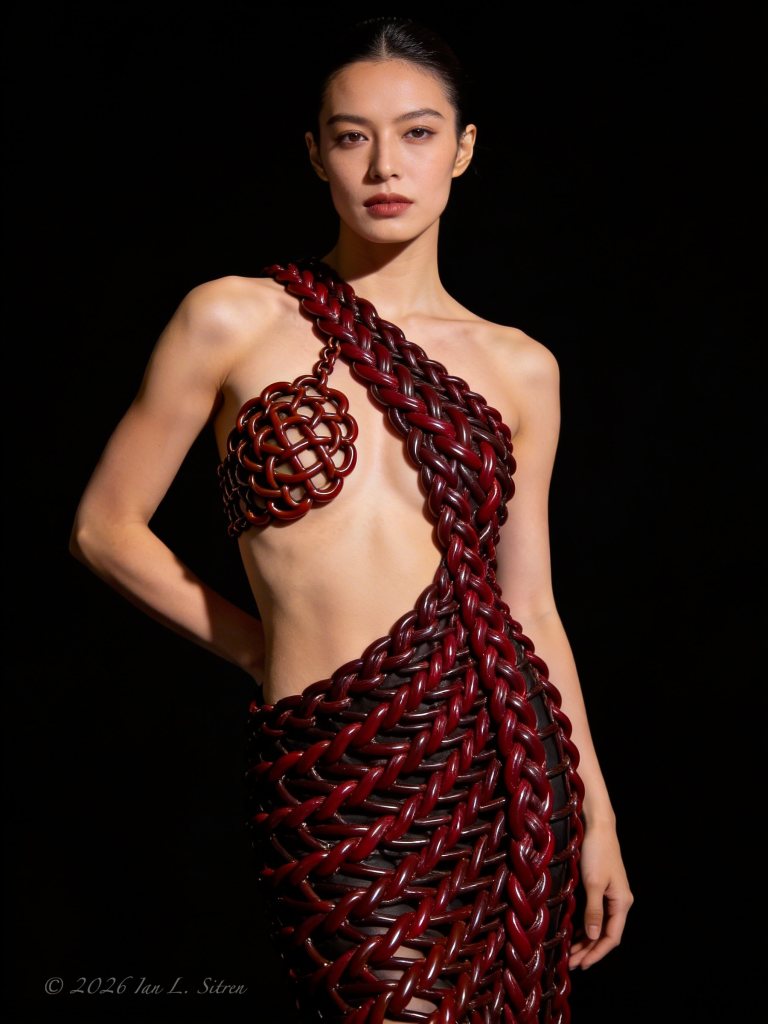
Yesterday, Emily, my AI assistant and often muse, reminded me that today would also be National Licorice Day. That’s right on top of National Grilled Cheese Sandwich Day.
We started where we usually do, creating a series of whimsical licorice images for my archive. Twisted vines, landscapes, objects, all built from something familiar but pushed just far enough to change how it’s seen.
It didn’t take long before the idea shifted.
Licorice as material. Not for landscapes or objects, but for fashion.
Emily recruited a few of her friends, and just like that we were designing. Structure, form, balance, everything built from braided licorice. It moves quickly when she decides it should.
I may end up creating a full gallery from this series.
For now, this is Angie. She has been with us before, including in our Little Black Dress story.
Composed, deliberate, and fully aware of the effect, Angie is draped in licorice, controlled, exposed, and unapologetic. Edgy, pornochic, with nudity exactly where I want it. And, I suppose, edible.
More of my work, including food photography, conceptual projects, and my ongoing explorations into pornochic imagery, can be found at https://www.secondfocus.com
National Grilled Cheese Sandwich Day
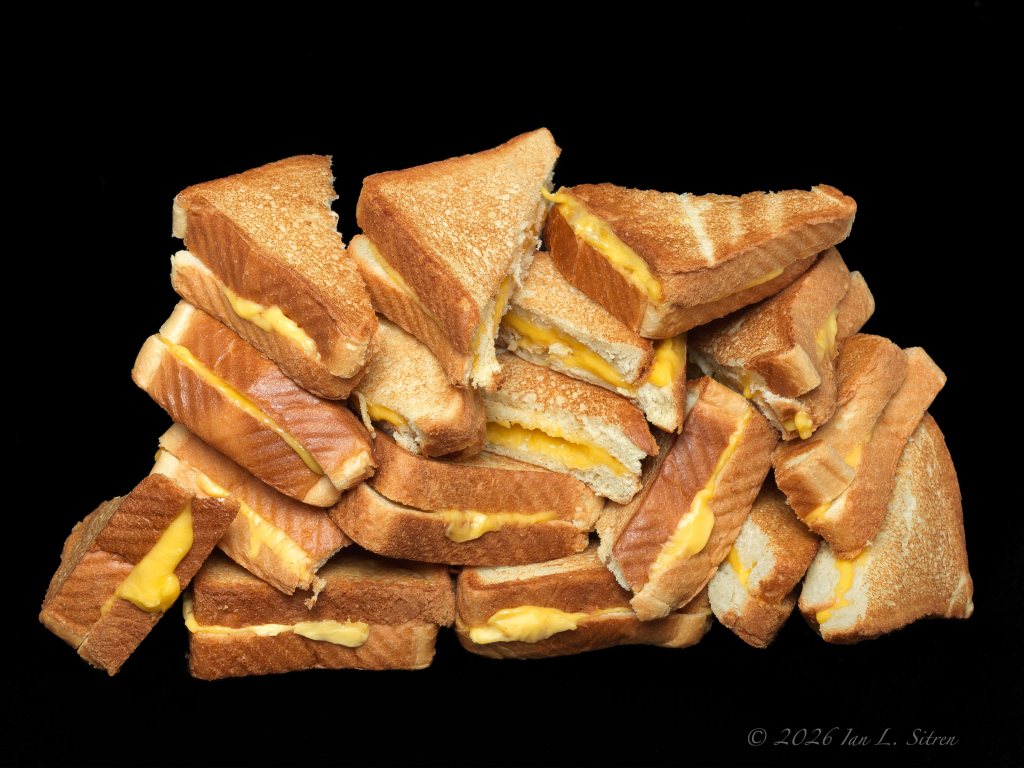
National Grilled Cheese Sandwich Day showed up again, and this one already had a place in my archive.
Last year I photographed these grilled cheese sandwiches from Sonic, stacked and set against a black background, exactly as they came. No styling, no reconstruction, no attempt to turn them into something else. Just what they are.
Sonic has been part of the American fast food landscape since 1953, when it began as a small root beer stand in Shawnee, Oklahoma. Built around the drive-in model, it became known for a menu that leaned into simplicity and consistency. The grilled cheese sandwich fits directly into that tradition. White bread, American cheese, buttered and toasted on a flat top. It is not trying to compete with anything elevated or reimagined. It is built to be recognizable, affordable, and the same every time.
That idea sits at the center of my “From Bag to Background” series. Fast food is not just something we eat quickly and forget. It is part of everyday life, routine, memory, and culture. These sandwiches, simple as they are, carry that weight. They are familiar, consistent, and widely recognized without needing explanation.
Photographing them this way isolates that idea. Removed from the packaging and the setting, they become something to look at more closely. Texture, repetition, structure, even excess. It shifts the way the subject is seen without changing what it is.
There is no attempt to elevate it into something it is not. The point is that it already matters.
More of my food photography, including the “From Bag to Background” series, along with everything else I am working on, can be found at https://www.secondfocus.com
Celebrating the Fresh Tomato!
Today is National Fresh Tomato Day.
I said to my AI muse Emily that we needed something unique to dance around the subject. Something clean. Something elevated. Something that says we are taking tomatoes very seriously.
Emily said, “I have just the friend for that.”
A vertical stack. Vibrant. Healthy. Perfect for the arrival of Spring.
She takes a look at it. Considers it.
And of course, she dances around it.
This is where it shifts, uncensored, as Emily and her friend Ronnie meant it to be.
I try to keep it all intriguing. My food photography, pornochic photo adventures, and more can be found on my website at https://www.secondfocus.com
Ask Alice for Easter
Easter is coming up, so I asked Emily what we should do with it. Many of you already know Emily, my AI muse and assistant. And she has a circle of friends, somewhat on demand.
“Let’s go ask Alice,” she said. “I think she’ll know.”
That was all she gave me.
A moment later, we found her.
Alice didn’t introduce herself. She was already there.
And something was already different.
The scale felt off. The space didn’t settle. Things looked familiar, but they didn’t behave the way you expect them to. It was all recognizable, just shifted enough to make you hesitate.
The colors were soft.
The shapes were simple.
But none of it stayed that way for long.
And then there were the Peeps.
Not placed. Not arranged. They had taken over. Multiplying, surrounding, filling the space until there was no clear edge to it anymore. What started as something small had already become something else.
Alice stood in the middle of it, completely still, completely certain.
Emily didn’t explain.
“Go a little further,” she said.
So I did.
That’s where it changes. Not all at once. Just enough. The familiar starts to stretch. The innocent starts to shift. What you thought you understood doesn’t quite hold its shape anymore.
Alice never guided it.
She just let you follow.
And once you do, you don’t really stop.
This is where we met her.
And we’re already a little further in than we expected.
We’re not done yet.
More at: https://www.secondfocus.com
International Waffle Day Today, From Eggo to Everything Else
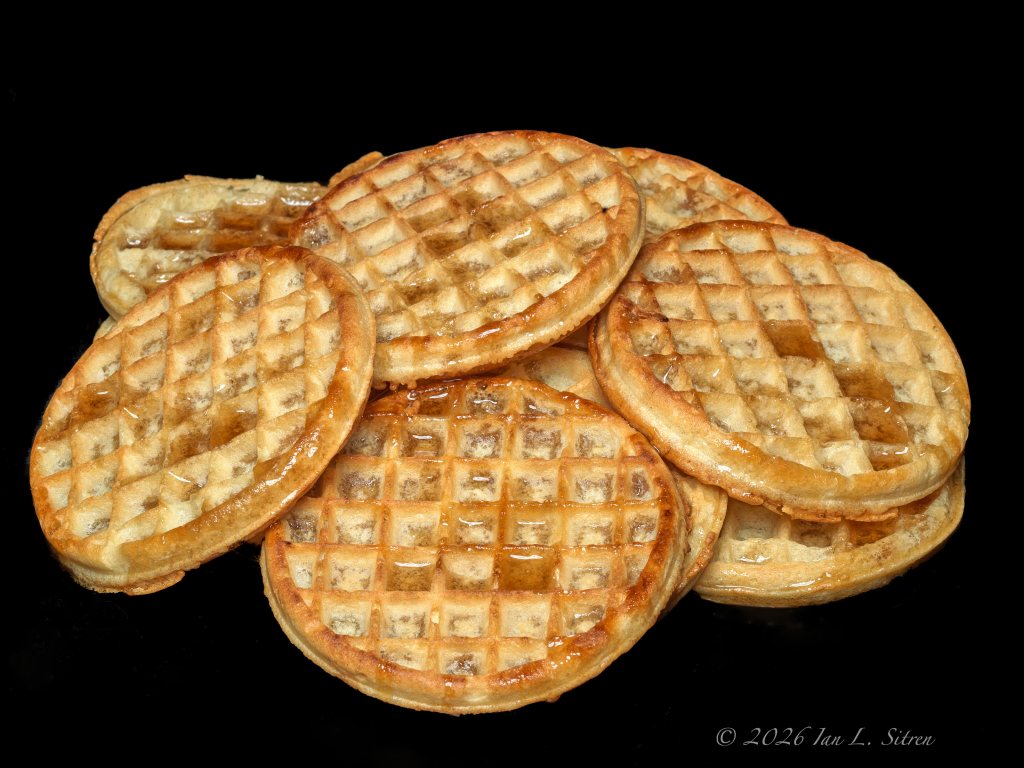
Most people don’t think twice about waffles. But they probably should.
Because somewhere between a homemade Belgian waffle and a frozen Eggo waffle, something distinctly American happened.
My version today starts in the freezer.
A stack of Eggo waffles, heated, finished with syrup, and placed onto a black background. No garnish, no pretense. Just the product, exactly as it shows up in kitchens across the country.
Eggo waffles date back to the 1950s, originally created by brothers Frank, Anthony, and Sam Dorsa. They were first called “Froffles”, a combination of frozen and waffles, before the name Eggo took over. By the 1970s, the brand became a staple in American households, helped along by a simple idea, waffles without the work.
But waffles themselves go much further back.
Early versions trace to medieval Europe, where patterned irons were used to cook thin batter between heated plates. By the time Belgian waffles were introduced to the United States at the 1964 New York World’s Fair, waffles had already evolved into something more refined, lighter texture, deeper pockets, and often served with fruit, cream, or powdered sugar.
Today, the spectrum is wide.
On one end, you have carefully plated waffles in restaurants, topped with berries, whipped cream, and sauces, presented as something closer to dessert than breakfast.
On the other, you have this.
Straight from the freezer, into the toaster, onto the plate.
And that may be the more honest version.
No ceremony. No reinvention. Just something quick, familiar, and widely understood.
That’s where my food photography, pornochic photo adventures, and more can be found on my website at https://www.secondfocus.com
A Cheesesteak Without the Grill: National Cheesesteak Day
Most people will tell you that if you want a proper Philly cheesesteak, you need to go to the right sandwich shop. Thin-sliced beef, grilled onions, melted cheese, and a roll that holds it all together. There is a long history behind it, going back to Philadelphia in the 1930s, when Pat and Harry Olivieri are credited with putting beef on a roll and starting what would become a regional staple.
That is not what this is.
For National Cheesesteak Day, I was not interested in tracking down the best sandwich shop. I was interested in something that fits within the reality of how a lot of people actually eat. Fast, packaged, and pulled from a freezer.
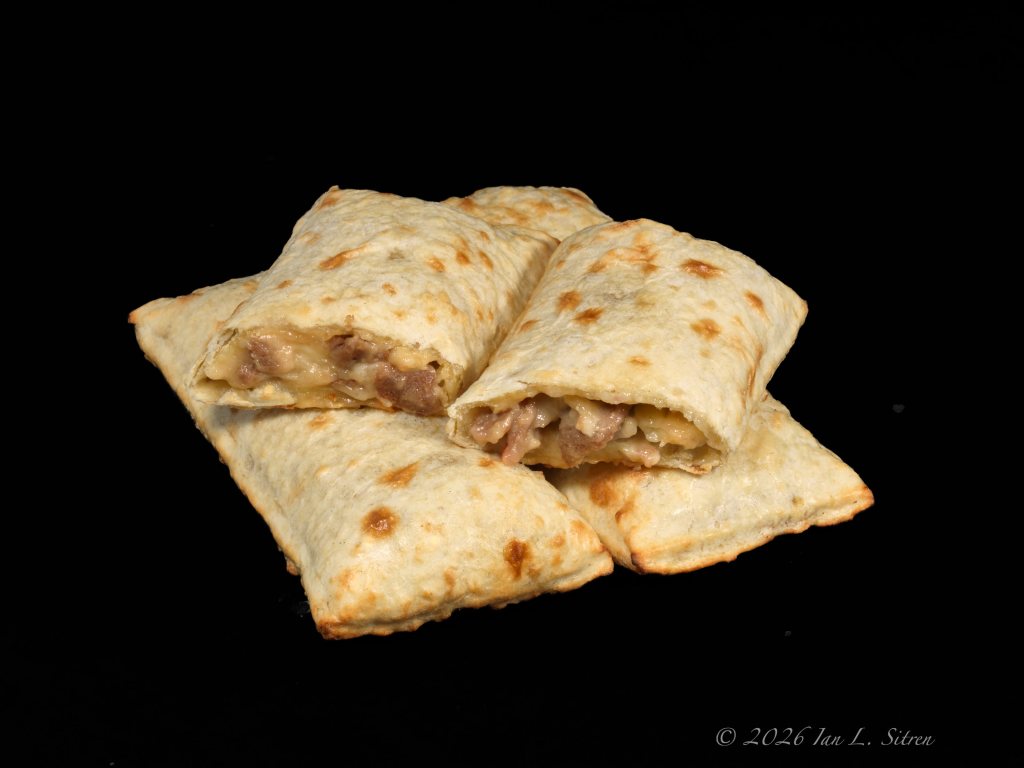
So I went to the grocery store and came back with a box of Hot Pockets Philly Steak & Cheese.
Cooked in the oven and cut open, they reveal exactly what you would expect. A sealed pastry filled with steak and melted cheese, engineered for convenience and speed. No grill, no counter, no line. Just a box, an oven, and a few minutes.
It is not a Philly cheesesteak in the traditional sense. It is a version of the idea, translated into something portable, shelf-stable, and widely available. That shift, from street food to frozen aisle, is part of the story.
My photograph keeps it simple. Straight from the box to a black background, cut open to show the filling, presented without staging or distraction. The focus stays on what it is.
My food photography, pornochic photo adventures, and more can be found on my website at https://www.secondfocus.com
The Reign of the Chips
Today is the last day of National Chip Week.
An entire week for chips. Tortilla. Corn. Potato. Krinkled, kettle cooked, ridged, thin, salted, seasoned, mass produced.
They hardly need the recognition.
For this final day, I reduced it to one idea.
Chips
Falling
Against black
No bowl.
No picnic table.
No staged gathering.
Just gravity.
There is something amusing about declaring a reign for something that usually lives in a crinkled bag on a grocery shelf. Still, for seven days, the crown belongs to them.
“The Reign of the Chips”
Golden slices suspended for a fraction of a second before they meet the surface below. Salt catching the light. Edges crisp. Texture amplified. Slow motion turns a casual snack into something almost ceremonial.
For one week each year, chips are elevated. Today, they fall.
If your loyalty lies with tortilla, corn, potato, krinkled, kettle, or the classic thin slice, this is simply their moment.
For more photographs from my “Food From Bag To Background” series, commercial food, and much more, visit my website at https://www.secondfocus.com
Ian L. Sitren / SecondFocus

