Today is National Big Boy Day.
Long before fast food chains covered every freeway exit, Bob’s Big Boy helped define what the American family restaurant could be. When Bob Wian introduced the original double-decker Big Boy hamburger in Glendale, California, in 1937, it became one of the first signature burgers that people would travel specifically to eat. The combination of car culture, diners, drive-ins, and roadside architecture made Big Boy an icon of postwar America.
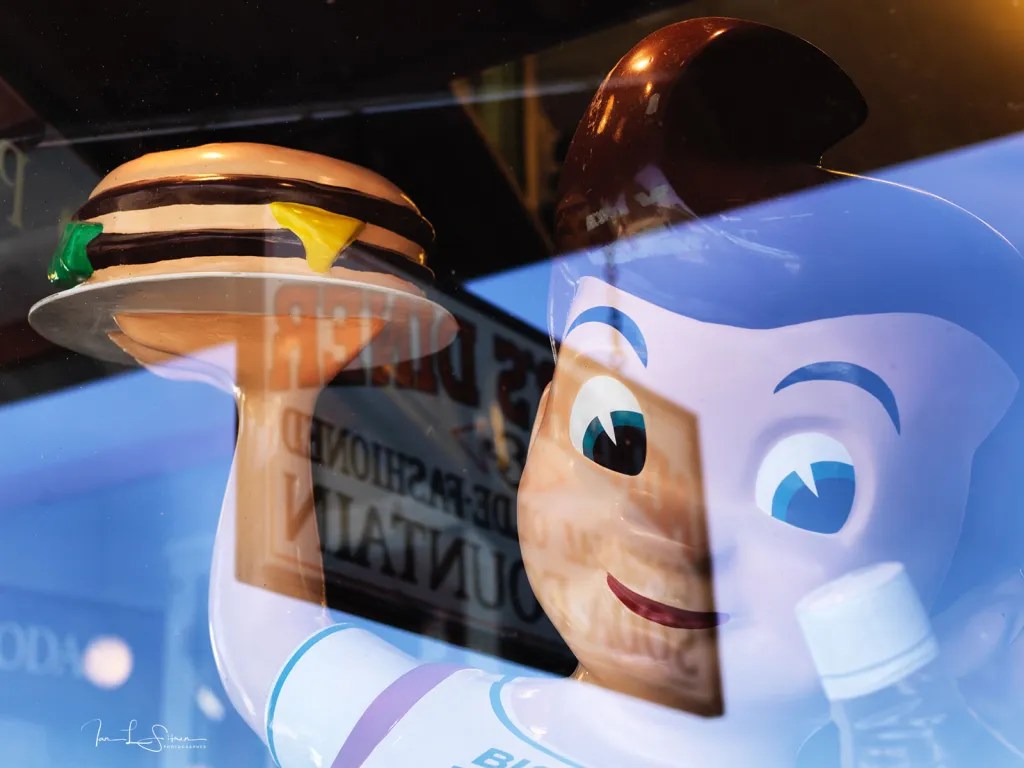
The smiling Big Boy statue carrying his oversized hamburger became just as recognizable as the restaurant itself. Today, original fiberglass statues have become highly sought-after collectibles, with surviving examples often selling for thousands of dollars. They represent much more than a restaurant chain. They remind people of family dinners, road trips, classic cars, and an era when the neighborhood diner was often the center of the community.
I photographed this statue in the window of an antique store in Julian, California. Between the reflections in the glass and the familiar smile, it seemed to capture exactly what nostalgia looks like. Sometimes an old restaurant mascot can tell a bigger story than the meal it was created to advertise.
There is much more to see on my website, including my food photography, aviation, editorial work, new Motion page, and my regularly updated blog. Visit SecondFocus.com
June 15, 2026 | Categories: Uncategorized | Tags: advertising mascot, American diner, Americana, antique store, Big Boy, Bob Wian, Bob's Big Boy, California history, classic hamburger, classic restaurants, collectibles, diner, double decker hamburger, editorial photography, fiberglass statue, Food History, hamburger, Julian California, National Big Boy Day, nostalgia, photography, restaurant collectibles, restaurant history, roadside America, roadside architecture, roadside attraction, secondfocus, vintage advertising | Leave a comment
Spotted Wednesday on a photo road trip: this Barstow building once known as the Hacienda Tequila Restaurant. The food is gone. The staff is gone. The only thing left? “Tequila” And frankly, that feels like a solid business model for the Mojave.
Bright yellow stucco and fresh green trim suggest someone’s trying to bring it back—or at least make it look like they might. There’s no menu, no hours, no explanation. Just a sign, blazing in the desert sun, whispering: “Tequila”.
Is it coming soon? Is it performance art? More roadside mysteries, faded ambition, fast food and eroticism on my website at http://SecondFocus.com
May 10, 2025 | Categories: Uncategorized | Tags: abandoned buildings, Barstow, California desert, desert travel, Hacienda Tequila Restaurant, Highway 58, Mojave Desert, photo road trip, quirky landmarks, repainted building, restaurant revival, roadside Americana, roadside architecture, roadside photography, Route 66, satirical commentary, stucco architecture, tequila sign, travel photography, visual storytelling | Leave a comment


Just Tequila: Maybe That Works!
Spotted Wednesday on a photo road trip: this Barstow building once known as the Hacienda Tequila Restaurant. The food is gone. The staff is gone. The only thing left? “Tequila” And frankly, that feels like a solid business model for the Mojave.
Bright yellow stucco and fresh green trim suggest someone’s trying to bring it back—or at least make it look like they might. There’s no menu, no hours, no explanation. Just a sign, blazing in the desert sun, whispering: “Tequila”.
Is it coming soon? Is it performance art? More roadside mysteries, faded ambition, fast food and eroticism on my website at http://SecondFocus.com
May 10, 2025 | Categories: Uncategorized | Tags: abandoned buildings, Barstow, California desert, desert travel, Hacienda Tequila Restaurant, Highway 58, Mojave Desert, photo road trip, quirky landmarks, repainted building, restaurant revival, roadside Americana, roadside architecture, roadside photography, Route 66, satirical commentary, stucco architecture, tequila sign, travel photography, visual storytelling | Leave a comment