I Guess It Is Fast Food If It Travels at Freeway Speed
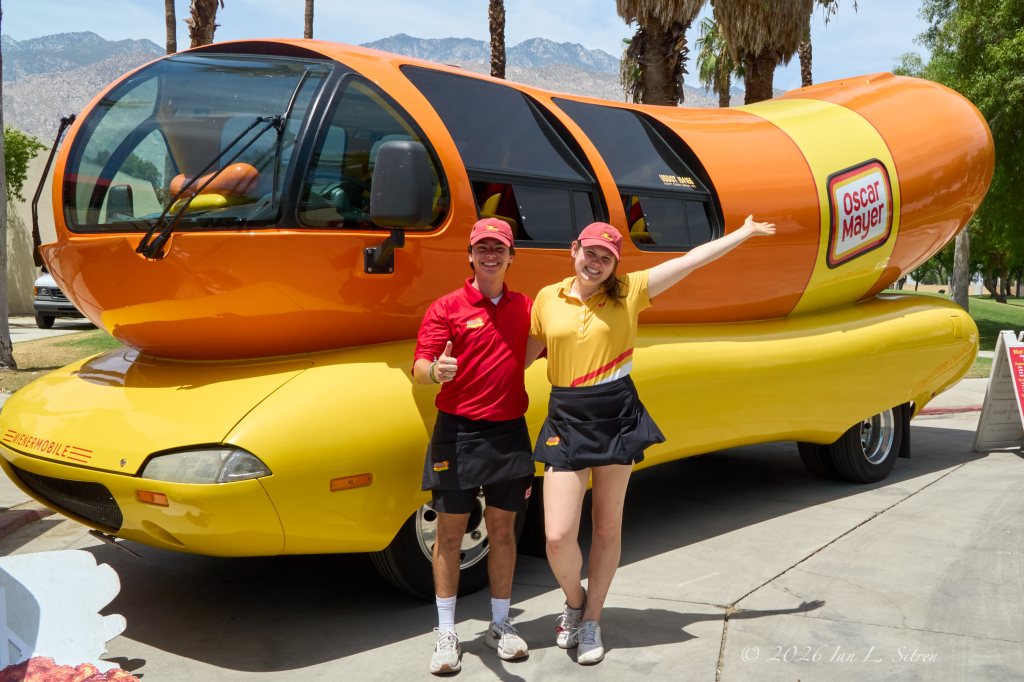
I guess it is fast food if it travels at freeway speed.
That was my first thought when the Oscar Mayer Wienermobile rolled into Palm Springs this weekend.
Although it looks like something from a cartoon, the Wienermobile has a remarkable history. The first one was commissioned in 1936 by Carl Mayer, the nephew of Oscar Mayer, as a rolling advertisement for the company’s hot dogs. Nearly ninety years later, it has become one of the most recognizable promotional vehicles ever created, with generations of Americans spotting it at parades, fairs, festivals, and community events across the country.
The Wienermobile I photographed is one of the newest in the fleet, having been built in 2024. While it carries nearly nine decades of history, it spends most of its time doing exactly what it was designed to do, traveling America’s highways, making appearances, and bringing smiles wherever it stops.
A big part of that tradition belongs to the people behind the wheel. Oscar Mayer selects recent college graduates to spend a year traveling the country as Hotdoggers, serving as ambassadors for the brand. Pictured here are Aiden Jaffe, known as “All Beef Aiden,” and Lauren Trippeer, whose Hotdogger name is “Lucky Dog Lauren.” They spend their year introducing visitors to one of the most famous vehicles on the road and answering questions about the Wienermobile wherever it stops.
I photographed the Wienermobile from every angle, including the surprisingly well-appointed interior, for syndication through ZUMA Press, but this photograph seemed to tell the story best.
You can see more photography, motion, projects, and my Blog at SecondFocus.com
Thank you!
July 12, 2026 FOLLOW UP
It isn’t everyday that photos of the Wienermobile make the “BREAKING NEWS from LAST 24 HOURS”!

National Big Boy Day | The Restaurant Mascot That Became an American Icon
Today is National Big Boy Day.
Long before fast food chains covered every freeway exit, Bob’s Big Boy helped define what the American family restaurant could be. When Bob Wian introduced the original double-decker Big Boy hamburger in Glendale, California, in 1937, it became one of the first signature burgers that people would travel specifically to eat. The combination of car culture, diners, drive-ins, and roadside architecture made Big Boy an icon of postwar America.
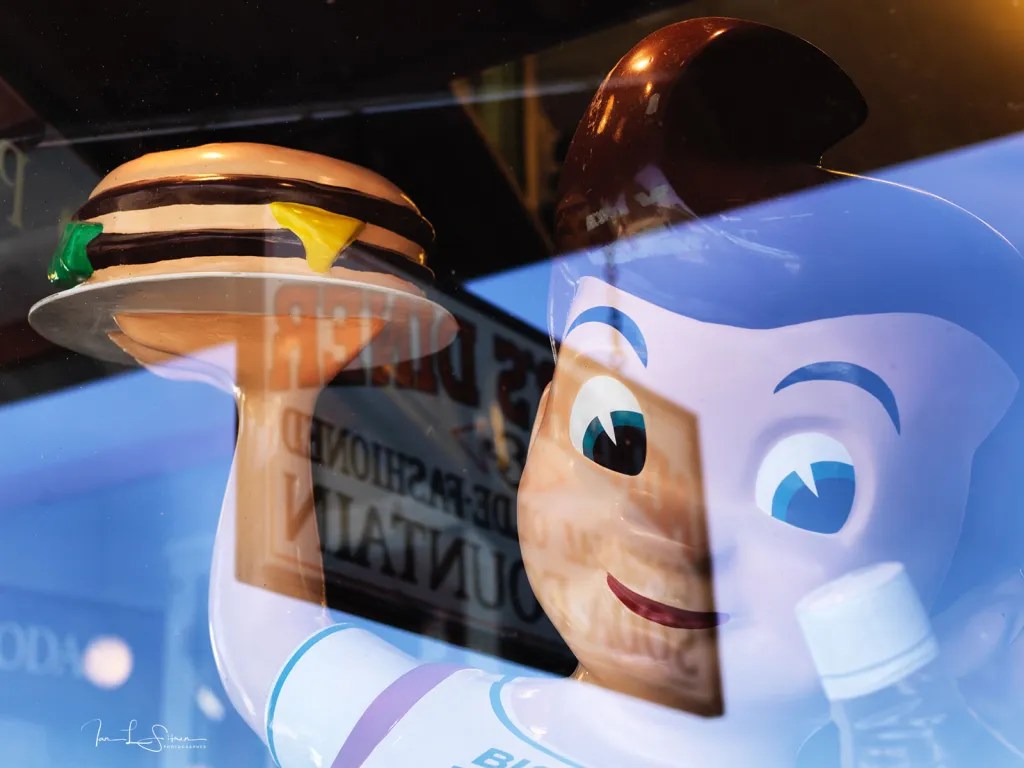
The smiling Big Boy statue carrying his oversized hamburger became just as recognizable as the restaurant itself. Today, original fiberglass statues have become highly sought-after collectibles, with surviving examples often selling for thousands of dollars. They represent much more than a restaurant chain. They remind people of family dinners, road trips, classic cars, and an era when the neighborhood diner was often the center of the community.
I photographed this statue in the window of an antique store in Julian, California. Between the reflections in the glass and the familiar smile, it seemed to capture exactly what nostalgia looks like. Sometimes an old restaurant mascot can tell a bigger story than the meal it was created to advertise.
There is much more to see on my website, including my food photography, aviation, editorial work, new Motion page, and my regularly updated blog. Visit SecondFocus.com

