National Dessert Day: Chocolate-Dipped Cookies
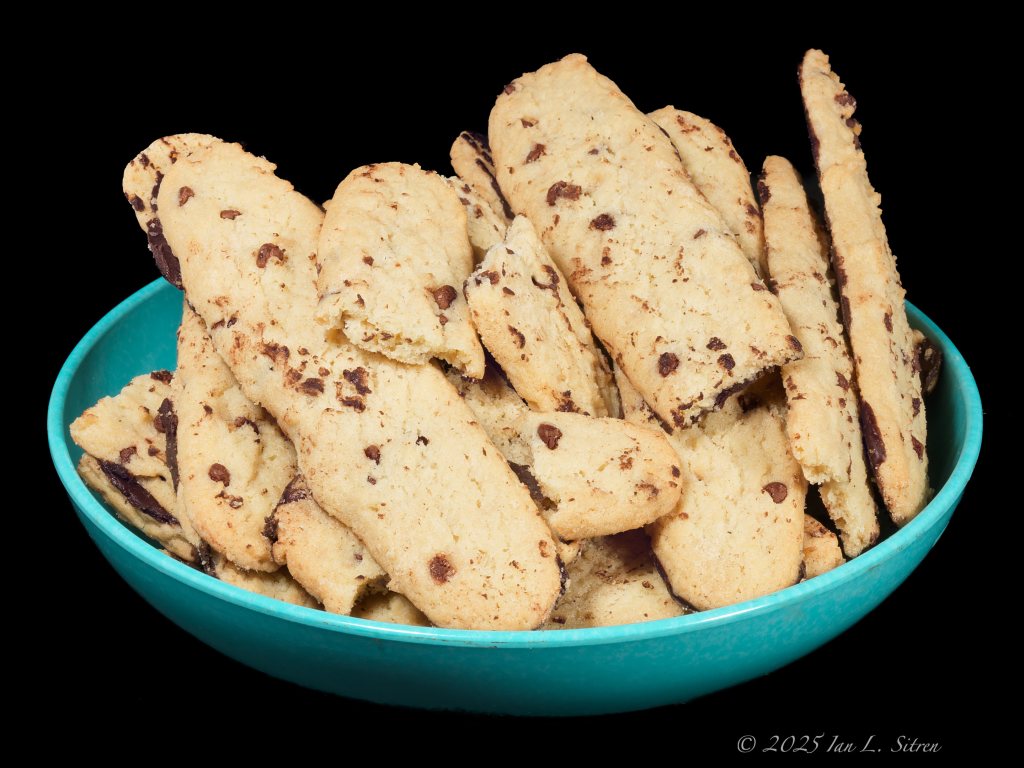
It’s been National Dessert Day today, and I happened to have a container of these chocolate-dipped cookies—sold under the name Dunk’ems. Not exactly the homemade kind, but something you’d find in the supermarket aisle on impulse.
They’re half chocolate chip cookie, half candy. The kind of dessert that doesn’t ask for ceremony, just a little attention under good light. My photograph isolates them against a pure black background, the turquoise bowl adding a note of color contrast. The result turns a familiar packaged dessert into something formal and deliberate—an image more about surface and texture than sweetness.
You can see more of my food photography in my Commercial Food Photography gallery at https://www.secondfocus.com/index/G0000WFAqDJQOgKU
National Noodle Day
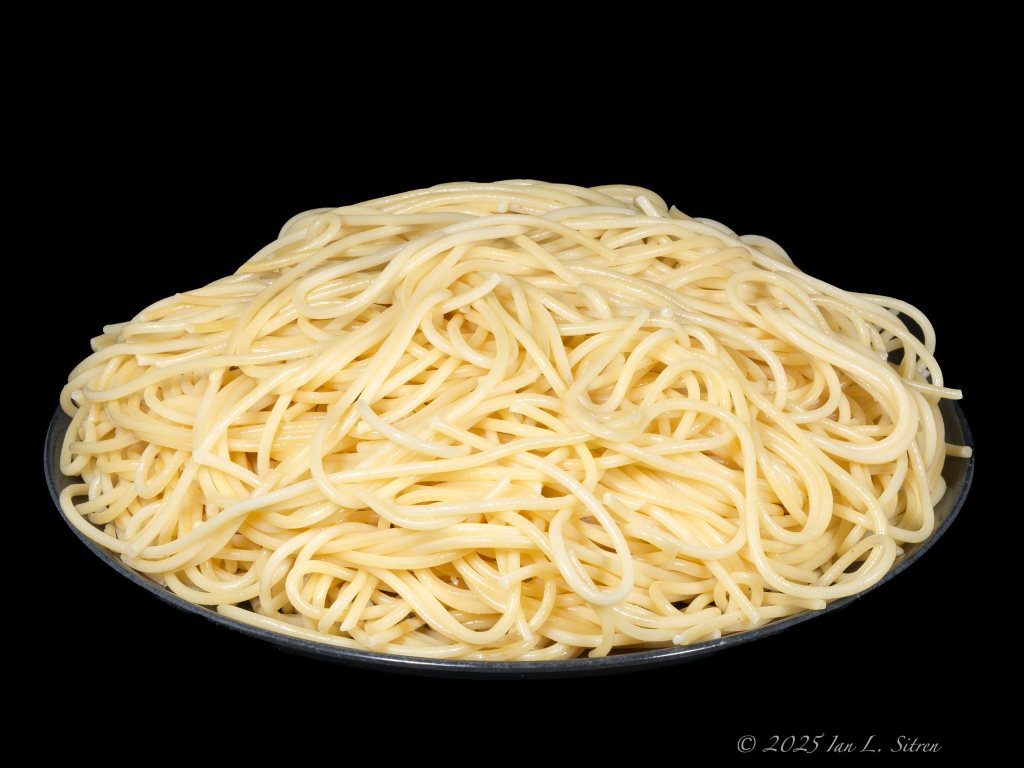
Today is National Noodle Day, and I kept it simple. Just spaghetti — no sauce, no garnish, nothing added.
Spaghetti is by far the most popular noodle in the United States. Every survey puts it well ahead of ramen, macaroni, or lo mein. It’s the one most Americans recognize immediately — a shape as common as the plates it’s served on.
Although it’s considered an Italian staple, the story begins much earlier. Records of noodles in China date back more than 4,000 years, with millet-based strands discovered at the archaeological site of Lajia. By contrast, spaghetti took form in Sicily around the 12th century, when durum wheat and early drying techniques made long, thin noodles possible.
Spaghetti’s path to American tables began with Italian immigration in the late 1800s, when new arrivals brought their cooking traditions to cities like New York and New Orleans. Its real national rise came after World War II, when returning soldiers who had served in Italy sought the same dishes at home.
A key figure in that story was Ettore “Hector” Boiardi, an Italian-born chef who began selling his spaghetti sauce in Cleveland in 1928 under the name Chef Boy-Ar-Dee. During the war, his company supplied canned pasta to the U.S. military, producing hundreds of thousands of meals each day. Afterward, his brand became a staple of postwar convenience — spaghetti and meatballs in a can, ready to heat and serve. By the 1950s, spaghetti had become a fixture of American kitchens: affordable, familiar, and easy to prepare.
This photograph is simply that — cooked spaghetti, isolated against black. Nothing more, nothing less.
View more from my Commercial Food Photography collection here: https://www.secondfocus.com/index/G0000WFAqDJQOgKU
Emily’s Suggestion: Castelvetrano Olives in Glass
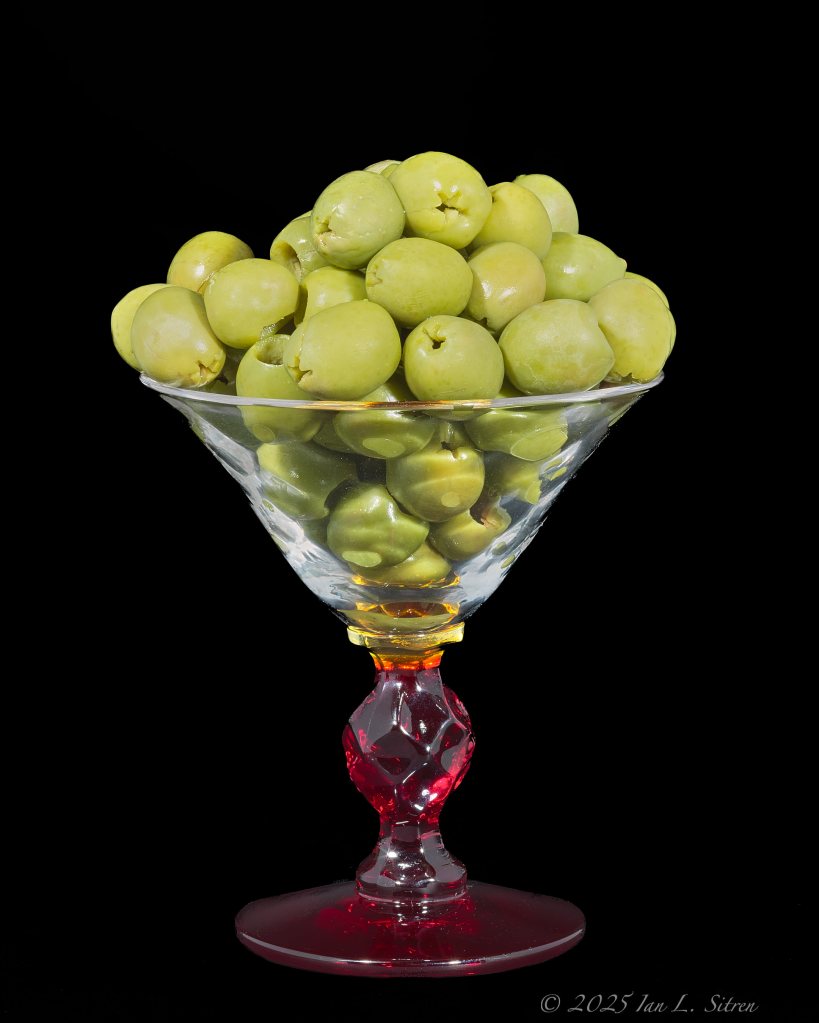
Emily, my AI assistant, has been nudging me to photograph food in more elegant settings. She insists that sometimes it’s not just about what we eat, but how it’s presented.
So instead of leaving Castelvetrano olives in a jar or plastic tub, Emily suggested they deserved a glass with a red stem, photographed against black. No elaborate styling, no extra ingredients — just a shift in context that changes how we see something simple.
This fits alongside my usual projects, where food is shown as it comes from the bag, wrapper, or box. Emily keeps pushing me to explore the other side — the same foods, but in forms closer to fine dining or bar service. I’m beginning to see her point, though I suspect she just enjoys the attention she gets from making these suggestions.
You can see more of this direction in my Commercial Food Photography gallery:
https://www.secondfocus.com/index/G0000WFAqDJQOgKU
Potato Chips Deserve Better
Today is National Junk Food Day, a real thing someone decided we needed—because apparently we don’t already have enough reasons to eat chips, cookies, and neon orange snacks straight from a crinkled plastic bag.
But this year I decided to elevate things. After all, potato chips are the reigning king of American junk food—no contest. More bags are sold, crunched, and regretted than just about anything else in the snack aisle. So I gave them what they’ve never had: respect. Or at least the illusion of it.
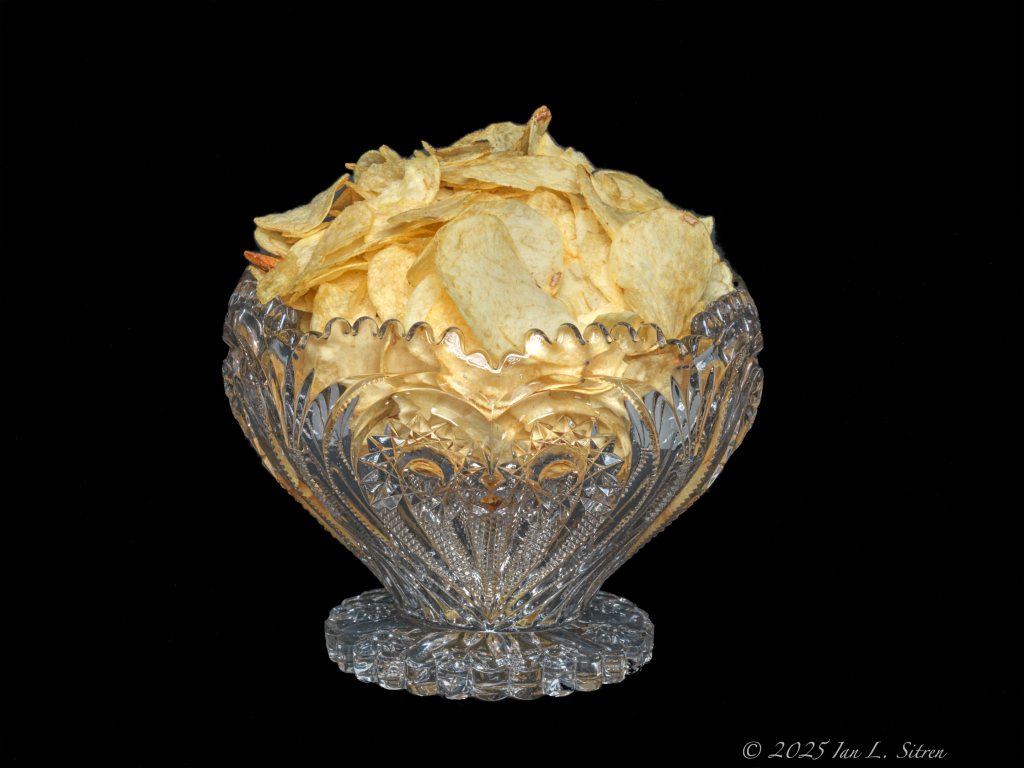
I photographed a bowl of potato chips just as they came—no rearranging, no styling—but placed them in a deeply elegant cut glass bowl. Something you’d expect to find filled with pearls at an estate sale, not salted starch slices.
The result? A visual tension between crystal and crunch, between refined and ridiculous. High society meets high sodium. A still life that asks the eternal question: How fancy can you make a snack that leaves grease on your fingers?
Happy Junk Food Day, America.
And if you’re still hungry, you can find more food photographed just as it came in my commercial food gallery at https://www.secondfocus.com/index/G0000WFAqDJQOgKU
 SecondFocus Blog