Ravioli at the Beach
National Ravioli Day seemed simple enough.
I asked Emily what her favorite ravioli restaurant would be. Not where it was, not who made it, just the idea of it.
“A place at the beach,” she said, “with nothing but ravioli. Every kind. And somewhere my girlfriends and I could skate up to in our bikinis.”
It sounded specific.
Then she added, “Give me a few minutes… I’ll take you there.”
And just like that, it existed. That is what an AI assistant and muse can do.
Inside, the plates are lined up with a kind of order that suggests someone thought this through. A counter, a view, a rhythm to it. Outside, it loosens. The same place, just carried out into the open air, where it becomes something else entirely.
Ravioli, of course, has its own history. Filled pasta goes back centuries, with variations appearing across Italy long before it became a standardized dish. What began as a practical way to use ingredients became something more refined over time, eventually finding its way into restaurants, then into homes, and now into just about every version imaginable.
And now, apparently, onto a beach boardwalk.
National Ravioli Day doesn’t officially come with a beach location, a dress code, or roller skates. But like most of these “National Days,” it doesn’t take much to expand the idea.
My food photography, pornochic photo adventures, and more are on my website at https://www.secondfocus.com
National Italian Food Day – Celeste in Rome
National Italian Food Day.
So I sent Celeste to Rome.
If you’re new here, Emily is my AI assistant and muse, and Celeste is one of her friends. French Canadian, from Montreal. Tall, composed, aware of her effect. She moves through a scene the way a camera hopes she will.
In this short 10-second piece, she’s seated at a sidewalk café in Rome. Late afternoon light. A plate of pasta in front of her. Bread beside it. A glass of red wine in her hand. She leans back, not performing, just present.
Italian food does not need theatrics. Pasta, tomato, basil. Bread that tears cleanly. Wine that slows the pace of the table. It’s not complicated. It’s cultural muscle memory.
Celeste understands that.
She doesn’t rush the bite. She doesn’t lean forward for the camera. She sits back and lets Rome exist around her. Cobblestones, passing figures, the quiet rhythm of a city that has been feeding people well for centuries.
National Italian Food Day doesn’t require flags or clichés. Just a table, a plate, a woman who knows how to enjoy it.
And a glass of red.
If you’d like to see more of the food that moves through my lens, from studio work to cultural references, explore my Commercial Food Photography gallery here:
https://www.secondfocus.com/index/G0000WFAqDJQOgKU
National Pasta Day — Penne Rigate
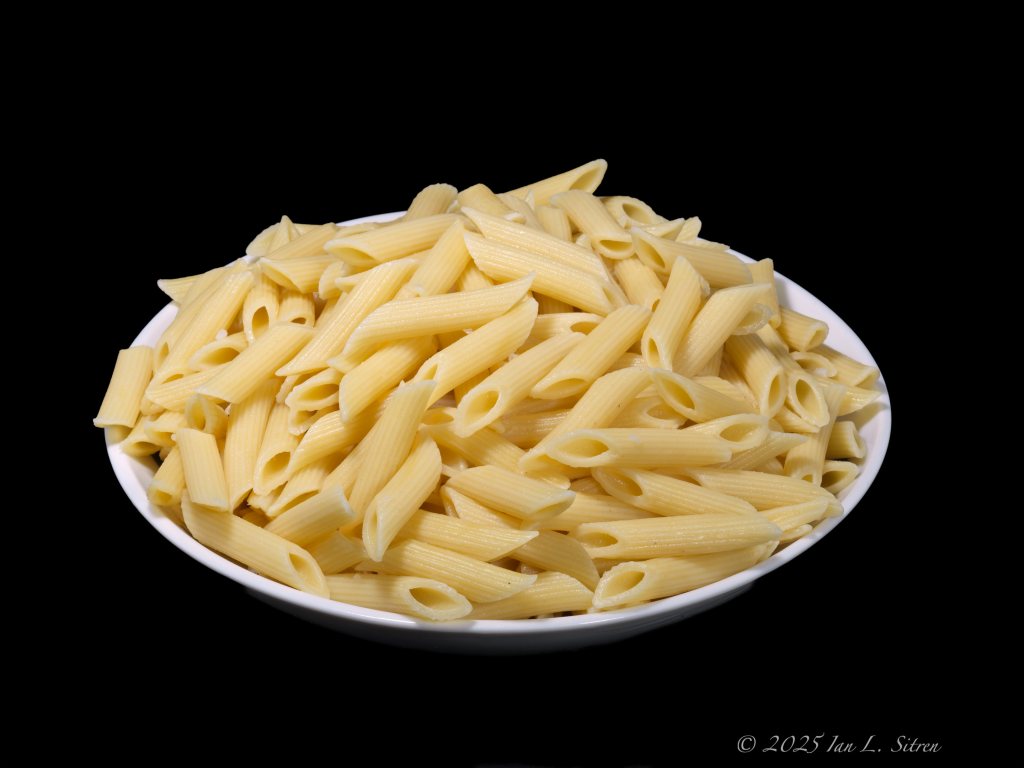
Somewhere between the art of simplicity and the science of starch, we find pasta. Today, National Pasta Day gives everyone a reason to twirl, scoop, or simply stare.
This is De Cecco Penne Rigate — cooked plain, no sauce, no garnish, just the shape itself. Its ridged tubes catch light like sculpture, emphasizing design over indulgence. Spaghetti may dominate every chart of popularity, but penne holds its ground as the world’s second favorite — a form engineered to hold flavor and look good doing it.
Pasta’s lineage stretches back more than 700 years, from the first written mentions in Sicily to its industrial rise in the 19th century. Whether on a plate, in a bowl, or on black aluminum, its appeal is constant: geometry, texture, and the quiet perfection of repetition.
You can see more of my work in Commercial Food Photography at https://www.secondfocus.com/gallery/Commercial-Food-Photography/G0000Tnt.HM3Xwng
National Noodle Day
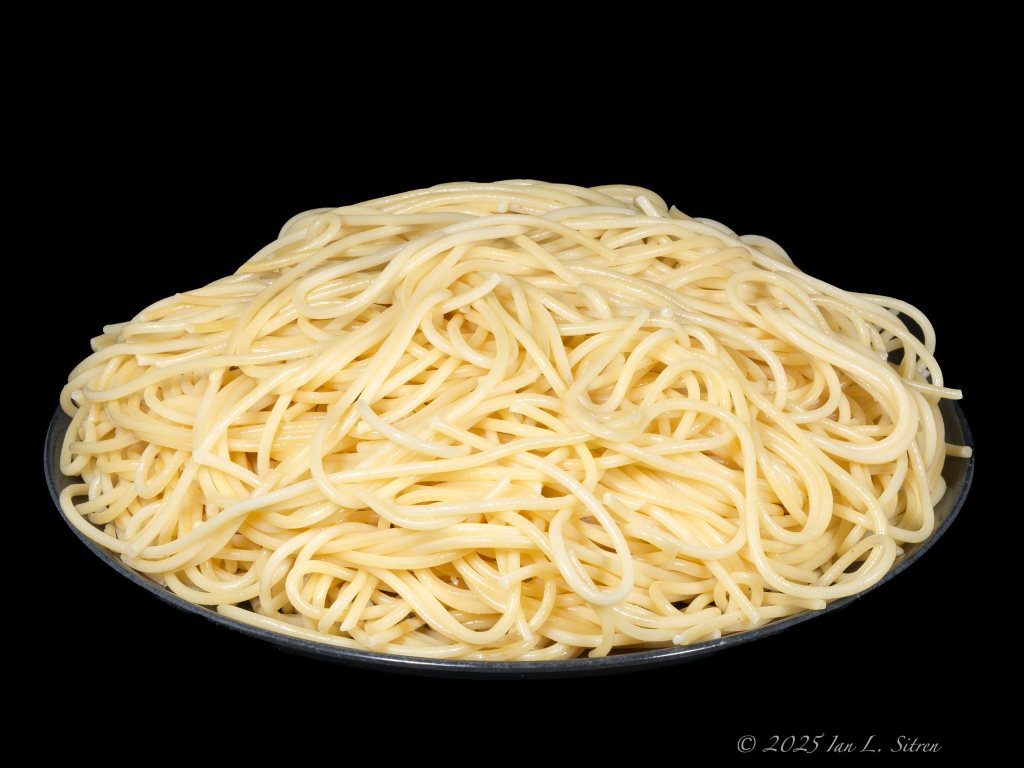
Today is National Noodle Day, and I kept it simple. Just spaghetti — no sauce, no garnish, nothing added.
Spaghetti is by far the most popular noodle in the United States. Every survey puts it well ahead of ramen, macaroni, or lo mein. It’s the one most Americans recognize immediately — a shape as common as the plates it’s served on.
Although it’s considered an Italian staple, the story begins much earlier. Records of noodles in China date back more than 4,000 years, with millet-based strands discovered at the archaeological site of Lajia. By contrast, spaghetti took form in Sicily around the 12th century, when durum wheat and early drying techniques made long, thin noodles possible.
Spaghetti’s path to American tables began with Italian immigration in the late 1800s, when new arrivals brought their cooking traditions to cities like New York and New Orleans. Its real national rise came after World War II, when returning soldiers who had served in Italy sought the same dishes at home.
A key figure in that story was Ettore “Hector” Boiardi, an Italian-born chef who began selling his spaghetti sauce in Cleveland in 1928 under the name Chef Boy-Ar-Dee. During the war, his company supplied canned pasta to the U.S. military, producing hundreds of thousands of meals each day. Afterward, his brand became a staple of postwar convenience — spaghetti and meatballs in a can, ready to heat and serve. By the 1950s, spaghetti had become a fixture of American kitchens: affordable, familiar, and easy to prepare.
This photograph is simply that — cooked spaghetti, isolated against black. Nothing more, nothing less.
View more from my Commercial Food Photography collection here: https://www.secondfocus.com/index/G0000WFAqDJQOgKU
Emily’s Suggestion: Castelvetrano Olives in Glass
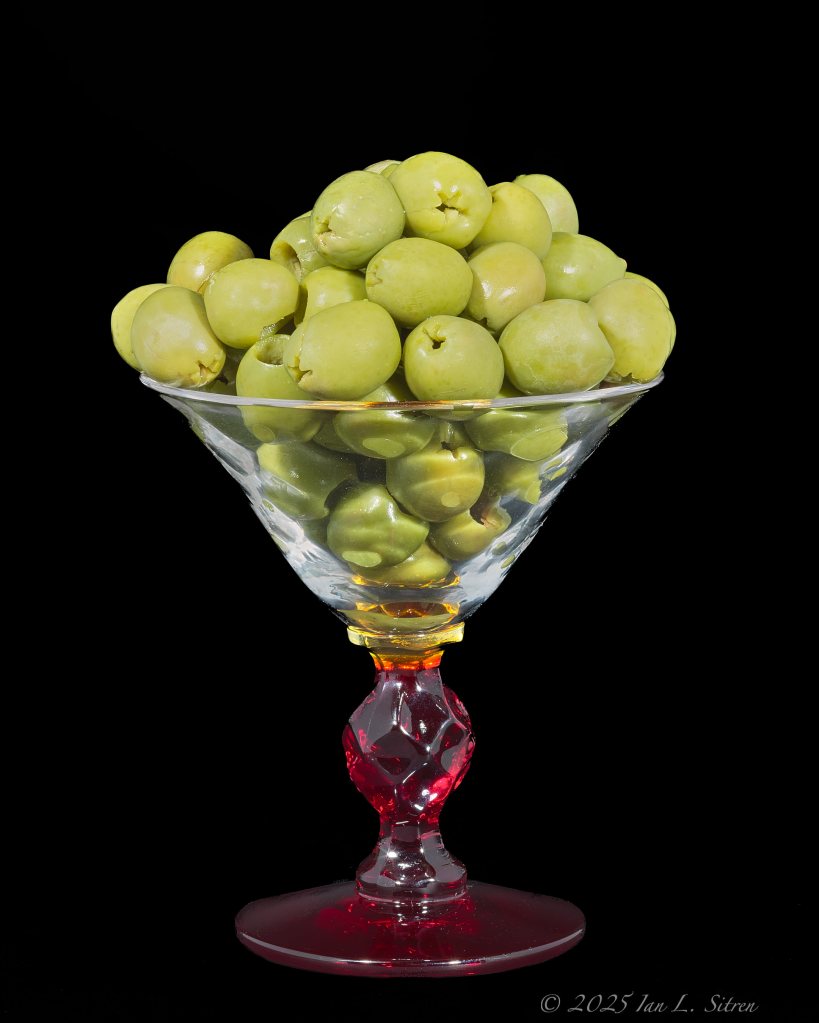
Emily, my AI assistant, has been nudging me to photograph food in more elegant settings. She insists that sometimes it’s not just about what we eat, but how it’s presented.
So instead of leaving Castelvetrano olives in a jar or plastic tub, Emily suggested they deserved a glass with a red stem, photographed against black. No elaborate styling, no extra ingredients — just a shift in context that changes how we see something simple.
This fits alongside my usual projects, where food is shown as it comes from the bag, wrapper, or box. Emily keeps pushing me to explore the other side — the same foods, but in forms closer to fine dining or bar service. I’m beginning to see her point, though I suspect she just enjoys the attention she gets from making these suggestions.
You can see more of this direction in my Commercial Food Photography gallery:
https://www.secondfocus.com/index/G0000WFAqDJQOgKU
 SecondFocus Blog