National Pigs In A Blanket Day
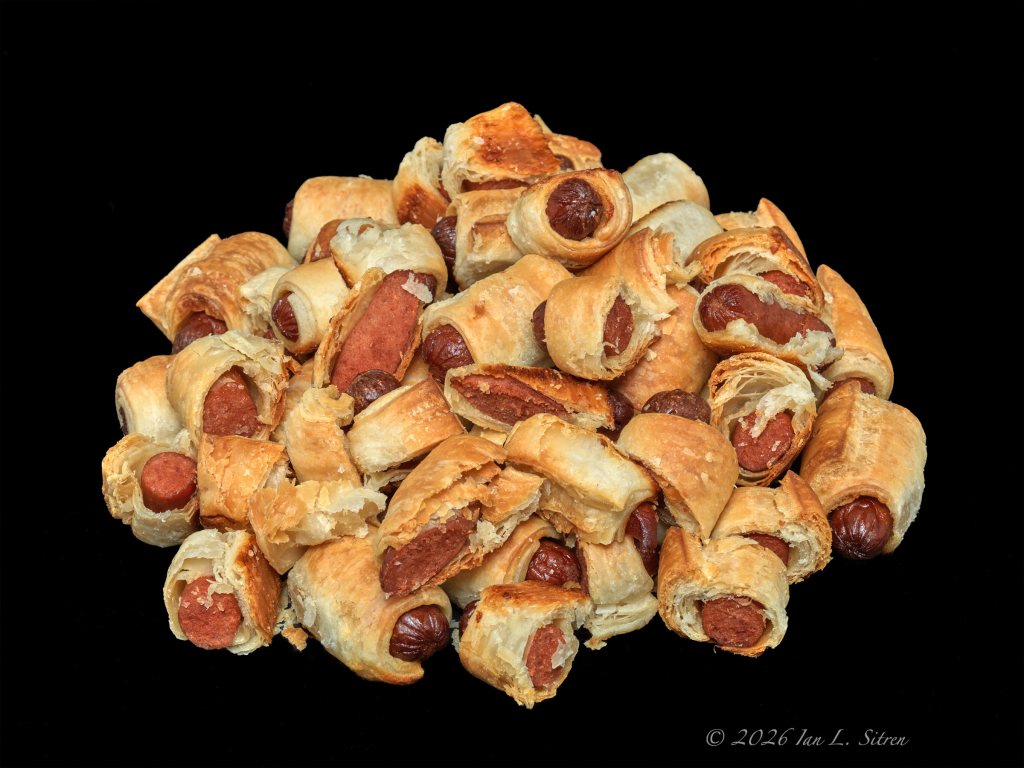
Today is National Pigs In A Blanket Day.
A name that sounds like it should require an explanation, but somehow never does.
So I made them. Or more accurately, I bought them, baked them, cut them into pieces, and piled them up.
In the United States, pigs in a blanket are typically made with cocktail sausages and crescent roll dough, a format that took hold in the mid-20th century as refrigerated dough products became widely available. They became a standard party food because they are inexpensive, easy to prepare in large quantities, and require no utensils.
Just pastry, sausage, and the quiet efficiency of a food that was never meant to last very long once it’s out. Try this next to that vegetable platter at your next party and see what happens.
More of my food photography, from simple compositions like this to everything else I’ve been working on, can be found at https://www.secondfocus.com
National English Muffin Day
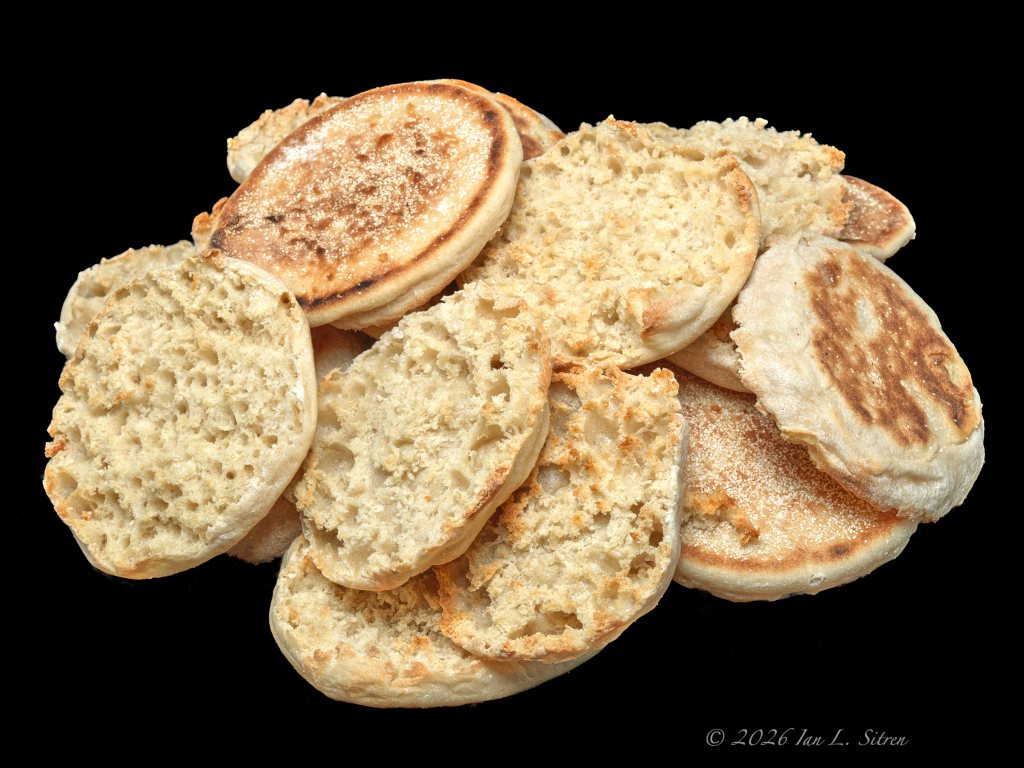
Today is National English Muffin Day.
Which means at some point, someone decided this particular bread product needed its own moment of recognition. Not toast. Not bread in general. Specifically, the English muffin.
So I split them open, toasted them, stacked them, and photographed them against a black background like they were about to be evaluated for something more serious than breakfast.
English muffins date back to the late 1800s, when Samuel Bath Thomas, an English immigrant in New York, began selling them as a softer alternative to traditional British crumpets. They were cooked on a griddle instead of baked, giving them their signature flat shape and the interior texture that marketers would later describe as “nooks and crannies.”
Those “nooks and crannies” became the entire story. A structural feature turned into branding, repeated often enough that it now feels like a technical specification rather than a slogan.
Today, English muffins are not a niche product. About 171 million Americans consume them each year, and the category generates roughly $700 million in annual sales, with Thomas’ controlling close to 70% of the market.
Here, they are split, toasted, and arranged as they are. No styling, no additions, no attempt to improve them.
Just bread, texture, and the quiet confidence of something that’s been around long enough to not need explanation.
More of my food photography, from simple compositions like this to everything else I’ve been working on, can be found at https://www.secondfocus.com
National Jelly Bean Day
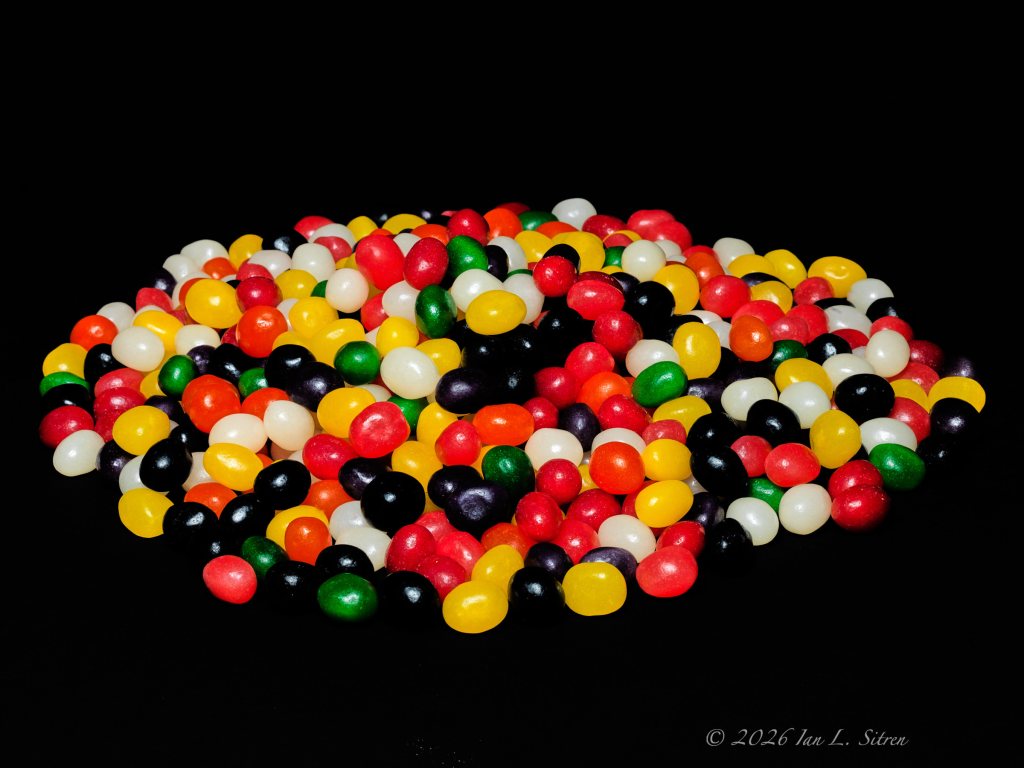
Today is National Jelly Bean Day.
So I simply poured an unreasonable number of jelly beans into a pile and photographed them against a black background.
Jelly beans have been around longer than they probably should have been. Their origins trace back to the 19th century, when Turkish Delight inspired the soft interior, and candy makers added a hard sugar shell. By the early 1900s, they were being marketed as an affordable treat, often sold by the pound.
They became closely associated with Easter in the 1930s, mostly because their egg-like shape fit the theme and they were cheap enough to produce in bulk. That hasn’t really changed.
Americans now consume billions of jelly beans each year, with estimates often landing somewhere around 16 billion during the Easter season alone. Flavors range from predictable fruit to combinations that seem designed more as a challenge than a snack.
What you’re looking at here is a simple pile, straight from the bag. No sorting, no styling, no intervention. Just color, sugar, and excess.
More of my food photography, from controlled compositions like this to everything else I’ve been working on, can be found at https://www.secondfocus.com
National Oreo Cookie Day
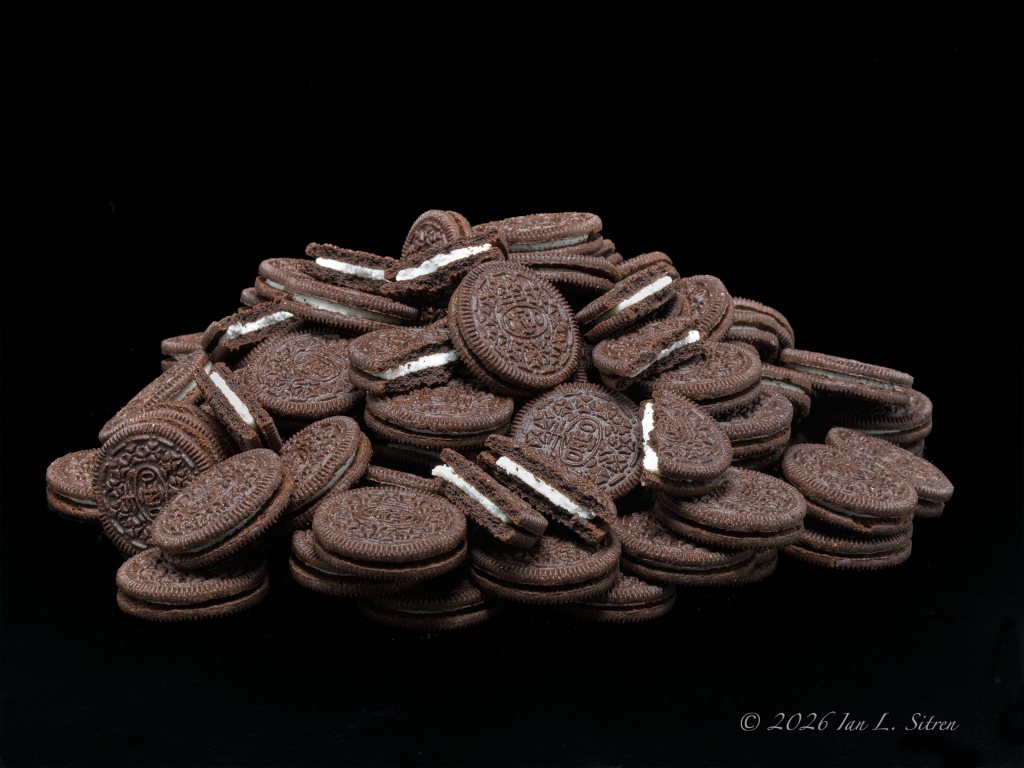
Two chocolate wafers. A layer of sweet cream filling. That was the entire idea.
Today is National Oreo Cookie Day, recognizing the cookie that has been quietly dominating the snack aisle since 1912.
That year the National Biscuit Company, better known as Nabisco, introduced the Oreo, a simple chocolate sandwich cookie finished with the familiar decorative pattern stamped into the biscuit.
More than a century later the formula still works. The company has introduced countless variations, double stuffed, seasonal flavors, and limited editions, yet the original remains the version most people recognize instantly.
For this photograph I kept things simple. A pile of Oreos straight from the package, stacked on a black background. No props and no styling tricks, just the cookies themselves arranged into a small mound of one of the most recognizable snack foods ever made.
You can see more of my Commercial Food Photography here:
https://www.secondfocus.com/index/G0000WFAqDJQOgKU

