National Junk Food Day: Fast Food and Junk Food Are Not the Same Thing
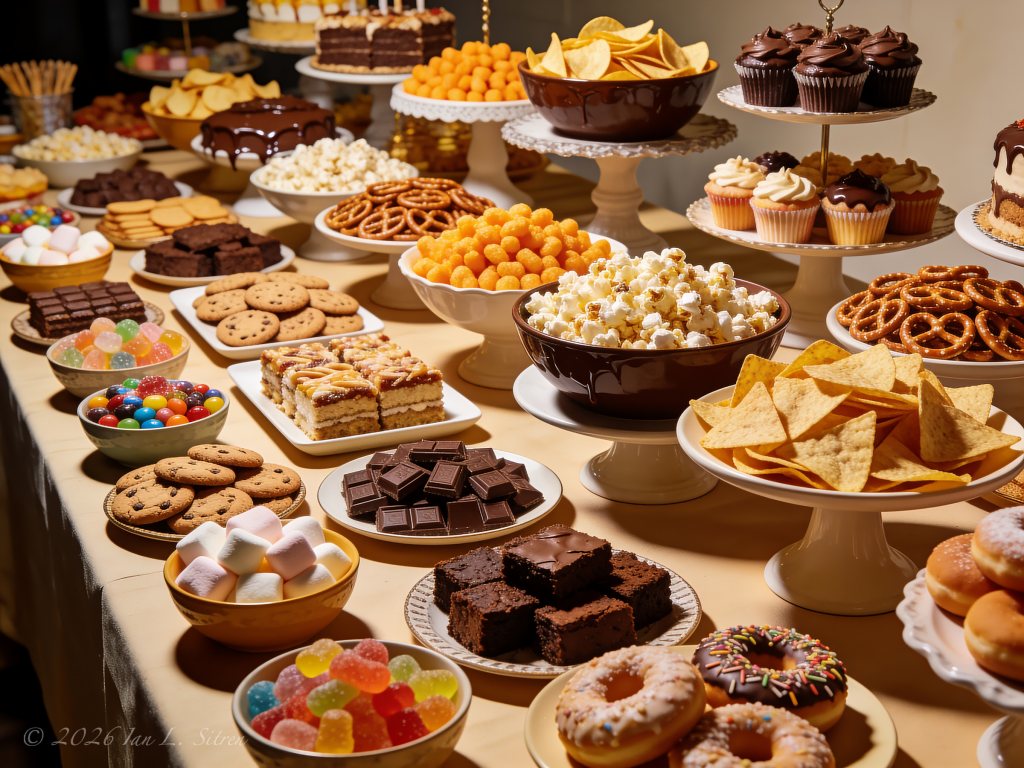
Last Tuesday was National Junk Food Day, which got me thinking about something I see confused all the time.
Fast food and junk food are often talked about as if they are the same thing. They are not. Some fast food can certainly be junk food, but being fast food is not what makes it junk food. And much of what we call junk food is not fast food at all.
So what does junk food look like?
Potato chips, cheese puffs, candy, cookies, brownies, cupcakes, doughnuts, pretzels, snack cakes and all those other things we eat mostly because we like them. Lots of sugar, salt and fat, not much nutritional ambition, and very easy to keep eating long after you intended to stop.
That is what got me thinking about what a photograph of actual junk food should look like. Not just one bag of chips or a plate of cookies. I wanted all of it. A ridiculous abundance of junk food presented as though it deserved its own buffet.
So I created it with AI. Platters, bowls and cake stands piled with just about every kind of junk food I could think of, all together on one table.
Apparently, if you put enough junk food on serving platters and cake stands, it becomes a formal occasion.
You can see more of my photography, projects, motion, and my Blog on my website at https://www.secondfocus.com
Thank You!
Reese’s Peanut Butter Cups: The Real Thing Behind Peanut Butter and Chocolate Day
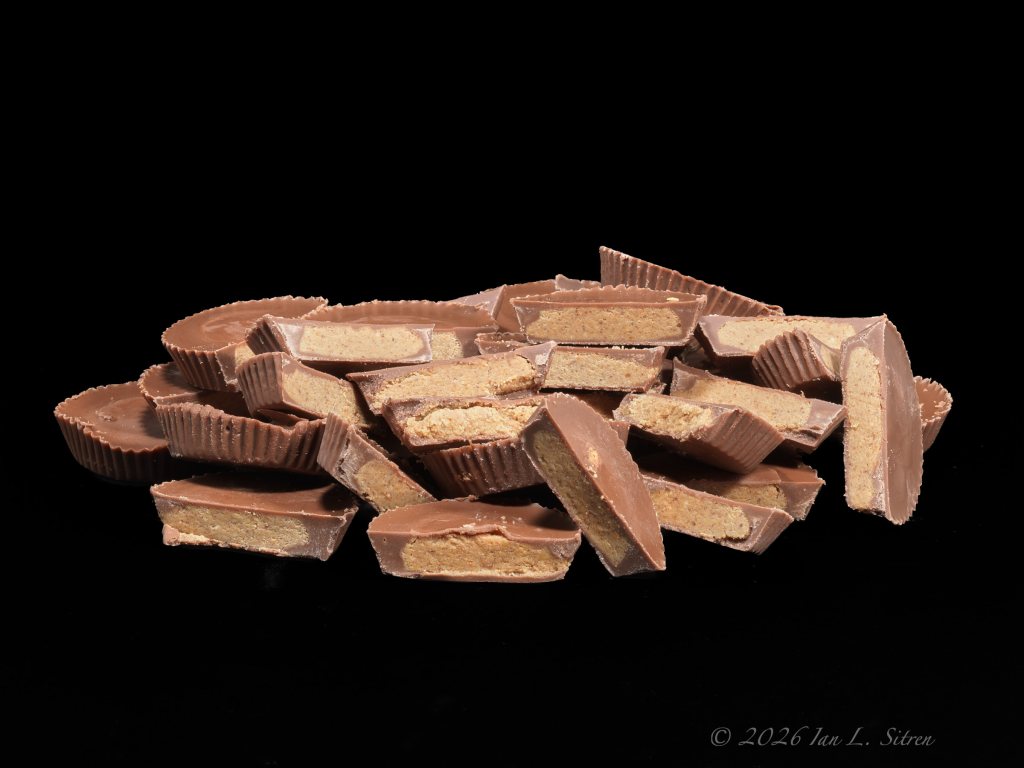
Yesterday was National Peanut Butter and Chocolate Day, and I used AI to explore what happens when you take that combination and push it a little further.
But I also wanted to photograph the real thing.
So I went to the store, purchased Reese’s Peanut Butter Cups, brought them into the studio, cut some of them open, piled them up on my very black black background, and photographed them.
Reese’s Peanut Butter Cups date back to 1928, when H.B. Reese created them in Hershey, Pennsylvania. And the combination obviously worked. By 2012, Reese’s was the best-selling candy brand in the United States, with more than $2.6 billion in annual sales. And it hasn’t exactly disappeared from the top of the candy pile. Reese’s Peanut Butter Cups ranked #1 in Instacart’s 2025 Halloween candy report.
It is easy to understand why. Chocolate and peanut butter is one of those combinations that just works. Reese’s took that combination and gave it a shape and identity that became instantly recognizable. Cut one open and there it is, milk chocolate surrounding that unmistakable peanut butter center.
You can see more of my photography, projects, motion, and my Blog on my website at https://www.secondfocus.com
Thank You!
World Chocolate Day | Hershey’s and an American Classic
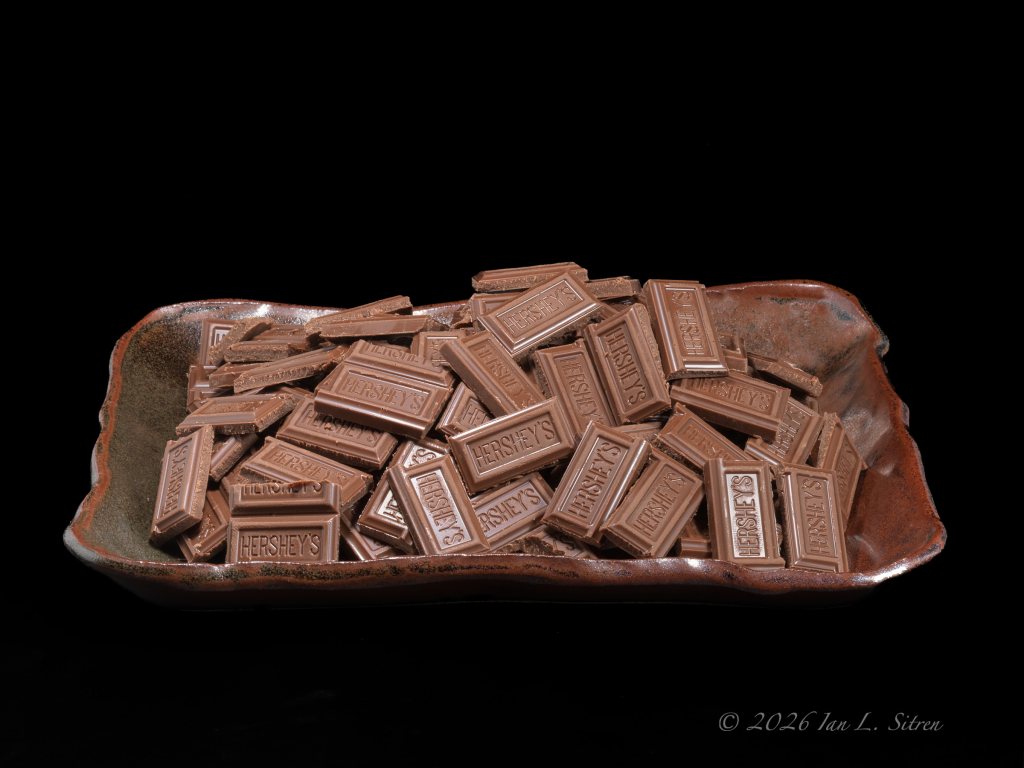
Today is World Chocolate Day.
In the United States, few chocolate brands are as familiar as Hershey’s. Founded by Milton Hershey in 1894, the company introduced the Hershey’s Milk Chocolate Bar in 1900. At a time when chocolate was still considered something of a luxury, Hershey helped make milk chocolate affordable and widely available.
The company also played an important role during World War II, producing millions of specially formulated Field Ration D Bars for U.S. troops. Those bars weren’t designed as candy. They were created to withstand heat, provide energy, and survive the harsh conditions of combat.
This photograph features dozens of Hershey’s miniature milk chocolate bars, served a little more formally than usual. I have a feeling they wouldn’t last very long if they were set out at a party next to the ever-present vegetable tray.
You can see more food photography, motion, projects, and my Blog on my website at https://www.secondfocus.com
Thank you!
National Jelly Bean Day
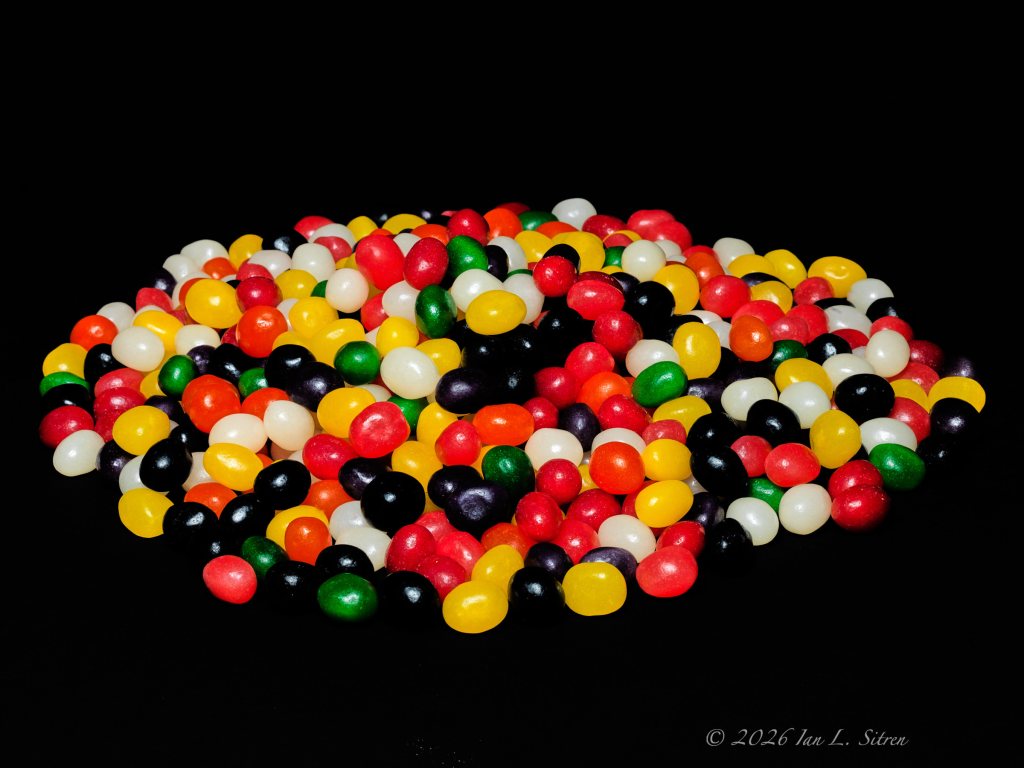
Today is National Jelly Bean Day.
So I simply poured an unreasonable number of jelly beans into a pile and photographed them against a black background.
Jelly beans have been around longer than they probably should have been. Their origins trace back to the 19th century, when Turkish Delight inspired the soft interior, and candy makers added a hard sugar shell. By the early 1900s, they were being marketed as an affordable treat, often sold by the pound.
They became closely associated with Easter in the 1930s, mostly because their egg-like shape fit the theme and they were cheap enough to produce in bulk. That hasn’t really changed.
Americans now consume billions of jelly beans each year, with estimates often landing somewhere around 16 billion during the Easter season alone. Flavors range from predictable fruit to combinations that seem designed more as a challenge than a snack.
What you’re looking at here is a simple pile, straight from the bag. No sorting, no styling, no intervention. Just color, sugar, and excess.
More of my food photography, from controlled compositions like this to everything else I’ve been working on, can be found at https://www.secondfocus.com
Happy National Chocolate Day!
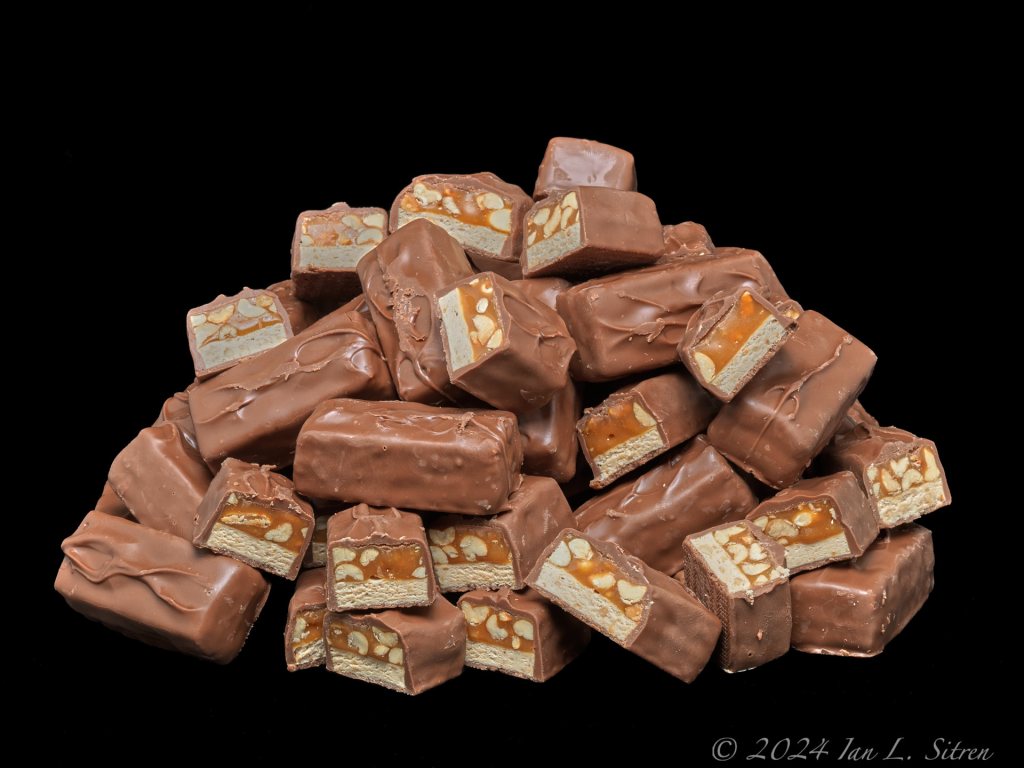
Today, we’re celebrating what many call mankind’s greatest culinary invention—chocolate! And what better way to honor it than with a look at the world’s best-selling candy bar: **Snickers**. First created in 1930 by Mars Inc. and named after the Mars family’s favorite horse, Snickers has been satisfying cravings for nearly a century. With layers of chocolate, creamy caramel, crunchy peanuts, and nougat, it’s no wonder it’s America’s top choice and the world’s best selling candy ba
Check out this shot and head over to http://SecondFocus.com to see more of my food photography and much more!
National Jelly Bean Day


