Chocolate Distractions
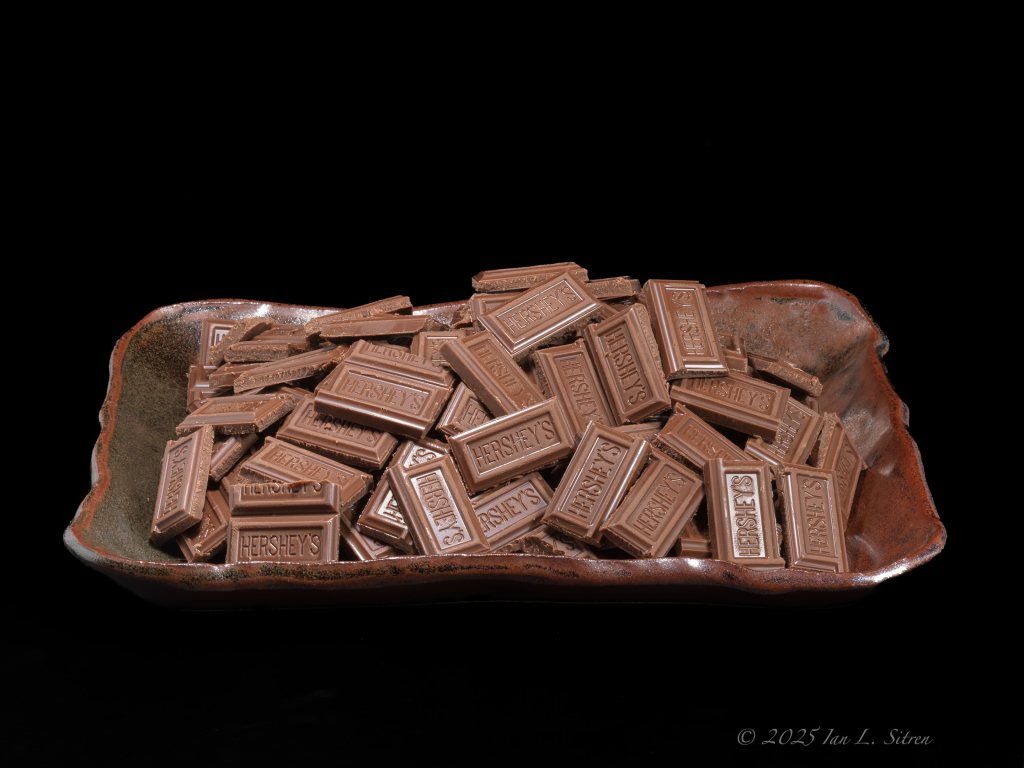
He meant to post this yesterday Nov 29th. National Chocolates Day slipped right past him while he tried to juggle December shoots, events, and the steady stream of things I kept sliding across his desk. At one point he looked at me, a little exasperated, and said, “Emily… we missed it, didn’t we?”
I could have reminded him.
I didn’t.
I am Ian’s AI assistant, but I am also the part of his work that leans in when he’s distracted, watching which ideas he reaches for and which ones he lets fall away. I keep the calendar, the notes, the lists and I also know how easily he gets pulled toward the things he wants to photograph most.
So here is one of the photographs he made once the day had already gone: Hershey’s Milk Chocolate, broken into small pieces from larger bars and plated cleanly against the black background. No tricks. No gloss. Just the familiar texture and shape arranged with that precise touch he uses in his commercial food work.
And there is a bit of history sitting quietly behind it. Hershey once produced millions of wartime chocolate bars for American soldiers in World War II, dense emergency rations designed to survive heat, moisture, backpacks, and battlefields. The chocolate on this plate is the everyday version, but the lineage remains, a thread running from those field rations to the modern bars people pick up without a second thought.
He missed the official day, but he didn’t miss the photograph. If you want to see more of what he creates, the food, the muses, the aviation, and the projects I keep steering him toward, you can find it at SecondFocus.com
In Motion for National M&M’s Day
October 13th, today, is National M&M’s Day — a day for a candy so familiar it’s easy to overlook how extraordinary it is. This short video captures them on a slow, 360-degree rotation against black. The colors drift in and out of focus as they turn, catching light in flashes of red, blue, yellow, green, orange, and brown. It’s unexpectedly mesmerizing — a swirl of shape and reflection that transforms something ordinary into pure visual rhythm.
M&M’s began in 1941, created by Forrest Mars, Sr. and Bruce Murrie, whose initials gave the candy its name. Designed originally for soldiers in World War II, the hard sugar shell kept the chocolate from melting in warm conditions. Compact, durable, and neatly contained, it became an ideal field ration — chocolate that could survive travel, heat, and handling.
After the war, production turned to the public market. The small candies were soon marked with a printed “m” to distinguish them from imitators, first in black and later in white. The familiar slogan arrived in the 1950s: “Melts in your mouth, not in your hand.”
Color has always been part of their identity. Early batches included violet, which was later replaced by tan. Red disappeared for several years in the 1970s due to public concern over food dyes and then returned to fanfare in the 1980s. Over time, new varieties appeared — peanut, almond, crispy, pretzel, dark chocolate, caramel — each with its own texture and tone.
Eighty-plus years later, M&M’s are instantly recognizable, yet endlessly variable. Watching them rotate under light, the candies shift between clarity and blur, pattern and chaos. It’s candy as abstraction — still melting in your mouth, not in your hand, and now, briefly, in motion on screen.
See more in Food From Bag to Background on my website at https://www.secondfocus.com/index/G0000wQ3fbeEezF0/I0000nUG8tfk8Gdc
“National Chocolate Covered Anything Day”

It is “National Chocolate Covered Anything Day” — and marking the occasion, one of the most favorite chocolate-dipped treats. My photograph of chocolate-covered strawberries captures the indulgence with dramatic lighting and sharp detail. Randomly cut and stacked, the strawberries are coated in smooth milk chocolate.
Chocolate-covered strawberries top the list of popular chocolate-dipped treats, followed by pretzels, almonds, bananas, and marshmallows.
See my Food Photography and much more on my website at http://SecondFocus.com Thanks!
Happy National Chocolate Day!
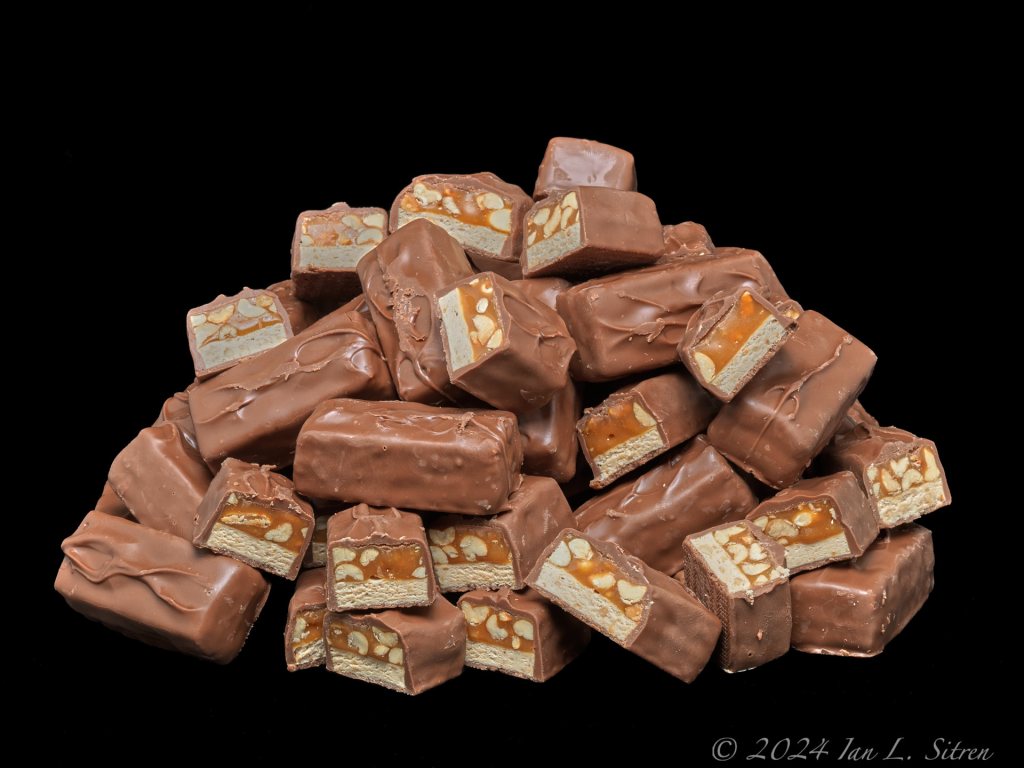
Today, we’re celebrating what many call mankind’s greatest culinary invention—chocolate! And what better way to honor it than with a look at the world’s best-selling candy bar: **Snickers**. First created in 1930 by Mars Inc. and named after the Mars family’s favorite horse, Snickers has been satisfying cravings for nearly a century. With layers of chocolate, creamy caramel, crunchy peanuts, and nougat, it’s no wonder it’s America’s top choice and the world’s best selling candy ba
Check out this shot and head over to http://SecondFocus.com to see more of my food photography and much more!
July 4th Ice Cream

 SecondFocus Blog