National Egg McMuffin Day
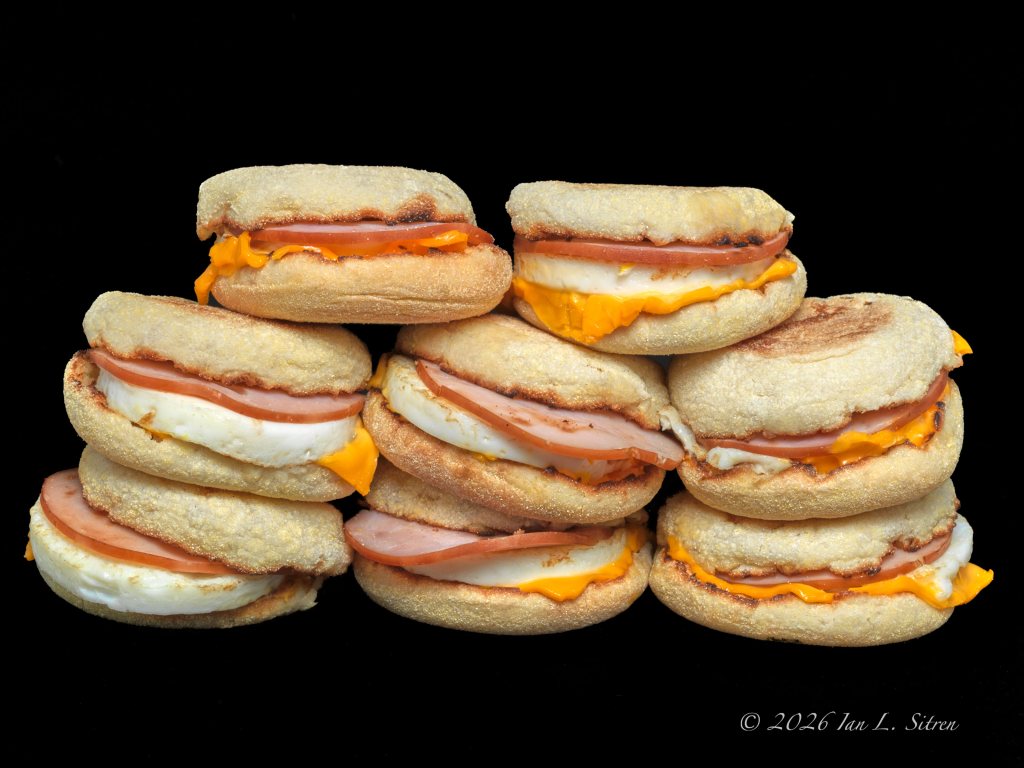
Behold the architecture of the American morning.
Not a sunrise. Not a quiet kitchen. Not a cast-iron skillet passed down three generations. An Egg McMuffin.
In 1971, Herb Peterson, a McDonald’s franchisee in Santa Barbara, developed the Egg McMuffin as a portable adaptation of Eggs Benedict. Peterson was part of the early generation of McDonald’s operators who worked closely within the system but were willing to experiment. His breakfast concept would eventually redefine the company’s morning business and influence the broader fast-food industry.
He looked at Eggs Benedict and asked a practical question: what if it had to survive traffic? The result was less brunch and more engineering. A freshly cracked egg cooked in a metal ring for geometric precision. Canadian bacon cut to fit the circumference. American cheese calibrated to melt on schedule. An English muffin built to hold the structure together without collapsing under pressure.
By 1975 it went national. And just like that, breakfast stopped being something you sat down for. It became something you drove with.
The Egg McMuffin didn’t just succeed, it multiplied. The Sausage McMuffin replaced Canadian bacon with a pork patty, heavier, louder, unapologetic. The Sausage McMuffin with Egg combined both impulses into one edible escalation. Competitors followed with croissants, biscuits, wraps. Different shapes, same formula: egg, cheese, meat, mobility.
An entire industry recalibrated itself around the idea that mornings should be efficient.
Now, more than fifty years later, today, National Egg McMuffin Day marks the acknowledgment of a sandwich that changed how America eats before 10:30 a.m.
For the record, I really like the Sausage McMuffin with Egg. It is denser, saltier, less restrained. If you are going to commit to the system, you might as well lean into it.
So I stacked eight of them against black. No wrapper. No logo. No golden arches. Just product. Symmetrical. Predictable. Familiar. Industrial, yes. But also effective.
Because this isn’t just breakfast. It’s infrastructure.
More from “Food From Bag To Background” at
https://www.secondfocus.com/index/G0000wQ3fbeEezF0
Whopper Birthday
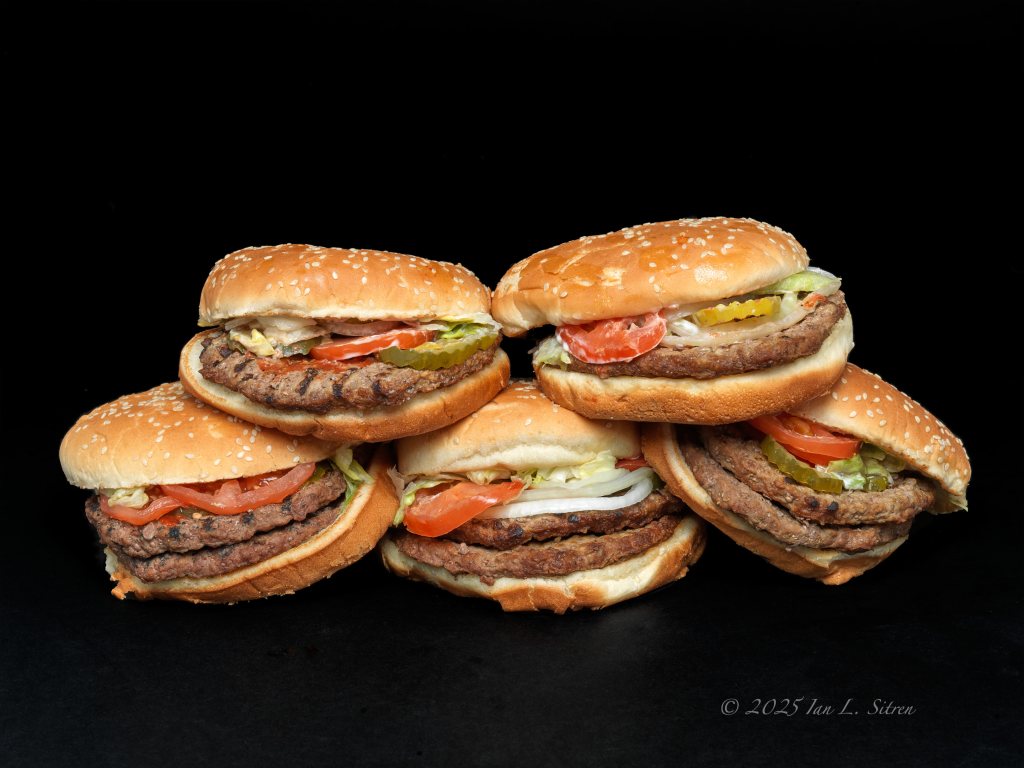
Some birthdays sneak up on you. Today happens to be the birthday of the Burger King Whopper, introduced in 1957 when a Miami burger stand decided America deserved something larger and more structurally ambitious than anything on the menu board.
James McLamore, one of the Burger King founders, noticed customers flocking to oversized burgers at rival drive-ins. His solution was simple: go bigger. Much bigger. The original Whopper sold for 37 cents and immediately rewired American expectations for how much beef should fit inside a bun. From there, fast-food evolution took over. The Double Whopper showed up because of course it did. The Angry Whopper arrived for people who needed emotional intensity with their lunch. The Brisket Whopper made a brief appearance to remind us that barbecue can be a personality trait. And then the Impossible Whopper landed in 2019, launching the plant-based arms race and proving that even vegetarians sometimes want a burger the size of a paperback novel.
This is my stack of Double Whoppers, photographed earlier. I didn’t have time to run out and buy new ones, but double is my personal preference anyway.
There is much more of my fast food project “Food From Bag To Background” on my website at
https://www.secondfocus.com/index/G0000wQ3fbeEezF0 You might find something to make you hungry, take a look. Thanks.
National Fish & Chips Day – From Bag to Background

Today, June 6, marks National Fish & Chips Day—a celebration of a dish with deep roots on both sides of the Atlantic. Fish and chips, traditionally battered white fish served over fried potatoes, originated in 19th-century England as affordable street food. By the early 20th century, it had become a staple of British life.
In the United States, one man helped bring that tradition stateside: Haddon Salt, a third-generation British fish fryer who opened his first shop in California in 1965. His goal was to deliver a true British experience—using imported frying ranges, Icelandic cod, and a proper malt vinegar finish. Within a few years, the chain—renamed H. Salt Esq. Fish & Chips—grew rapidly, eventually acquired by Kentucky Fried Chicken. For a brief time in the early 1970s, it looked as though fish and chips might become as ubiquitous in America as burgers and fried chicken.
That never fully materialized. But a few independently owned H. Salt locations remain in California, still serving battered fish with crinkle-cut fries the old-fashioned way. That’s where this order came from—photographed exactly as it was handed over the counter. No rearranging, no garnish, no styling. Just the food on a black background, part of my ongoing From Bag to Background series.
It’s fast food history, captured as-is. View more from the series at https://www.secondfocus.com/index/G0000wQ3fbeEezF0/I0000nUG8tfk8Gdc
McDonald’s Apple Pie on National Apple Pie Day

Today is National Apple Pie Day, a fitting time to feature one of the most enduring fast food desserts in America—McDonald’s Apple Pie.
First introduced in 1968, McDonald’s Apple Pie was the chain’s first-ever dessert item. Originally deep-fried, it quickly became a fan favorite for its crackling crust and piping-hot filling. In the early 1990s, most U.S. locations switched to a baked version, part of a broader push toward “healthier” options. Despite the change, the pie’s iconic rectangular shape, sugary glaze, and soft apple filling kept it popular across decades.
This photograph, part of my *From Bag to Background* series, captures the pies just as they came—unwrapped and stacked on a deep black background. Some are broken open, revealing the caramelized apple interior, while others remain whole, showcasing the crisp, golden lattice crust. No styling. No props. Just fast food as it really is.
McDonald’s still sells millions of apple pies each year, a testament to their lasting appeal. And while flavors have rotated in and out—cherry, pumpkin, and even taro in some countries—the classic apple pie remains a constant.
See more photos from the series on my website: http://SecondFocus.com
National Shrimp Day and Popeyes
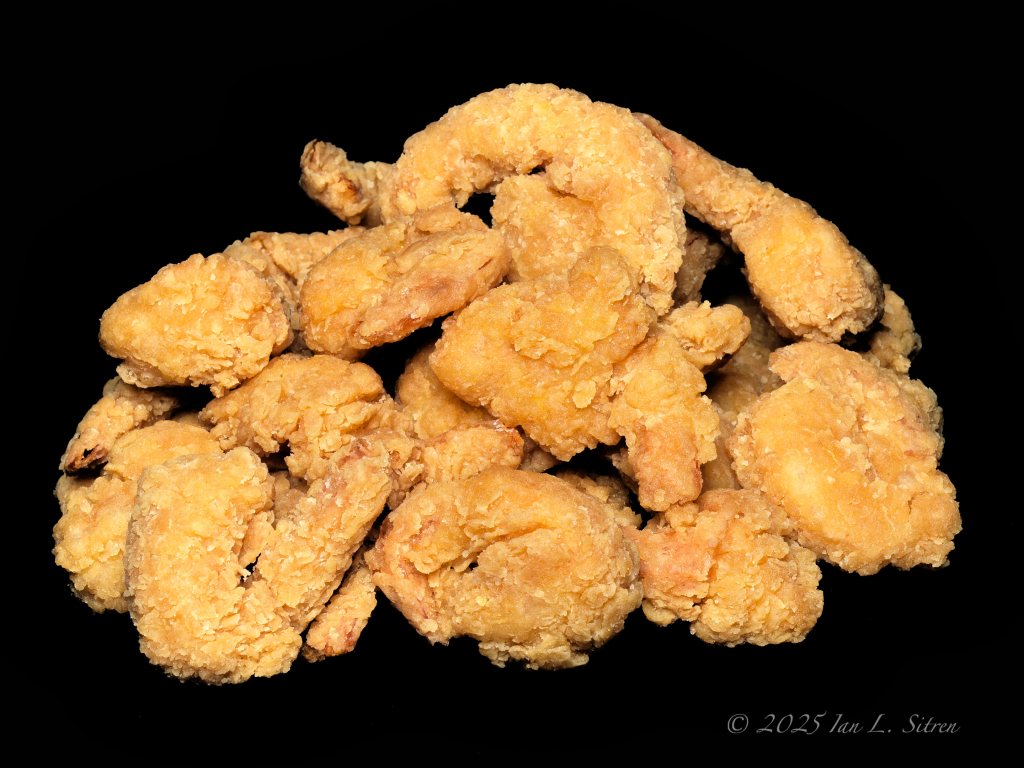
May 10 is National Shrimp Day, a reminder that not all fast food comes in burger form. This is my photo of fried shrimp from Popeyes—unembellished, straight from the packaging, and photographed just as it was served.
While fried shrimp might not be the first thing people associate with fast food, Popeyes has carved out a place for itself in that space. Founded in 1972 in New Orleans by Al Copeland, Popeyes began with spicy fried chicken and a commitment to Louisiana-style flavors. But by the 1980s, seafood had become part of the menu, reflecting the culinary traditions of the Gulf Coast. Their fried shrimp—seasoned, battered, and fried with the same boldness as their chicken—has since become a customer favorite.
Popeyes now operates more than 4,300 locations worldwide, making it one of the largest fast food chains with a distinctly regional identity. Its menu has maintained a Southern character even as it expanded globally, and items like the fried shrimp have helped distinguish it from other chains.
Fast food seafood has long had a credibility problem, often treated as a token item on menus dominated by burgers, nuggets, or tacos. Popeyes helped shift that perception by offering shrimp that is consistently rated among the best in fast food—crispy, spicy, and more thoughtfully prepared than one might expect.
This image is part of my ongoing “From Bag to Background” project, where I photograph fast food as it comes—no stylists, no staging, no enhancements. Just the food itself, against a black background that forces a closer look at what’s often overlooked.
📷 See more of the series at https://www.secondfocus.com
When Fast Food Isn’t Burgers and Fries
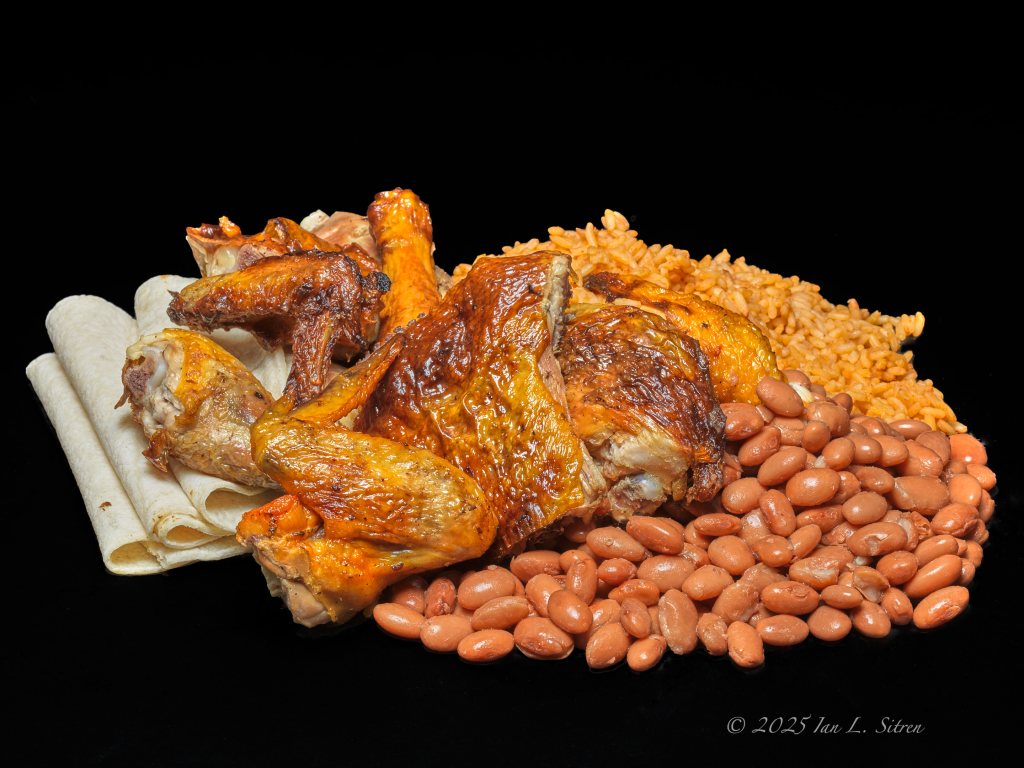
El Pollo Loco’s fire-grilled chicken — citrus-marinated and cooked over an open flame — has been the centerpiece of their menu since 1975, when the first location opened in Guasave, Sinaloa, Mexico. Brought to Los Angeles in 1980, it quickly became known for its simple, home-style approach: grilled chicken served with warm tortillas, pinto beans, and Spanish rice.
Despite its roots in traditional Mexican cooking, El Pollo Loco is officially classified as a fast food chain — not for a lack of quality, but for its counter service model, quick preparation, and drive-thru convenience. A reminder that fast food doesn’t always mean burgers and fries.
See more of my fast food photography series, “From Bag to Background”, on my website http://SecondFocus.com
The Original: 50 Years of the Egg McMuffin

March 2nd, National Egg McMuffin Day, McDonald’s iconic breakfast sandwich, has a rich history that revolutionized fast-food breakfast. It was conceived in 1971 by Herb Peterson, a McDonald’s franchisee in Santa Barbara, California. Inspired by Eggs Benedict, Peterson wanted to create a portable, handheld version that could be eaten on the go. He developed a sandwich featuring a freshly cracked egg cooked in a Teflon ring, Canadian bacon, and melted cheese, all served on a toasted English muffin.
After a successful test run, the Egg McMuffin made its national debut in 1975, becoming the foundation of McDonald’s breakfast menu. Its success led McDonald’s to expand its breakfast offerings, introducing items like **hotcakes, scrambled eggs, sausage, hash browns, and pastries. Among these additions was the Sausage McMuffin, which replaced the Canadian bacon with a seasoned pork sausage patty, offering a heartier, more indulgent alternative. The Sausage McMuffin with Egg soon followed, combining the best elements of both sandwiches.
The success of the Egg McMuffin didn’t just transform McDonald’s—it redefined fast-food breakfast entirely. Competing chains took notice, with Burger King launching the Croissan’wich in 1983, swapping the English muffin for a flaky croissant. Wendy’s, Jack in the Box, and Dunkin’ also expanded their morning menus, introducing similar breakfast sandwiches with eggs, cheese, and a choice of bacon, sausage, or ham. Even convenience stores and frozen food brands capitalized on the trend, offering ready-to-heat versions in grocery aisles.
2025 marks the sandwich’s 50th anniversary, celebrating half a century of mornings with McDonald’s first-ever breakfast item. The Egg McMuffin’s enduring popularity not only helped cement fast-food breakfast as a daily routine but also influenced an entire industry, proving that a simple idea—an egg on an English muffin—could change the way America starts its day.
Visit my website to see my Food Photography and other intriguing photo projects. Thanks! http://SecondFocus.com
 SecondFocus Blog