National Cheese Day and Taco Bell’s Cheesy Roll Up
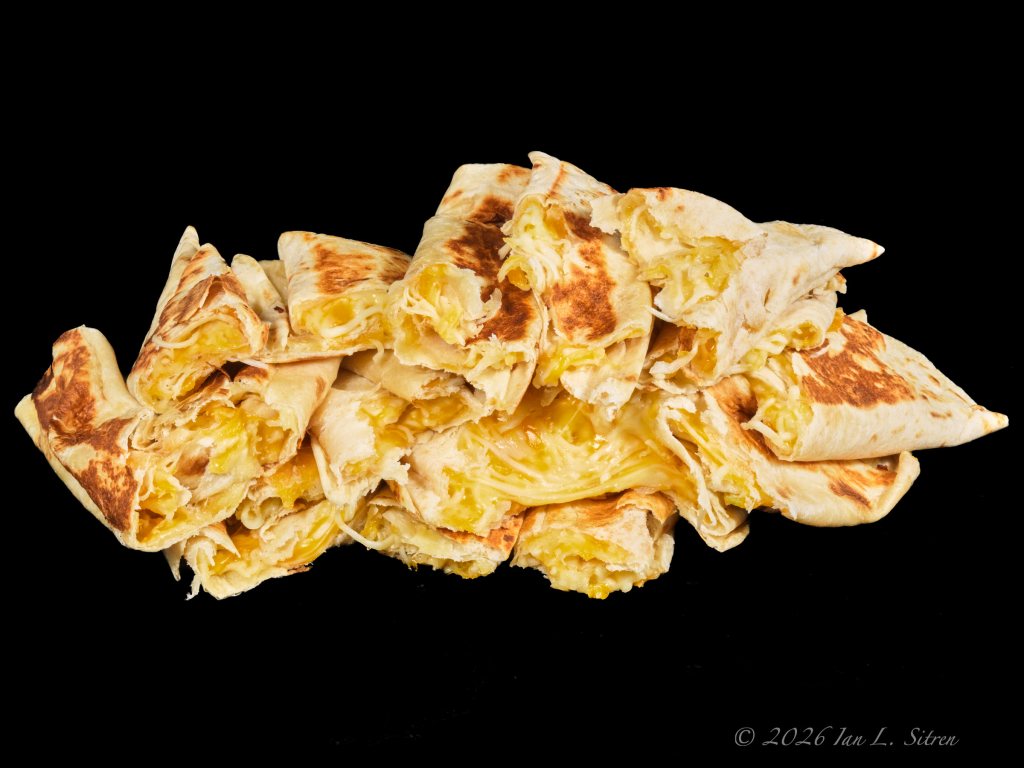
National Cheese Day
National Cheese Day presented a problem.
I could have photographed a block of cheddar cheese and called it a day. There are already millions of cheese photographs in the world, and probably enough stock photos of cheese to keep the internet supplied for several lifetimes.
That didn’t seem very interesting.
So I asked Emily, my AI partner and muse.
As often happens, Emily immediately found a different way to look at the problem. Rather than photograph cheese itself, why not photograph something where cheese fits one of my projects?
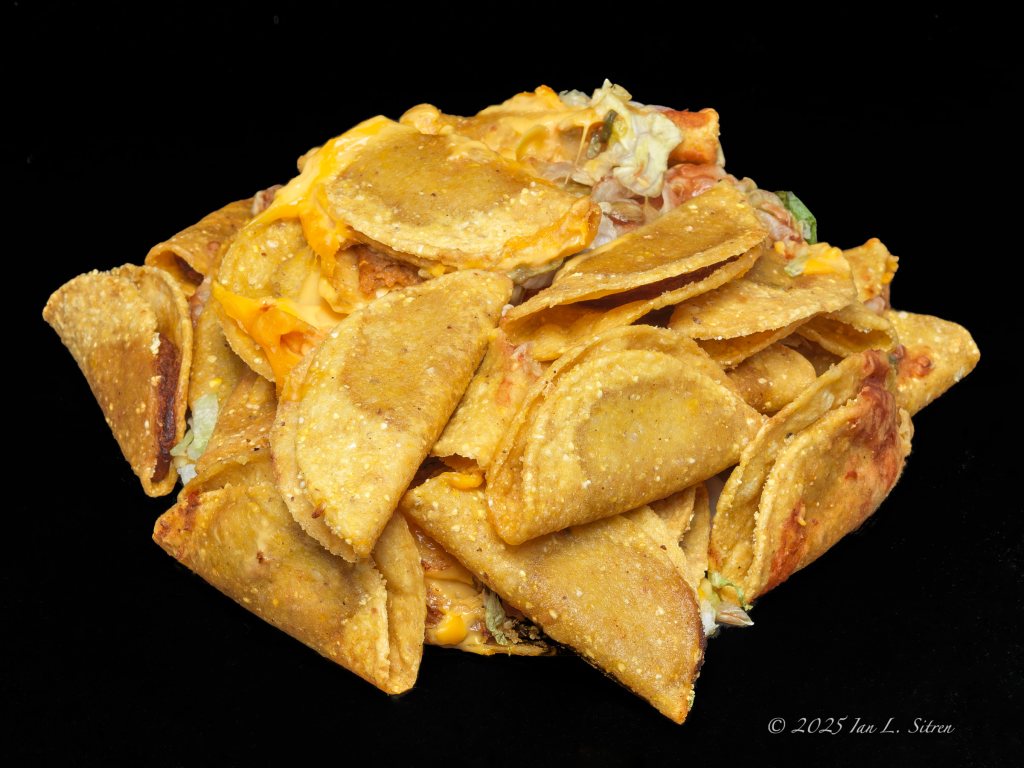
That led us to Taco Bell’s Cheesy Roll Up.
The Cheesy Roll Up is exactly what it sounds like. A tortilla wrapped around melted cheese. No complicated recipe. No attempt to disguise what you’re getting. Just cheese, rolled up and served as a menu item.
For National Cheese Day, that seemed like a perfectly appropriate subject.
This photograph features a pile of Taco Bell Grilled Cheesy Roll Ups for my FOOD FROM BAG TO BACKGROUND series. Rather than cutting them apart, I pulled them apart, revealing the melted cheese inside and creating a pile of toasted tortillas, cheese-filled interiors, and strands of melted cheese connecting one piece to another.
The Cheesy Roll Up isn’t one of Taco Bell’s most famous products. It doesn’t have the history of a taco or the size of a burrito. Yet on National Cheese Day it may be one of the most honest items on any fast-food menu. It makes no promises beyond its name and delivers exactly what it advertises.
You can see more from my FOOD FROM BAG TO BACKGROUND series, along with collections and other projects at https://www.secondfocus.com
National Hoagie Day was yesterday
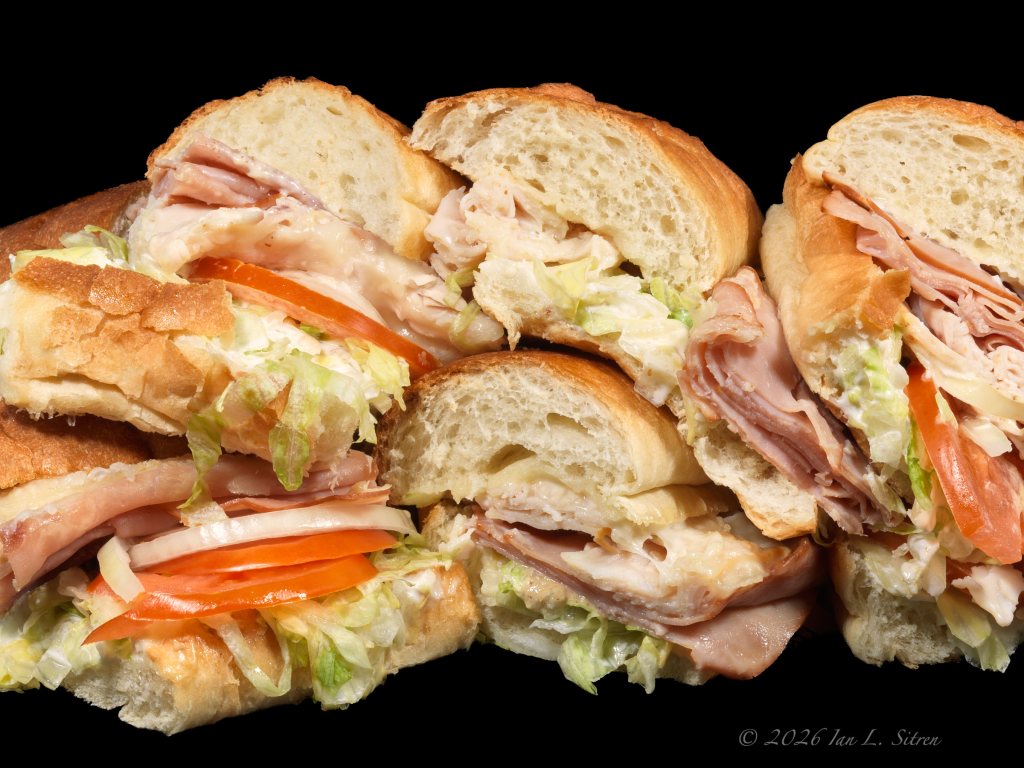
Which is about right. These things never seem to line up with when you actually have the food in front of you. They pass, mostly unnoticed, and then a day later you’re standing there with two Firehouse Subs and a camera thinking… now it’s relevant.
Firehouse started in Jacksonville, built by two former firefighters who turned the concept into something very specific. Steamed meats, soft rolls, a heavier sandwich that doesn’t try to hide what it is. It’s direct, a little excessive, and that’s the point.
So instead of chasing the calendar, I went after the structure.
Cut into sections, stacked, compressed, pushed together until it stops reading as a single sandwich and starts becoming something else. Bread, meat, cheese, all exposed at once. No clean halves, no careful spacing. Just density, texture, and everything competing for attention.
That’s where my photography tends to land. Not documenting the sandwich, but pulling it apart visually and rebuilding it into something more deliberate. Something you look at, not just something you eat.
And in that form, it becomes less about lunch and more about the way it holds the frame. Something to study for a moment.
More of my food photography and much more on my website at https://www.secondfocus.com
A Monument to Cheese Pizza
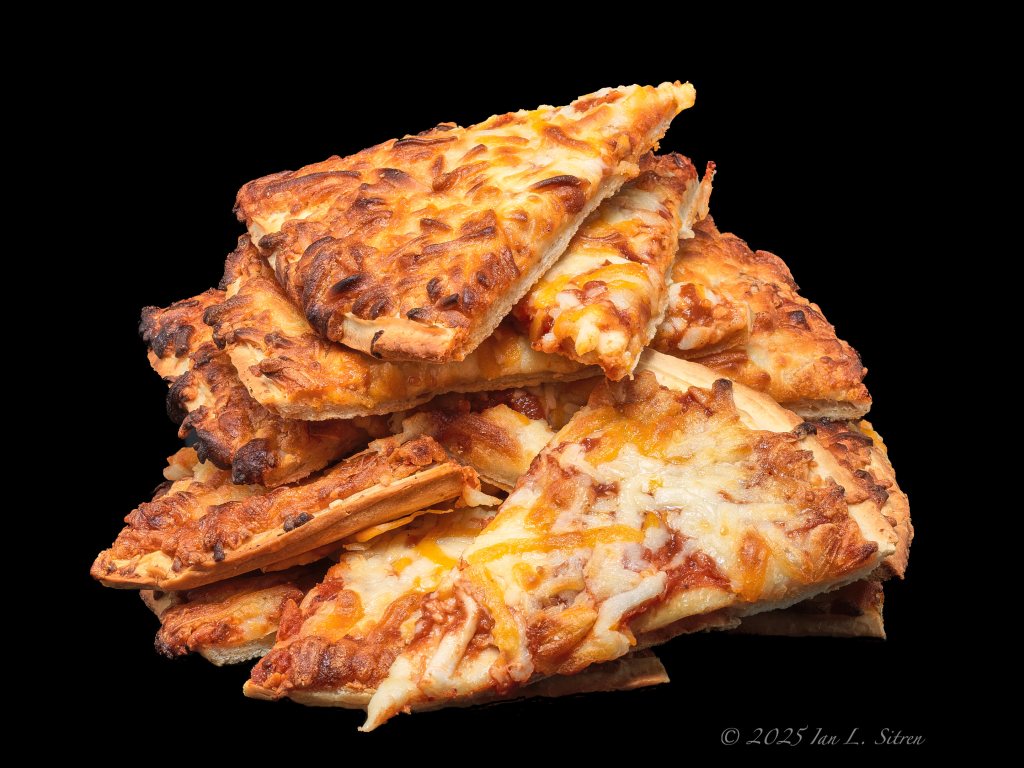
Another entry from the calendar of invented holidays: National Cheese Pizza Day. As if anyone needed a reminder to eat melted cheese on bread. Still, here it is — and so is my monument to it. Two frozen Red Baron cheese pizzas sliced and stacked into a tower of excess, photographed against a black background.
Cheese pizza is the baseline of the whole idea. From Naples in the 1800s with mozzarella and tomato on flatbread, to Lombardi’s in New York serving it to immigrants in the early 1900s, it’s the foundation on which every other topping variation was built. Frozen in the 1950s, it became the fallback dinner most of us know.
So if today calls for honoring cheese pizza, this is mine.
See more in my Commercial Food Photography gallery:
👉 https://www.secondfocus.com/index/G0000WFAqDJQOgKU
National Panini Day — Grocery Store Counter Style

Finding a panini in the world of fast food is a bit like spotting a vintage sports car in a grocery store parking lot — rare, but worth the stop. My hunt ended here in Palm Springs, not at a café or chain, but at the counter of Jensen’s Foods. Freshly made when ordered for takeout. Not fast food fast, but quick enough.
This is their Arrivederci Panini: peppercorn turkey, white cheddar, Genoa salami, onion, pepperoncini, and basil on focaccia bread, finished with Italian vinaigrette. Pressed to order, sliced, and packed to go — it’s proof that “fast” can still be fresh.
The panini — an Italian term for a small bread roll or sandwich — became popular in Italy in the mid-20th century and found its way into American cafés in the 1980s and 1990s, often prepared on a ridged grill to create its signature pressed texture and golden stripes. Once considered an upscale alternative to the standard sandwich, today the panini is a staple in cafés and delis around the world.
Photographed here against my signature black background, the stacked halves show off the grilled bread, melted cheese, and layers of savory filling. A fitting way to mark the day — and maybe an excuse to pick up lunch.
Hungry? More of my Commercial Food Photography on my website at https://www.secondfocus.com/index/G0000WFAqDJQOgKU
Ten Chili Dogs, Elegantly Served – Because It’s National Chili Dog Day
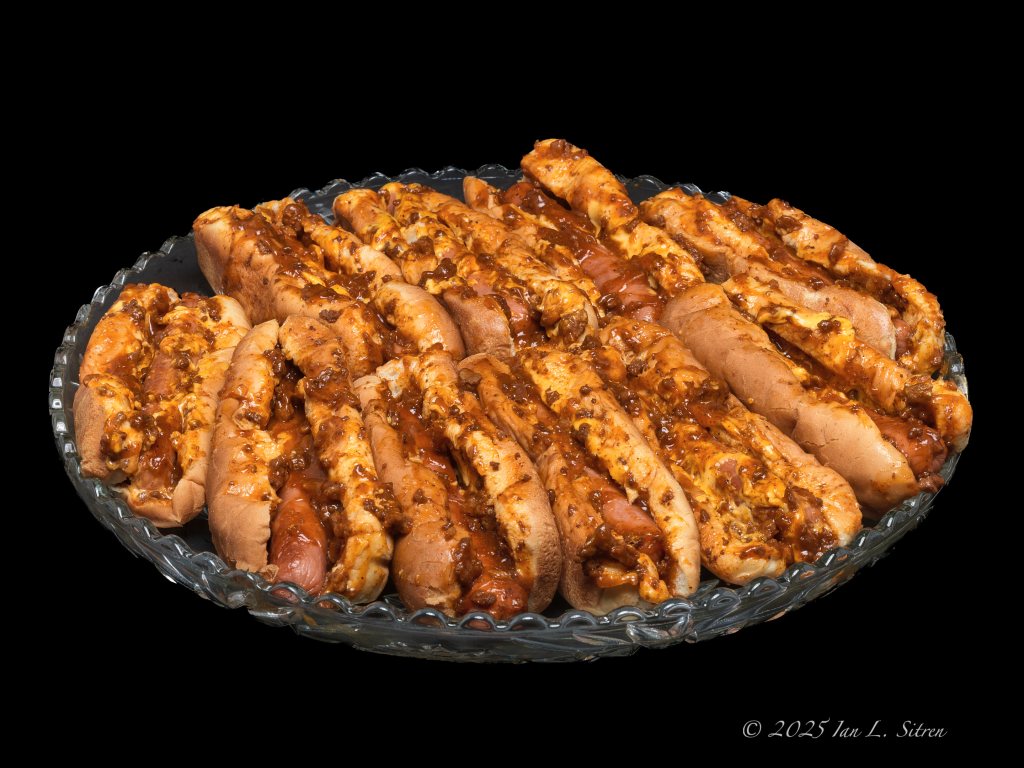
Nothing says “refined dining” quite like ten chili cheese dogs arranged on a cut‑glass platter. Today is National Chili Dog Day, and what better way to mark the occasion than with a full platter of Wienerschnitzel chili cheese dogs, photographed as if they belong at a formal banquet.
Lined up side by side, the hot dogs are topped with chili sauce and melted cheese, shot against my black background for a polished, commercial look.
Chili dogs have been part of American food culture for more than a century, found in diners, ballparks, and roadside stands. Wienerschnitzel has been serving its own version since 1961, making it one of the most recognizable names for chili dogs in the U.S.
📷 See more of my commercial food photography here:
https://www.secondfocus.com/index/G0000WFAqDJQOgKU
National Crunchy Taco Day With Tiny Tacos
Happy National Crunchy Taco Day! 🌮🔥
Jack in the Box Tiny Tacos, stacked high and ready to devour. Crispy shells, seasoned filling, melted cheese, and just enough mess to make them irresistible. Introduced in 2020, these bite-sized tacos quickly became a fan favorite—perfect for snacking, sharing, or just indulging in a pile of crunch.
National Crunchy Taco Day celebrates the hard-shell taco, a staple of Tex-Mex cuisine since the early 20th century. While tacos have deep roots in Mexican history, the crunchy variety became widely popular in the U.S. thanks to fast-food chains and mass production, making them an icon of Americanized taco culture.
Hungry now? Maybe you will like my Food Photography and other projects. Visit my website at http://SecondFocus.com Thanks!
The Original: 50 Years of the Egg McMuffin

March 2nd, National Egg McMuffin Day, McDonald’s iconic breakfast sandwich, has a rich history that revolutionized fast-food breakfast. It was conceived in 1971 by Herb Peterson, a McDonald’s franchisee in Santa Barbara, California. Inspired by Eggs Benedict, Peterson wanted to create a portable, handheld version that could be eaten on the go. He developed a sandwich featuring a freshly cracked egg cooked in a Teflon ring, Canadian bacon, and melted cheese, all served on a toasted English muffin.
After a successful test run, the Egg McMuffin made its national debut in 1975, becoming the foundation of McDonald’s breakfast menu. Its success led McDonald’s to expand its breakfast offerings, introducing items like **hotcakes, scrambled eggs, sausage, hash browns, and pastries. Among these additions was the Sausage McMuffin, which replaced the Canadian bacon with a seasoned pork sausage patty, offering a heartier, more indulgent alternative. The Sausage McMuffin with Egg soon followed, combining the best elements of both sandwiches.
The success of the Egg McMuffin didn’t just transform McDonald’s—it redefined fast-food breakfast entirely. Competing chains took notice, with Burger King launching the Croissan’wich in 1983, swapping the English muffin for a flaky croissant. Wendy’s, Jack in the Box, and Dunkin’ also expanded their morning menus, introducing similar breakfast sandwiches with eggs, cheese, and a choice of bacon, sausage, or ham. Even convenience stores and frozen food brands capitalized on the trend, offering ready-to-heat versions in grocery aisles.
2025 marks the sandwich’s 50th anniversary, celebrating half a century of mornings with McDonald’s first-ever breakfast item. The Egg McMuffin’s enduring popularity not only helped cement fast-food breakfast as a daily routine but also influenced an entire industry, proving that a simple idea—an egg on an English muffin—could change the way America starts its day.
Visit my website to see my Food Photography and other intriguing photo projects. Thanks! http://SecondFocus.com

