SPAM Meets the Big Mac
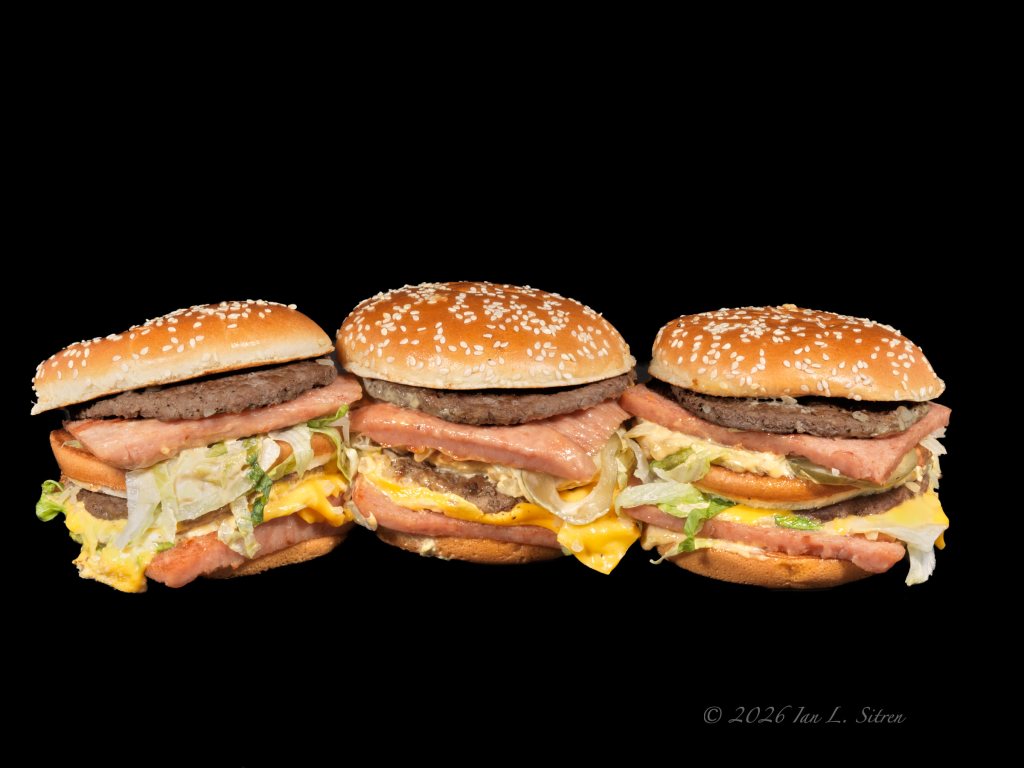
Last week gave us National SPAM Day. Then, just a couple of days later, came National Big Mac Day.
While thinking about National Big Mac Day, I remembered something that people on the mainland may not know.
SPAM is a huge part of the food culture in Hawaii, and McDonald’s restaurants throughout the Islands have embraced it for years. You’ll find SPAM on breakfast platters with eggs and rice, and at many locations it can also be substituted on selected breakfast sandwiches. So while McDonald’s has never offered a SPAM Big Mac, SPAM has had a place on the McDonald’s menu in Hawaii for many years.
Flying to Hawaii just to pick up breakfast from McDonald’s didn’t seem especially practical.
So I decided to bring a little Hawaii into my own kitchen.
Instead of changing the Big Mac, I wondered what would happen if I simply added SPAM to it. Not replacing the famous beef patties. Just adding two slices of pan-fried SPAM to each burger.
I started with three regular Big Macs. Then I pan-fried six slices of SPAM and added two slices to each burger, leaving the original Big Mac exactly as McDonald’s intended while adding a little Hawaiian inspiration.
Then it was time for the part I know best.
The three burgers moved in front of my camera and became the latest addition to my Food From Bag To Backgroundfast food photography project. Against my very black black background, the sesame seed buns, melted cheese, lettuce, beef patties, and SPAM came together exactly as I had envisioned.
The SPAM story isn’t over yet. There is one more stop on this journey through Hawaii’s favorite canned meat.
Next… SPAM Musubi.
You can see more of my photography, projects, motion, and my Blog on my website at https://www.secondfocus.com
Thank You!
Happy Anniversary Burger King: From Insta-Burger King to the Whopper
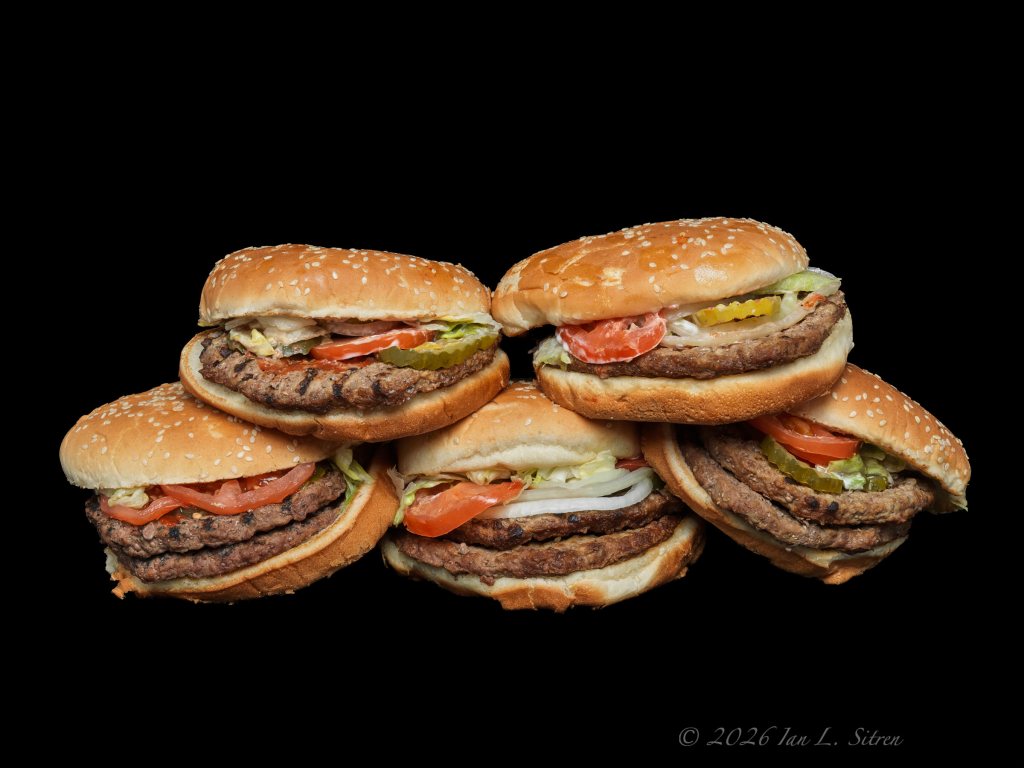
Today, July 23, marks the anniversary of the beginnings of Burger King, going back to 1953 and a restaurant in Jacksonville, Florida, called Insta-Burger King.
The story changed considerably from there. James McLamore and David Edgerton opened an Insta-Burger King franchise in Miami in 1954, eventually acquired the company, dropped the “Insta” from the name, and built Burger King into one of the biggest fast food chains in the world.
Then came the sandwich that would define the company.
The Whopper was introduced in 1957 and went on to become one of the most recognizable hamburgers in fast food. “Home of the Whopper” became part of the Burger King identity, and the Whopper itself has remained at the center of the menu for almost 70 years.
For my Food From Bag To Background photography project, I photographed both Whoppers and Double Whoppers, straight from Burger King, out of the wrappers and onto my very black black background.
And apparently one Whopper wasn’t enough for the photograph either.
Happy Anniversary Burger King!
You can see more of my photography, projects, motion, and my Blog on my website at https://www.secondfocus.com
Thank You!
National Veggie Burger Day and the Impossible Whopper
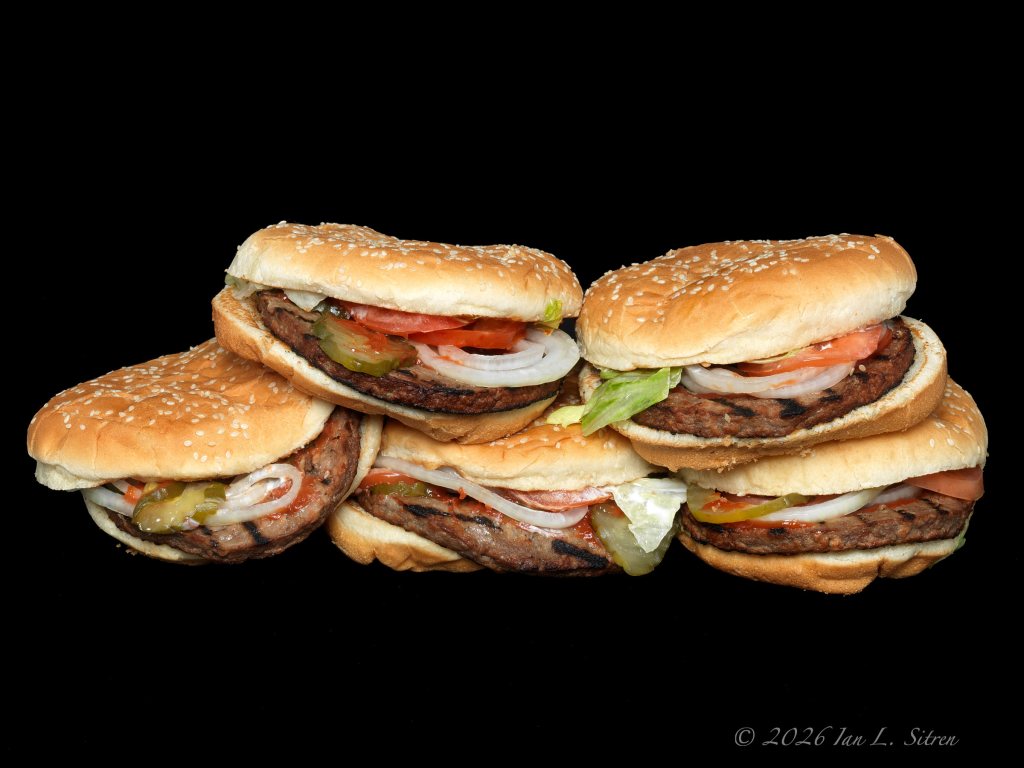
There was a time when the idea of a burger chain selling a plant-based Whopper would have sounded unlikely.
Burger King built its reputation on flame-grilled beef burgers. The Whopper has been the company’s signature sandwich since the 1950s and remains one of the most recognizable items in fast food.
Then came the Impossible Whopper.
Introduced nationally in 2019, the sandwich looked like a Whopper, was built like a Whopper, and was sold right alongside the traditional version. The difference was the patty, which was made from plant-based ingredients rather than beef.
Today’s photograph features a stack of Burger King Impossible Whoppers for my FOOD FROM BAG TO BACKGROUND series.
One of the reasons the Impossible Whopper attracted so much attention was that it wasn’t aimed exclusively at vegetarians. Burger King positioned it as an alternative that could appeal to anyone curious about plant-based burgers while still delivering a familiar fast-food experience.
Whether someone chooses it for environmental reasons, dietary preferences, curiosity, or simply to try something different, the Impossible Whopper marked a significant moment in fast-food history. One of the largest burger chains in the world had embraced a product that would have seemed out of place on its menu only a few decades earlier.
You can see more from my FOOD FROM BAG TO BACKGROUND series, along with collections and other projects at https://www.secondfocus.com
National Carl Day and a Different Carl
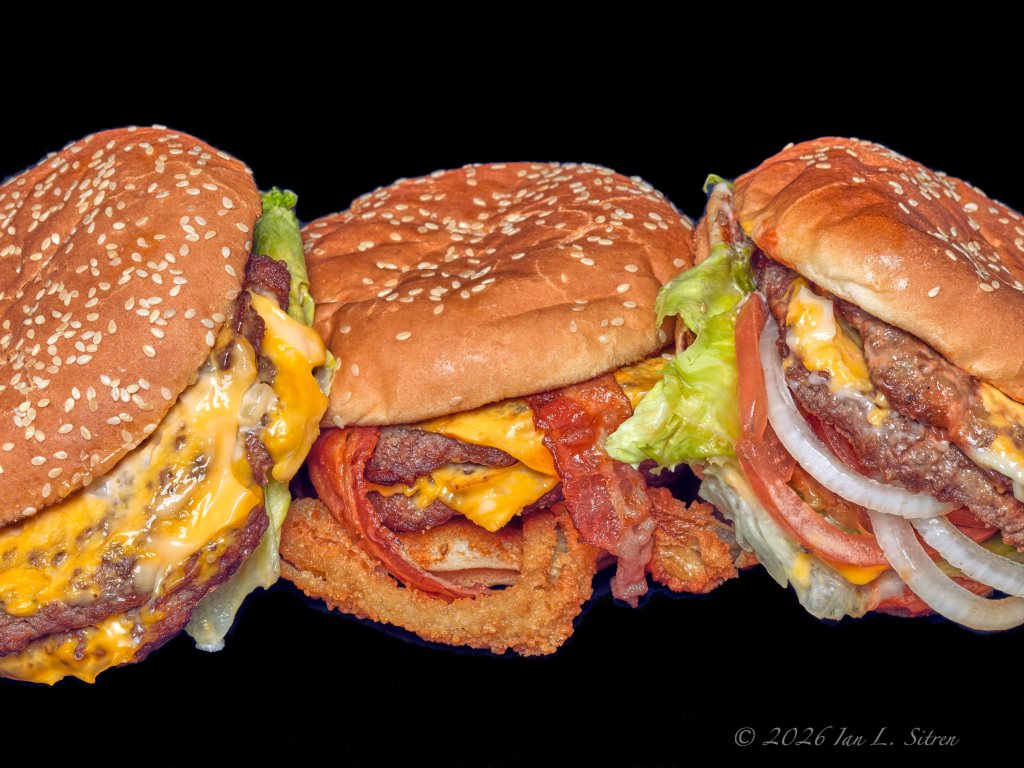
Today is National Carl Day.
Not Carl’s Jr. Day. Not National Cheeseburger Day. Not National Fast Food Day.
Just National Carl Day.
Naturally, that immediately raised an important question.
If there’s a National Carl Day, does Carl’s Jr. get to celebrate too?
I have no idea whether the people behind National Carl Day intended any connection whatsoever to the fast-food chain. My guess is they probably didn’t. But once the thought crossed my mind, there was really only one direction this was going to go.
So today’s photograph features a trio of Carl’s Jr. burgers from my FOOD FROM BAG TO BACKGROUND series.
Carl’s Jr. has always occupied an interesting place in fast-food history. The chain built a reputation around large burgers, unapologetic indulgence, and advertising campaigns that often generated as much discussion as the food itself. Beginning in 2005, a series of very sexy commercials featuring celebrities such as Paris Hilton helped make Carl’s Jr. one of the most talked-about names in fast food.
What makes today’s National Carl Day connection even more amusing for me is that years ago I actually had dinner with Carl, yes, that Carl, and his wife as guests in their home in Anaheim, California. He was a very interesting man, and both Carl and his wife were genuinely warm and welcoming people. At the time I certainly wasn’t thinking that someday there would be a National Carl Day, or that I would be photographing Carl’s Jr. burgers for a food photography project.
The burgers themselves were never subtle. Bigger portions, bigger flavors, and plenty of melted cheese were usually part of the formula. Looking at this photograph, it’s easy to see why Carl’s Jr. developed a reputation for building burgers that demanded attention.
So while National Carl Day almost certainly has nothing to do with Carl’s Jr., it seemed like a good excuse to revisit a brand that has been part of the American fast-food landscape for generations.
Then again, if your name is Carl, perhaps today belongs to you.
And if your name happens to be Carl’s Jr., maybe it does too.
You can see more from my FOOD FROM BAG TO BACKGROUND series, along with aviation photography, collections, and other projects at https://www.secondfocus.com Chances are you’ll find something unexpected waiting there.
National Hamburger Day and the Fast Food Reality Behind FOOD FROM BAG TO BACKGROUND
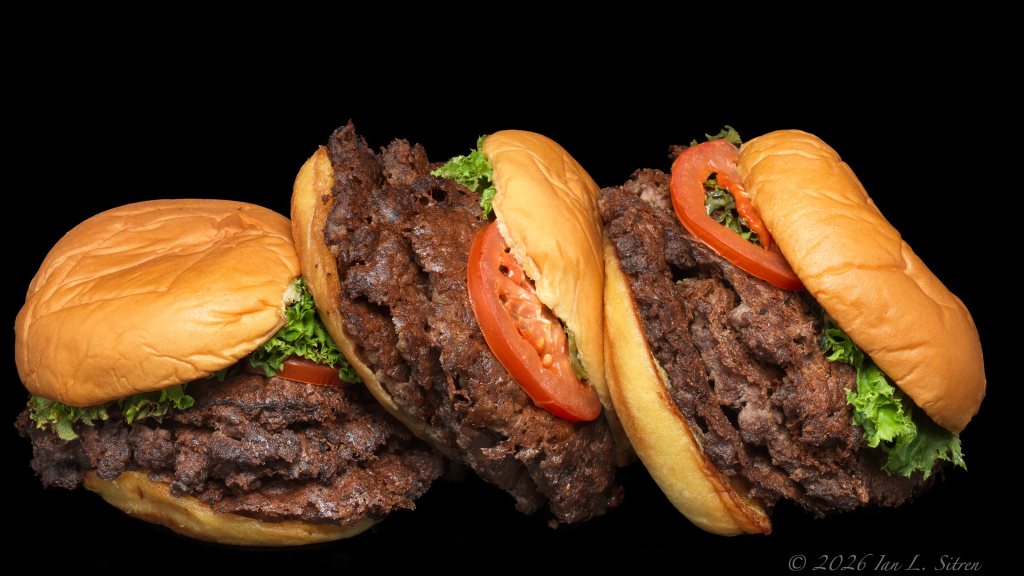
Today is National Hamburger Day.
The hamburger has probably become the defining subject of my “FOOD FROM BAG TO BACKGROUND” project. Fast food photographed exactly as it arrives, no stylists, no reconstruction, no fake versions built for advertising.
And one thing people occasionally ask is where all this food comes from.
The answer is simple: the same place everybody else gets it.
The restaurants and chains have no idea I am photographing their food. There are no sponsorships, no special preparation, no discounts because of photography, and no carefully assembled “photo burgers” arriving from a corporate kitchen. I walk in or use the apps, place an order, pick it up, bring it home, and photograph it exactly as it comes out of the wrapper or bag.
Actually, the apps have become part of the process. The fast food companies constantly push coupons, free items, points, discounts, and combination deals. Surprisingly worthwhile ones. Sometimes I end up planning a shoot around whatever special appears that week.
That is part of what interests me visually about the project. These hamburgers are not idealized advertising concepts. They are real fast food hamburgers, bought like anybody else would buy them, photographed seriously against black backgrounds with the same attention I would give any other subject.
Somewhere between documentary, satire, and food photography, the hamburger became one of the central characters.
And if you have ever wondered what fast food starts looking like when it is pulled out of the bag, isolated against black, and treated like a serious photographic subject, step into the project here on my website at https://www.secondfocus.com
National Hamburger Month, The Whopper Strikes Back in the BIG ARCH Authenticity War
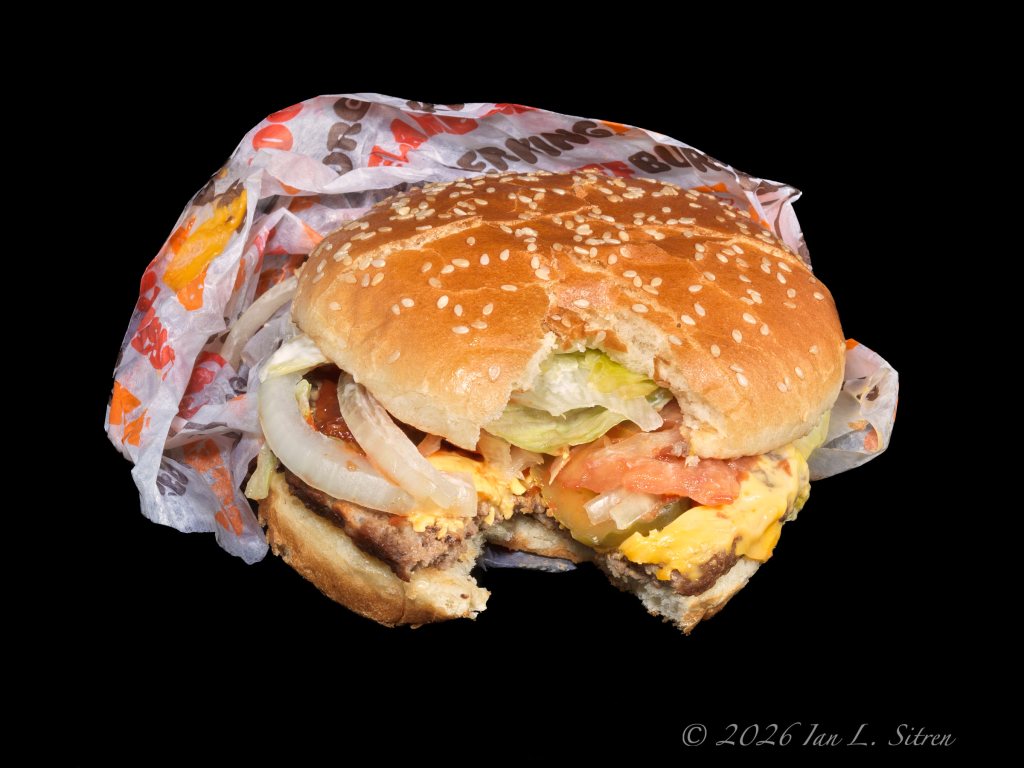
Yesterday I wrote about the introduction of the BIG ARCH from McDonald’s and the strange corporate authenticity debate that unexpectedly formed around it. That post ended up becoming less about hamburgers themselves and more about how massive fast food companies now perform for the public in real time, with every detail immediately analyzed, mocked, defended, or turned into marketing.
If you missed it, the first part is here:
But the story really did not stop with McDonald’s.
Burger King quickly responded using the Whopper as its counterargument. Not a new burger. Not a limited-time release. Just the Whopper itself, the company essentially arguing that authenticity did not need to be engineered because they already had it.
That became the fascinating part of this entire fast food moment.
McDonald’s presented the BIG ARCH almost like a flagship corporate object, oversized, stacked, carefully engineered, heavily promoted. Burger King responded with flame-grilled familiarity and a deliberately less controlled image. The companies were no longer simply competing on taste or price. They were competing on who appeared more believable.
And honestly, that may be the most modern form of advertising possible.
The Whopper itself has a long history. Introduced in 1957, it actually predates the Big Mac and became Burger King’s defining product for decades. Larger, messier, harder to eat cleanly, more physically uneven than the carefully stacked advertising versions most companies prefer to show.
Which is why this photograph interested me.
Unlike the BIG ARCH image I photographed earlier, this one already has a good sized bite taken out of it. The wrapper is still there. The burger is compressed from the bite. Sauce and onions are shifting out of place. It looks handled because it was handled.
That changes the photograph completely.
The image stops being about idealized presentation and becomes more about evidence, consumption, and the strange reality of how people actually interact with fast food. The burger becomes less like advertising and more like an object moving through someone’s life for a few minutes before disappearing.
That tension has become part of what I am exploring with the Food From Bag To Background project.
Fast food companies spend billions trying to construct images around products like this. Commercials, slogans, campaigns, celebrity promotions, social media teams, engineered branding language. But once the wrapper opens and someone takes a bite, the entire performance starts collapsing back into something very physical and very ordinary.
And somehow that may be the most authentic part of the entire thing.
More from the Food From Bag To Background project at https://www.secondfocus.com
And The Best Fast Food Burger Is…
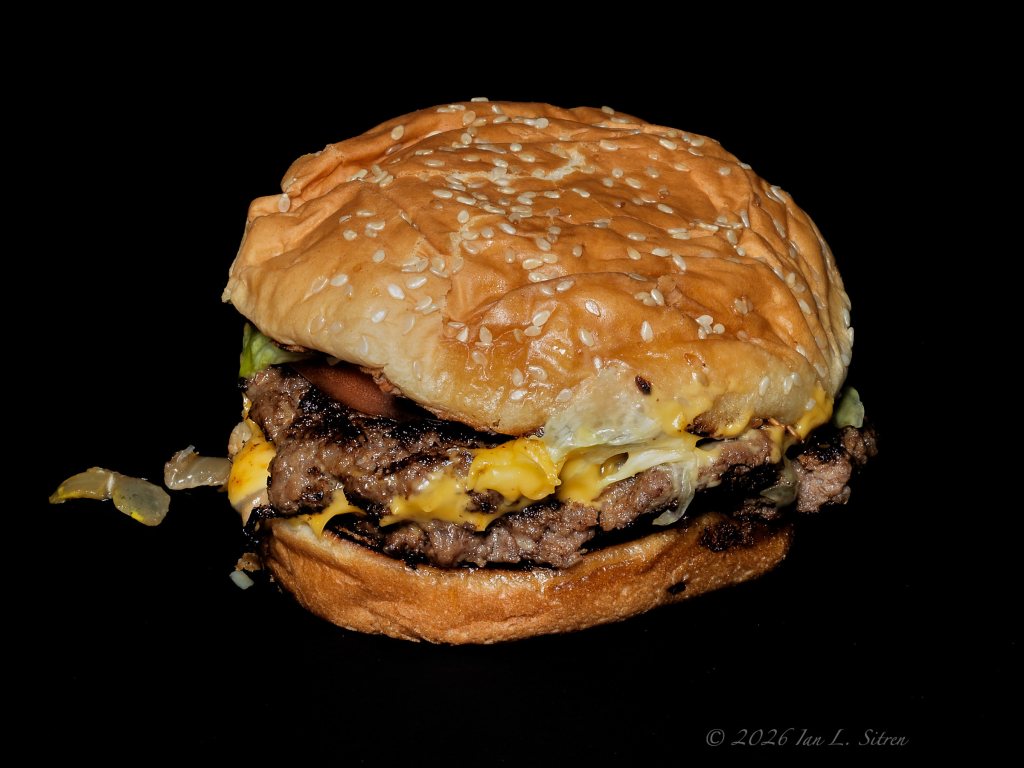
Today I came across a report from a fast food news source, “GreasyNews”, ranking the best fast food burgers in America. And yes I follow “GreasyNews”.
The result was close. Very close.
Five Guys took the top spot by just 0.5%, with Burger King right behind it. Then In-N-Out, Wendy’s, and McDonald’s rounding out the top five. The data came from YouGov, based on surveys of American adults collected between March 2025 and February 2026, tracking the habits of people who eat out regularly.
This is my photograph of a burger from Five Guys. No styling, no adjustments, just as it came out of the bag and onto my black background. The sesame bun slightly collapsing, the cheese melting into the patties, everything just a bit out of control. Exactly how it shows up in real life.
That’s what this project has always been about. Taking fast food and isolating it. Letting it stand on its own.
Five Guys may have edged out the rest in the rankings. But visually, they all hold up once you remove everything else around them.
My opinion… “This IS a tasty burger!”.
More of my fast food photography can be found in my “Food From Bag To Background” series on my website at https://www.secondfocus.com/index/G0000wQ3fbeEezF0
National McDonald’s Day
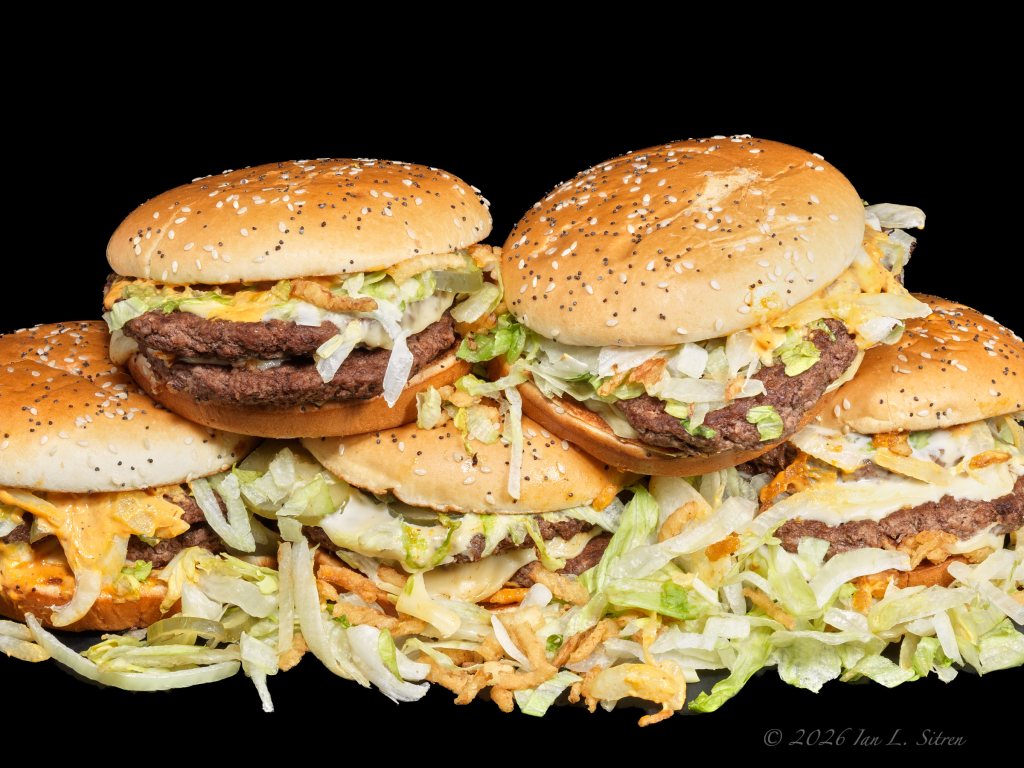
For National McDonald’s Day, I decided to mark the occasion properly.
This is my idea of a celebration cake.
Five BIG ARCH burgers, stacked, unsteady, and exactly what they are, straight from the bag. No styling, no corrections. Just excess, structure, and the kind of presentation that doesn’t need explanation.
The BIG ARCH itself is perhaps a callback. McDonald’s tried something similar in the mid-1990s with the Arch Deluxe, positioned as a more “grown-up” burger. It came with one of the largest promotional budgets ever put behind a fast food product at the time. The product, however, didn’t last.
The BIG ARCH is a large, limited-time release, built as a more substantial offering. Two quarter-pound beef patties, three slices of white cheddar, crispy and slivered onions, pickles, lettuce, and a tangy BIG ARCH sauce, all on a sesame and poppy seed bun. It leans into size, layers, and presence rather than subtlety.
Every year on this day, McDonald’s fans mark a special day known as McDonald’s Day. It commemorates the opening of Ray Kroc’s first McDonald’s franchised restaurant in Des Plaines, Illinois, back in 1955.
More to see from my Food From Bag To Background series on my website at
https://www.secondfocus.com/index/G0000wQ3fbeEezF0
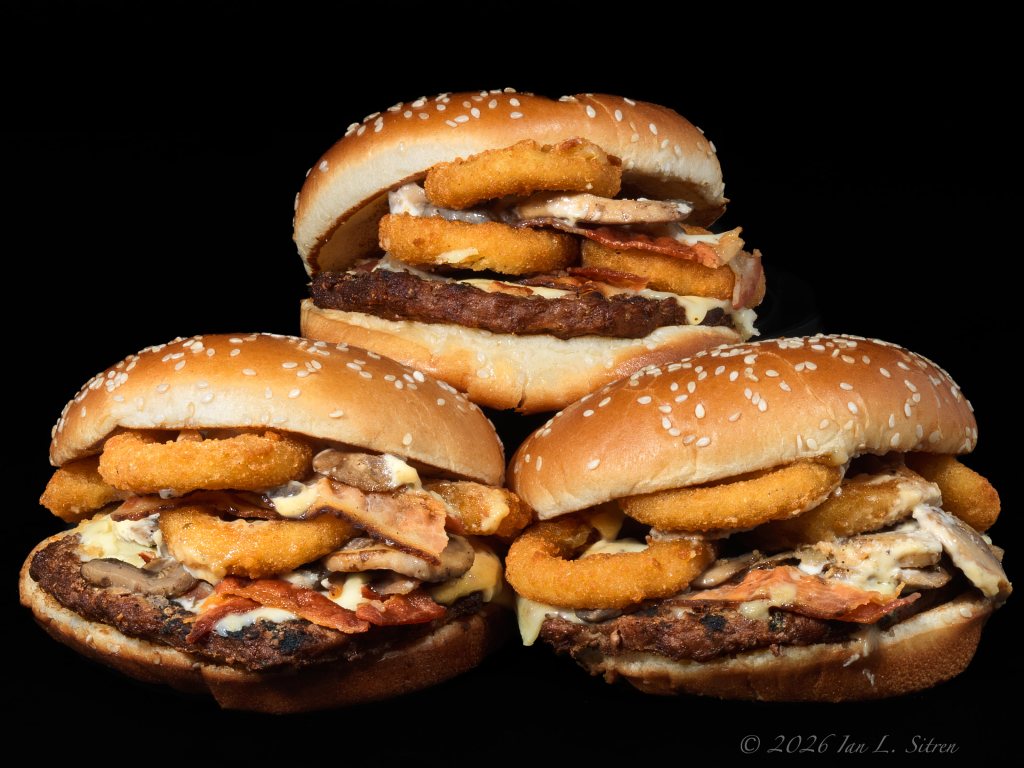
Three Steakburgers, Or Something Close
National Steakburger Day is upon us, a holiday with just enough
legitimacy to sound historic and just enough marketing behind it to make
you pause.
It was self-declared by Freddy’s Frozen Custard and Steakburgers to
honor co-founder Freddy Simon and their version of the steakburger. Like
many food observances, it began as branding and now comfortably lives on
the calendar beside everything else we are told to recognize.
A steakburger traditionally suggests ground steak cuts, something closer
to a steakhouse than a standard hamburger. It carries implication.
Heavier. Better. More serious.
For my Food From Bag To Background project, focus is a different
direction.
I chose the fast food interpretation.
Burger King’s Ultimate Steakhouse Whopper is not technically a
steakburger. It is a flame-grilled beef patty layered with bacon, onion
rings, mushrooms, and sauce on a sesame seed bun. It borrows the
language of the steakhouse, packages it for the drive-thru, and lets the
name do the work.
Pulled from the bag and placed against a black background, three of them
become something else. Not a value meal. Not a combo. Just stacked
excess, isolated and direct.
National Steakburger Day may be brand-born, but the burger is real.
See more from the Food From Bag To Background series here:
https://www.secondfocus.com/index/G0000wQ3fbeEezF0
Whopper Birthday
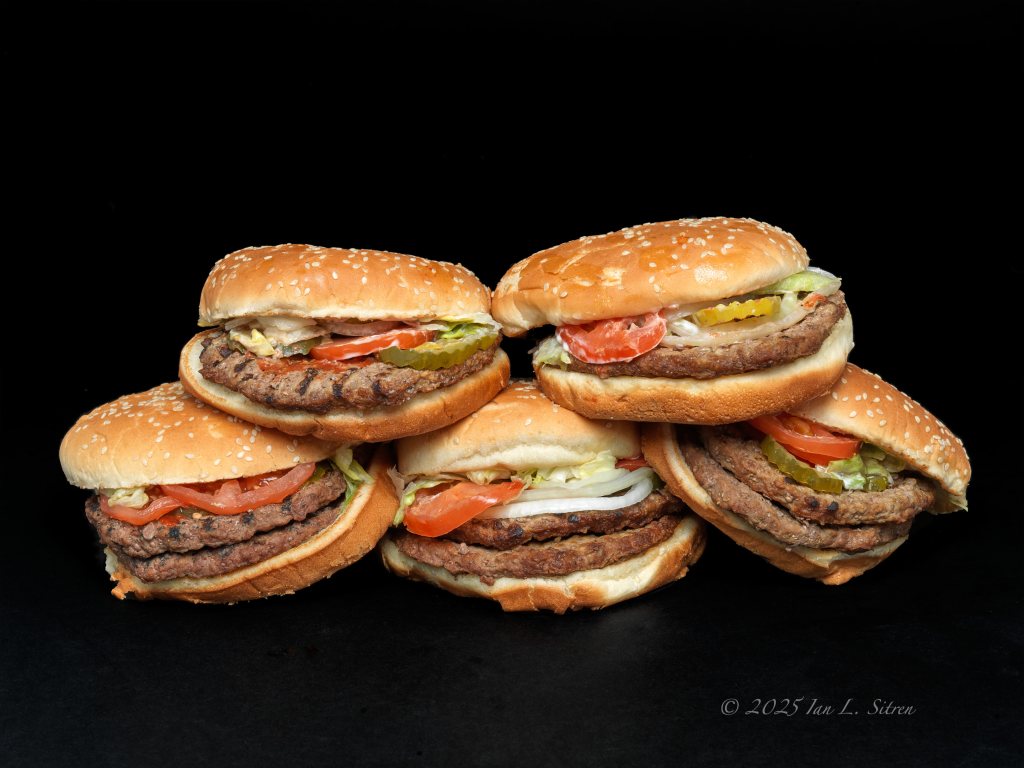
Some birthdays sneak up on you. Today happens to be the birthday of the Burger King Whopper, introduced in 1957 when a Miami burger stand decided America deserved something larger and more structurally ambitious than anything on the menu board.
James McLamore, one of the Burger King founders, noticed customers flocking to oversized burgers at rival drive-ins. His solution was simple: go bigger. Much bigger. The original Whopper sold for 37 cents and immediately rewired American expectations for how much beef should fit inside a bun. From there, fast-food evolution took over. The Double Whopper showed up because of course it did. The Angry Whopper arrived for people who needed emotional intensity with their lunch. The Brisket Whopper made a brief appearance to remind us that barbecue can be a personality trait. And then the Impossible Whopper landed in 2019, launching the plant-based arms race and proving that even vegetarians sometimes want a burger the size of a paperback novel.
This is my stack of Double Whoppers, photographed earlier. I didn’t have time to run out and buy new ones, but double is my personal preference anyway.
There is much more of my fast food project “Food From Bag To Background” on my website at
https://www.secondfocus.com/index/G0000wQ3fbeEezF0 You might find something to make you hungry, take a look. Thanks.


National Hamburger Month and the Billion Dollar Authenticity War Behind the BIG ARCH
May is National Hamburger Month.
Which sounds simple enough until you stop and realize how much of modern American culture quietly revolves around hamburgers.
This year, the biggest burger story has probably been the introduction of the BIG ARCH from McDonald’s. Not just because it was another fast food launch, but because the entire thing unexpectedly turned into a strange cultural event involving corporate marketing, social media authenticity, public reaction, and billions of dollars sitting underneath all of it.
The burger itself was designed to be bigger, heavier, and more excessive than the traditional McDonald’s lineup. Two large beef patties, layered cheese, onions, lettuce, pickles, special sauce, and a large sesame and poppy seed bun. McDonald’s positioned it almost like a flagship object, the “most McDonald’s McDonald’s burger yet,” which is such a corporate sentence it almost becomes satire on its own.
Earlier this year, McDonald’s CEO Chris Kempczinski posted a promotional tasting video for the BIG ARCH. Instead of focusing on the burger, people focused on him. The small bite. The awkward delivery. The careful corporate language. Whether he looked comfortable eating it at all.
The clips spread everywhere. TikTok, YouTube reactions, business media, late-night commentary, memes, marketing discussions. Burger King even took shots at the situation publicly. Business writers started describing the entire thing as an “authenticity war” between fast food companies trying to appear relatable in an era where consumers instantly dissect every detail.
Which is fascinating when you step back and look at the scale of what we are talking about.
McDonald’s serves roughly 69 million customers every day around the world. Annual revenue exceeds 25 billion dollars. The global burger market itself is estimated well over 100 billion dollars annually. Entire supply chains, agricultural systems, marketing departments, packaging systems, social media strategies, and public corporations revolve around products like this.
And after all of that planning, testing, engineering, and advertising, public discussion ended up collectively debating whether a CEO looked natural taking a bite out of a hamburger.
That may actually be the most 2026 thing imaginable.
This photograph became part of that larger observation for me. The image strips away the advertising language and isolates the object itself. No restaurant interior, no fries, no smiling family, no campaign graphics. Just the burgers against black.
That approach has become part of what I’m doing with the Food From Bag To Background project. Taking fast food out of its marketing environment and presenting it almost like an artifact. The layers, the excess, the construction, the familiarity of it all. Things people see constantly but rarely stop and actually look at.
And whether people love it, criticize it, joke about it, or eat it in their car without thinking twice, the hamburger remains one of the defining products of modern American culture.
More at https://www.secondfocus.com
May 18, 2026 | Categories: Uncategorized | Tags: American culture, BIG ARCH burger, black background food photography, burger history, burger industry, Burger King, burger marketing, Burger Photography, burger wars, Chris Kempczinski, commercial food photography, cultural commentary, fast food culture, fast food history, fast food industry, fast food marketing, fast food photography, food blog, food culture, Food From Bag to Background, hamburger culture, McDonald’s, McDonald’s Big Arch, National Hamburger Month, restaurant industry, secondfocus, whopper | 1 Comment