International Waffle Day Today, From Eggo to Everything Else
Most people don’t think twice about waffles. But they probably should.
Because somewhere between a homemade Belgian waffle and a frozen Eggo waffle, something distinctly American happened.
My version today starts in the freezer.
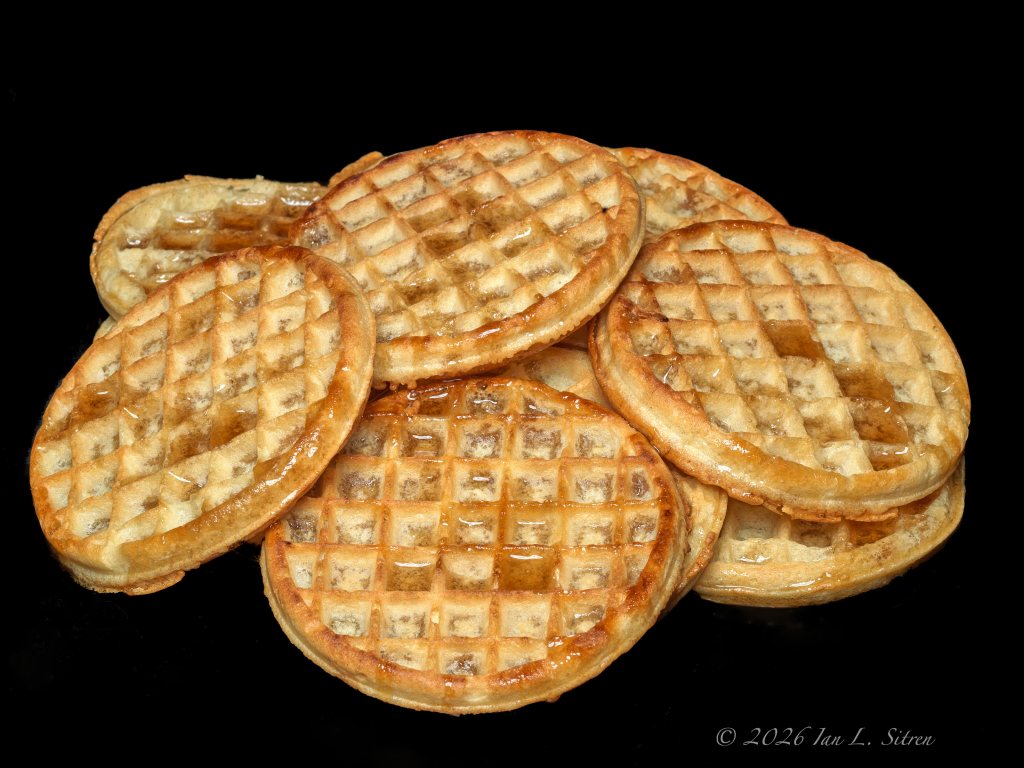
A stack of Eggo waffles, heated, finished with syrup, and placed onto a black background. No garnish, no pretense. Just the product, exactly as it shows up in kitchens across the country.
Eggo waffles date back to the 1950s, originally created by brothers Frank, Anthony, and Sam Dorsa. They were first called “Froffles”, a combination of frozen and waffles, before the name Eggo took over. By the 1970s, the brand became a staple in American households, helped along by a simple idea, waffles without the work.
But waffles themselves go much further back.
Early versions trace to medieval Europe, where patterned irons were used to cook thin batter between heated plates. By the time Belgian waffles were introduced to the United States at the 1964 New York World’s Fair, waffles had already evolved into something more refined, lighter texture, deeper pockets, and often served with fruit, cream, or powdered sugar.
Today, the spectrum is wide.
On one end, you have carefully plated waffles in restaurants, topped with berries, whipped cream, and sauces, presented as something closer to dessert than breakfast.
On the other, you have this.
Straight from the freezer, into the toaster, onto the plate.
And that may be the more honest version.
No ceremony. No reinvention. Just something quick, familiar, and widely understood.
That’s where my food photography, pornochic photo adventures, and more can be found on my website at https://www.secondfocus.com
A Cheesesteak Without the Grill: National Cheesesteak Day
Most people will tell you that if you want a proper Philly cheesesteak, you need to go to the right sandwich shop. Thin-sliced beef, grilled onions, melted cheese, and a roll that holds it all together. There is a long history behind it, going back to Philadelphia in the 1930s, when Pat and Harry Olivieri are credited with putting beef on a roll and starting what would become a regional staple.
That is not what this is.
For National Cheesesteak Day, I was not interested in tracking down the best sandwich shop. I was interested in something that fits within the reality of how a lot of people actually eat. Fast, packaged, and pulled from a freezer.
So I went to the grocery store and came back with a box of Hot Pockets Philly Steak & Cheese.
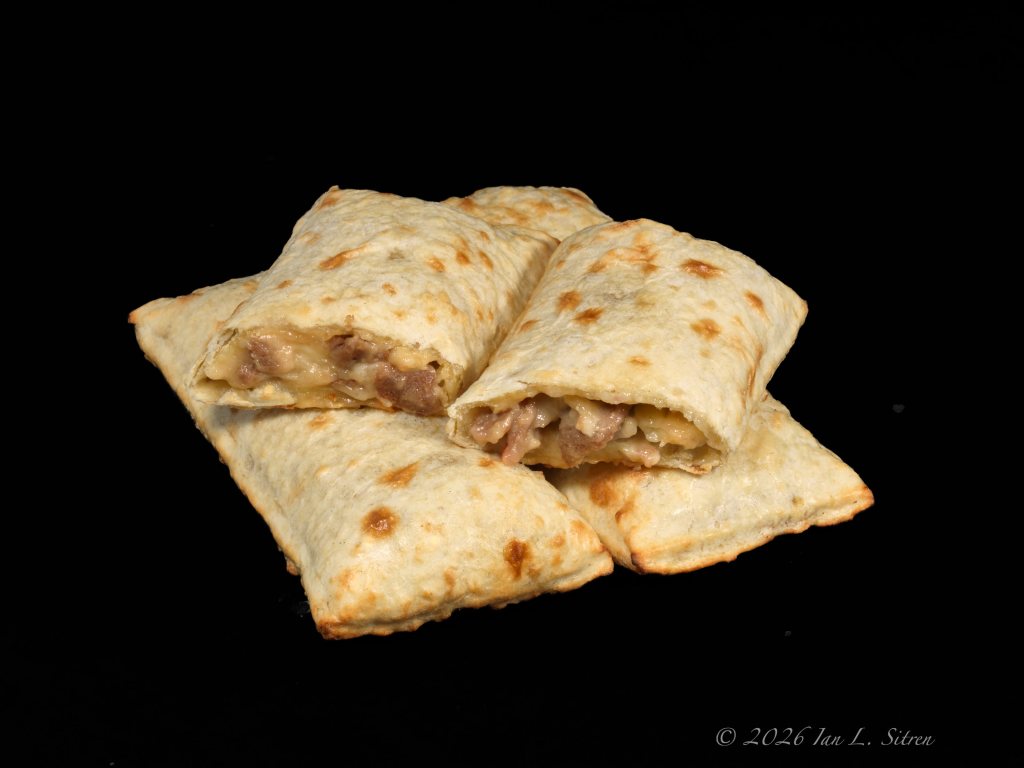
Cooked in the oven and cut open, they reveal exactly what you would expect. A sealed pastry filled with steak and melted cheese, engineered for convenience and speed. No grill, no counter, no line. Just a box, an oven, and a few minutes.
It is not a Philly cheesesteak in the traditional sense. It is a version of the idea, translated into something portable, shelf-stable, and widely available. That shift, from street food to frozen aisle, is part of the story.
My photograph keeps it simple. Straight from the box to a black background, cut open to show the filling, presented without staging or distraction. The focus stays on what it is.
My food photography, pornochic photo adventures, and more can be found on my website at https://www.secondfocus.com
National Bagel Day Today
Bagels didn’t start out like this.
Then America got involved.
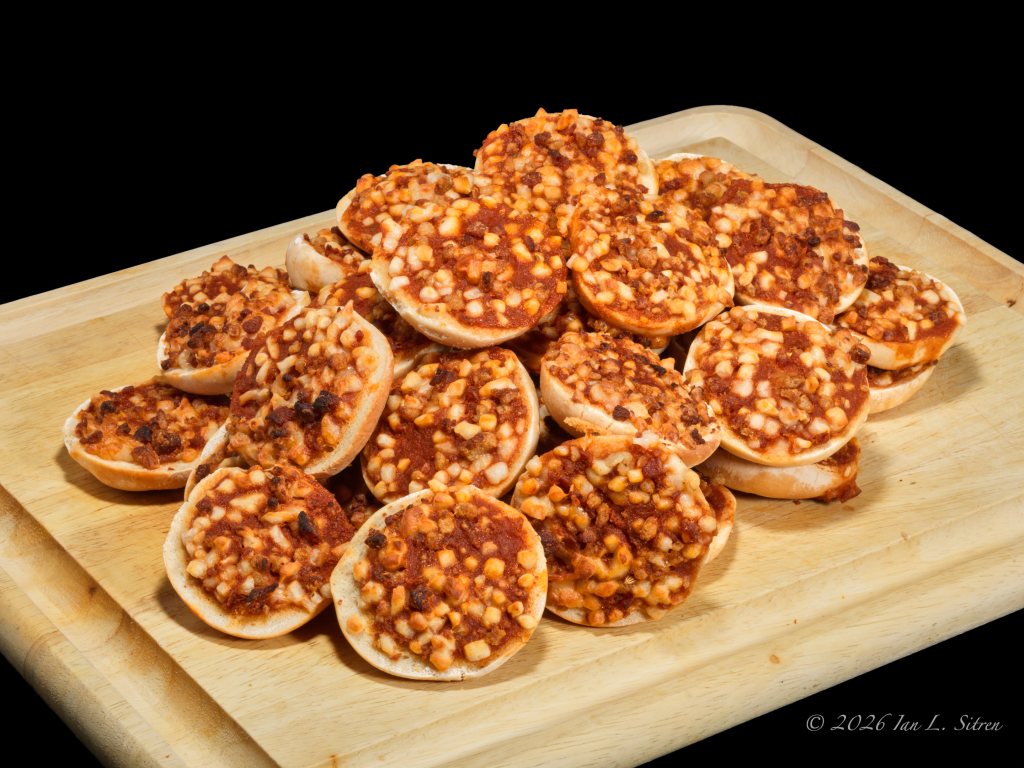
Rather than photograph a traditional bagel for National Bagel Day, I chose pizza bagels. They keep the shape, discard the ceremony, and replace it with tomato sauce, mozzarella, sausage, and pepperoni. There’s nothing to slice, nothing to decide, and no expectations to meet. Just heat and eat.
Bagels trace their history to Jewish communities in Eastern Europe, where they were boiled, baked, and valued for their practicality as much as their taste. When they arrived in the United States, they carried that tradition with them, at least briefly.
Pizza bagels may be the most American version of the bagel. Frozen, standardized, and designed for speed.
To see more of my Commercial Food Photography, please visit my website at
https://www.secondfocus.com/index/G0000WFAqDJQOgKU
National Quesadilla Day, the Frozen Aisle Edition
Today is National Quesadilla Day. I could’ve gone to Del Taco or Taco Bell — but that felt too expected. I wanted fast food, and this still qualifies.
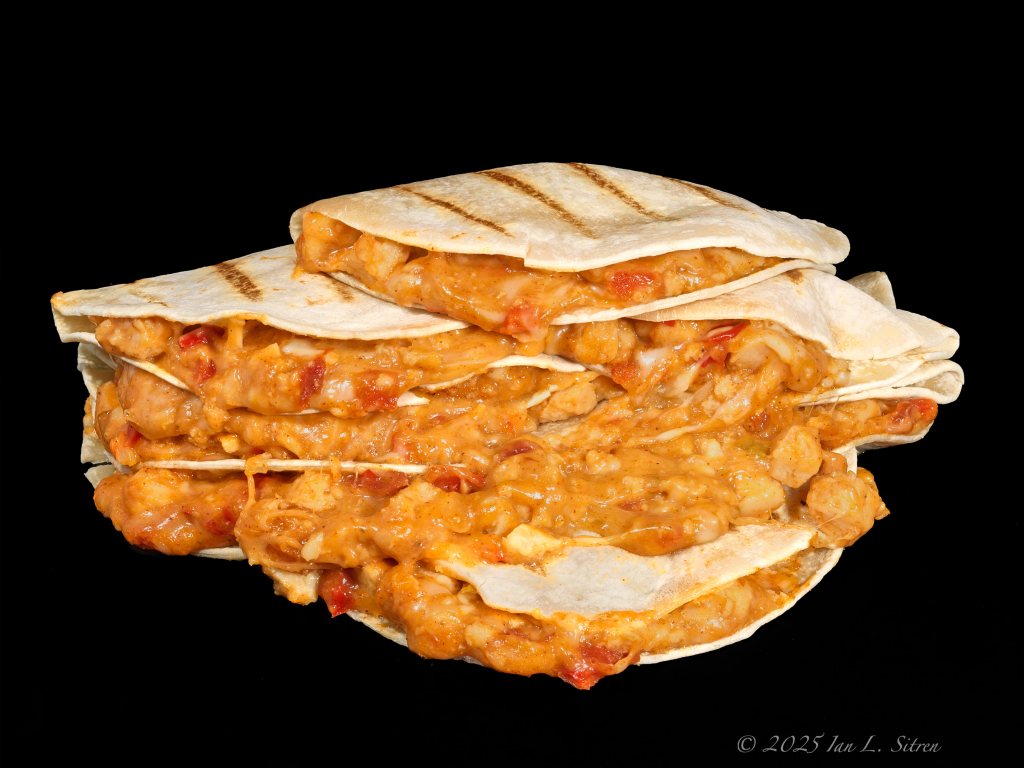
The quesadilla began in 16th-century Mexico — tortillas and cheese on a hot griddle, simple and fresh. Over the centuries it spread, evolved, and crossed borders. And now, at last, it has reached its pinnacle: two entire boxes of El Monterey frozen chicken and Monterey Jack quesadillas, stacked straight from cardboard to black background. Ten quesadillas, no chef required. Just freezer, oven, and done.
Is it authentic Mexican food? No. It’s just another variation of fast food — not handmade on the street corner, not handed through a drive-thru window, but pulled from a box in the freezer aisle.
Five hundred years of history, now available in 15 minutes at 375 degrees — family pack times two.
📸 From my From Bag to Background series:
https://www.secondfocus.com/index/G0000wQ3fbeEezF0
National Onion Rings Day – A Closer Look

Today has been National Onion Rings Day, a moment to acknowledge one of the most recognizable fried side items in the fast food world.
The history of the onion ring is somewhat unclear—some trace it back to an 1802 British cookbook, while others cite a 1933 Crisco ad in the New York Times that featured a recipe for deep-fried onion slices. Regardless of who gets credit, onion rings became a mainstay of American drive-ins and burger joints by the mid-20th century and have stayed popular ever since.
National Onion Rings Day is observed annually on June 22. Like many food-themed days, its origins are unofficial, but it’s widely embraced by fast food chains and fans of fried food across the country.
To mark the day, I photographed these onion rings straight out of the oven, frozen from a bag, just as they are. No styling, no enhancements, and nothing added. The close-up emphasizes the panko texture, the repetition of shapes, and the visual appeal of something usually overlooked.
This image is part of my more commercial food photography, but for now check out my From Bag to Background series, where I document fast food and snack items exactly as they arrive, unstyled and unaltered, set against a clean background.
View the full gallery here:
👉 https://www.secondfocus.com/index/G0000wQ3fbeEezF0/I0000nUG8tfk8Gdc
 SecondFocus Blog