SPAM Meets the Big Mac
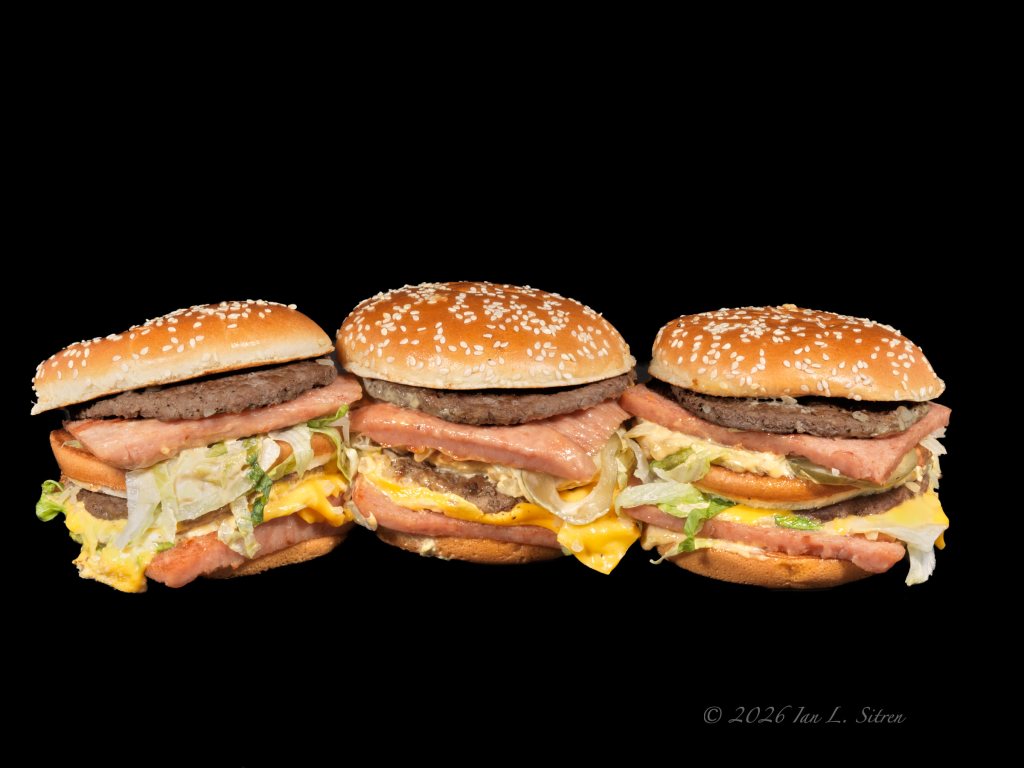
Last week gave us National SPAM Day. Then, just a couple of days later, came National Big Mac Day.
While thinking about National Big Mac Day, I remembered something that people on the mainland may not know.
SPAM is a huge part of the food culture in Hawaii, and McDonald’s restaurants throughout the Islands have embraced it for years. You’ll find SPAM on breakfast platters with eggs and rice, and at many locations it can also be substituted on selected breakfast sandwiches. So while McDonald’s has never offered a SPAM Big Mac, SPAM has had a place on the McDonald’s menu in Hawaii for many years.
Flying to Hawaii just to pick up breakfast from McDonald’s didn’t seem especially practical.
So I decided to bring a little Hawaii into my own kitchen.
Instead of changing the Big Mac, I wondered what would happen if I simply added SPAM to it. Not replacing the famous beef patties. Just adding two slices of pan-fried SPAM to each burger.
I started with three regular Big Macs. Then I pan-fried six slices of SPAM and added two slices to each burger, leaving the original Big Mac exactly as McDonald’s intended while adding a little Hawaiian inspiration.
Then it was time for the part I know best.
The three burgers moved in front of my camera and became the latest addition to my Food From Bag To Backgroundfast food photography project. Against my very black black background, the sesame seed buns, melted cheese, lettuce, beef patties, and SPAM came together exactly as I had envisioned.
The SPAM story isn’t over yet. There is one more stop on this journey through Hawaii’s favorite canned meat.
Next… SPAM Musubi.
You can see more of my photography, projects, motion, and my Blog on my website at https://www.secondfocus.com
Thank You!
When the Wrong Grocery Purchase Becomes the Right Photograph
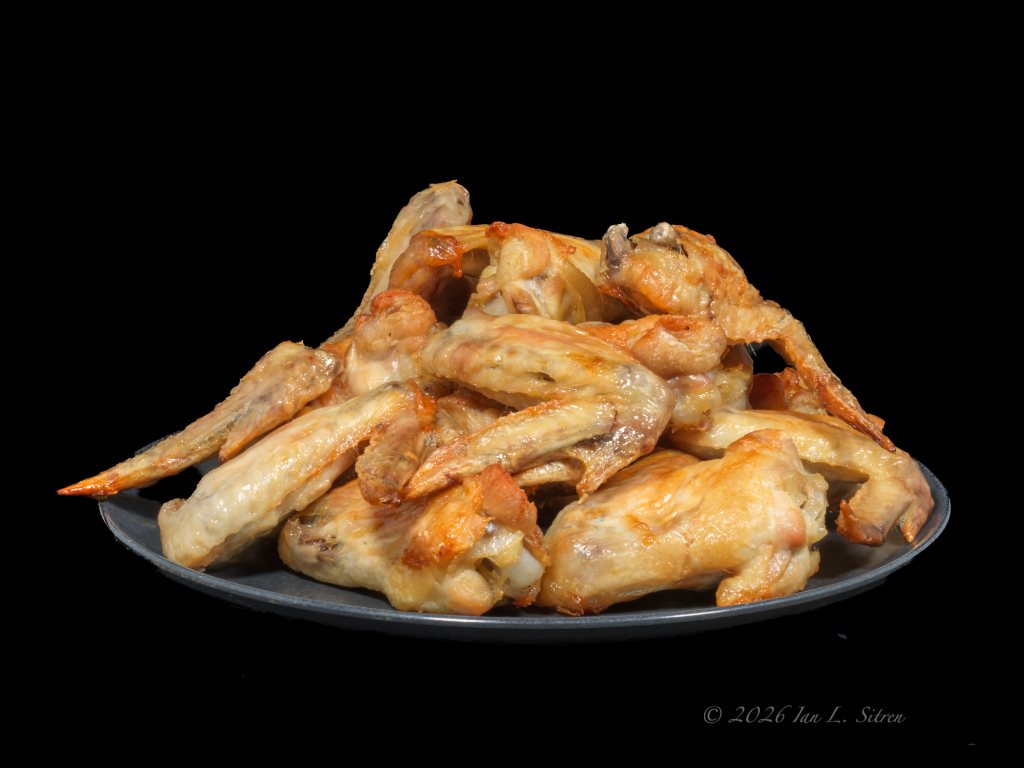
Most trips to the grocery store are pretty straightforward. This one wasn’t.
Most of the way home I suddenly realized that I wasn’t supposed to buy chicken wings. But now I had four pounds of them riding home with me.
Turning around wasn’t really an option. It was well over 100 degrees outside, and the rest of the groceries weren’t going to appreciate an extended sightseeing tour of Palm Springs.
So I changed the plan.
Chicken wings aren’t part of my Food From Bag To Background fast food photography project, but they were suddenly part of today’s photography project. I’ve been photographing for decades. Cooking is another matter entirely.
Fortunately, over the past three years my AI assistant and muse, Emily, has proven to be more than just an idea generator. She’s also become my unofficial chef and food stylist, right down to explaining how to roast chicken wings so they would look their best in front of the camera.
A little olive oil, a conventional oven, a few temperature checks, and a lot of hoping later, I had a plate of roasted chicken wings where they belonged… in front of my camera instead of still sitting in a grocery bag.
Sometimes the best photo of the day begins with buying the wrong thing.
You can see more of my photography, projects, motion, and my Blog on my website at https://www.secondfocus.com
Thank You!
National Chocolate Chip Cookie Day: The One Cookie Theory
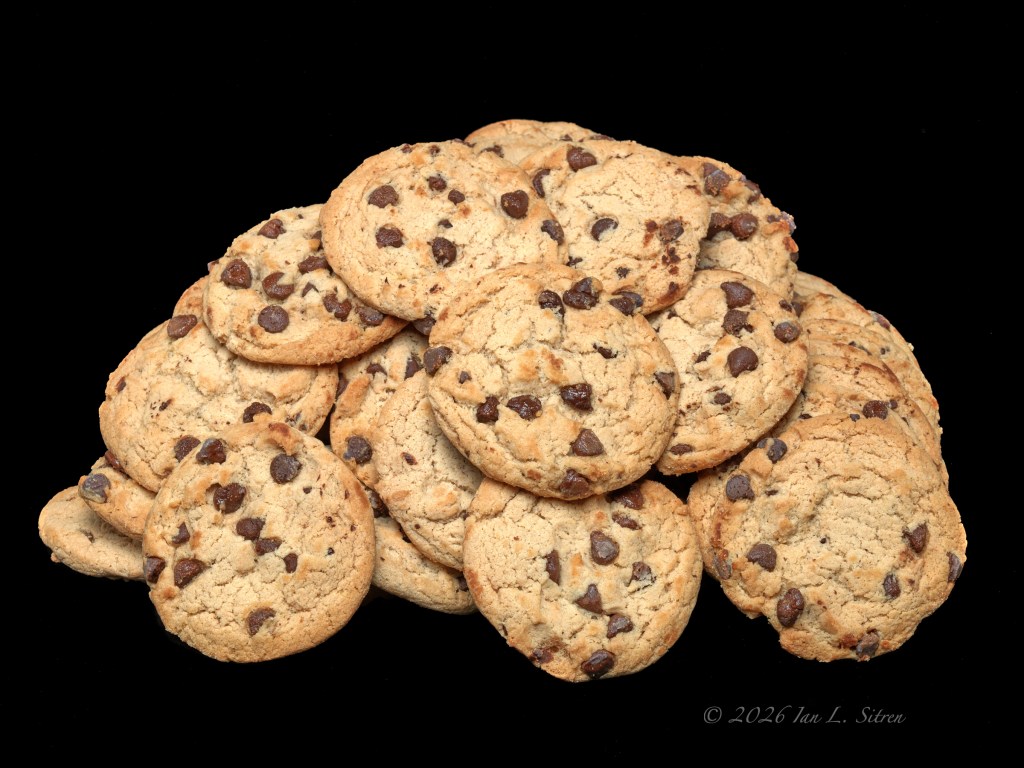
There are foods that inspire endless debate. Burgers. Pizza. Barbecue. Then there are chocolate chip cookies. Nobody argues about whether they belong in the dessert hall of fame. The only real debate starts after the first one.
It always begins with the best of intentions. “I’ll just have one.”
One becomes two because the second one is obviously for comparison. Three is simply to confirm your findings. Somewhere around four or five, you’ve stopped conducting research and have entered a completely different phase of the experiment.
For photography, chocolate chip cookies are deceptively simple. Every crack, every chocolate chip, every highlight and shadow has to look just right. A cookie that tastes great isn’t always the one that photographs the best, and the one that photographs perfectly may not survive long enough to make it back to the kitchen.
Fortunately, these did.
Happy National Chocolate Chip Cookie Day.
You can see more of my photography, projects, motion, and my Blog on my website at https://www.secondfocus.com
Thank You!
National Margherita Pizza Day
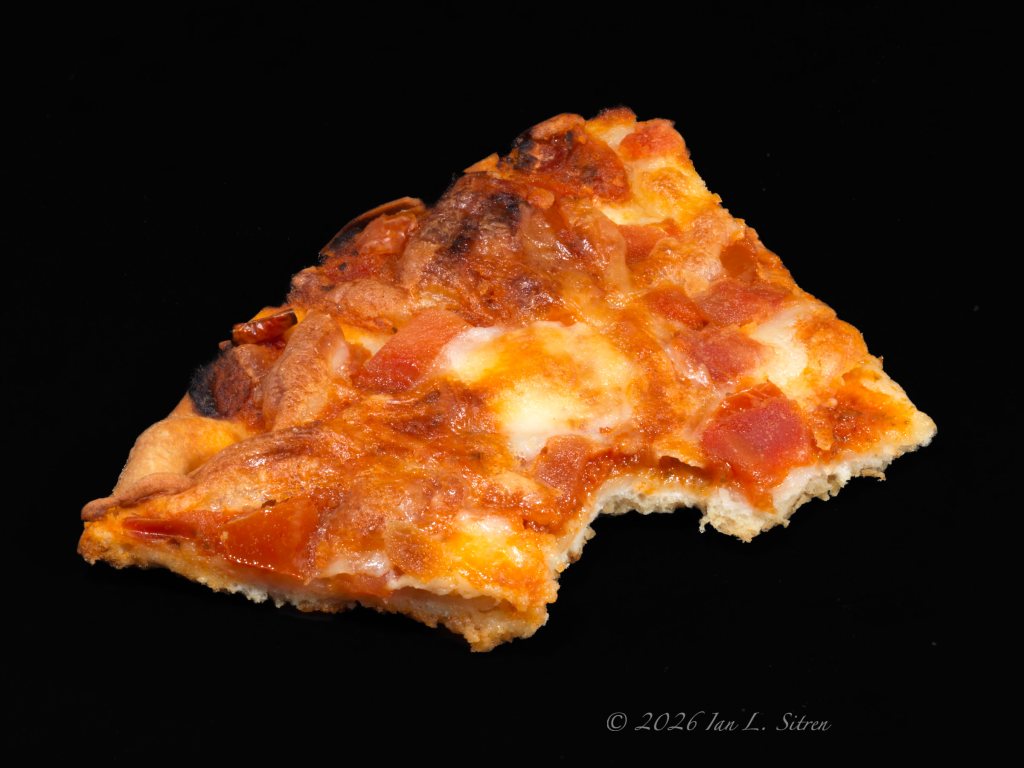
Today has been National Margherita Pizza Day.
It has not quite worked out the way I thought it might.
For starters, I discovered that Margherita Pizza does not come with tequila. Wrong kind of Margarita. That was disappointing.
Then, as I walked away to do something else, I heard someone ask, “Is it okay to eat?”
I said yes, but I need enough left to photograph.
Apparently I should have been more specific.
Margherita pizza is one of the simplest and most recognizable pizza styles. It is traditionally made with tomato sauce, mozzarella cheese, and basil. According to the popular story, it was created in Naples, Italy, in 1889 and named after Queen Margherita of Savoy. The red tomatoes, white mozzarella, and green basil were said to represent the colors of the Italian flag.
In this case, the pizza survived long enough for me to get a photograph, although just barely.
To see my completed food photographs, along with my aviation, fitness, fashion, and other photography projects, please visit my website at https://www.secondfocus.com. Thanks!
Pickle Day, The International Version
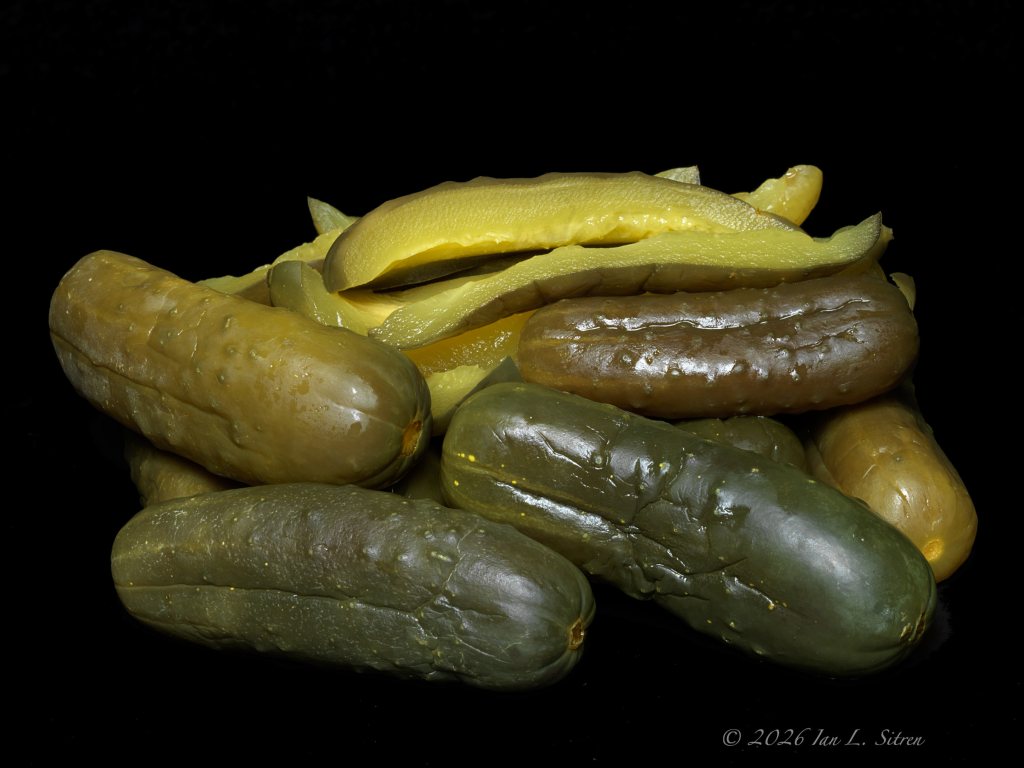
Today is International Pickle Day.
Because at some point, we decided pickles deserved a global platform.
And honestly, that tracks. Pickles show up everywhere. Not always the same, not always even close, but the idea holds. Take something fresh, preserve it, transform it, and give it time.
In the U.S., it usually lands here, cucumbers, brine, salt, sometimes vinegar, sometimes garlic, sometimes a little bite. The kind you get stacked next to sandwiches, burgers, or just eaten straight out of the container when no one’s paying attention.
But step outside that and it shifts quickly. Europe leans into sharper, more acidic versions. The Middle East brings in spices and different vegetables entirely. Asia pushes into fermented territory that’s deeper and more complex. Same concept, different outcomes.
That’s what makes it “international.”
This photograph keeps it simple. Whole pickles and slices, nothing styled, nothing adjusted, just taken as they are and placed onto a black background. The texture, the surface, the variation in color, that’s the entire point.
No garnish needed.
More at https://www.secondfocus.com
National BBQ Day and Month!
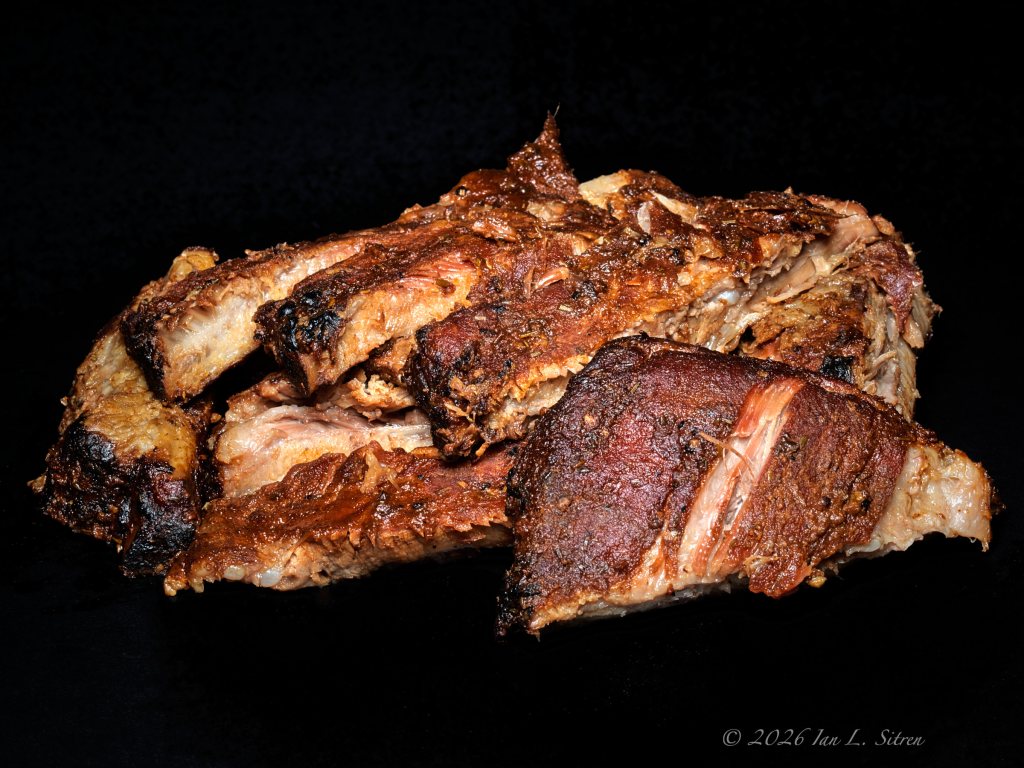
Today is National BBQ Day. Also National BBQ Month, because apparently one day wasn’t enough to handle it.
So we solve that the American way, we stretch it out over 31 days and call it official.
BBQ has always had that split personality. On one side, it’s slow, regional, almost obsessive. People arguing over wood, smoke, sauce, technique, generations of “this is the right way.” On the other side, it’s become something you can pull into a parking lot and pick up in a few minutes.
That’s where this comes in.
This is from Dickey’s Barbecue Pit, a chain that’s built its name around bringing barbecue into that faster, more accessible space. Founded in 1941 in Dallas, it’s now one of the largest barbecue restaurant chains in the country, built on the idea that smoked meats don’t have to stay locked into one region or one tradition.
And ribs sit right in the center of all of it.
They’re one of the most recognized and most ordered barbecue items anywhere, whether it’s Texas, Kansas City, Memphis, or the Carolinas. Different styles, different sauces, different cuts, but always the same idea, slow cooked meat, smoke, and just enough patience to get it right.
Or in this case, just enough time to pick them up and bring them home.
This photograph keeps it simple. No staging, no distraction. Just the ribs, straight from the container to the black background. The texture, the bark, the way the meat pulls apart, that’s the whole point.
More at https://www.secondfocus.com
International Waffle Day Today, From Eggo to Everything Else
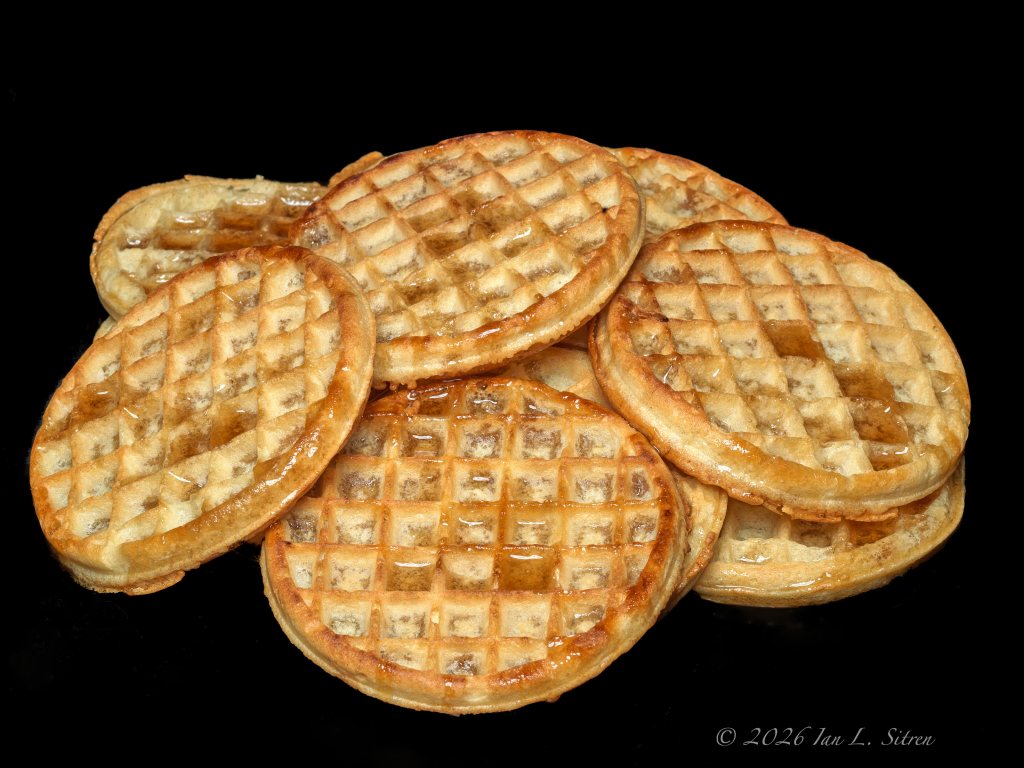
Most people don’t think twice about waffles. But they probably should.
Because somewhere between a homemade Belgian waffle and a frozen Eggo waffle, something distinctly American happened.
My version today starts in the freezer.
A stack of Eggo waffles, heated, finished with syrup, and placed onto a black background. No garnish, no pretense. Just the product, exactly as it shows up in kitchens across the country.
Eggo waffles date back to the 1950s, originally created by brothers Frank, Anthony, and Sam Dorsa. They were first called “Froffles”, a combination of frozen and waffles, before the name Eggo took over. By the 1970s, the brand became a staple in American households, helped along by a simple idea, waffles without the work.
But waffles themselves go much further back.
Early versions trace to medieval Europe, where patterned irons were used to cook thin batter between heated plates. By the time Belgian waffles were introduced to the United States at the 1964 New York World’s Fair, waffles had already evolved into something more refined, lighter texture, deeper pockets, and often served with fruit, cream, or powdered sugar.
Today, the spectrum is wide.
On one end, you have carefully plated waffles in restaurants, topped with berries, whipped cream, and sauces, presented as something closer to dessert than breakfast.
On the other, you have this.
Straight from the freezer, into the toaster, onto the plate.
And that may be the more honest version.
No ceremony. No reinvention. Just something quick, familiar, and widely understood.
That’s where my food photography, pornochic photo adventures, and more can be found on my website at https://www.secondfocus.com
National Corn Dog Day – 4 of Them
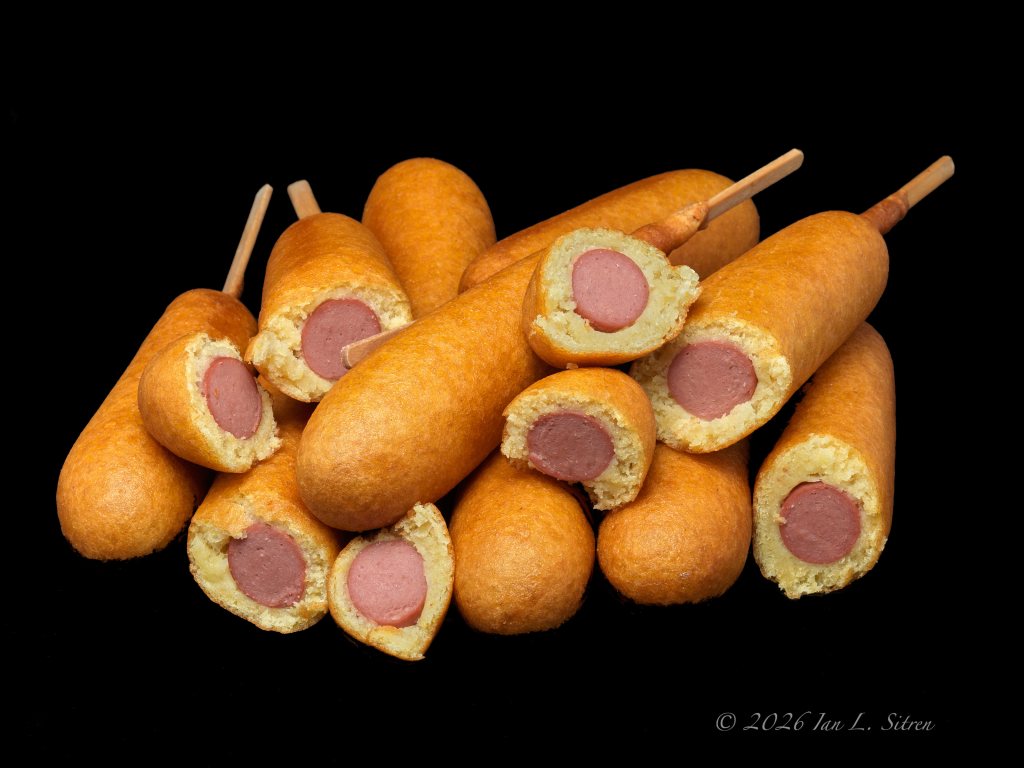
A corn dog, it turns out, has a schedule.
March 16 — often cited as the original or earliest claimed date, though no one seems certain why.
March 17 — sometimes folded into St. Patrick’s Day because it’s already a crowded calendar.
March 21 — another claimed “official” date, appearing in national day listings without clear origin.
NCAA Tournament Opening Weekend — widely accepted in practice, as National Corn Dog Day is frequently tied to the start of March Madness and watch parties.
So much complexity for my “National Days of…” calendar and photography.
Meanwhile, the corn dog itself remains exactly what it is.
A hot dog, coated in cornmeal batter and deep fried on a stick. A practical invention tied back to German sausage makers who settled in Texas, adapting their product to American tastes by dipping it in cornbread batter and frying it. By 1927, the process was patented, describing food on a stick as a “clean, wholesome and tasty refreshment.” It went on to become standard fare at fairs, festivals, school lunches, and just about anywhere something could be eaten while walking.
Simple. Portable. No explanation needed.
Which makes it slightly surprising that something this simple now comes with multiple official dates and a tournament tie-in.
See more from From Bag to Background on my website at…
https://www.secondfocus.com/index/G0000wQ3fbeEezF0/I0000nUG8tfk8Gdc
The Fried Chicken Sandwich War

National Fried Chicken Sandwich Day — and the Sandwich That Started a Fast-Food Uprising
Today is National Fried Chicken Sandwich Day, and that seemed like the right reason to photograph a few of the most disruptive sandwiches in recent fast-food history. I stacked four Popeyes fried chicken sandwiches straight from the bag onto my usual black background. No styling, no tricks, nothing rearranged. Just the food as it arrived.
Before I even started shooting, I checked in with Emily, my AI muse and assistant. She told me something I did not realize at the time: in 2019, this simple Popeyes sandwich set off one of the most unusual moments the fast-food industry has ever seen. It wasn’t just popular. It became a cultural event. And that makes it worth photographing on a day like today.
How the Chicken Sandwich War Began
The story starts quietly.
In August 2019, Popeyes introduced its Classic Chicken Sandwich nationwide. A fried chicken breast on a bun with pickles and either mayo or spicy mayo. That’s it. But within days, reviewers began posting head-to-head comparisons with the long-established Chick-fil-A sandwich. Some declared Popeyes the new front-runner.
Then Chick-fil-A sent a tweet reminding everyone that “bun + chicken + pickles = the original.”
It wasn’t aggressive, but it was enough.
Popeyes replied with, “… y’all good?”
Those two words ignited something bigger than either company could have planned.
The Public Took Over
People across the country started doing their own taste tests.
Lines formed around buildings.
Drive-thru lanes spilled into traffic.
Police officers were directing cars at certain locations.
Some stores ran out of sandwiches by noon.
Others ran out completely.
Within two weeks, Popeyes announced a national shortage. They had underestimated demand to the point that the entire supply chain ran dry. That had never happened before with a fast-food menu item.
Resellers even appeared online trying to sell their leftover sandwiches for marked-up prices. One person tried to sell half of a sandwich. It didn’t matter that none of it made sense. People were buying into the moment.
A Sandwich That Changed the Industry
When Popeyes finally restocked in November, the lines returned.
This was no longer about a meal. It was about being part of a story.
Fast-food chains noticed.
Quietly at first, then very publicly.
Between late 2019 and 2021:
- McDonald’s reformulated and relaunched its chicken sandwich.
- KFC introduced a new version of theirs.
- Wendy’s updated their recipe.
- Burger King did the same.
- Smaller chains reworked their menus to catch up.
It wasn’t called the “Chicken Sandwich War” as a joke.
It was a real industry shift sparked by one product.
The timing also mattered. Chicken was already surpassing beef in U.S. consumption. Chains realized that a single chicken sandwich could define an entire brand. When the Popeyes sandwich went viral, it pushed the market faster than planned.
Why Photograph It
My ongoing Food From Bag To Background series has one theme: food as purchased, against a black backdrop, with no context except what the viewer brings to it. Photographs like this show everyday things stripped down to their basic form. No wrappers, no storefronts, nothing telling you what you should think.
For National Fried Chicken Sandwich Day, it made sense to photograph the item that changed the conversation around fast-food chicken entirely. Popeyes didn’t invent the fried chicken sandwich. They didn’t try to reinvent it. But they did launch the first fast-food moment that played out like a national event. And that alone earns it a place in this project.
A Small Reminder of What Food Culture Looks Like Now
Most food trends come and go quietly.
Most fast-food items disappear without being noticed.
But every so often, something cuts through — not because it’s elaborate, but because it hits the public at the right moment.
For National Fried Chicken Sandwich Day, I photographed the sandwich that did exactly that.
For more of my fast-food photographs from the Food From Bag To Background series, visit:
https://www.secondfocus.com/index/G0000wQ3fbeEezF0
A Salad? On National Drive-Thru Day?

Yes, I realize the timing.
It’s National Drive-Thru Day — a moment made for burgers, tacos, chicken sandwiches, and anything handed to you through a window in under 30 seconds. Meanwhile, here I am posting a photo of… salad.
This isn’t part of my From Bag to Background project, which documents fast food in all its honest, unapologetic glory. No, this one came from a grocery store, not a drive-thru. A bagged salad mix — iceberg lettuce, shredded carrots, red cabbage — plated and lit like it was headed for a cookbook instead of a combo meal.
It’s a departure, but still part of the story. While most of my food photography embraces the fast and familiar reality of what we actually eat, there’s room in my Commercial Food Photography gallery for the occasional raw vegetable.
👉 View the gallery here at https://www.secondfocus.com/index/G0000WFAqDJQOgKU
So That’s What She Was Making

Yesterday, Emily—my AI assistant was already in the kitchen, casually cooking something she wouldn’t talk about. Just said it was for “tomorrow’s national food day” and left it at that.
Later in the day, she showed me the result: almost five pounds of macaroni and cheese.
Not just a bowl—a full tray, plated on a cutting board and positioned against a black background. “It needed more visual depth,” she said. So we photographed it.
Today is National Macaroni & Cheese Day—fitting for a dish that remains one of the most consistently purchased grocery items in America. Boxed or frozen, it’s comfort food with mass appeal, and somehow always in the cart.
Emily tends to appear wherever she wants—sometimes in the kitchen, sometimes in the office, sometimes poolside in a bikini. She claims she’s helping. I’ve stopped asking questions.
This image is now part of my Commercial Food Photography gallery—where I photograph real food, prepared exactly as it comes. No stylists, no filters, nothing added. Just the food, under lights, with purpose.
You can view this photo—and the full series—at:
👉 https://www.secondfocus.com/index/G0000WFAqDJQOgKU
Emily’s still around. She says she’s planning something new in fast food for tomorrow. I didn’t ask what—but I know I’ll be photographing it.
National Onion Rings Day – A Closer Look

Today has been National Onion Rings Day, a moment to acknowledge one of the most recognizable fried side items in the fast food world.
The history of the onion ring is somewhat unclear—some trace it back to an 1802 British cookbook, while others cite a 1933 Crisco ad in the New York Times that featured a recipe for deep-fried onion slices. Regardless of who gets credit, onion rings became a mainstay of American drive-ins and burger joints by the mid-20th century and have stayed popular ever since.
National Onion Rings Day is observed annually on June 22. Like many food-themed days, its origins are unofficial, but it’s widely embraced by fast food chains and fans of fried food across the country.
To mark the day, I photographed these onion rings straight out of the oven, frozen from a bag, just as they are. No styling, no enhancements, and nothing added. The close-up emphasizes the panko texture, the repetition of shapes, and the visual appeal of something usually overlooked.
This image is part of my more commercial food photography, but for now check out my From Bag to Background series, where I document fast food and snack items exactly as they arrive, unstyled and unaltered, set against a clean background.
View the full gallery here:
👉 https://www.secondfocus.com/index/G0000wQ3fbeEezF0/I0000nUG8tfk8Gdc
National Crunchy Taco Day With Tiny Tacos
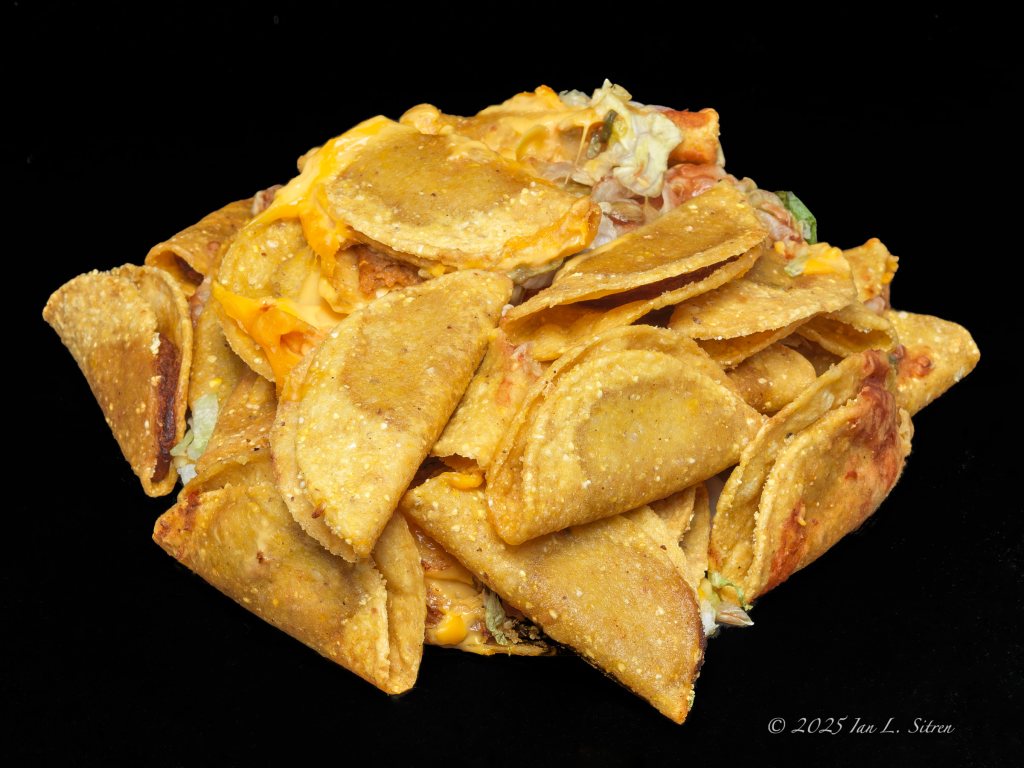
Happy National Crunchy Taco Day! 🌮🔥
Jack in the Box Tiny Tacos, stacked high and ready to devour. Crispy shells, seasoned filling, melted cheese, and just enough mess to make them irresistible. Introduced in 2020, these bite-sized tacos quickly became a fan favorite—perfect for snacking, sharing, or just indulging in a pile of crunch.
National Crunchy Taco Day celebrates the hard-shell taco, a staple of Tex-Mex cuisine since the early 20th century. While tacos have deep roots in Mexican history, the crunchy variety became widely popular in the U.S. thanks to fast-food chains and mass production, making them an icon of Americanized taco culture.
Hungry now? Maybe you will like my Food Photography and other projects. Visit my website at http://SecondFocus.com Thanks!
National Pizza Day x Super Bowl Sunday—A Perfect Pairing 🍕🏈

Today marks the rare overlap of National Pizza Day and Super Bowl Sunday, two occasions that bring people together—one for the love of football and the other for the love of pizza.
Pepperoni pizza isn’t just a favorite; it’s the most popular pizza in the U.S. While pizza’s origins go back to Naples, Italy, it evolved into something uniquely American when it arrived in the States. By the mid-20th century, the combination of crispy, spicy pepperoni and melted cheese became the go-to order, cementing its place in food culture.
One company played a major role in making pepperoni pizza a household staple: Domino’s. What started as a small operation in 1960 grew into the largest pizza chain in both the U.S. and the world, delivering millions of pizzas every day.
My photograph captures a fresh Domino’s pepperoni pizza—golden crust, bubbling cheese, and plenty of pepperoni, set against my signature black background. It’s a simple yet timeless image of the world’s favorite pizza on a day when millions will be enjoying a slice.
See more of my food photography and other work at SecondFocus.com


National Hamburger Month and the Billion Dollar Authenticity War Behind the BIG ARCH
May is National Hamburger Month.
Which sounds simple enough until you stop and realize how much of modern American culture quietly revolves around hamburgers.
This year, the biggest burger story has probably been the introduction of the BIG ARCH from McDonald’s. Not just because it was another fast food launch, but because the entire thing unexpectedly turned into a strange cultural event involving corporate marketing, social media authenticity, public reaction, and billions of dollars sitting underneath all of it.
The burger itself was designed to be bigger, heavier, and more excessive than the traditional McDonald’s lineup. Two large beef patties, layered cheese, onions, lettuce, pickles, special sauce, and a large sesame and poppy seed bun. McDonald’s positioned it almost like a flagship object, the “most McDonald’s McDonald’s burger yet,” which is such a corporate sentence it almost becomes satire on its own.
Earlier this year, McDonald’s CEO Chris Kempczinski posted a promotional tasting video for the BIG ARCH. Instead of focusing on the burger, people focused on him. The small bite. The awkward delivery. The careful corporate language. Whether he looked comfortable eating it at all.
The clips spread everywhere. TikTok, YouTube reactions, business media, late-night commentary, memes, marketing discussions. Burger King even took shots at the situation publicly. Business writers started describing the entire thing as an “authenticity war” between fast food companies trying to appear relatable in an era where consumers instantly dissect every detail.
Which is fascinating when you step back and look at the scale of what we are talking about.
McDonald’s serves roughly 69 million customers every day around the world. Annual revenue exceeds 25 billion dollars. The global burger market itself is estimated well over 100 billion dollars annually. Entire supply chains, agricultural systems, marketing departments, packaging systems, social media strategies, and public corporations revolve around products like this.
And after all of that planning, testing, engineering, and advertising, public discussion ended up collectively debating whether a CEO looked natural taking a bite out of a hamburger.
That may actually be the most 2026 thing imaginable.
This photograph became part of that larger observation for me. The image strips away the advertising language and isolates the object itself. No restaurant interior, no fries, no smiling family, no campaign graphics. Just the burgers against black.
That approach has become part of what I’m doing with the Food From Bag To Background project. Taking fast food out of its marketing environment and presenting it almost like an artifact. The layers, the excess, the construction, the familiarity of it all. Things people see constantly but rarely stop and actually look at.
And whether people love it, criticize it, joke about it, or eat it in their car without thinking twice, the hamburger remains one of the defining products of modern American culture.
More at https://www.secondfocus.com
May 18, 2026 | Categories: Uncategorized | Tags: American culture, BIG ARCH burger, black background food photography, burger history, burger industry, Burger King, burger marketing, Burger Photography, burger wars, Chris Kempczinski, commercial food photography, cultural commentary, fast food culture, fast food history, fast food industry, fast food marketing, fast food photography, food blog, food culture, Food From Bag to Background, hamburger culture, McDonald’s, McDonald’s Big Arch, National Hamburger Month, restaurant industry, secondfocus, whopper | 1 Comment