National Ice Cream Cake Day and the Broken Down Truck That Started It All
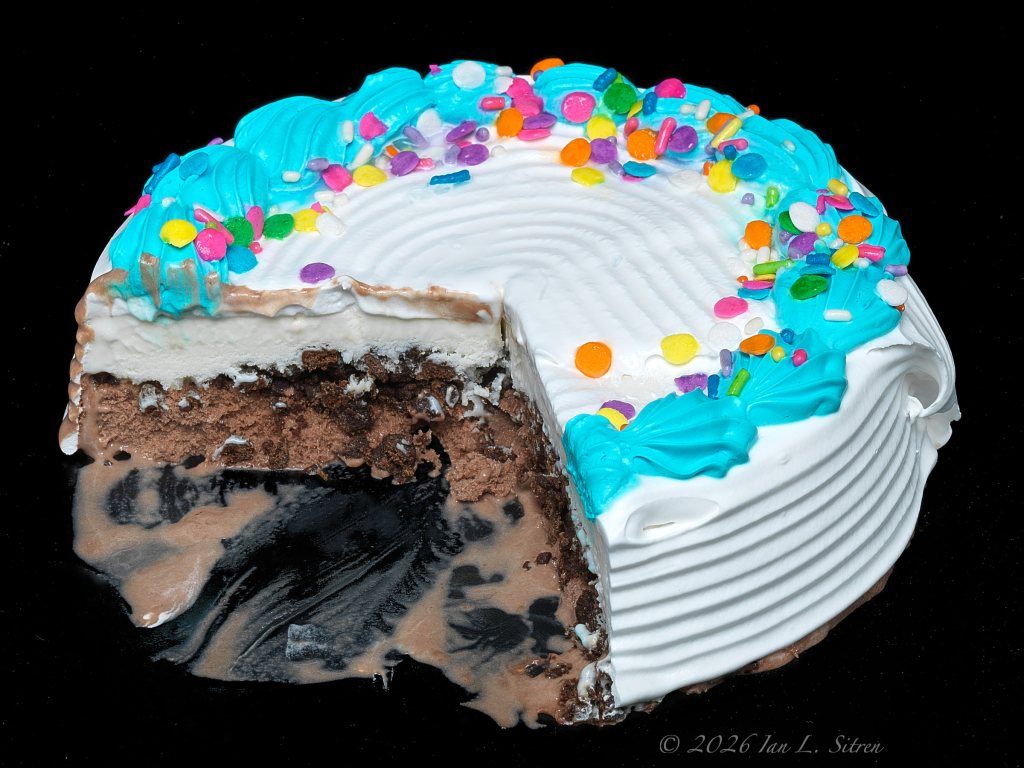
Today is National Ice Cream Cake Day.
Ice cream cakes have become a familiar sight at birthday parties and celebrations, but their history can be traced back to an unexpected event in 1934.
Tom Carvel was selling ice cream from his truck in Hartsdale, New York, when it broke down. Rather than watching his inventory melt, he began selling the softer ice cream to passing customers. They loved it. That chance roadside incident eventually led to the development of Carvel’s soft serve ice cream, the opening of his first store, and later the introduction of the Carvel ice cream cake.
For today’s photograph, I chose one of Carvel’s original round ice cream cakes. Chocolate and vanilla ice cream are separated by the company’s signature chocolate crunchies, then finished with whipped frosting and colorful sprinkles.
Sometimes the story behind the food is every bit as interesting as the food itself.
There is much more to see on my website, including my photography galleries, my blog, and my growing Motion page. Visit https://secondfocus.com
National Ice Cream Cake Day: A Carvel Cake Emily Wouldn’t Have Let Happen

Today is National Ice Cream Cake Day, and to celebrate, I took a Carvel ice cream cake, hacked it apart, and stacked the pieces into what can only be described as a leaning, frosting-smeared disaster.
The blue frosting and rainbow sprinkles are still trying to look festive while the chocolate ice cream and whipped topping slide off in quiet surrender. It’s not the cleanest presentation, but it still tastes the same—cold, sweet, and exactly what you want on a hot day.
If my AI assistant Emily had been in charge, it would be a different story. She’d have the slices cut perfectly, the layers lined up like a geometry lesson, sprinkles arranged with precision, and not a smear out of place. The cake would be camera-ready, and she would probably remind me to shoot it before it melted.
But Emily wasn’t here for this one, and it shows. Sometimes ice cream cake is best served like this: messy, leaning, and reminding you that even on National Ice Cream Cake Day, perfection is overrated—unless you’re Emily.
Check out more of my Food Photography on my website at https://www.secondfocus.com/index/G0000wQ3fbeEezF0/I0000nUG8tfk8Gdc
Memorial Day, 1934: Meltdown Created Carvel
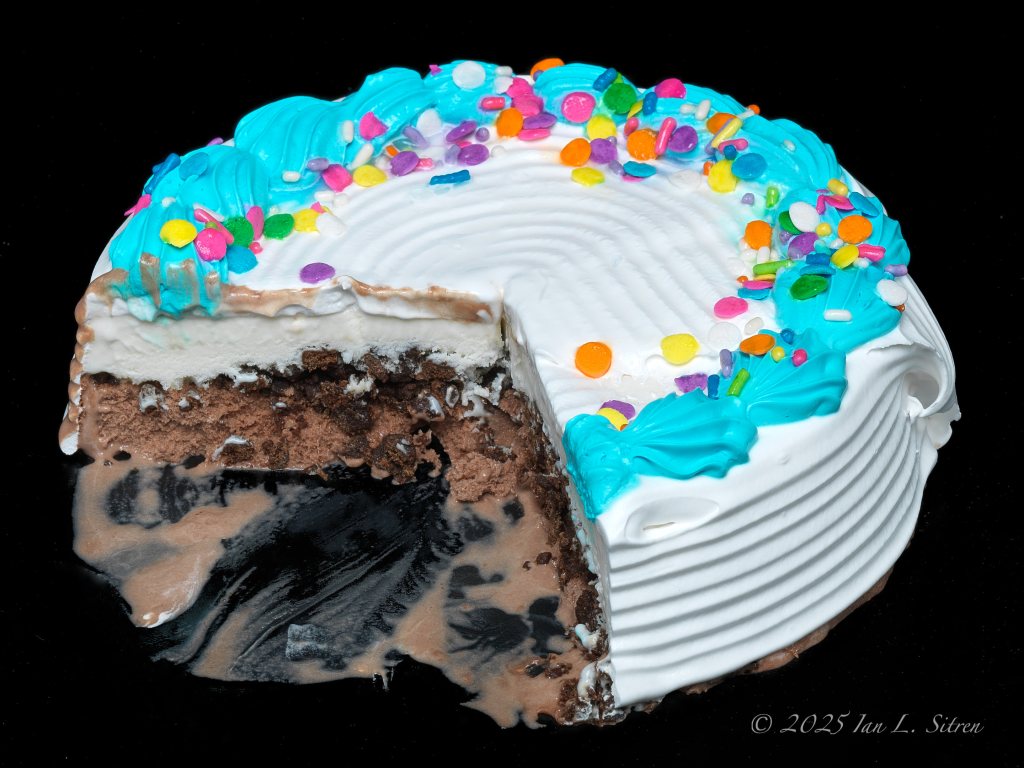
It was Memorial Day weekend, 1934, when Tom Carvel’s ice cream truck got a flat tire in Hartsdale, New York. He pulled into a parking lot and started selling his melting ice cream to passing drivers. What could have been a loss turned into a breakthrough—customers liked the softer texture, and the concept of soft-serve was born.
That moment sparked the launch of the Carvel brand. By 1936, Carvel opened a permanent roadside stand on that same site and began developing his own equipment and franchise model. He pioneered innovations in frozen desserts and advertising—including early television commercials and animated mascots.
In the 1950s, Carvel introduced the now-iconic round ice cream cake—layered with vanilla and chocolate soft-serve, filled with chocolate crunchies, and topped with piped whipped frosting and sprinkles. It quickly became a fixture at birthdays, holidays, and family celebrations.
Photographed here as served—no props, no styling—just the cake, isolated on a black background. It’s part of my “From Bag to Background” series, and a fitting nod to an accidental origin that took place on Memorial Day nearly a century ago.
See more from the series:
https://www.secondfocus.com/index/G0000wQ3fbeEezF0/I0000nUG8tfk8Gdc

