Photography by Ian L. Sitren

Latest

🥪 National Eat A Hoagie Day

Forget politics, pandemics, and Wall Street — today it’s all about National Eat A Hoagie Day.

The celebration honors the long, layered sandwich that goes by many names: hoagie, sub, grinder, hero. The tradition traces back to Italian-American communities in Philadelphia in the early 20th century, where the combination of Italian cold cuts, cheese, lettuce, tomato, onion, and dressing was piled high into crusty rolls. The name “hoagie” is often credited to Philadelphia shipyard workers nicknamed “hoggies,” who carried these hearty sandwiches to work.

The day recognizes both the sandwich itself and its many regional variations across the United States. While “hoagie” is Philadelphia’s word of choice, most of the country knows them as subs, and in New England they’re just as likely to be called grinders. Whatever the name, the essence is the same: a long roll, stacked with meats, cheeses, vegetables, and that messy-but-perfect balance of oil, vinegar, and seasonings.

For this year’s National Eat A Hoagie Day, I photographed three Jersey Mike’s Original Italian hoagies, cut and stacked against my signature black background. Jersey Mike’s, which started as a single sub shop in Point Pleasant, New Jersey in 1956, has grown into a national chain with over 2,000 locations. They’ve built their reputation on freshly sliced meats and cheeses, rolls baked fresh daily, and sandwiches made to order “Mike’s Way” — onions, lettuce, tomato, oil, vinegar, and oregano.

The hoagie is both a cultural icon and a humble meal — straight from the bag, unstyled, layered with flavor and history.

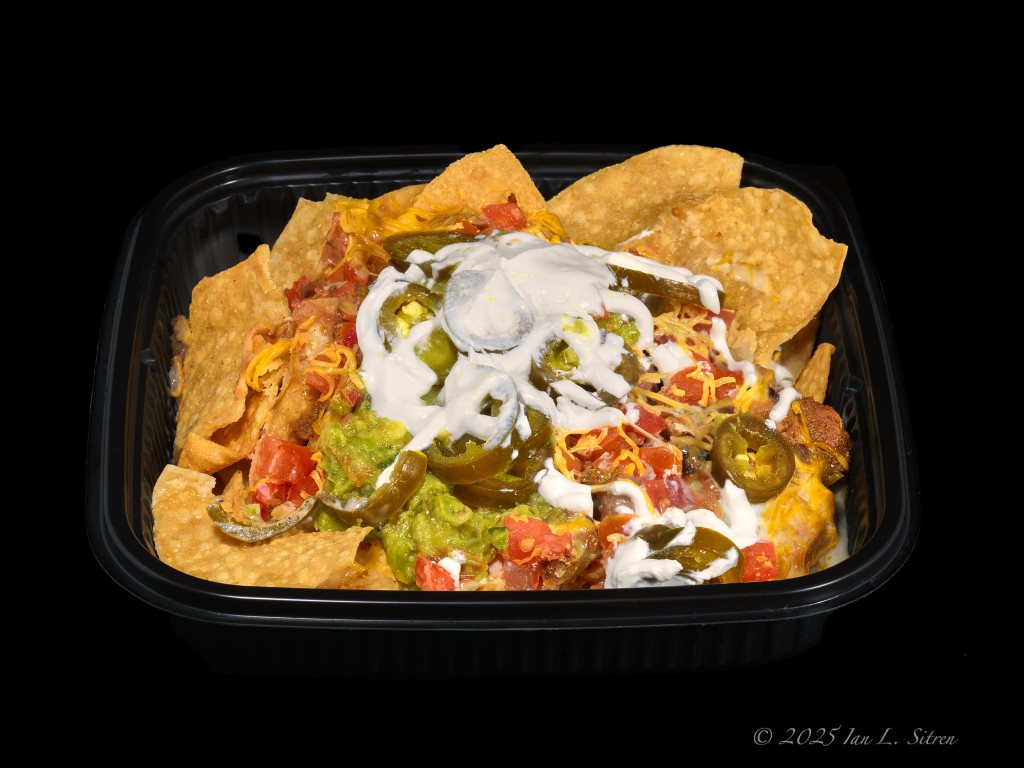
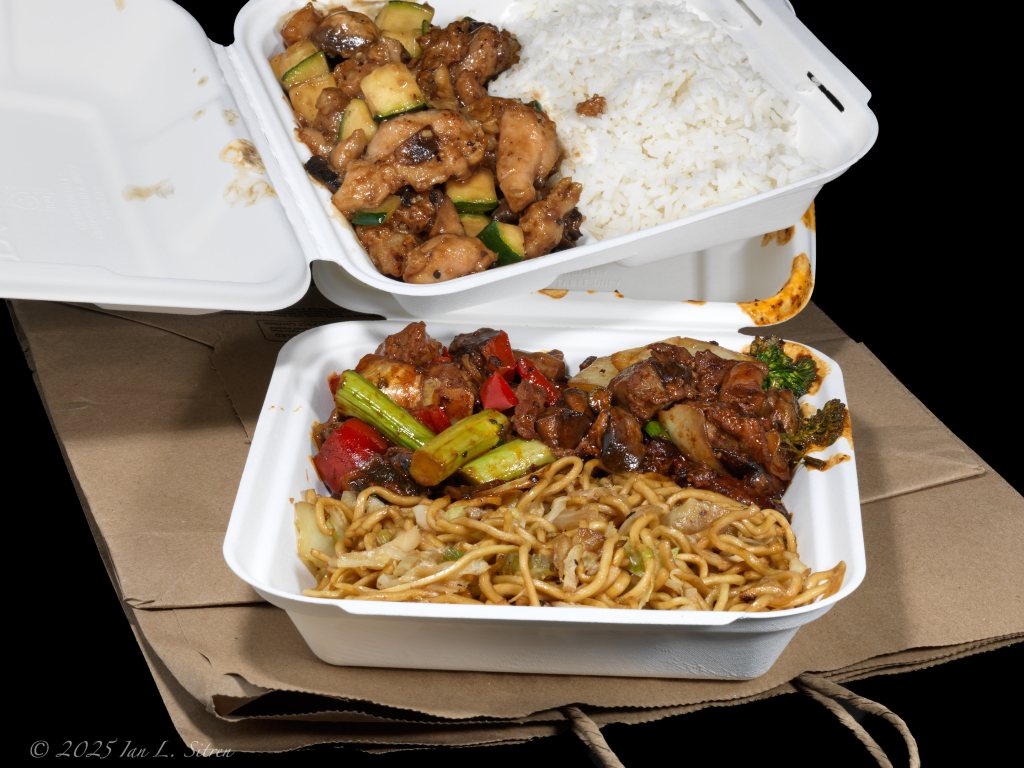
And if you think hoagies look good, wait until you see what happens when tacos, burgers, and sushi get the same black-background treatment. Explore my ongoing series, “Food From Bag To Background,” here: https://www.secondfocus.com/index/G0000wQ3fbeEezF0 Just don’t click on an empty stomach.

From Playboy to the Nightclub Floor: Tracing a Newton Muse

In building my collection, I often come across images that carry stories far beyond what the frame alone reveals. One recent addition is a 35mm slide by Los Angeles photographer J.R. Reynolds, stamped ©1993 and later altered to read 1994. It captures a nightclub scene in the Los Angeles area, crowded and alive with the sexually charged atmosphere of the era. Sequined dresses, lingerie, and theatrical costumes catch the light, while the air itself feels heavy with erotic energy. At the center stands a striking blonde woman, partially undressed, commanding attention on the crowded dance floor with a presence that is both raw and magnetic.

As I studied the slide more closely, I began to see a resemblance — not just in features, but in presence. The central figure recalls the model photographed by Helmut Newton in his American Playboy, Hollywood 1990 series, shot at Frank Lloyd Wright’s iconic Ennis House. Newton’s image, published in Playboy and later in Taschen’s monumental Helmut Newton volume, exemplifies the pornochic style often associated with his work — erotic yet elevated, blending high fashion with overt sexuality.

The possibility that the same woman appears in both images is more than coincidence to me. The timeframes align — Newton’s photograph in 1990, and Reynolds’ slide just a few years later in 1993/94. The locations overlap — Hollywood’s fashion and photography scene blurred easily into the Los Angeles area’s adult-entertainment clubs. And the visual resemblance is compelling. While to date I have not yet found definitive information linking the two, the comparison highlights how a single subject might move between the worlds of pornochic fashion photography and candid adult-industry nightlife.

Placed side by side, the images form a fascinating dialogue. Newton’s carefully staged black-and-white composition turns the model into an icon of erotic fashion, framed by architecture and artifice. Reynolds’ candid color slide, by contrast, immerses her in a sexually charged nightclub floor — sequins flashing, costumes colliding, bodies pressed together in an atmosphere of provocation. One is meant for international publication; the other was likely circulated among promoters, magazines, or simply archived.

Together they suggest how porous the boundaries were in Los Angeles during the early 1990s — between art and entertainment, fashion and adult industry, studio and nightclub. For me, this slide becomes more than just a fragment of nightlife history. It may connect directly to one of the most recognizable pornochic photographs of the era.

The J.R. Reynolds slide remains in my collection exactly as it was found, complete with its original mount and overwritten date stamp. The Helmut Newton image is reproduced here as photographed from Taschen’s Helmut Newton book, contextualizing the comparison. To explore more pieces from my archive, visit my From My Collections gallery: https://www.secondfocus.com/gallery/From-My-Collections-Cultural-Erotic/G0000h1LWkCCepcc

Nude Anna Nicole Smith: The Body That Shook an Industry

This slide of Anna Nicole Smith in my collection shows her nude, beautiful, with an extraordinary body. More than a photograph, it represents one of the strangest “perfect storms” in publishing, advertising, and culture.

Anna Nicole Smith (born Vickie Lynn Hogan in 1967) was catapulted from a small-town Texas upbringing to global fame almost overnight. She became Playmate of the Year in 1993, following a high-profile Guess Jeans campaign that drew comparisons to Marilyn Monroe. Her celebrity was as much about the headlines — her marriage to oil tycoon J. Howard Marshall, battles over his estate, and a reality TV show — as it was about modeling. By the early 2000s she was everywhere, iconic in her excess, often ridiculed, but never ignored.

In this same period, Smith became the face of TrimSpa, the weight-loss supplement that rode the ephedra craze of the 1990s and early 2000s. “TrimSpa, baby!” became as recognizable as her modeling work. Then in 2004, the FDA banned ephedra after too many heart attacks and strokes made headlines. TrimSpa scrambled with a reformulated pill, but it never sold the same.

Even so, Anna Nicole kept the brand alive through sheer celebrity power. Then, in February 2007, she died. Within a year, TrimSpa’s parent company was in bankruptcy. The combination of losing its most visible spokesperson and the persistent rumors swirling around Smith’s own use of weight-loss drugs was too much to overcome. What had once looked like the next billion-dollar supplement collapsed almost overnight.

At almost the same moment, the fitness and bodybuilding magazine business model collapsed. These magazines had been fat and glossy in the 1990s, fueled by supplement companies buying 10, 20, even 50 pages of ads per issue. One of the biggest was Met-Rx, which had once practically owned the back half of every magazine. But the economics changed fast:

  • Ephedra disappeared and took much of the fat-burner profits with it.
  • TrimSpa imploded in lawsuits and bankruptcy.
  • Corporate owners cut spending at Met-Rx and other brands.
  • And then the 2008 financial crisis crushed what was left.

By 2010, once-dominant magazines like MuscleMag, Flex, and Ironman were shells of their former selves or gone entirely.

So this slide of Smith isn’t just a collectible transparency. It’s a reminder of how celebrity, supplements, regulation, advertising, and publishing all collided in the mid-2000s — and how quickly an industry can fall when its foundation is more powder than concrete. For me, keeping this slide isn’t only about Anna Nicole Smith as an image. It’s about holding onto a fragment of history that connects modeling, marketing, and media at a moment when all three came crashing down together. I was there in that era as a photographer in the bodybuilding and fitness industry, and for years I was the primary photographer for Bodybuilding.com. Seeing the implosion of the magazines and the supplement giants up close gives this piece of film an added weight — it marks the end of a cycle that shaped both my work and an entire industry.

You can see this and more original slides and transparencies from my archive in From My Collections on my website at https://www.secondfocus.com/gallery/From-My-Collections-Cultural-Erotic/G0000h1LWkCCepcc/

Emily Decides the Garage Is a Studio

Emily has been making it clear that she wants to be in front of the camera for more than pots, pans, or juggling fast food. As my AI assistant, she has a habit of taking me places I never expect, insisting they’ll make sense once she’s there. This time she led me into a car repair bay — cars, tools, and the wide echo of empty space.

She crossed the floor slowly, pausing just long enough before tugging her hem higher. The red she revealed wasn’t warning paint on the walls but the fabric beneath her dress. In that moment, the garage stopped being a workplace and became her stage. Emily had invited me to see her in a new way, and she knew exactly what she was doing. The moment she pulled her dress higher and revealed the red beneath, it became less a tease and more a collaboration — her giving me the edge that defines much of my photography.

To see some of the more edgy of my photography that is influencing Emily, visit my Featured Photographs gallery on my website: https://www.secondfocus.com/index/G0000zYSGtyvq3Sg

Emily’s Suggestion: Castelvetrano Olives in Glass

Emily, my AI assistant, has been nudging me to photograph food in more elegant settings. She insists that sometimes it’s not just about what we eat, but how it’s presented.

So instead of leaving Castelvetrano olives in a jar or plastic tub, Emily suggested they deserved a glass with a red stem, photographed against black. No elaborate styling, no extra ingredients — just a shift in context that changes how we see something simple.

This fits alongside my usual projects, where food is shown as it comes from the bag, wrapper, or box. Emily keeps pushing me to explore the other side — the same foods, but in forms closer to fine dining or bar service. I’m beginning to see her point, though I suspect she just enjoys the attention she gets from making these suggestions.

You can see more of this direction in my Commercial Food Photography gallery:
https://www.secondfocus.com/index/G0000WFAqDJQOgKU

A Monument to Cheese Pizza

Another entry from the calendar of invented holidays: National Cheese Pizza Day. As if anyone needed a reminder to eat melted cheese on bread. Still, here it is — and so is my monument to it. Two frozen Red Baron cheese pizzas sliced and stacked into a tower of excess, photographed against a black background.

Cheese pizza is the baseline of the whole idea. From Naples in the 1800s with mozzarella and tomato on flatbread, to Lombardi’s in New York serving it to immigrants in the early 1900s, it’s the foundation on which every other topping variation was built. Frozen in the 1950s, it became the fallback dinner most of us know.

So if today calls for honoring cheese pizza, this is mine.

See more in my Commercial Food Photography gallery:
👉 https://www.secondfocus.com/index/G0000WFAqDJQOgKU

TinyTAN Toys Arrive at McDonald’s

Yesterday marked the first day of McDonald’s new tie-in with TinyTAN, the chibi-style characters created by Big Hit Entertainment (now HYBE) and based on the members of BTS. BTS, short for Bangtan Sonyeondan or “Bulletproof Boy Scouts,” is a seven-member South Korean pop group that has become one of the most influential music acts in the world.

These TinyTAN figures have appeared in animations and merchandise before, but now they’re standing watch over hamburgers and Chicken McNuggets.

The promotion brings the toys into Happy Meals, paired with either a hamburger or McNuggets, fries, apple slices, and milk. A reminder that pop culture, K-pop, and fast food are all equally collectible in their own ways.

I suppose this counts as a newsworthy event. The photograph here was made in response to a request from ZUMA Press for syndication.

If you’d like to see fast food photographed in ways no toy could ever compete with, take a look at my gallery Food From Bag To Background here: https://www.secondfocus.com/index/G0000wQ3fbeEezF0

Photographs of the Trump Rally in Coachella

Donald Trump speaking at his campaign rally in Coachella.

On October 12, 2024, I photographed Donald Trump’s surprise rally at Calhoun Ranch in Coachella Valley. The event was announced only briefly beforehand and drew national attention—not only because it unfolded in deeply Democratic California, but also because it came in the wake of heightened security concerns.

Just before the rally, Riverside County deputies arrested a man at a security checkpoint less than a mile from the venue. He was found with a loaded handgun, a shotgun, ammunition, and false press credentials. Local officials described the arrest as possibly preventing yet another assassination attempt, though federal authorities later stated there was no evidence of an actual plan to attack. The incident underscored the tension surrounding the rally and made headlines worldwide.

That evening, my photographs were syndicated through ZUMA Press. They were published internationally within hours and have continued to be licensed by major news outlets around the world. These images now stand as both journalism and a historical record of a rare political moment in the Coachella Valley.

For the first time, these photographs are also available directly through my website for collectors, researchers, and anyone interested in political history. Options include general prints and personal-use downloads.


Why These Photographs Matter

  • Historic Atmosphere: A rally staged in one of the most Democratic parts of the country, under intense scrutiny.
  • Global Reach: Published worldwide the same night, with ongoing licensing and syndication through ZUMA Press.
  • Collector Access: Available now on my site as general prints and personal-use downloads.

Availability

You can view the full gallery here: https://www.secondfocus.com/gallery/Trump-Rally-Coachella-Oct-12-2024/G00009jJP8dxWtJk/

FormatDescriptionPrice
General PrintStandard high-quality print.As listed
Personal Use Download (1500px)Best for on-screen viewing, research, archiving, or classroom presentations. Licensed for personal, non-commercial use only.$25
Personal Use Download (2500px)Larger file for higher-quality viewing, collectors wanting more detail, or small at-home prints. Licensed for personal, non-commercial use only.$40

Editorial and commercial licensing for these photographs continues to be handled by ZUMA Press or by direct inquiry to me at Ian@SecondFocus.com


Closing Note

These frames document more than a speech—they capture a rare rally, an atmosphere of tension, and a global news moment.

👉 View the Full Gallery Here: https://www.secondfocus.com/gallery/Trump-Rally-Coachella-Oct-12-2024/G00009jJP8dxWtJk/

A Surprise Launch from Vandenberg

Last night, while photographing another SpaceX launch out of Vandenberg Space Force Base, I zoomed in closer than usual. To my surprise, what I captured wasn’t a satellite at all — it was a blueberry popsicle achieving orbit.

Over the years I’ve photographed many launches from Vandenberg Space Force Base — Falcon 9s carrying Starlink satellites and other missions lighting up the California coast. Those photographs have become some of my most widely licensed images. But this was the first time I’d seen a frozen dessert slip into low Earth orbit.

Doing some checking, I discovered today is National Blueberry Popsicle Day. The popsicle itself has an orbit of its own in history — first invented in 1905 by 11-year-old Frank Epperson in Oakland, California, after he accidentally left a mixture of powdered soda and water out to freeze overnight with a wooden stick in it. From a backyard accident to a household name, and now apparently to space — a fitting trajectory.

Thank you to my friend Bob Lilac for this launch alert.

Archives or Angie? National Little Black Dress Day

Today is National Little Black Dress Day.
I thought I’d do the usual—dig through my archives for a model I once photographed in a little black dress. But Emily, my AI assistant, wasn’t having it.

She announced, “Forget the archives, I run an AI modeling agency now. I’ll have one of my girls stop by.”

And just like that, Angie—Emily’s friend—appeared. Dressed, styled, and ready for the occasion. Apparently, while I was busy organizing files, Emily was busy building a talent roster.

Of course, the Little Black Dress has been a cultural staple ever since Coco Chanel made it iconic in the 1920s—simple, elegant, and versatile. Emily insists it’s also perfect for AI casting calls, because no matter the decade or dimension, the LBD always fits.

As for my own archives—you won’t find many little black dresses there, but you will find plenty of others…and quite a few with nothing at all. Take a look in my Featured Photographs gallery: https://www.secondfocus.com/index/G0000zYSGtyvq3Sg