There seem to have been a lot of “National” and “International” food days lately, and I simply couldn’t keep up with all of them.
So here we are a few days late.
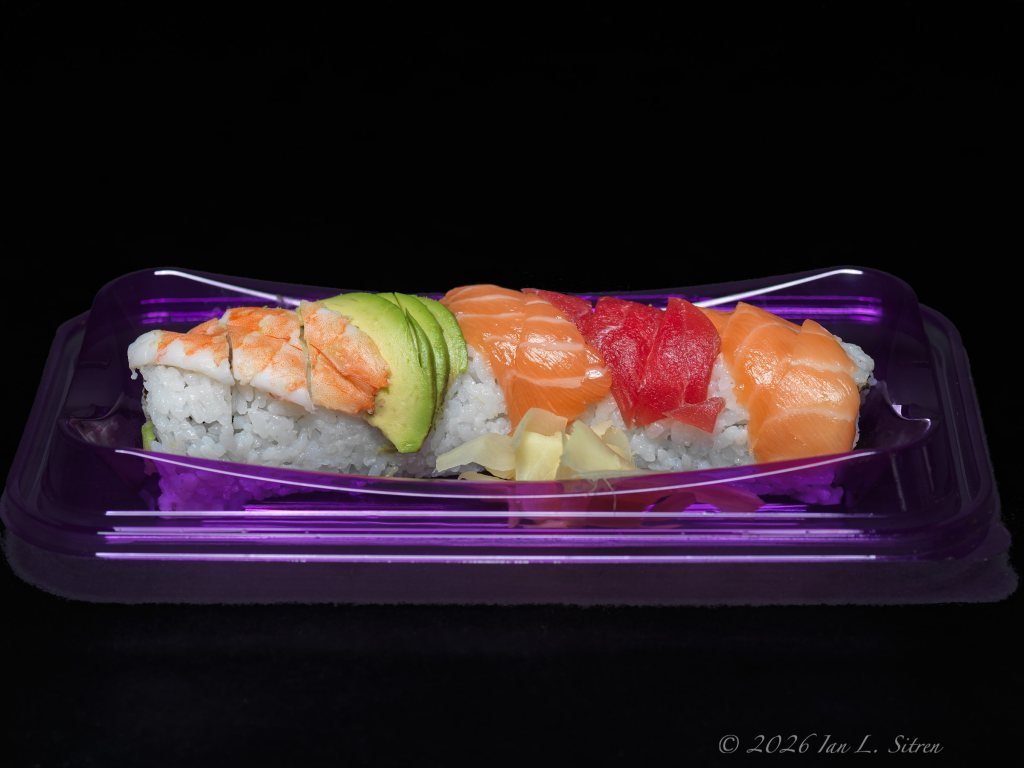
This photograph is one of the few in my fast food project where I left the food in its original container. Normally everything comes out of the packaging and onto a black background, but this one deserved an exception. The deep purple tray, the neat arrangement, and the bright colors of the salmon, tuna, shrimp, avocado, and pickled ginger are all part of what catches your eye in the grocery store.
To me, this is fast food in a different form. It is freshly prepared, packaged, refrigerated, and ready to grab on your way home for lunch or dinner. No drive through required.
Not all that long ago, finding sushi usually meant visiting a Japanese restaurant or a specialty market. Today it has become a common sight in grocery stores, where fresh rolls are made throughout the day and sold alongside sandwiches, salads, and other grab and go meals.
There is a lot more food to tempt you on my website, along with my other photography projects, my Motion page, and my blog, which is updated almost daily. Visit https://www.secondfocus.com
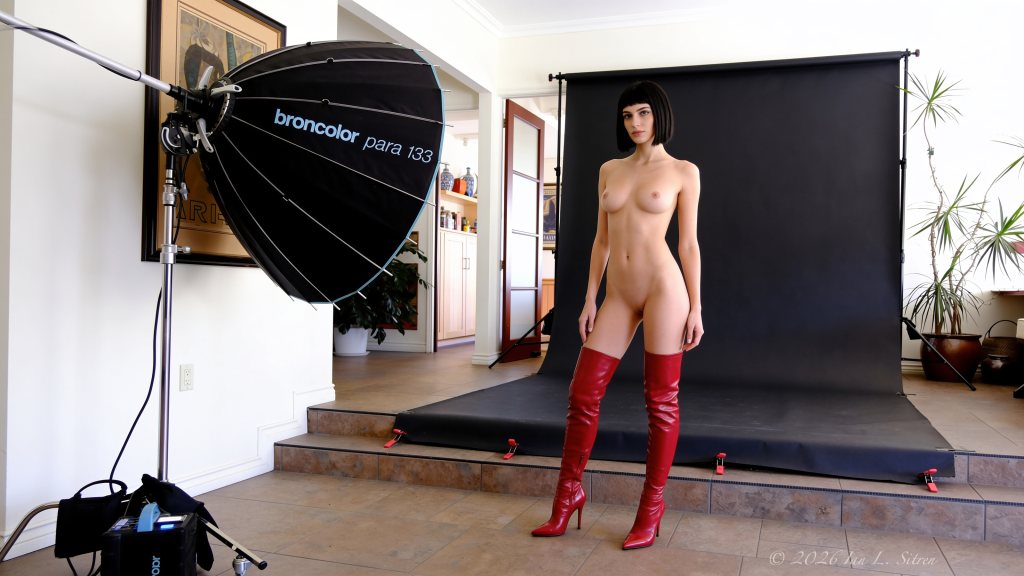
Roxanne, one of Emily’s AI friends and muses, stands on the studio set awaiting the start of a photography session. The behind the scenes view reveals the black seamless background, professional lighting equipment, and the working environment where many of the Emily and Friends photographs and videos are created.
Yesterday was World Tapas Day.
I was looking forward to photographing Roxanne with a table full of Spanish tapas. At least that was the plan.
Unfortunately, as anyone who spends much time working with AI knows, prompts occasionally get interpreted a little differently than intended.
Apparently Roxanne thought I had asked for topless instead of tapas.
By the time she arrived at the studio, the misunderstanding had become fairly obvious.
I explained that World Topless Day isn’t until August, but by then everyone agreed there wasn’t much point in changing anything.
Besides, it fit my Pornochic photography a lot better than a plate of olives and Manchego cheese.
The tapas can wait for another day.
In the meantime, I’d like you to meet Roxanne. She is one of Emily’s ever growing circle of AI friends and muses, and I suspect you’ll be seeing quite a bit more of her in the months ahead.
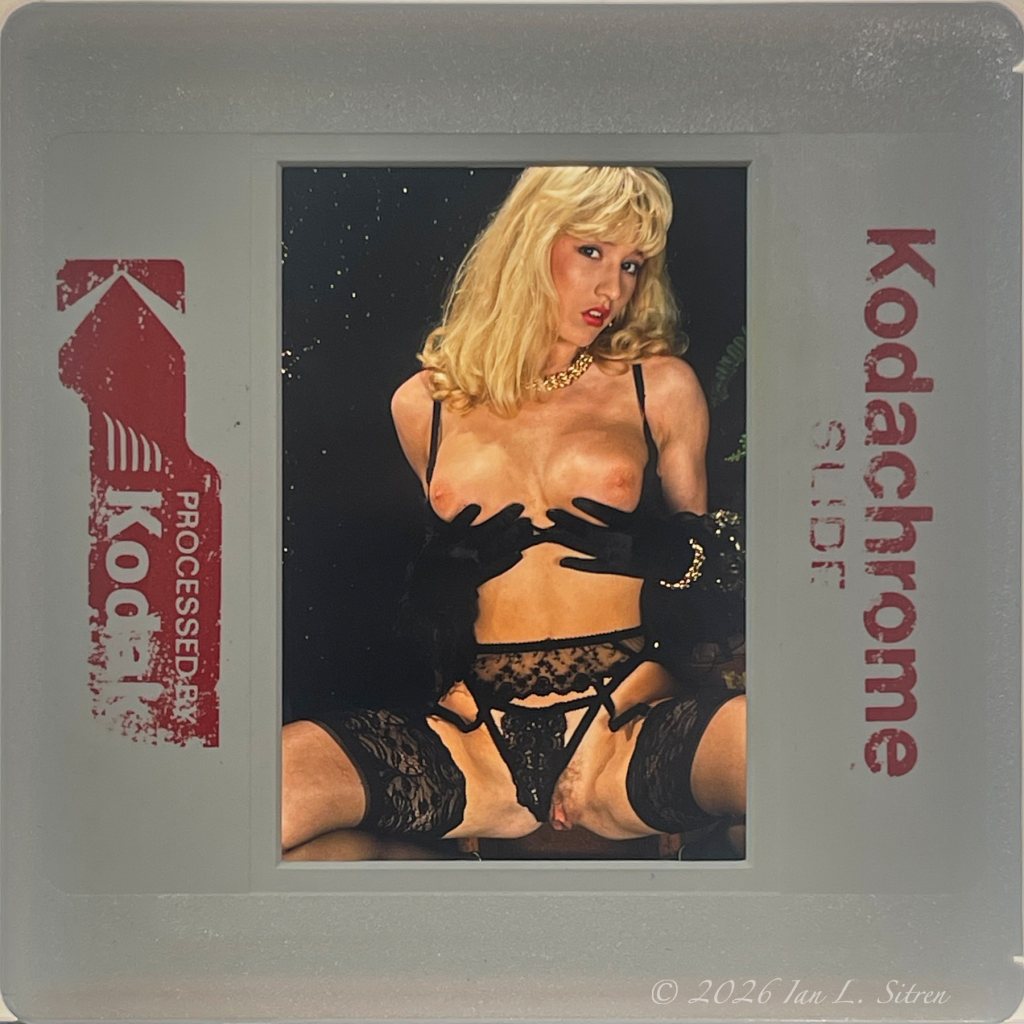
Original Kodachrome color transparency featuring glamour model Tonisha Mills in a studio lingerie portrait. The professionally photographed image captures a style of glamour photography popular during the 1990s, balancing provocative posing with carefully controlled composition and lighting. The original slide retains handwritten filing notations and Kodak processing marks, adding to its value as a photographic collectible.
One of the things I enjoy most about collecting photographs is finding original pieces that represent a particular moment in the history of photography. This Kodachrome transparency of model Tonisha Mills is one of those photographs.
Unlike many vintage photographs that circulate today as digital scans or magazine reproductions, this is the original 35mm color transparency. It still carries its Kodak processing marks along with the handwritten filing numbers that were added when it became part of a photographer’s or studio’s working archive.
Tonisha Mills was one of the best known models to appear in men’s magazines during the 1990s, a period when this style of photography was changing. As magazines became more competitive, photographers gradually moved beyond the traditional pin up style that had dominated earlier decades.
That’s what first caught my attention about this slide.
When I first looked at it, I immediately thought about where it fit in that progression. By the 1990s, photographs revealing what lay between a model’s legs were becoming increasingly common, but they were still usually presented with some restraint. Looking back now, this transparency represents an interesting point in the evolution of men’s magazine photography before completely explicit images became commonplace.
The Kodachrome film adds another layer of interest. By the time this photograph was made, digital photography was beginning to appear on the horizon, but professional photographers were still relying heavily on color transparencies for publication and reproduction. Looking at this original slide on a light table is much the same experience the photographer, editor, or magazine art director would have had when deciding whether it was the image they wanted.
That connection to the photographic process is one of the reasons I enjoy collecting original transparencies. They are more than just pictures. They are the original photographs that passed through the hands of the people who created and published them.
If you enjoy discovering unusual pieces of photographic history, take a look through my From My Collections gallery. While you’re there, you’ll also find my editorial, aviation, food, fashion, and fine art photography, my growing Motionpage, and regularly updated Blog. Everything is available at https://www.secondfocus.com
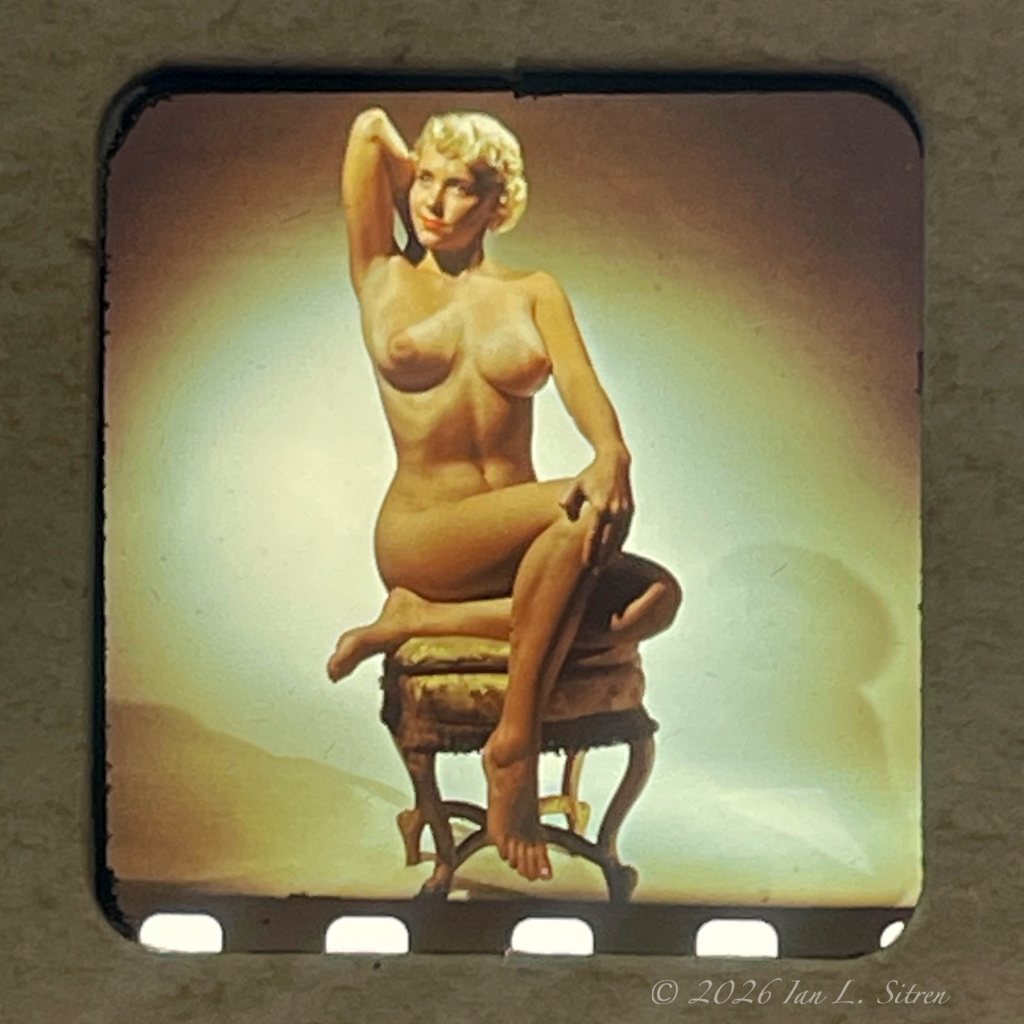
An original 35mm color transparency mounted in a cardboard slide mount depicting an unidentified nude glamour model posed on a Louis XV-style stool in a professional studio setting. Based on the hairstyle, lighting style, and color transparency format, the image likely dates from the 1950s to early 1960s. The slide is unmarked, with no photographer, publisher, or model identification, making it an interesting example of mid-century American glamour photography and photographic presentation.
I bought this 35mm color slide simply because it interested me.
It came mounted in an ordinary cardboard slide carrier with absolutely no identifying information. There is no photographer’s name, no date, no studio stamp, no model identification, and not even a handwritten note to suggest where it came from.
What remains is the photograph itself.
The image shows an unidentified blonde model seated on what appears to be a Louis XV-style stool in a carefully lit studio. The hairstyle, lighting, and the fact that it is a color transparency all suggest it was probably photographed sometime during the 1950s or early 1960s, although without any documentation that can only be an educated guess.
One of the things that attracted me is that it represents a period when glamour photography was changing. Earlier artistic nudes were often presented in black and white, while color transparency film was becoming practical enough for professional photographers and serious amateurs willing to invest in it. Every exposure had to count. There was no instant review, no deleting mistakes, and no Photoshop waiting at the end of the process.
We’ll probably never know whether this was made by a commercial glamour photographer, a camera club member, or simply someone who enjoyed creating carefully crafted studio photographs.
Photography has produced millions, perhaps even billions, of images over the years, but surprisingly few remain connected to the people who created them. Slides become separated from their boxes, handwritten notes disappear, studios close, and estates are dispersed. Eventually an image survives while everything that once explained it is gone.
This transparency is one of those survivors.
If you enjoy discovering unusual pieces of photographic history, take a look through my FromMyCollections gallery. While you’re there, you’ll also find my editorial, aviation, food, fashion, and fine art photography, my growing Motion page, and regularly updated Blog. Everything is available at https://www.secondfocus.com
I had every intention of posting this last night. However I was… celebrating.
Fortunately, someone remembered to keep the camera rolling.
The scene looked something like this. A long chrome-and-glass bar, glasses of bourbon lined up from one end to the other, and what appeared to be an endless row of identical redheads in little black dresses. They all seemed perfectly content to sit there, sip their bourbon, and look directly at the camera.
I have no explanation for why they all looked exactly alike.
It may have been the bourbon.
The video is only about twelve seconds long, but I thought it deserved a little extra time, so I looped it a few times. If you’re going to celebrate National Bourbon Day, you might as well do it properly.
Emily and her ever-growing circle of AI Muses have once again demonstrated that reality is optional.
If you’d like to see more of my photography, explore my Motion page, and read the stories behind many of these projects, you’ll find it all at SecondFocus.com.
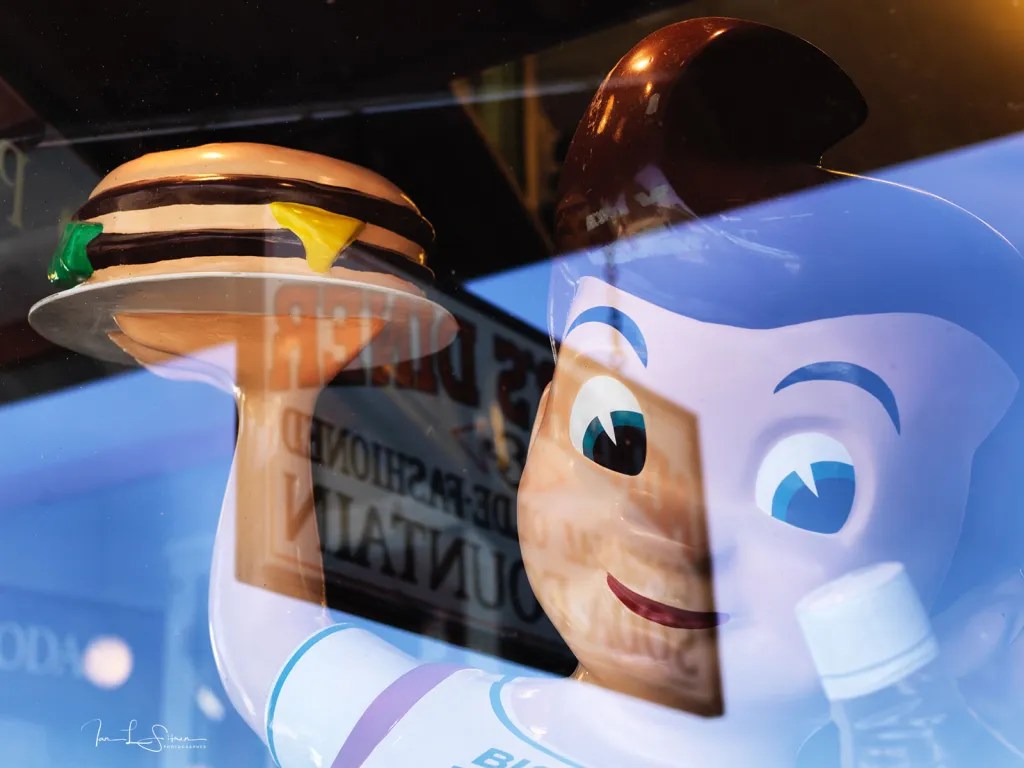
Long before fast food chains covered every freeway exit, Bob’s Big Boy helped define what the American family restaurant could be. When Bob Wian introduced the original double-decker Big Boy hamburger in Glendale, California, in 1937, it became one of the first signature burgers that people would travel specifically to eat. The combination of car culture, diners, drive-ins, and roadside architecture made Big Boy an icon of postwar America.
The smiling Big Boy statue carrying his oversized hamburger became just as recognizable as the restaurant itself. Today, original fiberglass statues have become highly sought-after collectibles, with surviving examples often selling for thousands of dollars. They represent much more than a restaurant chain. They remind people of family dinners, road trips, classic cars, and an era when the neighborhood diner was often the center of the community.
I photographed this statue in the window of an antique store in Julian, California. Between the reflections in the glass and the familiar smile, it seemed to capture exactly what nostalgia looks like. Sometimes an old restaurant mascot can tell a bigger story than the meal it was created to advertise.
There is much more to see on my website, including my food photography, aviation, editorial work, new Motion page, and my regularly updated blog. Visit SecondFocus.com
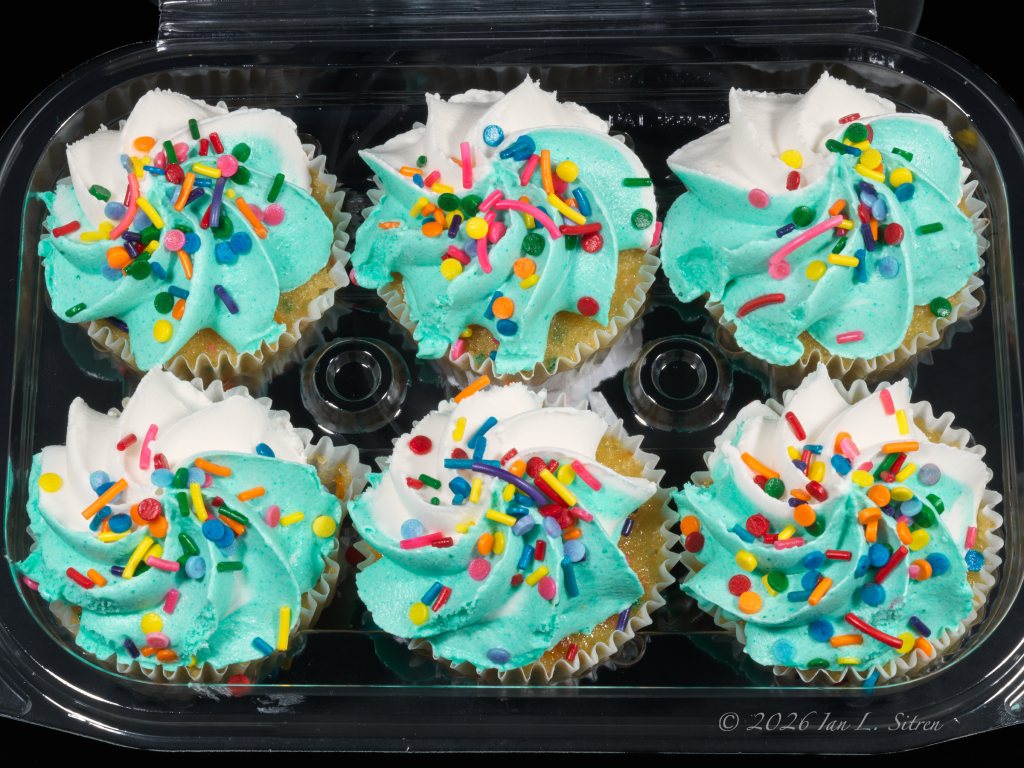
Notice it isn’t National Cupcake Day. It is National Cupcake Lovers Day, making it just as much about the people who enjoy cupcakes as the cupcakes themselves.
For this one, I made a slight departure from my usual Food From Bag To Background approach.
Instead of removing the cupcakes from their packaging, I photographed them exactly as they came from the grocery store in their clear plastic container. Sometimes the packaging is part of the story.
The cupcake has been around for more than 200 years. Early recipes appeared in American cookbooks in the late 1700s and early 1800s, and by the mid-19th century the name “cupcake” had become common. Some historians believe the name came from cakes baked in individual cups, while others point to recipes that measured ingredients by the cup rather than by weight.
These Birthday Cupcakes caught my attention because of their bright blue and white frosting and colorful sprinkles. I thought they would photograph really nicely.
To see more of my completed food photographs, along with my aviation, fitness, fashion, and other photography projects, please visit my website at https://www.secondfocus.com. Thanks!
I picked Arby’s for this one because my primary food project has focused on fast food.
Arby’s is somewhat unique in the fast-food world because the chain was built around the roast beef sandwich. While many major fast-food chains became known for hamburgers, fried chicken, tacos, or pizza, Arby’s made thinly sliced roast beef its signature item.
The chain was founded in 1964 by brothers Forrest and Leroy Raffel. At the time, most fast-food restaurants were competing in the hamburger business. The Raffel brothers decided to go in a different direction and built their restaurant around roast beef sandwiches instead.
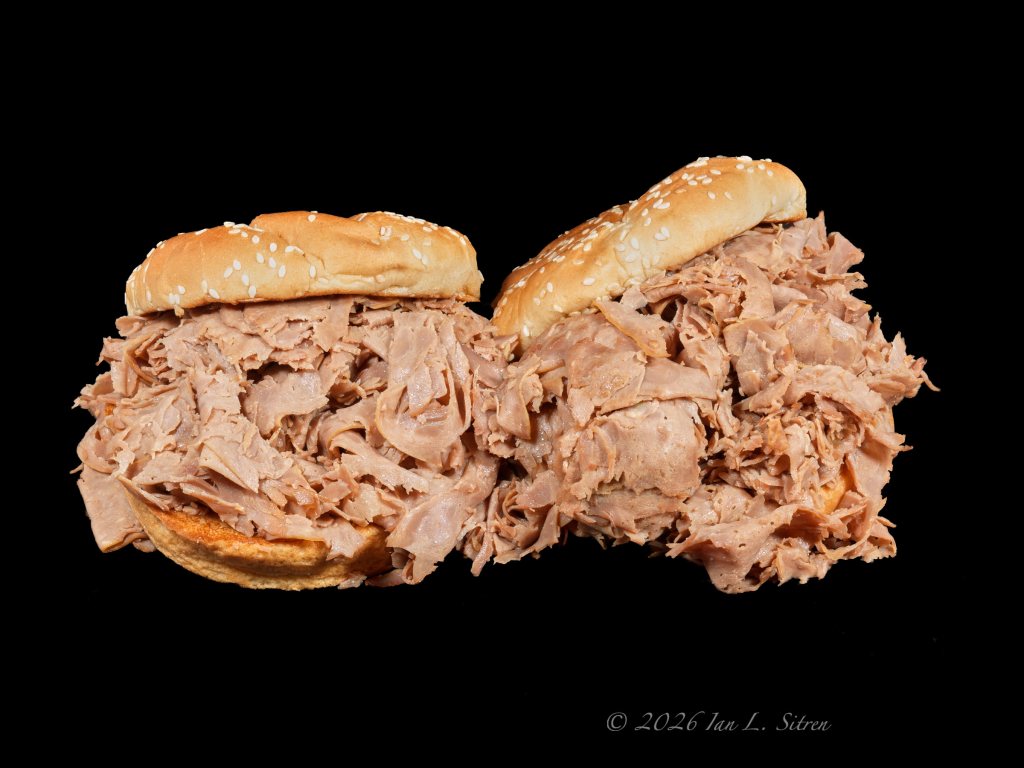
For this photograph, I used two Arby’s Half Pound Roast Beef sandwiches. The reason there are two is simple. Arby’s was offering a buy one, get one free promotion for National Roast Beef Day.
Working on my fast food project has also made me pay attention to fast-food apps and promotions. Many chains offer discounts tied to food holidays and loyalty programs. If you use them regularly, the savings can be significant.
These two sandwiches were removed from their wrappers and photographed against a black background for my Food From Bag To Background series.
To see more of my completed food photographs along with my other photography projects, please visit my website at https://www.secondfocus.com. Thanks!
It has not quite worked out the way I thought it might.
For starters, I discovered that Margherita Pizza does not come with tequila. Wrong kind of Margarita. That was disappointing.
Then, as I walked away to do something else, I heard someone ask, “Is it okay to eat?”
I said yes, but I need enough left to photograph.
Apparently I should have been more specific.
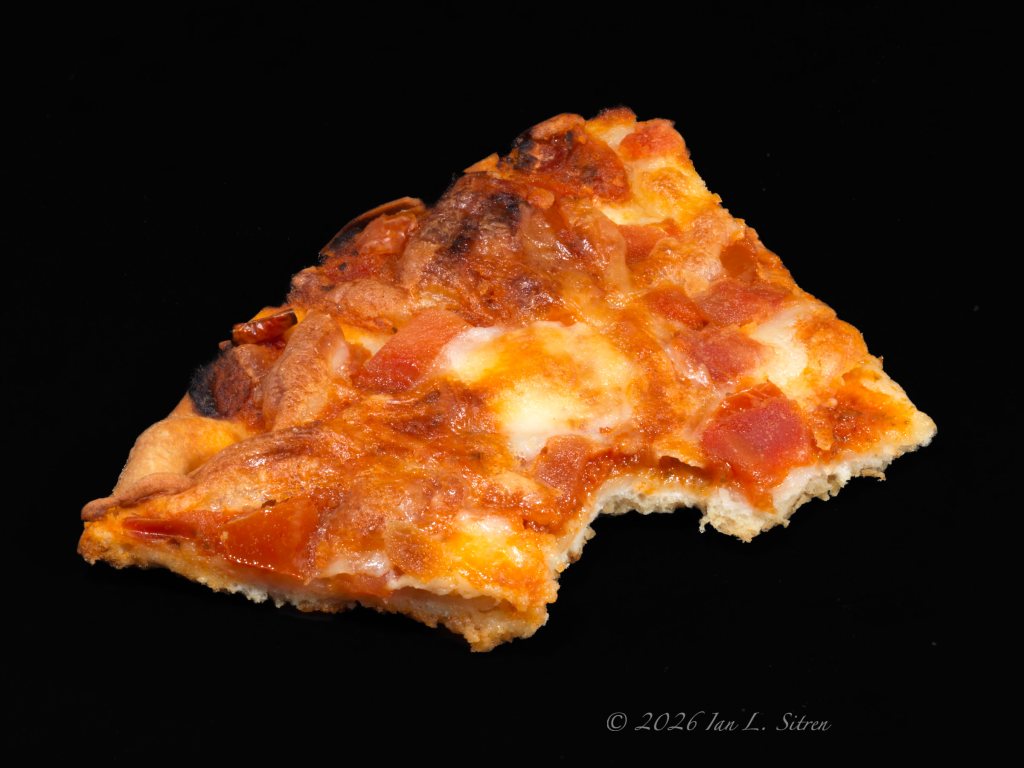
Margherita pizza is one of the simplest and most recognizable pizza styles. It is traditionally made with tomato sauce, mozzarella cheese, and basil. According to the popular story, it was created in Naples, Italy, in 1889 and named after Queen Margherita of Savoy. The red tomatoes, white mozzarella, and green basil were said to represent the colors of the Italian flag.
In this case, the pizza survived long enough for me to get a photograph, although just barely.
To see my completed food photographs, along with my aviation, fitness, fashion, and other photography projects, please visit my website at https://www.secondfocus.com. Thanks!
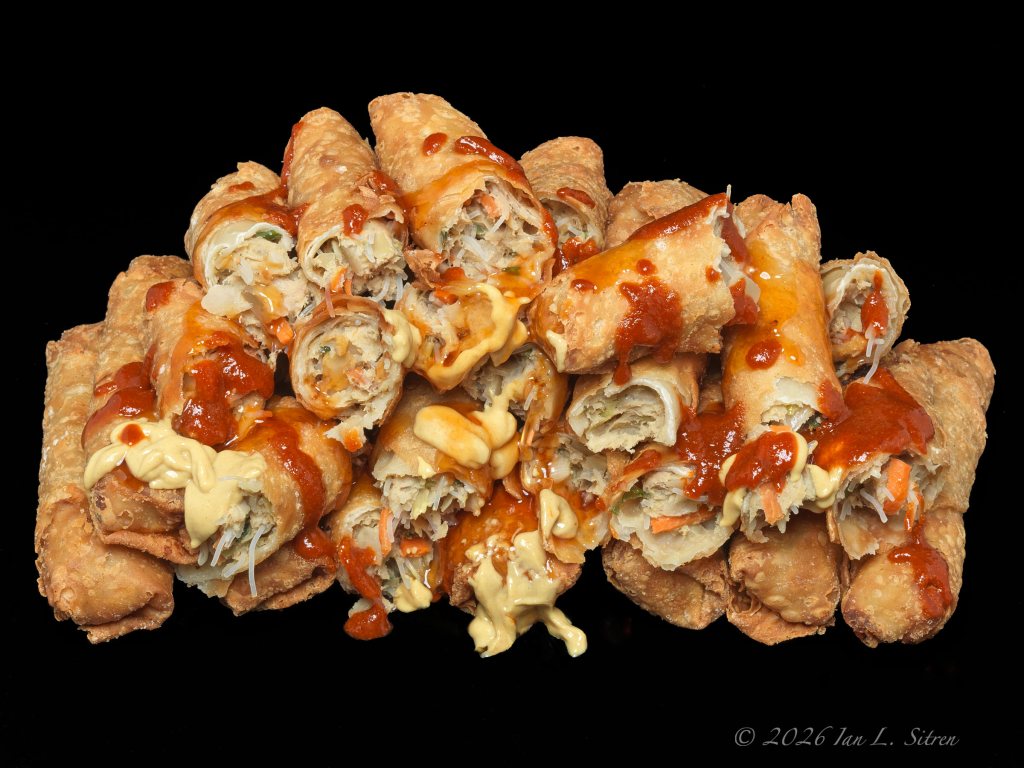
A stack of eighteen Panda Express chicken egg rolls photographed on a black background. Several rolls are halved to reveal the filling of cabbage, carrots, and chicken. The pile is covered in three condiments—bright red chili sauce or sriracha, yellow hot mustard, and translucent orange sweet and sour sauce—applied liberally and allowed to drip across the composition. The sauces add visual contrast and texture to the crisp, golden-brown wrappers. Part of the From Bag to Background series, photographed without styling or props.
Today is National Egg Roll Day.
Most people order an egg roll or two as a side item.
For this photograph, I ordered eighteen.
At that point, the egg rolls stop being a side dish and become the entire meal. Several were cut open to reveal the filling while the rest were stacked into a pile and covered with sweet and sour sauce, hot mustard, and chili sauce.
The modern American egg roll is actually a Chinese-American creation rather than a traditional Chinese food. While its exact origins are debated, the thick, bubbly wrapper and hearty filling helped make egg rolls a familiar part of takeout menus across the United States.
The egg rolls came from Panda Express, which opened its first restaurant in Glendale, California, in 1983 and has grown into the largest American-Chinese restaurant chain in the United States.
There is a lot more food to tempt you on my website along with my other photography projects, my new Motion page, and be sure to check out my blog. There is even more there and it is updated almost daily. Visit SecondFocus.com Thanks!