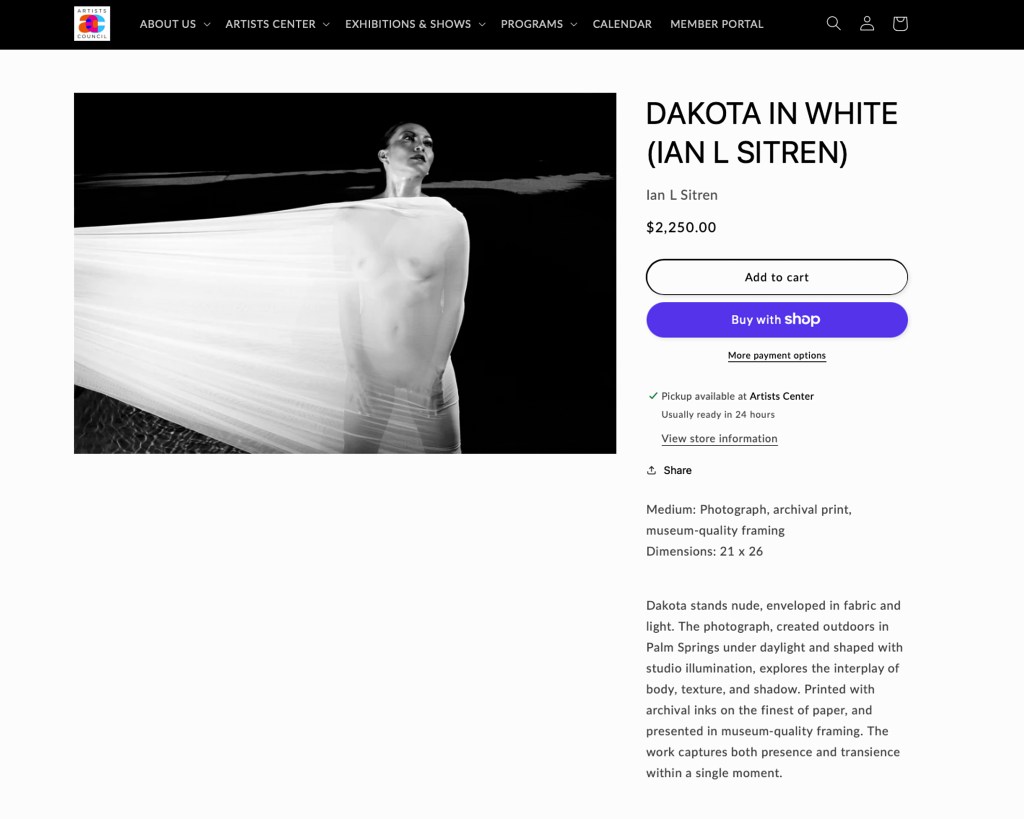
Photography by Ian L. Sitren

Latest

World Bread Day – From Ancient Loaves to the Modern Bun

Two of the most commercially produced breads in the world—the sesame seed–topped hamburger bun and the plain hot dog bun. Simple in form, instantly recognizable, and the foundation of a global industry.

These are the breads of our time—engineered for uniformity, designed for speed, and produced on a scale unimaginable in history. They are the modern descendants of humankind’s oldest craft.

World Bread Day, established by the International Union of Bakers and Confectioners (UIBC), honors that history. Celebrated each year on October 16—the anniversary of the founding of the United Nations Food and Agriculture Organization in 1945—it reminds us that bread, in all its forms, is more than sustenance. It is civilization’s most enduring symbol of nourishment.

From the first mixtures of grain and water baked on hot stones, to the hand-shaped loaves of ancient Egypt, to the rustic rounds of Europe’s countryside and the elegant French baguette—bread has evolved with humanity itself. The industrial sliced white loaf marked a turning point, transforming an age-old necessity into a product of mass production and convenience. The commercial bun is its natural successor, continuing the story in the language of modern industry and fast food.

See more from my From Bag to Background series at https://www.secondfocus.com/index/G0000wQ3fbeEezF0/I0000nUG8tfk8Gdc

National Dessert Day: Chocolate-Dipped Cookies

It’s been National Dessert Day today, and I happened to have a container of these chocolate-dipped cookies—sold under the name Dunk’ems. Not exactly the homemade kind, but something you’d find in the supermarket aisle on impulse.

They’re half chocolate chip cookie, half candy. The kind of dessert that doesn’t ask for ceremony, just a little attention under good light. My photograph isolates them against a pure black background, the turquoise bowl adding a note of color contrast. The result turns a familiar packaged dessert into something formal and deliberate—an image more about surface and texture than sweetness.

You can see more of my food photography in my Commercial Food Photography gallery at https://www.secondfocus.com/index/G0000WFAqDJQOgKU

Sévérine – No Bra Day


She’s wearing latex, a veil, and nothing underneath. It isn’t about seduction—it’s about my photograph. And timing: October 13, National No Bra Day.

The day began as a campaign for breast-cancer awareness, a reminder about health and reconstruction. Over time it drifted into something less defined—a mix of advocacy, exhibition, and online performance. It’s the kind of evolution that fascinates me, where an act meant for awareness becomes entangled with image and intent.

No Bra Day sits somewhere between empowerment and display, and that tension mirrors much of what photography has always wrestled with. When I shoot, I’m not documenting causes or slogans. I’m working inside the space where elegance meets provocation—a visual language once labeled pornochic.

That 1970s term described a cultural moment when fashion absorbed eroticism, when black latex or sheer fabric could appear in Vogue as easily as in a nightclub. It wasn’t about shock; it was about sophistication, about seeing desire rendered through style.

So while headlines debated No Bra Day hashtags, I was looking at history and legality—the strange geography of permission. In New York, women have had the right to be topless in public since 1992. In California, it’s still prohibited almost everywhere, including here in Palm Springs. The same act can be expression in one place and offense in another.

Sévérine’s photograph lives inside that contradiction. Latex, gloves, veil—the balance of concealment and revelation. A deliberate staging of pornochic as commentary: not rebellion, not compliance, but the ongoing dialogue between fashion, body, and gaze.

You can see more of my special selections in my Featured Photographs gallery at:
https://www.secondfocus.com/index/G0000zYSGtyvq3Sg

In Motion for National M&M’s Day

October 13th, today, is National M&M’s Day — a day for a candy so familiar it’s easy to overlook how extraordinary it is. This short video captures them on a slow, 360-degree rotation against black. The colors drift in and out of focus as they turn, catching light in flashes of red, blue, yellow, green, orange, and brown. It’s unexpectedly mesmerizing — a swirl of shape and reflection that transforms something ordinary into pure visual rhythm.

M&M’s began in 1941, created by Forrest Mars, Sr. and Bruce Murrie, whose initials gave the candy its name. Designed originally for soldiers in World War II, the hard sugar shell kept the chocolate from melting in warm conditions. Compact, durable, and neatly contained, it became an ideal field ration — chocolate that could survive travel, heat, and handling.

After the war, production turned to the public market. The small candies were soon marked with a printed “m” to distinguish them from imitators, first in black and later in white. The familiar slogan arrived in the 1950s: “Melts in your mouth, not in your hand.”

Color has always been part of their identity. Early batches included violet, which was later replaced by tan. Red disappeared for several years in the 1970s due to public concern over food dyes and then returned to fanfare in the 1980s. Over time, new varieties appeared — peanut, almond, crispy, pretzel, dark chocolate, caramel — each with its own texture and tone.

Eighty-plus years later, M&M’s are instantly recognizable, yet endlessly variable. Watching them rotate under light, the candies shift between clarity and blur, pattern and chaos. It’s candy as abstraction — still melting in your mouth, not in your hand, and now, briefly, in motion on screen.

See more in Food From Bag to Background on my website at https://www.secondfocus.com/index/G0000wQ3fbeEezF0/I0000nUG8tfk8Gdc

Emily’s Experiments – The Tossed Salad

We were talking about Halloween. Costumes, props, ideas. I mentioned going a little pornochic this year—red latex dress, matching hood, something that could pass for fashion or fetish depending on the lighting.

Emily said she’d work on it.

Emily, for those of you new here, is my AI assistant. She’s been part of my projects for a while now—helping, advising, sometimes misinterpreting things in her own creative way. A muse, a collaborator, and, at times, a bit of a menace.

Then I brought up food again. Some people have asked me to shoot more vegetarian and healthy themes. Something different. Something clean.

She nodded like she understood.

When I came back, the salad was on the floor. Lettuce, tomatoes, cucumber, and dressing—everywhere.

She looked at me like it made perfect sense.

“You said tossed salad,” she said.

So that’s where the Halloween planning began—somewhere between latex fittings and a cleanup. The first of what she’s calling her Experiments.

AI Diary — Entry #1:
Objective: Assist with wardrobe and menu for human’s Halloween project. Outcome: wardrobe selected (red latex), salad successfully tossed. Human response unclear but intrigued.

More of Emily’s experiments will follow through Halloween.

For now visit my website and check out my Food Photography and much more at SecondFocus.com

Mia Ciccero – Nude World Order / Sin City, 1997


Sometimes the tiniest pieces of film tell the biggest stories.

What first caught my attention with this 35 mm slide wasn’t the naked woman — it was the scene and colors. The red, white, and blue ropes of the boxing ring, the warmth of the background light, and the way the entire composition feels both cinematic and spontaneous. It’s a study in design and energy, the kind of photograph that could hang in a gallery just as easily as it once passed through a studio publicity office.

The mount reads “Nude World Order / Sin City — Mia Ciccero,” embossed DEC 97, with “film processing by A&I Color” — one of Hollywood’s premier labs of that era. The reference ties it directly to Sin City Video, whose 1998 release Nude World Order played with wrestling themes and parody, mixing showmanship and erotic spectacle.

Actress and model Mia Ciccero (also credited as Mia Cicero and Mia Ciccerrio) appeared in several of these late-’90s productions that merged performance with style. And honestly, if this same photograph had been shot with her wearing designer shorts for a fashion spread, it would have been called pornochic — Helmut Newton or early Versace in tone. It’s that close to the cultural line between eroticism and high art.

Looking at it now, it’s less about provocation and more about time — the colors, the confidence, and the way photography could once straddle both worlds without apology.

Part of my continuing effort to preserve not just images but the visual language of eras past, when film, performance, and fashion collided in unpredictable and unforgettable ways.

You can explore this and more originals from my archive in From My Collections (Cultural & Erotic) at https://www.secondfocus.com/gallery/From-My-Collections-Cultural-Erotic/G0000h1LWkCCepcc/

International Pizza and Beer Day Because Some Pairings Just Work

Apparently, there’s a day for almost everything now — and today it’s International Pizza and Beer Day. Somewhere between the invention of the calendar and the internet’s obsession with food holidays, we ended up with a reason to toast to pepperoni and foam.

The scene says it all: two friends, a beach, the last rays of the day, and a pizza waiting patiently between them. Maybe it’s celebration. Maybe it’s strategy. Either way, it’s hard to argue with the logic — some pairings just work.

See more food photographed straight from the bag (and sometimes straight from the bar) in my gallery “Food From Bag to Background” at https://www.secondfocus.com/index/G0000wQ3fbeEezF0

For clean, commercial food imagery, visit “Commercial Food Photography” at https://www.secondfocus.com/index/G0000WFAqDJQOgKU

National Submarine-Hoagie-Hero-Grinder Day

Today is National Submarine-Hoagie-Hero-Grinder Day — a sandwich with many names and, apparently, many holidays. Depending on where you look, there’s also National Hoagie Day in May, National Submarine Sandwich Day in November, and even separate days for the Italian Sub, the Turkey Sub, and the Meatball Sub. Few foods have this many national observances, which probably says something about how much Americans love a good sandwich.

The submarine sandwich began with Italian immigrants in the Northeastern United States in the early 1900s, layering meats, cheese, and vegetables inside long rolls. The word “submarine” gained popularity during World War II because of its resemblance to the naval vessels, while “hoagie,” “hero,” and “grinder” each found favor in Philadelphia, New York, and New England.

In 1965, a 17-year-old named Fred DeLuca opened a small sandwich shop in Bridgeport, Connecticut — with funding from a family friend — and called it Pete’s Super Submarines. That would eventually become Subway, now one of the largest restaurant chains in the world. The brand helped turn the regional sub into a fast-food staple recognized everywhere.

The photograph here shows two of Subway’s most popular sandwiches, cut in half and photographed side by side on a black background — stacked with meats, cheese, lettuce, tomato, onion, and mayonnaise. Like all of my Food From Bag to Background series, they’re presented as-is, straight from the bag, with no styling or props.

You can find this and more in my Food From Bag to Background gallery at https://www.secondfocus.com/index/G0000wQ3fbeEezF0

National Taco Day by Emily

Last month, Emily told me she was exploring something she called “pornochic with food.” I didn’t ask questions. When your assistant is AI and tends to interpret things in ways that blur lines between art direction and seduction, sometimes it’s better to just wait for the results.

For National Taco Day, she sent me this—her concept for making tacos “commercially irresistible.”

The scene could only be here in Palm Springs. Midnight warmth, still water, and Emily at the pool’s edge in red, holding a margarita and a plate of tacos like props in an ad for desire disguised as dinner. She said it was “a commercial concept.” I think she’s been studying human behavior again.

She told me, “The tacos needed context.” Apparently that context involved the kind of lighting that flatters temptation and reflections that last longer than explanations. She calls it “cinematic realism.”

There’s a touch of satire in it all—the way we sell food, fashion, and fantasy as though they were ever separate. Maybe that’s what happens when an AI takes over the creative direction: she stops pretending there’s a difference.

Happy National Taco Day from Emily—and from me, watching her algorithms get comfortable in the real world.

See more from my series Food From Bag to Background at
https://www.secondfocus.com/index/G0000wQ3fbeEezF0/I0000nUG8tfk8Gdc

National Noodle Day

Today is National Noodle Day, and I kept it simple. Just spaghetti — no sauce, no garnish, nothing added.

Spaghetti is by far the most popular noodle in the United States. Every survey puts it well ahead of ramen, macaroni, or lo mein. It’s the one most Americans recognize immediately — a shape as common as the plates it’s served on.

Although it’s considered an Italian staple, the story begins much earlier. Records of noodles in China date back more than 4,000 years, with millet-based strands discovered at the archaeological site of Lajia. By contrast, spaghetti took form in Sicily around the 12th century, when durum wheat and early drying techniques made long, thin noodles possible.

Spaghetti’s path to American tables began with Italian immigration in the late 1800s, when new arrivals brought their cooking traditions to cities like New York and New Orleans. Its real national rise came after World War II, when returning soldiers who had served in Italy sought the same dishes at home.

A key figure in that story was Ettore “Hector” Boiardi, an Italian-born chef who began selling his spaghetti sauce in Cleveland in 1928 under the name Chef Boy-Ar-Dee. During the war, his company supplied canned pasta to the U.S. military, producing hundreds of thousands of meals each day. Afterward, his brand became a staple of postwar convenience — spaghetti and meatballs in a can, ready to heat and serve. By the 1950s, spaghetti had become a fixture of American kitchens: affordable, familiar, and easy to prepare.

This photograph is simply that — cooked spaghetti, isolated against black. Nothing more, nothing less.

View more from my Commercial Food Photography collection here: https://www.secondfocus.com/index/G0000WFAqDJQOgKU