National Roast Beef Day and Arby’s Original Idea
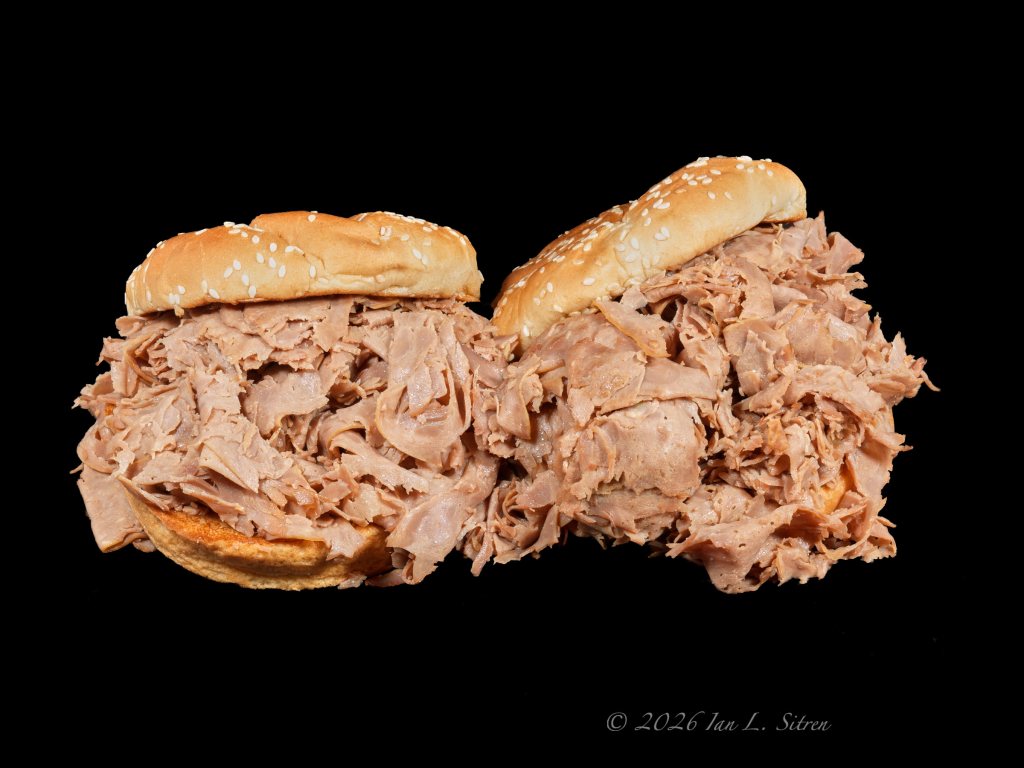
Today has been National Roast Beef Day.
I picked Arby’s for this one because my primary food project has focused on fast food.
Arby’s is somewhat unique in the fast-food world because the chain was built around the roast beef sandwich. While many major fast-food chains became known for hamburgers, fried chicken, tacos, or pizza, Arby’s made thinly sliced roast beef its signature item.
The chain was founded in 1964 by brothers Forrest and Leroy Raffel. At the time, most fast-food restaurants were competing in the hamburger business. The Raffel brothers decided to go in a different direction and built their restaurant around roast beef sandwiches instead.
For this photograph, I used two Arby’s Half Pound Roast Beef sandwiches. The reason there are two is simple. Arby’s was offering a buy one, get one free promotion for National Roast Beef Day.
Working on my fast food project has also made me pay attention to fast-food apps and promotions. Many chains offer discounts tied to food holidays and loyalty programs. If you use them regularly, the savings can be significant.
These two sandwiches were removed from their wrappers and photographed against a black background for my Food From Bag To Background series.
To see more of my completed food photographs along with my other photography projects, please visit my website at https://www.secondfocus.com. Thanks!
National Brisket Day and the Reality Behind FOOD FROM BAG TO BACKGROUND
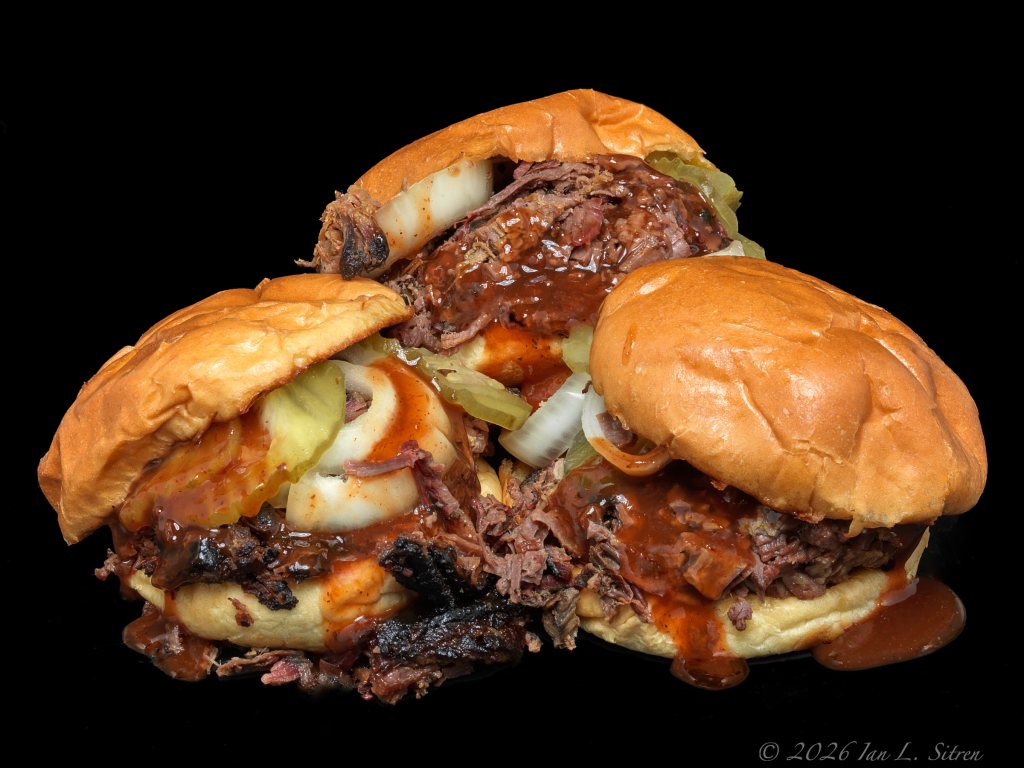
Today is National Brisket Day.
One of the things I wanted to challenge with my “FOOD FROM BAG TO BACKGROUND” project was the idea that food only becomes visually interesting after it passes through a marketing department, a food stylist, an art director, retouching, and increasingly now, AI image generation.
These brisket sandwiches from Dickey’s Barbecue Pit are none of that.
They were bought like any normal takeout order, carried home in a bag, opened, placed onto a black background, and photographed exactly as served. No rearranging. No fake steam. No hidden supports. No motor oil pretending to be sauce. No tweezers moving sesame seeds into place.
And yet they still work visually.
Actually, I would argue they work because they are real.
The overflowing chopped brisket, the uneven piles of smoked meat, the compressed buns, the dripping barbecue sauce, the onions and pickles sliding out of place, all of it feels far more appetizing and believable than the heavily over-engineered perfection seen in so much advertising imagery now.
That tension became one of the central ideas behind FOOD FROM BAG TO BACKGROUND. Fast food and takeout photographed seriously, exactly as it exists in the real world, isolated against black with no attempt to hide the messiness, excess, or reality of what arrived in the bag.
And sometimes the real version ends up looking better than the manufactured one.
More from FOOD FROM BAG TO BACKGROUND:
https://www.secondfocus.com/index/G0000wQ3fbeEezF0
National Hoagie Day was yesterday
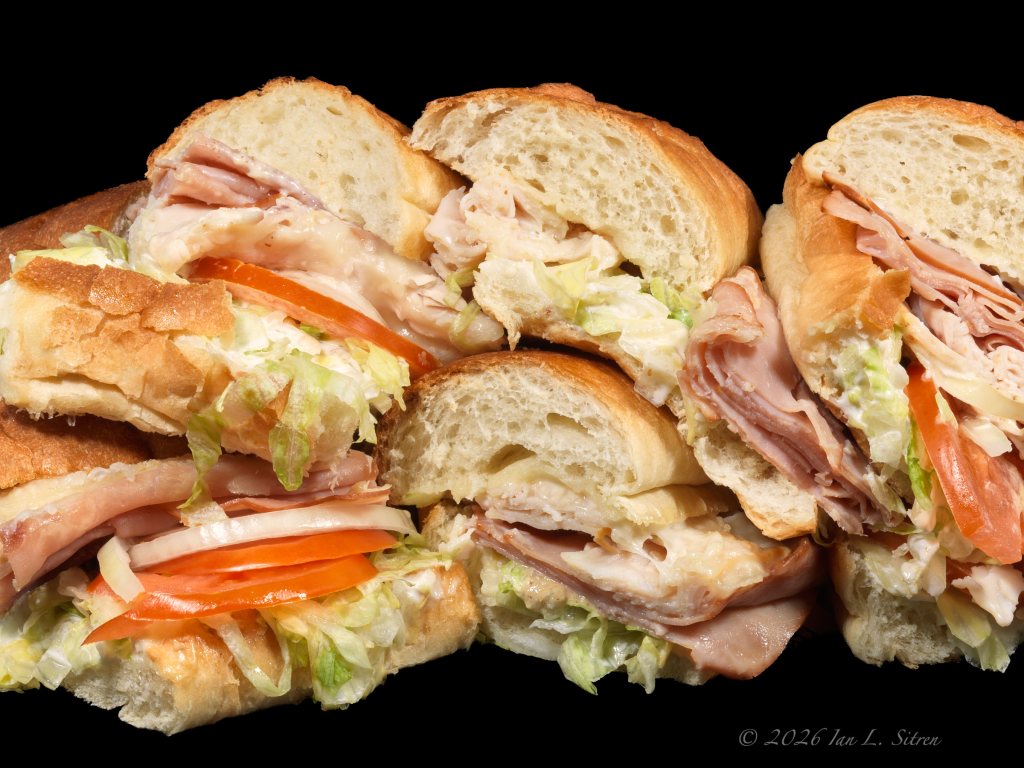
Which is about right. These things never seem to line up with when you actually have the food in front of you. They pass, mostly unnoticed, and then a day later you’re standing there with two Firehouse Subs and a camera thinking… now it’s relevant.
Firehouse started in Jacksonville, built by two former firefighters who turned the concept into something very specific. Steamed meats, soft rolls, a heavier sandwich that doesn’t try to hide what it is. It’s direct, a little excessive, and that’s the point.
So instead of chasing the calendar, I went after the structure.
Cut into sections, stacked, compressed, pushed together until it stops reading as a single sandwich and starts becoming something else. Bread, meat, cheese, all exposed at once. No clean halves, no careful spacing. Just density, texture, and everything competing for attention.
That’s where my photography tends to land. Not documenting the sandwich, but pulling it apart visually and rebuilding it into something more deliberate. Something you look at, not just something you eat.
And in that form, it becomes less about lunch and more about the way it holds the frame. Something to study for a moment.
More of my food photography and much more on my website at https://www.secondfocus.com
National Reuben Sandwich Day
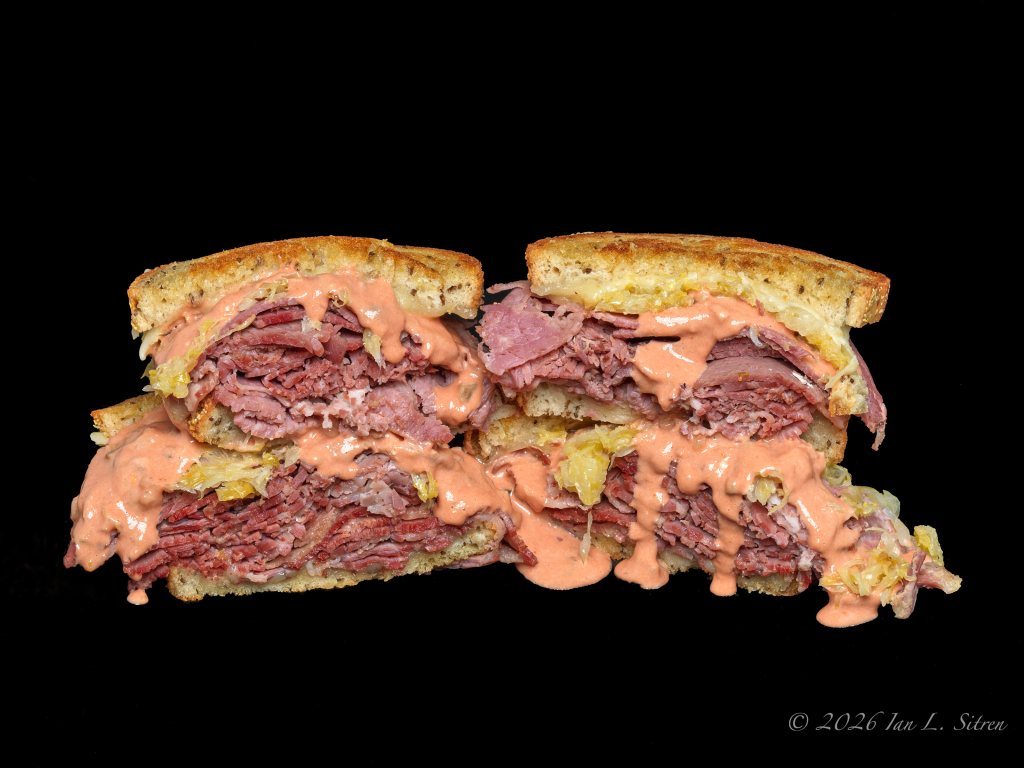
Every year on March 14th, National Reuben Sandwich Day gives the classic deli sandwich its moment.
While the sandwich has long been associated with New York delicatessens, the origin story most widely accepted today points west. In the 1920s, a grocer named Reuben Kulakofsky is said to have requested the sandwich during a poker game at The Blackstone Hotel in Omaha, Nebraska. The hotel’s chef prepared it, and the sandwich quickly became a house specialty. In 2013 the city of Omaha formally declared March 14th as National Reuben Sandwich Day in recognition of that story.
For my From Bag to Background food photography project, the approach is simple. The food is photographed as it arrives, without stylists or staging, isolated against a black background. The sandwich cut in half reveals exactly what makes a Reuben a Reuben: stacked corned beef, sauerkraut, melted Swiss cheese, and the dressing running through the layers.
There is also the well-known cousin to the Reuben, the Rachel, which swaps the corned beef for pastrami or turkey and replaces the sauerkraut with coleslaw. A different personality, but the same idea.
If you enjoy seeing familiar foods presented this way, you can explore more of the From Bag to Background series and other food photography on my website at https://www.secondfocus.com
Thanksgiving by Emily and Arby’s

For Thanksgiving I wanted to photograph something more in line with what I shoot instead of just another turkey. Fast food (and naked women) crossed my mind. The only thing I knew was out there was the Popeye’s Cajun Turkey, a whole bird, fully cooked and ready to go, but not what I wanted. So I checked with Emily, my assistant and muse. Her response, within a nano-second, was simple: Arby’s.
The result was the Deep Fried Turkey Gobbler, a seasonal sandwich that pulls the core elements of the holiday into one place: sliced deep-fried turkey, stuffing, cranberry spread, and a toasted roll. It’s available only for a short run, and it landed in front of my camera exactly as it came, picked up to go.
The Thanksgiving holiday itself has a different origin. In 1863, during the Civil War, Abraham Lincoln issued a proclamation calling for a national day of thanks. The goal was simple, a shared moment at a time when the country was divided. That proclamation set the tradition that still marks the last Thursday of November.
More than 160 years later the holiday includes everything from a full table to seasonal fast-food interpretations like this one. A modern take on turkey, stuffing, and cranberry, compressed into a sandwich and ready to unwrap.
You can see more of my fast food photography, muses, other projects, and those naked women on my website at SecondFocus.com Thanks Emily!
A Deli Icon for National Reuben Day and My St. Patrick’s Day Favorite

March 14 – National Reuben Sandwich Day
A true deli icon. My photograph of a Reuben sandwich—layered with corned beef, Swiss cheese, sauerkraut, and Russian dressing on crispy grilled rye. A sandwich with history, tracing its roots to early 20th-century America. Some say it was created in Omaha during a late-night poker game in the 1920s, while others credit Reuben’s Delicatessen in New York City. Either way, it’s been a staple for over a century.
And with St. Patrick’s Day around the corner, this is my way to enjoy corned beef, instead of corned beef and cabbage, which I don’t like a lot!
See more of my food photography and other intriguing photo projects at http://SecondFocus.com Thanks!
 SecondFocus Blog