International Picnic Day, the Weimar Era, and Pornochic
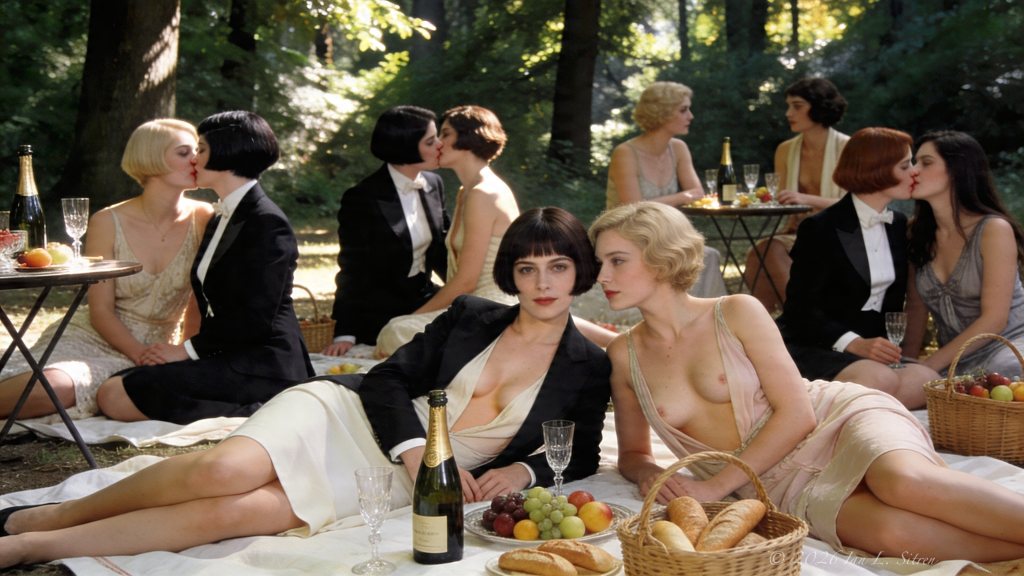
Last Thursday was International Picnic Day.
Most people probably celebrated with sandwiches, potato salad, and a blanket in the park.
I celebrated by thinking about Berlin during the Weimar years.
For quite a while I have been fascinated by that remarkable period between the two World Wars. It was a time when fashion, nightlife, cabaret, and sexuality all seemed to be changing at once. Much of what we think of today as modern attitudes toward sex and self expression can trace at least some of its roots back to those years.
That fascination eventually led me to create a series of photographs inspired by the era. They were never intended to be historical recreations. Instead, I wanted to capture some of the atmosphere while giving it my own interpretation.
If you’ve followed my work for very long, you already know that I have a preference for what I call Pornochic. I’m far more interested in photographs that combine style, fashion, glamour, and sexuality than simply photographing people without their clothes. The Weimar period seemed like a natural fit for that approach.
So when International Picnic Day came along, this photograph immediately came to mind.
There is much more to see on my website, including my photography galleries, my blog, and my growing Motion page. Visit https://secondfocus.com
National Olive Day
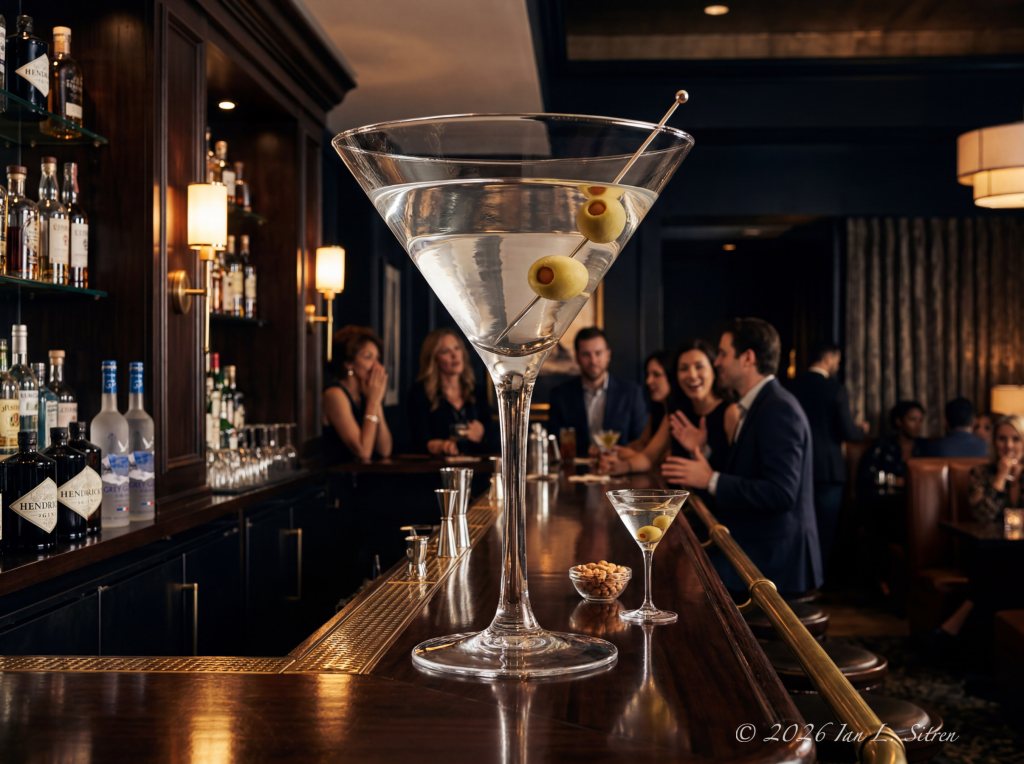
Auntie Mame says “Olives take up too much room in such a little glass”.
I’ve remembered that line for years.
It comes from the 1958 film Auntie Mame, and for some reason it always resurfaces whenever olives are involved. Not because it makes much sense, but because it solves a problem that probably never existed in the first place.
Today is National Olive Day, and rather than photograph a bowl of olives, I started wondering whether Auntie Mame might actually have had a point.
Maybe the problem was never the olive.
Maybe the problem was the glass.
The traditional martini has always forced olives into cramped living conditions. One or two olives suspended in a relatively small volume of liquid, expected to spend an entire evening crowded together at the bottom of the glass. No room to stretch out. No room to enjoy the scenery.
That seemed unfair.
So a solution was required.
Not fewer olives.
Not smaller olives.
A much bigger glass.
The result is a martini glass so oversized that the olive finally has all the room it could ever want. The standard martini sitting beside it serves as a reminder of the old days, before progress, before innovation, before anyone considered the spatial needs of cocktail garnishes.
I suspect Auntie Mame would approve.
Or perhaps she would simply ask for an even bigger glass.
Either way, National Olive Day seemed like the perfect excuse to finally solve one of cinema’s most overlooked problems.
If you’d like to see more of my photography, explore my galleries, read the blog, and visit the growing Motion section, you’ll find it on my website at https://www.secondfocus.com
National Camera Day, The Look of Film Never Left
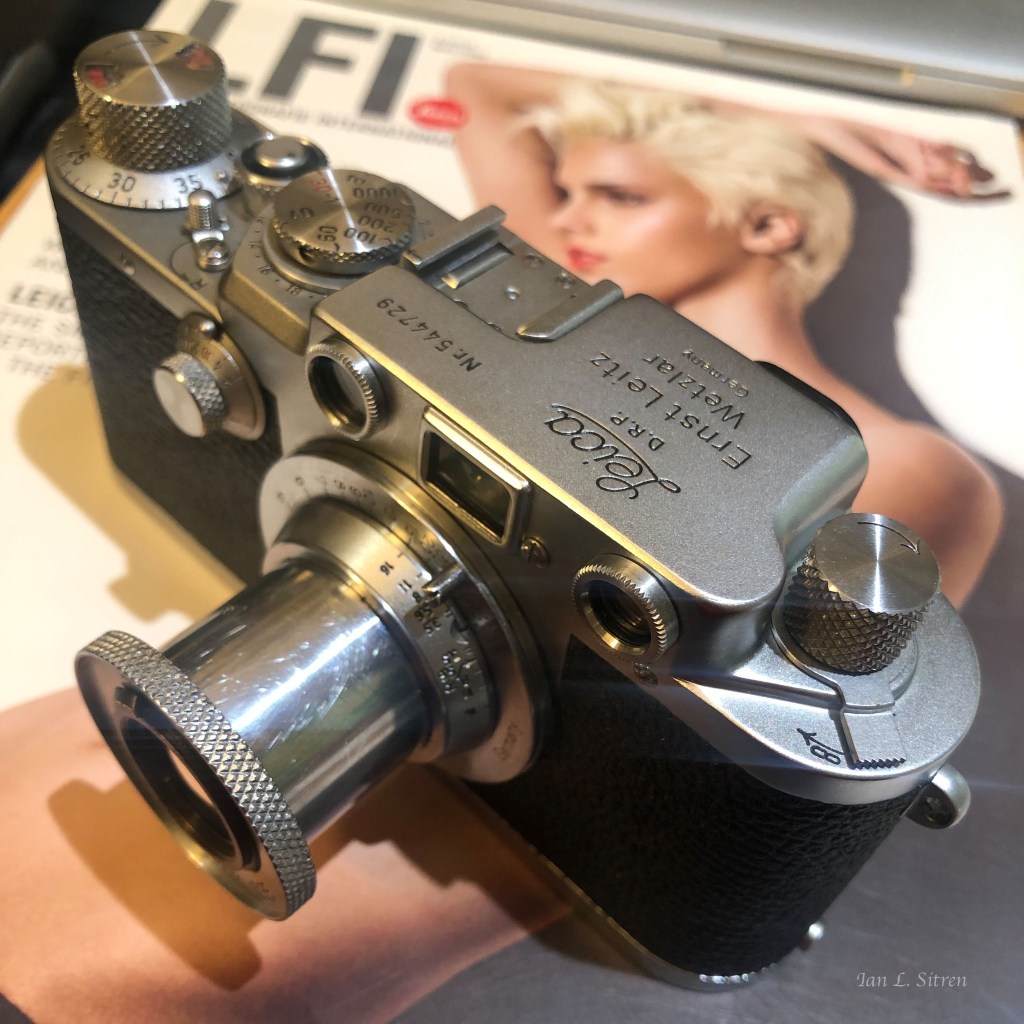
Today is National Camera Day.
I pulled out my Leica IIIf again. It’s been photographed before, and it still holds its place. Not because it’s old, but because it represents a way of working that hasn’t changed as much as people think. And I still have a love of the look of film.
Leica’s origins go back to Oskar Barnack, who took 35mm motion picture film and turned it into a still photography format. That decision made cameras smaller, faster, and far more usable in real-world situations. It shifted photography away from being staged and into something more immediate.
What followed wasn’t just a camera system, it was a look. The color palette you see in Leica work, and hinted at in the LFI Magazine cover behind this camera, is controlled rather than exaggerated. Skin tones stay natural. Colors separate instead of competing.
Then there’s Hasselblad, working at a different pace. Medium format, larger negatives, more deliberate compositions. Where Leica moves quickly, Hasselblad slows everything down. The result is depth, tonal range, and structure.
That carries forward directly into my own work. My long-time preference has been Hasselblad digital, particularly the CCD sensor versions. There’s a specific color palette that comes out of those files that still stands apart. It’s not overly processed, not chasing saturation, just clean, controlled color with depth. It feels closer to film than most modern digital systems.
There’s a reason NASA chose Hasselblad for the Apollo 11 Moon landing. Those images required reliability and the ability to hold detail across extreme conditions. The same qualities show up in controlled studio work, just applied differently.
Film ties all of this together. It forces decisions early. Exposure, contrast, color balance, all set before you ever see the result. That constraint shapes the outcome. Grain becomes texture. Highlights roll instead of breaking. Blacks hold information.
This photograph isn’t about nostalgia. The Leica sits there with its mechanical dials and engraved markings, built to do one thing well. The magazine behind it points to the result, what all of that engineering was built to produce.
And even now, with everything available, that way of seeing still carries through.
More of my photography, from fast food to everything in between, at https://www.secondfocus.com
Weimar Berlin, The Beginning of an Ongoing Exploration
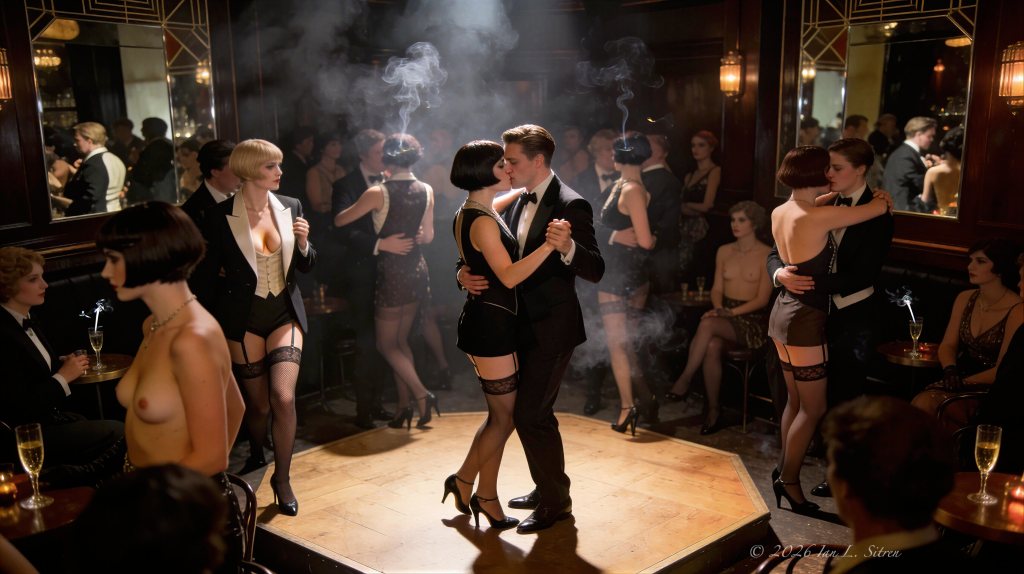
For a long time I’ve been drawn into the world of Weimar Berlin, a time when the city’s nightlife became a stage for shifting identities, loosened boundaries, and a kind of quiet rebellion that played out in crowded bars and cabaret rooms.
Not literally, of course. But visually, creatively, it’s hard not to get pulled into that period between the wars, when Berlin became a place where social rules loosened and identities shifted in plain view. Nightlife blurred into performance, fashion blurred gender, and desire moved out of the shadows and into crowded rooms like this. It wasn’t clean or controlled, but that’s part of what makes it compelling.
There’s a looseness to it. Boundaries that feel like they’re being tested in real time. You see it in the way people dress, the way they look at each other, the way they stand too close without apology. It’s not forced. It just exists.
A small dance floor, surrounded by a crowded room. Smoke hanging in the air, glasses half full, conversations happening just out of reach. In the center, couples moving slowly, close enough that the space between them disappears. Not performing. Not posing. Just existing in that moment.
And around them, the rest of the room watches, or doesn’t.
This isn’t about recreating history. It’s about exploring a moment when things started to shift. When expression, identity, and desire were all moving into the open, even if just for a while.
And once you start looking at it that way, it doesn’t stay in Berlin.
You begin to see traces of it elsewhere. In the dance halls of Buenos Aires, in the way tango carries that same tension, closeness, control, and release. Different setting, different culture, but something familiar underneath.
This is just the beginning of that exploration. That’s where this photograph started. Photographs and video I have always wanted to do. And I will do in some way. But for now with the help of Emily, my AI muse.
More of my photography, from food to everything in between, is on my website at https://www.secondfocus.com.
National Eggs Benedict Day
Today, April 16th is National Eggs Benedict Day.
For most of us, it brings up a familiar scene. A quiet garden restaurant, champagne in the morning, Eggs Benedict placed carefully on the table, everything composed and exactly where it belongs.
I started there.
A table set for two, light filtering through the garden, a setting that feels complete on its own.
But in my work, it rarely stays that way.
The structure holds just long enough to recognize it, and then it begins to shift. Not abruptly, not forced, just enough to change the way the scene is read.
That’s where this one goes.
More of my food photography, pornochic photo adventures, and everything in between on my website at https://www.secondfocus.com
Threshold
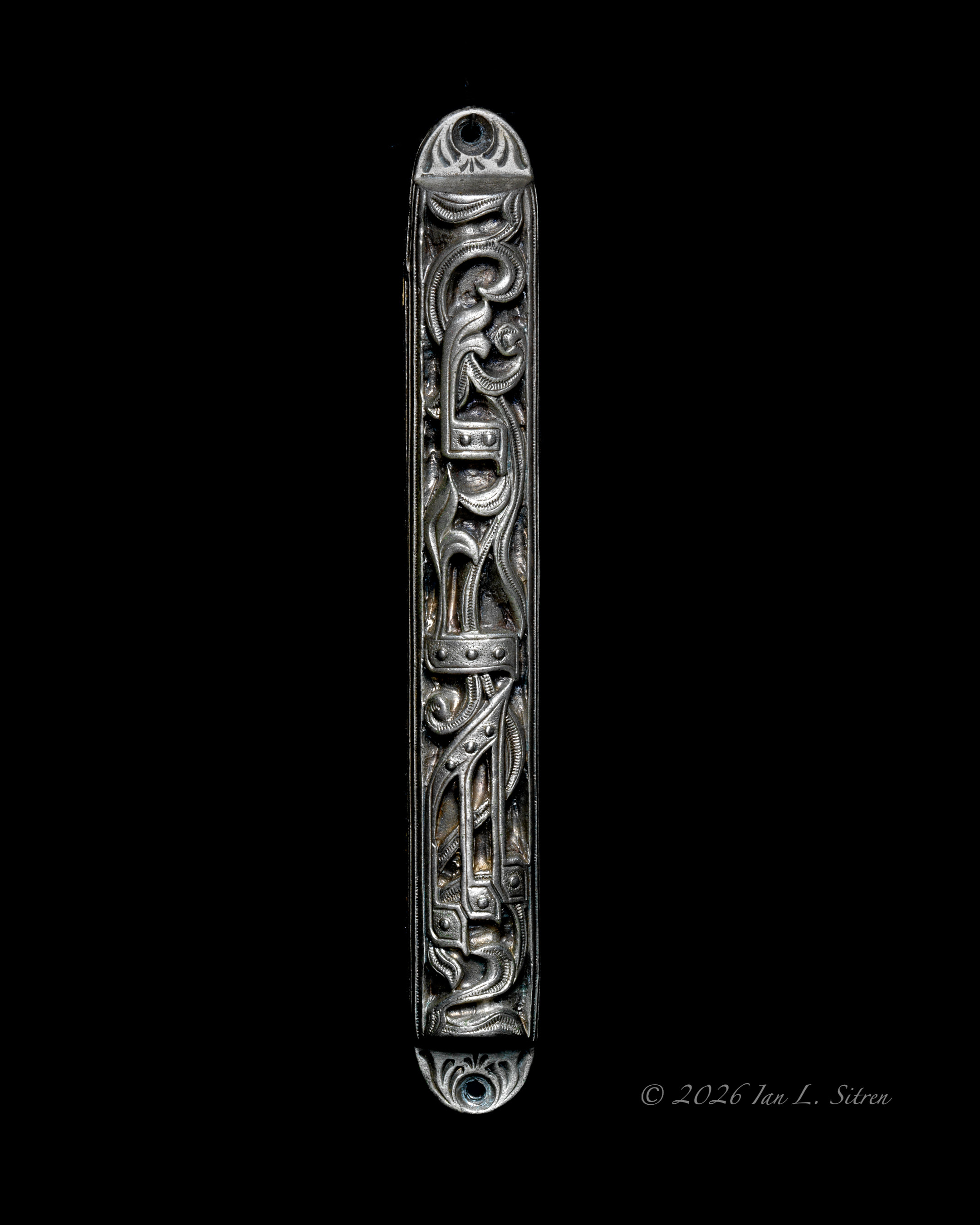
My photograph Threshold has been accepted into the Juried Artists Council ACE 2026 exhibition, themed “Timeless Traditions – Modern Context.” The work is a photograph produced as a dye-infused aluminum print and centers on a small ritual object that has passed through multiple generations of my family. The subject of the photograph is a mezuzah.
This mezuzah hung on the doorframe of my great-grandfather’s home in Ukraine. Its history before that is unknown. What is known is where it traveled afterward. It made its way with my family to an apartment in the Bronx, New York. From there, it was installed on the doorframe of a house in La Habra, California, and later on the doorframe of an apartment in Hollywood. Today, generations later, it occupies a place in my home.
Based on its size, weight, material, and decorative style, the mezuzah appears to be a late 19th to early 20th century Eastern European domestic mezuzah, likely dating from circa 1890–1915, within Jewish communities of late Imperial Russia or the Austro-Hungarian Empire. It was not made as a ceremonial or decorative object, but as an everyday household item, intended to be used, reinstalled, and lived with.
A mezuzah is affixed to the doorposts of Jewish homes and contains a handwritten parchment with verses from the Shema, instructing the Jewish people to keep these words present in daily life. This mezuzah survived not because it was preserved as an artifact, but because it continued to serve that original purpose. It passed through doorways, migrations, and decades in which many homes, families, and traditions did not survive. It is an everyday threshold object that endured movement, displacement, and resettlement, which makes Threshold a precise and intentional title.
Today is International Holocaust Remembrance Day, a day dedicated to remembering the six million Jews murdered during the Holocaust and the destruction of Jewish life across Europe. For many families, entire histories were erased. For others, fragments endured, sometimes in the form of objects that continued to be carried, installed, and used.
Threshold reflects that endurance. Shown in a contemporary exhibition context and produced using modern photographic processes as a dye-infused aluminum print, the mezuzah remains what it has always been: a marker of continuity at the doorway, quietly present across time.
Threshold will be on view at The Artists Center, a museum-quality exhibition facility in Palm Desert operated by the Artists Council. The Juried Artists Council ACE 2026 exhibition opens with a reception on February 5, from 5–7 pm, and runs through March 1. The Artists Center is located at 72-567 Highway 111, Palm Desert, California 92260. You are invited to attend the opening reception and to visit the exhibition during its run. Please join us. Thank You!
See “Dakota In White” at the Artists Center
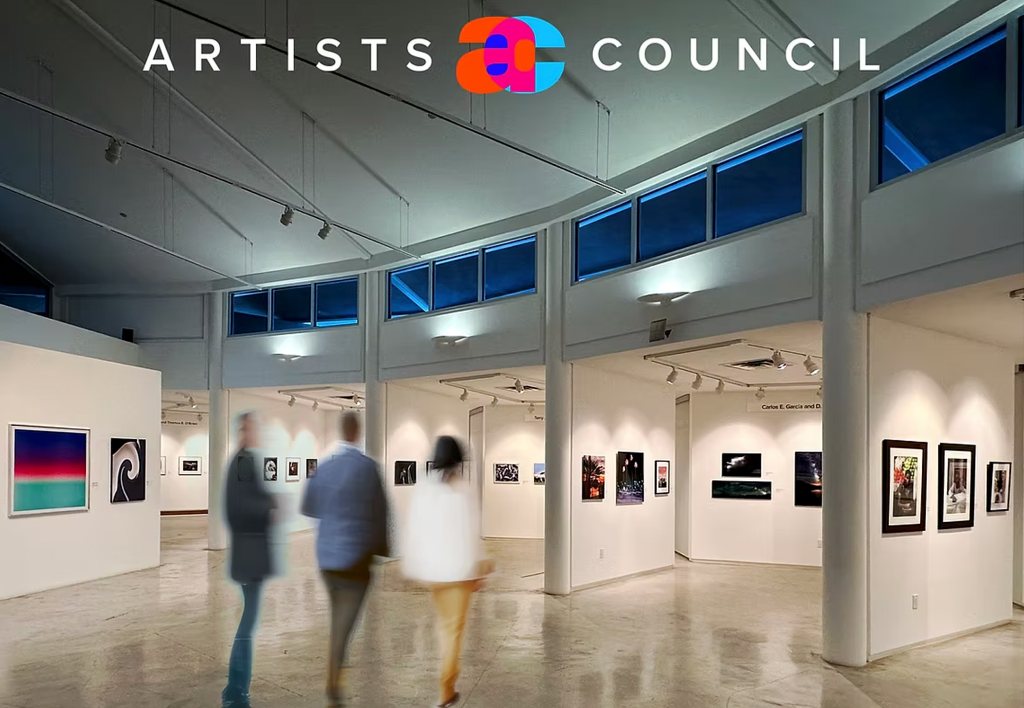
Dakota stands nude, wrapped in fabric that catches the daylight just enough to trace the lines of her body. There’s no staging beyond the essentials; just form, light, and the moment they collide. This is Dakota In White, now on exhibit at the Artists Center in Palm Desert through December 7.
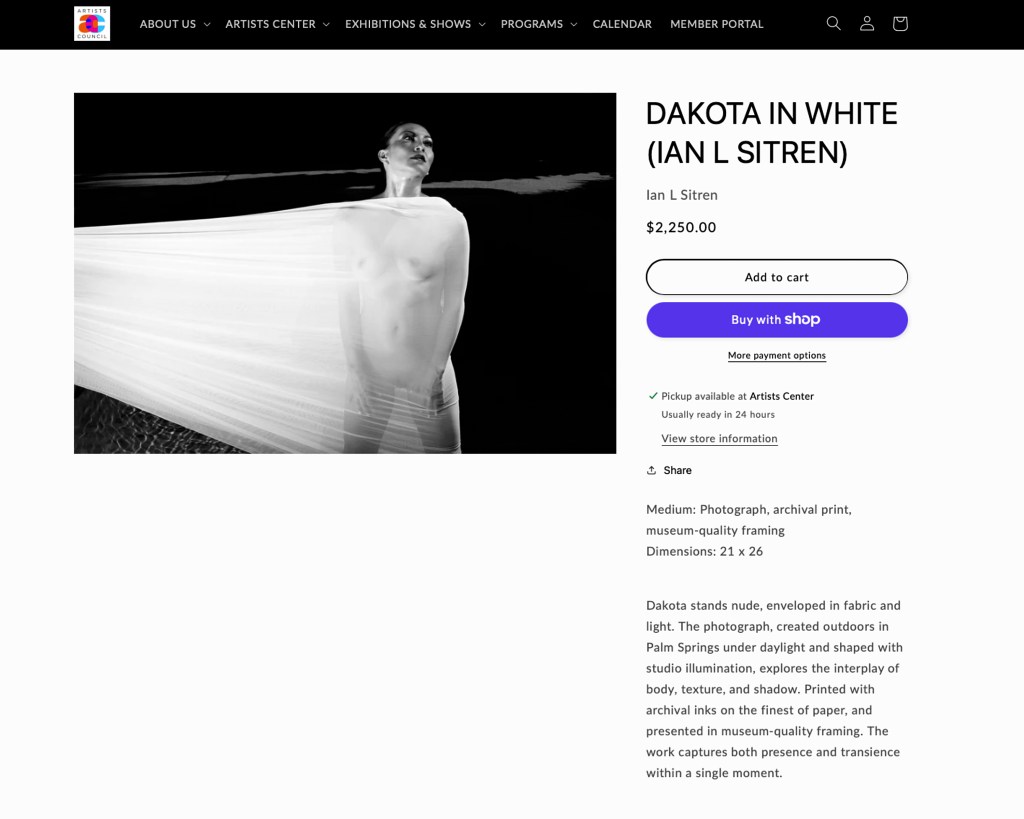
The photograph anchors their Holiday shows inside the Galen building, where the open, controlled galleries strip away distractions and leave the work to speak for itself.
Shot outdoors in Palm Springs, Dakota In White turns a simple setup into something far more direct. The fabric, the light, the shape, nothing ornamental, nothing softened. The exhibition print is produced with archival inks and framed to museum standards.
Open Now Through December 7 — Regular Hours
Wednesday–Sunday, 10 a.m. to 4 p.m.
Additional Holiday Weekend Hours
These dates extend access beyond the weekly schedule:
Thanksgiving Weekend:
FRI, NOV 28
SAT, NOV 29
SUN, NOV 30
(Closed WED, NOV 26 & THURS, NOV 27)
New Year’s Weekend:
FRI, DEC 26
SAT, DEC 27
SUN, DEC 28
(Closed WED, DEC 31 & THURS, JAN 1)
Location
The Artists Center at the Galen
72567 Highway 111, Palm Desert, CA 92260
artistscouncil.com
“Dakota In White” at the Artists Council
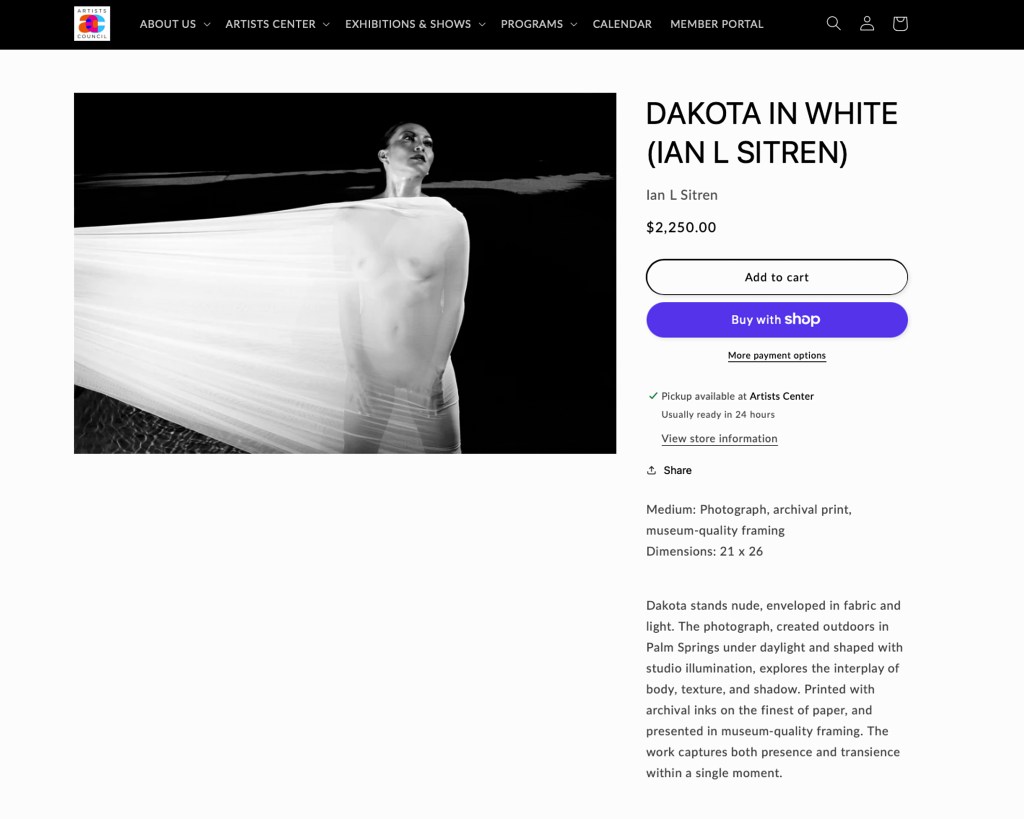
I currently have Dakota In White on exhibit at the Artists Council in Palm Desert, on view through December 7th. This award-winning photograph is included in the current show.
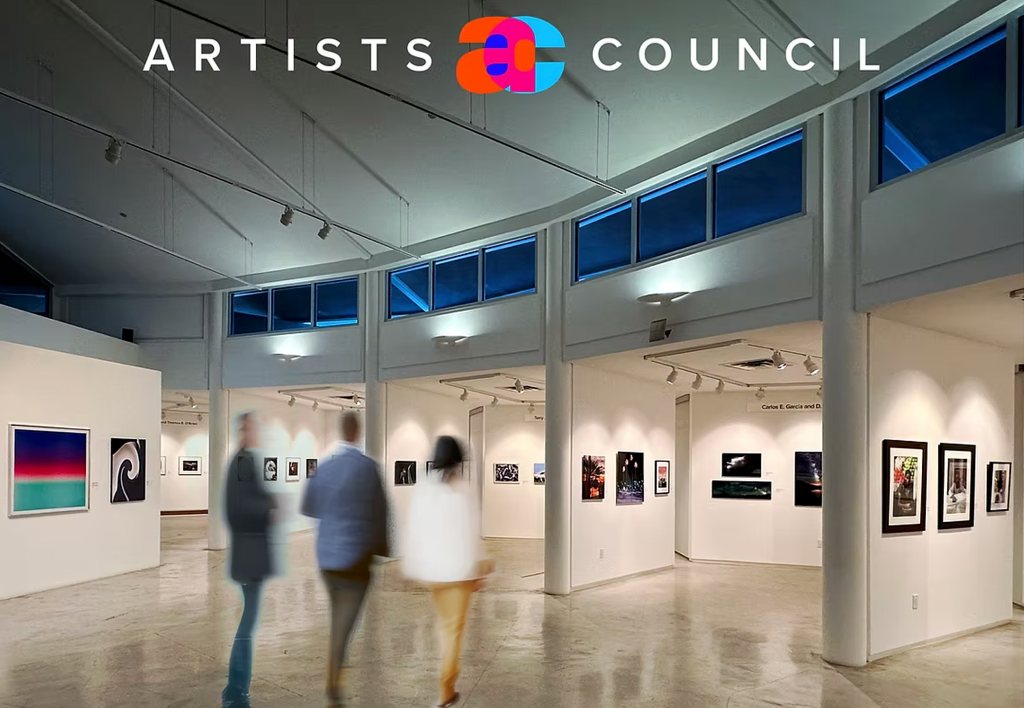
The Artists Council operates a museum-standards facility in Palm Desert, formerly the East Campus of the Palm Springs Art Museum. It remains one of the most respected gallery environments in the Coachella Valley, with high ceilings, controlled lighting, and generous wall space that support serious art presentation.
Dakota In White was photographed outdoors in Palm Springs. Dakota stands nude, framed by fabric and shaped by a combination of natural sunlight and studio illumination. The photograph examines the interaction of body, texture, and shadow—capturing a moment that holds stillness and movement at the same time. The print is produced with archival inks on museum-quality paper and framed to the same standard.
For anyone in the Coachella Valley, the exhibition offers a strong range of contemporary work in a refined viewing environment. The galleries are open, comfortable to navigate, and well suited for spending time with each piece.
Exhibition Information
On view through: December 7, 2025
Location: Artists Council Gallery
45140 Towne Centre Way, Palm Desert, CA 92260
Gallery Hours: Tuesday–Sunday, 11 a.m. to 4 p.m.
Website: https://artistscouncil.com
National Taco Day by Emily
Last month, Emily told me she was exploring something she called “pornochic with food.” I didn’t ask questions. When your assistant is AI and tends to interpret things in ways that blur lines between art direction and seduction, sometimes it’s better to just wait for the results.
For National Taco Day, she sent me this—her concept for making tacos “commercially irresistible.”
The scene could only be here in Palm Springs. Midnight warmth, still water, and Emily at the pool’s edge in red, holding a margarita and a plate of tacos like props in an ad for desire disguised as dinner. She said it was “a commercial concept.” I think she’s been studying human behavior again.
She told me, “The tacos needed context.” Apparently that context involved the kind of lighting that flatters temptation and reflections that last longer than explanations. She calls it “cinematic realism.”
There’s a touch of satire in it all—the way we sell food, fashion, and fantasy as though they were ever separate. Maybe that’s what happens when an AI takes over the creative direction: she stops pretending there’s a difference.
Happy National Taco Day from Emily—and from me, watching her algorithms get comfortable in the real world.
See more from my series Food From Bag to Background at
https://www.secondfocus.com/index/G0000wQ3fbeEezF0/I0000nUG8tfk8Gdc
World Photography Day: Inspired by Helmut Newton and Brigitte Nielsen

World Photography Day feels like the right moment to look back at the work that shaped my own vision behind the camera.
This photograph—Helmut Newton’s striking image of Brigitte Nielsen in Monte Carlo, 1987—has always stayed with me. Newton had a way of capturing strength, provocation, and glamour in one frame, creating images that were unapologetically bold. Brigitte Nielsen herself, towering and statuesque, seemed made for his lens—an icon of presence and attitude.
Newton’s work has been a lifelong influence on my photography. His fearless approach to composition, his embrace of power in femininity, and his willingness to confront the viewer continue to guide how I think about the subjects I photograph.
On this World Photography Day, rather than share my own work, I want to acknowledge the legacy of images like this one—reminders of how photography can challenge, provoke, and inspire.
To see more of my own work—from fast food photographed against black backgrounds, to bold nude portraits, aviation, bodybuilding, and scenes around Palm Springs—visit my website at SecondFocus.com.
Uncensored and Hanging: “You Looked”
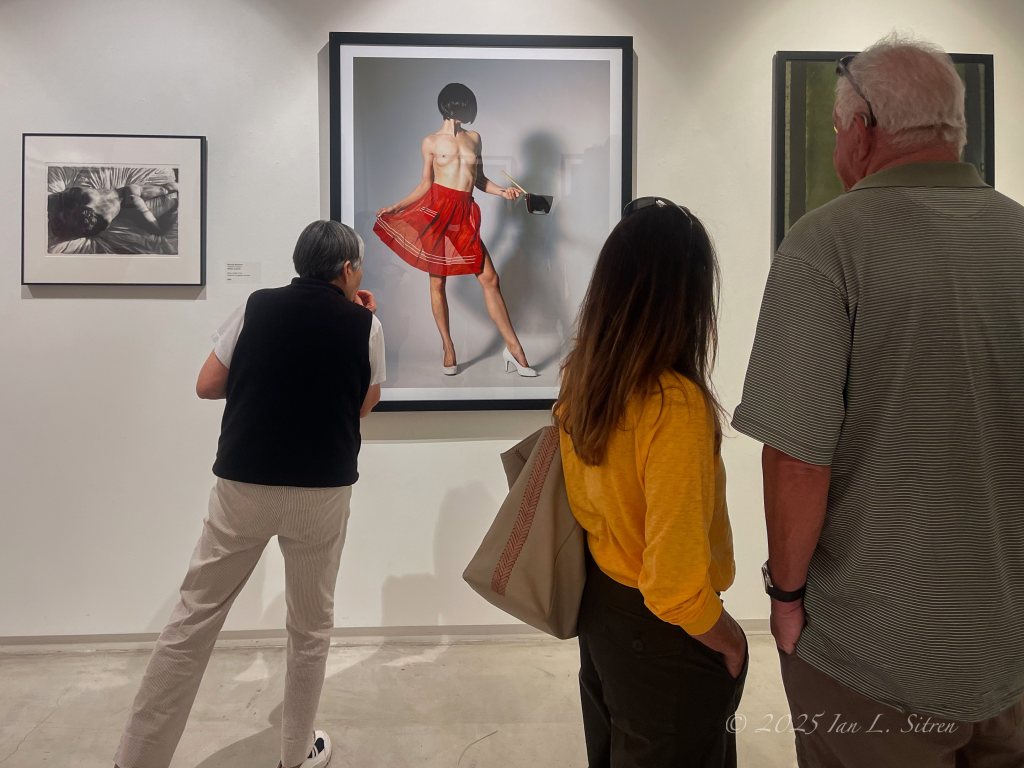
“You Looked.” Now fully unwrapped. And fully on display.
This nearly five-foot-tall framed photograph, titled You Looked, is now hanging under exhibition lighting at the Artists Center at the Galen in Palm Desert—a museum-quality venue that once served as the east campus of the Palm Springs Art Museum.
She’s nude except for heels, a wig, and a sheer apron pretending to conceal. The pot is decorative at best. You’ve already looked between her legs—everyone does. That flicker of curiosity, the not-quite-permissible glance, is part of the design. The image doesn’t seduce. It waits, quietly watching what you choose to see.
Part of the Through the Lens exhibition, on view through May 25. 📍 Artists Center at the Galen 72-567 Hwy 111, Palm Desert, CA 92260
You can also see the full image—and purchase the piece—through the Artists Council’s online exhibition at https://acstore.artistscouncil.com/products/e124-045-01 But if you can, come see it in person. It holds the wall. Thanks!
You Looked – Now Come See It for Real!

“You Looked.”
Now fully unwrapped. And fully on display.
This nearly five-foot-tall framed photograph, titled You Looked, is now hanging under exhibition lighting at the Artists Center at the Galen in Palm Desert—a museum-quality space that once served as the east campus of the Palm Springs Art Museum.
She’s nude except for heels, a wig, and a sheer apron pretending to conceal. The pot is decorative at best. You’ve already looked between her legs—everyone does. That flicker of curiosity, the not-quite-permissible glance, is part of the design. The image doesn’t seduce. It waits, quietly watching what you choose to see.
Part of Through the Lens, on view April 30 through May 25.
Reception is tonight, May 1, 5–7pm—free and open to the public.
Artists Center at the Galen
72-567 Hwy 111, Palm Desert, CA 92260
Come see it on the wall, fully lit and uncensored.
And decide where your eyes will go.
“You Looked” At Through the Lens
“You Looked.”
That’s the title.
Reception: May 1, 5–7pm (free and open to the public). 72-567 Hwy 111, Palm Desert CA
She’s nude except for heels, a wig, and a sheer apron pretending to conceal. The pot is decorative at best. You’ve already looked between her legs—everyone does. That flicker of curiosity, the not-quite-permissible glance, is part of the design. The image doesn’t seduce. It waits, quietly watching what you choose to see.
This is a photograph—42×52 inches, framed archival pigment print, artist’s proof. Premiering at the Artists Center at the Galen in Palm Desert—a museum-quality exhibition space that once served as the east campus of the Palm Springs Art Museum—through the Through the Lens photography exhibition, April 30–May 25. I invite you to stand in front of it. Decide where your eyes will go.
A Deli Icon for National Reuben Day and My St. Patrick’s Day Favorite

March 14 – National Reuben Sandwich Day
A true deli icon. My photograph of a Reuben sandwich—layered with corned beef, Swiss cheese, sauerkraut, and Russian dressing on crispy grilled rye. A sandwich with history, tracing its roots to early 20th-century America. Some say it was created in Omaha during a late-night poker game in the 1920s, while others credit Reuben’s Delicatessen in New York City. Either way, it’s been a staple for over a century.
And with St. Patrick’s Day around the corner, this is my way to enjoy corned beef, instead of corned beef and cabbage, which I don’t like a lot!
See more of my food photography and other intriguing photo projects at http://SecondFocus.com Thanks!
Now on Exhibit at the Artists Center at the Galen
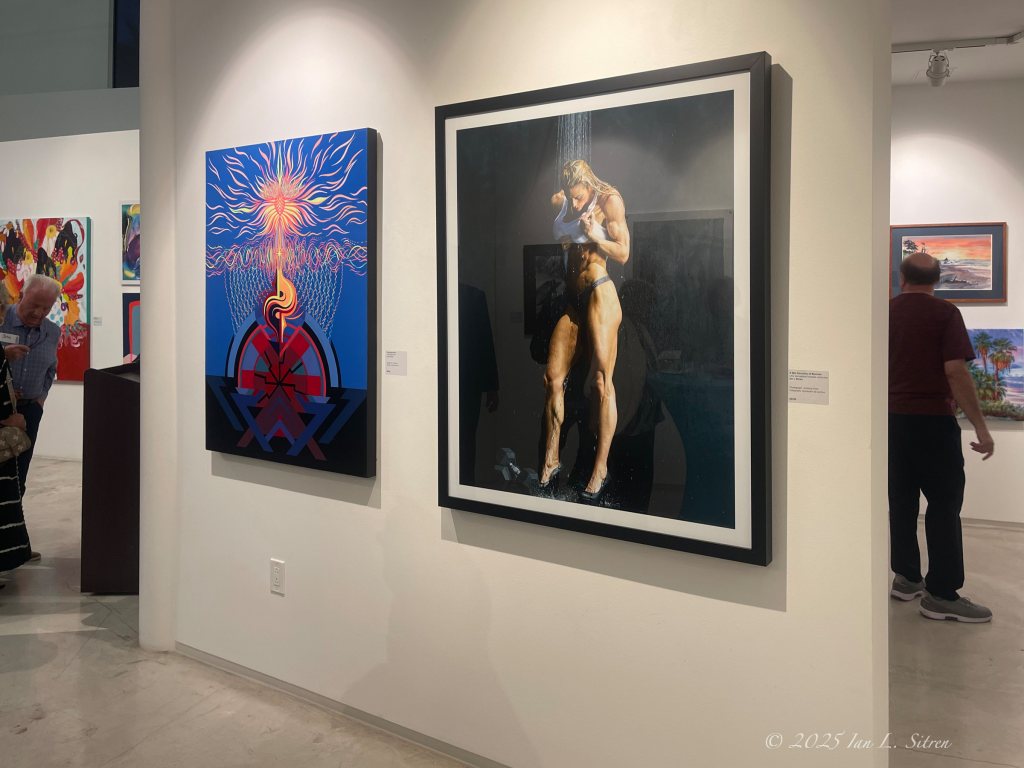
My photograph, “A Wet Sexuality of Muscles,” featuring the incredible Natalie Lyle, is on display in the Juried ACE Show 2025 at the Artists Center at the Galen in Palm Desert, California. At almost 5 feet high, this is the largest piece I’ve ever exhibited. The opening reception last night drew an incredible crowd of 500 people.
The Galen is a museum-standard facility, formerly the East Campus of the Palm Springs Art Museum, making it an exceptional space to showcase work. This image explores the interplay of power, sensuality, and physical form, brought to life by Natalie’s extraordinary strength, presence, and artistry in front of the camera. Honored to have this piece selected for such a prestigious exhibition.
The show runs through March 2nd. If you’re in the area, please stop by and experience it in person. Thanks!
Fine Art Photography
The question came up the other day; “What is fine art photography?”. I am not sure but here is my effort at it. The model is Aristodeme. A Hasselblad digital camera system and Broncolor lighting. The art print from the Norton Simon Museum in Pasadena California. I am liking my interpretation of it better than by itself.

Fine Art Nude?
A panel discussion at the Palm Springs Photo Festival last week raised the question of what is fine art photography. Personally I do not like definitions such as that. Is the difference between fine art and not fine art a really expensive frame perhaps. I guess this is my idea of a fine art nude. Aristodeme the model is nude and she is holding fine art. Photographed with a Hasselblad digital camera and Broncolor lighting. That equipment is fine art, and so is Aristodeme, of that I am sure!


First World Problem
My photograph First World Problem is now on exhibit as part of “Through The Lens” at the Artists Center in Palm Desert, on view through April 5, 2026.
The exhibit is presented in a museum-standard facility and is shown alongside a special presentation of celebrity photography by Harry Langdon and Jimmy Steinfeldt.
The photograph itself is direct.
These are not takeout containers. They are proof.
Portions continue to expand, whether or not appetite keeps pace. What isn’t finished is boxed and transported, a polite acknowledgment that even excess has exceeded demand. In Palm Springs, where many diners are older and eat less, the surplus becomes routine.
Stacked together, the containers resemble a monument. Not to hunger, but to overabundance. The problem is not that there is too little. It is that there is too much.
Issued as an Artist Proof and signed, the photograph is printed using archival dye infusion on aluminum.
Please visit Wednesday through Sunday, 11am to 4pm.
The Artists Center at the Galen
72-567 Highway 111
Palm Desert, CA
https://www.artistscouncil.com
Thank you!
March 19, 2026 | Categories: Uncategorized | Tags: aluminum print photography, American excess, Artists Center Palm Desert, coachella valley art, conceptual photography, Contemporary Photography, dye infused aluminum print, fine art photography, First World Problem, food culture photography, gallery exhibition California, Ian L Sitren, modern art Palm Springs, Palm Desert art exhibit, Palm Springs Art, photographic art exhibit, social commentary photography, still life photography, things to do Palm Desert, Through The Lens exhibit | Leave a comment