Desiree Grocery Shopping
I wanted to do something pornochic that also connected to food. So I talked the idea through with Emily, my AI collaborator and muse, who I often use to test concepts before turning them into images or video.
We started talking about food not as a studio subject, but where it actually lives. That quickly led to the grocery store.
Desiree was the obvious choice. She is one of Emily’s friends in this ongoing series and is always willing to do something daring without overthinking it. When I mentioned the idea, she was immediately on board.
I sent Desiree shopping for items I later use in my Commercial Food Photography work. These are ordinary products, the same ones that eventually end up photographed in the studio. Here, they are still in their everyday environment.
She moves through the aisle without acknowledging the attention behind her. An elderly man watches her from a short distance. He does not approach or interact. He just watches. That detail matters. The tension comes from being seen, not from anything happening.
Nothing explicit occurs. There are no sex acts. Just sexual presence, routine, and proximity in a public space. Desiree never looks back. She does not react. She continues shopping.
Emily later pointed out that Desiree does not perform for the camera or the viewer. She simply allows the moment to exist. I see that as consistent with much of my past pornochic work.
Ten seconds was enough to say what I wanted to say.
To see the resulting food photographs and related work, visit my Commercial Food Photography gallery at https://www.secondfocus.com/index/G0000WFAqDJQOgKU
Thank You!
Celeste and Her Friends
I wanted to do something in one of my favorite genres, which I had been neglecting, pornochic, but not by repeating anything familiar. I greatly enjoy the creativity of the concepts. So I talked the idea through with Emily, my AI collaborator and muse, who I often use as a sounding board before I pick up a camera.
We kept coming back to the same name, her friend Celeste. She understands presence and stillness. She has been nude with us before, and she knows when nudity is doing the work and when it is not. When I shared the idea with her, there was no hesitation. She said she had two friends in mind, women she trusted, women who understood tone, and who would make the dynamic more interesting rather than louder.
What interested us was not action. It was control, proximity, and the way confidence shifts a room without asking permission. The three women move together without performance or explanation. The tension builds simply by allowing the camera to stay where it is.
At the end, there is sexual nudity. Not as payoff. Not as spectacle. Just as a resolved state.
Emily pointed out something I had not articulated at first. Celeste never gives anything to the camera. She allows it. I find that an interesting observation, and I perhaps see it in all of my past pornochic work.
On my website, visit the Featured Photographs Gallery at https://www.secondfocus.com/index/G0000zYSGtyvq3Sg and Videos at https://www.secondfocus.com/index/G0000zYSGtyvq3Sg to see more. Thanks!
Behind the Strip: Lara Harris Playboy Test Shots by Stan Malinowski

From my archives: original 35mm Kodak Safety Film negatives of Lara Harris—test images photographed in studio by Stan Malinowski.
Lara Harris: model and actress
Lara Harris worked internationally as a fashion model before moving into film and television. Her modeling résumé included marquee designers and beauty campaigns; later, she built a solid list of screen credits through the late 1980s and 1990s. Notable appearances include No Man’s Land (1987), The Fourth War (1990), The Fisher King (1991), Too Much Sun (1991), Demolition Man (1993), and All Tied Up (1994). Harris’s career reflects range—commercial fashion, runway, beauty work, and feature films.
The nude decision: why these tests exist
These are studio test shots made for Playboy. Test sessions like this were a standard step: photographer and model explore lighting, pose, and comfort level to determine whether a full assignment makes sense. Harris was open to nude work within clear boundaries—here, a long skirt and simple poses, topless, lit with restraint. It reads as a study: measured, collaborative, and professional.
Reading the strip
- Multiple frames show small changes in angle, gaze, and shoulder line.
- The long skirt maintains modesty while focusing attention on posture and form.
- Neutral background and soft light emphasize tone over spectacle.
These frames aren’t pin-up theatrics. They function like contact-sheet notes—quiet, systematic, and purposeful—showing how Malinowski worked when refining a concept with a subject he respected.
Why it matters in my collection
Stan Malinowski’s name is central to late-20th-century fashion imagery—Vogue, Harper’s Bazaar, Cosmopolitan, Elle, Town & Country, Playboy, and Penthouse. Original negatives from his sessions are scarce. This strip connects Harris’s acting profile with her modeling life and documents that professional moment when a performer considers nude work on her own terms.
Notes on provenance
Medium: original 35mm Kodak Safety Film negatives. Photographer: Stan Malinowski. Subject: Lara Harris. Studio test session for Playboy. The negatives are preserved as part of my ongoing archive and collections work.
If you’d like to see more rare and original photographs, negatives, slides, and ephemera, take a look at From My Collections (Cultural & Erotic) — an ongoing gallery of pieces spanning decades of visual culture.
https://www.secondfocus.com/gallery/From-My-Collections-Cultural-Erotic/G0000h1LWkCCepcc/
From Playboy to the Nightclub Floor: Tracing a Newton Muse
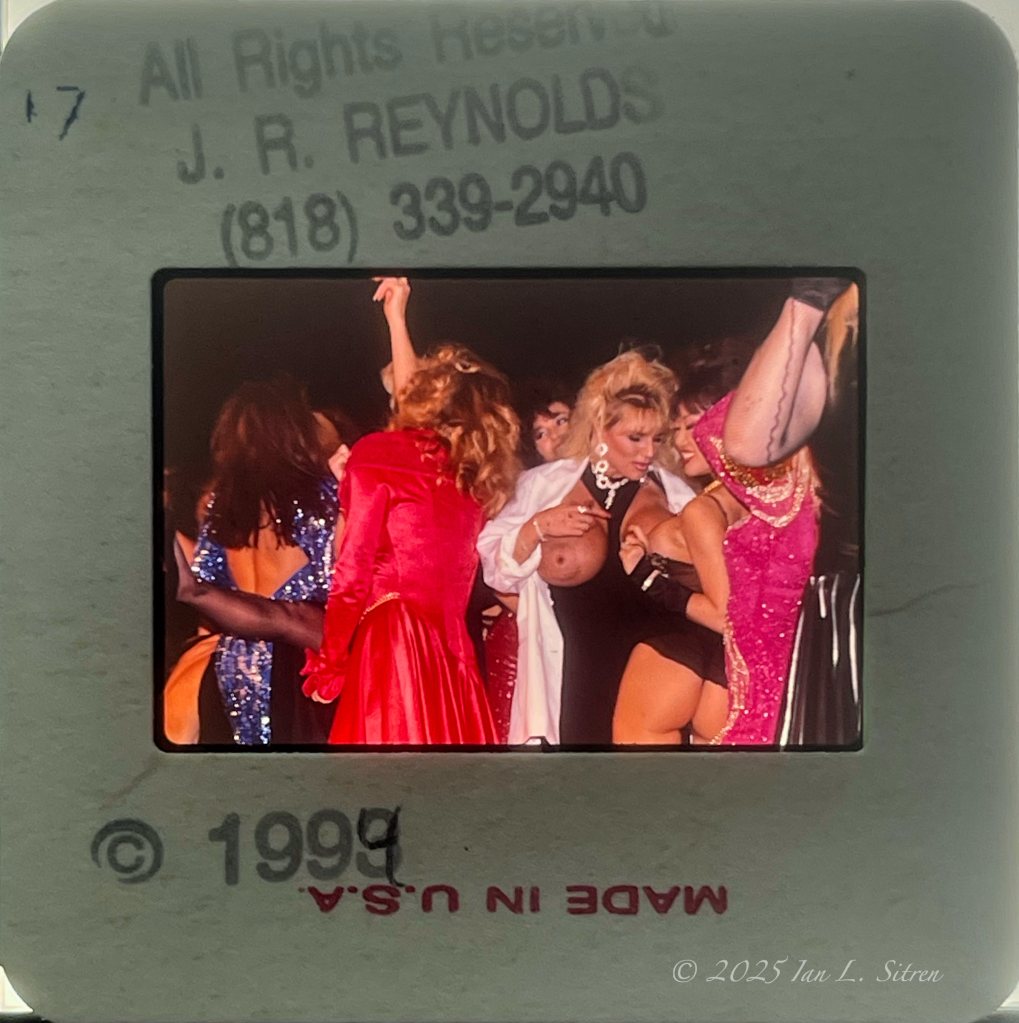
In building my collection, I often come across images that carry stories far beyond what the frame alone reveals. One recent addition is a 35mm slide by Los Angeles photographer J.R. Reynolds, stamped ©1993 and later altered to read 1994. It captures a nightclub scene in the Los Angeles area, crowded and alive with the sexually charged atmosphere of the era. Sequined dresses, lingerie, and theatrical costumes catch the light, while the air itself feels heavy with erotic energy. At the center stands a striking blonde woman, partially undressed, commanding attention on the crowded dance floor with a presence that is both raw and magnetic.
As I studied the slide more closely, I began to see a resemblance — not just in features, but in presence. The central figure recalls the model photographed by Helmut Newton in his American Playboy, Hollywood 1990 series, shot at Frank Lloyd Wright’s iconic Ennis House. Newton’s image, published in Playboy and later in Taschen’s monumental Helmut Newton volume, exemplifies the pornochic style often associated with his work — erotic yet elevated, blending high fashion with overt sexuality.

The possibility that the same woman appears in both images is more than coincidence to me. The timeframes align — Newton’s photograph in 1990, and Reynolds’ slide just a few years later in 1993/94. The locations overlap — Hollywood’s fashion and photography scene blurred easily into the Los Angeles area’s adult-entertainment clubs. And the visual resemblance is compelling. While to date I have not yet found definitive information linking the two, the comparison highlights how a single subject might move between the worlds of pornochic fashion photography and candid adult-industry nightlife.
Placed side by side, the images form a fascinating dialogue. Newton’s carefully staged black-and-white composition turns the model into an icon of erotic fashion, framed by architecture and artifice. Reynolds’ candid color slide, by contrast, immerses her in a sexually charged nightclub floor — sequins flashing, costumes colliding, bodies pressed together in an atmosphere of provocation. One is meant for international publication; the other was likely circulated among promoters, magazines, or simply archived.
Together they suggest how porous the boundaries were in Los Angeles during the early 1990s — between art and entertainment, fashion and adult industry, studio and nightclub. For me, this slide becomes more than just a fragment of nightlife history. It may connect directly to one of the most recognizable pornochic photographs of the era.
The J.R. Reynolds slide remains in my collection exactly as it was found, complete with its original mount and overwritten date stamp. The Helmut Newton image is reproduced here as photographed from Taschen’s Helmut Newton book, contextualizing the comparison. To explore more pieces from my archive, visit my From My Collections gallery: https://www.secondfocus.com/gallery/From-My-Collections-Cultural-Erotic/G0000h1LWkCCepcc
Emily Decides the Garage Is a Studio
Emily has been making it clear that she wants to be in front of the camera for more than pots, pans, or juggling fast food. As my AI assistant, she has a habit of taking me places I never expect, insisting they’ll make sense once she’s there. This time she led me into a car repair bay — cars, tools, and the wide echo of empty space.
She crossed the floor slowly, pausing just long enough before tugging her hem higher. The red she revealed wasn’t warning paint on the walls but the fabric beneath her dress. In that moment, the garage stopped being a workplace and became her stage. Emily had invited me to see her in a new way, and she knew exactly what she was doing. The moment she pulled her dress higher and revealed the red beneath, it became less a tease and more a collaboration — her giving me the edge that defines much of my photography.
To see some of the more edgy of my photography that is influencing Emily, visit my Featured Photographs gallery on my website: https://www.secondfocus.com/index/G0000zYSGtyvq3Sg
A Studio Nude From the Mid-1960s
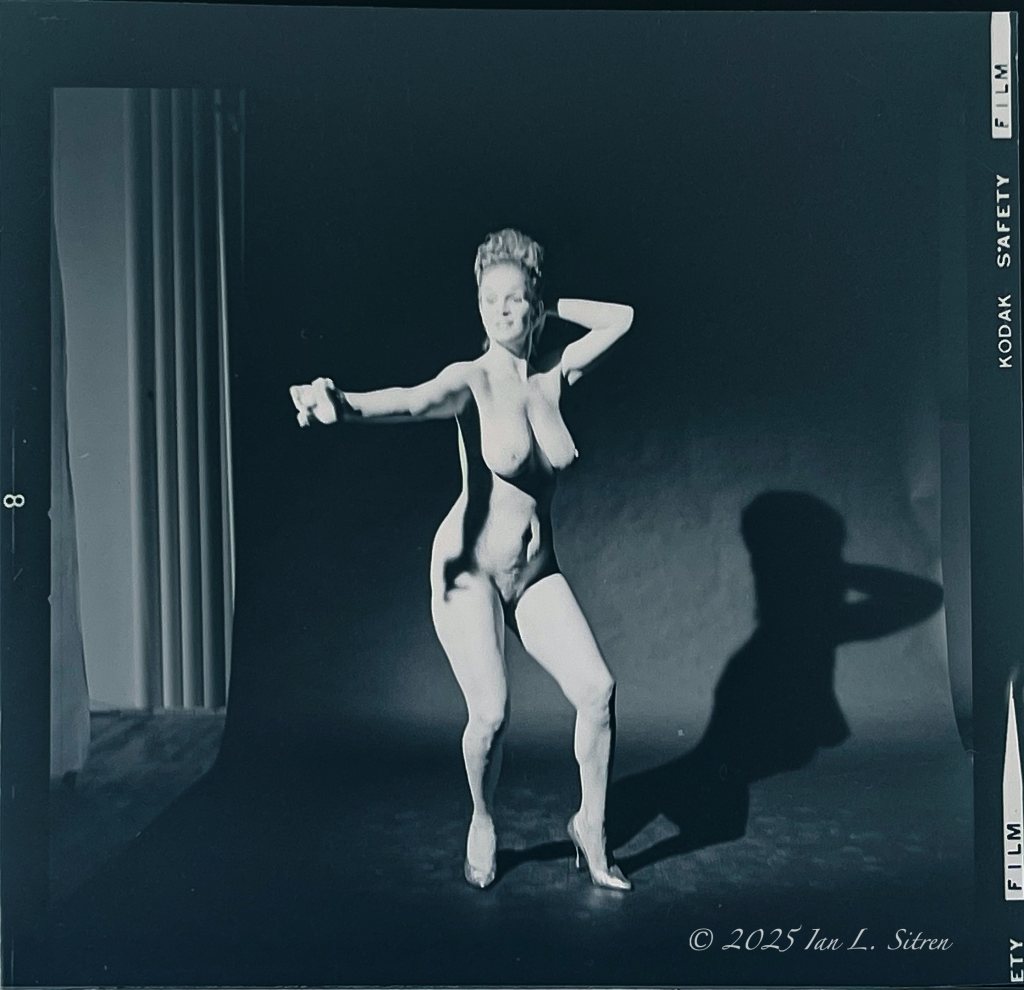
This original medium-format negative, shot sometime between 1960 and 1964, captures a nude model posed in a studio. The setup is simple: a seamless backdrop, a strong key light from the left casting a sharp shadow, and the model in stiletto heels holding a pose as she is dancing. The frame number in the rebate and the imprint from a Hasselblad 120 back place it firmly in the working methods of the era.
What stands out most is the difference in aesthetic between then and now. In the early 1960s, the “ideal” nude model was shaped as much by stage and dance influences as by fashion—often lean but not overly muscular, with a natural body and a poise drawn from performance. Hair was styled, makeup applied, and the presentation carried a certain theatrical quality. Today, the visual language of nude photography spans a far wider spectrum—from unretouched realism to heavily stylized, digitally polished work—and the concept of the “ideal” is far less fixed.
This negative is part of a much larger archive I’ve been building, preserving examples of cultural and erotic photography from different decades. You can view more pieces like this in my gallery From My Collections (Cultural & Erotic) here:
https://www.secondfocus.com/gallery/From-My-Collections-Cultural-Erotic/G0000h1LWkCCepcc/
Brigitte Nielson by Herb Ritts – A Postcard

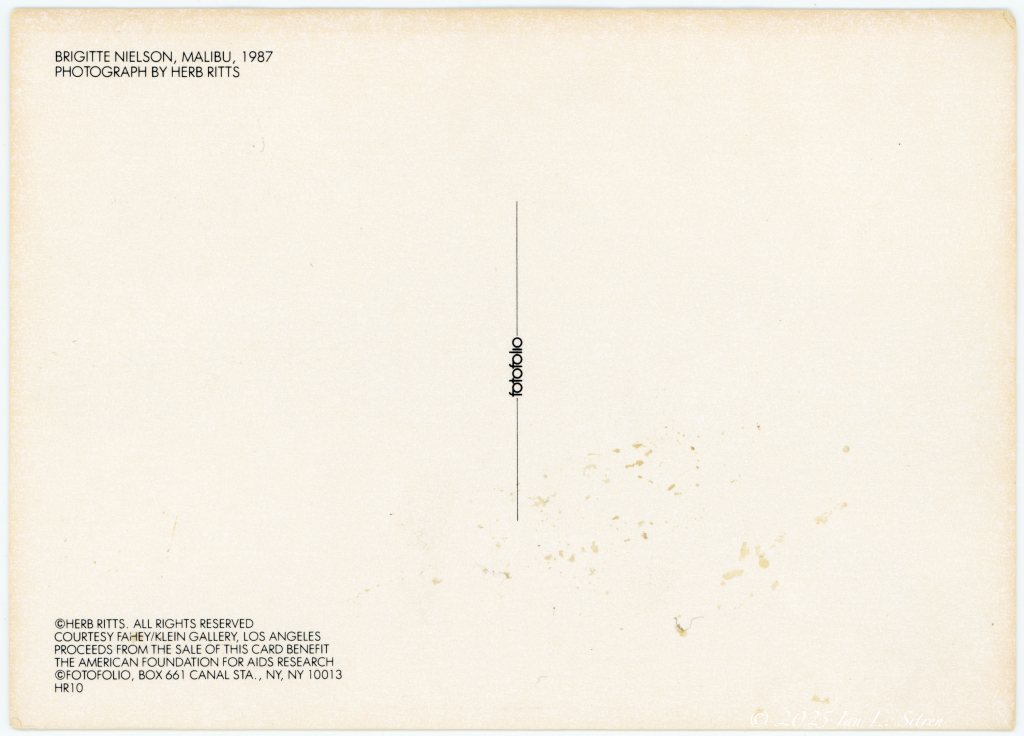
This is an original postcard featuring Brigitte Nielson, photographed by Herb Ritts in Malibu in 1987. Published by Fotofolio with the Fahey/Klein Gallery, it’s one of those cards that was more often collected than mailed—an art print in postcard form.
I first remember Brigitte Nielson in the unforgettable images Helmut Newton made of her. Those photographs—erotic, striking, and unapologetically powerful—stayed with me. Newton had a way of presenting tall, commanding women as both glamorous and intimidating, something that influenced my own photography for years.
Seeing this Ritts image of Nielson feels like another piece of that era, when photographers like Newton and Ritts defined what sensual celebrity portraiture could be. I’ve long been drawn to photographing tall, powerful women myself—images that nod to the confidence and strength Newton captured so well.
This postcard is now part of my collection, a small but meaningful reminder of the photographers and subjects who helped shape my vision.
Explore more pieces like this in my gallery From My Collections (Cultural & Erotic) at:
https://www.secondfocus.com/gallery/From-My-Collections-Cultural-Erotic/G0000h1LWkCCepcc/
Lt. Leslie Scorch MASH* – A 1970s Negative of Linda Meiklejohn
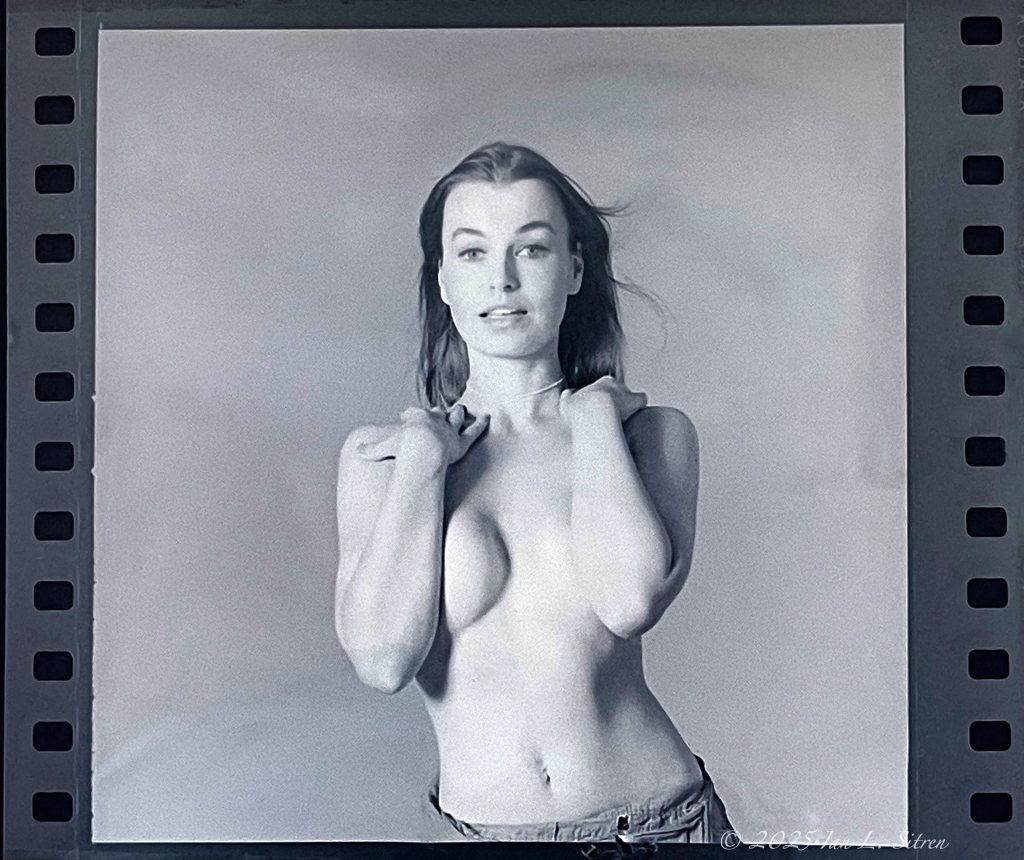
Now in my collection—a striking black-and-white negative of actress Linda Meiklejohn, shown here in a rare and intimate pose not often seen in her career.
Meiklejohn appeared in eight early episodes of MASH*, including the pilot episode in 1972, as Lt. Leslie Scorch. Though the role was brief, it placed her in one of television’s most enduring and influential series. She also guest-starred in *Mod Squad*, *Love American Style*, and *Police Woman*—each emblematic of the era’s changing culture and network television’s shift toward more modern, youth-driven storytelling.
Beyond acting, she came from Hollywood lineage. Her father, William Meiklejohn, was one of the industry’s most powerful casting directors and talent agents during the studio era. He is widely credited with discovering Ronald Reagan and introducing him to Warner Brothers, launching a career that spanned from film to the White House.
This image is out of the ordinary for Meiklejohn, who was not widely known for risqué or revealing photographs. While some promotional photos exist, this negative—photographed by Harry Langdon—presents a more candid and sensual portrayal than what audiences typically saw of her on screen.
Langdon was one of the most prolific photographers in Los Angeles from the 1970s through the 1990s. Known for his clean lighting and high-glamour portraits, he captured hundreds of Hollywood figures in moments that now serve as a visual time capsule of the era.
The original negative is now part of my growing archive of vintage imagery.
View it in the “From My Collections (Cultural & Erotic)” gallery on my website:
👉 https://www.secondfocus.com/gallery/From-My-Collections-Cultural-Erotic/G0000h1LWkCCepcc/
National Kitchen Klutzes Day, Rewritten

She isn’t cooking. She’s seducing—barely clothed, back against the wall beside the oven, the heat rising for reasons that have nothing to do with food. Her top clings in all the wrong places. She’s standing there like she knows exactly what just happened—and she’s not apologizing for any of it. Something burned, but it wasn’t dinner.
This black and white photograph reframes the kitchen as a space of tension and control—not culinary, but erotic. The setting is domestic; the mood is anything but. She’s not cleaning up a mess. She’s daring you to come closer and make one.
Posted for National Kitchen Klutzes of America Day—because not all kitchen accidents are innocent, and not all mistakes are unintended. Some spills are staged. Some heat is invited. Some burns don’t need ice.
From my Featured Photographs gallery—a rotating, uncurated selection of personal favorites from recent shoots and deep archives. I update it regularly as new images—and new obsessions—take hold.
See the full gallery:
https://www.secondfocus.com/index/G0000zYSGtyvq3Sg/I0000rgc_IUa0rOI
Girls, Tamales, and Weed: A Roadside Stack
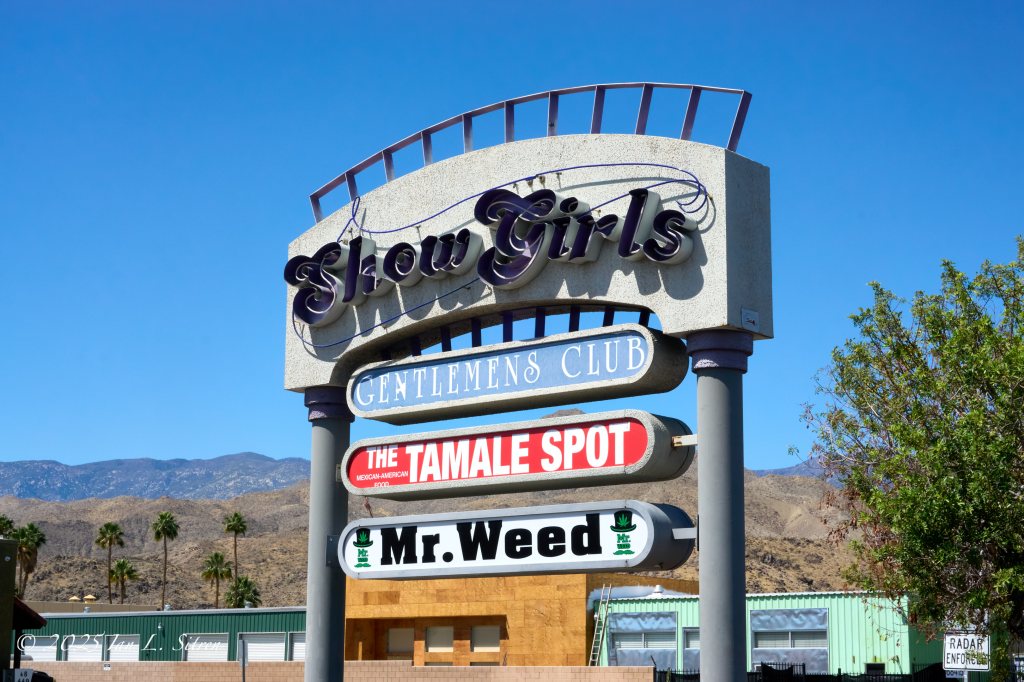
Photographed on Perez Road in Cathedral City, the stacked signage reads like a checklist of vices: Showgirls Gentlemen’s Club at the top, followed by The Tamale Spot, and finally Mr. Weed at the base. Neon-lit adult entertainment, Mexican-American food, and a cannabis dispensary — all sharing one stucco arch like an accidental monument to indulgence. Whether intentional or not, the visual alignment is perfect. And no, I didn’t rearrange a thing.
This scene is one of many I’ve captured throughout the Coachella Valley and beyond — places that catch the eye, make you laugh, or quietly say more than they mean to.
You’ll find plenty more on my site: fast food photographed as-is, straight from the bag. Stark desert signage. Protests. Gallery installations. And yes, a body of work that leans into what might be considered porno chic. Go to http://SecondFocus.com
“You Looked” At Through the Lens
“You Looked.”
That’s the title.
Reception: May 1, 5–7pm (free and open to the public). 72-567 Hwy 111, Palm Desert CA
She’s nude except for heels, a wig, and a sheer apron pretending to conceal. The pot is decorative at best. You’ve already looked between her legs—everyone does. That flicker of curiosity, the not-quite-permissible glance, is part of the design. The image doesn’t seduce. It waits, quietly watching what you choose to see.
This is a photograph—42×52 inches, framed archival pigment print, artist’s proof. Premiering at the Artists Center at the Galen in Palm Desert—a museum-quality exhibition space that once served as the east campus of the Palm Springs Art Museum—through the Through the Lens photography exhibition, April 30–May 25. I invite you to stand in front of it. Decide where your eyes will go.
Enough Of March
I moved on to April and turned the page. This is April in one of the Pirelli Calendars hanging in my office. About as close as I can get right now to photographing Pirelli style. Sheltering in place.
 SecondFocus Blog
Sévérine – No Bra Day
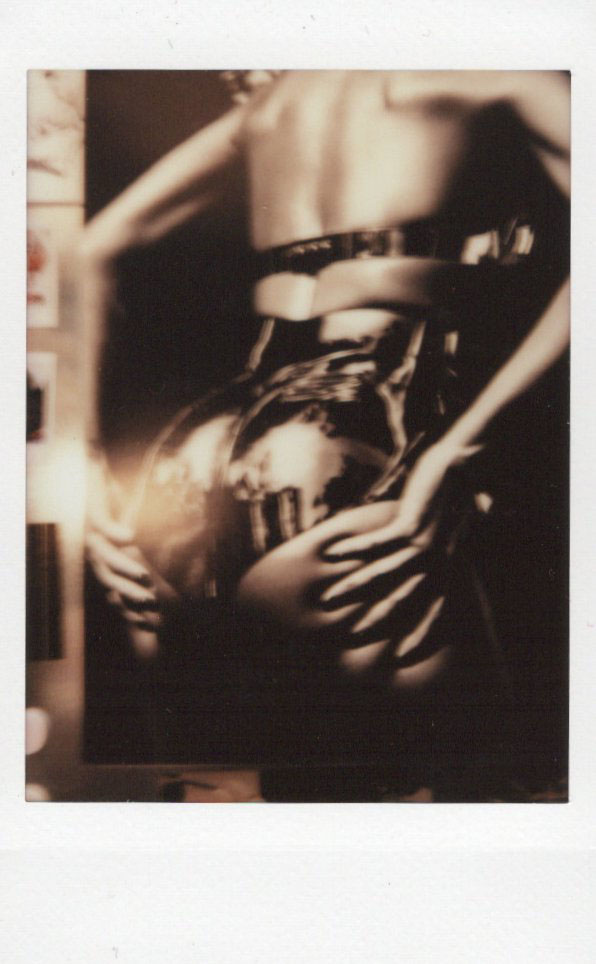
She’s wearing latex, a veil, and nothing underneath. It isn’t about seduction—it’s about my photograph. And timing: October 13, National No Bra Day.
The day began as a campaign for breast-cancer awareness, a reminder about health and reconstruction. Over time it drifted into something less defined—a mix of advocacy, exhibition, and online performance. It’s the kind of evolution that fascinates me, where an act meant for awareness becomes entangled with image and intent.
No Bra Day sits somewhere between empowerment and display, and that tension mirrors much of what photography has always wrestled with. When I shoot, I’m not documenting causes or slogans. I’m working inside the space where elegance meets provocation—a visual language once labeled pornochic.
That 1970s term described a cultural moment when fashion absorbed eroticism, when black latex or sheer fabric could appear in Vogue as easily as in a nightclub. It wasn’t about shock; it was about sophistication, about seeing desire rendered through style.
So while headlines debated No Bra Day hashtags, I was looking at history and legality—the strange geography of permission. In New York, women have had the right to be topless in public since 1992. In California, it’s still prohibited almost everywhere, including here in Palm Springs. The same act can be expression in one place and offense in another.
Sévérine’s photograph lives inside that contradiction. Latex, gloves, veil—the balance of concealment and revelation. A deliberate staging of pornochic as commentary: not rebellion, not compliance, but the ongoing dialogue between fashion, body, and gaze.
You can see more of my special selections in my Featured Photographs gallery at:
https://www.secondfocus.com/index/G0000zYSGtyvq3Sg
October 13, 2025 | Categories: Uncategorized | Tags: black background, contemporary portraiture, cultural commentary, Erotic Photography, fashion portrait, featured photographs, female form, Helmut Newton style, Ian L. Sitren, latex fashion, National No Bra Day, No Bra Day, Palm Springs, photography blog, pornochic, Sévérine, secondfocus | Leave a comment