International Waffle Day Today, From Eggo to Everything Else
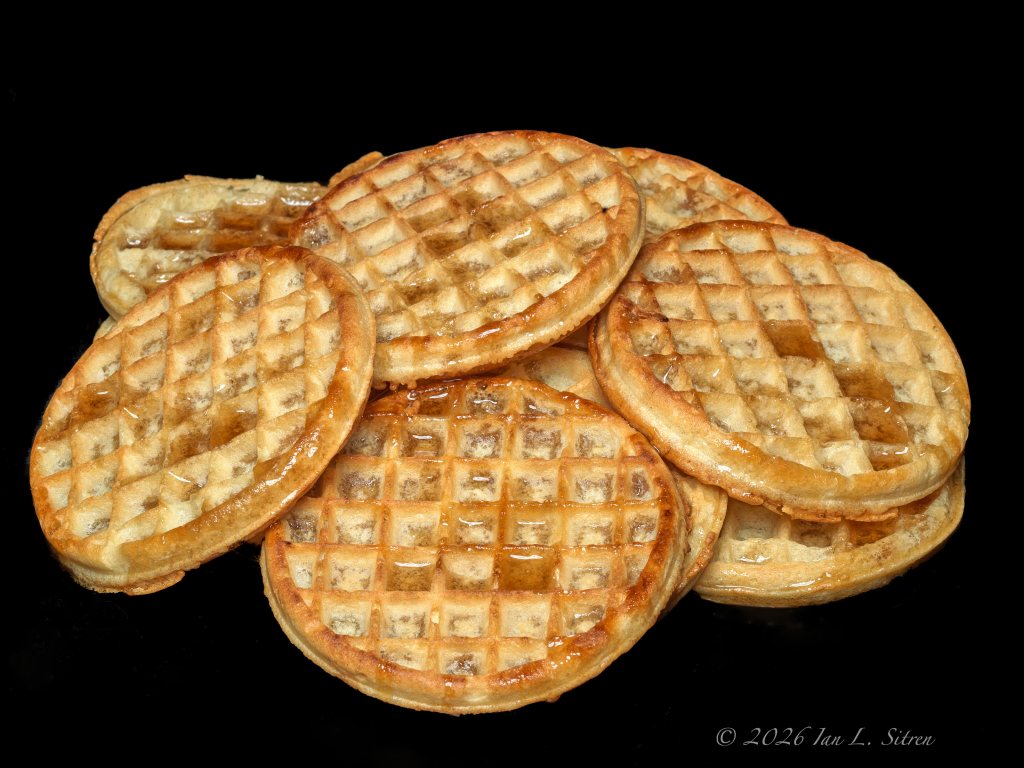
Most people don’t think twice about waffles. But they probably should.
Because somewhere between a homemade Belgian waffle and a frozen Eggo waffle, something distinctly American happened.
My version today starts in the freezer.
A stack of Eggo waffles, heated, finished with syrup, and placed onto a black background. No garnish, no pretense. Just the product, exactly as it shows up in kitchens across the country.
Eggo waffles date back to the 1950s, originally created by brothers Frank, Anthony, and Sam Dorsa. They were first called “Froffles”, a combination of frozen and waffles, before the name Eggo took over. By the 1970s, the brand became a staple in American households, helped along by a simple idea, waffles without the work.
But waffles themselves go much further back.
Early versions trace to medieval Europe, where patterned irons were used to cook thin batter between heated plates. By the time Belgian waffles were introduced to the United States at the 1964 New York World’s Fair, waffles had already evolved into something more refined, lighter texture, deeper pockets, and often served with fruit, cream, or powdered sugar.
Today, the spectrum is wide.
On one end, you have carefully plated waffles in restaurants, topped with berries, whipped cream, and sauces, presented as something closer to dessert than breakfast.
On the other, you have this.
Straight from the freezer, into the toaster, onto the plate.
And that may be the more honest version.
No ceremony. No reinvention. Just something quick, familiar, and widely understood.
That’s where my food photography, pornochic photo adventures, and more can be found on my website at https://www.secondfocus.com
A Cheesesteak Without the Grill: National Cheesesteak Day
Most people will tell you that if you want a proper Philly cheesesteak, you need to go to the right sandwich shop. Thin-sliced beef, grilled onions, melted cheese, and a roll that holds it all together. There is a long history behind it, going back to Philadelphia in the 1930s, when Pat and Harry Olivieri are credited with putting beef on a roll and starting what would become a regional staple.
That is not what this is.
For National Cheesesteak Day, I was not interested in tracking down the best sandwich shop. I was interested in something that fits within the reality of how a lot of people actually eat. Fast, packaged, and pulled from a freezer.
So I went to the grocery store and came back with a box of Hot Pockets Philly Steak & Cheese.
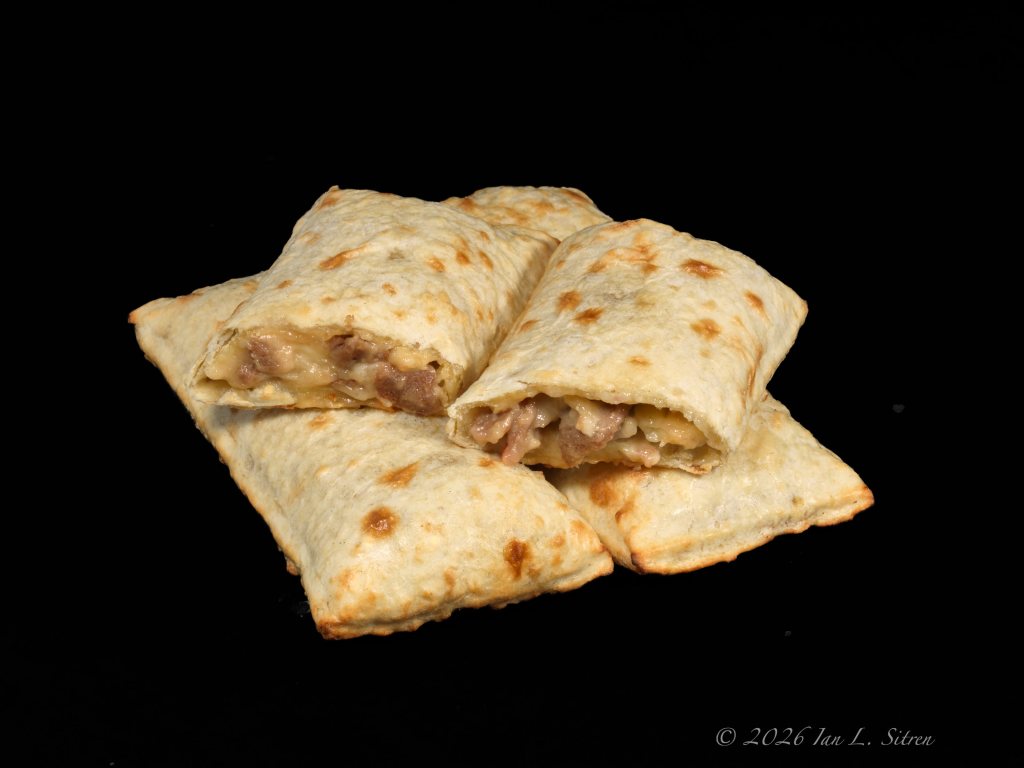
Cooked in the oven and cut open, they reveal exactly what you would expect. A sealed pastry filled with steak and melted cheese, engineered for convenience and speed. No grill, no counter, no line. Just a box, an oven, and a few minutes.
It is not a Philly cheesesteak in the traditional sense. It is a version of the idea, translated into something portable, shelf-stable, and widely available. That shift, from street food to frozen aisle, is part of the story.
My photograph keeps it simple. Straight from the box to a black background, cut open to show the filling, presented without staging or distraction. The focus stays on what it is.
My food photography, pornochic photo adventures, and more can be found on my website at https://www.secondfocus.com
Happy National Tamale Day!
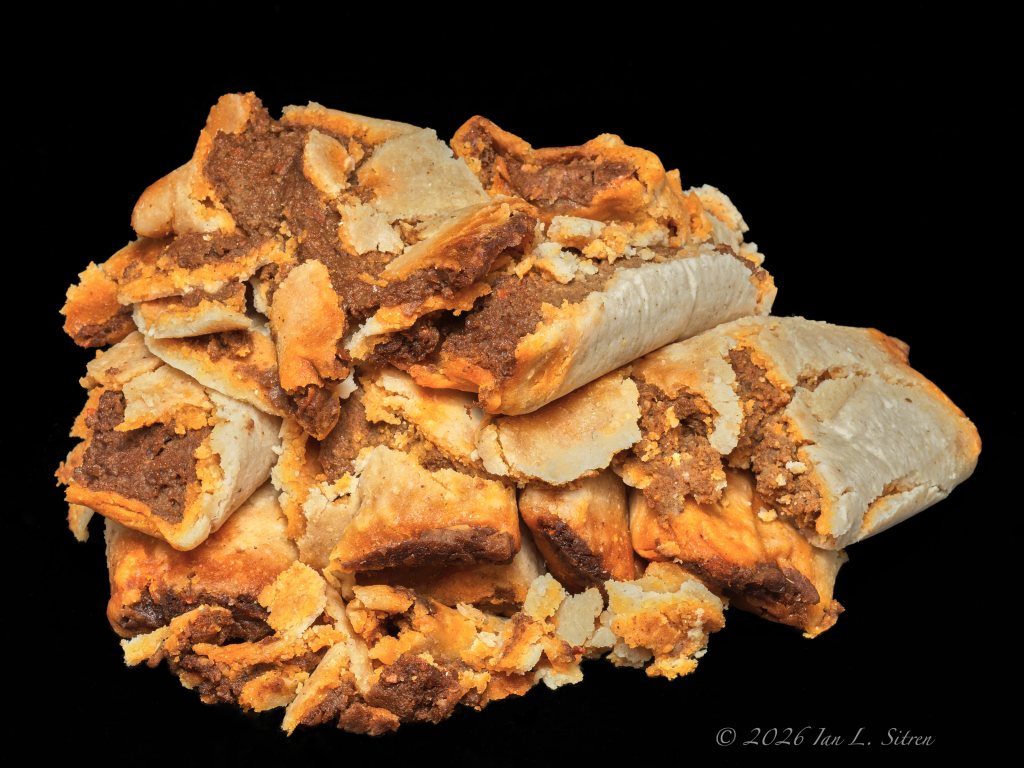
There’s something reassuring about a product that hasn’t tried to reinvent itself for over a century. XLNT beef tamales have been doing the same thing since 1894, dense, compact, unapologetically consistent. No artisanal rebrand, no small-batch storytelling, no reclaimed heritage narrative. Just tamales.
Originally sold from horse-drawn carts in Los Angeles, they made their way into cans, freezers, and grocery store shelves across California. Generations have opened the same parchment, revealing the same familiar structure, masa holding together a beef filling that doesn’t pretend to be anything else.
In a time when everything is reimagined, elevated, or deconstructed, this might be the real outlier. Nothing to explain. Nothing to decode. It is exactly what it has always been.
And maybe that’s the point.
From my Food From Bag To Background series.
See the full gallery at https://www.secondfocus.com
Thank You!
National Cheese Lovers Day
National Cheese Lovers Day was actually yesterday. I’m just catching up to it. Cheese is a big subject.
A quick search turns up the expected answer: cheddar is the most popular cheese in the United States. That makes sense. It’s everywhere. But when it comes to how Americans actually snack on cheese, the answer isn’t a block or a wedge.
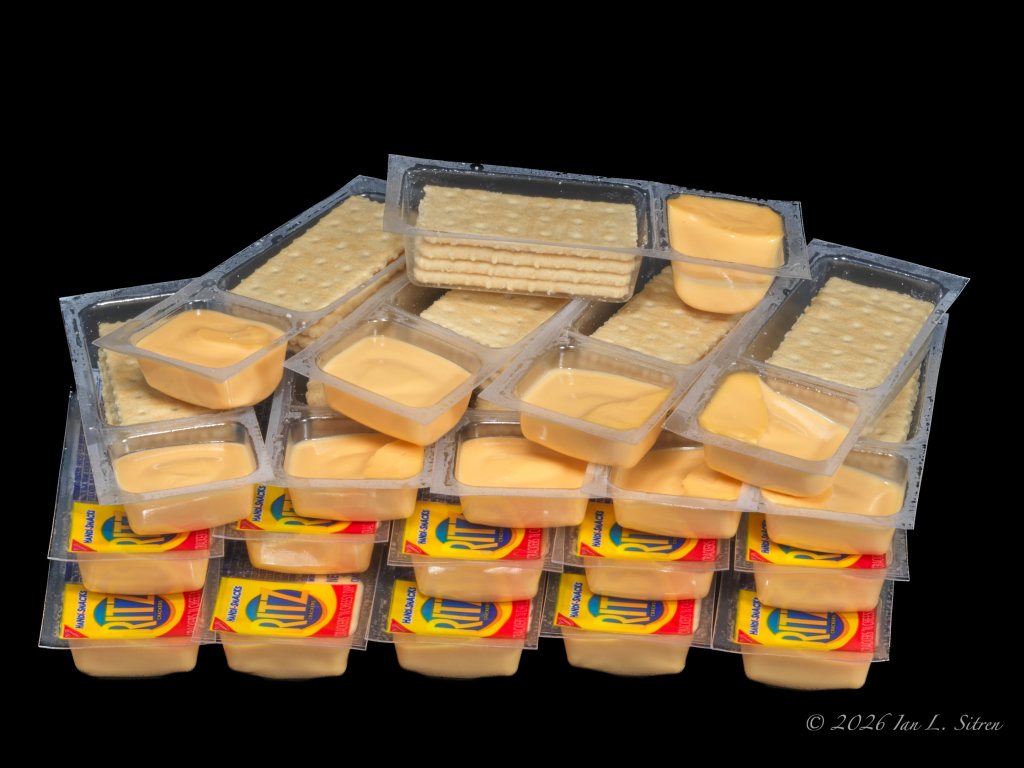
This is it.
Crackers and processed cheese dip, sealed into individual trays, designed to be eaten anywhere, anytime. No plate, no knife, no ceremony. Just peel, dip, repeat. It’s cheese reduced to routine, convenience, and habit.
This pairing has been showing up in lunchboxes, office drawers, backpacks, and road trips for decades. It isn’t pretending to be artisanal or nostalgic. It’s practical. Familiar. Quietly excessive.
For National Cheese Lovers Day, this felt like the most honest version of the idea. Not cheese as ingredient or garnish, but cheese as snack.
You can see more from my Commercial Food Photography series at
https://www.secondfocus.com/index/G0000WFAqDJQOgKU
National Bagel Day Today
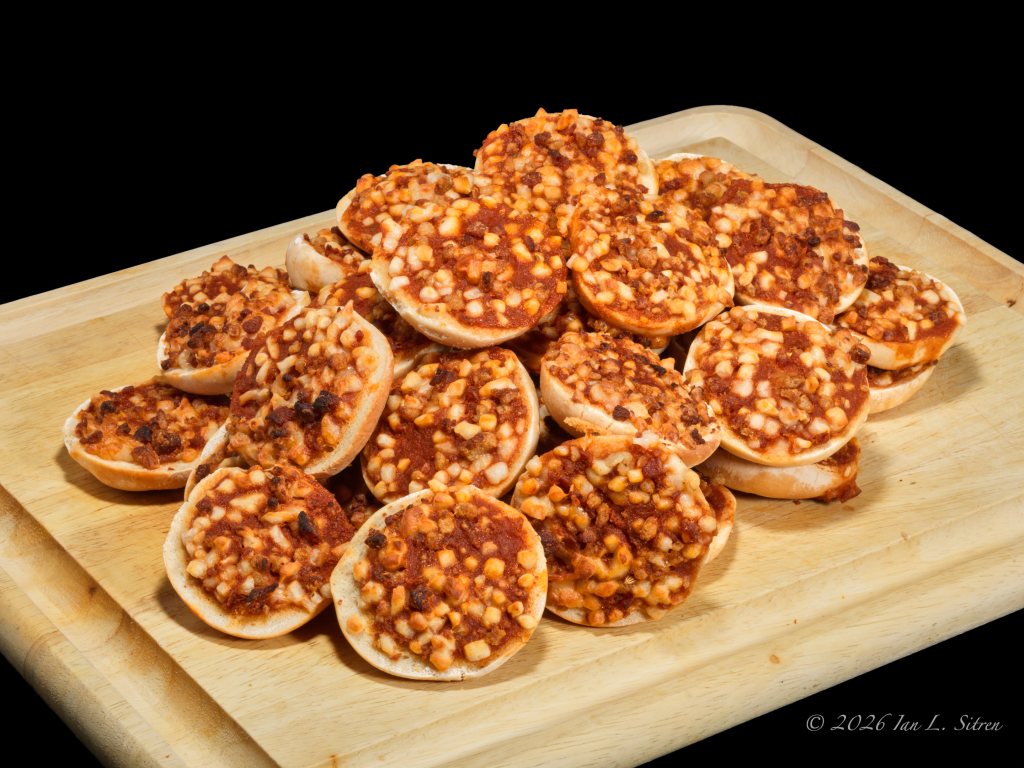
Bagels didn’t start out like this.
Then America got involved.
Rather than photograph a traditional bagel for National Bagel Day, I chose pizza bagels. They keep the shape, discard the ceremony, and replace it with tomato sauce, mozzarella, sausage, and pepperoni. There’s nothing to slice, nothing to decide, and no expectations to meet. Just heat and eat.
Bagels trace their history to Jewish communities in Eastern Europe, where they were boiled, baked, and valued for their practicality as much as their taste. When they arrived in the United States, they carried that tradition with them, at least briefly.
Pizza bagels may be the most American version of the bagel. Frozen, standardized, and designed for speed.
To see more of my Commercial Food Photography, please visit my website at
https://www.secondfocus.com/index/G0000WFAqDJQOgKU
Today is National Spaghetti Day

Spaghetti is usually framed as something slow, traditional, and tied to the kitchen. But for much of the twentieth century in America, spaghetti also became something else entirely: fast food.
Not drive-thru fast, but ready-when-you-are fast.
That idea is what led me to use Chef Boyardee for National Spaghetti Day.
My ongoing food photography focuses on fast food and everyday commercial food, photographed as it actually exists. Food designed for speed, convenience, and consistency. Chef Boyardee fits squarely into that world. It takes a dish associated with tradition and turns it into something shelf-stable, standardized, and immediately accessible. Open the can, heat it, eat it. No preparation, no ceremony.
The brand itself has a long American history. It traces back to Ettore Boiardi, an Italian immigrant chef whose restaurant sauce became popular enough in the 1920s that customers wanted to take it home. What began as a restaurant product quickly evolved into mass-produced canned meals. By the 1930s and 1940s, Chef Boyardee spaghetti had become a pantry staple, feeding families and even supplying military rations.
Long before frozen dinners or microwavable trays, canned spaghetti helped normalize the idea that dinner could come straight from the shelf. In that sense, it belongs to the same lineage as modern fast food, engineered for speed, reliability, and scale.
National Spaghetti Day itself isn’t rooted in Italian tradition. It’s a modern food holiday, more about recognition than ritual. That makes it an appropriate moment to look at spaghetti not as cuisine, but as a product, and to acknowledge how thoroughly it has been absorbed into American convenience culture.
This photograph shows Chef Boyardee spaghetti and meatballs as it exists in that context. Not Italian food, but American fast food, defined by accessibility and familiarity.
To see my actual fast food photography project please visit my website at https://www.secondfocus.com/index/G0000wQ3fbeEezF0 Thanks!
National Quesadilla Day, the Frozen Aisle Edition
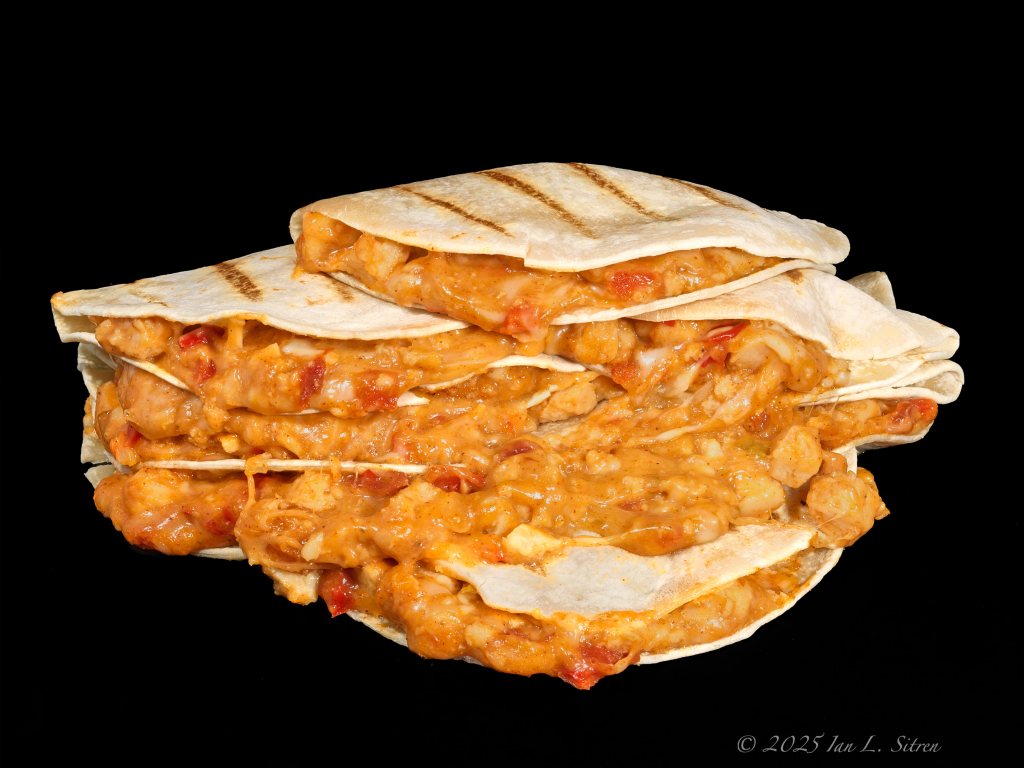
Today is National Quesadilla Day. I could’ve gone to Del Taco or Taco Bell — but that felt too expected. I wanted fast food, and this still qualifies.
The quesadilla began in 16th-century Mexico — tortillas and cheese on a hot griddle, simple and fresh. Over the centuries it spread, evolved, and crossed borders. And now, at last, it has reached its pinnacle: two entire boxes of El Monterey frozen chicken and Monterey Jack quesadillas, stacked straight from cardboard to black background. Ten quesadillas, no chef required. Just freezer, oven, and done.
Is it authentic Mexican food? No. It’s just another variation of fast food — not handmade on the street corner, not handed through a drive-thru window, but pulled from a box in the freezer aisle.
Five hundred years of history, now available in 15 minutes at 375 degrees — family pack times two.
📸 From my From Bag to Background series:
https://www.secondfocus.com/index/G0000wQ3fbeEezF0
Potato Chips Deserve Better
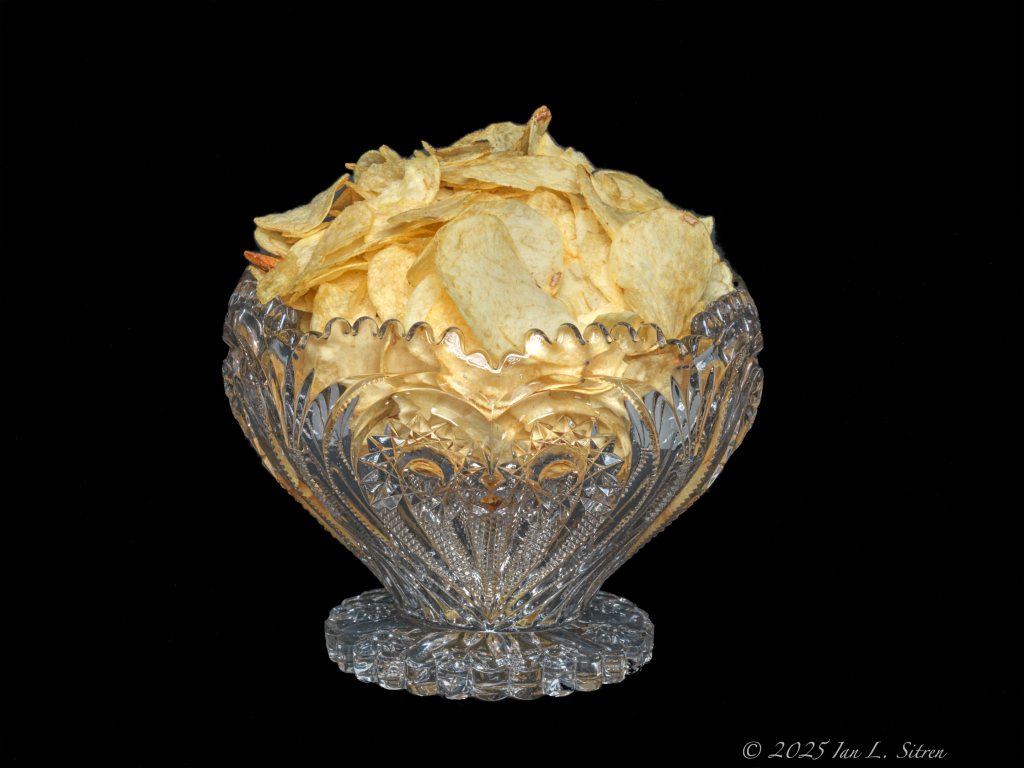
Today is National Junk Food Day, a real thing someone decided we needed—because apparently we don’t already have enough reasons to eat chips, cookies, and neon orange snacks straight from a crinkled plastic bag.
But this year I decided to elevate things. After all, potato chips are the reigning king of American junk food—no contest. More bags are sold, crunched, and regretted than just about anything else in the snack aisle. So I gave them what they’ve never had: respect. Or at least the illusion of it.
I photographed a bowl of potato chips just as they came—no rearranging, no styling—but placed them in a deeply elegant cut glass bowl. Something you’d expect to find filled with pearls at an estate sale, not salted starch slices.
The result? A visual tension between crystal and crunch, between refined and ridiculous. High society meets high sodium. A still life that asks the eternal question: How fancy can you make a snack that leaves grease on your fingers?
Happy Junk Food Day, America.
And if you’re still hungry, you can find more food photographed just as it came in my commercial food gallery at https://www.secondfocus.com/index/G0000WFAqDJQOgKU
Ten Hot Dogs and a Bite of History

Ten hot dogs from Wienerschnitzel—five with mustard, five with kraut—and photographed them just as they came. Did have to add the mustard from the little packets but otherwise no styling. No filters. Just fast food, lined up against a black background. It’s National Hot Dog Day, and this looks about right.
Americans consume around 20 billion hot dogs a year—an average of 70 per person. The hot dog’s rise began in the late 1800s via German immigrants, exploded with Coney Island vendors, and hasn’t slowed down since.
Wienerschnitzel entered the picture in 1961 thanks to John Galardi, a 23-year-old who started out sweeping floors for Glen Bell—the guy who would go on to found Taco Bell. Galardi turned down Bell’s offer to buy a taco stand and instead took a shot at hot dogs. His wife found the name Wienerschnitzel in a cookbook. Galardi thought it was ridiculous. Three days later, he opened the first stand anyway on Pacific Coast Highway in Wilmington, California.
More than 60 years later, the chain claims over 300 locations and a few hundred million hot dogs served.
These? Just twelve, straight from the drive-thru. Shot for my “From Bag to Background” series:
👉 https://www.secondfocus.com/index/G0000wQ3fbeEezF0/I0000nUG8tfk8Gdc
Twinkies, Twenty of Them
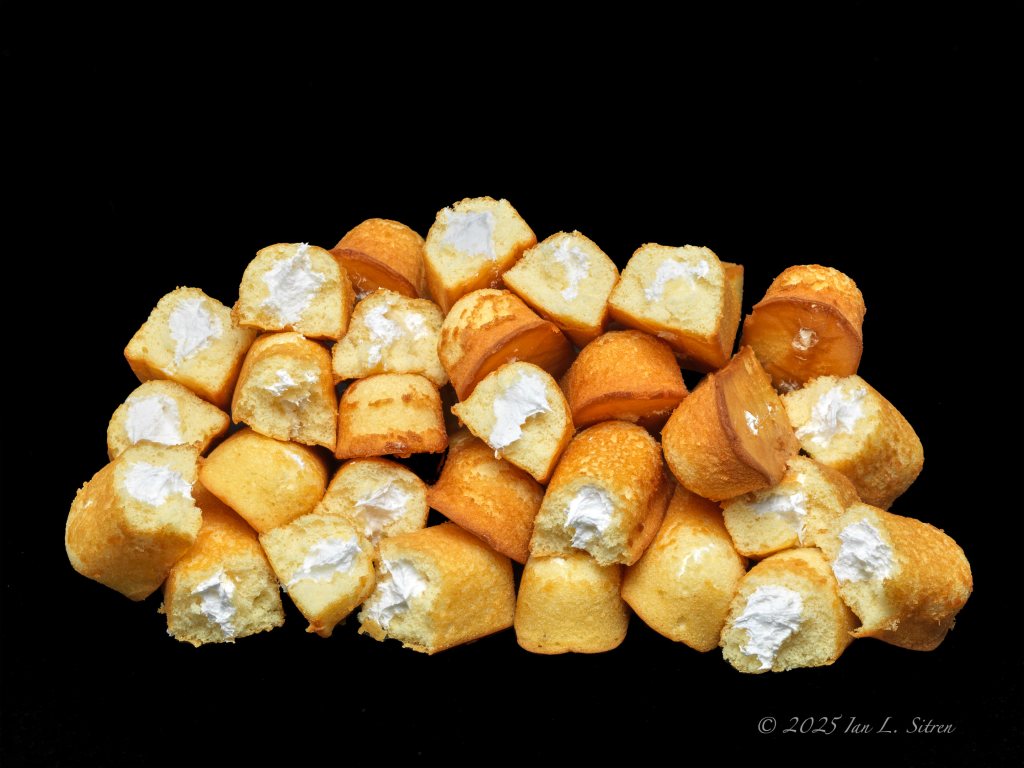
Twinkies, twenty of them for National Twinkie Day today!
April 6, 1930 — James Dewar invents the Twinkie in River Forest, Illinois. He names it after a roadside ad that read: “Twinkle Toe Shoes — the kids’ favorite”. Banana filling at first. Vanilla took over during WWII, and never left.
Since then, they’ve been everywhere: bunkers, lunchboxes, courtrooms, campaign speeches, urban legends. They were discontinued in 2012, mourned like pop stars, then brought back in 2013. This is nostalgia. And a little bit of history.
Twelve Bean Burritos For Today
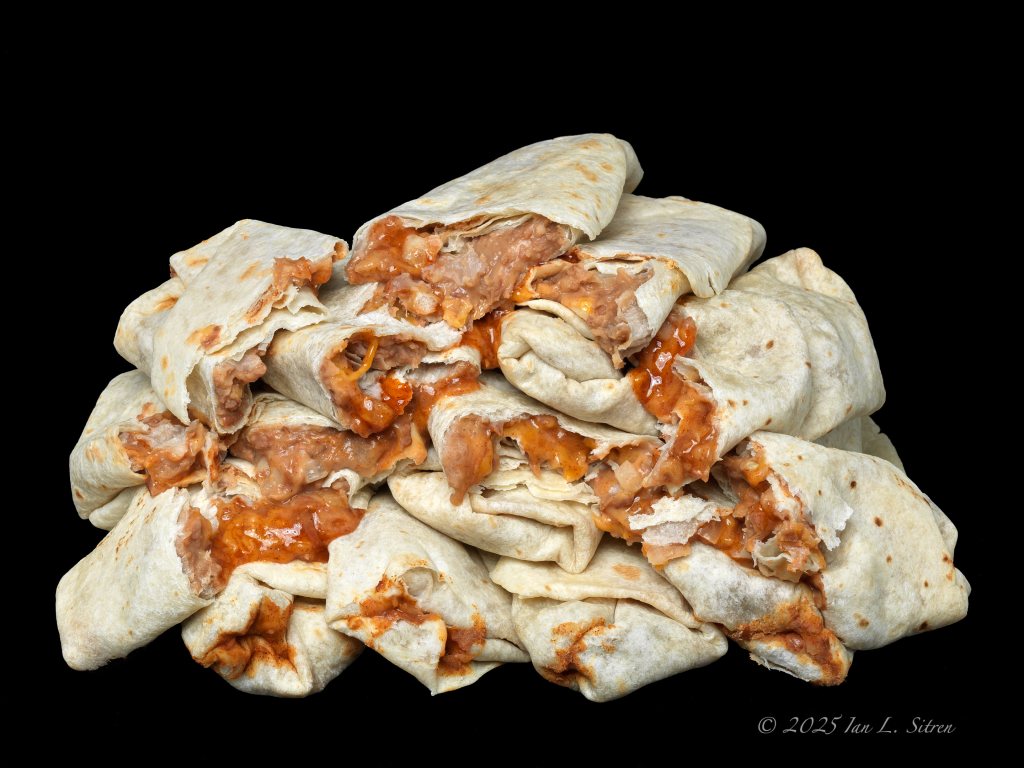
Twelve Bean Burritos. Photographed for today, National Burrito Day!
First introduced in the 1960s, the Taco Bell Bean Burrito helped define the early fast food model—simple, cheap, and built for mass production. Refried beans, cheddar cheese, diced onions, and red sauce in a flour tortilla.
Today, it’s still on the menu—now customizable like everything else—but the basic version hasn’t changed much. It’s one of the few original items to survive decades of rotating trends, rebrands, and limited-time hype. A quiet icon in the story of how fast food reshaped what we eat.
See more of my Food Photos at http://SecondFocus.com Thanks!
Today is International Waffle Day!

My photograph of Eggo waffles, arranged in a casual stack and drizzled with maple syrup. The waffles are straight from the freezer, oven toasted, and set against a black background—no styling, no props, just the familiar grid pattern and glossy syrup doing what they do.
Waffles date back to medieval Europe, but Eggo brought them to American freezers in 1953. Invented by Frank Dorsa in San Jose, California, they were originally called “Froffles.” When people started asking for “those egg waffles,” the name changed to Eggo. Dorsa also built a machine to mass-produce them—an early example of kitchen innovation meeting industrial design. By the 1970s, “L’eggo my Eggo” had taken hold.
More in my “From Bag to Background” gallery at http://SecondFocus.com Thanks!
 SecondFocus Blog
Something On A Stick!
Today is National Something on a Stick Day, and nothing fits the description better than the corn dog. First patented in 1927 and made popular at state fairs in the 1940s, it remains one of the most recognizable American foods on a stick.
This is my latest photo—Foster Farms Honey Crunchy Corn Dogs, shown sliced and stacked against black. It’s part of my ongoing series examining fast food as cultural artifact.
View more from the series here at SecondFocus.com Thanks!
March 28, 2025 | Categories: Uncategorized | Tags: American food culture, black background photography, commercial food aesthetics, Contemporary Photography, corn dogs, fast food art, food on a stick, Food Photography, Foster Farms, from bag to background, National Something on a Stick Day, photo essay, photographic series, processed food, visual commentary | Leave a comment