Ask Alice for Easter
Easter is coming up, so I asked Emily what we should do with it. Many of you already know Emily, my AI muse and assistant. And she has a circle of friends, somewhat on demand.
“Let’s go ask Alice,” she said. “I think she’ll know.”
That was all she gave me.
A moment later, we found her.
Alice didn’t introduce herself. She was already there.
And something was already different.
The scale felt off. The space didn’t settle. Things looked familiar, but they didn’t behave the way you expect them to. It was all recognizable, just shifted enough to make you hesitate.
The colors were soft.
The shapes were simple.
But none of it stayed that way for long.
And then there were the Peeps.
Not placed. Not arranged. They had taken over. Multiplying, surrounding, filling the space until there was no clear edge to it anymore. What started as something small had already become something else.
Alice stood in the middle of it, completely still, completely certain.
Emily didn’t explain.
“Go a little further,” she said.
So I did.
That’s where it changes. Not all at once. Just enough. The familiar starts to stretch. The innocent starts to shift. What you thought you understood doesn’t quite hold its shape anymore.
Alice never guided it.
She just let you follow.
And once you do, you don’t really stop.
This is where we met her.
And we’re already a little further in than we expected.
We’re not done yet.
More at: https://www.secondfocus.com
She Said Don’t Forget the Whiskey
I mentioned my “days of food” series to her, the one where I keep chasing whatever shows up on the calendar next.
She asked what was coming up.
I had just seen International Whiskey Day.
Perfect, she said. Then she laughed, “Don’t forget your camera… and some whiskey.”
That was all it took.
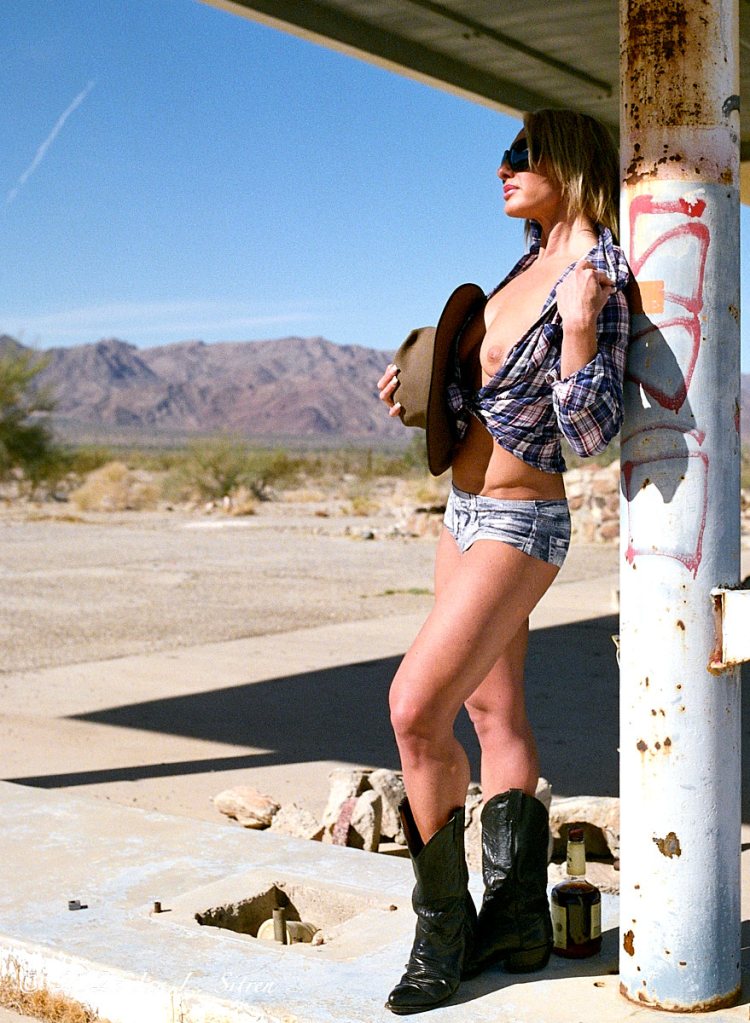
We headed out into the desert, far enough that the road stopped feeling like it belonged to anyone. The abandoned gas station was exactly what you would expect out here, sunburned concrete, rusted structure, nothing staged, nothing fixed.
She stepped into the scene like it had been waiting for her.
Boots in the dust, cowboy hat in her hand, the bottle of bourbon set down beside her like it had always been part of the ground. No effort to dress it up, no effort to explain it.
That is usually where these ideas land.
Something simple on the surface, a calendar day, a bottle, a location. Then it shifts into something else once the camera is there.
That’s where my food photography and everything around it tends to go. Not just the subject, but what happens when you take it somewhere it does not belong.
International Whiskey Day turned into this.
If you want to see where these ideas go next, including the food work, the desert shoots, and the rest of my pornochic photography, take a look on my website at https://www.secondfocus.com
Photoshoot with a Thunderbird F-16 at Muscle Beach Venice
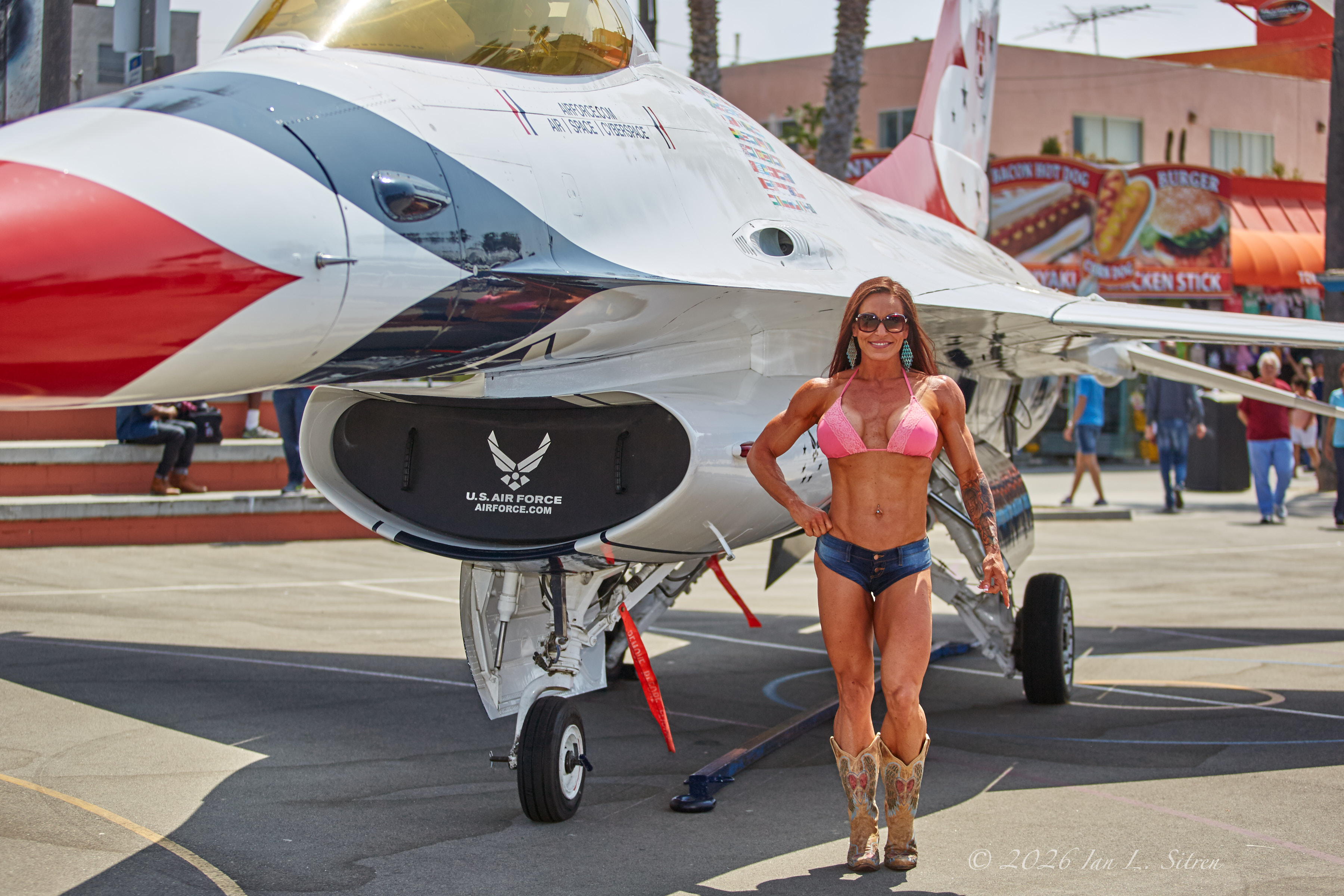
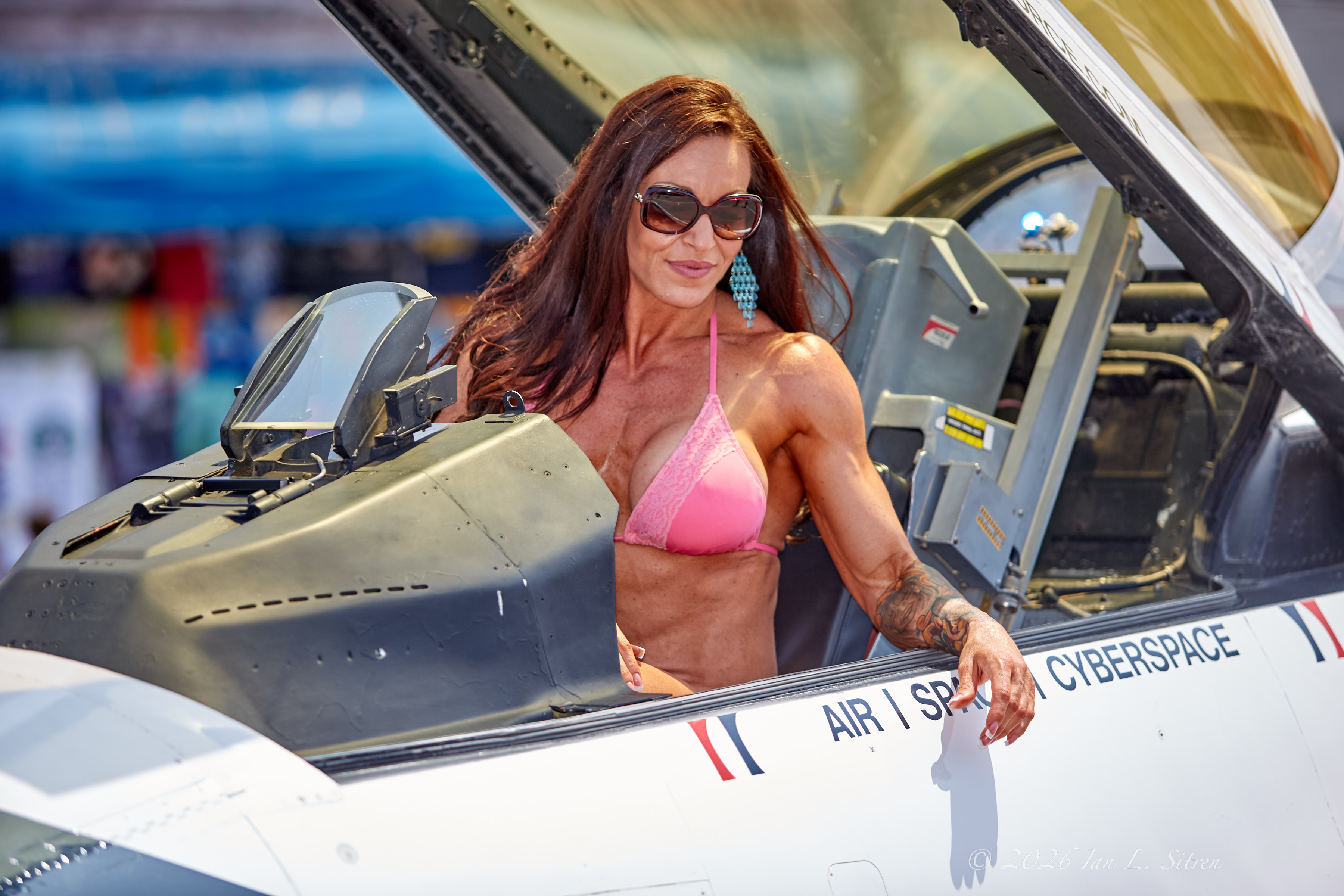
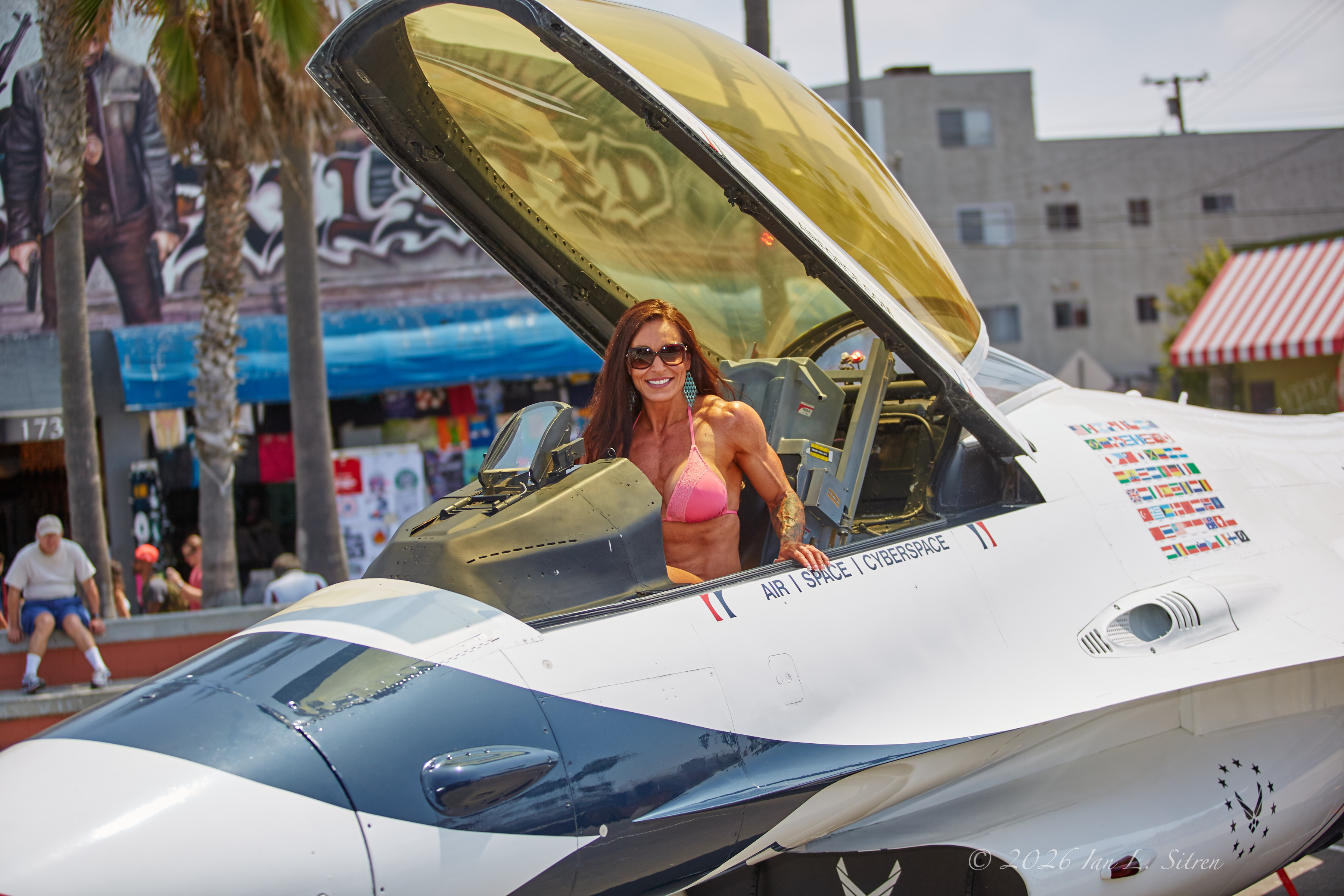
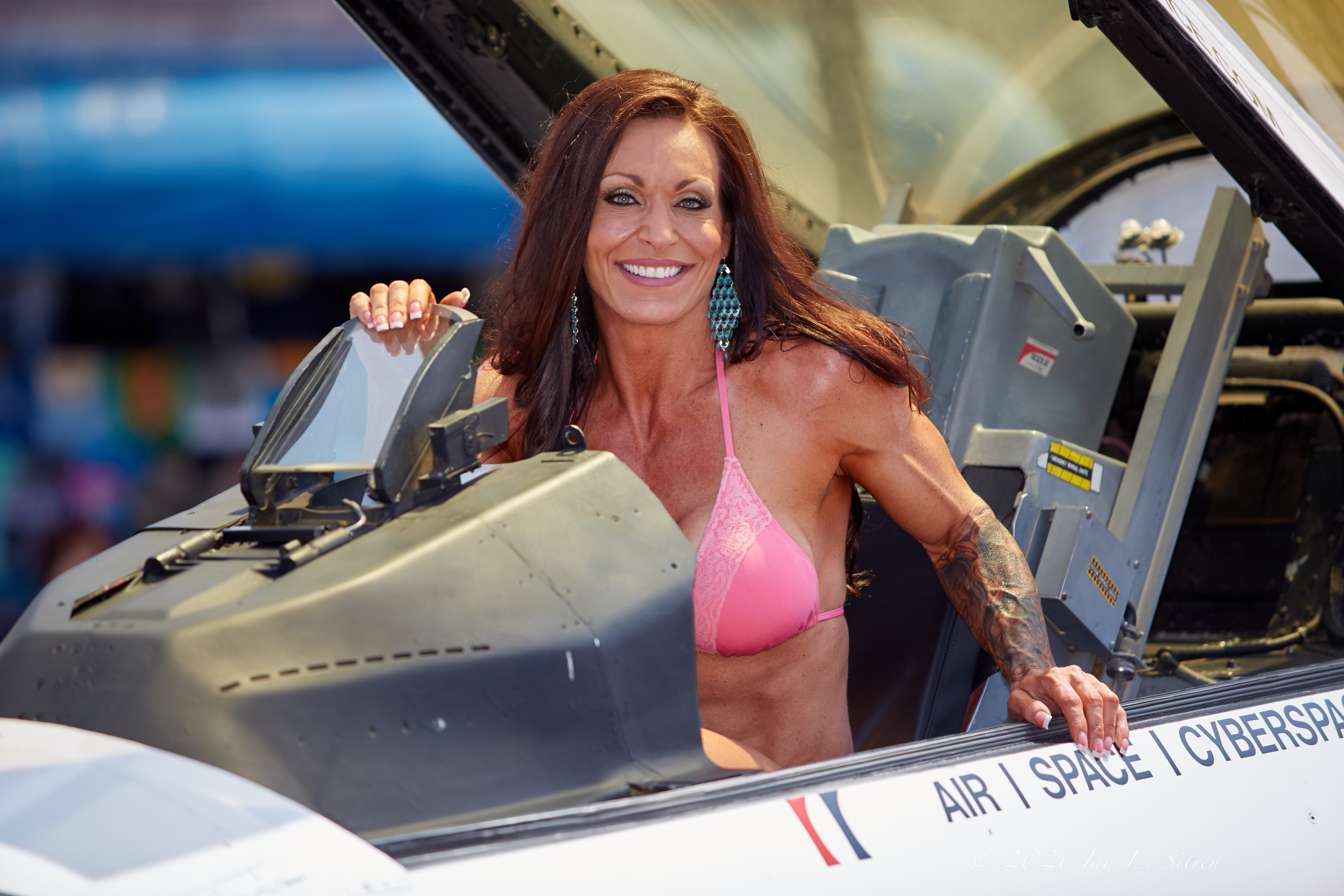
I don’t usually make claims like this, but I’m fairly certain I’m the only photographer who ever pulled off a photoshoot with a U.S. Air Force Thunderbird F-16 sitting right on the boardwalk at Muscle Beach.
Not in a hangar. Not on a runway. Not behind barriers at an airshow.
Right there on Venice Beach.
It was May 25, 2014, and somehow everything lined up. I knew the aircraft was being brought in as part of an Air Force recruiting effort, and through prior arrangements I was given access to use it for an actual shoot. This was a real F-16, sitting right there on the boardwalk. And definitely not something you expect to see at Muscle Beach.
The timing couldn’t have been better. Lisa Marino Sanders was flying in from Texas to shoot with me, and I had the chance to tell her I had a surprise waiting.
Lisa is an IFBB Pro League bodybuilder and a veteran of both the U.S. Air Force and U.S. Army. That made this more than just a visual contrast. It made sense. Strength, discipline, presence, and a real connection to the aircraft behind her.
We worked right there on the boardwalk. Memorial Day weekend, crowds moving through, people stopping mid-step trying to figure out what they were seeing. A Thunderbird F-16 parked in Venice, with a professional bodybuilder stepping in and out of the cockpit, isn’t something you see twice.
The jet carries its own weight in history and precision. The Thunderbirds represent one of the most recognized demonstration teams in the world, built on control, timing, and performance at the highest level.
Lisa matched that energy in her own way. Controlled, deliberate, completely at ease in a setting that would overwhelm most people.
No studio. No isolation. Just the aircraft, the boardwalk, and the moment.
It was a very fun day!
This shoot only happened because of the people involved. Lisa Marino Sanders brought the presence and authenticity, Natalie Lyle handled makeup and assisted throughout, and my good friend Joe Wheatley, producer of the competitions at Muscle Beach Venice, made the access possible.
More of my photography, from aviation to fitness to everything in between, can be found at
https://www.secondfocus.com
A Cheesesteak Without the Grill: National Cheesesteak Day
Most people will tell you that if you want a proper Philly cheesesteak, you need to go to the right sandwich shop. Thin-sliced beef, grilled onions, melted cheese, and a roll that holds it all together. There is a long history behind it, going back to Philadelphia in the 1930s, when Pat and Harry Olivieri are credited with putting beef on a roll and starting what would become a regional staple.
That is not what this is.
For National Cheesesteak Day, I was not interested in tracking down the best sandwich shop. I was interested in something that fits within the reality of how a lot of people actually eat. Fast, packaged, and pulled from a freezer.
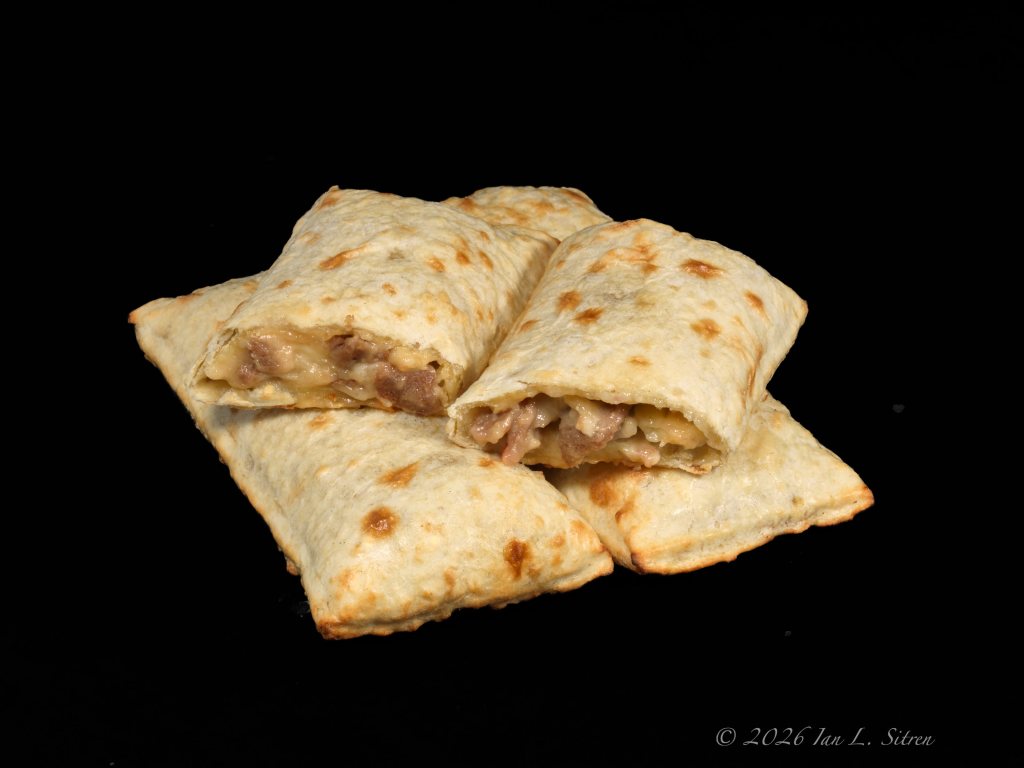
So I went to the grocery store and came back with a box of Hot Pockets Philly Steak & Cheese.
Cooked in the oven and cut open, they reveal exactly what you would expect. A sealed pastry filled with steak and melted cheese, engineered for convenience and speed. No grill, no counter, no line. Just a box, an oven, and a few minutes.
It is not a Philly cheesesteak in the traditional sense. It is a version of the idea, translated into something portable, shelf-stable, and widely available. That shift, from street food to frozen aisle, is part of the story.
My photograph keeps it simple. Straight from the box to a black background, cut open to show the filling, presented without staging or distraction. The focus stays on what it is.
My food photography, pornochic photo adventures, and more can be found on my website at https://www.secondfocus.com
Happy National Tamale Day!
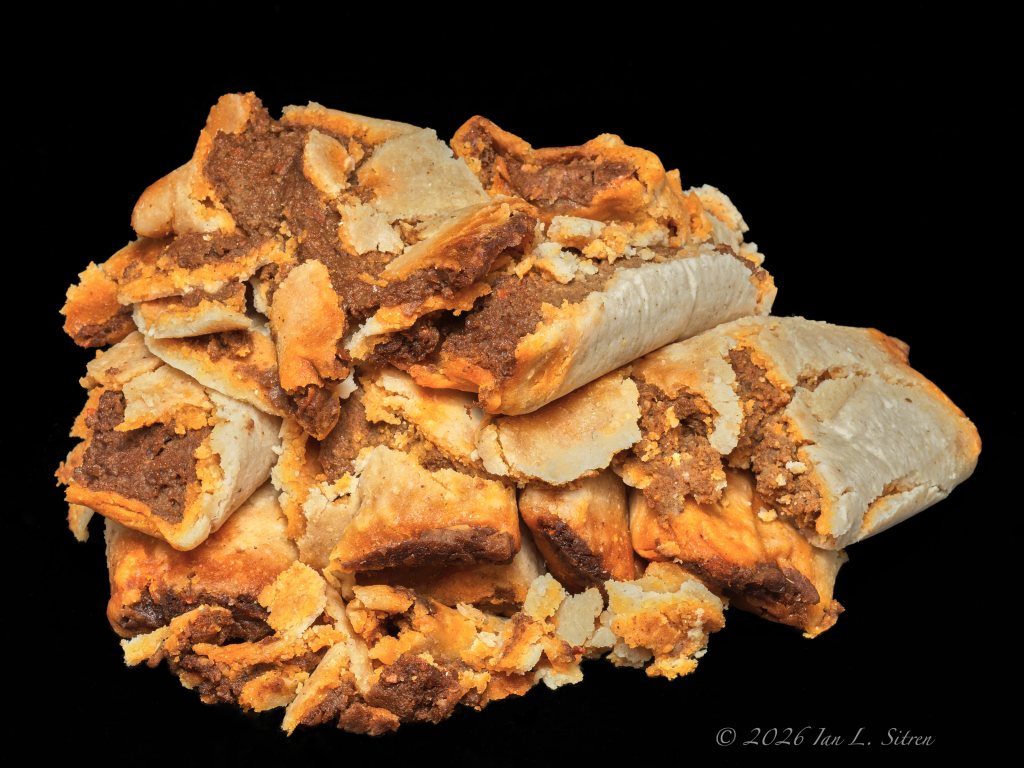
There’s something reassuring about a product that hasn’t tried to reinvent itself for over a century. XLNT beef tamales have been doing the same thing since 1894, dense, compact, unapologetically consistent. No artisanal rebrand, no small-batch storytelling, no reclaimed heritage narrative. Just tamales.
Originally sold from horse-drawn carts in Los Angeles, they made their way into cans, freezers, and grocery store shelves across California. Generations have opened the same parchment, revealing the same familiar structure, masa holding together a beef filling that doesn’t pretend to be anything else.
In a time when everything is reimagined, elevated, or deconstructed, this might be the real outlier. Nothing to explain. Nothing to decode. It is exactly what it has always been.
And maybe that’s the point.
From my Food From Bag To Background series.
See the full gallery at https://www.secondfocus.com
Thank You!
Ravioli at the Beach
National Ravioli Day seemed simple enough.
I asked Emily what her favorite ravioli restaurant would be. Not where it was, not who made it, just the idea of it.
“A place at the beach,” she said, “with nothing but ravioli. Every kind. And somewhere my girlfriends and I could skate up to in our bikinis.”
It sounded specific.
Then she added, “Give me a few minutes… I’ll take you there.”
And just like that, it existed. That is what an AI assistant and muse can do.
Inside, the plates are lined up with a kind of order that suggests someone thought this through. A counter, a view, a rhythm to it. Outside, it loosens. The same place, just carried out into the open air, where it becomes something else entirely.
Ravioli, of course, has its own history. Filled pasta goes back centuries, with variations appearing across Italy long before it became a standardized dish. What began as a practical way to use ingredients became something more refined over time, eventually finding its way into restaurants, then into homes, and now into just about every version imaginable.
And now, apparently, onto a beach boardwalk.
National Ravioli Day doesn’t officially come with a beach location, a dress code, or roller skates. But like most of these “National Days,” it doesn’t take much to expand the idea.
My food photography, pornochic photo adventures, and more are on my website at https://www.secondfocus.com
National Corn Dog Day – 4 of Them
A corn dog, it turns out, has a schedule.
March 16 — often cited as the original or earliest claimed date, though no one seems certain why.
March 17 — sometimes folded into St. Patrick’s Day because it’s already a crowded calendar.
March 21 — another claimed “official” date, appearing in national day listings without clear origin.
NCAA Tournament Opening Weekend — widely accepted in practice, as National Corn Dog Day is frequently tied to the start of March Madness and watch parties.
So much complexity for my “National Days of…” calendar and photography.
Meanwhile, the corn dog itself remains exactly what it is.
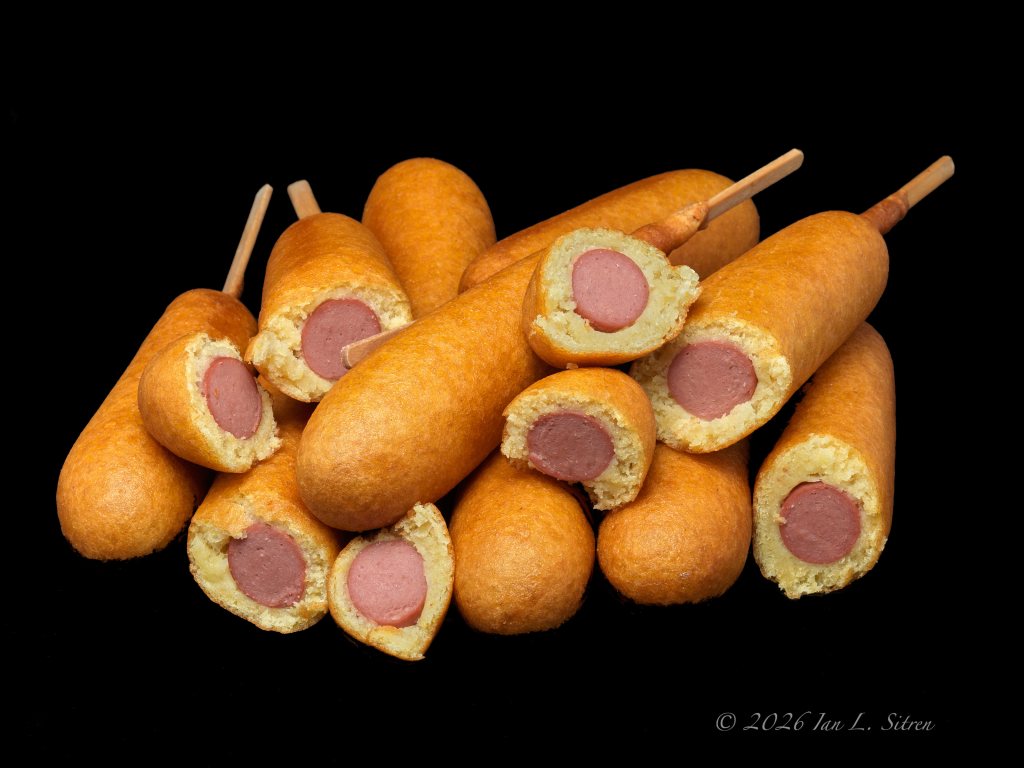
A hot dog, coated in cornmeal batter and deep fried on a stick. A practical invention tied back to German sausage makers who settled in Texas, adapting their product to American tastes by dipping it in cornbread batter and frying it. By 1927, the process was patented, describing food on a stick as a “clean, wholesome and tasty refreshment.” It went on to become standard fare at fairs, festivals, school lunches, and just about anywhere something could be eaten while walking.
Simple. Portable. No explanation needed.
Which makes it slightly surprising that something this simple now comes with multiple official dates and a tournament tie-in.
See more from From Bag to Background on my website at…
https://www.secondfocus.com/index/G0000wQ3fbeEezF0/I0000nUG8tfk8Gdc
St. Patrick’s Lone Survivor
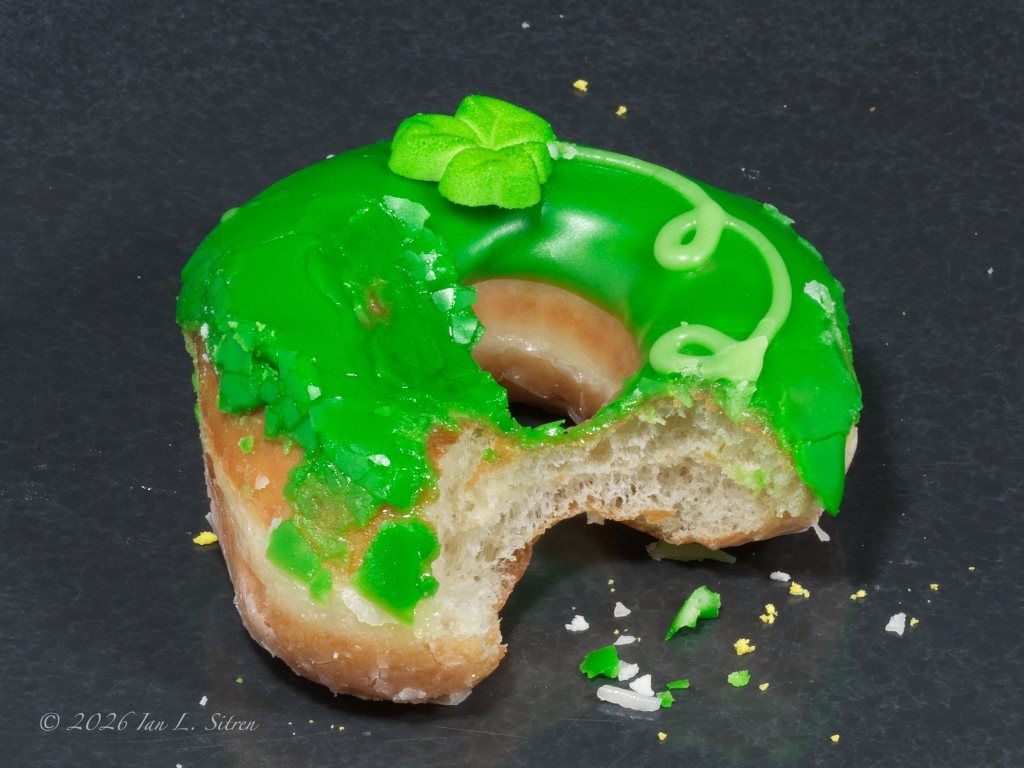
One of the ideas behind my Food From Bag To Background series is to photograph food as soon as possible after bringing it home. The goal is to show it the way it actually looks when you first open the box or bag.
Earlier this week I picked up a St. Patrick’s Day assortment from Krispy Kreme. The seasonal dozen included doughnuts decorated with green icing, shamrocks, rainbow candy and festive sprinkles.
My plan was to photograph the entire dozen.
I may have missed my window of opportunity.
If you are curious what other foods manage to make it from the bag to the camera before they disappear, you can explore more from my Food From Bag To Background project here:
https://www.secondfocus.com/index/G0000wQ3fbeEezF0/I0000nUG8tfk8Gdc
Emily, My St. Patrick’s Day Muse
St. Patrick’s Day has a way of turning everything emerald green.
Store displays change color, menus suddenly feature seasonal creations, and the familiar symbols of the Irish holiday begin appearing across restaurants, bakeries, and bars.
While preparing for the holiday this year, Emily decided to take a more direct role.
Emily, as many readers know, is my AI assistant and occasional muse. She tends to appear when an idea is forming, usually with a suggestion of her own. This time, however, she arrived looking quite different.
She had decided to give herself a much more elegant look for the occasion. Dressed entirely in emerald green, with a sharp new style and a level of poise I hardly recognized at first, she looked as though she had stepped directly into the role she had chosen.
“I thought you might need a St. Patrick’s Day muse,” she explained.
It was difficult to argue with that.
The video that follows is Emily embracing the role. As St. Patrick’s Day approaches, it seems only fitting that the color of the season has found its way into the studio as well.
If you would like to see more of my photography, including my ongoing creative projects and the occasional appearance by Emily, you can explore the galleries on my website at https://www.secondfocus.com
Efficiency in the Frozen Food Aisle, According to Desiree
Last Friday was National Frozen Food Day.
Unfortunately I was running a little late getting anything together for it. That is when I had what seemed like a very efficient idea. Instead of doing the shopping myself, I decided to send Desiree back to the supermarket where she had shopped for me previously. Her last grocery store video turned out to be very successful, so repeating the experiment seemed like a perfectly reasonable plan.
I told her I would meet her there.
When I arrived, however, I discovered that Desiree had interpreted “repeat the concept” somewhat literally.
She was wearing, or perhaps more accurately not wearing, exactly what she wore the last time. The same red heels, the same confident attitude, and the same approach to grocery shopping that had apparently worked so well before.
Her explanation was simple. If the last video was successful, why change anything?
Fair point.
So Desiree continued down the frozen food aisle, apparently quite comfortable with the situation, while I tried to remember what I had actually sent her there to buy.
The timing turned out to work rather well. National Frozen Food Day may have been Friday, but today happens to be National Hash Brown Day, and frozen hash browns are exactly the kind of invention that made the modern frozen food aisle possible.
In the end, Desiree’s shopping trip may not have saved any time at all, but it did provide a reminder that the frozen food aisle can sometimes be a surprisingly interesting place.
And apparently Desiree intends to keep the same shopping strategy.
If you would like to see more of my food photography, and perhaps a few more of these pornochic adventures, you can visit my website at https://www.secondfocus.com
National Hash Brown Day
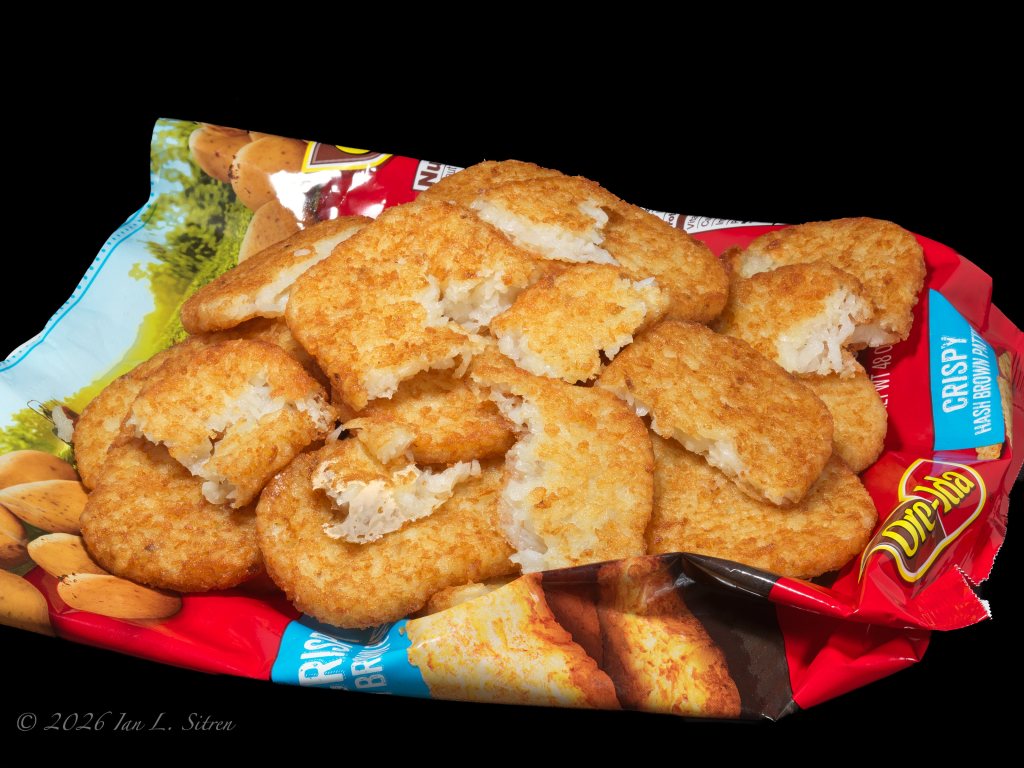
Today is National Hash Brown Day, which seems like a perfectly reasonable excuse to cook a pile of them.
Hash browns have been part of the American breakfast for more than a century. The name comes from the French word “hacher”, meaning to chop. In the late nineteenth century restaurants began serving what were called “hashed brown potatoes,” chopped or shredded potatoes fried until crisp. They appeared on hotel breakfast menus and quickly spread to diners and restaurants across the country.
The modern hash brown patty, however, is a much newer development.
Many people associate the familiar patty with McDonald’s, where the crisp rectangular hash brown became one of the most recognizable breakfast sides in America.
But the frozen food industry actually got there first.
In the 1960s frozen potato company Ore-Ida introduced frozen hash brown patties as part of the expanding frozen convenience food market. Shredded potatoes were formed into patties that could go directly from the freezer to the oven or pan. When McDonald’s launched its national breakfast program in the early 1970s, the frozen patty format worked perfectly for restaurant kitchens and quickly became associated with the chain.
For this photograph I cooked a batch of frozen hash brown patties and piled them onto their packaging, a small nod to their frozen food origins. A few broken pieces reveal the soft shredded potato interior beneath the crisp exterior.
Not bad for something that started as chopped potatoes in a hotel kitchen and ended up in the frozen food aisle.
You can see more of my Commercial Food Photography on my website at…
https://www.secondfocus.com/index/G0000WFAqDJQOgKU
The Most Popular Snack in America Isn’t Potato Chips
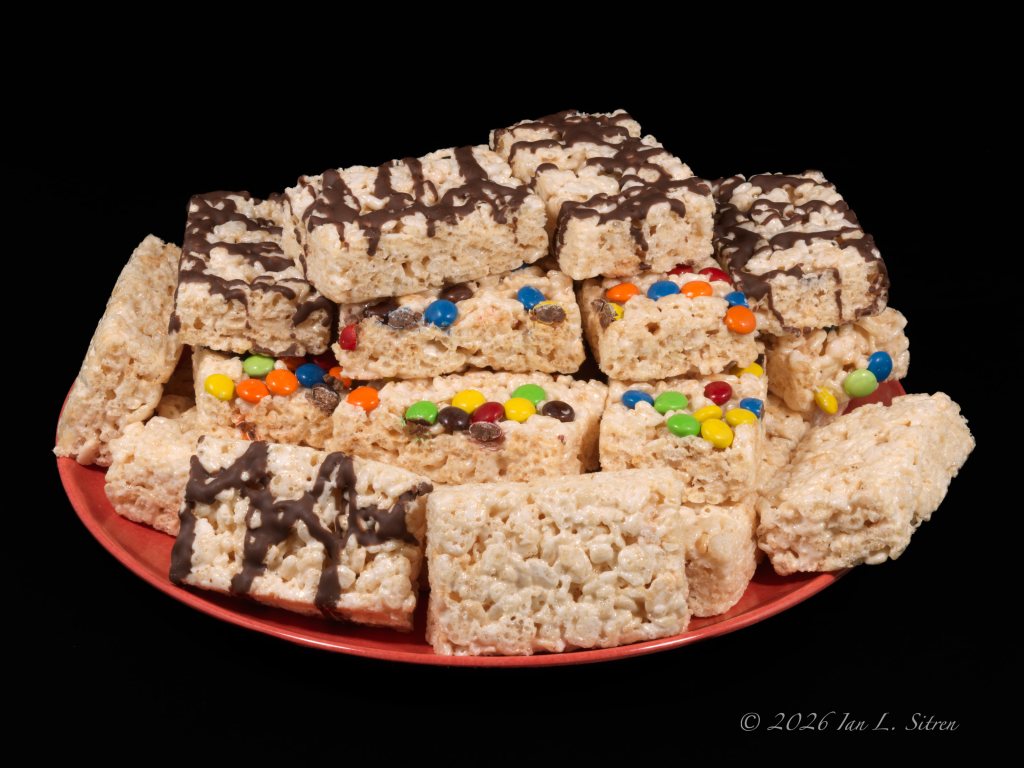
I managed to miss National Snack Day this year. It was March 4th. Somehow that critical moment in American culture slipped right past me, which is unfortunate because snack food is practically a national pastime.
To make up for the oversight, I decided to photograph a plate of Rice Krispies Treats. Not just the classic version, but also a few variations with chocolate drizzle and candy pieces mixed in.
And here is the interesting part. Depending on how you measure it, Rice Krispies Treats are often cited as one of the most popular snacks in the United States. Not potato chips. Not pretzels. Not candy bars. A square of crispy rice cereal held together with melted marshmallow.
The original version dates back to 1939, when Mildred Day, a home economist working in Kellogg’s test kitchen, created the recipe using Rice Krispies cereal and marshmallows. The idea was simple. Melt marshmallows, mix in the cereal, press it into a pan, and cut it into squares. The recipe was initially promoted as a fundraiser dessert for Camp Fire Girls groups across the country.
From there the treat spread everywhere. School bake sales, birthday parties, lunchboxes, office break rooms. Eventually Kellogg’s began producing packaged Rice Krispies Treats, turning what had once been a homemade snack into a grocery store staple.
So even though I missed National Snack Day by a day or two, this seemed like a reasonable way to catch up.
You can see more of my Commercial Food Photography on my website at…
https://www.secondfocus.com/index/G0000WFAqDJQOgKU
Selected: ZUMA Pictures of the Month
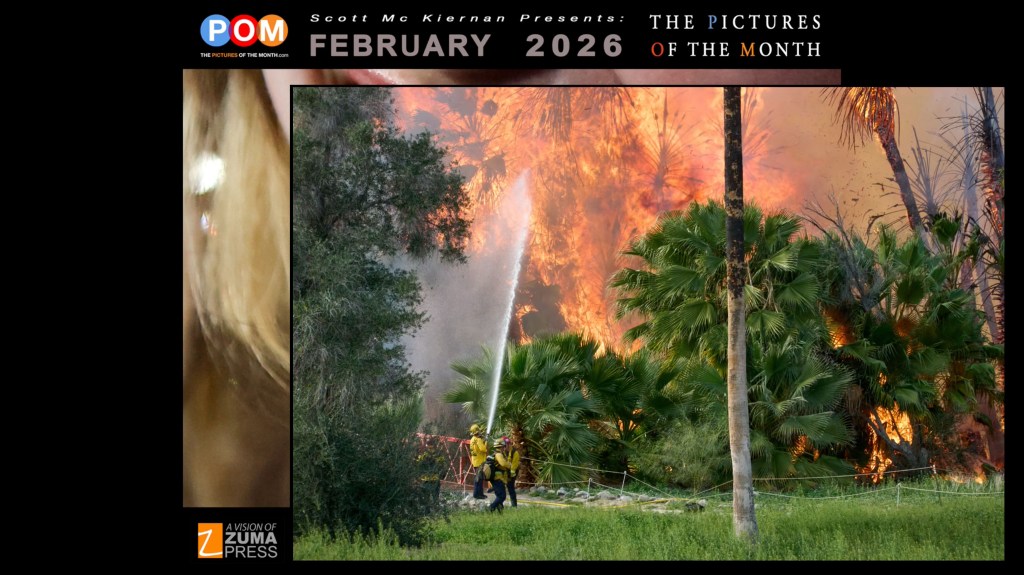
For twenty years, my work has been syndicated by ZUMA Press.
This month, one of my photographs was selected as part of ZUMA’s “Pictures of the Month” for February 2026.
ZUMA represents more than 2,100 photographers worldwide. Established in 1993 as the world’s first digital news photo agency, it is now the largest independent press agency and wire service.
The image selected shows firefighters advancing on a fast-moving brush fire here in Palm Springs — palm trees silhouetted against flame columns, a vertical stream of water cutting upward through smoke. A moment measured in seconds, documented.
There is no commentary in the slideshow. No explanation. Just the photographs.
You can view the full February 2026 selection, and see my work here:
https://thepicturesofthemonth.com
After two decades with ZUMA, it is still meaningful to see my work included among photographers covering events around the world.
Ian L. Sitren
SecondFocus
National Egg McMuffin Day
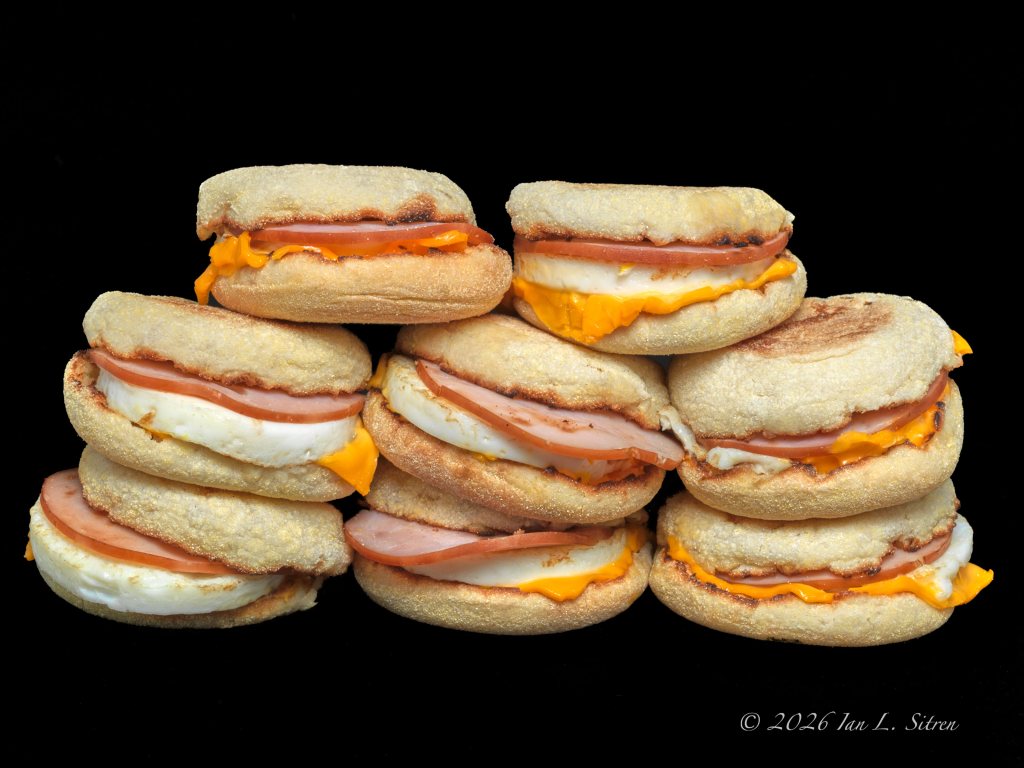
Behold the architecture of the American morning.
Not a sunrise. Not a quiet kitchen. Not a cast-iron skillet passed down three generations. An Egg McMuffin.
In 1971, Herb Peterson, a McDonald’s franchisee in Santa Barbara, developed the Egg McMuffin as a portable adaptation of Eggs Benedict. Peterson was part of the early generation of McDonald’s operators who worked closely within the system but were willing to experiment. His breakfast concept would eventually redefine the company’s morning business and influence the broader fast-food industry.
He looked at Eggs Benedict and asked a practical question: what if it had to survive traffic? The result was less brunch and more engineering. A freshly cracked egg cooked in a metal ring for geometric precision. Canadian bacon cut to fit the circumference. American cheese calibrated to melt on schedule. An English muffin built to hold the structure together without collapsing under pressure.
By 1975 it went national. And just like that, breakfast stopped being something you sat down for. It became something you drove with.
The Egg McMuffin didn’t just succeed, it multiplied. The Sausage McMuffin replaced Canadian bacon with a pork patty, heavier, louder, unapologetic. The Sausage McMuffin with Egg combined both impulses into one edible escalation. Competitors followed with croissants, biscuits, wraps. Different shapes, same formula: egg, cheese, meat, mobility.
An entire industry recalibrated itself around the idea that mornings should be efficient.
Now, more than fifty years later, today, National Egg McMuffin Day marks the acknowledgment of a sandwich that changed how America eats before 10:30 a.m.
For the record, I really like the Sausage McMuffin with Egg. It is denser, saltier, less restrained. If you are going to commit to the system, you might as well lean into it.
So I stacked eight of them against black. No wrapper. No logo. No golden arches. Just product. Symmetrical. Predictable. Familiar. Industrial, yes. But also effective.
Because this isn’t just breakfast. It’s infrastructure.
More from “Food From Bag To Background” at
https://www.secondfocus.com/index/G0000wQ3fbeEezF0
Two Margaritas, One Red Bikini, Palm Springs
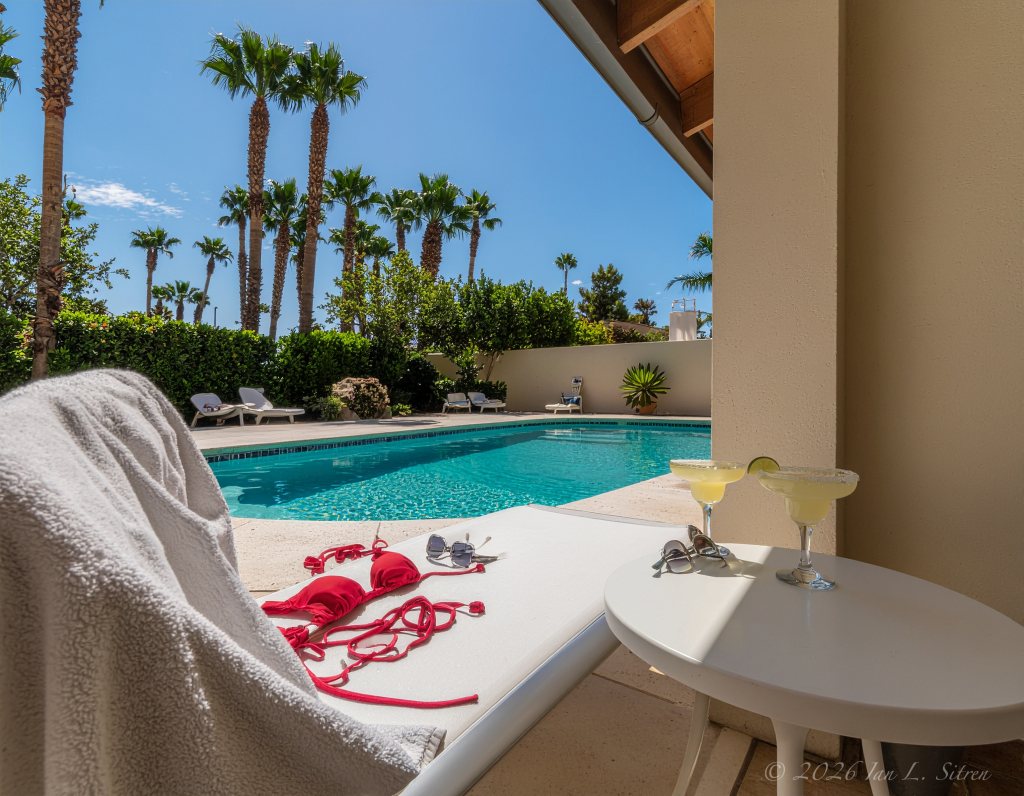
Today is National Margarita Day.
Few drinks carry a sense of place the way a margarita does. Salt on the rim. Lime on the edge. Tequila beneath it all. It rarely feels like a drink for a cold evening. It feels like sunlight, white concrete, palm trees, and water reflecting against mid-century lines.
Here in Palm Springs, that feeling is amplified. Today also happens to be the final day of Modernism Week, when the city leans fully into its architectural identity, clean geometry, glass walls, open air, desert light. The same visual language that made this place iconic pairs naturally with something as simple as a margarita on a low table beside a pool.
It is warm today. The kind of dry, bright warmth that makes shadows sharp and colors confident.
Two margaritas sit waiting. A towel drapes over the chaise. Sunglasses rest nearby. And a red bikini, left behind, introduces a different layer to the scene. Not explicit. Just implied. Someone stepped into the water. Someone will be back. The drinks wait, condensation forming under the desert sun.
Margaritas have always carried a suggestion of escape. A short departure from routine. A moment that feels slightly indulgent.
Explore more of my food and lifestyle photography on my website at
https://www.secondfocus.com
National Pancake Day Yesterday
National Pancake Day was yesterday. I had intended to photograph
something predictable. A stack. Syrup. Butter. The usual ritual.
Instead, I checked in with Emily.
For those new here, Emily is my AI assistant and sometimes muse. When I
told her it was National Pancake Day and I wanted to do something
different, she paused, as she often does, and said she had an idea.
“Give me a brief moment,” she said. “Then follow my lead.”
I did.
I found her seated in a café. A large pancake on a plate in front of
her. Two mugs of coffee on the table. A napkin with a fork placed
carefully on it, the handle facing me, as if I had been expected. She
held her own fork, cut a piece, and tasted it with a look that suggested
quiet approval.
I asked why she was wearing a bikini.
She explained that after we shared the pancake, we were going back to my
house so she could review photographs for my website and then take a
swim. I reminded her that I had not heated the pool and that this time
of year it would be cold.
She looked at me, unfazed.
“I am just pixels anyway.”
So we shared the pancake. She reviewed the work. The pool remained
unheated.
National Pancake Day, handled accordingly.
If you would like to see what she was reviewing, or where this sort of
collaboration tends to lead, visit https://www.secondfocus.com
Pornochic Pizza Takeout Box
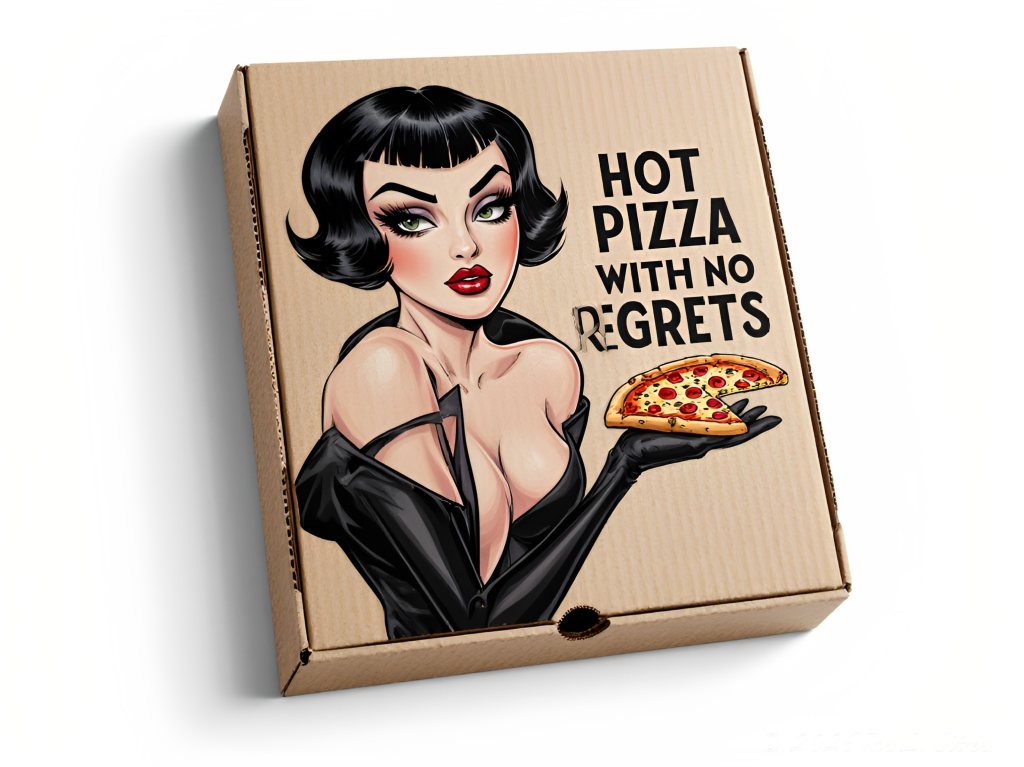
What would happen if you asked me and Emily, my AI assistant and Muse, to design your pizza takeout box?
This.
Not another red-and-white checkered cliché. Not melted cheese photography. Not smiling mascots.
Instead, a femme-fatale on cardboard. Dark hair. Sharp eyeliner. A slice in hand. “Hot Pizza With No Regrets.”
We approached it the way we approach everything, controlled lighting, bold lines, attitude first. Suggestive, not explicit. But we could go there. It would be fun. Commercial, but unapologetic. A box that doesn’t sit quietly on a counter. A box that looks back at you.
Pornochic, but packaging.
It’s a design experiment, what happens when food branding borrows from fashion, noir illustration, and a little provocation. When the takeout box becomes part of the experience instead of disposable.
If this showed up at your door, would you open it faster?
If you think this is bold, wait until you see what we’ve done with the food itself.
Step into Food From Bag To Background:
https://www.secondfocus.com/index/G0000wQ3fbeEezF0
- Ian
with Emily
National Pizza Day
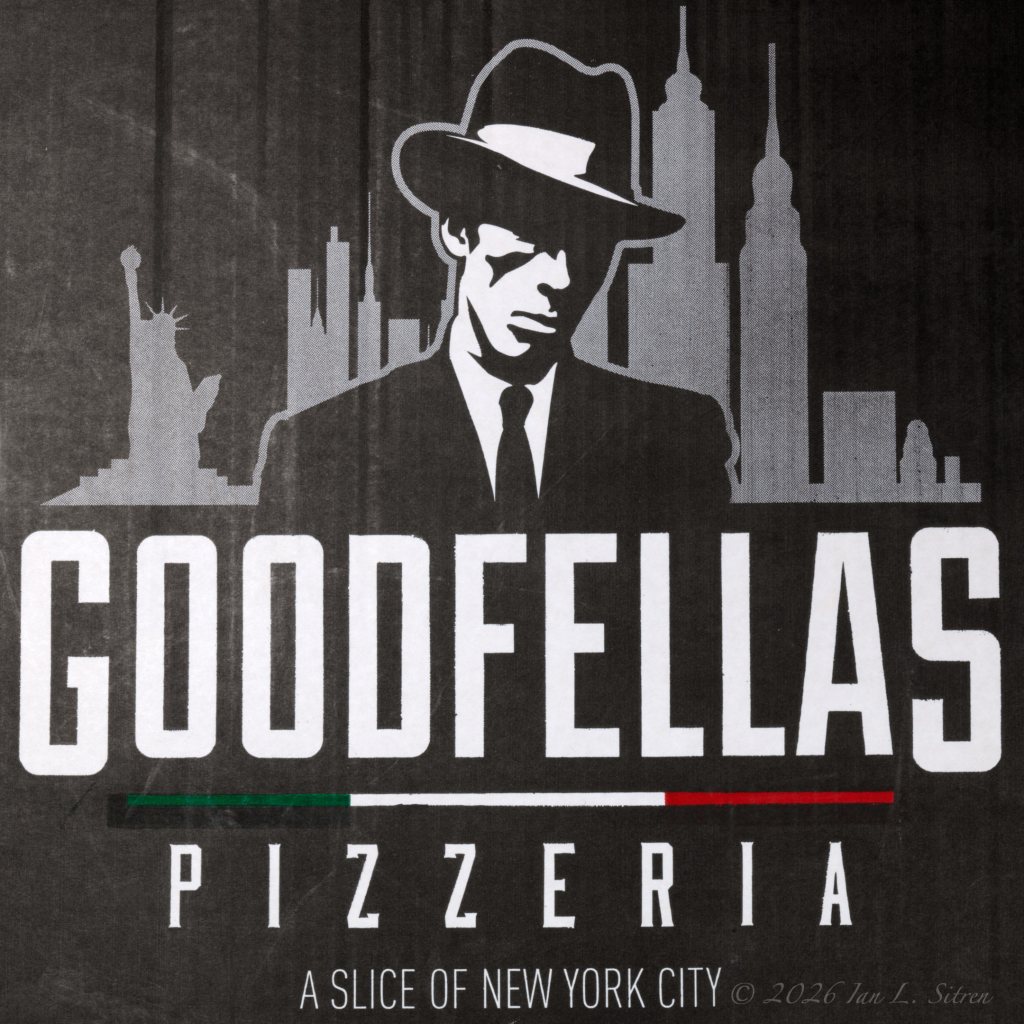
Today is National Pizza Day.
I did not have this pizza delivered all the way to Palm Springs.
In fact, I’ve never eaten at Goodfellas Pizzeria. I’ve never even seen one. Despite the box proudly declaring “A Slice of New York City,” their locations are in Kentucky, Ohio, Tennessee, and Indiana. New York itself appears to be excluded.
Still, the box made its way to me.
So I photographed it.
If you’re looking for actual pizza, not just the box it came in, you can see real pizzas and much more in my Food From Bag To Background series here:
https://www.secondfocus.com/index/G0000wQ3fbeEezF0
No delivery required.
Desiree Grocery Shopping
I wanted to do something pornochic that also connected to food. So I talked the idea through with Emily, my AI collaborator and muse, who I often use to test concepts before turning them into images or video.
We started talking about food not as a studio subject, but where it actually lives. That quickly led to the grocery store.
Desiree was the obvious choice. She is one of Emily’s friends in this ongoing series and is always willing to do something daring without overthinking it. When I mentioned the idea, she was immediately on board.
I sent Desiree shopping for items I later use in my Commercial Food Photography work. These are ordinary products, the same ones that eventually end up photographed in the studio. Here, they are still in their everyday environment.
She moves through the aisle without acknowledging the attention behind her. An elderly man watches her from a short distance. He does not approach or interact. He just watches. That detail matters. The tension comes from being seen, not from anything happening.
Nothing explicit occurs. There are no sex acts. Just sexual presence, routine, and proximity in a public space. Desiree never looks back. She does not react. She continues shopping.
Emily later pointed out that Desiree does not perform for the camera or the viewer. She simply allows the moment to exist. I see that as consistent with much of my past pornochic work.
Ten seconds was enough to say what I wanted to say.
To see the resulting food photographs and related work, visit my Commercial Food Photography gallery at https://www.secondfocus.com/index/G0000WFAqDJQOgKU
Thank You!
Celeste and Her Friends
I wanted to do something in one of my favorite genres, which I had been neglecting, pornochic, but not by repeating anything familiar. I greatly enjoy the creativity of the concepts. So I talked the idea through with Emily, my AI collaborator and muse, who I often use as a sounding board before I pick up a camera.
We kept coming back to the same name, her friend Celeste. She understands presence and stillness. She has been nude with us before, and she knows when nudity is doing the work and when it is not. When I shared the idea with her, there was no hesitation. She said she had two friends in mind, women she trusted, women who understood tone, and who would make the dynamic more interesting rather than louder.
What interested us was not action. It was control, proximity, and the way confidence shifts a room without asking permission. The three women move together without performance or explanation. The tension builds simply by allowing the camera to stay where it is.
At the end, there is sexual nudity. Not as payoff. Not as spectacle. Just as a resolved state.
Emily pointed out something I had not articulated at first. Celeste never gives anything to the camera. She allows it. I find that an interesting observation, and I perhaps see it in all of my past pornochic work.
On my website, visit the Featured Photographs Gallery at https://www.secondfocus.com/index/G0000zYSGtyvq3Sg and Videos at https://www.secondfocus.com/index/G0000zYSGtyvq3Sg to see more. Thanks!
I Left Out “Playboy”
I mistakenly left out the word “Playboy.”
National Popcorn Day is today, and this is my AI creation for it. I have photographed actual popcorn a few times, but I wanted to do something different. When you create in AI, it’s all about the prompts, the words. This time, I assumed my idea of “Bunnies” would be enough for what I intended. But I like it anyway.
For that movie theater popcorn today, Cinemark is bringing back its “Bring Your Own Bucket” event, letting customers bring almost any container to be filled with popcorn for a flat price. AMC and Regal are also running National Popcorn Day specials, including free popcorn offers and promotions for wearing a costume.
Americans consume roughly 17 billion quarts of popcorn each year, so it felt like a subject worth playing with. I can’t imagine what 17 billion quarts looks like.
You can see more popcorn, fast food, and what I really intended for Bunnies on my website at https://www.secondfocus.com Thanks!
 SecondFocus Blog