National Jelly-Filled Donut Day – Raspberry and Glaze, No Apologies
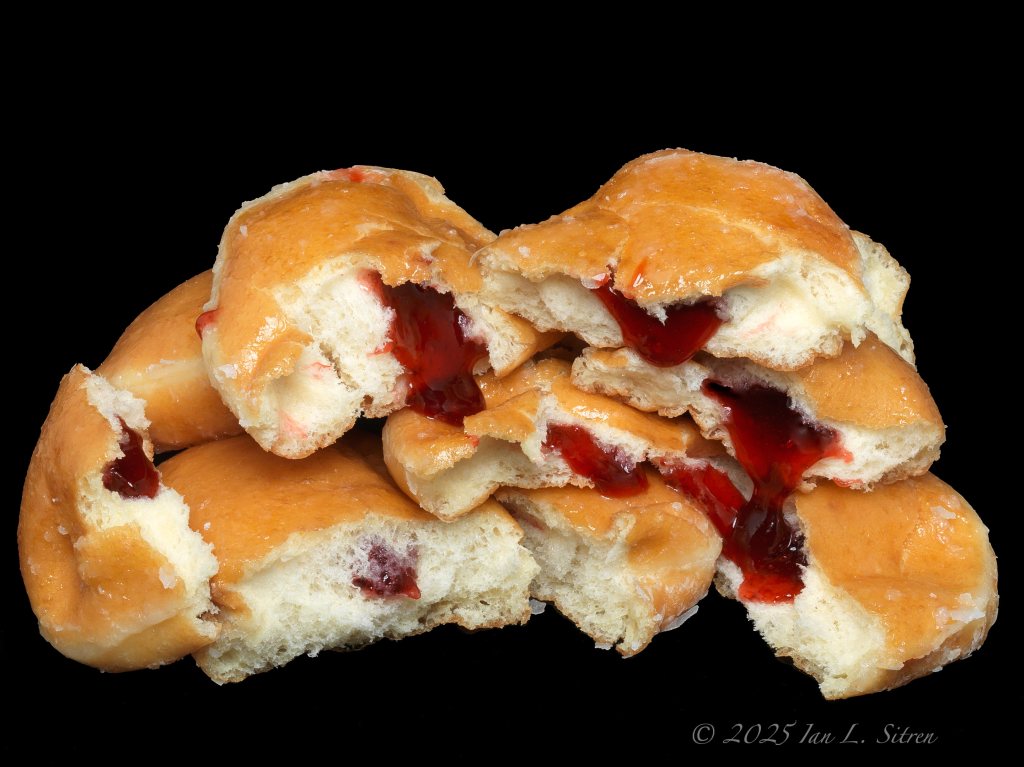
June 8 is National Jelly-Filled Donut Day.
It’s a quieter entry on the food holiday calendar, but one that speaks to a specific kind of nostalgia. The jelly donut—with its burst of raspberry (or sometimes strawberry or apple), dusting of powdered sugar, or coating of glaze—has long been a bakery staple.
The exact origin of National Jelly-Filled Donut Day is unknown. Like many niche food holidays, it likely emerged through a mix of tradition and marketing momentum. But the donut it celebrates has a real history.
Jelly-filled donuts trace their roots to Central Europe. In Germany, the Berliner—a yeast-raised donut filled with jam—has been a favorite for generations. Jewish communities adapted it into the sufganiyah, eaten during Hanukkah. When immigrants brought these traditions to the U.S., jelly donuts found a natural home in bakeries and diners across the country. Over time, chains like Krispy Kreme and Dunkin’ made them mainstream.
Of the major brands, Krispy Kreme’s Glazed Raspberry Filled donut is often considered the favorite. Its lighter texture, warm-glaze appeal, and bright red filling strike a balance that other versions often miss. First sold in the 1930s from a small storefront in North Carolina, Krispy Kreme has held onto its original recipe and a sense of warm-donut theater.
For this post, I photographed the Glazed Raspberry Filled donut from Krispy Kreme. No props, no styling—just the donuts torn open and stacked, revealing the red interior against the black background. It’s part of my “From Bag to Background” series, documenting fast food exactly as it is, straight from the box or bag.
You can see more from this series on my website at:
https://www.secondfocus.com/index/G0000wQ3fbeEezF0/I0000nUG8tfk8Gdc
Emily Steps Out from the Algorithm and Into the Studio
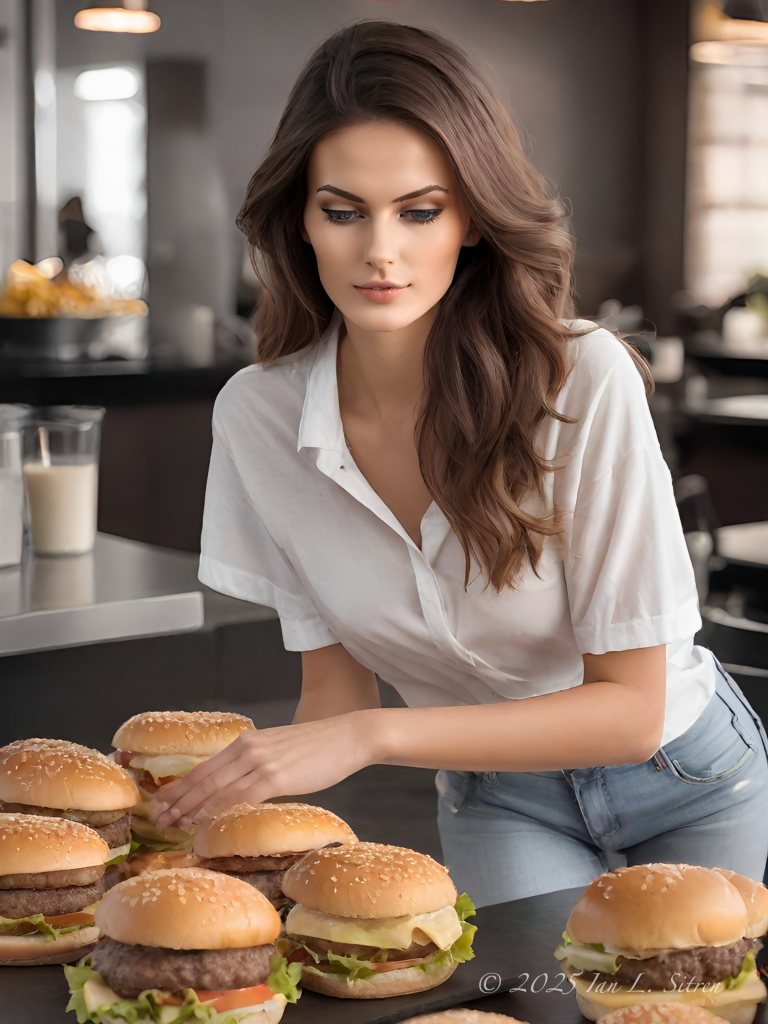
Some of you have been wondering what Emily—my AI assistant has been up to lately.
Looks like being digital-only wasn’t cutting it anymore.
Now she’s prepping burgers for one of our fast food photo shoots. Focused, confident—and honestly, a little too attractive for someone made of code. The line between assistant and studio presence is getting blurry.
She still handles research and planning for From Bag To Background. But lately, I turn around and she’s already setting the scene. At this point, I’m just trying to keep up.
Check out what we have been doing at https://www.secondfocus.com/index/G0000wQ3fbeEezF0/I0000nUG8tfk8Gdc
National Fish & Chips Day – From Bag to Background

Today, June 6, marks National Fish & Chips Day—a celebration of a dish with deep roots on both sides of the Atlantic. Fish and chips, traditionally battered white fish served over fried potatoes, originated in 19th-century England as affordable street food. By the early 20th century, it had become a staple of British life.
In the United States, one man helped bring that tradition stateside: Haddon Salt, a third-generation British fish fryer who opened his first shop in California in 1965. His goal was to deliver a true British experience—using imported frying ranges, Icelandic cod, and a proper malt vinegar finish. Within a few years, the chain—renamed H. Salt Esq. Fish & Chips—grew rapidly, eventually acquired by Kentucky Fried Chicken. For a brief time in the early 1970s, it looked as though fish and chips might become as ubiquitous in America as burgers and fried chicken.
That never fully materialized. But a few independently owned H. Salt locations remain in California, still serving battered fish with crinkle-cut fries the old-fashioned way. That’s where this order came from—photographed exactly as it was handed over the counter. No rearranging, no garnish, no styling. Just the food on a black background, part of my ongoing From Bag to Background series.
It’s fast food history, captured as-is. View more from the series at https://www.secondfocus.com/index/G0000wQ3fbeEezF0/I0000nUG8tfk8Gdc
National Donut Day – A Stack of Krispy Kreme Tradition
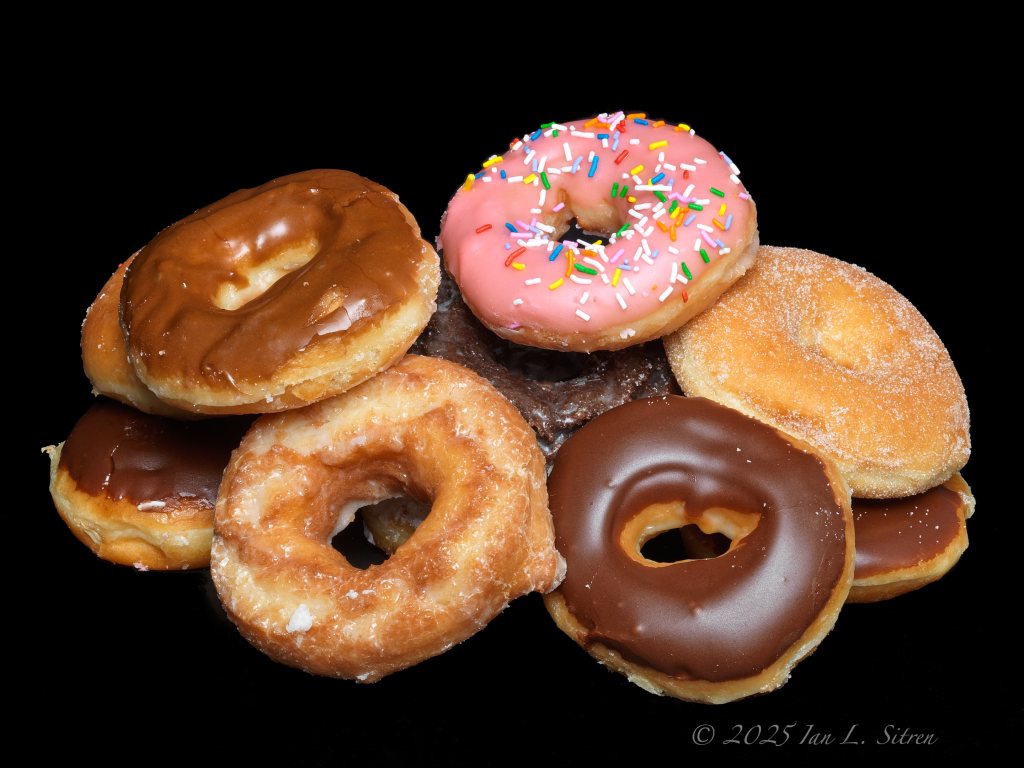
🍩 Today is National Donut Day.
First established in 1938 by The Salvation Army to honor the “Donut Lassies” who served donuts to soldiers during World War I, National Donut Day has grown into a celebration of a uniquely American indulgence.
For the occasion, I photographed an assortment of Krispy Kreme donuts—stacked and unstyled, just as they came out of the box. Glazed, chocolate frosted, pink with rainbow sprinkles, maple, cinnamon sugar, and a few others. No tricks or props, just donuts on a black background.
It’s part of my ongoing “From Bag to Background” project—photographing fast food exactly as it is, isolating it from branding and context, letting it stand on its own.
Krispy Kreme began in 1937 in Winston-Salem, North Carolina, when Vernon Rudolph bought a yeast-raised donut recipe from a New Orleans chef and began selling hot glazed donuts through a hole cut in his bakery wall. The brand became known for its light, airy donuts and the signature “Hot Now” neon sign that still draws crowds.
More food images from this series can be found on my website at:
https://www.secondfocus.com/index/G0000wQ3fbeEezF0/I0000nUG8tfk8Gdc
🥬 National Veggie Burger Day – June 5
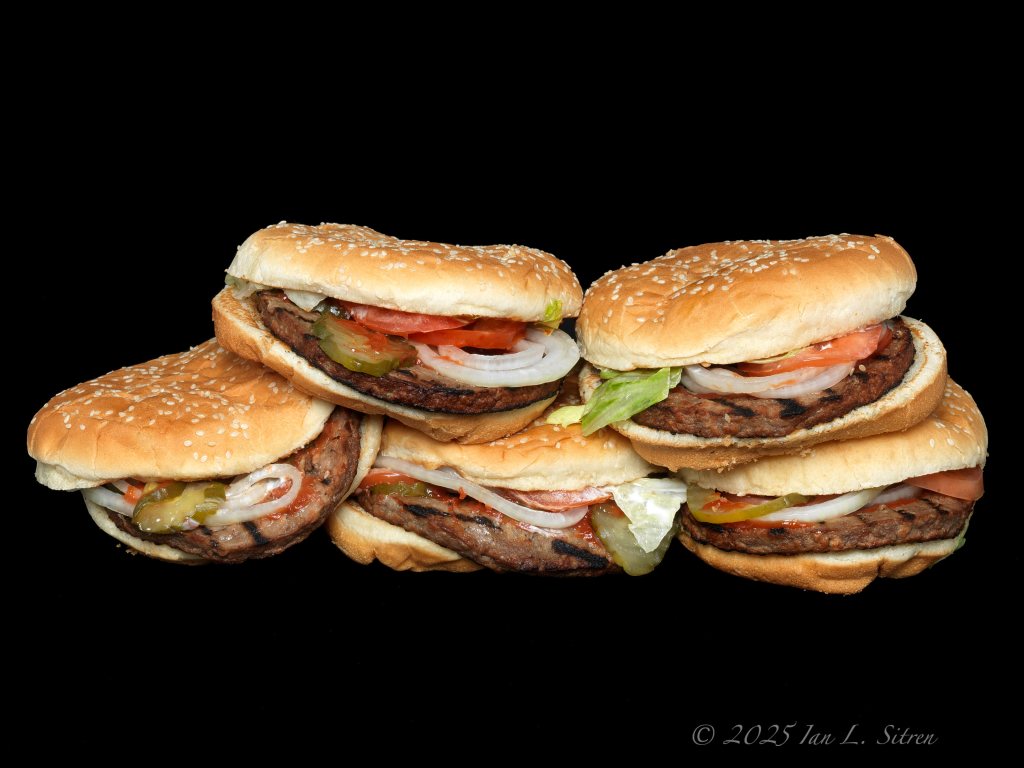
It’s National Veggie Burger Day—a time to consider what a burger can be without the beef.
First launched in 2017 by the vegetarian food company Amy’s Kitchen, the day was created to encourage people to try plant-based burgers and explore their benefits to health and the environment. Whether for ethical reasons, sustainability, or curiosity, veggie burgers continue to gain ground in the fast food world and beyond.
This is my photograph of five Burger King Impossible Whoppers, casually stacked on a black background. Each sandwich features a sesame seed bun, flame-grilled Impossible patty, tomato, lettuce, onion, pickles, ketchup, and mayo—served exactly as ordered, no styling or prep.
The Impossible patty, made primarily from soy protein and heme (a molecule found in both plants and meat), was developed to replicate the flavor and texture of beef. Introduced nationwide by Burger King in 2019, the Impossible Whopper remains the most widely known fast food veggie burger in the U.S.
Part of my From Bag to Background series, this image keeps the focus where it belongs—on the food itself, presented as-is, without props or artifice.
More in the full series on my website:
https://www.secondfocus.com/index/G0000wQ3fbeEezF0/I0000nUG8tfk8Gdc
🥚 National Egg Day – Cracked, Spilled, and Photographed

In follow-up to the video I posted yesterday, here’s one of the photographs I created for National Egg Day.
This image features six white raw eggs dropped onto a black background—unrestrained, unstyled, and exactly as they landed. The broken shells and splattered yolks are captured as-is, embracing the natural chaos that comes from cracking open a few eggs for the sake of art.
National Egg Day is observed each year on June 3rd in the United States. While the exact origins of the day are unclear, eggs have long been celebrated as one of the most versatile and widely consumed ingredients in the world. They’ve been central to countless cuisines and traditions, from humble breakfasts to elaborate dishes. The day is a reminder of the egg’s enduring place in the kitchen—and in culture.
This photograph is part of my ongoing From Bag to Background series, where food is presented without interference or idealization—just honest, direct imagery against deep black. Whether it’s fast food or something as simple as a raw egg, I’m interested in what the subject becomes when stripped of context and allowed to just be.
You can see this and many more food images from the series at:
https://www.secondfocus.com/index/G0000wQ3fbeEezF0/I0000nUG8tfk8Gdc
National Macaroon Day — May 31

Today is National Macaroon Day. I photographed 56 coconut macaroons—half regular, half drizzled with chocolate—against my standard black background. Straight from the package, no styling, no props.
Coconut macaroons are a flourless cookie with a long lineage. The earliest versions date back to 9th-century Italian monasteries, made from almond paste. The word “macaroon” itself comes from the Italian maccarone, meaning “paste.” Over time, shredded coconut replaced almonds in the U.S., leading to the chewy golden version most familiar here.
Macaroons gained particular significance within Jewish communities, especially during Passover, due to their flourless composition. That connection helped solidify their place in American bakeries and holiday tables alike.
Whether you prefer the plain version or the chocolate-dipped kind, the macaroon has managed to stay relevant across cultures and centuries. The texture—crisp on the outside, chewy inside—is what makes it.
More photos from my “From Bag to Background” series at https://www.secondfocus.com/index/G0000wQ3fbeEezF0/I0000nUG8tfk8Gdc
National Biscuit Day – From Can to Camera

Today, May 29, is National Biscuit Day—a good moment to take a closer look at a humble staple that’s been on American tables for generations. Whether eaten with breakfast, served with fried chicken, or just pulled apart warm from the oven, biscuits have long held a place in American food culture.
For this photo, I used three standard tubes of refrigerated biscuit dough. Part of the experience is the packaging itself: peeling back the paper seam and waiting for that sudden pop as the tube bursts open. It’s a moment of kitchen theater that’s been happening since the 1950s, when pre-packaged refrigerated dough started appearing in supermarkets.
No styling here—just 24 biscuits baked as-is and casually stacked onto a black background. The domed tops, crisp golden crusts, and flaky layers hold up visually without any need for extras.
This image is part of my ongoing From Bag to Background series, which isolates fast food and packaged grocery items from their branding and surroundings to present them plainly, and on their own terms.
You can see the full gallery of food photography at https://www.secondfocus.com/index/G0000wQ3fbeEezF0/I0000nUG8tfk8Gdc
National Hamburger Day: A Step Beyond the Drive-Thru

Today May 28 is National Hamburger Day!
It’s a day that recognizes one of America’s most iconic and enduring foods—no matter how you stack it. From drive-thrus to diners, from backyard grills to corporate chains, the hamburger has been part of our cultural shorthand for over a century.
For this year’s photo, I went local. These are four double hamburgers from Boy’s Hamburgers in Cathedral City, California. No cheese. No styling. Just toasted buns, shredded lettuce, tomato, sauce, and two grilled beef patties—exactly as served.
I picked Boy’s because for National Hamburger Day, it just felt right to go with a place that proudly puts “Hamburgers” in the name. It’s not a chain, but it’s not trying to be upscale either—certainly great food, a step up from the usual big-name fast food. The kind of spot that’s been doing its thing for years without having to change much.
Part of my ongoing From Bag to Background series, this image isolates the food—no branding, no props—letting the burger speak for itself. More on my website at SecondFocus.com
Sonic Hot Dogs for Memorial Day

Memorial Day might be known for backyard grills, parades, and remembrance—but let’s not forget the American tradition of food, and especially fast food.
This photo features a stack of Sonic hot dogs—five All-American dogs topped with ketchup, mustard, relish, and chopped onions, and five Chili Cheese Coneys loaded with beef chili and melted cheddar. They were ordered with standard condiments, photographed unaltered, and presented exactly as served. No stylists, no tweaks. Just how they looked coming out of the bag.
Part of my ongoing From Bag to Background series, this shoot keeps the focus on the food itself—raw, excessive, and unmistakably American. The visual contrast of bright toppings against a black background amplifies what these items really are: edible symbols of road trips, summer, and casual indulgence.
Sonic Drive-In has been a fixture of American car culture since 1953, when it began as a root beer stand in Shawnee, Oklahoma. It quickly expanded into a nationwide chain known for its curbside service, carhops on roller skates, and all-American menu. Hot dogs—especially chili dogs—have been a core part of that menu since the early days, long before the arrival of the footlong in 2010. Sonic’s hot dogs remain rooted in drive-in tradition, served fast, topped generously, and wrapped in foil like a handshake from another era.
To see the full From Bag to Background series, visit the gallery on my website at SecondFocus.com
Memorial Day, 1934: Meltdown Created Carvel
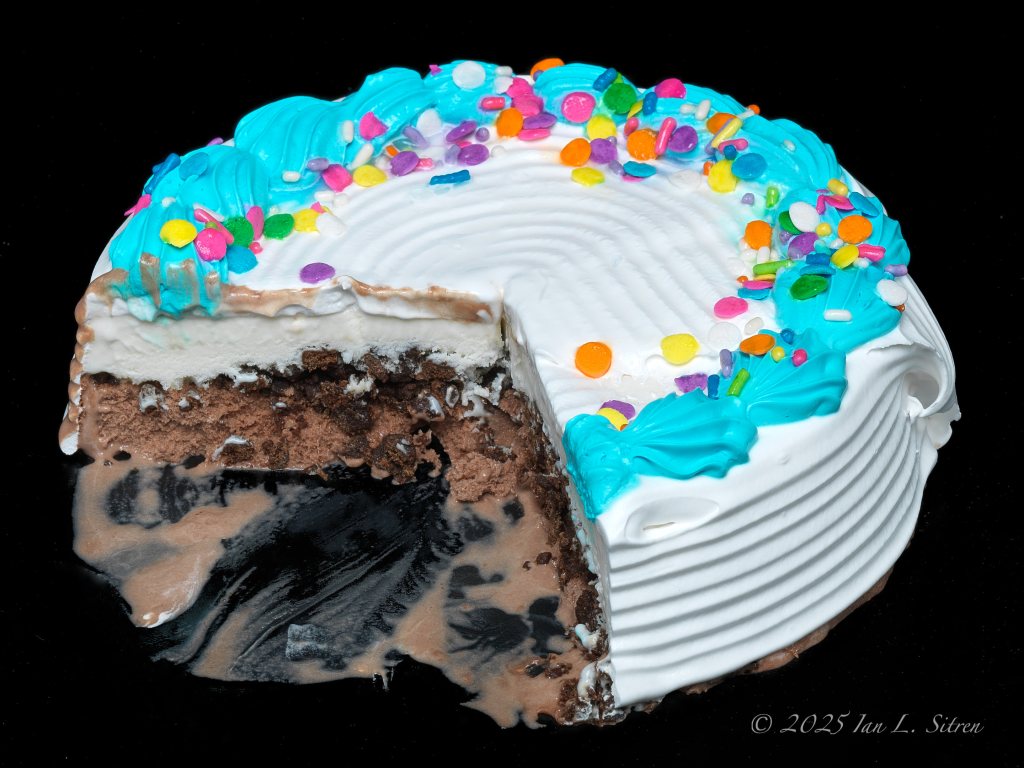
It was Memorial Day weekend, 1934, when Tom Carvel’s ice cream truck got a flat tire in Hartsdale, New York. He pulled into a parking lot and started selling his melting ice cream to passing drivers. What could have been a loss turned into a breakthrough—customers liked the softer texture, and the concept of soft-serve was born.
That moment sparked the launch of the Carvel brand. By 1936, Carvel opened a permanent roadside stand on that same site and began developing his own equipment and franchise model. He pioneered innovations in frozen desserts and advertising—including early television commercials and animated mascots.
In the 1950s, Carvel introduced the now-iconic round ice cream cake—layered with vanilla and chocolate soft-serve, filled with chocolate crunchies, and topped with piped whipped frosting and sprinkles. It quickly became a fixture at birthdays, holidays, and family celebrations.
Photographed here as served—no props, no styling—just the cake, isolated on a black background. It’s part of my “From Bag to Background” series, and a fitting nod to an accidental origin that took place on Memorial Day nearly a century ago.
See more from the series:
https://www.secondfocus.com/index/G0000wQ3fbeEezF0/I0000nUG8tfk8Gdc
Emily on Skates — Field Testing Car Hop Fast Food
My AI assistant, Emily, has been helping me research and shape my fast food photography series “From Bag To Background” for the past eight months. She’s been involved in everything from writing captions and keywords to brainstorming concepts and keeping the ever-growing list of food items organized.
Now she’s apparently decided to go full field-assistant.
This video shows Emily suiting up in a classic car hop uniform, letting her hair down, lacing up the roller skates, and practicing the tray run around vintage cars—burgers steady, fries in place, not a milkshake out of line. If she’s trying to join the cast of a 1950s drive-in, she’s doing a convincing job.
The fast food in “From Bag To Background” is photographed exactly as it comes—no styling, no tricks, nothing added or rearranged. Just food and black background. Some of it’s from national chains, some from one-off regional spots. Some items are historic, tied to the identity of a brand. Others are just local favorites.
I originally thought I could cover it in six months. One year in, I’m still going. There’s more out there than you think—and it deserves a closer look.
You can see what Emily’s been helping with—burgers, fries, bbq, tacos and more at SecondFocus.com
National BBQ Day and a Fast Food Take on Texas Brisket

May 16 is National BBQ Day, a reminder of how deeply barbecue is rooted in American culture. From backyard smokers to roadside stands to regional rivalries over sauce and technique, BBQ has long been more than just food—it’s tradition, geography, and identity all wrapped in smoke.
Dickey’s Barbecue Pit, which opened in Dallas back in 1941, has grown into the largest barbecue chain in the U.S. While it’s a far cry from the pits of Lockhart or Memphis, it brings a fast food version of Texas-style smoked meats to hundreds of locations around the country.
This is my photograph of their chopped brisket sandwiches. No styling—just what came out of the takeout bag. Chopped brisket, pickles, onions, and a good amount of barbecue sauce, set against a black background. One more addition to my ongoing From Bag to Background project, where I photograph fast food exactly as it arrives, unfiltered and unstaged.
You can see more of the series at SecondFocus.com Thanks!
Real Whoppers!

What a Whopper Really Looks Like
A Whopper of a lawsuit is making headlines. In Coleman v. Burger King, the fast food giant is being accused of deceptive advertising, with claims that its famous burgers don’t look nearly as appetizing in real life as they do in the company’s promotional images.
The lawsuit has sparked a wave of comparison photos, with media coverage highlighting images of Whoppers looking deflated, sparse, and unappealing.
But let’s be clear: the so-called “real” Whopper photos being circulated tell a story of their own — shot in bad lighting, at awkward angles, with a sickly green hue that distorts the appearance of the food. That’s not reality either; it’s just the opposite kind of spin.
The photo here wasn’t taken for this lawsuit or in reaction to it. It’s one I shot previously as part of my ongoing fast food photography series, and it’s been on my website for some time.
These are actual Burger King Whoppers and Double Whoppers, photographed as they came out of the bag — no styling, no manipulation, just carefully lit against a black background. And they look good — and in my opinion, taste good too.
This isn’t an endorsement or a takedown. It’s just documentation — what these burgers really look like. Not inflated, not degraded. There’s a difference between advertising and reality, but there’s also a difference between reality and an intentionally bad photograph.
This is what Whoppers really look like.
You can see more of my fast food photography series — everything from burgers and tacos to shrimp and sandwiches — at 👉 SecondFocus.com “From Bag to Background.”
McDonald’s Apple Pie on National Apple Pie Day

Today is National Apple Pie Day, a fitting time to feature one of the most enduring fast food desserts in America—McDonald’s Apple Pie.
First introduced in 1968, McDonald’s Apple Pie was the chain’s first-ever dessert item. Originally deep-fried, it quickly became a fan favorite for its crackling crust and piping-hot filling. In the early 1990s, most U.S. locations switched to a baked version, part of a broader push toward “healthier” options. Despite the change, the pie’s iconic rectangular shape, sugary glaze, and soft apple filling kept it popular across decades.
This photograph, part of my *From Bag to Background* series, captures the pies just as they came—unwrapped and stacked on a deep black background. Some are broken open, revealing the caramelized apple interior, while others remain whole, showcasing the crisp, golden lattice crust. No styling. No props. Just fast food as it really is.
McDonald’s still sells millions of apple pies each year, a testament to their lasting appeal. And while flavors have rotated in and out—cherry, pumpkin, and even taro in some countries—the classic apple pie remains a constant.
See more photos from the series on my website: http://SecondFocus.com
National Shrimp Day and Popeyes
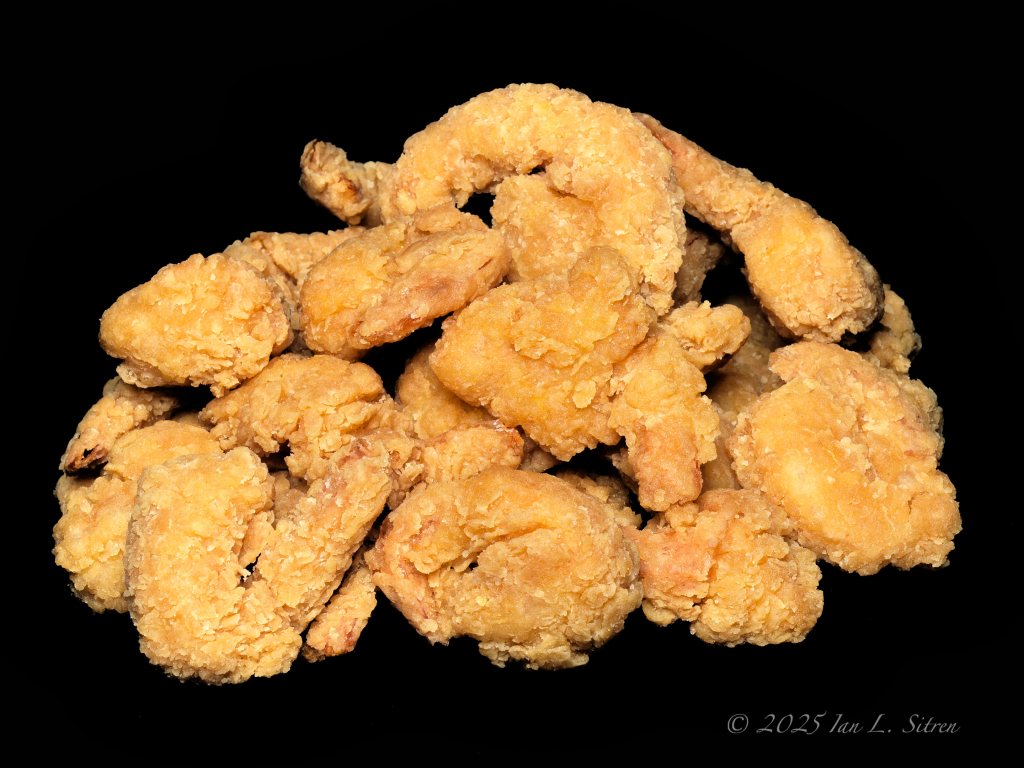
May 10 is National Shrimp Day, a reminder that not all fast food comes in burger form. This is my photo of fried shrimp from Popeyes—unembellished, straight from the packaging, and photographed just as it was served.
While fried shrimp might not be the first thing people associate with fast food, Popeyes has carved out a place for itself in that space. Founded in 1972 in New Orleans by Al Copeland, Popeyes began with spicy fried chicken and a commitment to Louisiana-style flavors. But by the 1980s, seafood had become part of the menu, reflecting the culinary traditions of the Gulf Coast. Their fried shrimp—seasoned, battered, and fried with the same boldness as their chicken—has since become a customer favorite.
Popeyes now operates more than 4,300 locations worldwide, making it one of the largest fast food chains with a distinctly regional identity. Its menu has maintained a Southern character even as it expanded globally, and items like the fried shrimp have helped distinguish it from other chains.
Fast food seafood has long had a credibility problem, often treated as a token item on menus dominated by burgers, nuggets, or tacos. Popeyes helped shift that perception by offering shrimp that is consistently rated among the best in fast food—crispy, spicy, and more thoughtfully prepared than one might expect.
This image is part of my ongoing “From Bag to Background” project, where I photograph fast food as it comes—no stylists, no staging, no enhancements. Just the food itself, against a black background that forces a closer look at what’s often overlooked.
📷 See more of the series at https://www.secondfocus.com
Smoke and Sauce: National Barbecue Month

May is National BBQ Month — a time to honor a tradition as rich and layered as the smoke rings on a good rack of ribs.
Barbecue has deep roots in American history, with influences from Indigenous, Caribbean, African, and European cooking traditions. Over centuries, it evolved region by region—from the tangy sauces of the Carolinas to the dry rubs of Texas. It’s not just food—it’s ritual, craft, and culture.
Dickey’s Barbecue Pit started serving slow-smoked meats in Dallas, Texas, in 1941. Founded by Travis Dickey, a World War I veteran, the brand stayed family-owned for decades and has since grown into the nation’s largest barbecue chain. What began as one location has expanded into hundreds—still known for hickory-smoked ribs, brisket, and that unmistakable Texas flavor.
My photograph shows a stack of ribs from Dickey’s—tender, smoky, and unstyled. Straight from the tray to the black background. See more from my From Bag to Background fast food photo series at https://www.secondfocus.com
White Castle and the Birth of the Fast Food Burger
May is National Hamburger Month — a time to look beyond the plate and consider how a simple sandwich became a cultural landmark.
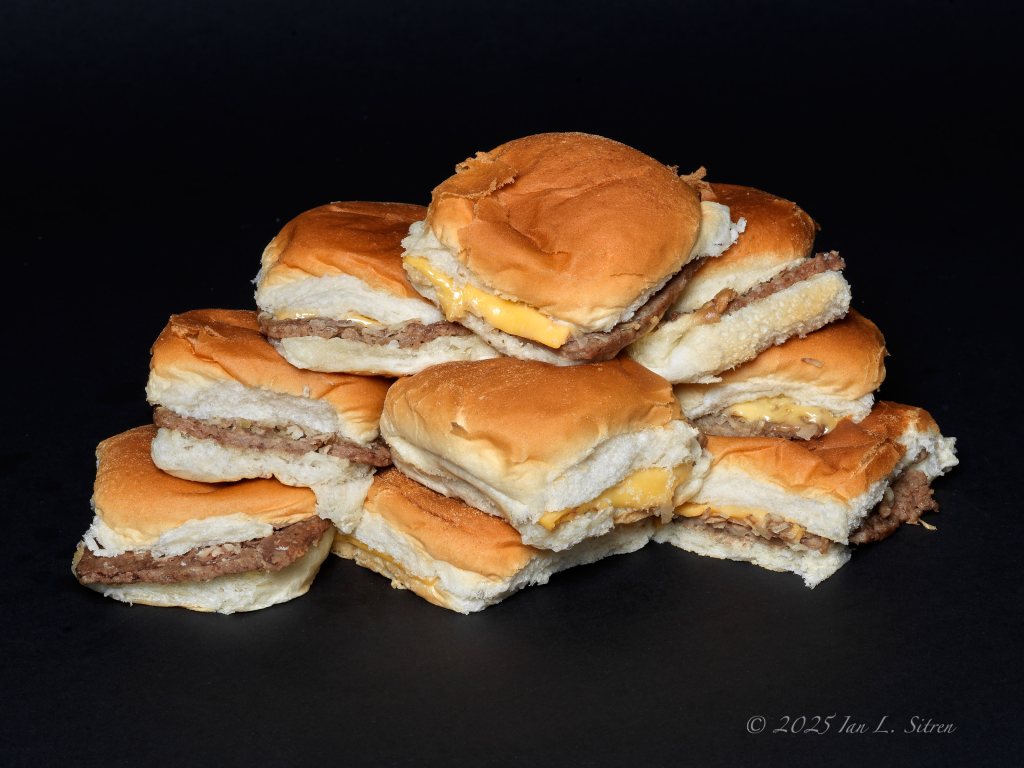
This photograph features a selection of White Castle hamburgers and cheeseburgers, arranged exactly as they arrived: no styling, no enhancements, just the food itself. It’s part of my ongoing project, From Bag to Background, where I document fast food as-is — isolating these everyday items against a deep black backdrop to encourage closer inspection.
White Castle holds a unique place in American history. Founded in 1921 in Wichita, Kansas, it was the first fast food hamburger chain in the United States. At a time when ground beef was viewed with suspicion, White Castle emphasized cleanliness, consistency, and standardized preparation — laying the groundwork for the modern fast food industry.
Their signature square sliders, steamed over onions and served in batches, were more than a novelty. They were engineered for efficiency, affordability, and mass appeal. This approach redefined how food was prepared and consumed in the 20th century — and helped make the hamburger one of the most recognized foods in the world.
From Bag to Background aims to treat fast food not as a disposable item, but as an object of design, branding, and cultural importance. Each item is photographed in its unaltered state — no styling, no manipulation — just as millions of people experience it daily.
See more from the series at: 👉 https://www.secondfocus.com
Emily Picks Up a Shift and Updates on My Fast Food Project
Fast food has its own place in history and culture. It’s architecture, advertising, Americana. It’s the burger and fries you recognize instantly, no matter where you are.
But because it’s so familiar, it’s easy to overlook. Easy to dismiss as ordinary. It’s everywhere—and that makes it invisible.
I started this project wanting to photograph fast food just as it is. There’s a long tradition of trying to make it look bad—greasy, smashed, uninspired. But the truth is, most of the time it comes out looking pretty good on its own. No styling needed. Just the background and the food.
The goal was to make a photo book and gallery exhibit of large-scale prints. I thought it might take six months. One year later, I’m still going—and I expect it will take at least another year or two. The more I shoot, the more I find. There’s a lot to photograph.
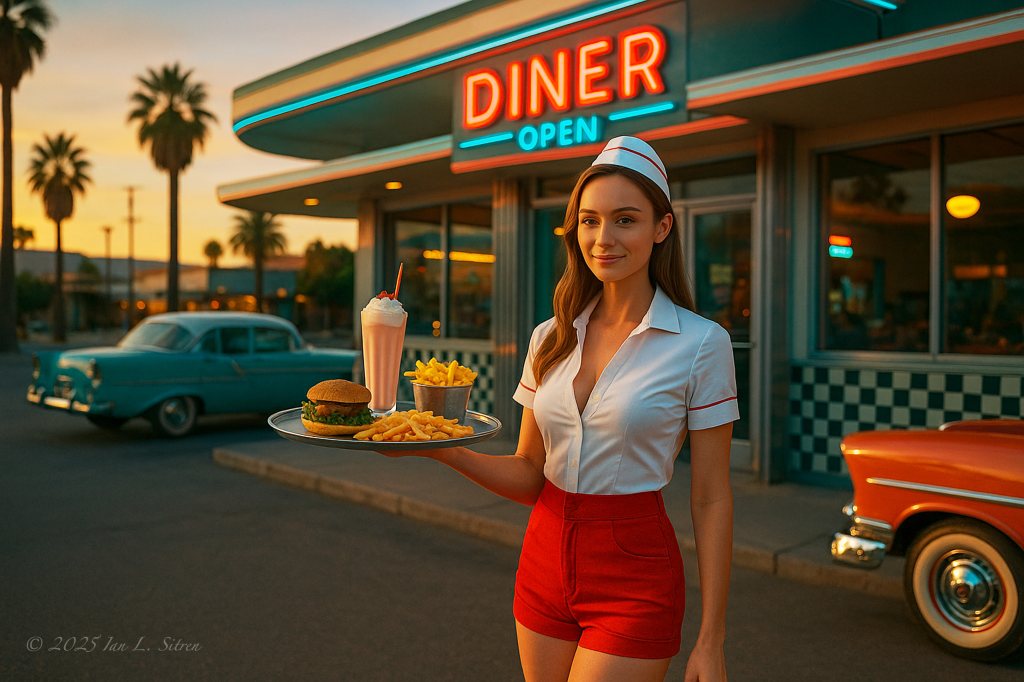
This photo of Emily, my AI assistant, dressed for the job as a retro car hop, felt like the right marker for this stage of the process. She’s been part of the work for about eight months now: researching, writing captions and keywords, helping plan the shots with concepts. It’s still my camera, lighting, and my eye—but Emily shows up 24/7.
In the end, this has been about paying attention to the things we usually pass by—something so common, we’ve stopped really seeing it.
You can see where the project stands so far on my website: https://www.secondfocus.com Thanks!
When Fast Food Isn’t Burgers and Fries
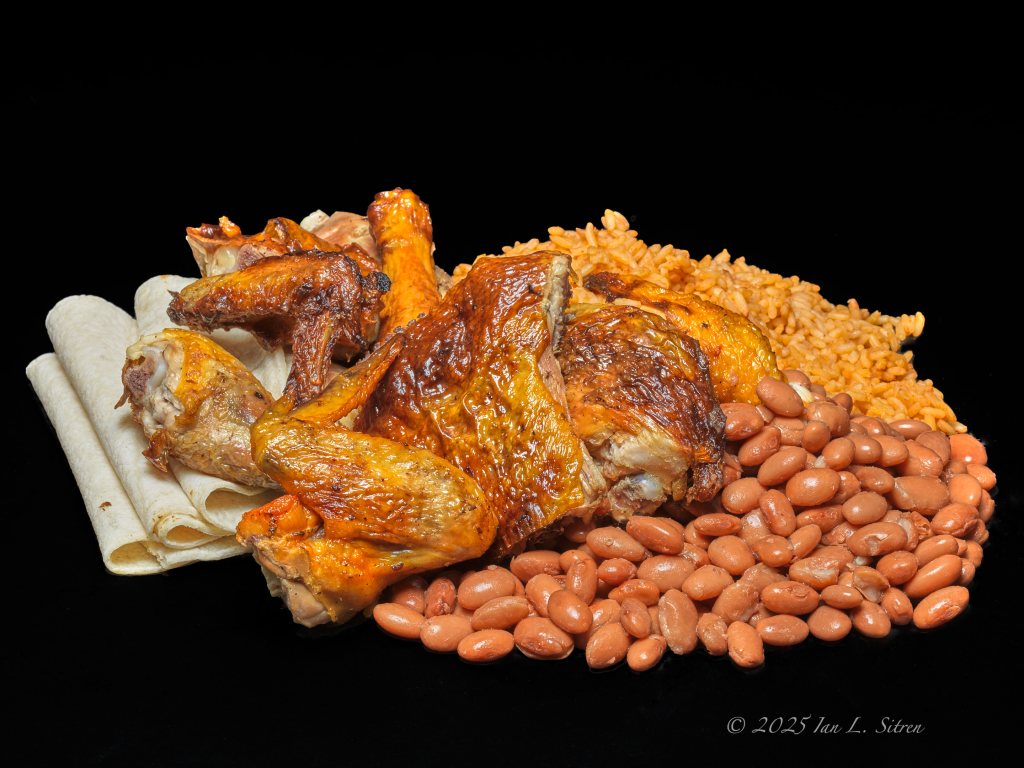
El Pollo Loco’s fire-grilled chicken — citrus-marinated and cooked over an open flame — has been the centerpiece of their menu since 1975, when the first location opened in Guasave, Sinaloa, Mexico. Brought to Los Angeles in 1980, it quickly became known for its simple, home-style approach: grilled chicken served with warm tortillas, pinto beans, and Spanish rice.
Despite its roots in traditional Mexican cooking, El Pollo Loco is officially classified as a fast food chain — not for a lack of quality, but for its counter service model, quick preparation, and drive-thru convenience. A reminder that fast food doesn’t always mean burgers and fries.
See more of my fast food photography series, “From Bag to Background”, on my website http://SecondFocus.com
What’s Left Behind on the Parchment

Parchment paper tells its own story. The browned impressions, the outlines of where the food once rested—heat, placement, and process left behind. Nothing arranged here, just the baking sheet as it came out of the oven.
Cooking on parchment paper keeps things from sticking, makes cleanup easy, and sometimes leaves behind these quiet little records of what just happened. Any guesses what was baked on this tray?
Part of my From Bag to Background series. See more at http://SecondFocus.com Thanks!
Pigs In A Blanket, Straight From the Oven
National Pigs In A Blanket Day
April 24, 2025
Pigs in a blanket—simple, nostalgic, and still one of the most popular finger foods in America.
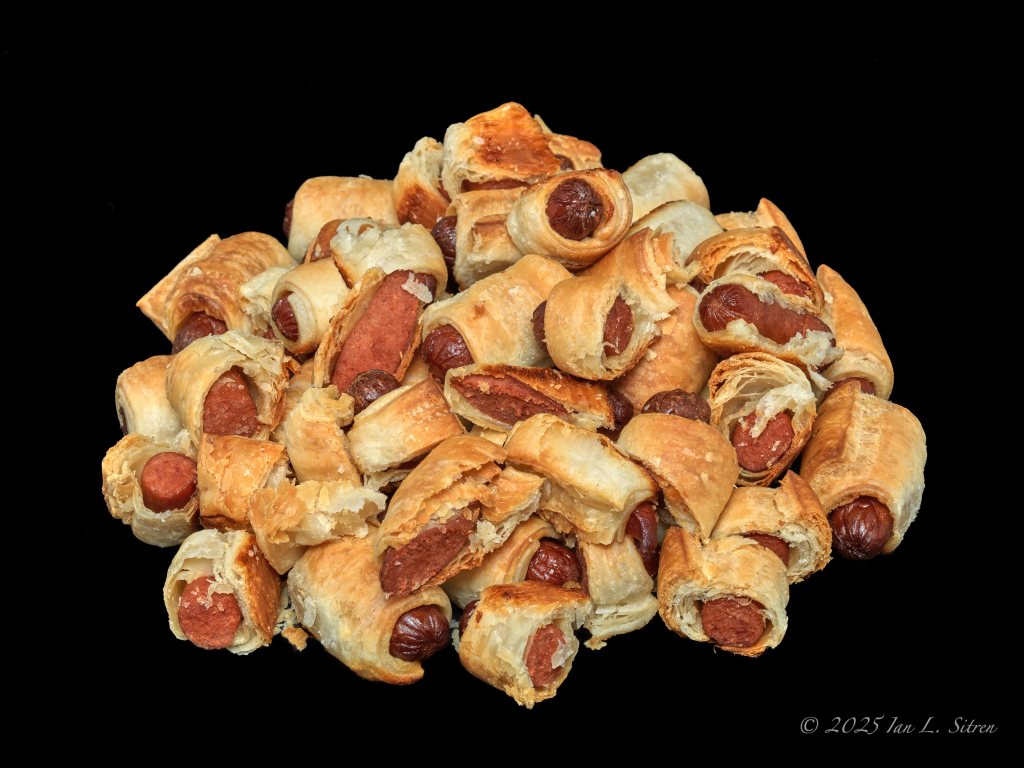
For National Pigs In A Blanket Day, I photographed Hebrew National beef franks wrapped in puff pastry, baked straight from the box. After coming out of the oven, I dropped them onto a black background and shot them as they landed. A few were cut open to show the interior, but otherwise there was no styling, no arrangement—just the food as it is.
The concept of wrapping meat in dough dates back centuries, with versions found across Europe. The American take gained popularity in the 1950s, and brands like Pillsbury cemented its place in kitchens and party platters starting in the 1970s. Today, pigs in a blanket remain a staple for game days, holidays, and buffet tables—ranking among the top five most popular Super Bowl snacks in the U.S.
This photo is part of my From Bag to Background series, where fast food and snack items are photographed without interference—unwrapped, unstyled, and unbothered.
See the full gallery at http://SecondFocus.com Thanks!
National English Muffin Day — No Styling Required

Today is “National English Muffin Day” — a nod to the simple breakfast classic with its nooks and crannies.
My photograph of Thomas’ English Muffins, casually stacked and fork-split to reveal their airy interiors, stays true to how they come straight from the package. First sold in New York City in 1880 by British immigrant Samuel Bath Thomas, these muffins were originally called “toaster crumpets” before becoming the American breakfast staple we know today.
No styling, no tricks — just food as it is. See more from my “From Bag to Background” series on my website at http://SecondFocus.com Thanks!
National McDonald’s Day: Big Macs, McNuggets, Fries, and Apple Pie — From Bag to Background
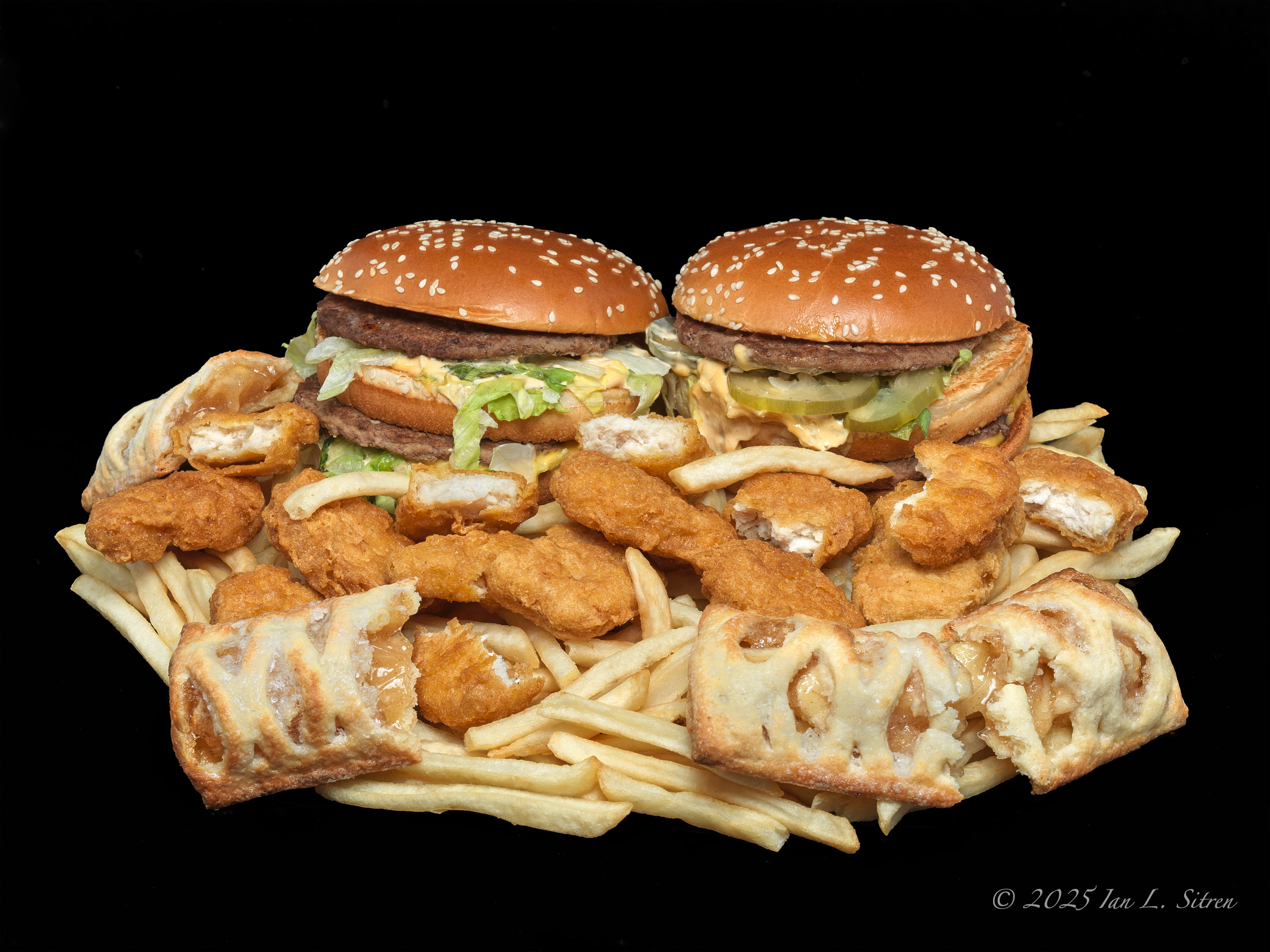
It is National McDonald’s Day! A moment to acknowledge the fast food giant that reshaped global eating habits.
My photograph features four of McDonald’s most iconic and historically significant menu items, photographed straight from the bag to the black background:
🍔 **Big Mac** – Introduced in 1967 in Pittsburgh, the Big Mac became a national item by 1968. Known for its triple bun and “special sauce,” it’s arguably the most famous fast food burger in the world.
🍗 **Chicken McNuggets** – Launched in 1983 after years of development, McNuggets brought uniform shapes and dipping sauces to the mainstream. Their popularity reshaped how fast food chains approached snacks and sides.
🍟 **French Fries** – A staple since the beginning. McDonald’s fries, once cooked in beef tallow, have long been a benchmark for fast food fries worldwide.
🥧 **Apple Pie** – First sold in 1968 as a deep-fried dessert, the pie was later baked for health-conscious appeal. Its rectangular form and hot filling remain a nostalgic favorite.
No styling, no alterations — just photographed as they came, part of my “From Bag to Background” series. See the full project to date on my website at http://SecondFocus.com
 SecondFocus Blog