National Brisket Day and the Reality Behind FOOD FROM BAG TO BACKGROUND
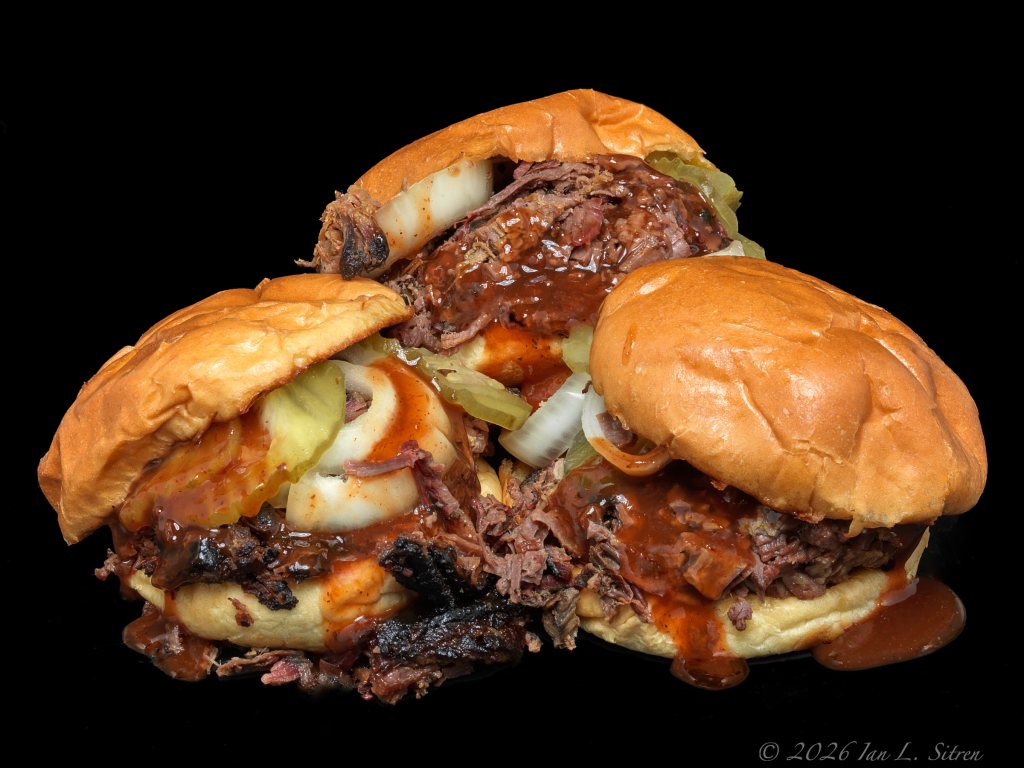
Today is National Brisket Day.
One of the things I wanted to challenge with my “FOOD FROM BAG TO BACKGROUND” project was the idea that food only becomes visually interesting after it passes through a marketing department, a food stylist, an art director, retouching, and increasingly now, AI image generation.
These brisket sandwiches from Dickey’s Barbecue Pit are none of that.
They were bought like any normal takeout order, carried home in a bag, opened, placed onto a black background, and photographed exactly as served. No rearranging. No fake steam. No hidden supports. No motor oil pretending to be sauce. No tweezers moving sesame seeds into place.
And yet they still work visually.
Actually, I would argue they work because they are real.
The overflowing chopped brisket, the uneven piles of smoked meat, the compressed buns, the dripping barbecue sauce, the onions and pickles sliding out of place, all of it feels far more appetizing and believable than the heavily over-engineered perfection seen in so much advertising imagery now.
That tension became one of the central ideas behind FOOD FROM BAG TO BACKGROUND. Fast food and takeout photographed seriously, exactly as it exists in the real world, isolated against black with no attempt to hide the messiness, excess, or reality of what arrived in the bag.
And sometimes the real version ends up looking better than the manufactured one.
More from FOOD FROM BAG TO BACKGROUND:
https://www.secondfocus.com/index/G0000wQ3fbeEezF0
National Hamburger Day and the Fast Food Reality Behind FOOD FROM BAG TO BACKGROUND
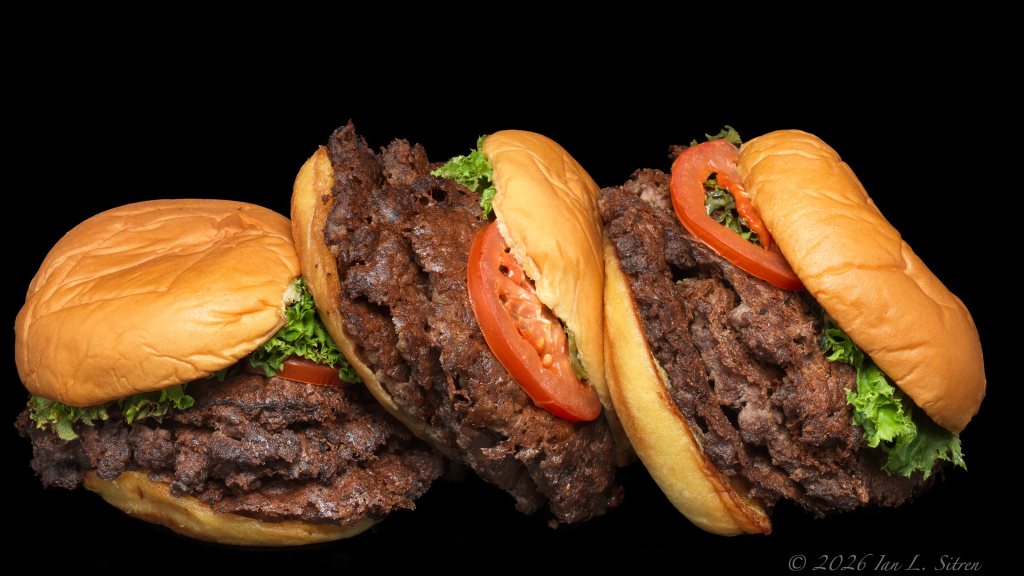
Today is National Hamburger Day.
The hamburger has probably become the defining subject of my “FOOD FROM BAG TO BACKGROUND” project. Fast food photographed exactly as it arrives, no stylists, no reconstruction, no fake versions built for advertising.
And one thing people occasionally ask is where all this food comes from.
The answer is simple: the same place everybody else gets it.
The restaurants and chains have no idea I am photographing their food. There are no sponsorships, no special preparation, no discounts because of photography, and no carefully assembled “photo burgers” arriving from a corporate kitchen. I walk in or use the apps, place an order, pick it up, bring it home, and photograph it exactly as it comes out of the wrapper or bag.
Actually, the apps have become part of the process. The fast food companies constantly push coupons, free items, points, discounts, and combination deals. Surprisingly worthwhile ones. Sometimes I end up planning a shoot around whatever special appears that week.
That is part of what interests me visually about the project. These hamburgers are not idealized advertising concepts. They are real fast food hamburgers, bought like anybody else would buy them, photographed seriously against black backgrounds with the same attention I would give any other subject.
Somewhere between documentary, satire, and food photography, the hamburger became one of the central characters.
And if you have ever wondered what fast food starts looking like when it is pulled out of the bag, isolated against black, and treated like a serious photographic subject, step into the project here on my website at https://www.secondfocus.com
National Nacho Day and the Rise of Fast-Food Nachos
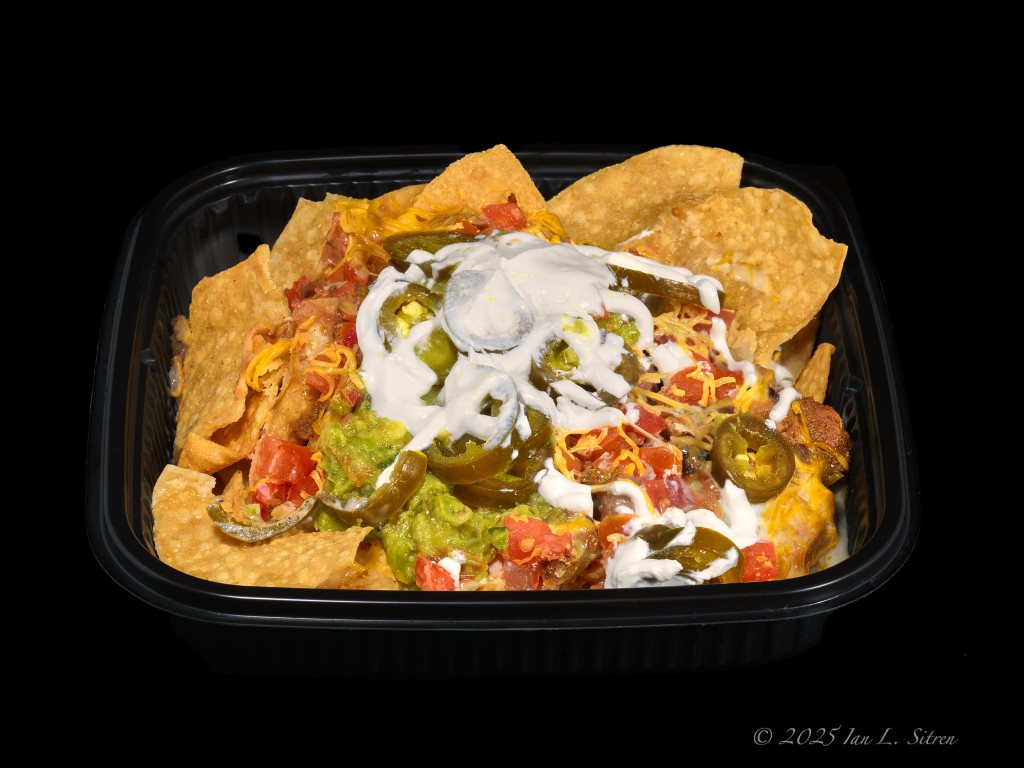
Apparently one tribute wasn’t enough for a dish invented as a last-minute solution in 1943. Nachos are one of the few foods successful enough to earn two holidays—International Nacho Day on October 21 and National Nacho Day today.
Nachos moved into the fast-food world in the 1970s, when chains began looking for inexpensive items that were quick to assemble and visually appealing. The combination of chips, cheese, and a few toppings fit perfectly into the developing drive-thru model. Taco Bell was an early adopter, introducing nachos nationally in 1979 and helping establish them as a standard menu item across the country. From there, nachos spread everywhere—from sporting events to convenience stores—and became one of the most recognizable Tex-Mex foods in American fast food.
For this second celebration, I photographed Del Taco’s Carne Asada Loaded Nachos exactly as they arrived in the black takeout container. Tortilla chips with carne asada steak, queso blanco, shredded cheese, guacamole, sour cream, diced tomatoes, and jalapeños. Fast food presented without adjustments, isolated on a black background as part of my ongoing Food From Bag to Background series.
See more on my website at: https://www.secondfocus.com/index/G0000wQ3fbeEezF0

