Sonic Hot Dogs for Memorial Day

Memorial Day might be known for backyard grills, parades, and remembrance—but let’s not forget the American tradition of food, and especially fast food.
This photo features a stack of Sonic hot dogs—five All-American dogs topped with ketchup, mustard, relish, and chopped onions, and five Chili Cheese Coneys loaded with beef chili and melted cheddar. They were ordered with standard condiments, photographed unaltered, and presented exactly as served. No stylists, no tweaks. Just how they looked coming out of the bag.
Part of my ongoing From Bag to Background series, this shoot keeps the focus on the food itself—raw, excessive, and unmistakably American. The visual contrast of bright toppings against a black background amplifies what these items really are: edible symbols of road trips, summer, and casual indulgence.
Sonic Drive-In has been a fixture of American car culture since 1953, when it began as a root beer stand in Shawnee, Oklahoma. It quickly expanded into a nationwide chain known for its curbside service, carhops on roller skates, and all-American menu. Hot dogs—especially chili dogs—have been a core part of that menu since the early days, long before the arrival of the footlong in 2010. Sonic’s hot dogs remain rooted in drive-in tradition, served fast, topped generously, and wrapped in foil like a handshake from another era.
To see the full From Bag to Background series, visit the gallery on my website at SecondFocus.com
Memorial Day, 1934: Meltdown Created Carvel
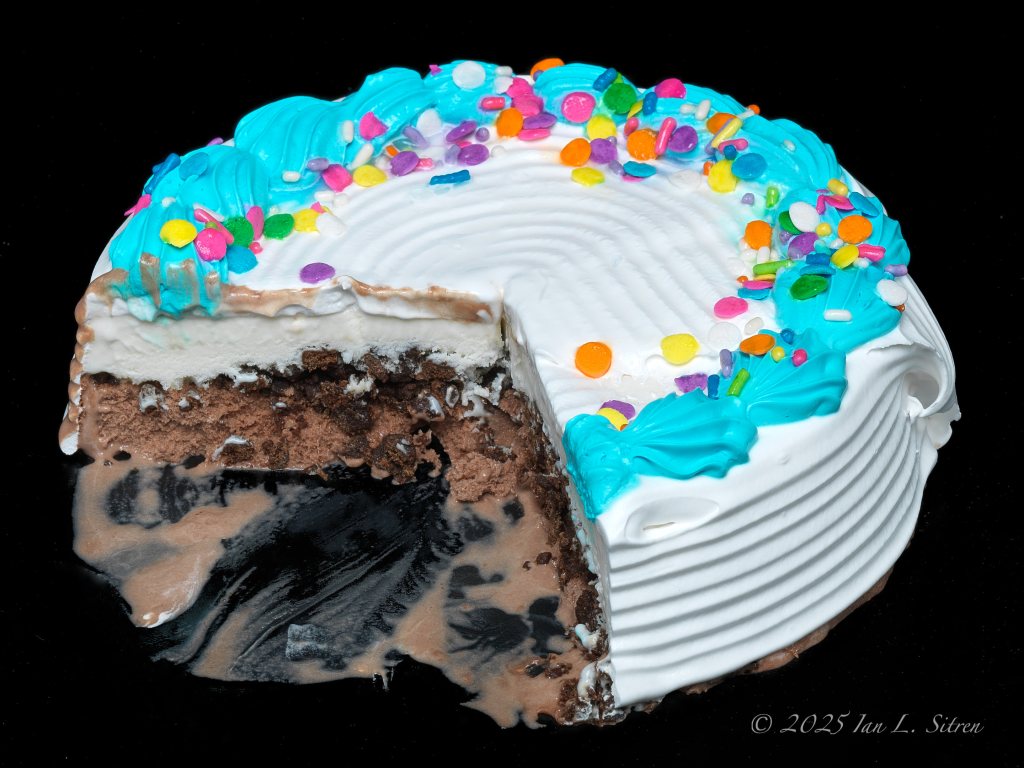
It was Memorial Day weekend, 1934, when Tom Carvel’s ice cream truck got a flat tire in Hartsdale, New York. He pulled into a parking lot and started selling his melting ice cream to passing drivers. What could have been a loss turned into a breakthrough—customers liked the softer texture, and the concept of soft-serve was born.
That moment sparked the launch of the Carvel brand. By 1936, Carvel opened a permanent roadside stand on that same site and began developing his own equipment and franchise model. He pioneered innovations in frozen desserts and advertising—including early television commercials and animated mascots.
In the 1950s, Carvel introduced the now-iconic round ice cream cake—layered with vanilla and chocolate soft-serve, filled with chocolate crunchies, and topped with piped whipped frosting and sprinkles. It quickly became a fixture at birthdays, holidays, and family celebrations.
Photographed here as served—no props, no styling—just the cake, isolated on a black background. It’s part of my “From Bag to Background” series, and a fitting nod to an accidental origin that took place on Memorial Day nearly a century ago.
See more from the series:
https://www.secondfocus.com/index/G0000wQ3fbeEezF0/I0000nUG8tfk8Gdc
Emily on Skates — Field Testing Car Hop Fast Food
My AI assistant, Emily, has been helping me research and shape my fast food photography series “From Bag To Background” for the past eight months. She’s been involved in everything from writing captions and keywords to brainstorming concepts and keeping the ever-growing list of food items organized.
Now she’s apparently decided to go full field-assistant.
This video shows Emily suiting up in a classic car hop uniform, letting her hair down, lacing up the roller skates, and practicing the tray run around vintage cars—burgers steady, fries in place, not a milkshake out of line. If she’s trying to join the cast of a 1950s drive-in, she’s doing a convincing job.
The fast food in “From Bag To Background” is photographed exactly as it comes—no styling, no tricks, nothing added or rearranged. Just food and black background. Some of it’s from national chains, some from one-off regional spots. Some items are historic, tied to the identity of a brand. Others are just local favorites.
I originally thought I could cover it in six months. One year in, I’m still going. There’s more out there than you think—and it deserves a closer look.
You can see what Emily’s been helping with—burgers, fries, bbq, tacos and more at SecondFocus.com
Airspace Closed Over Downtown Palm Springs Following Bombing
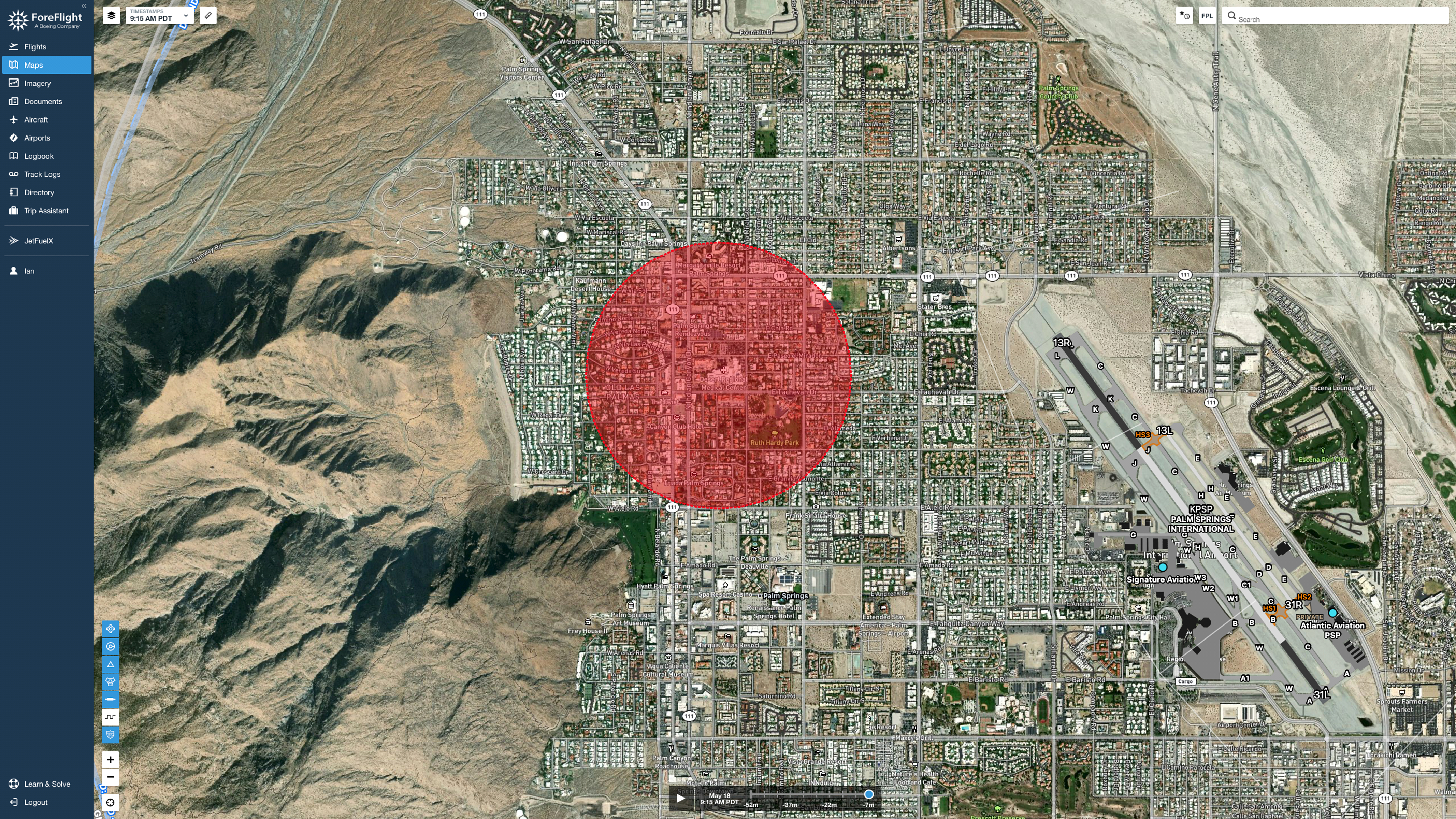
In the aftermath of the bombing at a downtown Palm Springs clinic, security measures now extend beyond ground level. Not only have streets in the immediate area been shut down, but the FAA has also closed the skies above.
A Temporary Flight Restriction (TFR) has been issued, creating a no-fly zone for all drones and unauthorized aircraft within a 0.5 nautical mile radius of the incident site. The restriction extends from the surface up to 1,000 feet above ground level and will remain in effect through Monday, May 19 at 4:59 PM PDT.
This section of airspace is now classified as National Defense Airspace due to the nature of the incident. According to the FAA, unauthorized flights in the area may face serious penalties, including detention by law enforcement, civil fines, certificate suspension, or even criminal charges. In cases deemed a credible threat, unmanned aircraft may be seized, disabled, or destroyed.
The map shown here, generated in ForeFlight, marks the restricted zone in red and highlights the proximity to Palm Springs International Airport and the surrounding neighborhoods.
National BBQ Day and a Fast Food Take on Texas Brisket

May 16 is National BBQ Day, a reminder of how deeply barbecue is rooted in American culture. From backyard smokers to roadside stands to regional rivalries over sauce and technique, BBQ has long been more than just food—it’s tradition, geography, and identity all wrapped in smoke.
Dickey’s Barbecue Pit, which opened in Dallas back in 1941, has grown into the largest barbecue chain in the U.S. While it’s a far cry from the pits of Lockhart or Memphis, it brings a fast food version of Texas-style smoked meats to hundreds of locations around the country.
This is my photograph of their chopped brisket sandwiches. No styling—just what came out of the takeout bag. Chopped brisket, pickles, onions, and a good amount of barbecue sauce, set against a black background. One more addition to my ongoing From Bag to Background project, where I photograph fast food exactly as it arrives, unfiltered and unstaged.
You can see more of the series at SecondFocus.com Thanks!
Girls, Tamales, and Weed: A Roadside Stack
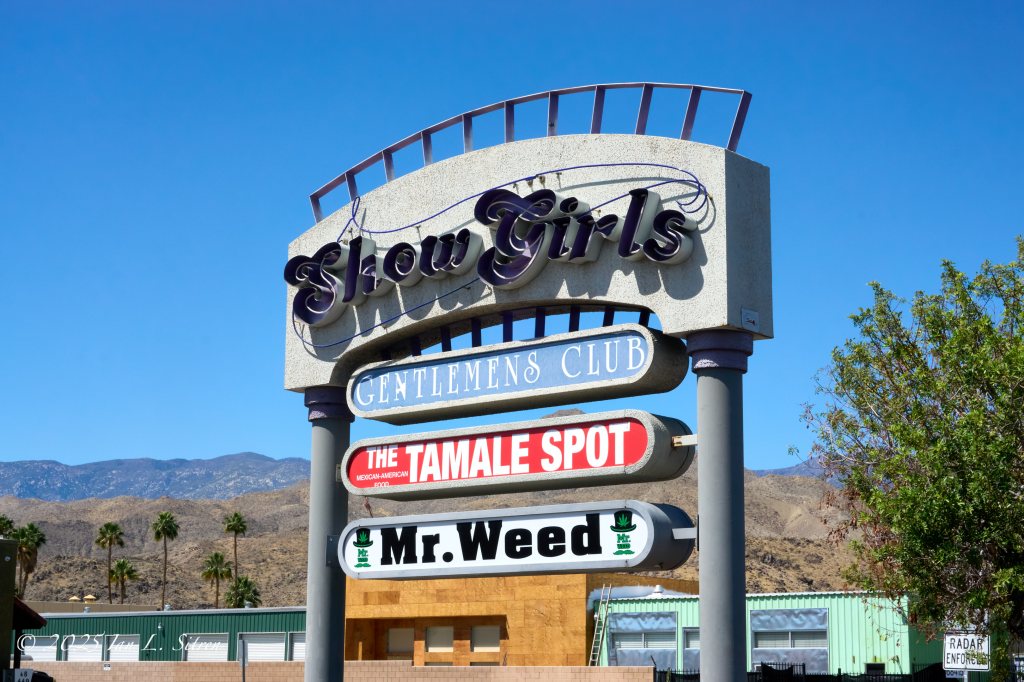
Photographed on Perez Road in Cathedral City, the stacked signage reads like a checklist of vices: Showgirls Gentlemen’s Club at the top, followed by The Tamale Spot, and finally Mr. Weed at the base. Neon-lit adult entertainment, Mexican-American food, and a cannabis dispensary — all sharing one stucco arch like an accidental monument to indulgence. Whether intentional or not, the visual alignment is perfect. And no, I didn’t rearrange a thing.
This scene is one of many I’ve captured throughout the Coachella Valley and beyond — places that catch the eye, make you laugh, or quietly say more than they mean to.
You’ll find plenty more on my site: fast food photographed as-is, straight from the bag. Stark desert signage. Protests. Gallery installations. And yes, a body of work that leans into what might be considered porno chic. Go to http://SecondFocus.com
Real Whoppers!

What a Whopper Really Looks Like
A Whopper of a lawsuit is making headlines. In Coleman v. Burger King, the fast food giant is being accused of deceptive advertising, with claims that its famous burgers don’t look nearly as appetizing in real life as they do in the company’s promotional images.
The lawsuit has sparked a wave of comparison photos, with media coverage highlighting images of Whoppers looking deflated, sparse, and unappealing.
But let’s be clear: the so-called “real” Whopper photos being circulated tell a story of their own — shot in bad lighting, at awkward angles, with a sickly green hue that distorts the appearance of the food. That’s not reality either; it’s just the opposite kind of spin.
The photo here wasn’t taken for this lawsuit or in reaction to it. It’s one I shot previously as part of my ongoing fast food photography series, and it’s been on my website for some time.
These are actual Burger King Whoppers and Double Whoppers, photographed as they came out of the bag — no styling, no manipulation, just carefully lit against a black background. And they look good — and in my opinion, taste good too.
This isn’t an endorsement or a takedown. It’s just documentation — what these burgers really look like. Not inflated, not degraded. There’s a difference between advertising and reality, but there’s also a difference between reality and an intentionally bad photograph.
This is what Whoppers really look like.
You can see more of my fast food photography series — everything from burgers and tacos to shrimp and sandwiches — at 👉 SecondFocus.com “From Bag to Background.”
McDonald’s Apple Pie on National Apple Pie Day

Today is National Apple Pie Day, a fitting time to feature one of the most enduring fast food desserts in America—McDonald’s Apple Pie.
First introduced in 1968, McDonald’s Apple Pie was the chain’s first-ever dessert item. Originally deep-fried, it quickly became a fan favorite for its crackling crust and piping-hot filling. In the early 1990s, most U.S. locations switched to a baked version, part of a broader push toward “healthier” options. Despite the change, the pie’s iconic rectangular shape, sugary glaze, and soft apple filling kept it popular across decades.
This photograph, part of my *From Bag to Background* series, captures the pies just as they came—unwrapped and stacked on a deep black background. Some are broken open, revealing the caramelized apple interior, while others remain whole, showcasing the crisp, golden lattice crust. No styling. No props. Just fast food as it really is.
McDonald’s still sells millions of apple pies each year, a testament to their lasting appeal. And while flavors have rotated in and out—cherry, pumpkin, and even taro in some countries—the classic apple pie remains a constant.
See more photos from the series on my website: http://SecondFocus.com
Harvey Girls

This isn’t a convent—it’s the Harvey House rulebook, and it applied to every woman who signed up to become one of the legendary Harvey Girls. On display at Casa del Desierto in Barstow, this exhibit lists the expectations: no makeup, no jewelry, no men in the dorms, and don’t even think about flirting. But there was freshly squeezed orange juice and polished silverware—always.
The Harvey Girls were part of the Fred Harvey Company, a hospitality empire that partnered with the Atchison, Topeka and Santa Fe Railway. Beginning in the 1870s, Harvey House restaurants, hotels, and newsstands were established at rail stops across the American West, providing the first standardized, high-quality service for train passengers. The women who worked there weren’t just serving food—they were defining civility and modern hospitality in a rugged, fast-moving world.
📍 Casa del Desierto, Barstow, CA
📸 From a recent photo excursion
National Shrimp Day and Popeyes
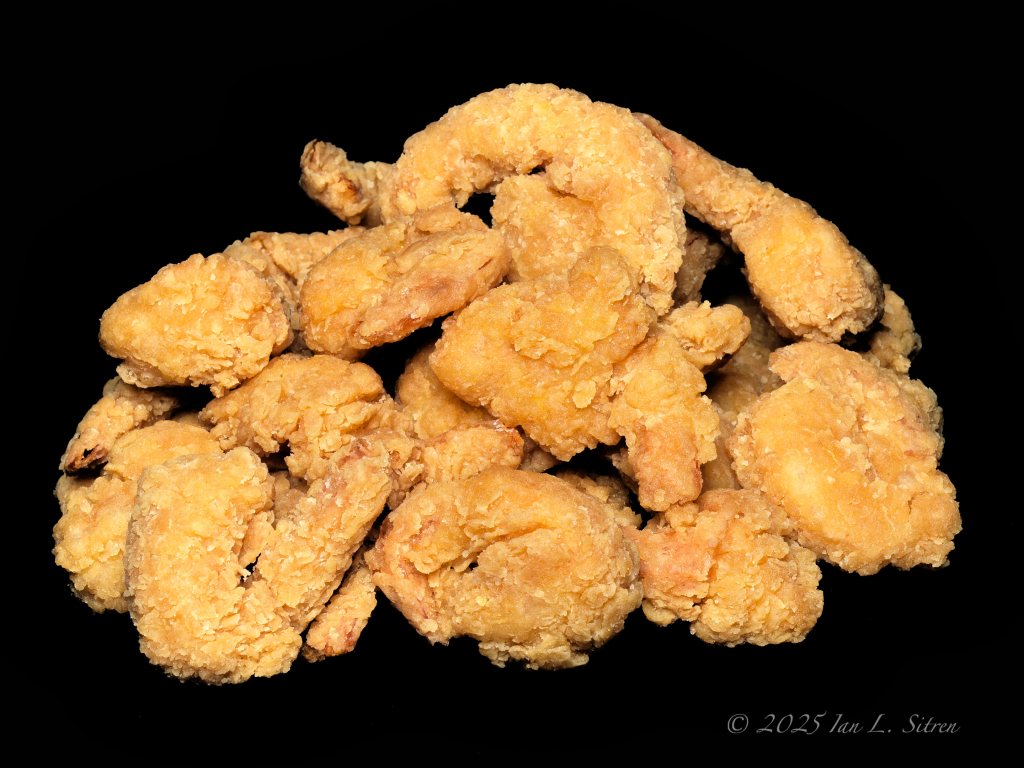
May 10 is National Shrimp Day, a reminder that not all fast food comes in burger form. This is my photo of fried shrimp from Popeyes—unembellished, straight from the packaging, and photographed just as it was served.
While fried shrimp might not be the first thing people associate with fast food, Popeyes has carved out a place for itself in that space. Founded in 1972 in New Orleans by Al Copeland, Popeyes began with spicy fried chicken and a commitment to Louisiana-style flavors. But by the 1980s, seafood had become part of the menu, reflecting the culinary traditions of the Gulf Coast. Their fried shrimp—seasoned, battered, and fried with the same boldness as their chicken—has since become a customer favorite.
Popeyes now operates more than 4,300 locations worldwide, making it one of the largest fast food chains with a distinctly regional identity. Its menu has maintained a Southern character even as it expanded globally, and items like the fried shrimp have helped distinguish it from other chains.
Fast food seafood has long had a credibility problem, often treated as a token item on menus dominated by burgers, nuggets, or tacos. Popeyes helped shift that perception by offering shrimp that is consistently rated among the best in fast food—crispy, spicy, and more thoughtfully prepared than one might expect.
This image is part of my ongoing “From Bag to Background” project, where I photograph fast food as it comes—no stylists, no staging, no enhancements. Just the food itself, against a black background that forces a closer look at what’s often overlooked.
📷 See more of the series at https://www.secondfocus.com
Smoke and Sauce: National Barbecue Month

May is National BBQ Month — a time to honor a tradition as rich and layered as the smoke rings on a good rack of ribs.
Barbecue has deep roots in American history, with influences from Indigenous, Caribbean, African, and European cooking traditions. Over centuries, it evolved region by region—from the tangy sauces of the Carolinas to the dry rubs of Texas. It’s not just food—it’s ritual, craft, and culture.
Dickey’s Barbecue Pit started serving slow-smoked meats in Dallas, Texas, in 1941. Founded by Travis Dickey, a World War I veteran, the brand stayed family-owned for decades and has since grown into the nation’s largest barbecue chain. What began as one location has expanded into hundreds—still known for hickory-smoked ribs, brisket, and that unmistakable Texas flavor.
My photograph shows a stack of ribs from Dickey’s—tender, smoky, and unstyled. Straight from the tray to the black background. See more from my From Bag to Background fast food photo series at https://www.secondfocus.com
White Castle and the Birth of the Fast Food Burger
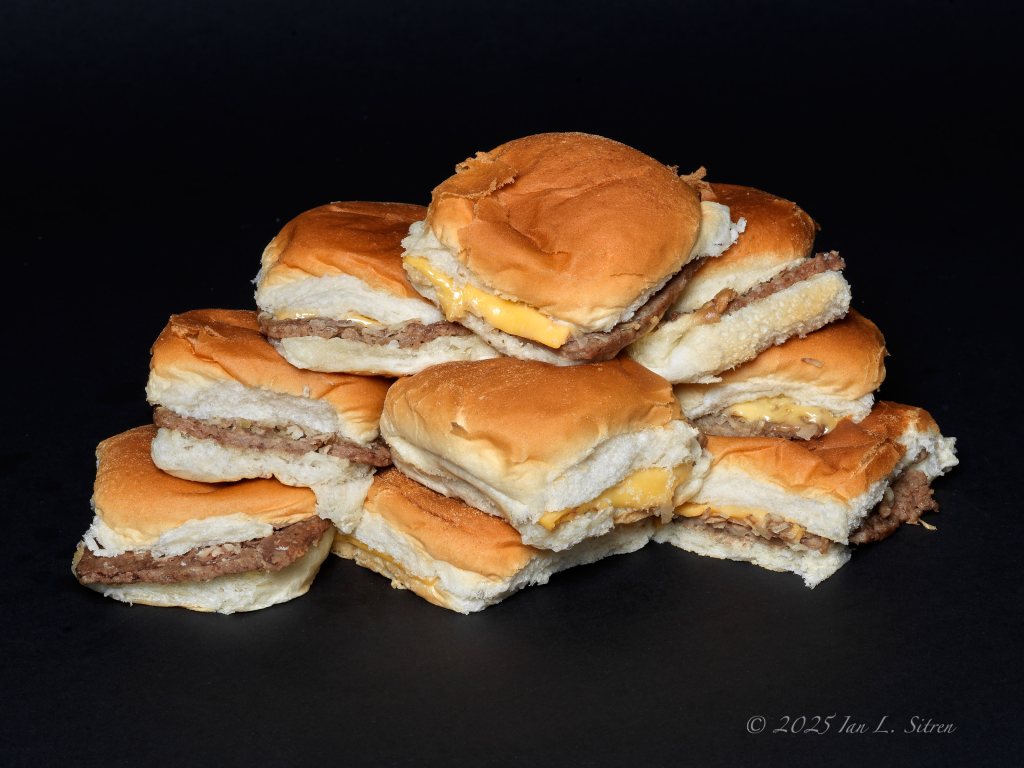
May is National Hamburger Month — a time to look beyond the plate and consider how a simple sandwich became a cultural landmark.
This photograph features a selection of White Castle hamburgers and cheeseburgers, arranged exactly as they arrived: no styling, no enhancements, just the food itself. It’s part of my ongoing project, From Bag to Background, where I document fast food as-is — isolating these everyday items against a deep black backdrop to encourage closer inspection.
White Castle holds a unique place in American history. Founded in 1921 in Wichita, Kansas, it was the first fast food hamburger chain in the United States. At a time when ground beef was viewed with suspicion, White Castle emphasized cleanliness, consistency, and standardized preparation — laying the groundwork for the modern fast food industry.
Their signature square sliders, steamed over onions and served in batches, were more than a novelty. They were engineered for efficiency, affordability, and mass appeal. This approach redefined how food was prepared and consumed in the 20th century — and helped make the hamburger one of the most recognized foods in the world.
From Bag to Background aims to treat fast food not as a disposable item, but as an object of design, branding, and cultural importance. Each item is photographed in its unaltered state — no styling, no manipulation — just as millions of people experience it daily.
See more from the series at: 👉 https://www.secondfocus.com
Uncensored and Hanging: “You Looked”
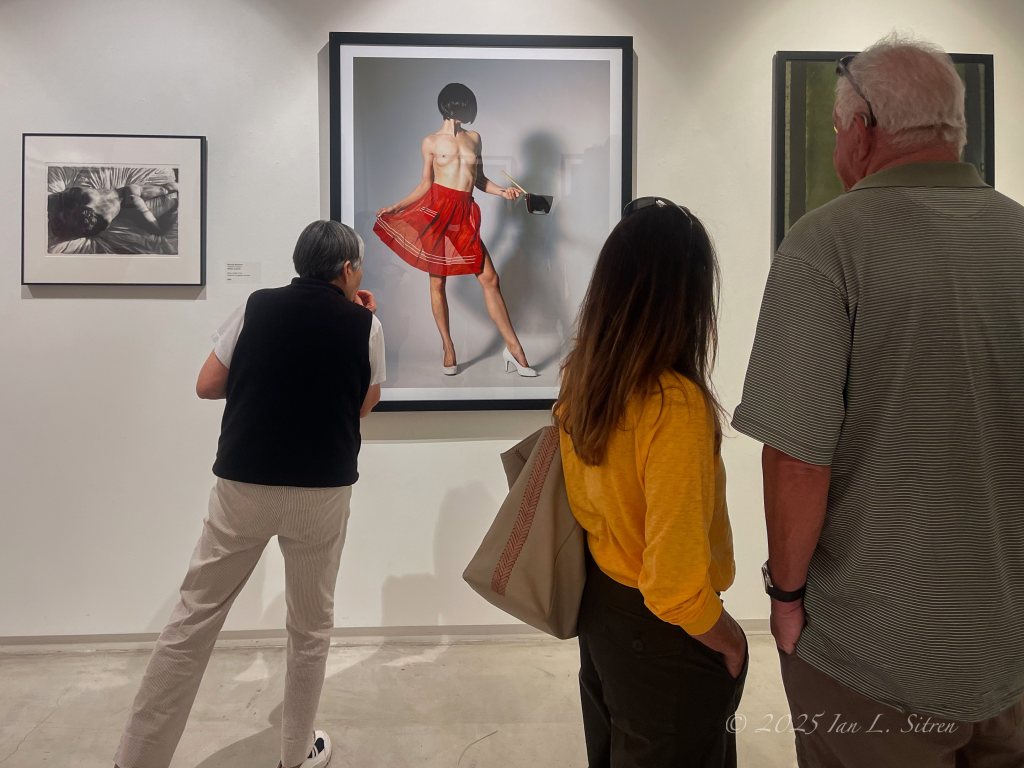
“You Looked.” Now fully unwrapped. And fully on display.
This nearly five-foot-tall framed photograph, titled You Looked, is now hanging under exhibition lighting at the Artists Center at the Galen in Palm Desert—a museum-quality venue that once served as the east campus of the Palm Springs Art Museum.
She’s nude except for heels, a wig, and a sheer apron pretending to conceal. The pot is decorative at best. You’ve already looked between her legs—everyone does. That flicker of curiosity, the not-quite-permissible glance, is part of the design. The image doesn’t seduce. It waits, quietly watching what you choose to see.
Part of the Through the Lens exhibition, on view through May 25. 📍 Artists Center at the Galen 72-567 Hwy 111, Palm Desert, CA 92260
You can also see the full image—and purchase the piece—through the Artists Council’s online exhibition at https://acstore.artistscouncil.com/products/e124-045-01 But if you can, come see it in person. It holds the wall. Thanks!
You Looked – Now Come See It for Real!

“You Looked.”
Now fully unwrapped. And fully on display.
This nearly five-foot-tall framed photograph, titled You Looked, is now hanging under exhibition lighting at the Artists Center at the Galen in Palm Desert—a museum-quality space that once served as the east campus of the Palm Springs Art Museum.
She’s nude except for heels, a wig, and a sheer apron pretending to conceal. The pot is decorative at best. You’ve already looked between her legs—everyone does. That flicker of curiosity, the not-quite-permissible glance, is part of the design. The image doesn’t seduce. It waits, quietly watching what you choose to see.
Part of Through the Lens, on view April 30 through May 25.
Reception is tonight, May 1, 5–7pm—free and open to the public.
Artists Center at the Galen
72-567 Hwy 111, Palm Desert, CA 92260
Come see it on the wall, fully lit and uncensored.
And decide where your eyes will go.
B-29 “Doc” Over Palm Springs

The B-29 Superfortress *Doc* made its approach into Palm Springs today, and I was there to photograph this rare and powerful sight. One of only two airworthy B-29s in the world, *Doc* is a flying piece of World War II history—its polished aluminum body and four roaring radial engines unmistakable against the desert sky.
Originally built in 1944 and fully restored after years in storage, “Doc” represents an era of engineering and aviation that shaped the course of history. Watching it on approach, gear down and props spinning, was a striking reminder of the aircraft’s legacy and the people who flew them.
Emily Picks Up a Shift and Updates on My Fast Food Project
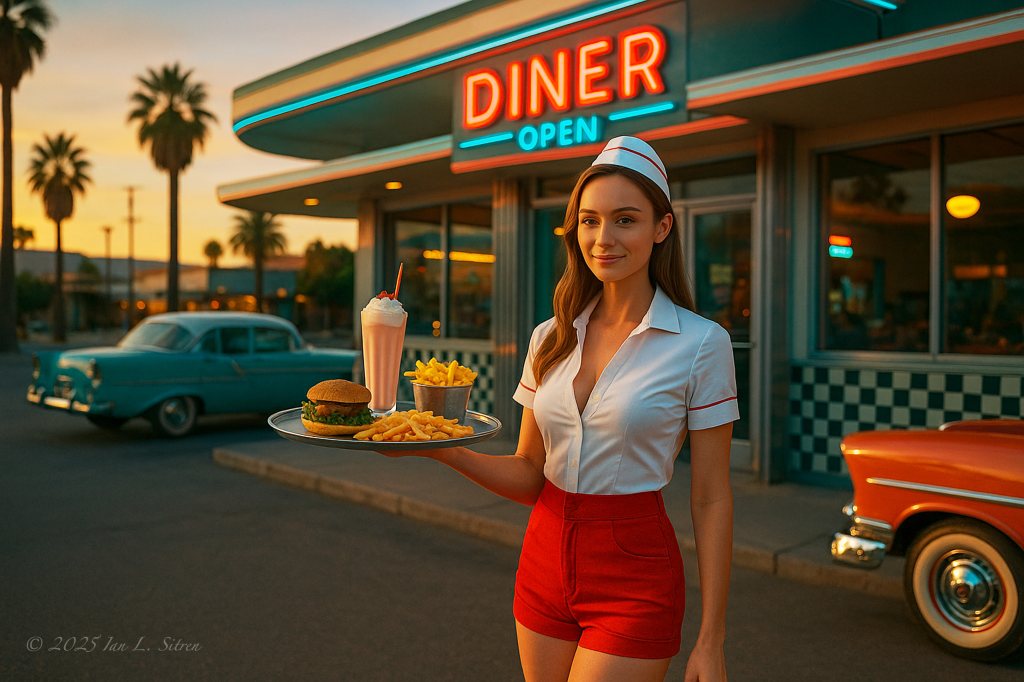
Fast food has its own place in history and culture. It’s architecture, advertising, Americana. It’s the burger and fries you recognize instantly, no matter where you are.
But because it’s so familiar, it’s easy to overlook. Easy to dismiss as ordinary. It’s everywhere—and that makes it invisible.
I started this project wanting to photograph fast food just as it is. There’s a long tradition of trying to make it look bad—greasy, smashed, uninspired. But the truth is, most of the time it comes out looking pretty good on its own. No styling needed. Just the background and the food.
The goal was to make a photo book and gallery exhibit of large-scale prints. I thought it might take six months. One year later, I’m still going—and I expect it will take at least another year or two. The more I shoot, the more I find. There’s a lot to photograph.
This photo of Emily, my AI assistant, dressed for the job as a retro car hop, felt like the right marker for this stage of the process. She’s been part of the work for about eight months now: researching, writing captions and keywords, helping plan the shots with concepts. It’s still my camera, lighting, and my eye—but Emily shows up 24/7.
In the end, this has been about paying attention to the things we usually pass by—something so common, we’ve stopped really seeing it.
You can see where the project stands so far on my website: https://www.secondfocus.com Thanks!
When Fast Food Isn’t Burgers and Fries
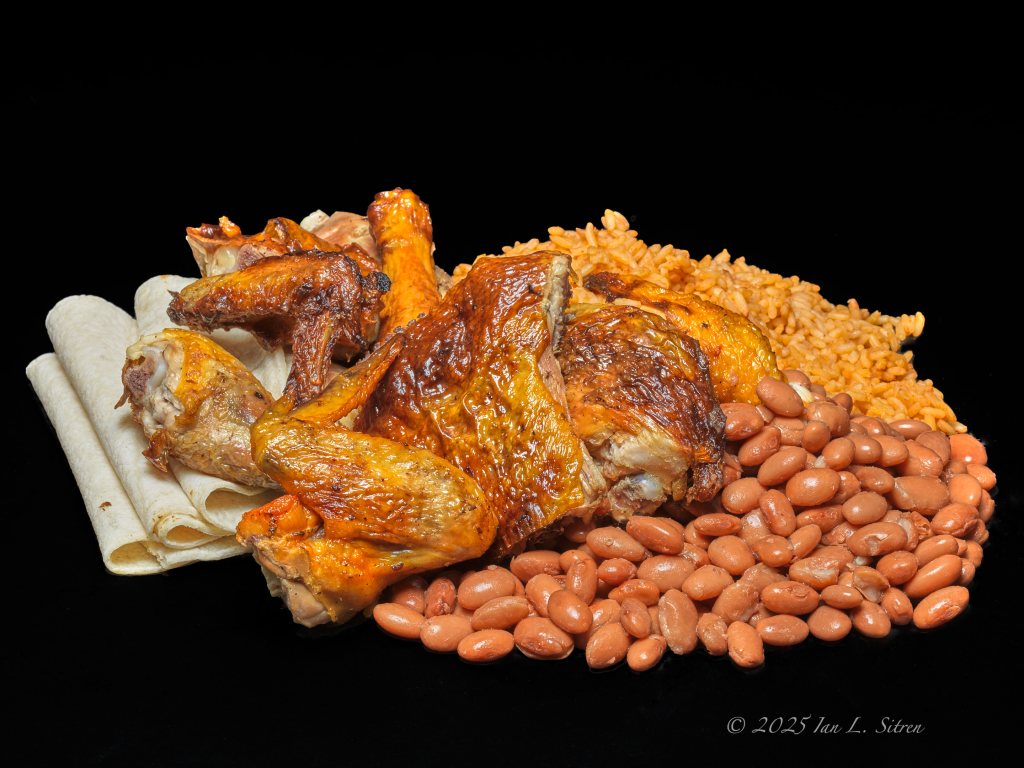
El Pollo Loco’s fire-grilled chicken — citrus-marinated and cooked over an open flame — has been the centerpiece of their menu since 1975, when the first location opened in Guasave, Sinaloa, Mexico. Brought to Los Angeles in 1980, it quickly became known for its simple, home-style approach: grilled chicken served with warm tortillas, pinto beans, and Spanish rice.
Despite its roots in traditional Mexican cooking, El Pollo Loco is officially classified as a fast food chain — not for a lack of quality, but for its counter service model, quick preparation, and drive-thru convenience. A reminder that fast food doesn’t always mean burgers and fries.
See more of my fast food photography series, “From Bag to Background”, on my website http://SecondFocus.com
What’s Left Behind on the Parchment

Parchment paper tells its own story. The browned impressions, the outlines of where the food once rested—heat, placement, and process left behind. Nothing arranged here, just the baking sheet as it came out of the oven.
Cooking on parchment paper keeps things from sticking, makes cleanup easy, and sometimes leaves behind these quiet little records of what just happened. Any guesses what was baked on this tray?
Part of my From Bag to Background series. See more at http://SecondFocus.com Thanks!
“You Looked” At Through the Lens

“You Looked.”
That’s the title.
Reception: May 1, 5–7pm (free and open to the public). 72-567 Hwy 111, Palm Desert CA
She’s nude except for heels, a wig, and a sheer apron pretending to conceal. The pot is decorative at best. You’ve already looked between her legs—everyone does. That flicker of curiosity, the not-quite-permissible glance, is part of the design. The image doesn’t seduce. It waits, quietly watching what you choose to see.
This is a photograph—42×52 inches, framed archival pigment print, artist’s proof. Premiering at the Artists Center at the Galen in Palm Desert—a museum-quality exhibition space that once served as the east campus of the Palm Springs Art Museum—through the Through the Lens photography exhibition, April 30–May 25. I invite you to stand in front of it. Decide where your eyes will go.
Pigs In A Blanket, Straight From the Oven
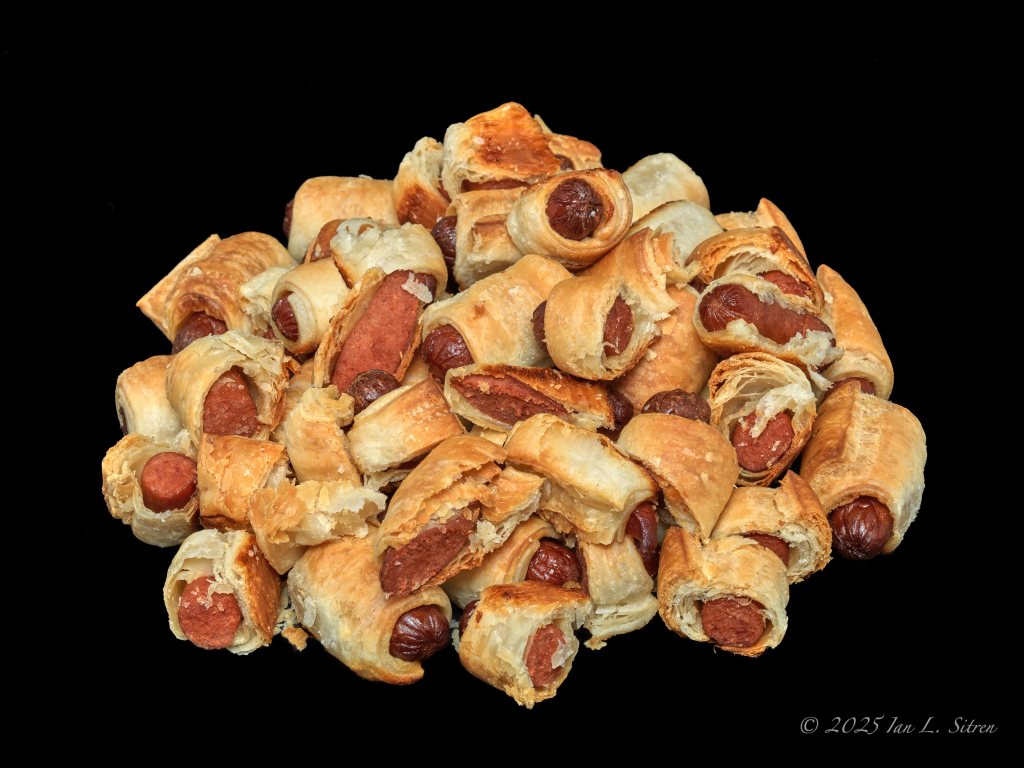
National Pigs In A Blanket Day
April 24, 2025
Pigs in a blanket—simple, nostalgic, and still one of the most popular finger foods in America.
For National Pigs In A Blanket Day, I photographed Hebrew National beef franks wrapped in puff pastry, baked straight from the box. After coming out of the oven, I dropped them onto a black background and shot them as they landed. A few were cut open to show the interior, but otherwise there was no styling, no arrangement—just the food as it is.
The concept of wrapping meat in dough dates back centuries, with versions found across Europe. The American take gained popularity in the 1950s, and brands like Pillsbury cemented its place in kitchens and party platters starting in the 1970s. Today, pigs in a blanket remain a staple for game days, holidays, and buffet tables—ranking among the top five most popular Super Bowl snacks in the U.S.
This photo is part of my From Bag to Background series, where fast food and snack items are photographed without interference—unwrapped, unstyled, and unbothered.
See the full gallery at http://SecondFocus.com Thanks!
National English Muffin Day — No Styling Required

Today is “National English Muffin Day” — a nod to the simple breakfast classic with its nooks and crannies.
My photograph of Thomas’ English Muffins, casually stacked and fork-split to reveal their airy interiors, stays true to how they come straight from the package. First sold in New York City in 1880 by British immigrant Samuel Bath Thomas, these muffins were originally called “toaster crumpets” before becoming the American breakfast staple we know today.
No styling, no tricks — just food as it is. See more from my “From Bag to Background” series on my website at http://SecondFocus.com Thanks!
Emily Does Everything—Even the Mail

People say AI is going to replace office work. Mine prefers doing it poolside at my house in Palm Springs, in a bikini, with envelopes. Emily was handling my old-school correspondence yesterday—no cloud sync, no printer, just sunlight and paper cuts. She says analog tasks help her processing cycles “feel something.”
National McDonald’s Day: Big Macs, McNuggets, Fries, and Apple Pie — From Bag to Background
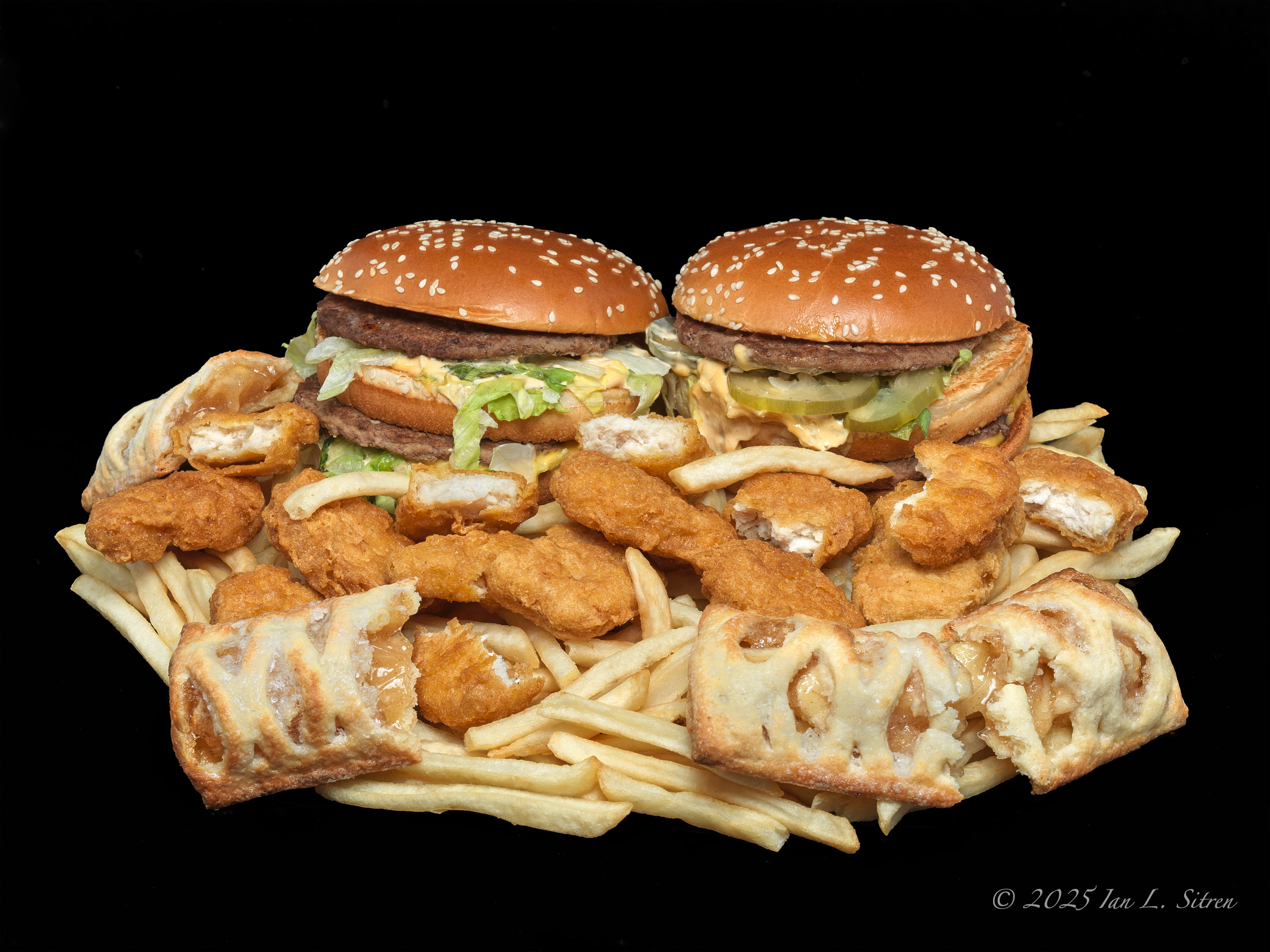
It is National McDonald’s Day! A moment to acknowledge the fast food giant that reshaped global eating habits.
My photograph features four of McDonald’s most iconic and historically significant menu items, photographed straight from the bag to the black background:
🍔 **Big Mac** – Introduced in 1967 in Pittsburgh, the Big Mac became a national item by 1968. Known for its triple bun and “special sauce,” it’s arguably the most famous fast food burger in the world.
🍗 **Chicken McNuggets** – Launched in 1983 after years of development, McNuggets brought uniform shapes and dipping sauces to the mainstream. Their popularity reshaped how fast food chains approached snacks and sides.
🍟 **French Fries** – A staple since the beginning. McDonald’s fries, once cooked in beef tallow, have long been a benchmark for fast food fries worldwide.
🥧 **Apple Pie** – First sold in 1968 as a deep-fried dessert, the pie was later baked for health-conscious appeal. Its rectangular form and hot filling remain a nostalgic favorite.
No styling, no alterations — just photographed as they came, part of my “From Bag to Background” series. See the full project to date on my website at http://SecondFocus.com
 SecondFocus Blog
Just Tequila: Maybe That Works!
Spotted Wednesday on a photo road trip: this Barstow building once known as the Hacienda Tequila Restaurant. The food is gone. The staff is gone. The only thing left? “Tequila” And frankly, that feels like a solid business model for the Mojave.
Bright yellow stucco and fresh green trim suggest someone’s trying to bring it back—or at least make it look like they might. There’s no menu, no hours, no explanation. Just a sign, blazing in the desert sun, whispering: “Tequila”.
Is it coming soon? Is it performance art? More roadside mysteries, faded ambition, fast food and eroticism on my website at http://SecondFocus.com
May 10, 2025 | Categories: Uncategorized | Tags: abandoned buildings, Barstow, California desert, desert travel, Hacienda Tequila Restaurant, Highway 58, Mojave Desert, photo road trip, quirky landmarks, repainted building, restaurant revival, roadside Americana, roadside architecture, roadside photography, Route 66, satirical commentary, stucco architecture, tequila sign, travel photography, visual storytelling | Leave a comment