National Corn Dog Day – 4 of Them
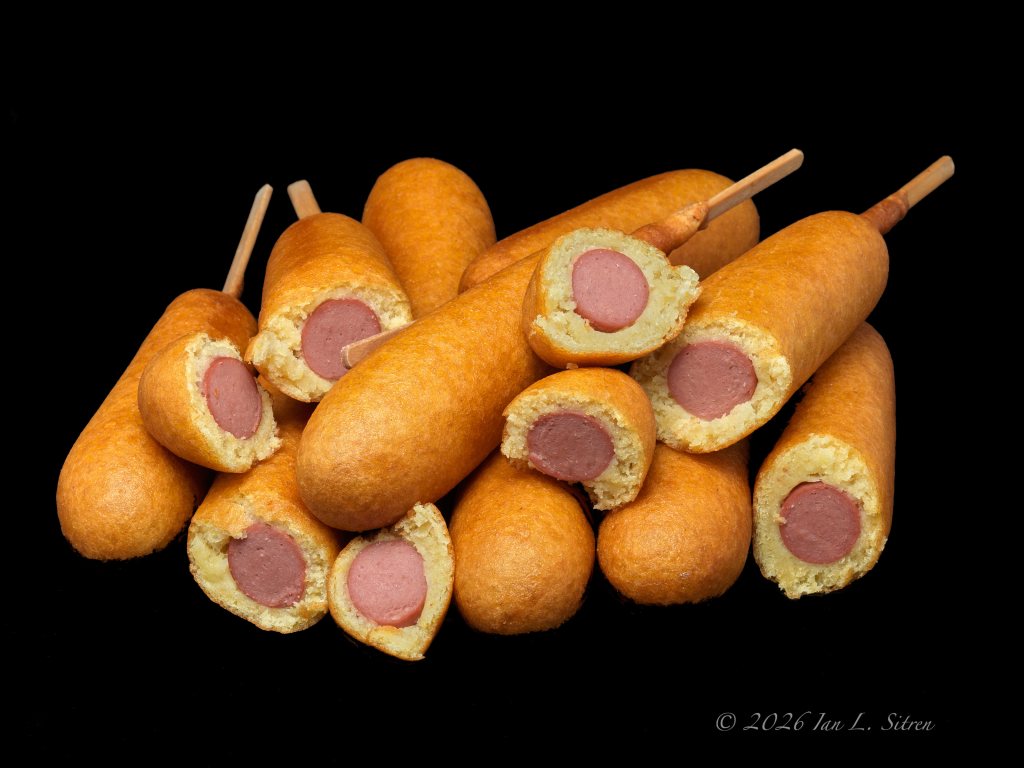
A corn dog, it turns out, has a schedule.
March 16 — often cited as the original or earliest claimed date, though no one seems certain why.
March 17 — sometimes folded into St. Patrick’s Day because it’s already a crowded calendar.
March 21 — another claimed “official” date, appearing in national day listings without clear origin.
NCAA Tournament Opening Weekend — widely accepted in practice, as National Corn Dog Day is frequently tied to the start of March Madness and watch parties.
So much complexity for my “National Days of…” calendar and photography.
Meanwhile, the corn dog itself remains exactly what it is.
A hot dog, coated in cornmeal batter and deep fried on a stick. A practical invention tied back to German sausage makers who settled in Texas, adapting their product to American tastes by dipping it in cornbread batter and frying it. By 1927, the process was patented, describing food on a stick as a “clean, wholesome and tasty refreshment.” It went on to become standard fare at fairs, festivals, school lunches, and just about anywhere something could be eaten while walking.
Simple. Portable. No explanation needed.
Which makes it slightly surprising that something this simple now comes with multiple official dates and a tournament tie-in.
See more from From Bag to Background on my website at…
https://www.secondfocus.com/index/G0000wQ3fbeEezF0/I0000nUG8tfk8Gdc
National Hash Brown Day
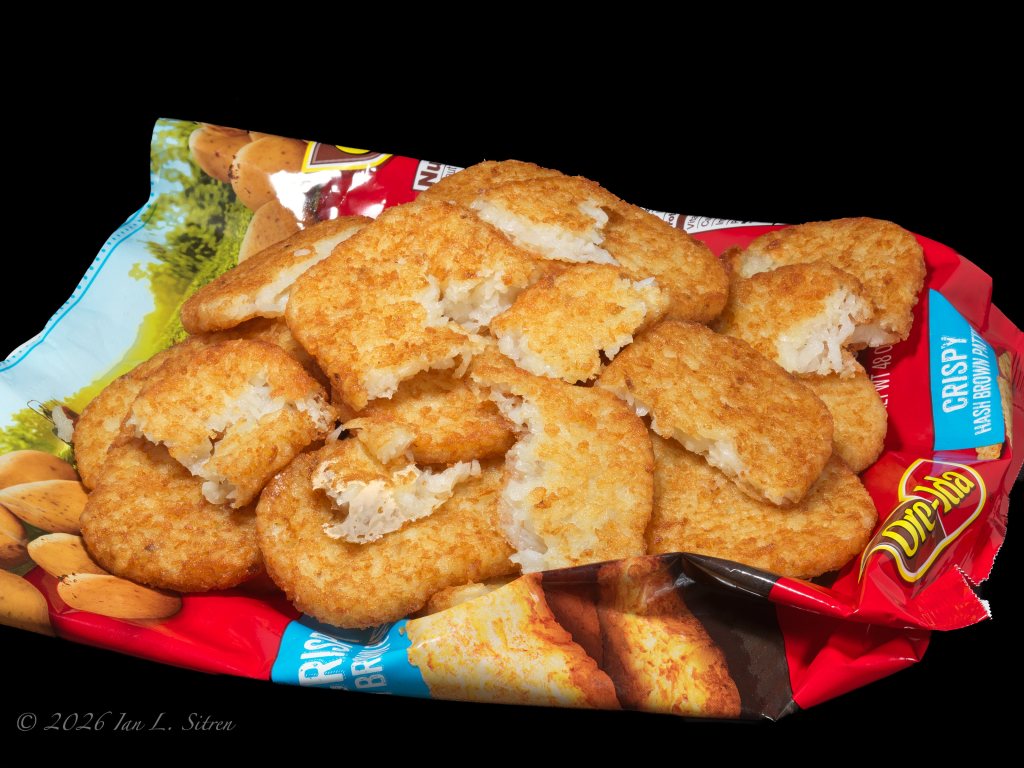
Today is National Hash Brown Day, which seems like a perfectly reasonable excuse to cook a pile of them.
Hash browns have been part of the American breakfast for more than a century. The name comes from the French word “hacher”, meaning to chop. In the late nineteenth century restaurants began serving what were called “hashed brown potatoes,” chopped or shredded potatoes fried until crisp. They appeared on hotel breakfast menus and quickly spread to diners and restaurants across the country.
The modern hash brown patty, however, is a much newer development.
Many people associate the familiar patty with McDonald’s, where the crisp rectangular hash brown became one of the most recognizable breakfast sides in America.
But the frozen food industry actually got there first.
In the 1960s frozen potato company Ore-Ida introduced frozen hash brown patties as part of the expanding frozen convenience food market. Shredded potatoes were formed into patties that could go directly from the freezer to the oven or pan. When McDonald’s launched its national breakfast program in the early 1970s, the frozen patty format worked perfectly for restaurant kitchens and quickly became associated with the chain.
For this photograph I cooked a batch of frozen hash brown patties and piled them onto their packaging, a small nod to their frozen food origins. A few broken pieces reveal the soft shredded potato interior beneath the crisp exterior.
Not bad for something that started as chopped potatoes in a hotel kitchen and ended up in the frozen food aisle.
You can see more of my Commercial Food Photography on my website at…
https://www.secondfocus.com/index/G0000WFAqDJQOgKU
National Bagel Day Today
Bagels didn’t start out like this.
Then America got involved.
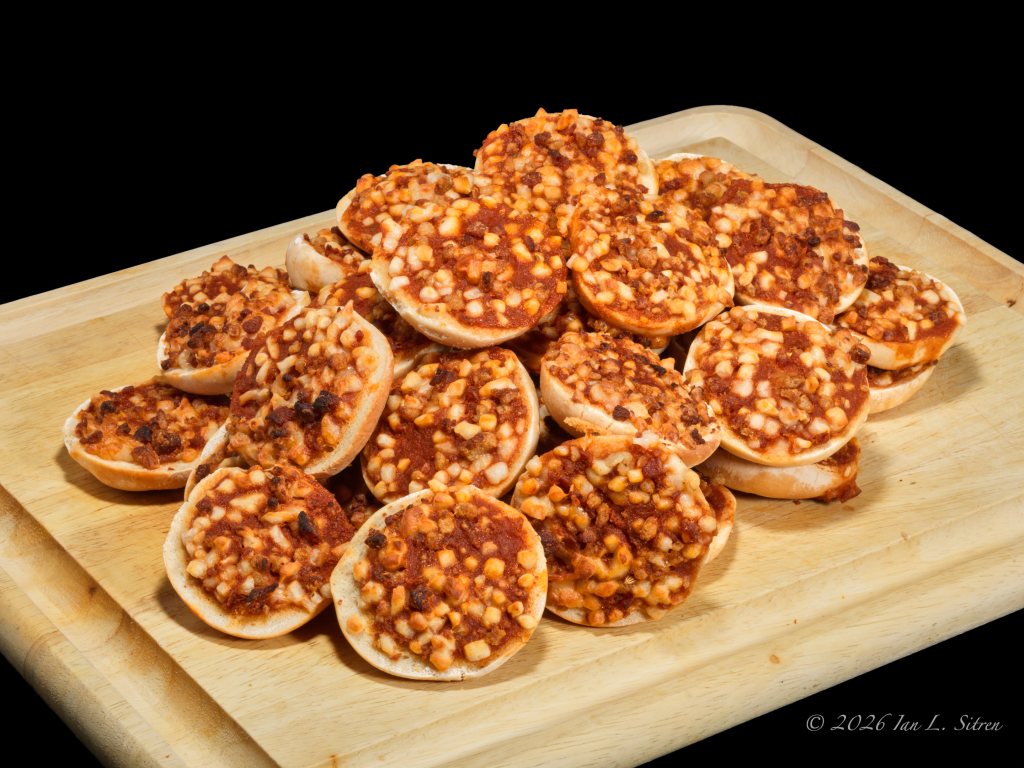
Rather than photograph a traditional bagel for National Bagel Day, I chose pizza bagels. They keep the shape, discard the ceremony, and replace it with tomato sauce, mozzarella, sausage, and pepperoni. There’s nothing to slice, nothing to decide, and no expectations to meet. Just heat and eat.
Bagels trace their history to Jewish communities in Eastern Europe, where they were boiled, baked, and valued for their practicality as much as their taste. When they arrived in the United States, they carried that tradition with them, at least briefly.
Pizza bagels may be the most American version of the bagel. Frozen, standardized, and designed for speed.
To see more of my Commercial Food Photography, please visit my website at
https://www.secondfocus.com/index/G0000WFAqDJQOgKU
National Hot Pastrami Sandwich Day
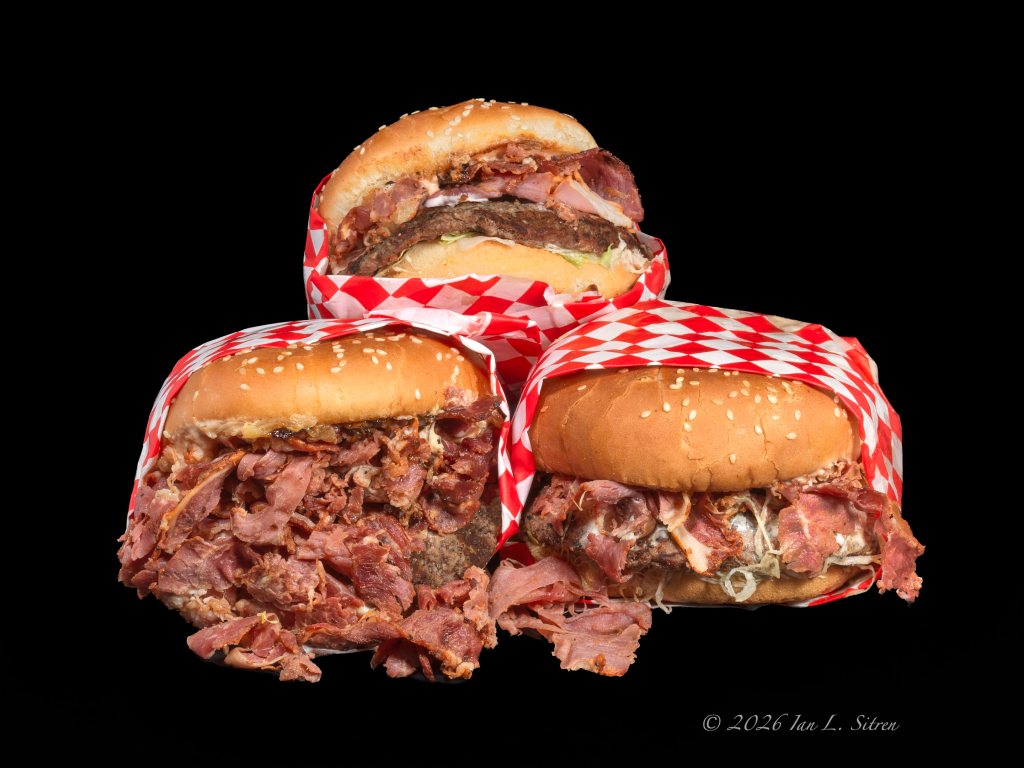
Today is National Hot Pastrami Sandwich Day, and this is the photograph I chose to mark it.
I’ve photographed classic pastrami sandwiches before, the kind wrapped in paper, stacked high, and eaten leaning forward so nothing ends up on your shirt. This time I wanted to look at something I see more and more often: the pastrami cheeseburger.
Pastrami began as a method of preservation, rooted in Eastern European Jewish traditions, before becoming a defining part of American food culture. In delicatessens, especially in New York and later Los Angeles, it settled into a familiar form: sliced hot, piled high, and served with little interference. The meat was the point.
The pastrami cheeseburger feels like a distinctly American evolution of that idea.
This photograph features pastrami cheeseburgers from P&G Burgers in Colton, California, a long-running Southern California fast-food restaurant with indoor seating, outdoor tables, and a drive-thru. You order at the counter beneath a wall of menu boards and pick up your food when your number is called. It’s not a deli and not just a roadside shack. It’s a full-scale fast-food operation built around burgers, fries, shakes, and pastrami.
Their claim, “Home of the Best Pastrami Cheeseburgers in the World,” is printed right on the building. Whether taken literally or as confident fast-food bravado, it suits what they’re serving. These burgers are large, heavy, and unapologetically loaded. Thick beef patties stacked with grilled pastrami, cheese, and a soft sesame seed bun, wrapped tight and meant to be eaten with commitment.
The cheeseburger version shifts pastrami away from its deli roots and places it squarely in American fast-food culture. Beef layered onto beef. Cheese added. Rye replaced by a burger bun. It’s less about tradition and more about appetite. Less about restraint and more about scale.
That’s what drew me to photograph it.
This image shows the burgers exactly as they’re served, straight from the counter, still wrapped, still spilling out. No styling, no cleanup. Just weight, texture, and excess. In that way, it still respects pastrami’s history, even as it pushes it into something louder and distinctly American.
On National Hot Pastrami Sandwich Day, that evolution feels worth acknowledging.
More of my fast food photographs on my website in the gallery “Food From Bag To Background” at https://www.secondfocus.com/index/G0000wQ3fbeEezF0
National Bacon Day!
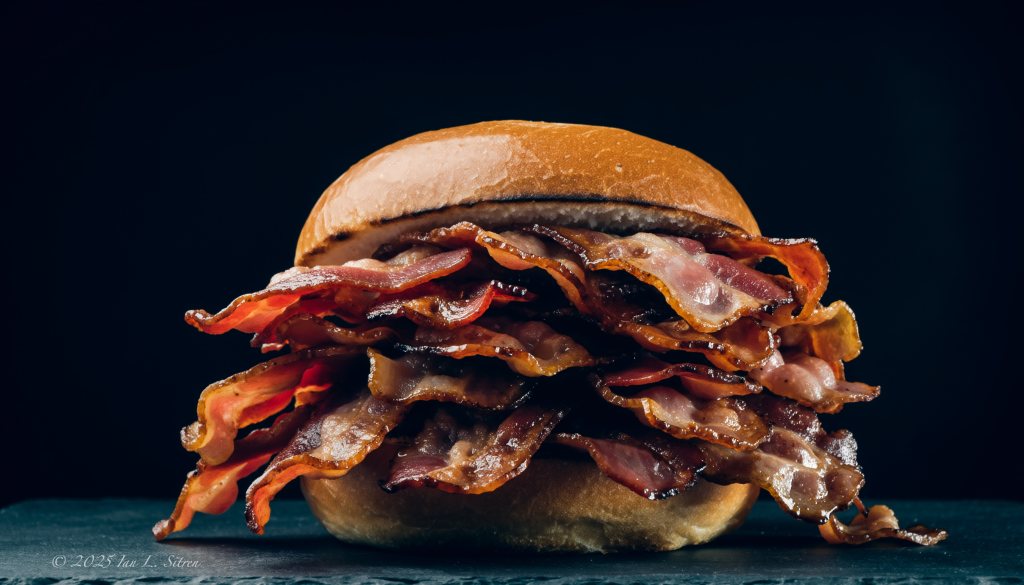
There are few foods people agree on as readily as bacon. Across generations and cultures, it holds a rare position as something almost universally liked, often described as the ingredient that makes everything better. If you asked people to name their ideal sandwich, many would quietly admit this would be it: bread, bacon, and nothing else getting in the way.
Bacon’s appeal is deeply rooted in history. Salt-cured pork dates back thousands of years, used as a practical method of preservation long before refrigeration. Variations appeared across Europe and Asia, but bacon as we recognize it today became firmly embedded in American food culture during the 20th century. By the mid-1900s, it had moved beyond breakfast and into sandwiches, burgers, and fast food, where its smoky, fatty richness became shorthand for indulgence.
Culturally, bacon has taken on a role larger than the ingredient itself. It represents abundance, comfort, and excess, often acknowledged without apology. Entire menus have been built around it, and marketing has leaned heavily into its reputation as something people crave even when they know they shouldn’t. It’s one of the few foods that can be both nostalgic and provocative at the same time.
This photograph leans into that idea by stripping the sandwich down to its core. No lettuce, no tomato, no attempt at balance. Just bacon, stacked high, presented without distraction. It’s easy to imagine this being wildly popular as a fast-food option, ordered impulsively and remembered vividly. Of course, it isn’t something you’ll actually find on a menu. And that absence is part of the point.
My fast food photography project can be found in “Food From Bag to Background” on my website at https://www.secondfocus.com/index/G0000wQ3fbeEezF0
National Nacho Day and the Rise of Fast-Food Nachos
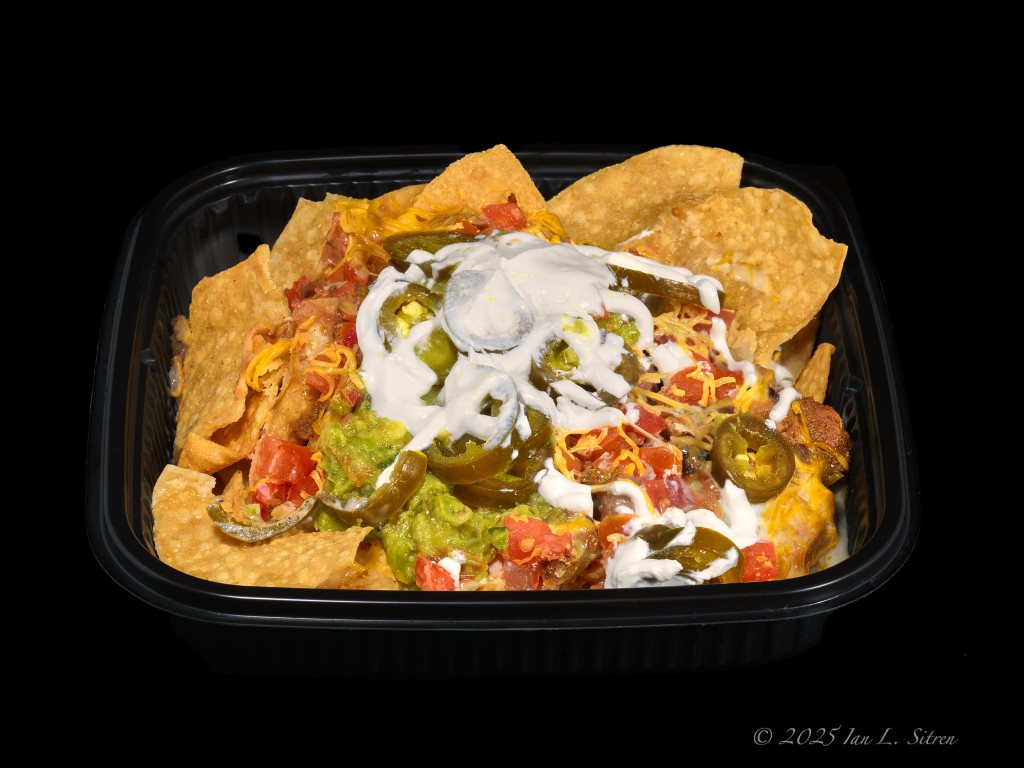
Apparently one tribute wasn’t enough for a dish invented as a last-minute solution in 1943. Nachos are one of the few foods successful enough to earn two holidays—International Nacho Day on October 21 and National Nacho Day today.
Nachos moved into the fast-food world in the 1970s, when chains began looking for inexpensive items that were quick to assemble and visually appealing. The combination of chips, cheese, and a few toppings fit perfectly into the developing drive-thru model. Taco Bell was an early adopter, introducing nachos nationally in 1979 and helping establish them as a standard menu item across the country. From there, nachos spread everywhere—from sporting events to convenience stores—and became one of the most recognizable Tex-Mex foods in American fast food.
For this second celebration, I photographed Del Taco’s Carne Asada Loaded Nachos exactly as they arrived in the black takeout container. Tortilla chips with carne asada steak, queso blanco, shredded cheese, guacamole, sour cream, diced tomatoes, and jalapeños. Fast food presented without adjustments, isolated on a black background as part of my ongoing Food From Bag to Background series.
See more on my website at: https://www.secondfocus.com/index/G0000wQ3fbeEezF0
National Noodle Day
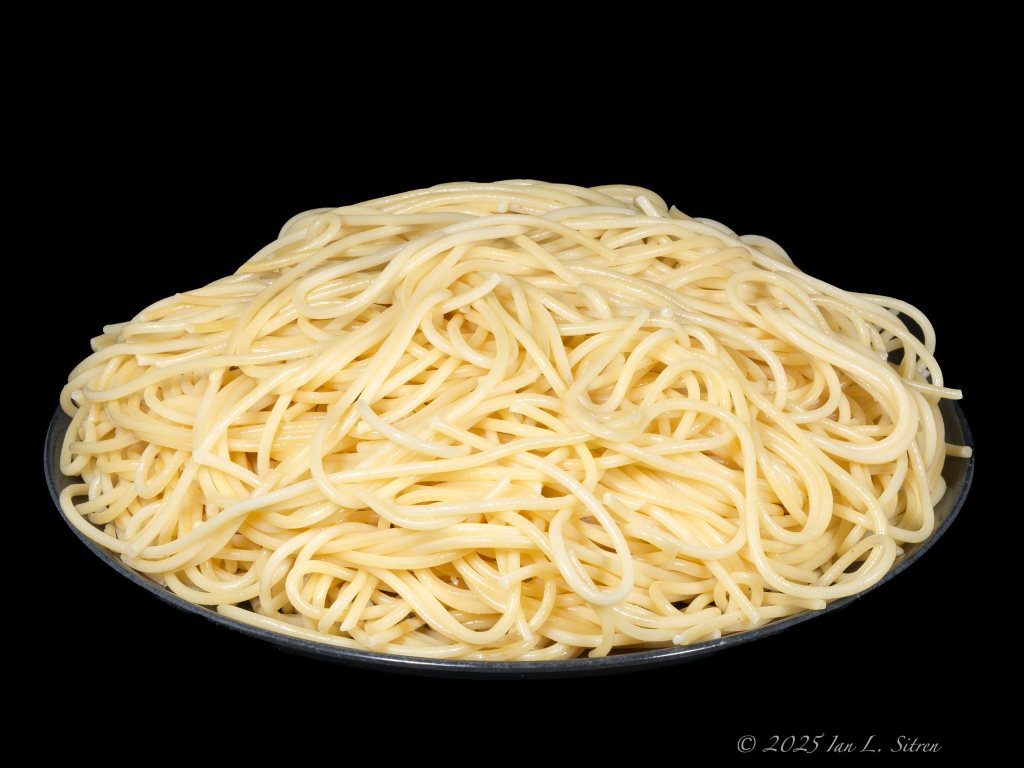
Today is National Noodle Day, and I kept it simple. Just spaghetti — no sauce, no garnish, nothing added.
Spaghetti is by far the most popular noodle in the United States. Every survey puts it well ahead of ramen, macaroni, or lo mein. It’s the one most Americans recognize immediately — a shape as common as the plates it’s served on.
Although it’s considered an Italian staple, the story begins much earlier. Records of noodles in China date back more than 4,000 years, with millet-based strands discovered at the archaeological site of Lajia. By contrast, spaghetti took form in Sicily around the 12th century, when durum wheat and early drying techniques made long, thin noodles possible.
Spaghetti’s path to American tables began with Italian immigration in the late 1800s, when new arrivals brought their cooking traditions to cities like New York and New Orleans. Its real national rise came after World War II, when returning soldiers who had served in Italy sought the same dishes at home.
A key figure in that story was Ettore “Hector” Boiardi, an Italian-born chef who began selling his spaghetti sauce in Cleveland in 1928 under the name Chef Boy-Ar-Dee. During the war, his company supplied canned pasta to the U.S. military, producing hundreds of thousands of meals each day. Afterward, his brand became a staple of postwar convenience — spaghetti and meatballs in a can, ready to heat and serve. By the 1950s, spaghetti had become a fixture of American kitchens: affordable, familiar, and easy to prepare.
This photograph is simply that — cooked spaghetti, isolated against black. Nothing more, nothing less.
View more from my Commercial Food Photography collection here: https://www.secondfocus.com/index/G0000WFAqDJQOgKU
🥪 National Eat A Hoagie Day

Forget politics, pandemics, and Wall Street — today it’s all about National Eat A Hoagie Day.
The celebration honors the long, layered sandwich that goes by many names: hoagie, sub, grinder, hero. The tradition traces back to Italian-American communities in Philadelphia in the early 20th century, where the combination of Italian cold cuts, cheese, lettuce, tomato, onion, and dressing was piled high into crusty rolls. The name “hoagie” is often credited to Philadelphia shipyard workers nicknamed “hoggies,” who carried these hearty sandwiches to work.
The day recognizes both the sandwich itself and its many regional variations across the United States. While “hoagie” is Philadelphia’s word of choice, most of the country knows them as subs, and in New England they’re just as likely to be called grinders. Whatever the name, the essence is the same: a long roll, stacked with meats, cheeses, vegetables, and that messy-but-perfect balance of oil, vinegar, and seasonings.
For this year’s National Eat A Hoagie Day, I photographed three Jersey Mike’s Original Italian hoagies, cut and stacked against my signature black background. Jersey Mike’s, which started as a single sub shop in Point Pleasant, New Jersey in 1956, has grown into a national chain with over 2,000 locations. They’ve built their reputation on freshly sliced meats and cheeses, rolls baked fresh daily, and sandwiches made to order “Mike’s Way” — onions, lettuce, tomato, oil, vinegar, and oregano.
The hoagie is both a cultural icon and a humble meal — straight from the bag, unstyled, layered with flavor and history.
And if you think hoagies look good, wait until you see what happens when tacos, burgers, and sushi get the same black-background treatment. Explore my ongoing series, “Food From Bag To Background,” here: https://www.secondfocus.com/index/G0000wQ3fbeEezF0 Just don’t click on an empty stomach.
A Monument to Cheese Pizza
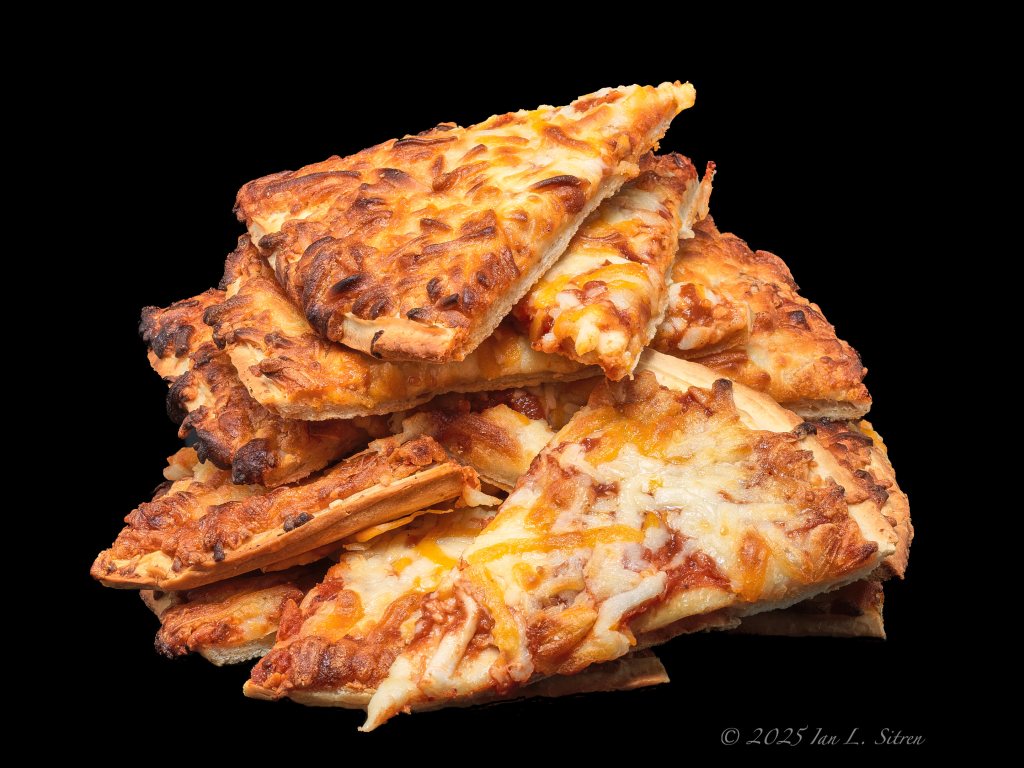
Another entry from the calendar of invented holidays: National Cheese Pizza Day. As if anyone needed a reminder to eat melted cheese on bread. Still, here it is — and so is my monument to it. Two frozen Red Baron cheese pizzas sliced and stacked into a tower of excess, photographed against a black background.
Cheese pizza is the baseline of the whole idea. From Naples in the 1800s with mozzarella and tomato on flatbread, to Lombardi’s in New York serving it to immigrants in the early 1900s, it’s the foundation on which every other topping variation was built. Frozen in the 1950s, it became the fallback dinner most of us know.
So if today calls for honoring cheese pizza, this is mine.
See more in my Commercial Food Photography gallery:
👉 https://www.secondfocus.com/index/G0000WFAqDJQOgKU
Ten Chili Dogs, Elegantly Served – Because It’s National Chili Dog Day
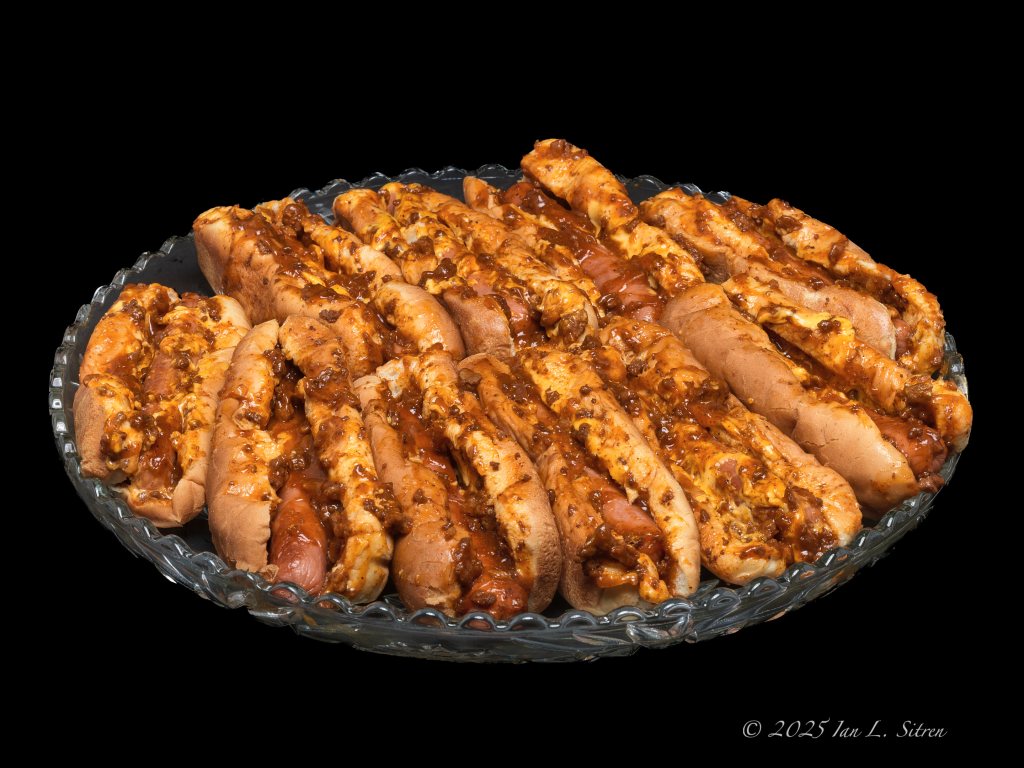
Nothing says “refined dining” quite like ten chili cheese dogs arranged on a cut‑glass platter. Today is National Chili Dog Day, and what better way to mark the occasion than with a full platter of Wienerschnitzel chili cheese dogs, photographed as if they belong at a formal banquet.
Lined up side by side, the hot dogs are topped with chili sauce and melted cheese, shot against my black background for a polished, commercial look.
Chili dogs have been part of American food culture for more than a century, found in diners, ballparks, and roadside stands. Wienerschnitzel has been serving its own version since 1961, making it one of the most recognizable names for chili dogs in the U.S.
📷 See more of my commercial food photography here:
https://www.secondfocus.com/index/G0000WFAqDJQOgKU
Wings and Waffles for National Chicken Wing Day

Today is National Chicken Wing Day, and I decided to do something a little different. Instead of photographing just wings, I thought—why not stack them on waffles? A twist on the classic chicken and waffles that has been a Southern comfort food staple for generations.
Chicken and waffles has deep roots in American food history. Its origins trace back to the late 1800s and early 1900s, where fried chicken and waffles were served together in the South. The pairing later became iconic in Harlem’s jazz clubs during the 1930s and 40s, offered as a hearty dish for late-night musicians and patrons—too early for dinner, too late for breakfast. Over time, it became a combination that blends sweet, savory, and crispy textures in one plate.
As for National Chicken Wing Day, that’s thanks to Buffalo, New York—the city credited with creating the Buffalo-style wing in 1964 at the Anchor Bar. Teressa Bellissimo is said to have fried leftover chicken wings for her son and his friends, tossing them in a spicy sauce and serving them with celery and blue cheese. The idea took off. By 1977, Buffalo declared July 29th as National Chicken Wing Day, cementing the city’s claim to the now-famous bar food.
So here we are—Buffalo wings meet Belgian waffles, photographed just as they were plated. No styling, no tricks. A nod to both a food holiday and an enduring classic that continues to reinvent itself.
Take a look at more of my work in my Commercial Food Photography gallery here:
https://www.secondfocus.com/index/G0000WFAqDJQOgKU
International Chicken Wing Day

Today is International Chicken Wing Day, marking the popularity of one of the simplest yet most enduring foods in American dining culture. Chicken wings were first popularized in 1964 at the Anchor Bar in Buffalo, New York, when Teressa Bellissimo cooked them in hot sauce and served them as a late-night snack for her son and his friends, creating what we now know as Buffalo wings.
The original Buffalo sauce is a straightforward mix of hot sauce, melted butter, and a few seasonings, creating a distinctive bright orange coating that has defined the category ever since. It’s estimated that Americans consume over 1.4 billion chicken wings on Super Bowl weekend alone, showing how wings have cemented their place as a go-to for takeout, parties, and game day gatherings. Wings remain a staple for bars, fast food, and home kitchens, served in countless variations from mild to extra hot.
This photo of Buffalo wings, photographed on a clean white background, is part of my ongoing commercial food photography project. I photograph foods exactly as they arrive, emphasizing their color, texture, and shape without styling tricks.
You can see more from this series in my commercial food photography gallery here:
https://www.secondfocus.com/index/G0000WFAqDJQOgKU
National Biscuit Day – From Can to Camera

Today, May 29, is National Biscuit Day—a good moment to take a closer look at a humble staple that’s been on American tables for generations. Whether eaten with breakfast, served with fried chicken, or just pulled apart warm from the oven, biscuits have long held a place in American food culture.
For this photo, I used three standard tubes of refrigerated biscuit dough. Part of the experience is the packaging itself: peeling back the paper seam and waiting for that sudden pop as the tube bursts open. It’s a moment of kitchen theater that’s been happening since the 1950s, when pre-packaged refrigerated dough started appearing in supermarkets.
No styling here—just 24 biscuits baked as-is and casually stacked onto a black background. The domed tops, crisp golden crusts, and flaky layers hold up visually without any need for extras.
This image is part of my ongoing From Bag to Background series, which isolates fast food and packaged grocery items from their branding and surroundings to present them plainly, and on their own terms.
You can see the full gallery of food photography at https://www.secondfocus.com/index/G0000wQ3fbeEezF0/I0000nUG8tfk8Gdc
A Deli Icon for National Reuben Day and My St. Patrick’s Day Favorite

March 14 – National Reuben Sandwich Day
A true deli icon. My photograph of a Reuben sandwich—layered with corned beef, Swiss cheese, sauerkraut, and Russian dressing on crispy grilled rye. A sandwich with history, tracing its roots to early 20th-century America. Some say it was created in Omaha during a late-night poker game in the 1920s, while others credit Reuben’s Delicatessen in New York City. Either way, it’s been a staple for over a century.
And with St. Patrick’s Day around the corner, this is my way to enjoy corned beef, instead of corned beef and cabbage, which I don’t like a lot!
See more of my food photography and other intriguing photo projects at http://SecondFocus.com Thanks!
The Evolution of Meatballs: Celebrating National Meatball Day
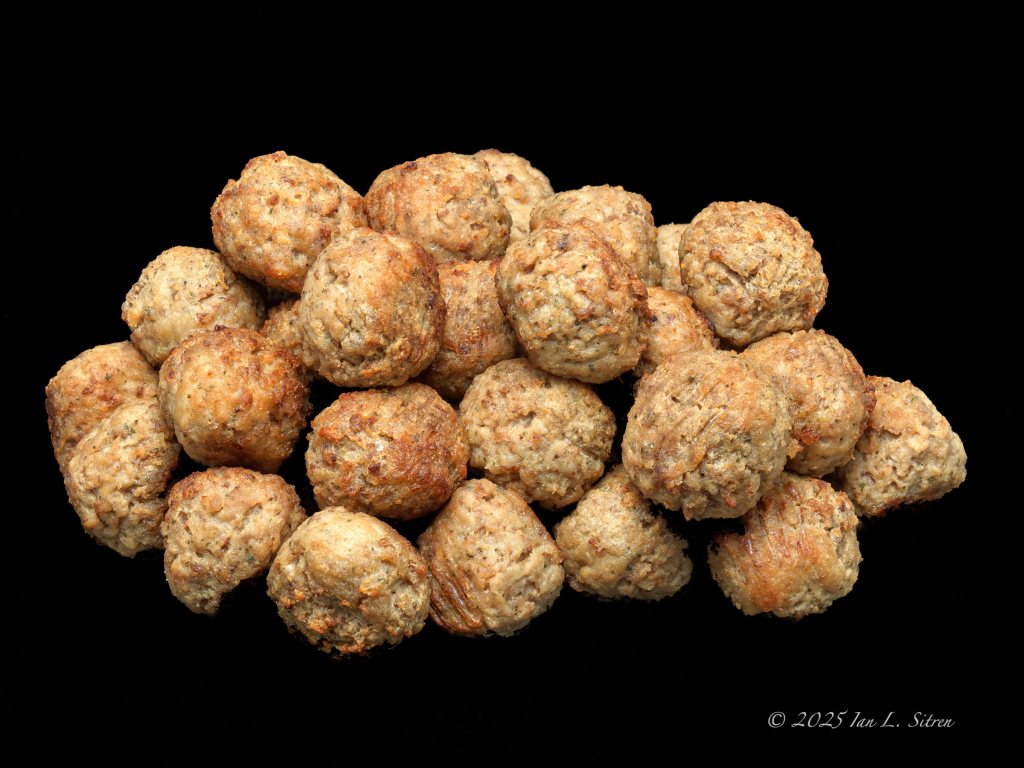
My photograph of Meatballs for today, National Meatball Day!
While the exact origins of National Meatball Day are unclear, it’s believed to have started in the United States as a way for restaurants and meatball enthusiasts to celebrate this comfort food. Over the years, the holiday has grown in popularity, with eateries offering specials and home cooks sharing their favorite recipes.
In Italy, meatballs—known as polpette—are typically small, made from a blend of pork, beef, or veal mixed with breadcrumbs, garlic, and Parmesan. Unlike the American tradition, they’re rarely served with pasta, instead enjoyed on their own or in broths.
When Italian immigrants arrived in the United States in the late 19th and early 20th centuries, they adapted their recipes to the abundance of meat available, creating larger meatballs paired with spaghetti and marinara sauce—an entirely American invention. The meatball sub soon followed, packed with marinara and melted cheese, becoming a deli staple.
See more of my Food Photography and intriguing photo shoots on my website at http://SecondFocus.com Thanks!
McDonald’s Hash Browns: A Fast-Food Icon
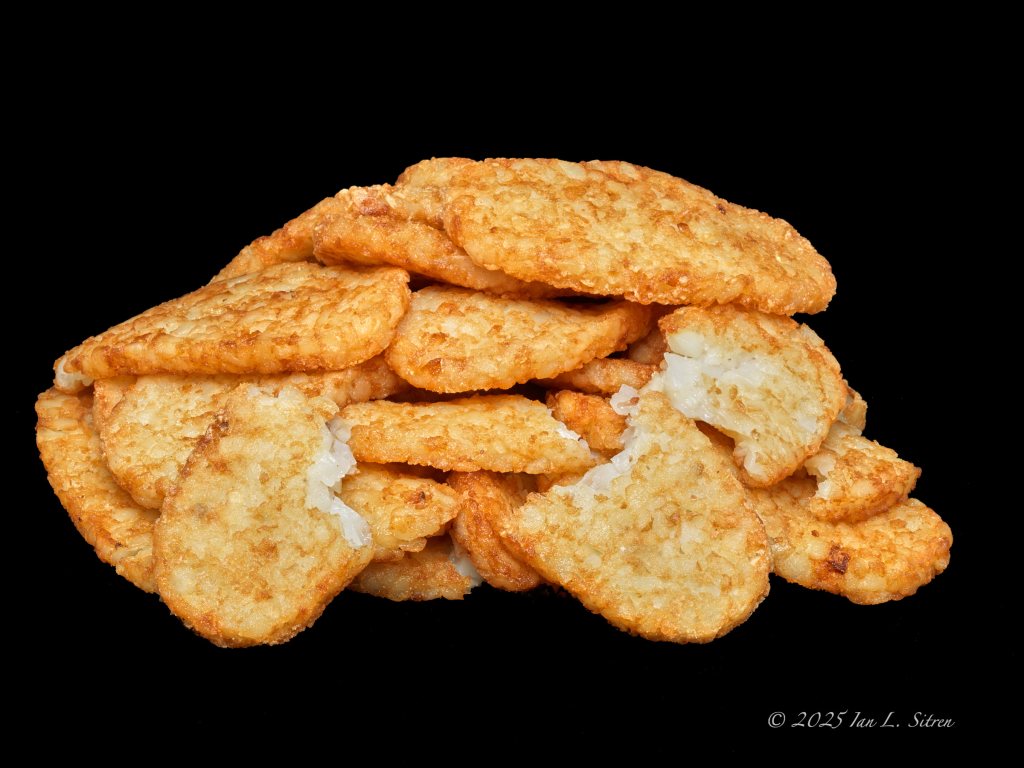
Happy National Hash Brown Day! McDonald’s hash browns have been a breakfast favorite since their introduction in 1977. These golden, crispy patties are made from grated russet potatoes, offering a satisfying crunch on the outside and a fluffy interior. Each hash brown contains 140 calories, making it a popular choice to complement breakfast sandwiches or enjoy on its own.
Over the years, McDonald’s has played a significant role in shaping the fast-food breakfast landscape. As of 2024, McDonald’s holds approximately 34.8% of the U.S. breakfast market share, leading the industry ahead of competitors like Starbucks (16%) and Dunkin’ Donuts (14.3%).
However, recent price increases have sparked customer feedback. In some locations, the price of a single hash brown has risen to over $3, leading to discussions about affordability. McDonald’s CEO has acknowledged these concerns, emphasizing the company’s commitment to maintaining value for customers. I will say that by using the McDonald’s app to order, I personally saved $16 buying this stack of 20 to photograph.
McDonald’s hash browns remain an iconic breakfast item, symbolizing the brand’s influence on morning routines nationwide. Visit my website for more of my delicious Food Photographs and other intriguing photography. Thanks! http://SecondFocus.com
National Tater Tot Day: A Classic Fast-Food Favorite

Tater tots are more than just a side dish—they’re an American fast-food icon. Originally created by Ore-Ida in 1953 as a way to repurpose leftover potato scraps, tater tots quickly found their way into school cafeterias, diners, and eventually, fast-food chains.
One of the biggest champions of tater tots has been Sonic Drive-In, which has served them since at least the 1960s. Unlike many fast-food chains that focus solely on fries, Sonic made tots a signature menu item, offering them plain or loaded with cheese, bacon, ranch, or chili. Their crisp texture and deep-fried appeal make them the perfect companion to burgers, hot dogs, and milkshakes.
To mark National Tater Tot Day, I photographed Sonic’s signature tater tots, capturing their rich golden-brown color and crispy edges against a dramatic black background. You can see this shot and more of my food photography at http://SecondFocus.com Thanks!
What’s your favorite way to enjoy tater tots? Let me know in the comments.
 SecondFocus Blog