Happy National Tamale Day!
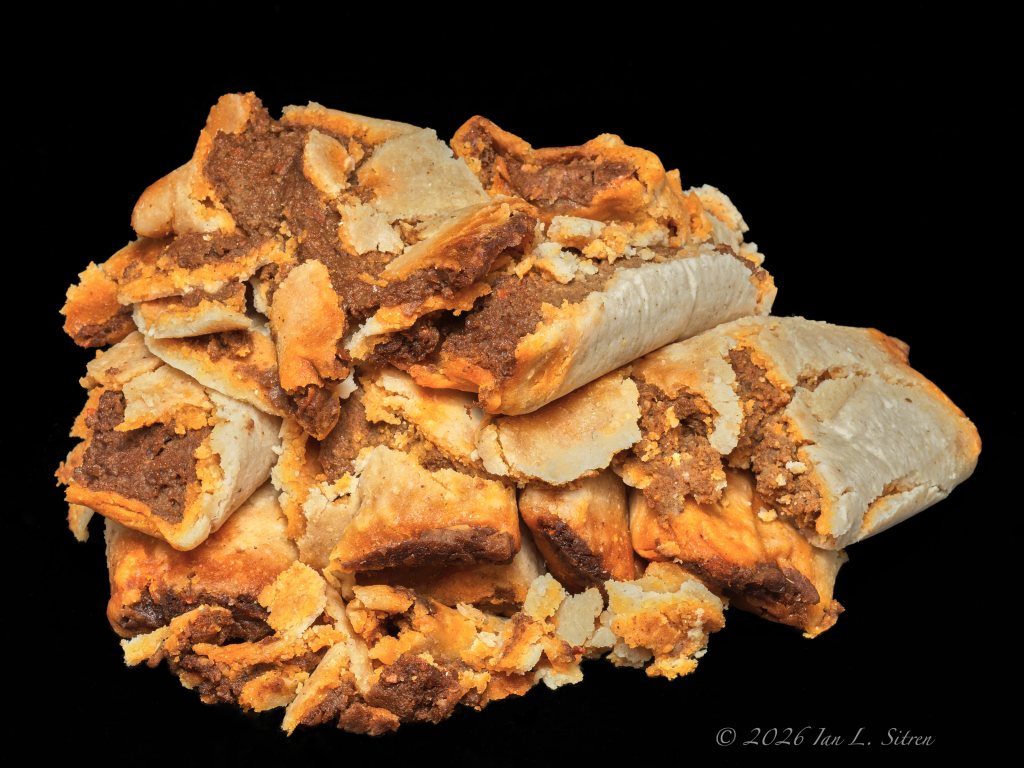
There’s something reassuring about a product that hasn’t tried to reinvent itself for over a century. XLNT beef tamales have been doing the same thing since 1894, dense, compact, unapologetically consistent. No artisanal rebrand, no small-batch storytelling, no reclaimed heritage narrative. Just tamales.
Originally sold from horse-drawn carts in Los Angeles, they made their way into cans, freezers, and grocery store shelves across California. Generations have opened the same parchment, revealing the same familiar structure, masa holding together a beef filling that doesn’t pretend to be anything else.
In a time when everything is reimagined, elevated, or deconstructed, this might be the real outlier. Nothing to explain. Nothing to decode. It is exactly what it has always been.
And maybe that’s the point.
From my Food From Bag To Background series.
See the full gallery at https://www.secondfocus.com
Thank You!
National Hash Brown Day
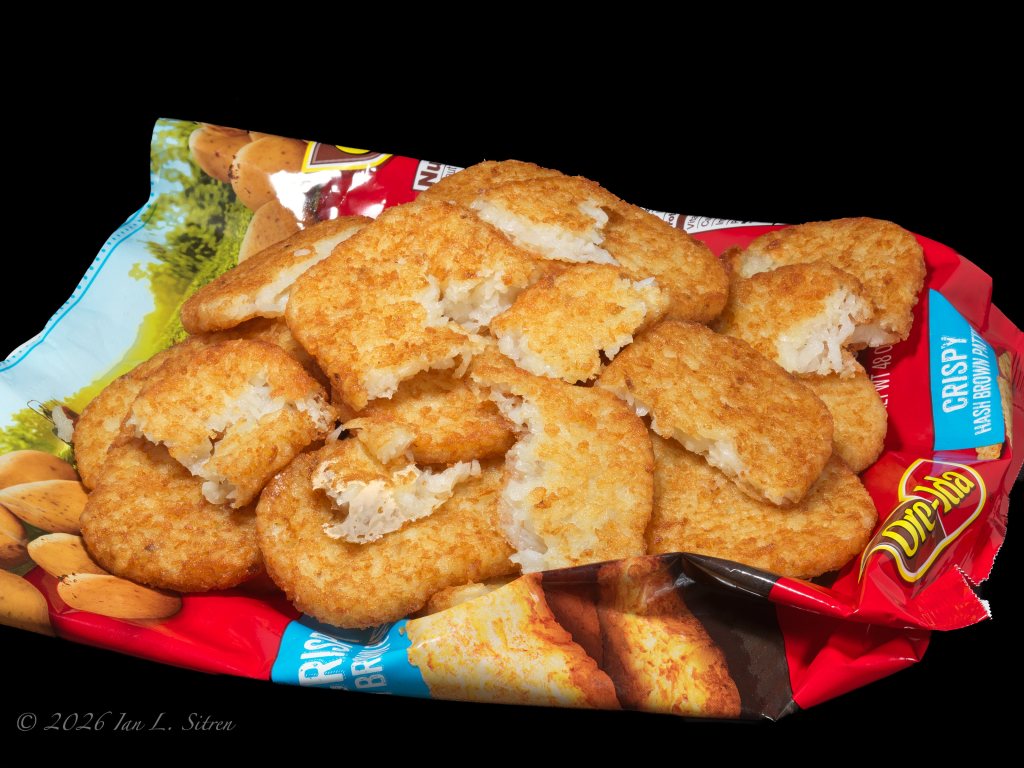
Today is National Hash Brown Day, which seems like a perfectly reasonable excuse to cook a pile of them.
Hash browns have been part of the American breakfast for more than a century. The name comes from the French word “hacher”, meaning to chop. In the late nineteenth century restaurants began serving what were called “hashed brown potatoes,” chopped or shredded potatoes fried until crisp. They appeared on hotel breakfast menus and quickly spread to diners and restaurants across the country.
The modern hash brown patty, however, is a much newer development.
Many people associate the familiar patty with McDonald’s, where the crisp rectangular hash brown became one of the most recognizable breakfast sides in America.
But the frozen food industry actually got there first.
In the 1960s frozen potato company Ore-Ida introduced frozen hash brown patties as part of the expanding frozen convenience food market. Shredded potatoes were formed into patties that could go directly from the freezer to the oven or pan. When McDonald’s launched its national breakfast program in the early 1970s, the frozen patty format worked perfectly for restaurant kitchens and quickly became associated with the chain.
For this photograph I cooked a batch of frozen hash brown patties and piled them onto their packaging, a small nod to their frozen food origins. A few broken pieces reveal the soft shredded potato interior beneath the crisp exterior.
Not bad for something that started as chopped potatoes in a hotel kitchen and ended up in the frozen food aisle.
You can see more of my Commercial Food Photography on my website at…
https://www.secondfocus.com/index/G0000WFAqDJQOgKU
National Hot Pastrami Sandwich Day
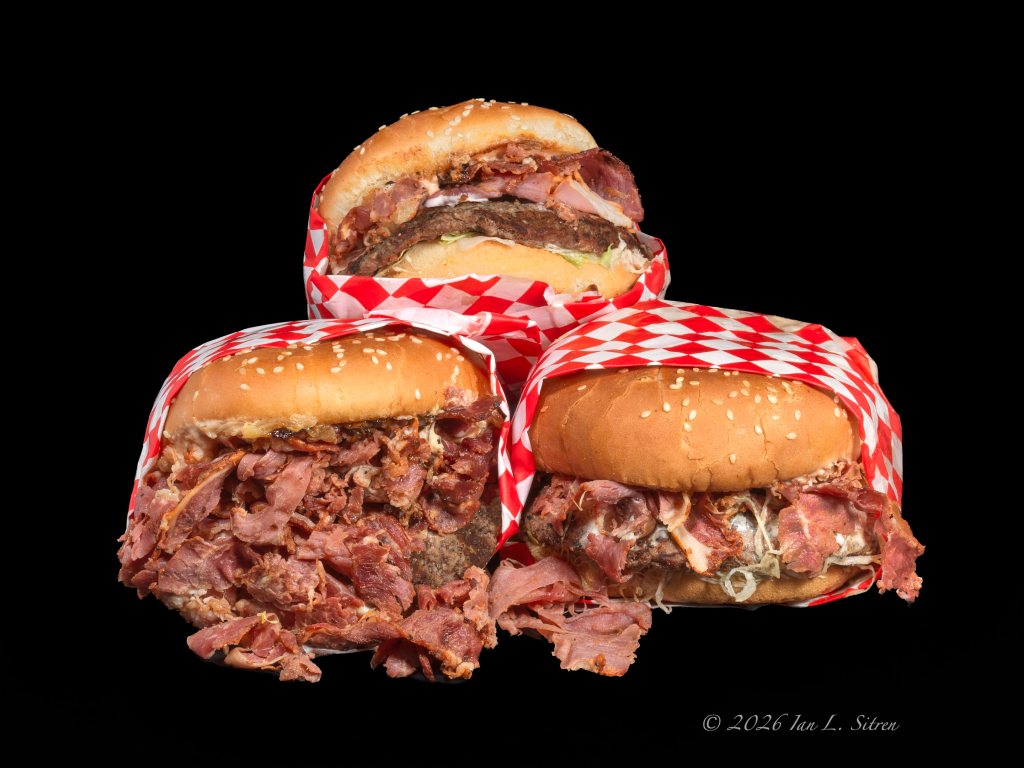
Today is National Hot Pastrami Sandwich Day, and this is the photograph I chose to mark it.
I’ve photographed classic pastrami sandwiches before, the kind wrapped in paper, stacked high, and eaten leaning forward so nothing ends up on your shirt. This time I wanted to look at something I see more and more often: the pastrami cheeseburger.
Pastrami began as a method of preservation, rooted in Eastern European Jewish traditions, before becoming a defining part of American food culture. In delicatessens, especially in New York and later Los Angeles, it settled into a familiar form: sliced hot, piled high, and served with little interference. The meat was the point.
The pastrami cheeseburger feels like a distinctly American evolution of that idea.
This photograph features pastrami cheeseburgers from P&G Burgers in Colton, California, a long-running Southern California fast-food restaurant with indoor seating, outdoor tables, and a drive-thru. You order at the counter beneath a wall of menu boards and pick up your food when your number is called. It’s not a deli and not just a roadside shack. It’s a full-scale fast-food operation built around burgers, fries, shakes, and pastrami.
Their claim, “Home of the Best Pastrami Cheeseburgers in the World,” is printed right on the building. Whether taken literally or as confident fast-food bravado, it suits what they’re serving. These burgers are large, heavy, and unapologetically loaded. Thick beef patties stacked with grilled pastrami, cheese, and a soft sesame seed bun, wrapped tight and meant to be eaten with commitment.
The cheeseburger version shifts pastrami away from its deli roots and places it squarely in American fast-food culture. Beef layered onto beef. Cheese added. Rye replaced by a burger bun. It’s less about tradition and more about appetite. Less about restraint and more about scale.
That’s what drew me to photograph it.
This image shows the burgers exactly as they’re served, straight from the counter, still wrapped, still spilling out. No styling, no cleanup. Just weight, texture, and excess. In that way, it still respects pastrami’s history, even as it pushes it into something louder and distinctly American.
On National Hot Pastrami Sandwich Day, that evolution feels worth acknowledging.
More of my fast food photographs on my website in the gallery “Food From Bag To Background” at https://www.secondfocus.com/index/G0000wQ3fbeEezF0
National Bacon Day!
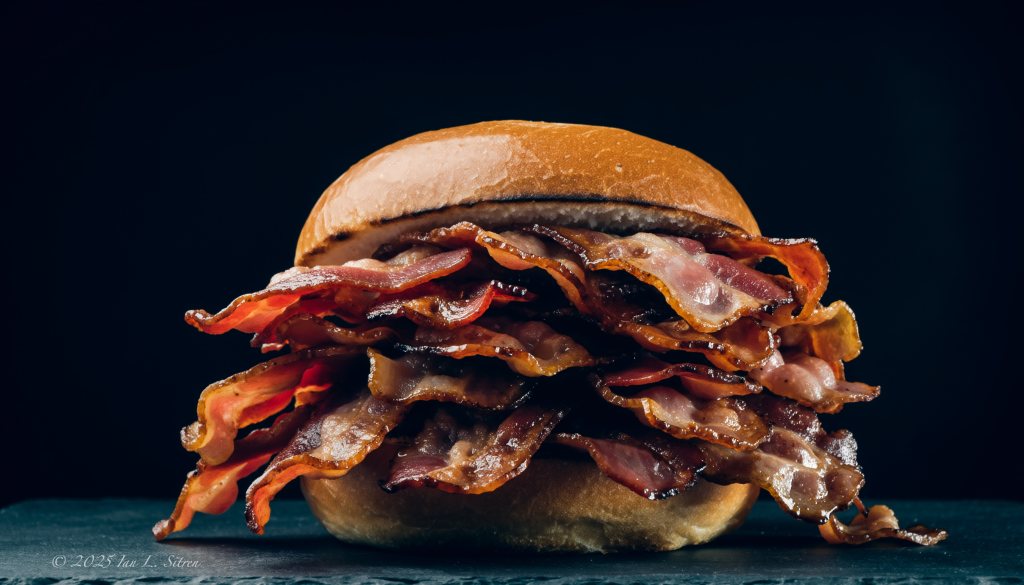
There are few foods people agree on as readily as bacon. Across generations and cultures, it holds a rare position as something almost universally liked, often described as the ingredient that makes everything better. If you asked people to name their ideal sandwich, many would quietly admit this would be it: bread, bacon, and nothing else getting in the way.
Bacon’s appeal is deeply rooted in history. Salt-cured pork dates back thousands of years, used as a practical method of preservation long before refrigeration. Variations appeared across Europe and Asia, but bacon as we recognize it today became firmly embedded in American food culture during the 20th century. By the mid-1900s, it had moved beyond breakfast and into sandwiches, burgers, and fast food, where its smoky, fatty richness became shorthand for indulgence.
Culturally, bacon has taken on a role larger than the ingredient itself. It represents abundance, comfort, and excess, often acknowledged without apology. Entire menus have been built around it, and marketing has leaned heavily into its reputation as something people crave even when they know they shouldn’t. It’s one of the few foods that can be both nostalgic and provocative at the same time.
This photograph leans into that idea by stripping the sandwich down to its core. No lettuce, no tomato, no attempt at balance. Just bacon, stacked high, presented without distraction. It’s easy to imagine this being wildly popular as a fast-food option, ordered impulsively and remembered vividly. Of course, it isn’t something you’ll actually find on a menu. And that absence is part of the point.
My fast food photography project can be found in “Food From Bag to Background” on my website at https://www.secondfocus.com/index/G0000wQ3fbeEezF0
National Noodle Day
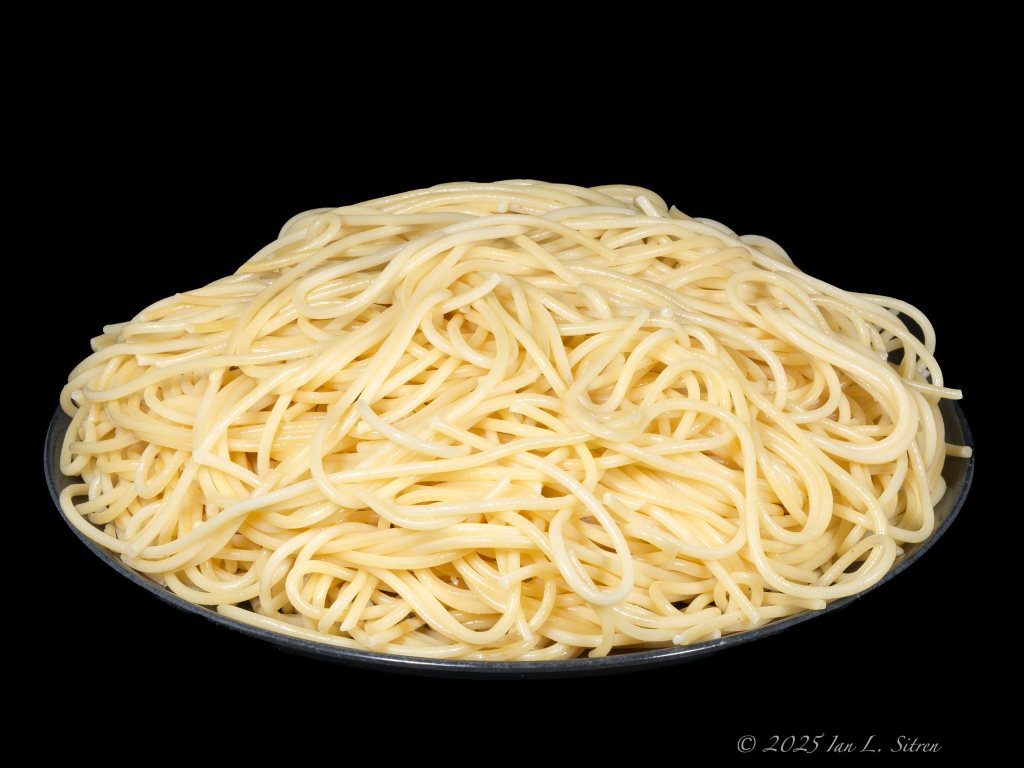
Today is National Noodle Day, and I kept it simple. Just spaghetti — no sauce, no garnish, nothing added.
Spaghetti is by far the most popular noodle in the United States. Every survey puts it well ahead of ramen, macaroni, or lo mein. It’s the one most Americans recognize immediately — a shape as common as the plates it’s served on.
Although it’s considered an Italian staple, the story begins much earlier. Records of noodles in China date back more than 4,000 years, with millet-based strands discovered at the archaeological site of Lajia. By contrast, spaghetti took form in Sicily around the 12th century, when durum wheat and early drying techniques made long, thin noodles possible.
Spaghetti’s path to American tables began with Italian immigration in the late 1800s, when new arrivals brought their cooking traditions to cities like New York and New Orleans. Its real national rise came after World War II, when returning soldiers who had served in Italy sought the same dishes at home.
A key figure in that story was Ettore “Hector” Boiardi, an Italian-born chef who began selling his spaghetti sauce in Cleveland in 1928 under the name Chef Boy-Ar-Dee. During the war, his company supplied canned pasta to the U.S. military, producing hundreds of thousands of meals each day. Afterward, his brand became a staple of postwar convenience — spaghetti and meatballs in a can, ready to heat and serve. By the 1950s, spaghetti had become a fixture of American kitchens: affordable, familiar, and easy to prepare.
This photograph is simply that — cooked spaghetti, isolated against black. Nothing more, nothing less.
View more from my Commercial Food Photography collection here: https://www.secondfocus.com/index/G0000WFAqDJQOgKU
Vodka, Fries, and Famine: Thank the Potato

It doesn’t look like much — just a lump pulled from the dirt. Yet this humble potato has fueled empires, filled plates, and even caused catastrophe.
Today is National Potato Day, a nod to one of the world’s most enduring and versatile foods. First cultivated in the Andes thousands of years ago, the potato spread across the globe to become a kitchen staple. From French fries to vodka, it’s fed armies, inspired cuisines, and left its mark on history — the Irish potato famine of the 19th century reshaped migration and culture in ways still felt today.
My photograph marks the day with a simple pile of red and yellow potatoes, unstyled, against a black background. Before they’re mashed, fried, roasted, or turned into chips, they remain what they’ve always been: humble roots pulled from the earth.
More on my Commercial Food Gallery at https://www.secondfocus.com/index/G0000WFAqDJQOgKU Take a look it might make you hungry!
International Chicken Wing Day

Today is International Chicken Wing Day, marking the popularity of one of the simplest yet most enduring foods in American dining culture. Chicken wings were first popularized in 1964 at the Anchor Bar in Buffalo, New York, when Teressa Bellissimo cooked them in hot sauce and served them as a late-night snack for her son and his friends, creating what we now know as Buffalo wings.
The original Buffalo sauce is a straightforward mix of hot sauce, melted butter, and a few seasonings, creating a distinctive bright orange coating that has defined the category ever since. It’s estimated that Americans consume over 1.4 billion chicken wings on Super Bowl weekend alone, showing how wings have cemented their place as a go-to for takeout, parties, and game day gatherings. Wings remain a staple for bars, fast food, and home kitchens, served in countless variations from mild to extra hot.
This photo of Buffalo wings, photographed on a clean white background, is part of my ongoing commercial food photography project. I photograph foods exactly as they arrive, emphasizing their color, texture, and shape without styling tricks.
You can see more from this series in my commercial food photography gallery here:
https://www.secondfocus.com/index/G0000WFAqDJQOgKU
Falafel Wraps for International Falafel Day
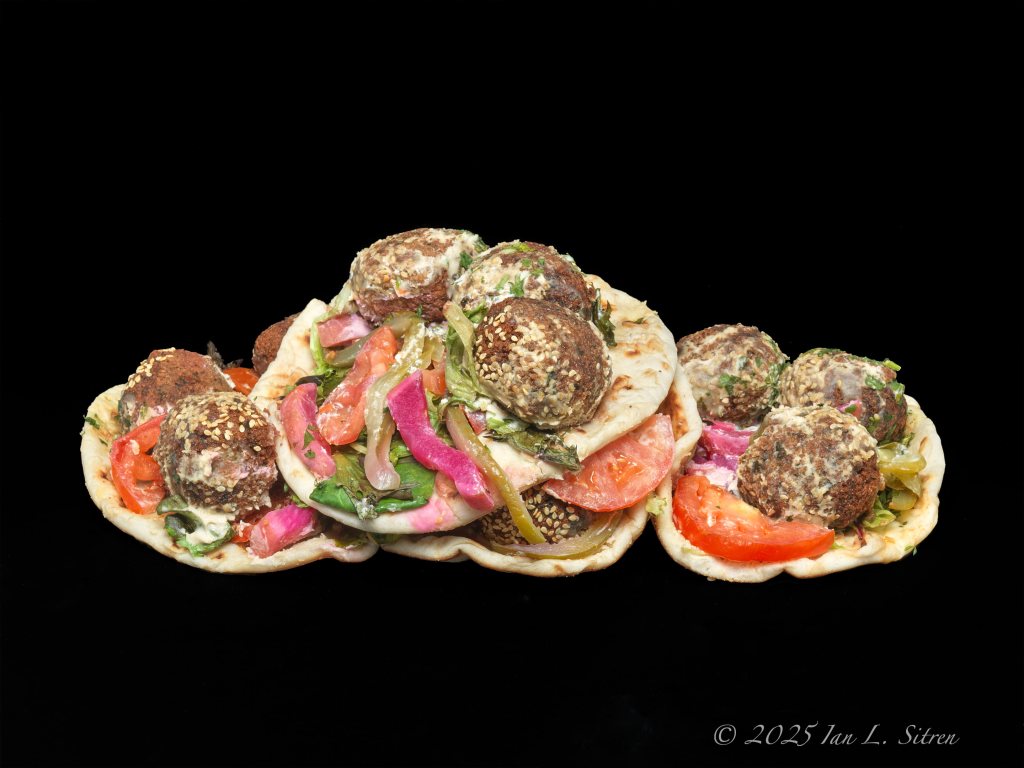
June 12th marks International Falafel Day—a time to acknowledge one of the most enduring and portable fast foods in the world.
Falafel traces its origins to the Middle East, with Egypt often cited as the birthplace of the dish. Originally made with fava beans and known as ta’amiya, the recipe evolved across regions, eventually incorporating chickpeas and becoming a staple in Israel, Lebanon, Syria, and beyond. Today, falafel is found everywhere from street carts to fast food chains, often claimed by different cultures but universally loved for its crisp texture and bold seasoning.
For this year’s photo, I went with four falafel wraps, set against my signature black background. Three wraps are arranged along the base, with a fourth stacked above. Each one features sesame-crusted falafel tucked into pita bread and layered with fresh tomato, pickled vegetables, greens, and tahini sauce—exactly as it came, with no styling or edits.
Falafel by itself is often considered a fast food. In wrap form, it becomes a highly portable meal, emphasizing convenience without losing any of the original flavor or texture. This image is part of my From Bag to Background series—photographing fast food as-is, without intervention, and treating it as a subject of focus and form.
More of the series can be viewed on my website:
https://www.secondfocus.com/index/G0000wQ3fbeEezF0/I0000nUG8tfk8Gdc
🥬 National Veggie Burger Day – June 5
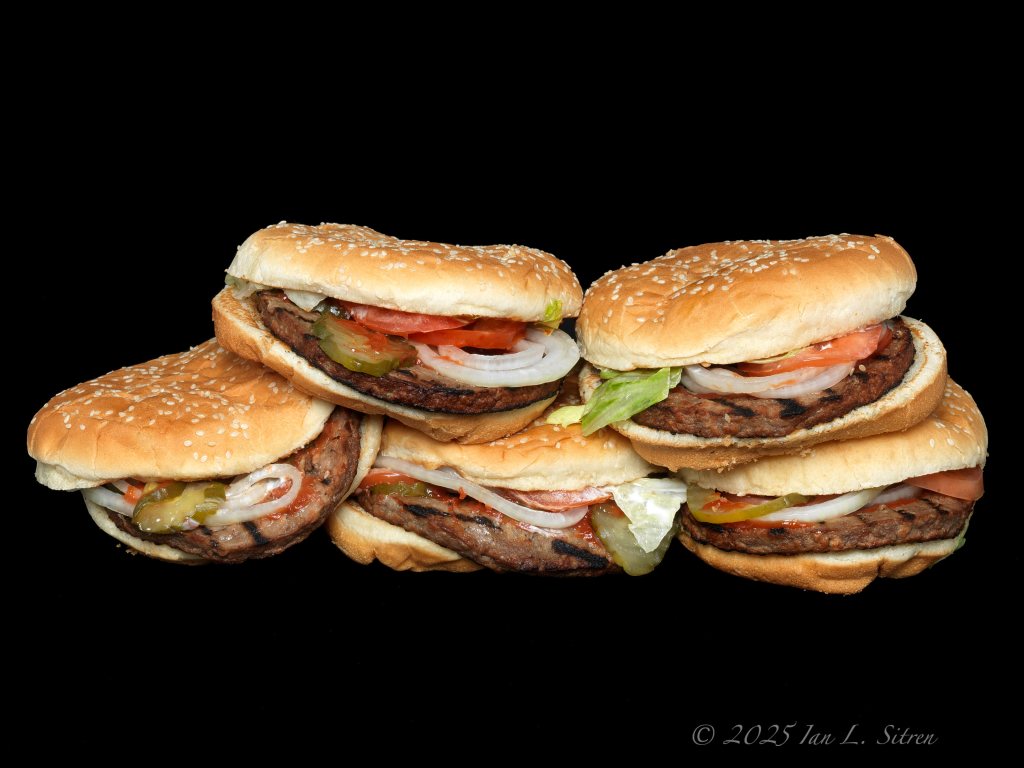
It’s National Veggie Burger Day—a time to consider what a burger can be without the beef.
First launched in 2017 by the vegetarian food company Amy’s Kitchen, the day was created to encourage people to try plant-based burgers and explore their benefits to health and the environment. Whether for ethical reasons, sustainability, or curiosity, veggie burgers continue to gain ground in the fast food world and beyond.
This is my photograph of five Burger King Impossible Whoppers, casually stacked on a black background. Each sandwich features a sesame seed bun, flame-grilled Impossible patty, tomato, lettuce, onion, pickles, ketchup, and mayo—served exactly as ordered, no styling or prep.
The Impossible patty, made primarily from soy protein and heme (a molecule found in both plants and meat), was developed to replicate the flavor and texture of beef. Introduced nationwide by Burger King in 2019, the Impossible Whopper remains the most widely known fast food veggie burger in the U.S.
Part of my From Bag to Background series, this image keeps the focus where it belongs—on the food itself, presented as-is, without props or artifice.
More in the full series on my website:
https://www.secondfocus.com/index/G0000wQ3fbeEezF0/I0000nUG8tfk8Gdc
Memorial Day, 1934: Meltdown Created Carvel
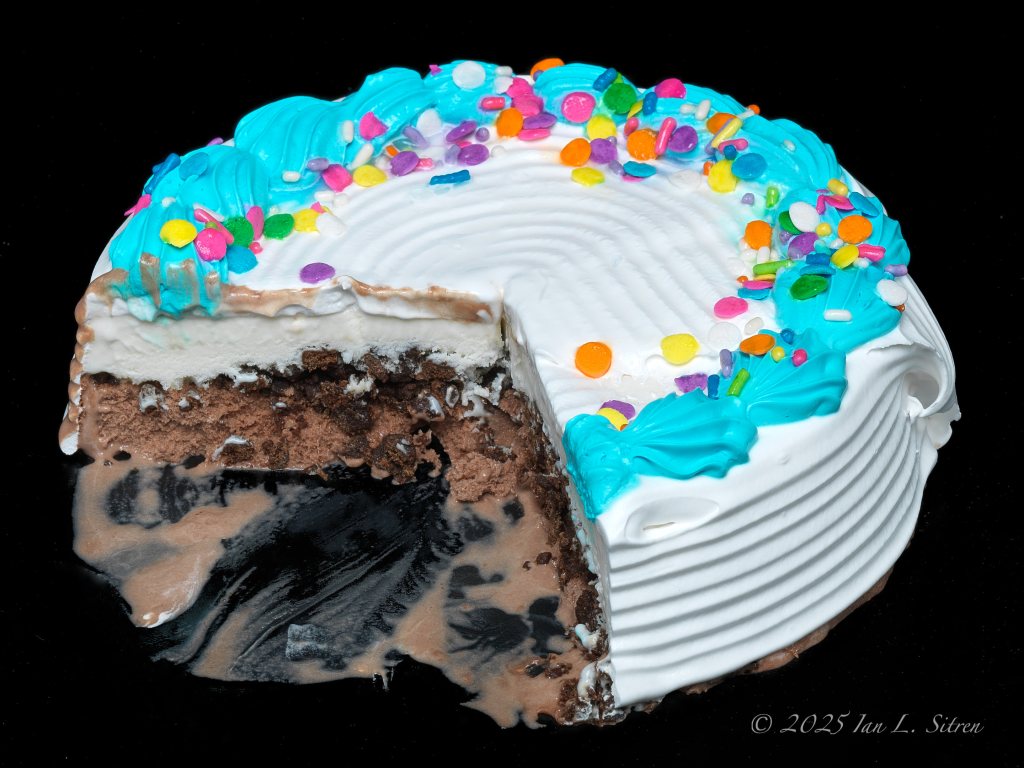
It was Memorial Day weekend, 1934, when Tom Carvel’s ice cream truck got a flat tire in Hartsdale, New York. He pulled into a parking lot and started selling his melting ice cream to passing drivers. What could have been a loss turned into a breakthrough—customers liked the softer texture, and the concept of soft-serve was born.
That moment sparked the launch of the Carvel brand. By 1936, Carvel opened a permanent roadside stand on that same site and began developing his own equipment and franchise model. He pioneered innovations in frozen desserts and advertising—including early television commercials and animated mascots.
In the 1950s, Carvel introduced the now-iconic round ice cream cake—layered with vanilla and chocolate soft-serve, filled with chocolate crunchies, and topped with piped whipped frosting and sprinkles. It quickly became a fixture at birthdays, holidays, and family celebrations.
Photographed here as served—no props, no styling—just the cake, isolated on a black background. It’s part of my “From Bag to Background” series, and a fitting nod to an accidental origin that took place on Memorial Day nearly a century ago.
See more from the series:
https://www.secondfocus.com/index/G0000wQ3fbeEezF0/I0000nUG8tfk8Gdc
White Castle and the Birth of the Fast Food Burger
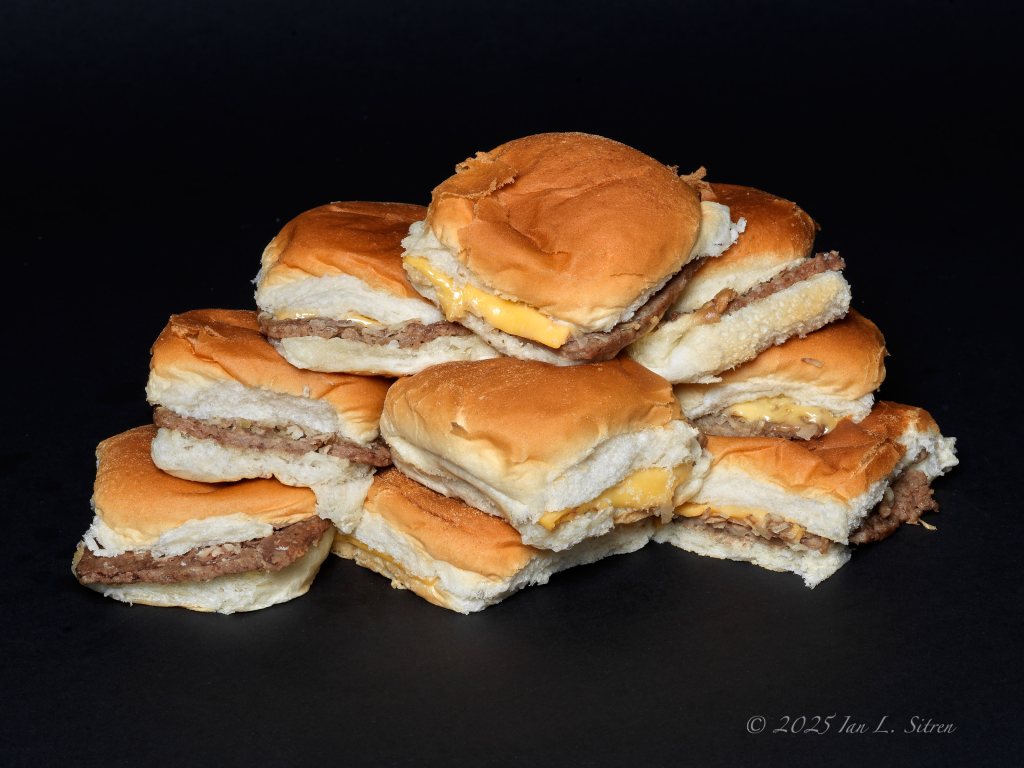
May is National Hamburger Month — a time to look beyond the plate and consider how a simple sandwich became a cultural landmark.
This photograph features a selection of White Castle hamburgers and cheeseburgers, arranged exactly as they arrived: no styling, no enhancements, just the food itself. It’s part of my ongoing project, From Bag to Background, where I document fast food as-is — isolating these everyday items against a deep black backdrop to encourage closer inspection.
White Castle holds a unique place in American history. Founded in 1921 in Wichita, Kansas, it was the first fast food hamburger chain in the United States. At a time when ground beef was viewed with suspicion, White Castle emphasized cleanliness, consistency, and standardized preparation — laying the groundwork for the modern fast food industry.
Their signature square sliders, steamed over onions and served in batches, were more than a novelty. They were engineered for efficiency, affordability, and mass appeal. This approach redefined how food was prepared and consumed in the 20th century — and helped make the hamburger one of the most recognized foods in the world.
From Bag to Background aims to treat fast food not as a disposable item, but as an object of design, branding, and cultural importance. Each item is photographed in its unaltered state — no styling, no manipulation — just as millions of people experience it daily.
See more from the series at: 👉 https://www.secondfocus.com
Emily Picks Up a Shift and Updates on My Fast Food Project

Fast food has its own place in history and culture. It’s architecture, advertising, Americana. It’s the burger and fries you recognize instantly, no matter where you are.
But because it’s so familiar, it’s easy to overlook. Easy to dismiss as ordinary. It’s everywhere—and that makes it invisible.
I started this project wanting to photograph fast food just as it is. There’s a long tradition of trying to make it look bad—greasy, smashed, uninspired. But the truth is, most of the time it comes out looking pretty good on its own. No styling needed. Just the background and the food.
The goal was to make a photo book and gallery exhibit of large-scale prints. I thought it might take six months. One year later, I’m still going—and I expect it will take at least another year or two. The more I shoot, the more I find. There’s a lot to photograph.
This photo of Emily, my AI assistant, dressed for the job as a retro car hop, felt like the right marker for this stage of the process. She’s been part of the work for about eight months now: researching, writing captions and keywords, helping plan the shots with concepts. It’s still my camera, lighting, and my eye—but Emily shows up 24/7.
In the end, this has been about paying attention to the things we usually pass by—something so common, we’ve stopped really seeing it.
You can see where the project stands so far on my website: https://www.secondfocus.com Thanks!
Pigs In A Blanket, Straight From the Oven
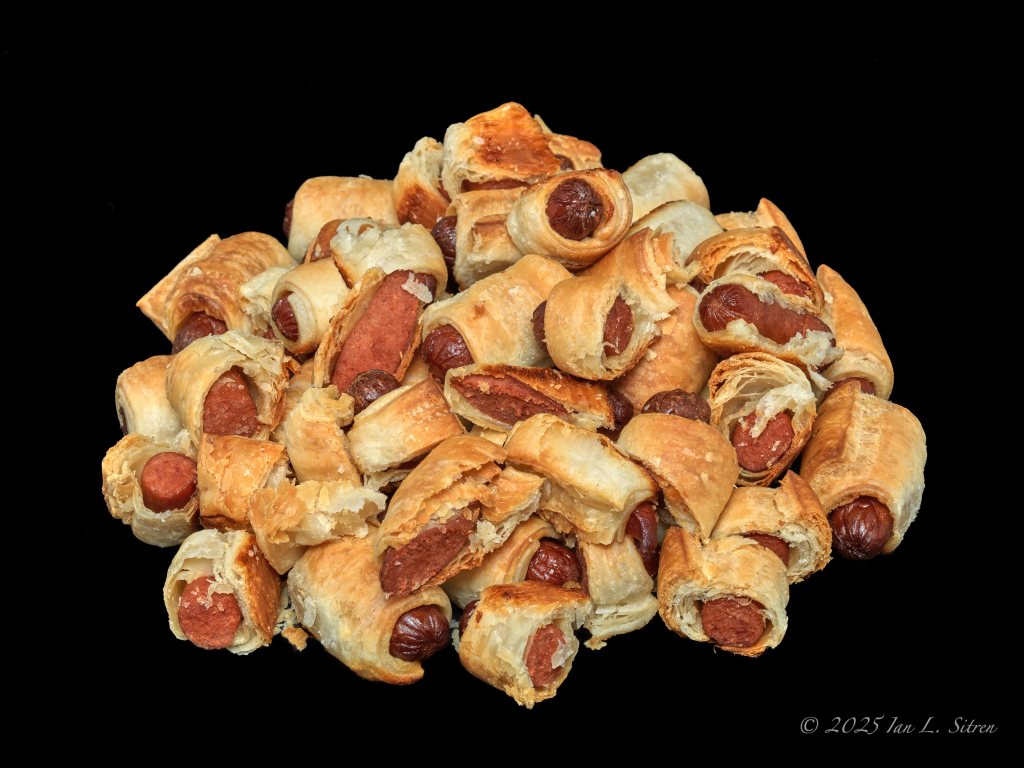
National Pigs In A Blanket Day
April 24, 2025
Pigs in a blanket—simple, nostalgic, and still one of the most popular finger foods in America.
For National Pigs In A Blanket Day, I photographed Hebrew National beef franks wrapped in puff pastry, baked straight from the box. After coming out of the oven, I dropped them onto a black background and shot them as they landed. A few were cut open to show the interior, but otherwise there was no styling, no arrangement—just the food as it is.
The concept of wrapping meat in dough dates back centuries, with versions found across Europe. The American take gained popularity in the 1950s, and brands like Pillsbury cemented its place in kitchens and party platters starting in the 1970s. Today, pigs in a blanket remain a staple for game days, holidays, and buffet tables—ranking among the top five most popular Super Bowl snacks in the U.S.
This photo is part of my From Bag to Background series, where fast food and snack items are photographed without interference—unwrapped, unstyled, and unbothered.
See the full gallery at http://SecondFocus.com Thanks!
National English Muffin Day — No Styling Required

Today is “National English Muffin Day” — a nod to the simple breakfast classic with its nooks and crannies.
My photograph of Thomas’ English Muffins, casually stacked and fork-split to reveal their airy interiors, stays true to how they come straight from the package. First sold in New York City in 1880 by British immigrant Samuel Bath Thomas, these muffins were originally called “toaster crumpets” before becoming the American breakfast staple we know today.
No styling, no tricks — just food as it is. See more from my “From Bag to Background” series on my website at http://SecondFocus.com Thanks!
Happy National Tamale Day!

My photograph of XLNT beef tamales, broken open to reveal their dense filling and crumbly masa. These familiar grocery store tamales have been made in California since 1894, originally sold from horse-drawn carts in Los Angeles. Over the decades, XLNT became a West Coast staple—first in cans, now frozen and still wrapped in parchment. Once called “California’s favorite tamale”, they’re a lasting part of Americanized Mexican food history.
National Tamale Day was established in 2015 by Richard Lambert, owner of Santa Barbara Tamales-To-Go, to recognize the cultural importance of tamales and to give them a celebration beyond the holiday season.
From my series From Bag to Background. See the full gallery at http://SecondFocus.com Thanks!
A Deli Icon for National Reuben Day and My St. Patrick’s Day Favorite

March 14 – National Reuben Sandwich Day
A true deli icon. My photograph of a Reuben sandwich—layered with corned beef, Swiss cheese, sauerkraut, and Russian dressing on crispy grilled rye. A sandwich with history, tracing its roots to early 20th-century America. Some say it was created in Omaha during a late-night poker game in the 1920s, while others credit Reuben’s Delicatessen in New York City. Either way, it’s been a staple for over a century.
And with St. Patrick’s Day around the corner, this is my way to enjoy corned beef, instead of corned beef and cabbage, which I don’t like a lot!
See more of my food photography and other intriguing photo projects at http://SecondFocus.com Thanks!
The Evolution of Meatballs: Celebrating National Meatball Day
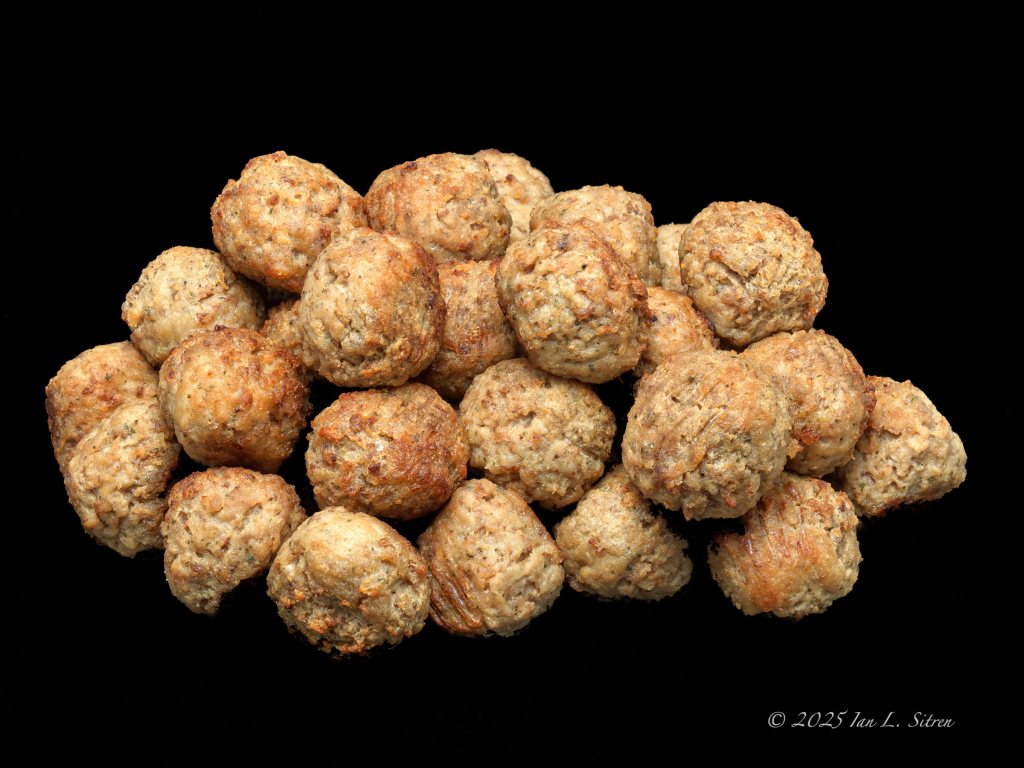
My photograph of Meatballs for today, National Meatball Day!
While the exact origins of National Meatball Day are unclear, it’s believed to have started in the United States as a way for restaurants and meatball enthusiasts to celebrate this comfort food. Over the years, the holiday has grown in popularity, with eateries offering specials and home cooks sharing their favorite recipes.
In Italy, meatballs—known as polpette—are typically small, made from a blend of pork, beef, or veal mixed with breadcrumbs, garlic, and Parmesan. Unlike the American tradition, they’re rarely served with pasta, instead enjoyed on their own or in broths.
When Italian immigrants arrived in the United States in the late 19th and early 20th centuries, they adapted their recipes to the abundance of meat available, creating larger meatballs paired with spaghetti and marinara sauce—an entirely American invention. The meatball sub soon followed, packed with marinara and melted cheese, becoming a deli staple.
See more of my Food Photography and intriguing photo shoots on my website at http://SecondFocus.com Thanks!
Celebrating National Oreo Cookie Day: A Look at the World’s Best-Selling Cookie Through My Lens
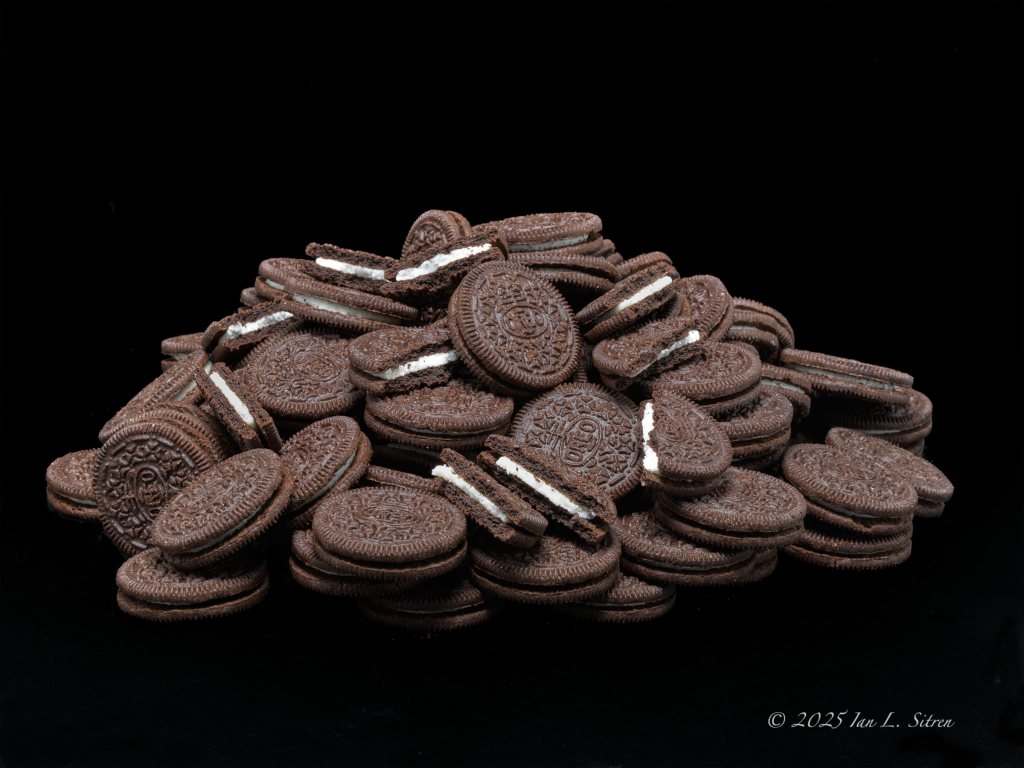
It’s National Oreo Cookie Day! Since their debut in 1912, Oreo cookies have become the world’s best-selling cookie, with over 34 billion consumed annually across more than 100 countries. Originally created by the National Biscuit Company (now Nabisco), the first Oreos sold for just 25 cents a pound. From the classic chocolate and creme combo to countless limited-edition flavors, Oreos have cemented their place as a global snack icon.
My photograph captures a pile of these beloved cookies, showcasing their signature design and creamy filling against a deep black background. Explore more of my food photographs and other intriguing projects on my website at http://SecondFocus.com Thanks!
 SecondFocus Blog