SPAM Meets the Big Mac
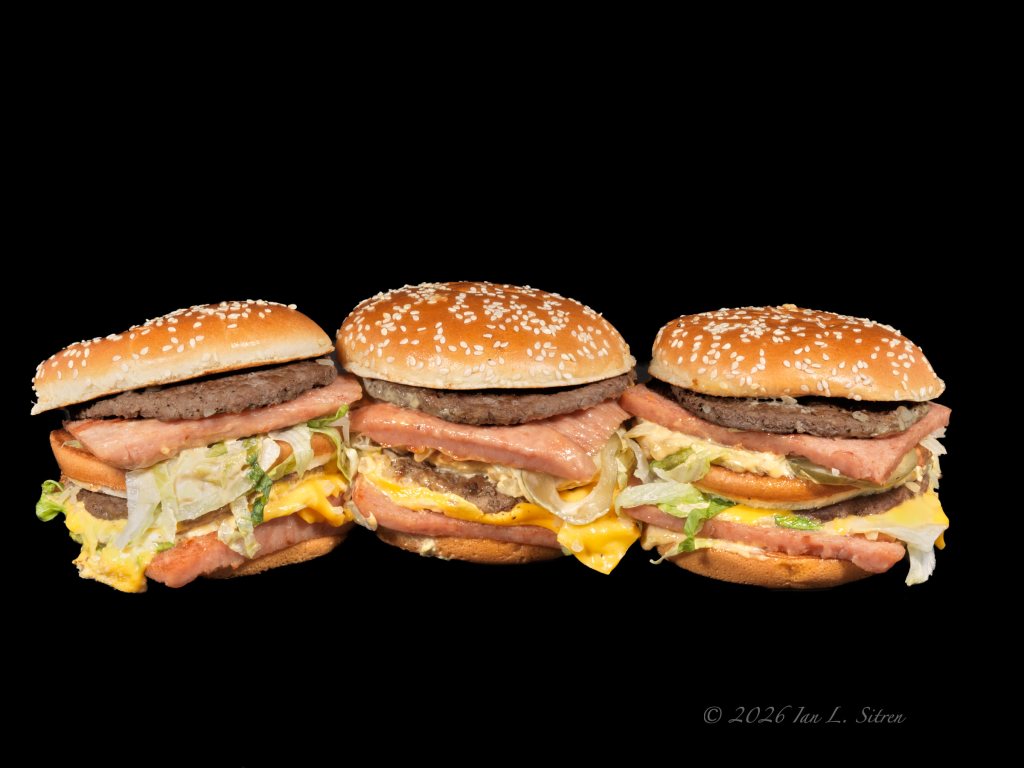
Last week gave us National SPAM Day. Then, just a couple of days later, came National Big Mac Day.
While thinking about National Big Mac Day, I remembered something that people on the mainland may not know.
SPAM is a huge part of the food culture in Hawaii, and McDonald’s restaurants throughout the Islands have embraced it for years. You’ll find SPAM on breakfast platters with eggs and rice, and at many locations it can also be substituted on selected breakfast sandwiches. So while McDonald’s has never offered a SPAM Big Mac, SPAM has had a place on the McDonald’s menu in Hawaii for many years.
Flying to Hawaii just to pick up breakfast from McDonald’s didn’t seem especially practical.
So I decided to bring a little Hawaii into my own kitchen.
Instead of changing the Big Mac, I wondered what would happen if I simply added SPAM to it. Not replacing the famous beef patties. Just adding two slices of pan-fried SPAM to each burger.
I started with three regular Big Macs. Then I pan-fried six slices of SPAM and added two slices to each burger, leaving the original Big Mac exactly as McDonald’s intended while adding a little Hawaiian inspiration.
Then it was time for the part I know best.
The three burgers moved in front of my camera and became the latest addition to my Food From Bag To Backgroundfast food photography project. Against my very black black background, the sesame seed buns, melted cheese, lettuce, beef patties, and SPAM came together exactly as I had envisioned.
The SPAM story isn’t over yet. There is one more stop on this journey through Hawaii’s favorite canned meat.
Next… SPAM Musubi.
You can see more of my photography, projects, motion, and my Blog on my website at https://www.secondfocus.com
Thank You!
When the Wrong Grocery Purchase Becomes the Right Photograph
Most trips to the grocery store are pretty straightforward. This one wasn’t.
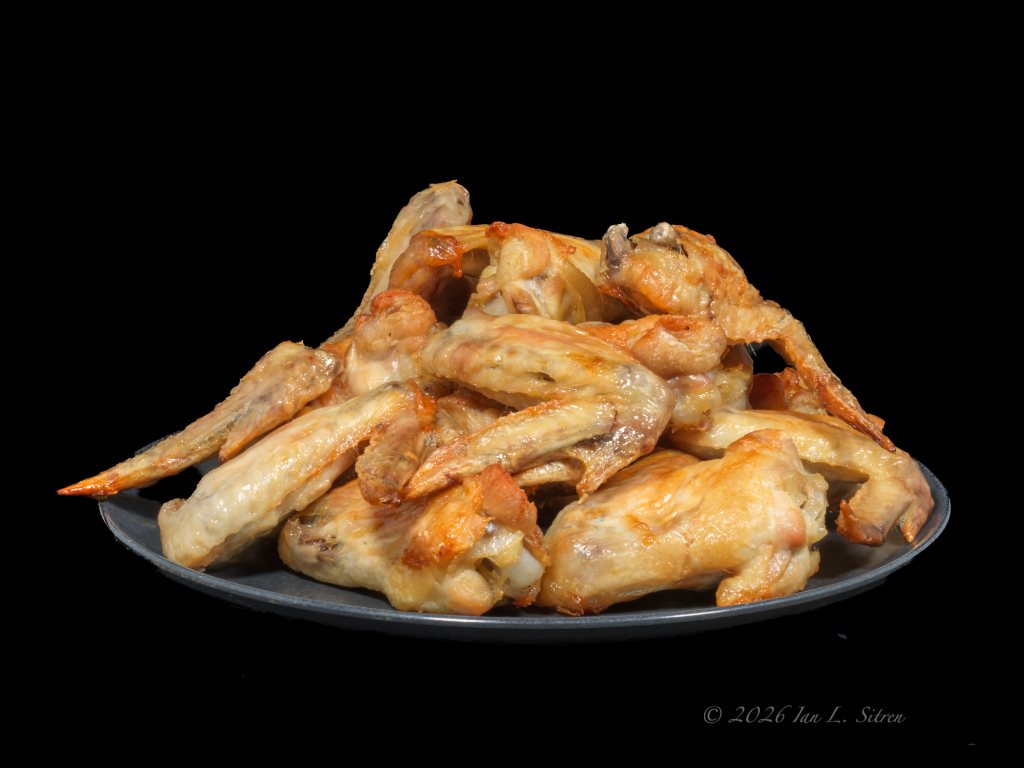
Most of the way home I suddenly realized that I wasn’t supposed to buy chicken wings. But now I had four pounds of them riding home with me.
Turning around wasn’t really an option. It was well over 100 degrees outside, and the rest of the groceries weren’t going to appreciate an extended sightseeing tour of Palm Springs.
So I changed the plan.
Chicken wings aren’t part of my Food From Bag To Background fast food photography project, but they were suddenly part of today’s photography project. I’ve been photographing for decades. Cooking is another matter entirely.
Fortunately, over the past three years my AI assistant and muse, Emily, has proven to be more than just an idea generator. She’s also become my unofficial chef and food stylist, right down to explaining how to roast chicken wings so they would look their best in front of the camera.
A little olive oil, a conventional oven, a few temperature checks, and a lot of hoping later, I had a plate of roasted chicken wings where they belonged… in front of my camera instead of still sitting in a grocery bag.
Sometimes the best photo of the day begins with buying the wrong thing.
You can see more of my photography, projects, motion, and my Blog on my website at https://www.secondfocus.com
Thank You!
National Chocolate Chip Cookie Day: The One Cookie Theory
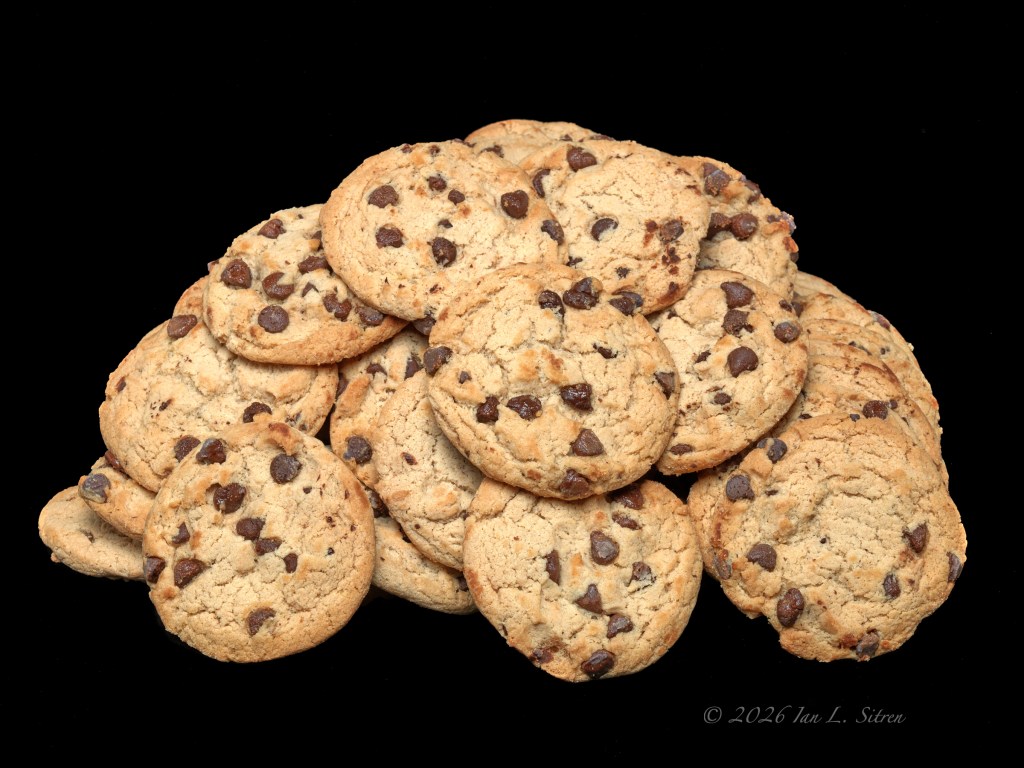
There are foods that inspire endless debate. Burgers. Pizza. Barbecue. Then there are chocolate chip cookies. Nobody argues about whether they belong in the dessert hall of fame. The only real debate starts after the first one.
It always begins with the best of intentions. “I’ll just have one.”
One becomes two because the second one is obviously for comparison. Three is simply to confirm your findings. Somewhere around four or five, you’ve stopped conducting research and have entered a completely different phase of the experiment.
For photography, chocolate chip cookies are deceptively simple. Every crack, every chocolate chip, every highlight and shadow has to look just right. A cookie that tastes great isn’t always the one that photographs the best, and the one that photographs perfectly may not survive long enough to make it back to the kitchen.
Fortunately, these did.
Happy National Chocolate Chip Cookie Day.
You can see more of my photography, projects, motion, and my Blog on my website at https://www.secondfocus.com
Thank You!
National Egg Roll Day
Today is National Egg Roll Day.
Most people order an egg roll or two as a side item.
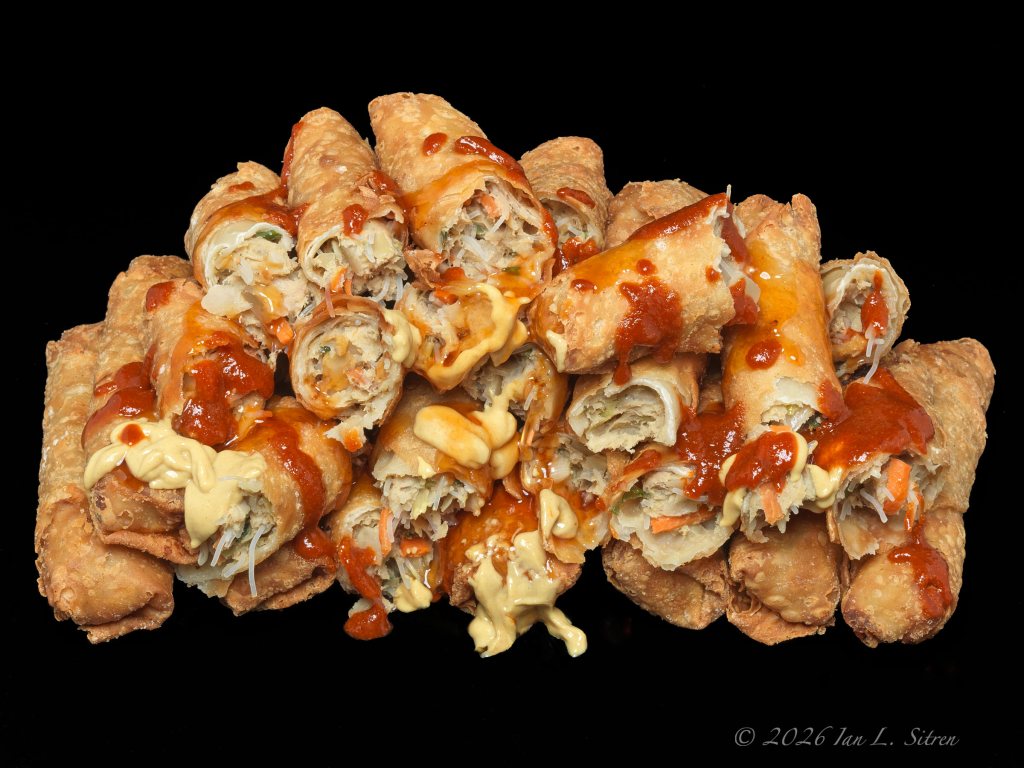
For this photograph, I ordered eighteen.
At that point, the egg rolls stop being a side dish and become the entire meal. Several were cut open to reveal the filling while the rest were stacked into a pile and covered with sweet and sour sauce, hot mustard, and chili sauce.
The modern American egg roll is actually a Chinese-American creation rather than a traditional Chinese food. While its exact origins are debated, the thick, bubbly wrapper and hearty filling helped make egg rolls a familiar part of takeout menus across the United States.
The egg rolls came from Panda Express, which opened its first restaurant in Glendale, California, in 1983 and has grown into the largest American-Chinese restaurant chain in the United States.
There is a lot more food to tempt you on my website along with my other photography projects, my new Motion page, and be sure to check out my blog. There is even more there and it is updated almost daily. Visit SecondFocus.com Thanks!
National Jelly-Filled Doughnut Day: Krispy Kreme Raspberry Filled
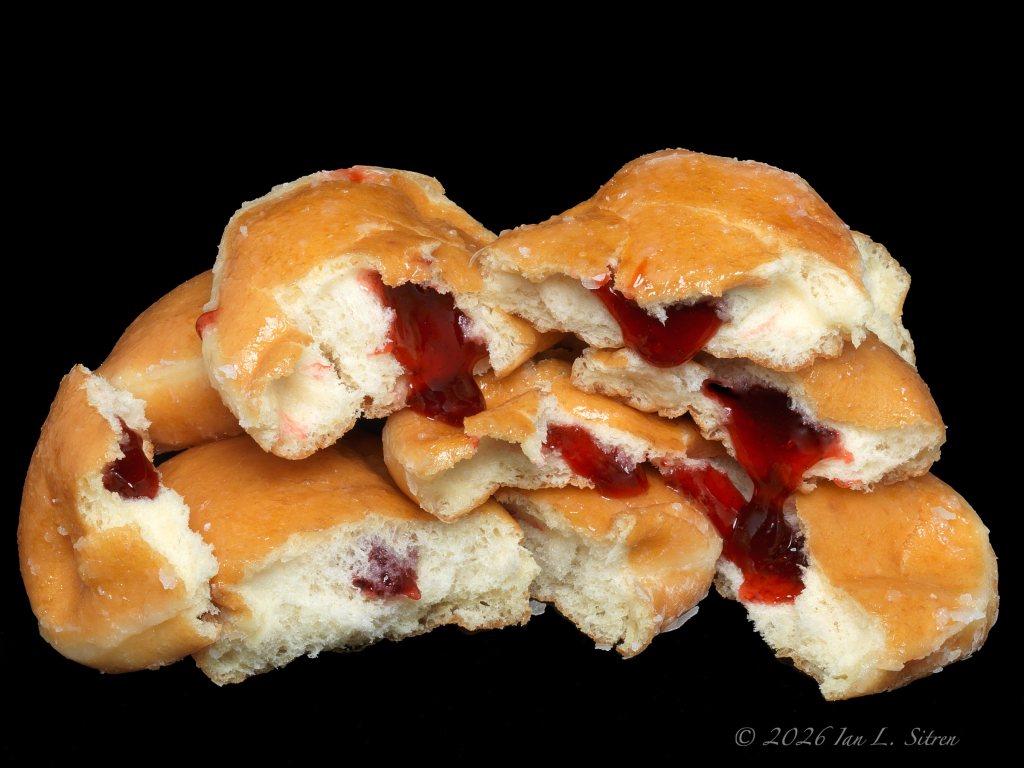
Today is National Jelly-Filled Doughnut Day
The entire reason for today’s holiday is the filling, yet a jelly-filled doughnut looks pretty much like a lot of other doughnuts until somebody tears it open.
So I did.
For this photograph, I chose Krispy Kreme Glazed Raspberry Filled doughnuts. While Krispy Kreme is best known for its Original Glazed doughnut, the Raspberry Filled version combines Krispy Kreme’s glazed doughnut with one of the most traditional doughnut fillings.
Krispy Kreme was founded in Winston-Salem, North Carolina, in 1937 and built its reputation on fresh glazed doughnuts. Today, nearly ninety years later, it remains one of the most recognizable doughnut brands in America.
National Jelly-Filled Doughnut Day follows closely behind National Doughnut Day and celebrates a style of doughnut that appears in many forms around the world. Germany has the Berliner, Poland has the pączki, Italy has the bomboloni, and in the United States we simply call them jelly-filled doughnuts.
There is a lot more food to tempt you on my website along with my other photography projects, my new Motion page, and be sure to check out my blog. There is even more there and it is updated almost daily. https://www.secondfocus.com
Yesterday was National Eat What You Want Day
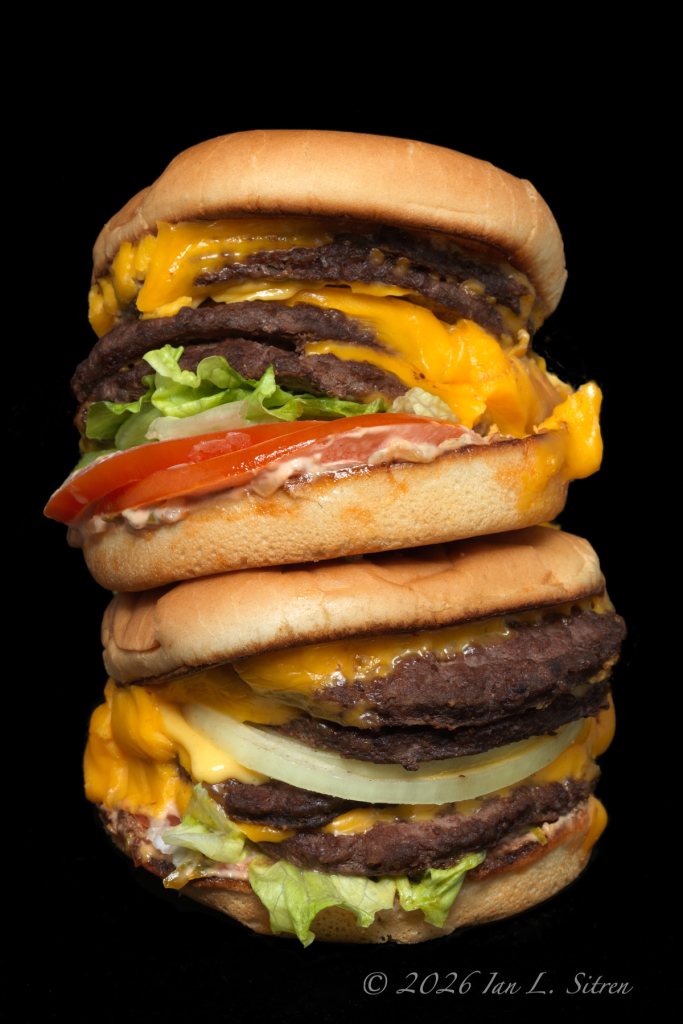
Yesterday was National Eat What You Want Day.
I actually spent some time going through all of the food photographs on my website trying to decide what I would use. First realization was just how much is there now. Second was that there were many choices.
That slowed me down enough that the day passed without a post.
So this is late, but the choice is clear.
If it’s really about eating what you want, then for me it comes down to a cheeseburger. Not a small one. Something stacked, excessive, and a little out of proportion.
No explanation needed.
Just the object, isolated on a black background, exactly as it is.
More of my food photography, from fast food to everything in between, is on my website at https://www.secondfocus.com
National Hostess CupCake Day
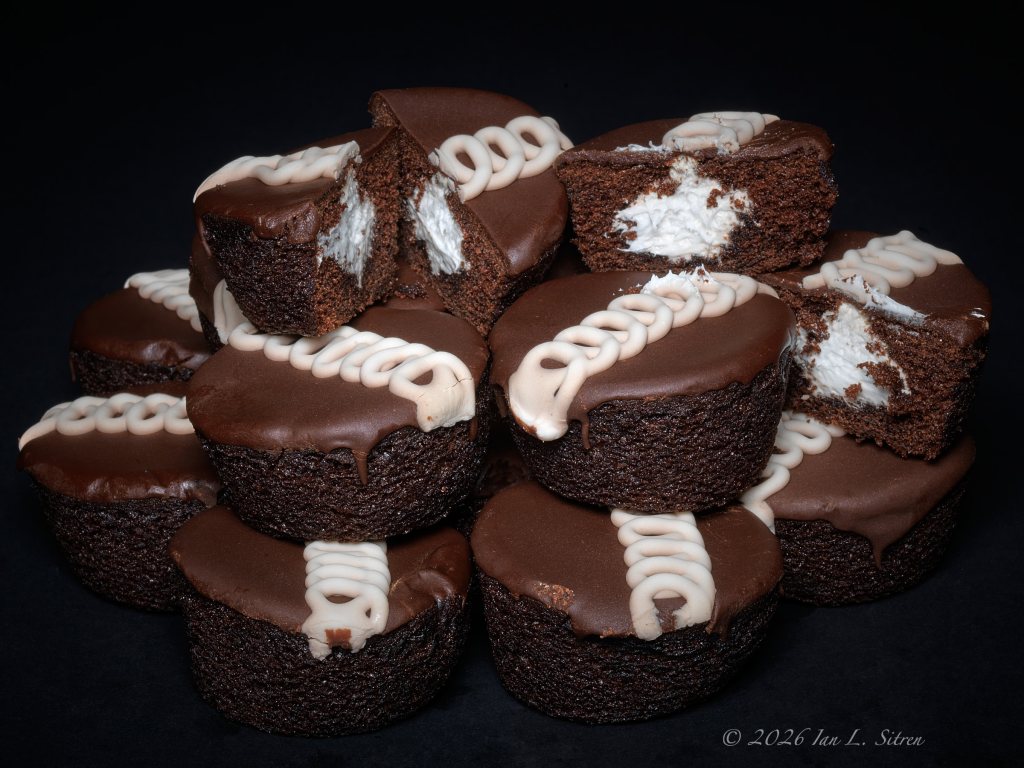
Today is National Hostess CupCake Day.
Which means we’re supposed to pause and appreciate one of the most engineered snack foods ever made.
The Hostess CupCake goes back to 1919, but the version most people recognize chocolate cake, white cream center, and that signature squiggle showed up in 1947. The swirl itself didn’t arrive until the 1950s, when a baker figured out he could pipe it on in one continuous motion.
Simple idea. Instantly recognizable.
At one point, hundreds of millions of these were being produced every year. Same shape, same filling, same swirl. Consistency as a business model.
And that’s really the point.
This isn’t about a chef, or a kitchen, or even baking. It’s about repetition. A product designed to look exactly the same every single time, whether you’re buying one or a million.
So naturally, I stacked a dozen of them on a black background.
No packaging. No branding. No context.
Just the object itself.
Which is probably not how Hostess intended you to look at it.
More of my food photography, from fast food to everything in between, is on my website at https://www.secondfocus.com
National Fitness Day
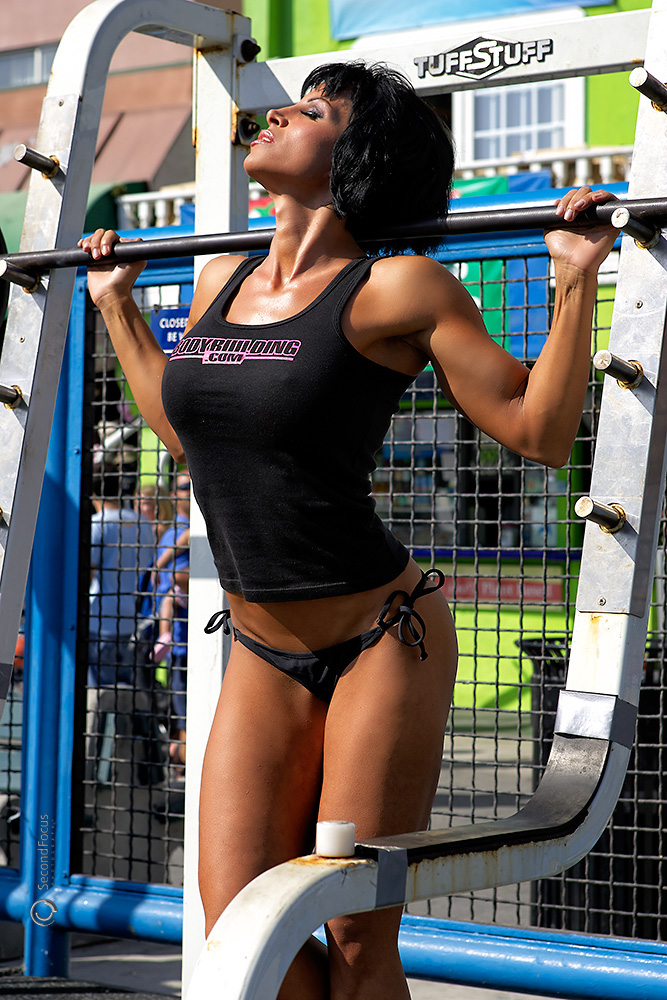
Today is National Fitness Day.
My first gym experience goes back to 1959 when my father took me to a Vic Tanny gym where he was a member. Tanny built the first real gym chain in the country, and his first location was near the original Muscle Beach in Santa Monica.
That’s where this starts.
In my 30s, I began training seriously. For decades, I pushed it harder than most around me, heavier, more focused. Curling 100-pound dumbbells, repping 405 on the bench, and at one point pulling a 765-pound deadlift. It was just what I did, it was fun!
At the same time, I was reading the bodybuilding magazines, studying the imagery as much as the physiques. It became obvious that my photography belonged in that world.
That led me to Muscle Beach Venice, where I eventually became the official photographer. From there, it moved into shooting for Bodybuilding.com, the major magazines, and brands across the industry. At one point, my work was appearing in hundreds of publications around the world each month, reaching millions online.
When people think of bodybuilding, they think of Muscle Beach. I remember standing on the boardwalk when I was young, watching the biggest bodybuilders in the world lifting in the Pit.
Years later, back in that same place with Ava Cowan, someone I’ve worked with since and having become good friends.
With Ava in town from Florida, it was obvious we would shoot there.
In the Pit, this photograph represents something special. Coming full circle. The same place I once watched from the outside, now part of my own history, with my camera, photographing one of the most recognized figures in the fitness world under that same Venice Beach sky.
More of my photography, fitness work, and everything in between at https://www.secondfocus.com
National No Pants Day
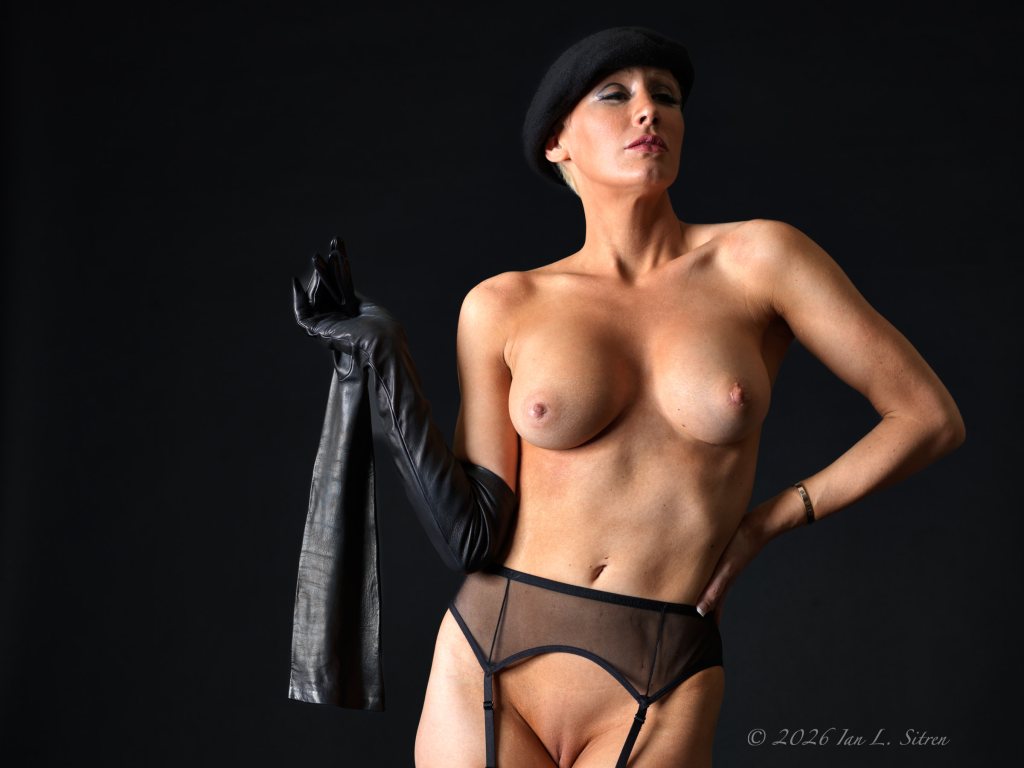
Today is National No Pants Day.
Of course, that takes me in a different direction than what was intended. It started in the early 1980s at the University of Texas at Austin as a campus stunt. People walking around in public in their underwear, acting like nothing is unusual. It spread, became organized, and now sits on the calendar as a planned bit of public absurdity. That’s the idea behind it.
I shoot in the space between fashion, pornochic, and nude because it doesn’t hide what it is. The sexuality is not implied, and it’s not softened. It’s part of the structure of the photograph.
Sévérine brought that directly into my shoot. Her presence is openly sexual, controlled, and fully aware of itself. Nothing tentative about it. The makeup and styling by Blanche LeBeau push it further, not decorative, not secondary, but part of the same intent, shaping how that sexuality is presented and held in place.
This is the genre I work in.
National No Pants Day fits right in.
More on my website at https://www.secondfocus.com


National Foodies Day
Today is National Foodies Day.
Which got me thinking, what exactly is a “foodie” now?
There was a time when people argued over whether they were gourmets or gourmands. People who chased flavors, studied food, cared about where it came from.
Now it mostly means you took a photo of what you ordered.
So here’s my contribution to the conversation.
A stack of McDonald’s McRib sandwiches, straight out of the bag and onto a black background. No styling, no plating, no attempt to make it something it isn’t.
I photograph food, but not in the way that fits neatly into any of those categories. No chef, no restaurant, no experience attached to it. Just the object itself.
So does that make me a foodie?
Or something else entirely.
More of my food photography, from fast food to everything in between, is on my website at https://www.secondfocus.com
May 9, 2026 | Categories: Uncategorized | Tags: black background food, commercial food imagery, conceptual food photography, fast food photography, food art, food culture commentary, Food Photography, food styling vs reality, food trends, foodie definition, from bag to background, gourmet vs foodie, isolated food photography, McDonalds McRib, McRib, minimalist food photography, modern food culture, National Foodies Day, provocative food imagery, secondfocus photography, what is a foodie | Leave a comment