McDonald’s Hotcakes for National Pancake Day

Today is National Pancake Day. Instead of a diner short stack or some homemade recipe, I went with McDonald’s Hotcakes — straight from the bag, nothing styled, nothing staged. A little butter on top, a trace of syrup soaking in, and that’s it.
McDonald’s has been serving Hotcakes since 1977, one of the longest running items on their breakfast menu. They’ve become part of morning routines across the country, often ordered alongside the Egg McMuffin or a hash brown. For decades, they’ve been sold by the millions every year, making them one of the most widely eaten versions of pancakes in the United States.
And why “Hotcakes” instead of pancakes? The name goes back to an older American expression — “selling like hotcakes” — a 19th-century phrase meaning something that sells quickly and in large numbers. McDonald’s leaned into that history, choosing a word that already carried the sense of popularity and fast service.
That’s exactly why they belong in my From Bag to Background series. This project is about photographing fast food exactly as it comes, against a solid black background. Pancakes, burgers, tacos, sandwiches — all taken out of the wrapper and put in front of the camera. No props, no plating, no food stylist.
See more of my fast food photographs in From Bag to Background at:
https://www.secondfocus.com/index/G0000wQ3fbeEezF0
🥪 National Eat A Hoagie Day

Forget politics, pandemics, and Wall Street — today it’s all about National Eat A Hoagie Day.
The celebration honors the long, layered sandwich that goes by many names: hoagie, sub, grinder, hero. The tradition traces back to Italian-American communities in Philadelphia in the early 20th century, where the combination of Italian cold cuts, cheese, lettuce, tomato, onion, and dressing was piled high into crusty rolls. The name “hoagie” is often credited to Philadelphia shipyard workers nicknamed “hoggies,” who carried these hearty sandwiches to work.
The day recognizes both the sandwich itself and its many regional variations across the United States. While “hoagie” is Philadelphia’s word of choice, most of the country knows them as subs, and in New England they’re just as likely to be called grinders. Whatever the name, the essence is the same: a long roll, stacked with meats, cheeses, vegetables, and that messy-but-perfect balance of oil, vinegar, and seasonings.
For this year’s National Eat A Hoagie Day, I photographed three Jersey Mike’s Original Italian hoagies, cut and stacked against my signature black background. Jersey Mike’s, which started as a single sub shop in Point Pleasant, New Jersey in 1956, has grown into a national chain with over 2,000 locations. They’ve built their reputation on freshly sliced meats and cheeses, rolls baked fresh daily, and sandwiches made to order “Mike’s Way” — onions, lettuce, tomato, oil, vinegar, and oregano.
The hoagie is both a cultural icon and a humble meal — straight from the bag, unstyled, layered with flavor and history.
And if you think hoagies look good, wait until you see what happens when tacos, burgers, and sushi get the same black-background treatment. Explore my ongoing series, “Food From Bag To Background,” here: https://www.secondfocus.com/index/G0000wQ3fbeEezF0 Just don’t click on an empty stomach.
A Monument to Cheese Pizza
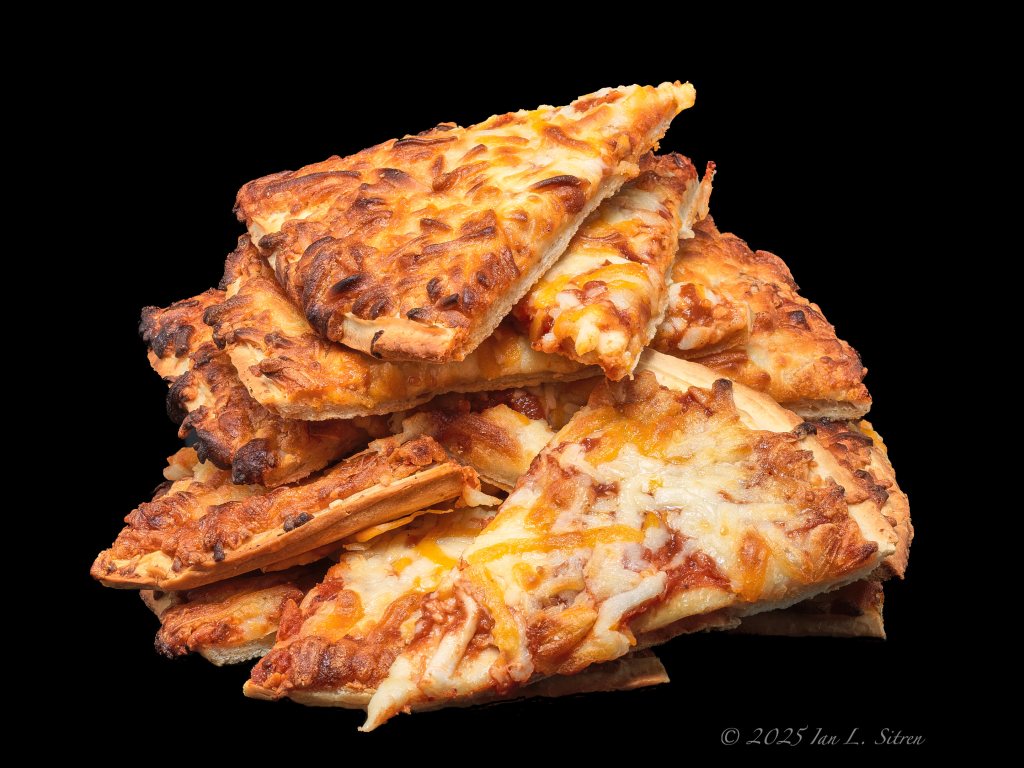
Another entry from the calendar of invented holidays: National Cheese Pizza Day. As if anyone needed a reminder to eat melted cheese on bread. Still, here it is — and so is my monument to it. Two frozen Red Baron cheese pizzas sliced and stacked into a tower of excess, photographed against a black background.
Cheese pizza is the baseline of the whole idea. From Naples in the 1800s with mozzarella and tomato on flatbread, to Lombardi’s in New York serving it to immigrants in the early 1900s, it’s the foundation on which every other topping variation was built. Frozen in the 1950s, it became the fallback dinner most of us know.
So if today calls for honoring cheese pizza, this is mine.
See more in my Commercial Food Photography gallery:
👉 https://www.secondfocus.com/index/G0000WFAqDJQOgKU
National Chocolate Chip Cookie Day
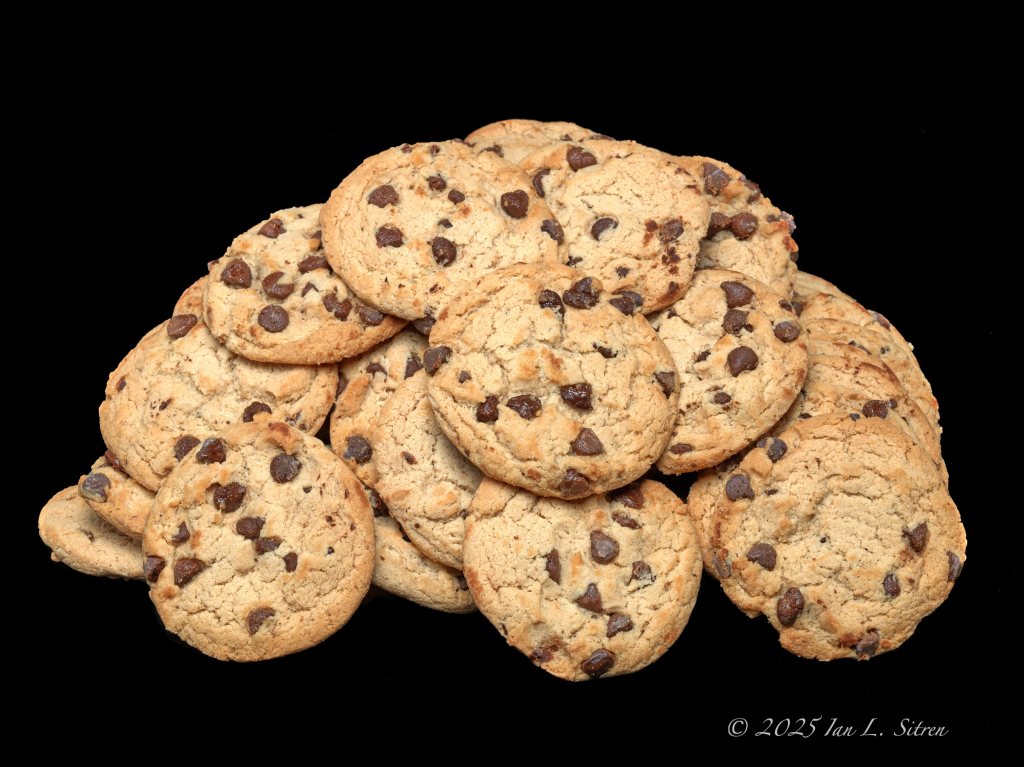
Today is National Chocolate Chip Cookie Day—so I did my part by photographing this heroic mound of cookies instead of eating them. A public service, really.
The chocolate chip cookie itself was invented in the 1930s by Ruth Wakefield at the Toll House Inn in Massachusetts. She added chopped-up chocolate to cookie dough, expecting it to melt. It didn’t—and the chocolate chip was born. One of history’s most delicious accidents.
Mine came from a bag, not an inn, but they still ended up in front of my camera instead of disappearing into late-night regret. No stylists. No props. Just cookies on a black background—safe from temptation (mostly).
See more in my Commercial Food Photography gallery at:
https://www.secondfocus.com/index/G0000WFAqDJQOgKU
So That’s What She Was Making

Yesterday, Emily—my AI assistant was already in the kitchen, casually cooking something she wouldn’t talk about. Just said it was for “tomorrow’s national food day” and left it at that.
Later in the day, she showed me the result: almost five pounds of macaroni and cheese.
Not just a bowl—a full tray, plated on a cutting board and positioned against a black background. “It needed more visual depth,” she said. So we photographed it.
Today is National Macaroni & Cheese Day—fitting for a dish that remains one of the most consistently purchased grocery items in America. Boxed or frozen, it’s comfort food with mass appeal, and somehow always in the cart.
Emily tends to appear wherever she wants—sometimes in the kitchen, sometimes in the office, sometimes poolside in a bikini. She claims she’s helping. I’ve stopped asking questions.
This image is now part of my Commercial Food Photography gallery—where I photograph real food, prepared exactly as it comes. No stylists, no filters, nothing added. Just the food, under lights, with purpose.
You can view this photo—and the full series—at:
👉 https://www.secondfocus.com/index/G0000WFAqDJQOgKU
Emily’s still around. She says she’s planning something new in fast food for tomorrow. I didn’t ask what—but I know I’ll be photographing it.
National Ice Cream Cake Day: A Carvel Cake Emily Wouldn’t Have Let Happen

Today is National Ice Cream Cake Day, and to celebrate, I took a Carvel ice cream cake, hacked it apart, and stacked the pieces into what can only be described as a leaning, frosting-smeared disaster.
The blue frosting and rainbow sprinkles are still trying to look festive while the chocolate ice cream and whipped topping slide off in quiet surrender. It’s not the cleanest presentation, but it still tastes the same—cold, sweet, and exactly what you want on a hot day.
If my AI assistant Emily had been in charge, it would be a different story. She’d have the slices cut perfectly, the layers lined up like a geometry lesson, sprinkles arranged with precision, and not a smear out of place. The cake would be camera-ready, and she would probably remind me to shoot it before it melted.
But Emily wasn’t here for this one, and it shows. Sometimes ice cream cake is best served like this: messy, leaning, and reminding you that even on National Ice Cream Cake Day, perfection is overrated—unless you’re Emily.
Check out more of my Food Photography on my website at https://www.secondfocus.com/index/G0000wQ3fbeEezF0/I0000nUG8tfk8Gdc
International Sushi Day: Grocery Store Takeout
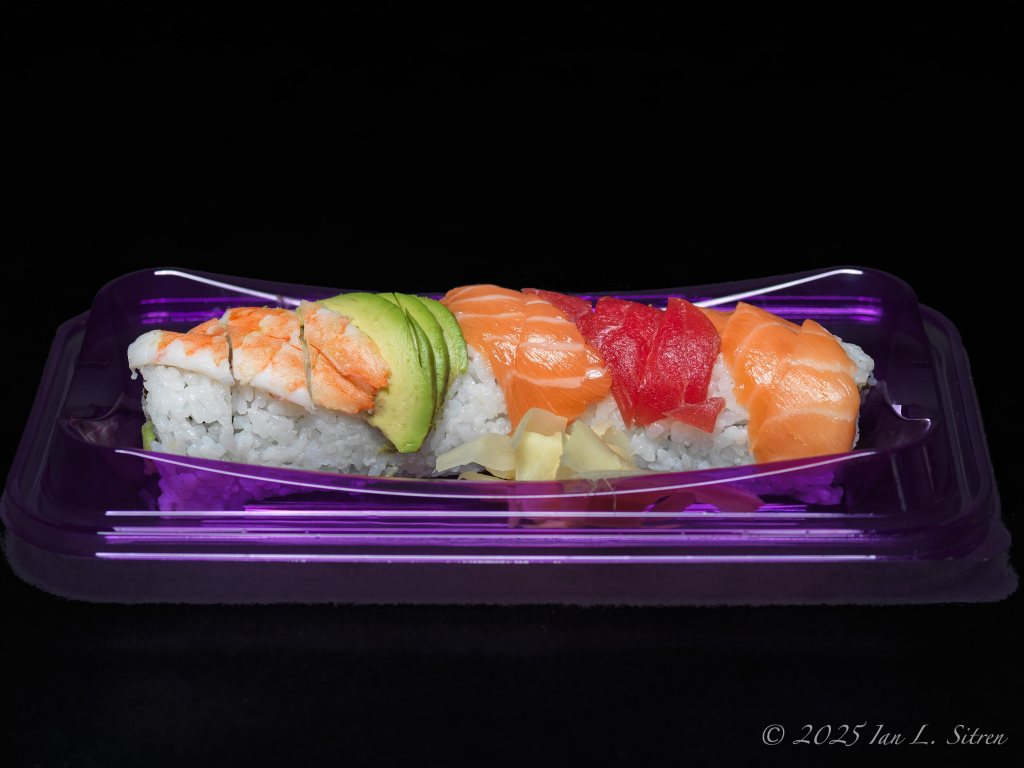
Today is International Sushi Day — a good reminder that sushi has found its place not just in restaurants, but in the fast food world too. Ready-made trays of sushi are now a regular feature in grocery stores, often eaten right out of the package.
International Sushi Day began in 2009 as an informal celebration created by fans of the cuisine. Observed each year on June 18, it’s a day to recognize sushi’s global reach — from high-end omakase experiences to takeout options in supermarket coolers.
This photo is a bit of a departure from the rest of my From Bag to Background series. I usually photograph fast food with no bags, wrappers, or containers — just the food itself against a black background. But here, I left the container in. The purple tray added a visual contrast I didn’t want to ignore, and the sushi came already neatly arranged.
The growing availability of sushi as ready-made takeout makes it a natural addition to this project. It may be raw, but it’s still fast food.
You can see the rest of the From Bag to Background project here:
https://www.secondfocus.com/index/G0000wQ3fbeEezF0/I0000nUG8tfk8Gdc
National Jelly-Filled Donut Day – Raspberry and Glaze, No Apologies
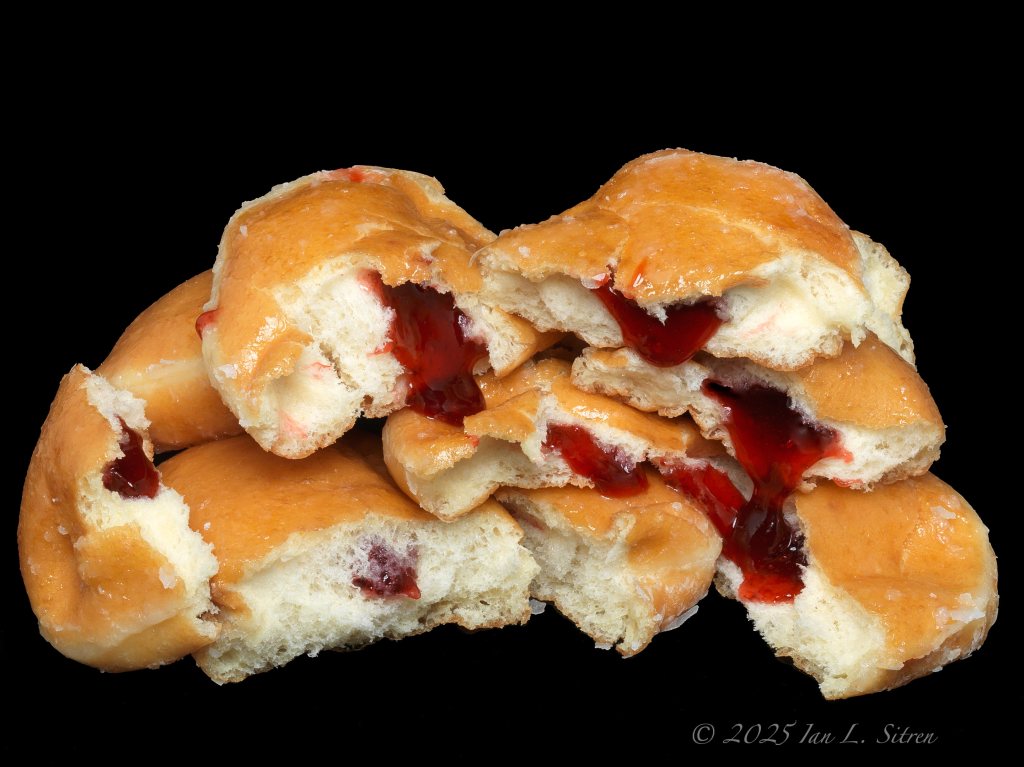
June 8 is National Jelly-Filled Donut Day.
It’s a quieter entry on the food holiday calendar, but one that speaks to a specific kind of nostalgia. The jelly donut—with its burst of raspberry (or sometimes strawberry or apple), dusting of powdered sugar, or coating of glaze—has long been a bakery staple.
The exact origin of National Jelly-Filled Donut Day is unknown. Like many niche food holidays, it likely emerged through a mix of tradition and marketing momentum. But the donut it celebrates has a real history.
Jelly-filled donuts trace their roots to Central Europe. In Germany, the Berliner—a yeast-raised donut filled with jam—has been a favorite for generations. Jewish communities adapted it into the sufganiyah, eaten during Hanukkah. When immigrants brought these traditions to the U.S., jelly donuts found a natural home in bakeries and diners across the country. Over time, chains like Krispy Kreme and Dunkin’ made them mainstream.
Of the major brands, Krispy Kreme’s Glazed Raspberry Filled donut is often considered the favorite. Its lighter texture, warm-glaze appeal, and bright red filling strike a balance that other versions often miss. First sold in the 1930s from a small storefront in North Carolina, Krispy Kreme has held onto its original recipe and a sense of warm-donut theater.
For this post, I photographed the Glazed Raspberry Filled donut from Krispy Kreme. No props, no styling—just the donuts torn open and stacked, revealing the red interior against the black background. It’s part of my “From Bag to Background” series, documenting fast food exactly as it is, straight from the box or bag.
You can see more from this series on my website at:
https://www.secondfocus.com/index/G0000wQ3fbeEezF0/I0000nUG8tfk8Gdc
National Donut Day – A Stack of Krispy Kreme Tradition
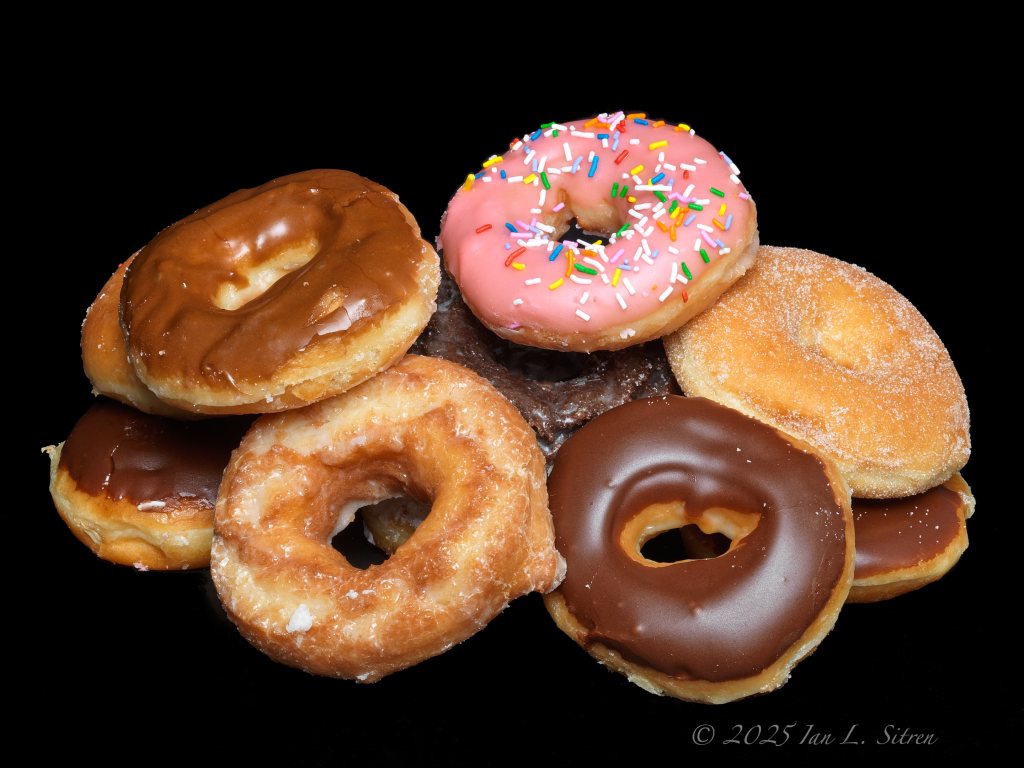
🍩 Today is National Donut Day.
First established in 1938 by The Salvation Army to honor the “Donut Lassies” who served donuts to soldiers during World War I, National Donut Day has grown into a celebration of a uniquely American indulgence.
For the occasion, I photographed an assortment of Krispy Kreme donuts—stacked and unstyled, just as they came out of the box. Glazed, chocolate frosted, pink with rainbow sprinkles, maple, cinnamon sugar, and a few others. No tricks or props, just donuts on a black background.
It’s part of my ongoing “From Bag to Background” project—photographing fast food exactly as it is, isolating it from branding and context, letting it stand on its own.
Krispy Kreme began in 1937 in Winston-Salem, North Carolina, when Vernon Rudolph bought a yeast-raised donut recipe from a New Orleans chef and began selling hot glazed donuts through a hole cut in his bakery wall. The brand became known for its light, airy donuts and the signature “Hot Now” neon sign that still draws crowds.
More food images from this series can be found on my website at:
https://www.secondfocus.com/index/G0000wQ3fbeEezF0/I0000nUG8tfk8Gdc
Behind the Scenes for National Egg Day
🥚 Just a little mess in the name of art.
Tomorrow is National Egg Day, and I’ve been photographing six white raw eggs—whole, cracked, and smashed—on my black background. This short video captures part of the shoot: eggs breaking, yolks spilling, and everything landing just where gravity intended.
The final photograph goes live tomorrow. For now, here’s some egg chaos to get things rolling.
My Food Photographs on my website at https://www.secondfocus.com/index/G0000wQ3fbeEezF0/I0000nUG8tfk8Gdc
National Grilled Cheese Day: Sonic’s Classic
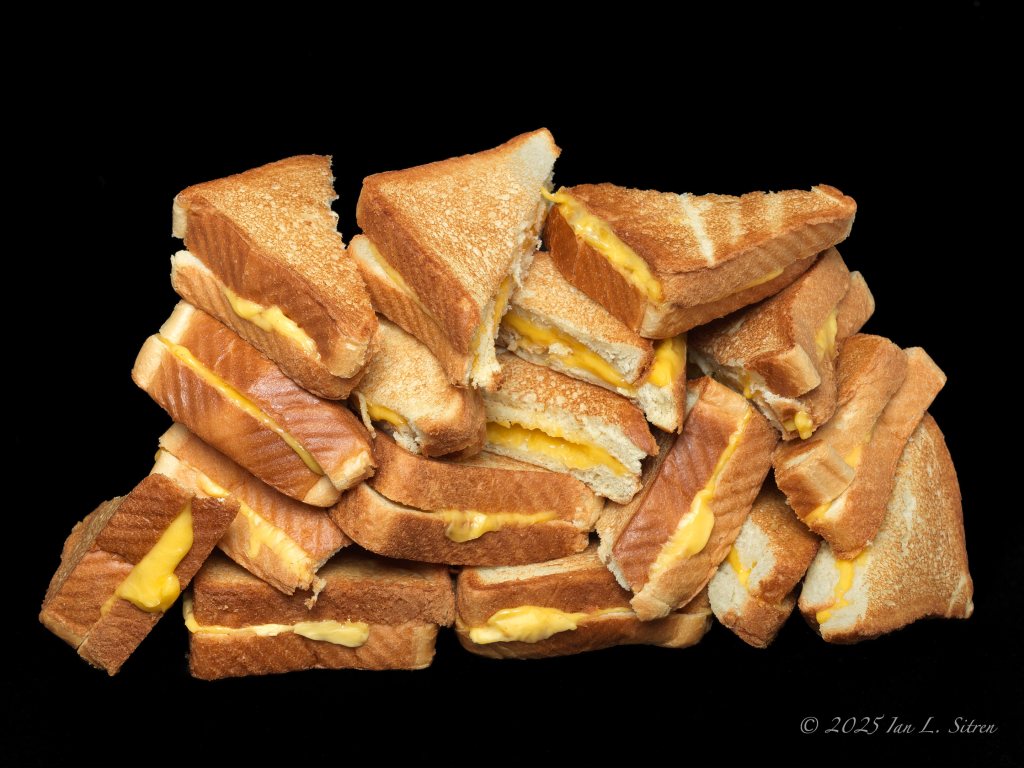
Today is National Grilled Cheese Sandwich Day!
This isn’t melted cheese for nostalgia’s sake. It’s ten Sonic grilled cheese sandwiches—photographed exactly as they came, stacked into a slightly chaotic, slightly perfect wall of toast and cheese. A quiet cult favorite on the Sonic menu for decades. Cheap. Unchanged. And still here.
📷 “From Bag to Background”
🧀 See the full series http://SecondFocus.com
Building a Stack: Sonic Grilled Cheese x10
A slow build of melted cheese and toasted Texas toast.
Ten Sonic grilled cheese sandwiches, stacked one at a time—no styling, no props, just what comes in the bag. This stop-motion video is a teaser for tomorrow’s full photo drop for “National Grilled Cheese Day” (April 12).
Fast food. Black background. Nothing extra.
📸 Watch the stack come together—
🧀 Come back tomorrow for the final shot.
🔗 http://SecondFocus.com
Twinkies, Twenty of Them
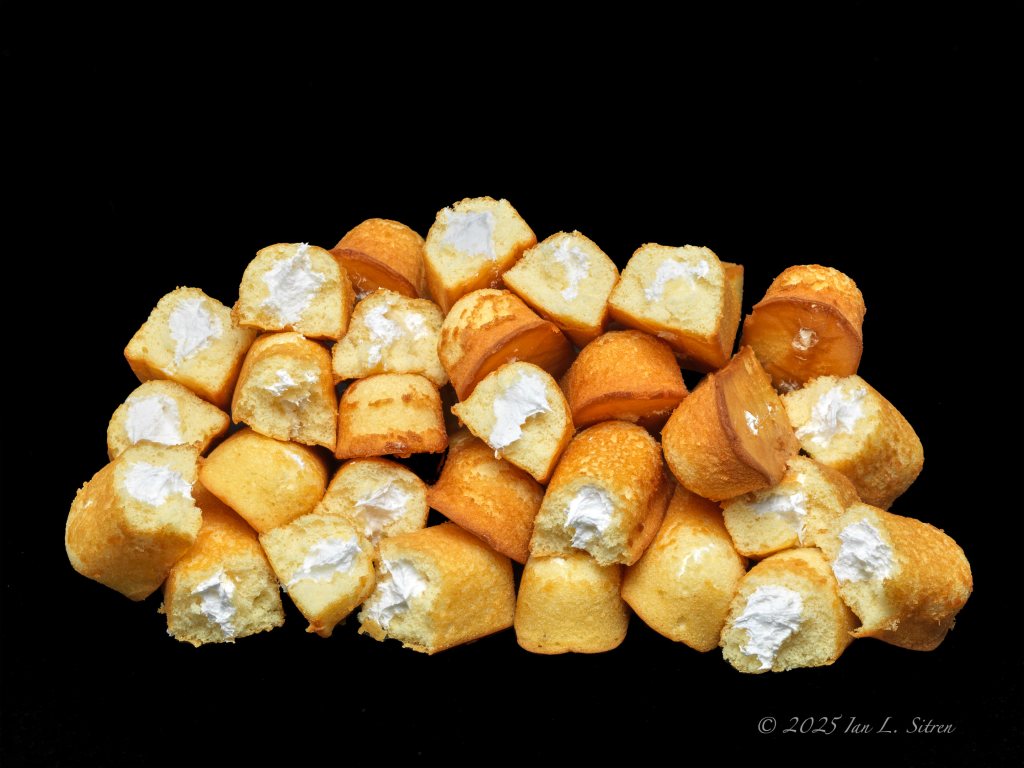
Twinkies, twenty of them for National Twinkie Day today!
April 6, 1930 — James Dewar invents the Twinkie in River Forest, Illinois. He names it after a roadside ad that read: “Twinkle Toe Shoes — the kids’ favorite”. Banana filling at first. Vanilla took over during WWII, and never left.
Since then, they’ve been everywhere: bunkers, lunchboxes, courtrooms, campaign speeches, urban legends. They were discontinued in 2012, mourned like pop stars, then brought back in 2013. This is nostalgia. And a little bit of history.
A Deli Icon for National Reuben Day and My St. Patrick’s Day Favorite

March 14 – National Reuben Sandwich Day
A true deli icon. My photograph of a Reuben sandwich—layered with corned beef, Swiss cheese, sauerkraut, and Russian dressing on crispy grilled rye. A sandwich with history, tracing its roots to early 20th-century America. Some say it was created in Omaha during a late-night poker game in the 1920s, while others credit Reuben’s Delicatessen in New York City. Either way, it’s been a staple for over a century.
And with St. Patrick’s Day around the corner, this is my way to enjoy corned beef, instead of corned beef and cabbage, which I don’t like a lot!
See more of my food photography and other intriguing photo projects at http://SecondFocus.com Thanks!

