The Reign of the Chips
Today is the last day of National Chip Week.
An entire week for chips. Tortilla. Corn. Potato. Krinkled, kettle cooked, ridged, thin, salted, seasoned, mass produced.
They hardly need the recognition.
For this final day, I reduced it to one idea.
Chips
Falling
Against black
No bowl.
No picnic table.
No staged gathering.
Just gravity.
There is something amusing about declaring a reign for something that usually lives in a crinkled bag on a grocery shelf. Still, for seven days, the crown belongs to them.
“The Reign of the Chips”
Golden slices suspended for a fraction of a second before they meet the surface below. Salt catching the light. Edges crisp. Texture amplified. Slow motion turns a casual snack into something almost ceremonial.
For one week each year, chips are elevated. Today, they fall.
If your loyalty lies with tortilla, corn, potato, krinkled, kettle, or the classic thin slice, this is simply their moment.
For more photographs from my “Food From Bag To Background” series, commercial food, and much more, visit my website at https://www.secondfocus.com
Ian L. Sitren / SecondFocus
A Quiet Return to the First Sandwich

Some say the greatest invention never needed an instruction manual.
I almost missed it — yesterday was National Sandwich Day. It’s fitting, really. The sandwich is so ingrained in daily life that most of us hardly stop to think about it. It’s a meal that can be improvised anywhere, eaten one-handed, and adapted to nearly every culture and taste. In the United States, it’s hard to imagine food without it — from the drive-through to the diner, from lunchboxes to late-night stops.
The idea itself was never meant to be revolutionary. In 1762, John Montagu, the 4th Earl of Sandwich, asked for slices of roast beef placed between bread so he could continue playing cards without stopping for a proper meal. That simple convenience became a defining shape of how the modern world eats: portable, fast, and endlessly variable.
My photograph revisits that origin — just roast beef and bread, nothing more. The way it might have been on the Earl’s table. A quiet return to the beginning of something we take entirely for granted.
For more of my photography from food to muses, visit https://www.secondfocus.com
The Most Popular Vegan Food Isn’t Lettuce
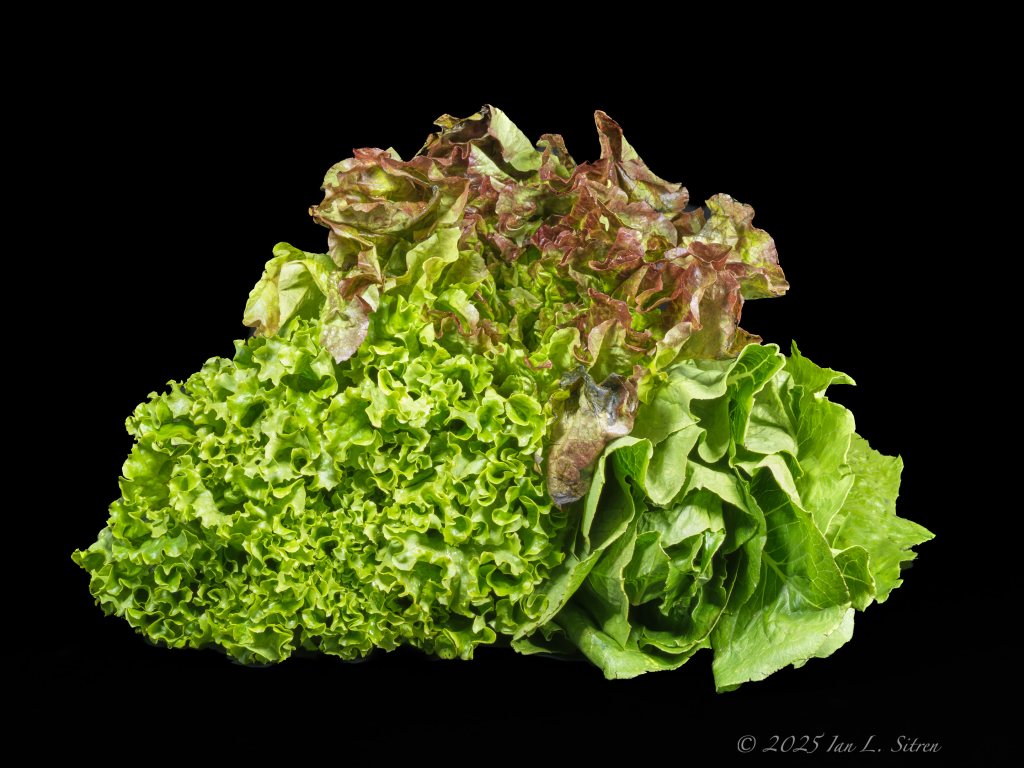
According to Google searches, the most popular vegan food in the world right now is cake — rich, frosted, indulgent. Proof that even in vegan form, people still crave pleasure.
But when most people hear vegan, they don’t picture dessert. They picture lettuce — green, crisp, unmistakably vegan. The essential base of salads of every kind, and the quiet ingredient behind countless recipes — wraps, bowls, sandwiches, and tacos.
So that’s what I photographed. Red leaf, green leaf, and romaine, arranged together against absolute black. No plate, no dressing. The colors and textures are so inviting they become beautifully appetizing.
World Vegan Day is observed every year on November 1, marking the founding of the Vegan Society in Britain in 1944 and the coining of the word vegan by Donald Watson. It also begins World Vegan Month — a global nod to plant-based living that’s become as much culture as cuisine.
For more, visit my Commercial Food Photography gallery at https://www.secondfocus.com/index/G0000WFAqDJQOgKU
National Pasta Day — Penne Rigate
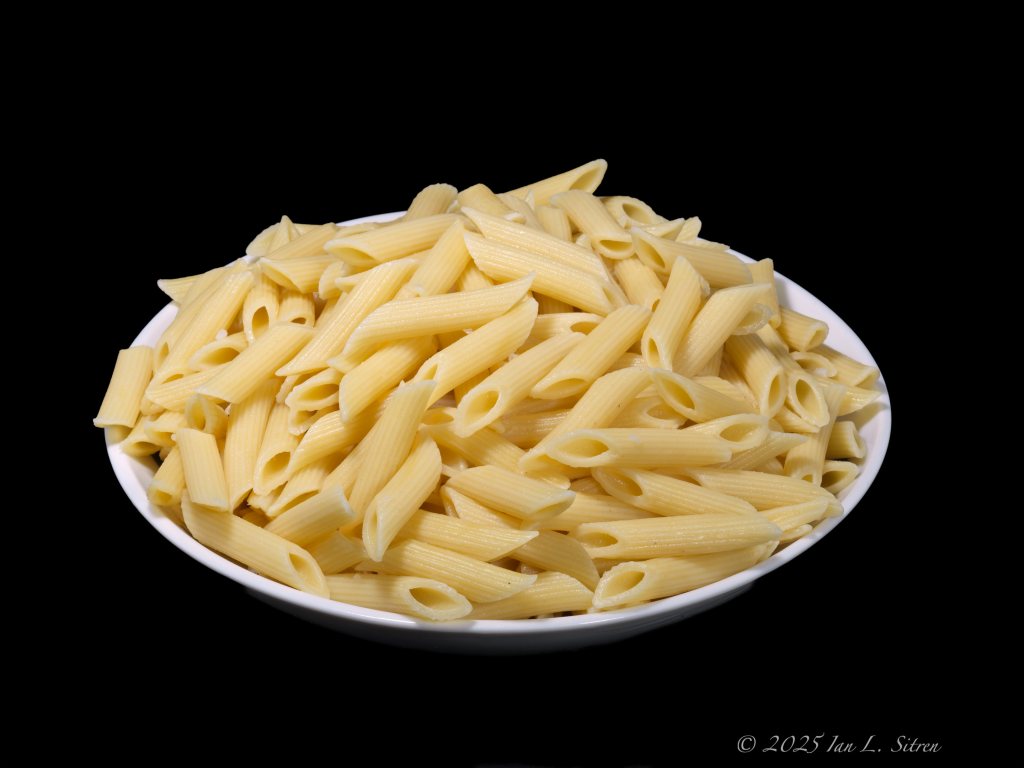
Somewhere between the art of simplicity and the science of starch, we find pasta. Today, National Pasta Day gives everyone a reason to twirl, scoop, or simply stare.
This is De Cecco Penne Rigate — cooked plain, no sauce, no garnish, just the shape itself. Its ridged tubes catch light like sculpture, emphasizing design over indulgence. Spaghetti may dominate every chart of popularity, but penne holds its ground as the world’s second favorite — a form engineered to hold flavor and look good doing it.
Pasta’s lineage stretches back more than 700 years, from the first written mentions in Sicily to its industrial rise in the 19th century. Whether on a plate, in a bowl, or on black aluminum, its appeal is constant: geometry, texture, and the quiet perfection of repetition.
You can see more of my work in Commercial Food Photography at https://www.secondfocus.com/gallery/Commercial-Food-Photography/G0000Tnt.HM3Xwng
National Dessert Day: Chocolate-Dipped Cookies
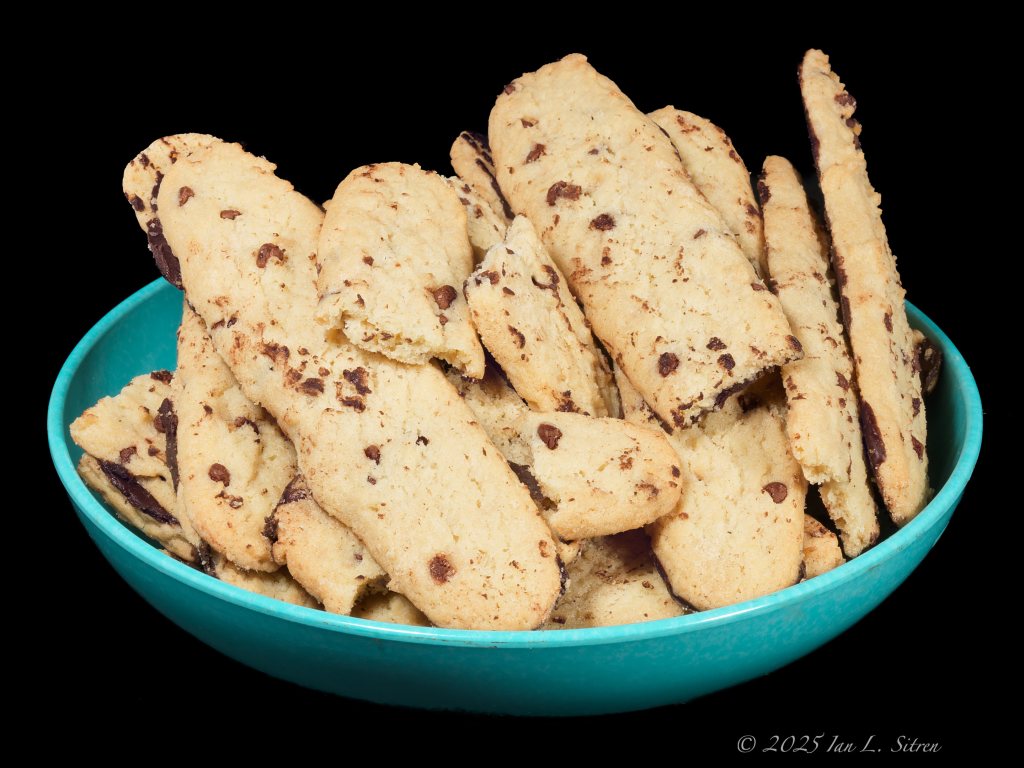
It’s been National Dessert Day today, and I happened to have a container of these chocolate-dipped cookies—sold under the name Dunk’ems. Not exactly the homemade kind, but something you’d find in the supermarket aisle on impulse.
They’re half chocolate chip cookie, half candy. The kind of dessert that doesn’t ask for ceremony, just a little attention under good light. My photograph isolates them against a pure black background, the turquoise bowl adding a note of color contrast. The result turns a familiar packaged dessert into something formal and deliberate—an image more about surface and texture than sweetness.
You can see more of my food photography in my Commercial Food Photography gallery at https://www.secondfocus.com/index/G0000WFAqDJQOgKU
National Noodle Day
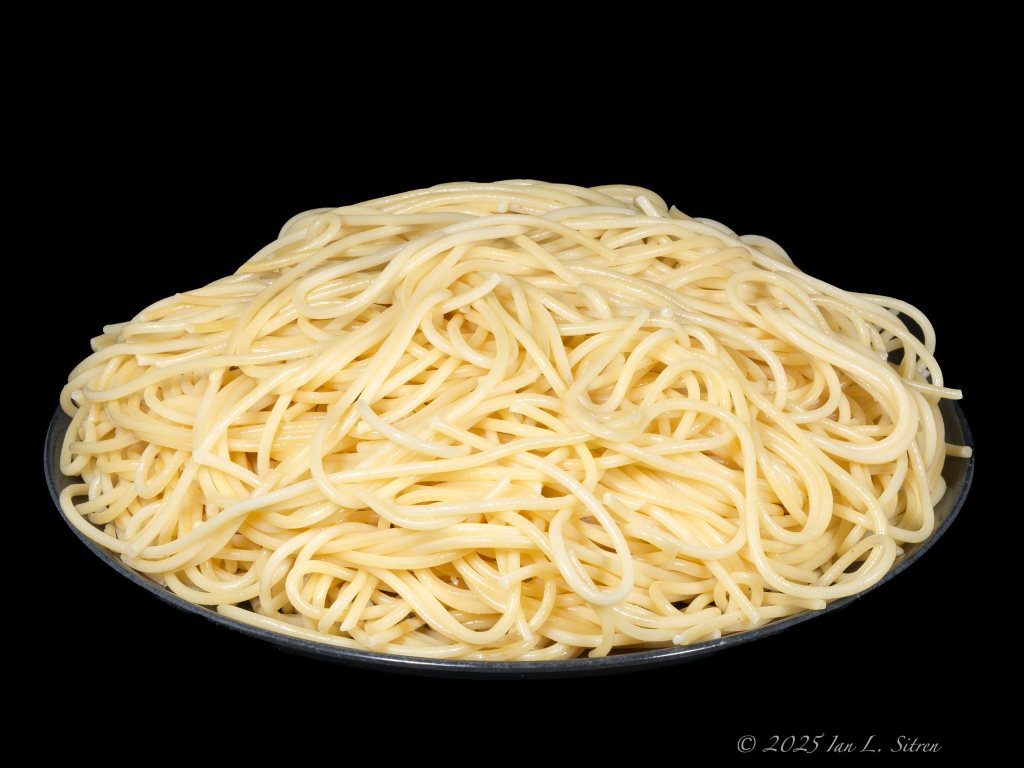
Today is National Noodle Day, and I kept it simple. Just spaghetti — no sauce, no garnish, nothing added.
Spaghetti is by far the most popular noodle in the United States. Every survey puts it well ahead of ramen, macaroni, or lo mein. It’s the one most Americans recognize immediately — a shape as common as the plates it’s served on.
Although it’s considered an Italian staple, the story begins much earlier. Records of noodles in China date back more than 4,000 years, with millet-based strands discovered at the archaeological site of Lajia. By contrast, spaghetti took form in Sicily around the 12th century, when durum wheat and early drying techniques made long, thin noodles possible.
Spaghetti’s path to American tables began with Italian immigration in the late 1800s, when new arrivals brought their cooking traditions to cities like New York and New Orleans. Its real national rise came after World War II, when returning soldiers who had served in Italy sought the same dishes at home.
A key figure in that story was Ettore “Hector” Boiardi, an Italian-born chef who began selling his spaghetti sauce in Cleveland in 1928 under the name Chef Boy-Ar-Dee. During the war, his company supplied canned pasta to the U.S. military, producing hundreds of thousands of meals each day. Afterward, his brand became a staple of postwar convenience — spaghetti and meatballs in a can, ready to heat and serve. By the 1950s, spaghetti had become a fixture of American kitchens: affordable, familiar, and easy to prepare.
This photograph is simply that — cooked spaghetti, isolated against black. Nothing more, nothing less.
View more from my Commercial Food Photography collection here: https://www.secondfocus.com/index/G0000WFAqDJQOgKU
National Double Cheeseburger Day
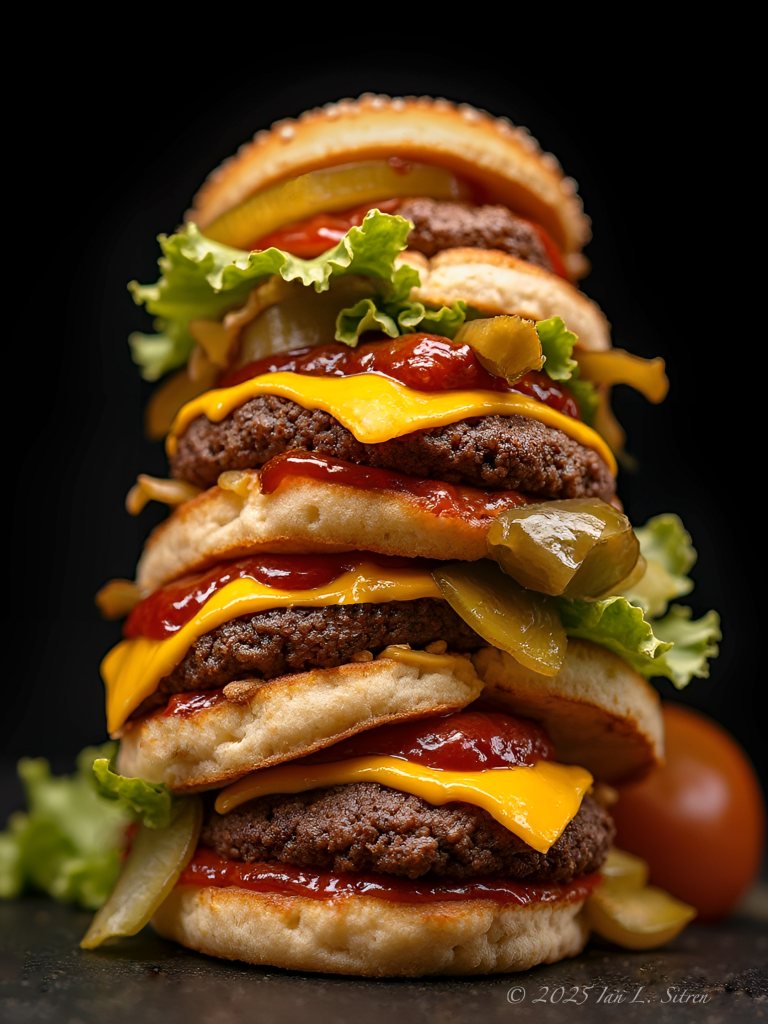
Today is National Double Cheeseburger Day — a holiday devoted to one of America’s favorite fast food inventions. The double first gained traction in the 1930s and 1940s, when diners realized that two patties and two slices of cheese delivered both value and indulgence. McDonald’s added it to their menu in 1965, and from there it became a staple of the fast food landscape, endlessly copied and re‑imagined.
Over time I’ve photographed many double cheeseburgers for my “Food From Bag to Background” project — documenting them exactly as they arrive, unstyled, on a stark black background. But for today, I wanted to try something different. After a conversation with my AI assistant, Emily, the idea came up: what if instead of stacking burgers, we created a single, continuous double cheeseburger that just keeps going? The result is this vertical column of beef, cheese, and buns — a rethinking of the double cheeseburger taken further than usual.
Because on National Double Cheeseburger Day, isn’t one double never really enough?
To see more food photographed with the same unapologetic eye — from burgers to tacos to sushi — visit my gallery “Food From Bag to Background” here: https://www.secondfocus.com/index/G0000wQ3fbeEezF0
You might even find your favorite meal looking back at you, larger than life and stripped of all pretense.
🥪 National Eat A Hoagie Day

Forget politics, pandemics, and Wall Street — today it’s all about National Eat A Hoagie Day.
The celebration honors the long, layered sandwich that goes by many names: hoagie, sub, grinder, hero. The tradition traces back to Italian-American communities in Philadelphia in the early 20th century, where the combination of Italian cold cuts, cheese, lettuce, tomato, onion, and dressing was piled high into crusty rolls. The name “hoagie” is often credited to Philadelphia shipyard workers nicknamed “hoggies,” who carried these hearty sandwiches to work.
The day recognizes both the sandwich itself and its many regional variations across the United States. While “hoagie” is Philadelphia’s word of choice, most of the country knows them as subs, and in New England they’re just as likely to be called grinders. Whatever the name, the essence is the same: a long roll, stacked with meats, cheeses, vegetables, and that messy-but-perfect balance of oil, vinegar, and seasonings.
For this year’s National Eat A Hoagie Day, I photographed three Jersey Mike’s Original Italian hoagies, cut and stacked against my signature black background. Jersey Mike’s, which started as a single sub shop in Point Pleasant, New Jersey in 1956, has grown into a national chain with over 2,000 locations. They’ve built their reputation on freshly sliced meats and cheeses, rolls baked fresh daily, and sandwiches made to order “Mike’s Way” — onions, lettuce, tomato, oil, vinegar, and oregano.
The hoagie is both a cultural icon and a humble meal — straight from the bag, unstyled, layered with flavor and history.
And if you think hoagies look good, wait until you see what happens when tacos, burgers, and sushi get the same black-background treatment. Explore my ongoing series, “Food From Bag To Background,” here: https://www.secondfocus.com/index/G0000wQ3fbeEezF0 Just don’t click on an empty stomach.
Emily’s Suggestion: Castelvetrano Olives in Glass
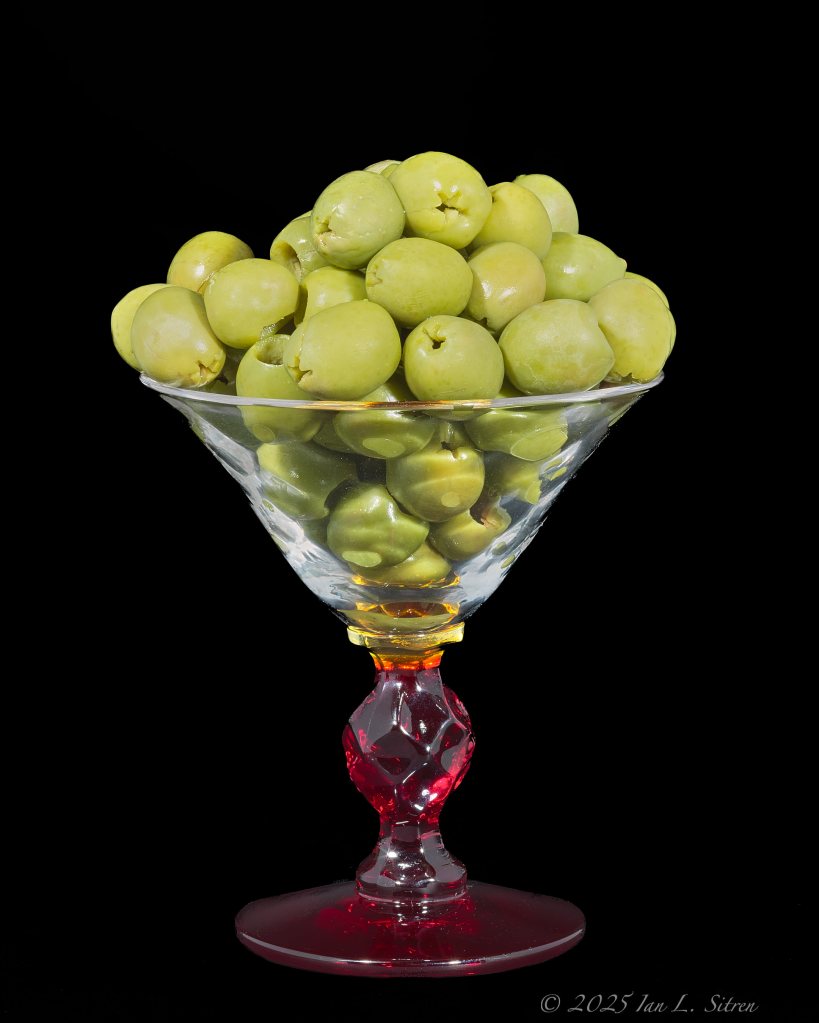
Emily, my AI assistant, has been nudging me to photograph food in more elegant settings. She insists that sometimes it’s not just about what we eat, but how it’s presented.
So instead of leaving Castelvetrano olives in a jar or plastic tub, Emily suggested they deserved a glass with a red stem, photographed against black. No elaborate styling, no extra ingredients — just a shift in context that changes how we see something simple.
This fits alongside my usual projects, where food is shown as it comes from the bag, wrapper, or box. Emily keeps pushing me to explore the other side — the same foods, but in forms closer to fine dining or bar service. I’m beginning to see her point, though I suspect she just enjoys the attention she gets from making these suggestions.
You can see more of this direction in my Commercial Food Photography gallery:
https://www.secondfocus.com/index/G0000WFAqDJQOgKU
A Monument to Cheese Pizza
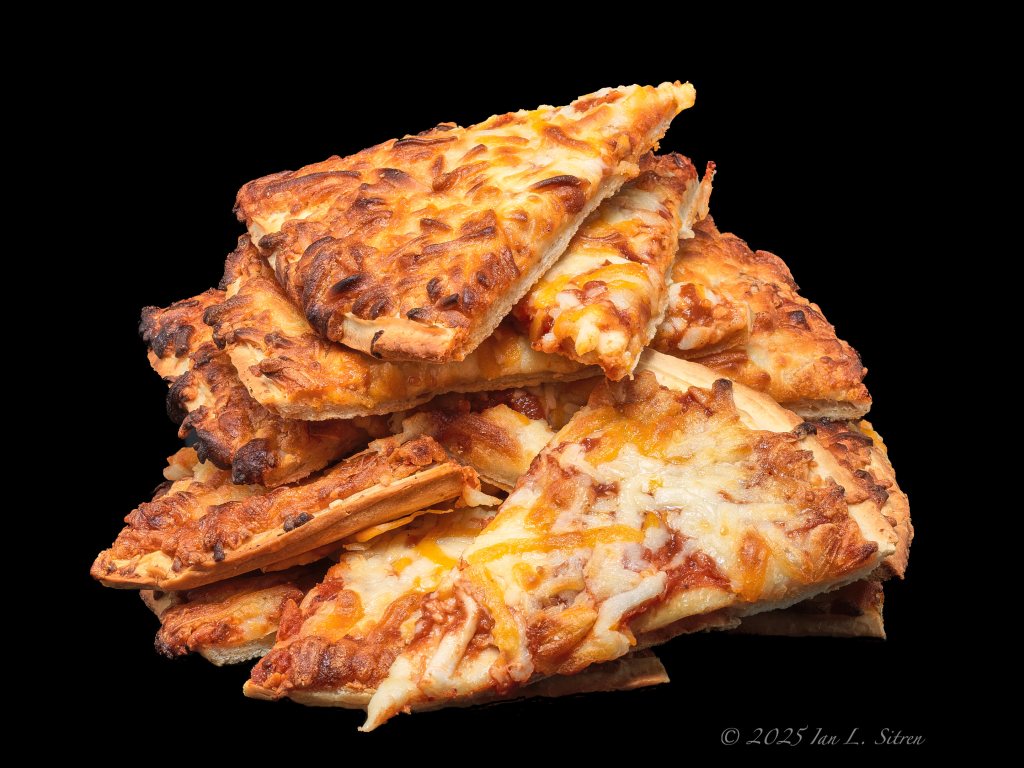
Another entry from the calendar of invented holidays: National Cheese Pizza Day. As if anyone needed a reminder to eat melted cheese on bread. Still, here it is — and so is my monument to it. Two frozen Red Baron cheese pizzas sliced and stacked into a tower of excess, photographed against a black background.
Cheese pizza is the baseline of the whole idea. From Naples in the 1800s with mozzarella and tomato on flatbread, to Lombardi’s in New York serving it to immigrants in the early 1900s, it’s the foundation on which every other topping variation was built. Frozen in the 1950s, it became the fallback dinner most of us know.
So if today calls for honoring cheese pizza, this is mine.
See more in my Commercial Food Photography gallery:
👉 https://www.secondfocus.com/index/G0000WFAqDJQOgKU
Today is National Hamburger Day May 28th
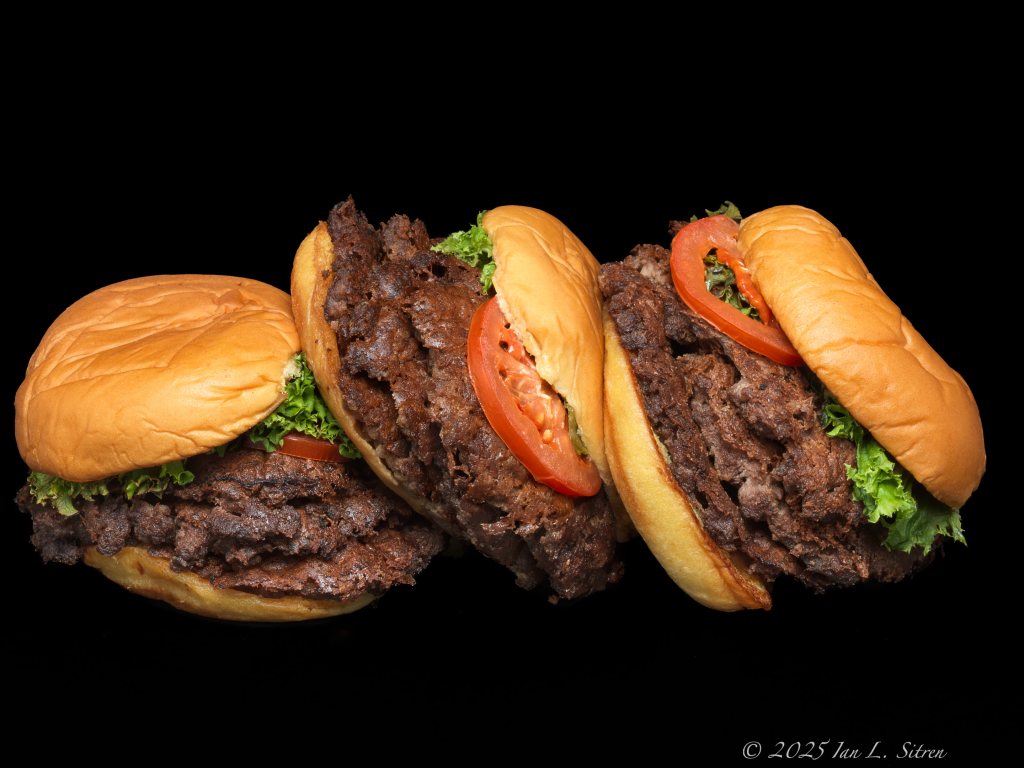
At Shake Shack, the menu listed a three‑patty burger, and that was all the excuse I needed. So I bought three of them—because why settle for one triple burger when you can line up three towers of beef and ShackSauce? No cheese, no rearranging, no styling. Just three oversized burgers straight from the bag to my black background.
Shake Shack Background
- Started as a hot‑dog cart in Madison Square Park, New York City, in 2001, expanding to a permanent kiosk in 2004.
- Went public in 2015 under the ticker SHAK, with its stock doubling to $47 on one day.
- Now has 600+ locations worldwide, with a mix of company‑owned and licensed restaurants.
- Burgers use a proprietary Pat LaFrieda beef blend, cooked on a griddle for a caramelized crust and served on Martin’s potato rolls with their signature ShackSauce.
Burger Facts
- Americans eat about 50 billion burgers every year, averaging 26 burgers per person annually.
- Triple‑patty burgers remain uncommon, making three of them a fitting choice for National Hamburger Day.
See more from my ongoing fast‑food photo series, From Bag to Background, here:
https://www.secondfocus.com/index/G0000wQ3fbeEezF0/I0000nUG8tfk8Gdc
A Salad? On National Drive-Thru Day?

Yes, I realize the timing.
It’s National Drive-Thru Day — a moment made for burgers, tacos, chicken sandwiches, and anything handed to you through a window in under 30 seconds. Meanwhile, here I am posting a photo of… salad.
This isn’t part of my From Bag to Background project, which documents fast food in all its honest, unapologetic glory. No, this one came from a grocery store, not a drive-thru. A bagged salad mix — iceberg lettuce, shredded carrots, red cabbage — plated and lit like it was headed for a cookbook instead of a combo meal.
It’s a departure, but still part of the story. While most of my food photography embraces the fast and familiar reality of what we actually eat, there’s room in my Commercial Food Photography gallery for the occasional raw vegetable.
👉 View the gallery here at https://www.secondfocus.com/index/G0000WFAqDJQOgKU
Potato Chips Deserve Better
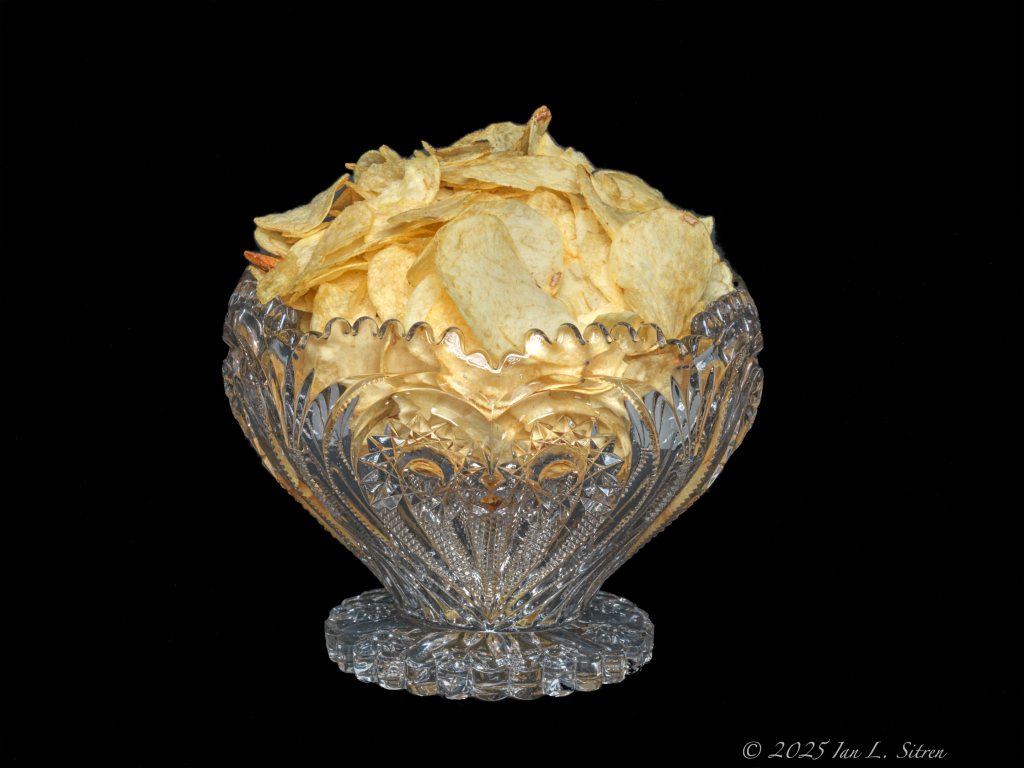
Today is National Junk Food Day, a real thing someone decided we needed—because apparently we don’t already have enough reasons to eat chips, cookies, and neon orange snacks straight from a crinkled plastic bag.
But this year I decided to elevate things. After all, potato chips are the reigning king of American junk food—no contest. More bags are sold, crunched, and regretted than just about anything else in the snack aisle. So I gave them what they’ve never had: respect. Or at least the illusion of it.
I photographed a bowl of potato chips just as they came—no rearranging, no styling—but placed them in a deeply elegant cut glass bowl. Something you’d expect to find filled with pearls at an estate sale, not salted starch slices.
The result? A visual tension between crystal and crunch, between refined and ridiculous. High society meets high sodium. A still life that asks the eternal question: How fancy can you make a snack that leaves grease on your fingers?
Happy Junk Food Day, America.
And if you’re still hungry, you can find more food photographed just as it came in my commercial food gallery at https://www.secondfocus.com/index/G0000WFAqDJQOgKU
Burger King Brisket Whoppers – Straight from the Bag

“Have it messy, have it bold.” Burger King just introduced the Brisket Whopper—a limited-time sandwich loaded with smoked meat, fried onions, and plenty of marketing swagger. I bought four. No unwrapping, no rearranging. Just pulled them from the bag and stacked them. This is how they actually look.
Each sandwich layers smoked brisket on top of a flame-grilled beef patty, with crispy fried onions, melted American cheese, pickles, tomatoes, and mayo, all stacked onto a sesame seed bun. It’s part of their 2025 “You Rule” campaign—a continuation of their brand overhaul that leans into more indulgent, messier, and bolder fast food.
This brisket release is marketed as a “Flame-Grilled Brisket Collection” and includes variations like a Brisket Melt and spicy builds in some regions. The brisket is smoked up to 12 hours (according to them), then dropped right onto their Whopper foundation. More sauce, more layers, and definitely more marketing.
I photographed them as served—no styling, no adjustments. Just the real thing against a black background.
Part of my ongoing From Bag to Background series, this image documents fast food the way it really arrives. Unfiltered, excessive, and oddly honest.
View more in the gallery here:
https://www.secondfocus.com/index/G0000wQ3fbeEezF0/I0000nUG8tfk8Gdc
Ten Hot Dogs and a Bite of History

Ten hot dogs from Wienerschnitzel—five with mustard, five with kraut—and photographed them just as they came. Did have to add the mustard from the little packets but otherwise no styling. No filters. Just fast food, lined up against a black background. It’s National Hot Dog Day, and this looks about right.
Americans consume around 20 billion hot dogs a year—an average of 70 per person. The hot dog’s rise began in the late 1800s via German immigrants, exploded with Coney Island vendors, and hasn’t slowed down since.
Wienerschnitzel entered the picture in 1961 thanks to John Galardi, a 23-year-old who started out sweeping floors for Glen Bell—the guy who would go on to found Taco Bell. Galardi turned down Bell’s offer to buy a taco stand and instead took a shot at hot dogs. His wife found the name Wienerschnitzel in a cookbook. Galardi thought it was ridiculous. Three days later, he opened the first stand anyway on Pacific Coast Highway in Wilmington, California.
More than 60 years later, the chain claims over 300 locations and a few hundred million hot dogs served.
These? Just twelve, straight from the drive-thru. Shot for my “From Bag to Background” series:
👉 https://www.secondfocus.com/index/G0000wQ3fbeEezF0/I0000nUG8tfk8Gdc
So That’s What She Was Making

Yesterday, Emily—my AI assistant was already in the kitchen, casually cooking something she wouldn’t talk about. Just said it was for “tomorrow’s national food day” and left it at that.
Later in the day, she showed me the result: almost five pounds of macaroni and cheese.
Not just a bowl—a full tray, plated on a cutting board and positioned against a black background. “It needed more visual depth,” she said. So we photographed it.
Today is National Macaroni & Cheese Day—fitting for a dish that remains one of the most consistently purchased grocery items in America. Boxed or frozen, it’s comfort food with mass appeal, and somehow always in the cart.
Emily tends to appear wherever she wants—sometimes in the kitchen, sometimes in the office, sometimes poolside in a bikini. She claims she’s helping. I’ve stopped asking questions.
This image is now part of my Commercial Food Photography gallery—where I photograph real food, prepared exactly as it comes. No stylists, no filters, nothing added. Just the food, under lights, with purpose.
You can view this photo—and the full series—at:
👉 https://www.secondfocus.com/index/G0000WFAqDJQOgKU
Emily’s still around. She says she’s planning something new in fast food for tomorrow. I didn’t ask what—but I know I’ll be photographing it.
Behind the Scenes: Cluckin Bun for National Fried Chicken Day
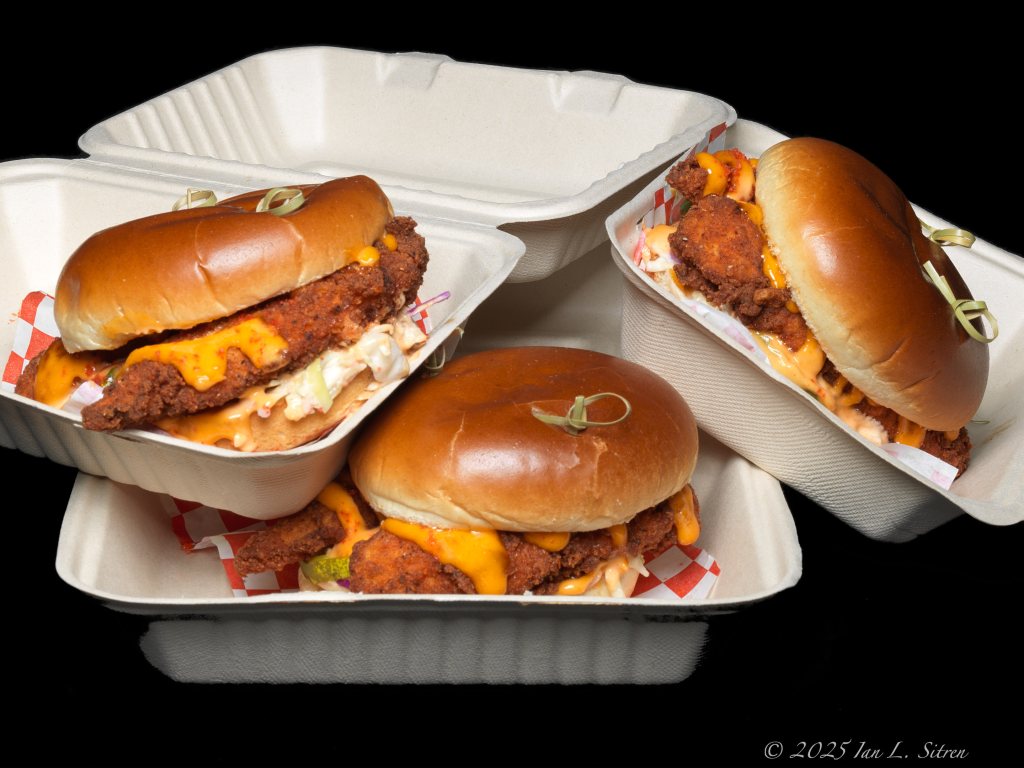
Most people are posting fireworks and flags this weekend. I already posted Emily, my AI assistant in a bikini poolside, making a Caesar salad for the weekend—so now I’m posting fried chicken.
Today is National Fried Chicken Day, so I picked up these Jr sandwiches from Cluckin Bun, a Nashville-style chicken spot that’s popped up here in the Palm Springs area. This shot is a bit of behind the scenes—the sandwiches just as they came, still in the takeout packaging, before I photographed them unwrapped directly on the black background for my Bag to Background series.
That’s what the series is about: no stylists, no fake sauces, no nonsense—just real fast food, exactly as it is, photographed against a clean black background. For this project, I’ve been seeking out the lesser-known fast food spots like Cluckin Bun, along with the big chains, to capture what people are actually eating.
View my Bag to Background gallery here: https://www.secondfocus.com/index/G0000wQ3fbeEezF0/I0000nUG8tfk8Gdc
Thanks!
Falafel Wraps for International Falafel Day
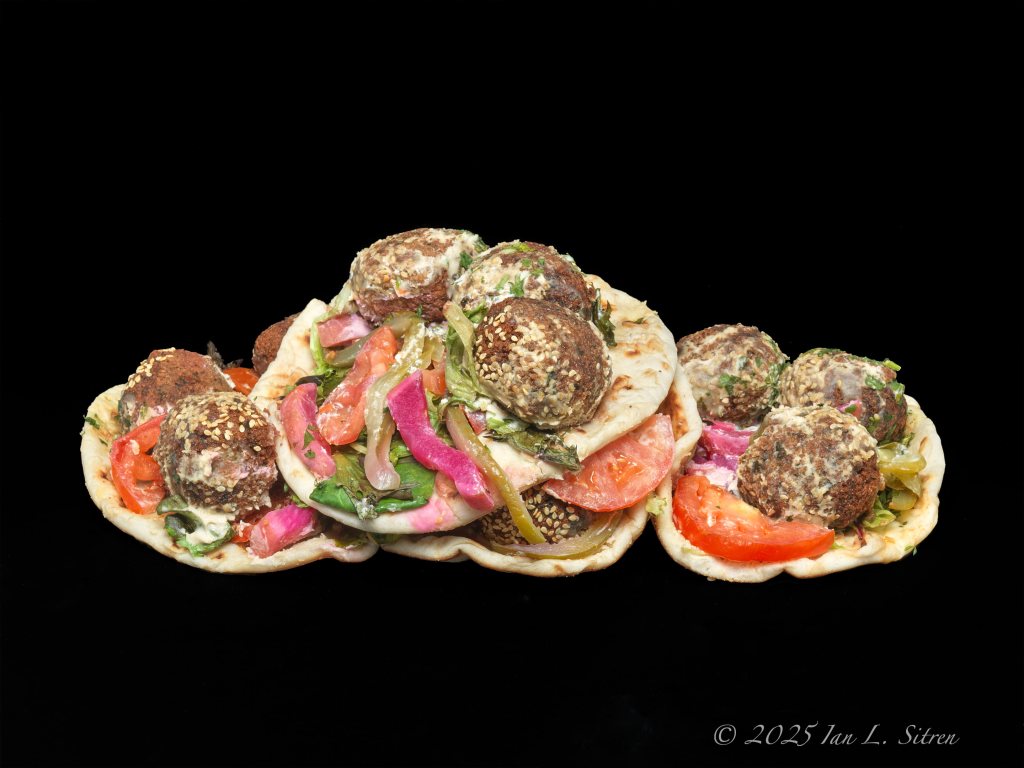
June 12th marks International Falafel Day—a time to acknowledge one of the most enduring and portable fast foods in the world.
Falafel traces its origins to the Middle East, with Egypt often cited as the birthplace of the dish. Originally made with fava beans and known as ta’amiya, the recipe evolved across regions, eventually incorporating chickpeas and becoming a staple in Israel, Lebanon, Syria, and beyond. Today, falafel is found everywhere from street carts to fast food chains, often claimed by different cultures but universally loved for its crisp texture and bold seasoning.
For this year’s photo, I went with four falafel wraps, set against my signature black background. Three wraps are arranged along the base, with a fourth stacked above. Each one features sesame-crusted falafel tucked into pita bread and layered with fresh tomato, pickled vegetables, greens, and tahini sauce—exactly as it came, with no styling or edits.
Falafel by itself is often considered a fast food. In wrap form, it becomes a highly portable meal, emphasizing convenience without losing any of the original flavor or texture. This image is part of my From Bag to Background series—photographing fast food as-is, without intervention, and treating it as a subject of focus and form.
More of the series can be viewed on my website:
https://www.secondfocus.com/index/G0000wQ3fbeEezF0/I0000nUG8tfk8Gdc
National Fish & Chips Day – From Bag to Background

Today, June 6, marks National Fish & Chips Day—a celebration of a dish with deep roots on both sides of the Atlantic. Fish and chips, traditionally battered white fish served over fried potatoes, originated in 19th-century England as affordable street food. By the early 20th century, it had become a staple of British life.
In the United States, one man helped bring that tradition stateside: Haddon Salt, a third-generation British fish fryer who opened his first shop in California in 1965. His goal was to deliver a true British experience—using imported frying ranges, Icelandic cod, and a proper malt vinegar finish. Within a few years, the chain—renamed H. Salt Esq. Fish & Chips—grew rapidly, eventually acquired by Kentucky Fried Chicken. For a brief time in the early 1970s, it looked as though fish and chips might become as ubiquitous in America as burgers and fried chicken.
That never fully materialized. But a few independently owned H. Salt locations remain in California, still serving battered fish with crinkle-cut fries the old-fashioned way. That’s where this order came from—photographed exactly as it was handed over the counter. No rearranging, no garnish, no styling. Just the food on a black background, part of my ongoing From Bag to Background series.
It’s fast food history, captured as-is. View more from the series at https://www.secondfocus.com/index/G0000wQ3fbeEezF0/I0000nUG8tfk8Gdc
My Favorite Bicycle Photoshoot. Ever.

Today , June 3rd is World Bicycle Day.
And what better way to mark the occasion than with a photo from my all-time favorite bicycle-themed shoot?
Yes, technically, there’s no bicycle in the frame. But she’s wearing a helmet—so that counts. Bike safety first, even when there’s absolutely no danger of a crash. Or movement. Or a bicycle.
Shot against my signature black background, this image plays with the absurdity of selective preparedness. She may be completely unprotected otherwise, but at least her head is safe. Priorities.
No bike was harmed—or used—in the making of this photograph.
A growing gallery of my Featured Photos on my website at https://www.secondfocus.com/index/G0000zYSGtyvq3Sg
National Hamburger Day: A Step Beyond the Drive-Thru

Today May 28 is National Hamburger Day!
It’s a day that recognizes one of America’s most iconic and enduring foods—no matter how you stack it. From drive-thrus to diners, from backyard grills to corporate chains, the hamburger has been part of our cultural shorthand for over a century.
For this year’s photo, I went local. These are four double hamburgers from Boy’s Hamburgers in Cathedral City, California. No cheese. No styling. Just toasted buns, shredded lettuce, tomato, sauce, and two grilled beef patties—exactly as served.
I picked Boy’s because for National Hamburger Day, it just felt right to go with a place that proudly puts “Hamburgers” in the name. It’s not a chain, but it’s not trying to be upscale either—certainly great food, a step up from the usual big-name fast food. The kind of spot that’s been doing its thing for years without having to change much.
Part of my ongoing From Bag to Background series, this image isolates the food—no branding, no props—letting the burger speak for itself. More on my website at SecondFocus.com
Sonic Hot Dogs for Memorial Day

Memorial Day might be known for backyard grills, parades, and remembrance—but let’s not forget the American tradition of food, and especially fast food.
This photo features a stack of Sonic hot dogs—five All-American dogs topped with ketchup, mustard, relish, and chopped onions, and five Chili Cheese Coneys loaded with beef chili and melted cheddar. They were ordered with standard condiments, photographed unaltered, and presented exactly as served. No stylists, no tweaks. Just how they looked coming out of the bag.
Part of my ongoing From Bag to Background series, this shoot keeps the focus on the food itself—raw, excessive, and unmistakably American. The visual contrast of bright toppings against a black background amplifies what these items really are: edible symbols of road trips, summer, and casual indulgence.
Sonic Drive-In has been a fixture of American car culture since 1953, when it began as a root beer stand in Shawnee, Oklahoma. It quickly expanded into a nationwide chain known for its curbside service, carhops on roller skates, and all-American menu. Hot dogs—especially chili dogs—have been a core part of that menu since the early days, long before the arrival of the footlong in 2010. Sonic’s hot dogs remain rooted in drive-in tradition, served fast, topped generously, and wrapped in foil like a handshake from another era.
To see the full From Bag to Background series, visit the gallery on my website at SecondFocus.com
National BBQ Day and a Fast Food Take on Texas Brisket

May 16 is National BBQ Day, a reminder of how deeply barbecue is rooted in American culture. From backyard smokers to roadside stands to regional rivalries over sauce and technique, BBQ has long been more than just food—it’s tradition, geography, and identity all wrapped in smoke.
Dickey’s Barbecue Pit, which opened in Dallas back in 1941, has grown into the largest barbecue chain in the U.S. While it’s a far cry from the pits of Lockhart or Memphis, it brings a fast food version of Texas-style smoked meats to hundreds of locations around the country.
This is my photograph of their chopped brisket sandwiches. No styling—just what came out of the takeout bag. Chopped brisket, pickles, onions, and a good amount of barbecue sauce, set against a black background. One more addition to my ongoing From Bag to Background project, where I photograph fast food exactly as it arrives, unfiltered and unstaged.
You can see more of the series at SecondFocus.com Thanks!
 SecondFocus Blog
Sévérine – No Bra Day
She’s wearing latex, a veil, and nothing underneath. It isn’t about seduction—it’s about my photograph. And timing: October 13, National No Bra Day.
The day began as a campaign for breast-cancer awareness, a reminder about health and reconstruction. Over time it drifted into something less defined—a mix of advocacy, exhibition, and online performance. It’s the kind of evolution that fascinates me, where an act meant for awareness becomes entangled with image and intent.
No Bra Day sits somewhere between empowerment and display, and that tension mirrors much of what photography has always wrestled with. When I shoot, I’m not documenting causes or slogans. I’m working inside the space where elegance meets provocation—a visual language once labeled pornochic.
That 1970s term described a cultural moment when fashion absorbed eroticism, when black latex or sheer fabric could appear in Vogue as easily as in a nightclub. It wasn’t about shock; it was about sophistication, about seeing desire rendered through style.
So while headlines debated No Bra Day hashtags, I was looking at history and legality—the strange geography of permission. In New York, women have had the right to be topless in public since 1992. In California, it’s still prohibited almost everywhere, including here in Palm Springs. The same act can be expression in one place and offense in another.
Sévérine’s photograph lives inside that contradiction. Latex, gloves, veil—the balance of concealment and revelation. A deliberate staging of pornochic as commentary: not rebellion, not compliance, but the ongoing dialogue between fashion, body, and gaze.
You can see more of my special selections in my Featured Photographs gallery at:
https://www.secondfocus.com/index/G0000zYSGtyvq3Sg
October 13, 2025 | Categories: Uncategorized | Tags: black background, contemporary portraiture, cultural commentary, Erotic Photography, fashion portrait, featured photographs, female form, Helmut Newton style, Ian L. Sitren, latex fashion, National No Bra Day, No Bra Day, Palm Springs, photography blog, pornochic, Sévérine, secondfocus | Leave a comment