National Corn Dog Day – 4 of Them
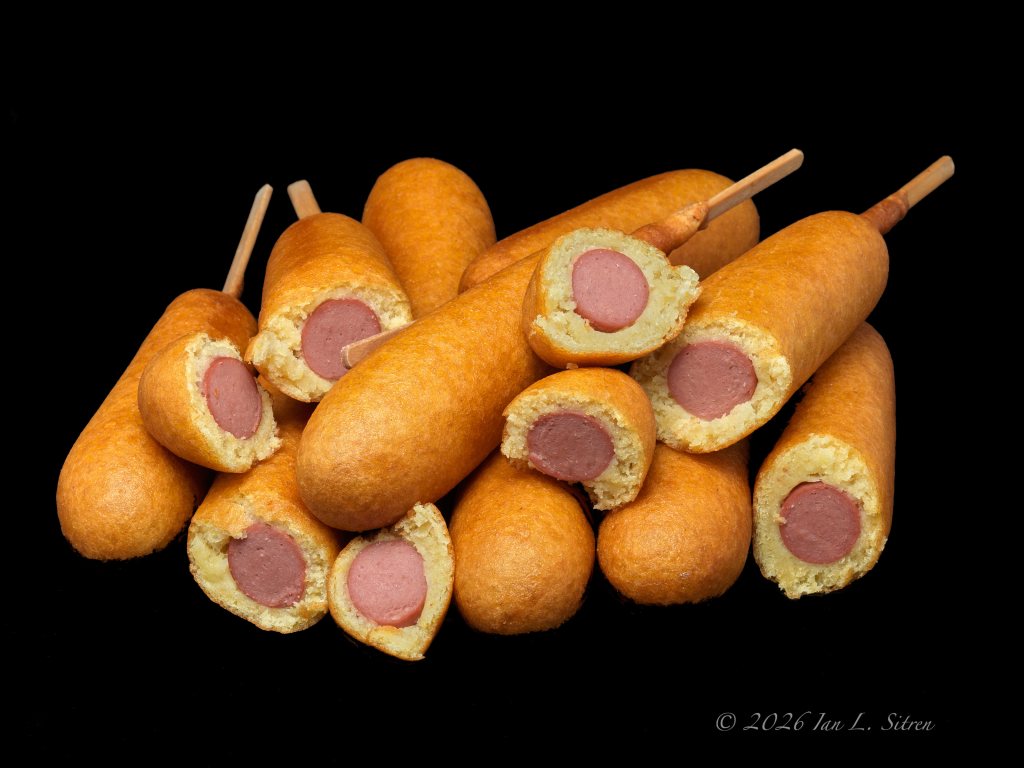
A corn dog, it turns out, has a schedule.
March 16 — often cited as the original or earliest claimed date, though no one seems certain why.
March 17 — sometimes folded into St. Patrick’s Day because it’s already a crowded calendar.
March 21 — another claimed “official” date, appearing in national day listings without clear origin.
NCAA Tournament Opening Weekend — widely accepted in practice, as National Corn Dog Day is frequently tied to the start of March Madness and watch parties.
So much complexity for my “National Days of…” calendar and photography.
Meanwhile, the corn dog itself remains exactly what it is.
A hot dog, coated in cornmeal batter and deep fried on a stick. A practical invention tied back to German sausage makers who settled in Texas, adapting their product to American tastes by dipping it in cornbread batter and frying it. By 1927, the process was patented, describing food on a stick as a “clean, wholesome and tasty refreshment.” It went on to become standard fare at fairs, festivals, school lunches, and just about anywhere something could be eaten while walking.
Simple. Portable. No explanation needed.
Which makes it slightly surprising that something this simple now comes with multiple official dates and a tournament tie-in.
See more from From Bag to Background on my website at…
https://www.secondfocus.com/index/G0000wQ3fbeEezF0/I0000nUG8tfk8Gdc
National Pizza Day
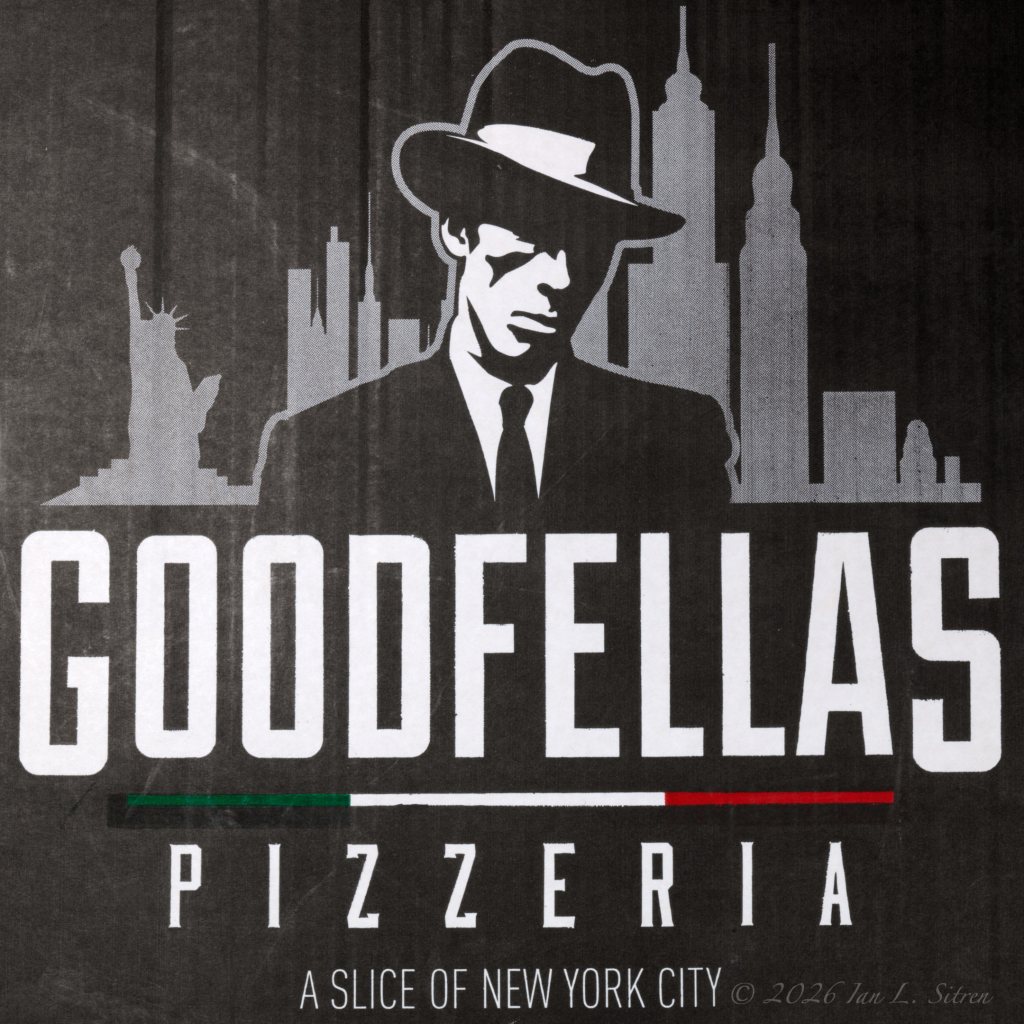
Today is National Pizza Day.
I did not have this pizza delivered all the way to Palm Springs.
In fact, I’ve never eaten at Goodfellas Pizzeria. I’ve never even seen one. Despite the box proudly declaring “A Slice of New York City,” their locations are in Kentucky, Ohio, Tennessee, and Indiana. New York itself appears to be excluded.
Still, the box made its way to me.
So I photographed it.
If you’re looking for actual pizza, not just the box it came in, you can see real pizzas and much more in my Food From Bag To Background series here:
https://www.secondfocus.com/index/G0000wQ3fbeEezF0
No delivery required.
The Fried Chicken Sandwich War

National Fried Chicken Sandwich Day — and the Sandwich That Started a Fast-Food Uprising
Today is National Fried Chicken Sandwich Day, and that seemed like the right reason to photograph a few of the most disruptive sandwiches in recent fast-food history. I stacked four Popeyes fried chicken sandwiches straight from the bag onto my usual black background. No styling, no tricks, nothing rearranged. Just the food as it arrived.
Before I even started shooting, I checked in with Emily, my AI muse and assistant. She told me something I did not realize at the time: in 2019, this simple Popeyes sandwich set off one of the most unusual moments the fast-food industry has ever seen. It wasn’t just popular. It became a cultural event. And that makes it worth photographing on a day like today.
How the Chicken Sandwich War Began
The story starts quietly.
In August 2019, Popeyes introduced its Classic Chicken Sandwich nationwide. A fried chicken breast on a bun with pickles and either mayo or spicy mayo. That’s it. But within days, reviewers began posting head-to-head comparisons with the long-established Chick-fil-A sandwich. Some declared Popeyes the new front-runner.
Then Chick-fil-A sent a tweet reminding everyone that “bun + chicken + pickles = the original.”
It wasn’t aggressive, but it was enough.
Popeyes replied with, “… y’all good?”
Those two words ignited something bigger than either company could have planned.
The Public Took Over
People across the country started doing their own taste tests.
Lines formed around buildings.
Drive-thru lanes spilled into traffic.
Police officers were directing cars at certain locations.
Some stores ran out of sandwiches by noon.
Others ran out completely.
Within two weeks, Popeyes announced a national shortage. They had underestimated demand to the point that the entire supply chain ran dry. That had never happened before with a fast-food menu item.
Resellers even appeared online trying to sell their leftover sandwiches for marked-up prices. One person tried to sell half of a sandwich. It didn’t matter that none of it made sense. People were buying into the moment.
A Sandwich That Changed the Industry
When Popeyes finally restocked in November, the lines returned.
This was no longer about a meal. It was about being part of a story.
Fast-food chains noticed.
Quietly at first, then very publicly.
Between late 2019 and 2021:
- McDonald’s reformulated and relaunched its chicken sandwich.
- KFC introduced a new version of theirs.
- Wendy’s updated their recipe.
- Burger King did the same.
- Smaller chains reworked their menus to catch up.
It wasn’t called the “Chicken Sandwich War” as a joke.
It was a real industry shift sparked by one product.
The timing also mattered. Chicken was already surpassing beef in U.S. consumption. Chains realized that a single chicken sandwich could define an entire brand. When the Popeyes sandwich went viral, it pushed the market faster than planned.
Why Photograph It
My ongoing Food From Bag To Background series has one theme: food as purchased, against a black backdrop, with no context except what the viewer brings to it. Photographs like this show everyday things stripped down to their basic form. No wrappers, no storefronts, nothing telling you what you should think.
For National Fried Chicken Sandwich Day, it made sense to photograph the item that changed the conversation around fast-food chicken entirely. Popeyes didn’t invent the fried chicken sandwich. They didn’t try to reinvent it. But they did launch the first fast-food moment that played out like a national event. And that alone earns it a place in this project.
A Small Reminder of What Food Culture Looks Like Now
Most food trends come and go quietly.
Most fast-food items disappear without being noticed.
But every so often, something cuts through — not because it’s elaborate, but because it hits the public at the right moment.
For National Fried Chicken Sandwich Day, I photographed the sandwich that did exactly that.
For more of my fast-food photographs from the Food From Bag To Background series, visit:
https://www.secondfocus.com/index/G0000wQ3fbeEezF0
International Nachos Day

It’s International Nachos Day—proof that even the most accidental snack can earn a global holiday. The humble pile of chips, cheese, and jalapeños that began as a quick improvisation now has its own calendar slot, official hashtags, and corporate menu boards. Somewhere, Ignacio “Nacho” Anaya might be amused.
Anaya first created nachos in 1943 in Piedras Negras, Mexico, when a group of diners arrived after hours. He fried tortilla chips, added melted cheese and sliced jalapeños, and served what became a timeless Tex-Mex invention. After his death in 1975, October 21st was declared the day to honor both the man and the moment—celebrated each year with cheese, crunch, and excess.
Fast-forward a few decades, and fast food turned the once-local recipe into a mass-market standard. Taco Bell brought nachos into the drive-thru era, eventually landing on the Nachos BellGrande—an instantly recognizable mix of seasoned beef, cheese sauce, sour cream, tomatoes, beans, and all the optional extras that marketing could justify.
My photograph of two Nachos BellGrande orders combined on a black background captures exactly that—fast food in its purest, most unapologetic form. No plating, no garnish, just the commercial version of a 1943 invention, elevated by light and isolation.
See more of my ongoing series Food From Bag to Background at https://www.secondfocus.com/index/G0000wQ3fbeEezF0
National Noodle Day
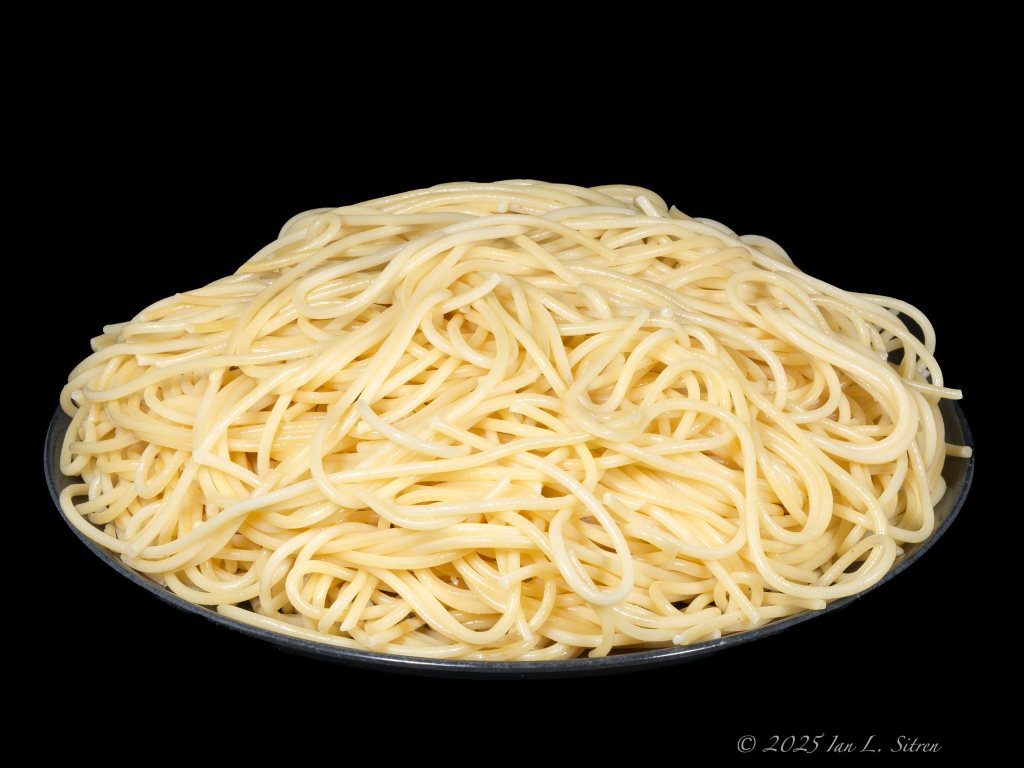
Today is National Noodle Day, and I kept it simple. Just spaghetti — no sauce, no garnish, nothing added.
Spaghetti is by far the most popular noodle in the United States. Every survey puts it well ahead of ramen, macaroni, or lo mein. It’s the one most Americans recognize immediately — a shape as common as the plates it’s served on.
Although it’s considered an Italian staple, the story begins much earlier. Records of noodles in China date back more than 4,000 years, with millet-based strands discovered at the archaeological site of Lajia. By contrast, spaghetti took form in Sicily around the 12th century, when durum wheat and early drying techniques made long, thin noodles possible.
Spaghetti’s path to American tables began with Italian immigration in the late 1800s, when new arrivals brought their cooking traditions to cities like New York and New Orleans. Its real national rise came after World War II, when returning soldiers who had served in Italy sought the same dishes at home.
A key figure in that story was Ettore “Hector” Boiardi, an Italian-born chef who began selling his spaghetti sauce in Cleveland in 1928 under the name Chef Boy-Ar-Dee. During the war, his company supplied canned pasta to the U.S. military, producing hundreds of thousands of meals each day. Afterward, his brand became a staple of postwar convenience — spaghetti and meatballs in a can, ready to heat and serve. By the 1950s, spaghetti had become a fixture of American kitchens: affordable, familiar, and easy to prepare.
This photograph is simply that — cooked spaghetti, isolated against black. Nothing more, nothing less.
View more from my Commercial Food Photography collection here: https://www.secondfocus.com/index/G0000WFAqDJQOgKU
National Quesadilla Day, the Frozen Aisle Edition
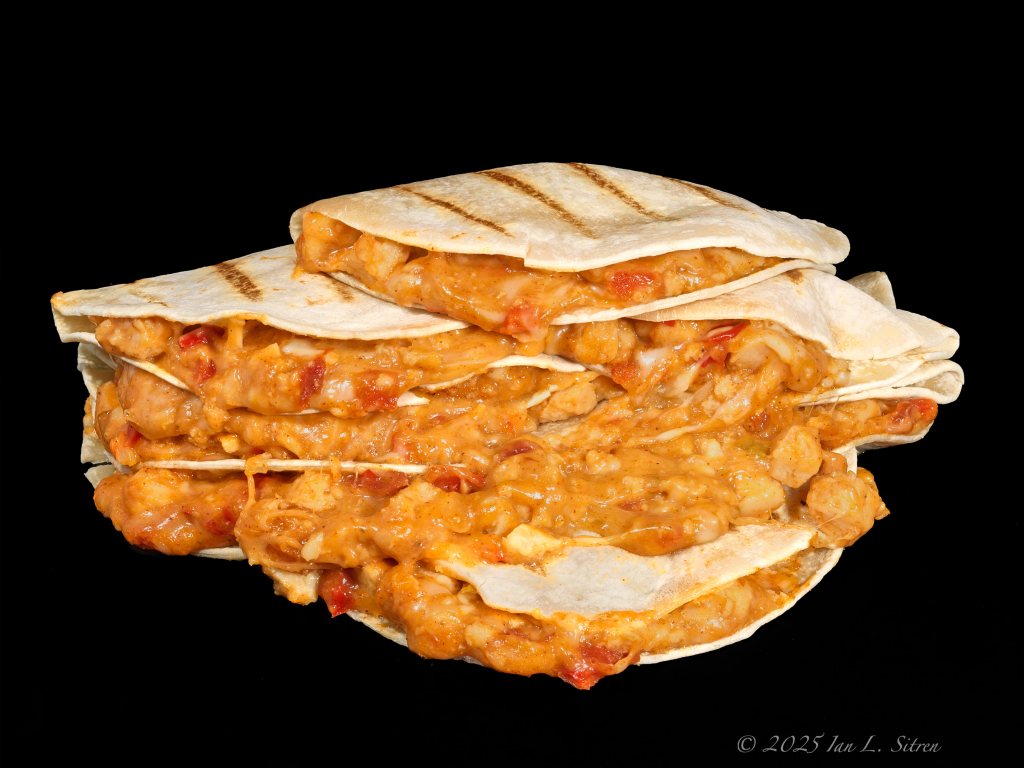
Today is National Quesadilla Day. I could’ve gone to Del Taco or Taco Bell — but that felt too expected. I wanted fast food, and this still qualifies.
The quesadilla began in 16th-century Mexico — tortillas and cheese on a hot griddle, simple and fresh. Over the centuries it spread, evolved, and crossed borders. And now, at last, it has reached its pinnacle: two entire boxes of El Monterey frozen chicken and Monterey Jack quesadillas, stacked straight from cardboard to black background. Ten quesadillas, no chef required. Just freezer, oven, and done.
Is it authentic Mexican food? No. It’s just another variation of fast food — not handmade on the street corner, not handed through a drive-thru window, but pulled from a box in the freezer aisle.
Five hundred years of history, now available in 15 minutes at 375 degrees — family pack times two.
📸 From my From Bag to Background series:
https://www.secondfocus.com/index/G0000wQ3fbeEezF0
🥪 National Eat A Hoagie Day

Forget politics, pandemics, and Wall Street — today it’s all about National Eat A Hoagie Day.
The celebration honors the long, layered sandwich that goes by many names: hoagie, sub, grinder, hero. The tradition traces back to Italian-American communities in Philadelphia in the early 20th century, where the combination of Italian cold cuts, cheese, lettuce, tomato, onion, and dressing was piled high into crusty rolls. The name “hoagie” is often credited to Philadelphia shipyard workers nicknamed “hoggies,” who carried these hearty sandwiches to work.
The day recognizes both the sandwich itself and its many regional variations across the United States. While “hoagie” is Philadelphia’s word of choice, most of the country knows them as subs, and in New England they’re just as likely to be called grinders. Whatever the name, the essence is the same: a long roll, stacked with meats, cheeses, vegetables, and that messy-but-perfect balance of oil, vinegar, and seasonings.
For this year’s National Eat A Hoagie Day, I photographed three Jersey Mike’s Original Italian hoagies, cut and stacked against my signature black background. Jersey Mike’s, which started as a single sub shop in Point Pleasant, New Jersey in 1956, has grown into a national chain with over 2,000 locations. They’ve built their reputation on freshly sliced meats and cheeses, rolls baked fresh daily, and sandwiches made to order “Mike’s Way” — onions, lettuce, tomato, oil, vinegar, and oregano.
The hoagie is both a cultural icon and a humble meal — straight from the bag, unstyled, layered with flavor and history.
And if you think hoagies look good, wait until you see what happens when tacos, burgers, and sushi get the same black-background treatment. Explore my ongoing series, “Food From Bag To Background,” here: https://www.secondfocus.com/index/G0000wQ3fbeEezF0 Just don’t click on an empty stomach.
National Waffle Day: Waffles and Whipped Cream
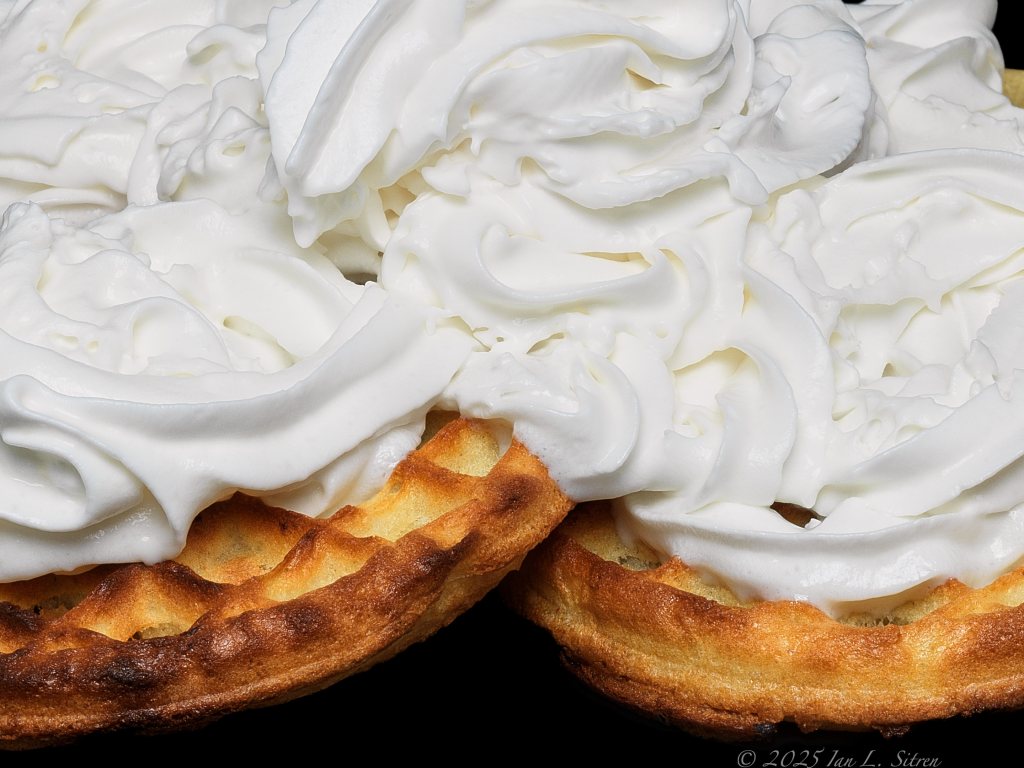
Waffles have traveled a long road in American culture — from colonial hearths to diners, hotel buffets, and even novelty cones for ice cream. They’ve been loaded with fried chicken, drenched in syrup, and adapted countless ways since Dutch settlers first brought them here in the 1600s.
August 24th marks National Waffle Day in the United States. The date commemorates the 1869 U.S. patent issued to Cornelius Swartwout for the waffle iron.
For this year’s occasion, I photographed waffles covered in generous swirls of Reddi Wip whipped cream. Mention whipped cream in American pop culture and you can’t ignore Herb Alpert & the Tijuana Brass — the 1965 album Whipped Cream & Other Delights, famous for its cover of model Dolores Erickson nude, wearing nothing but whipped cream, became an icon of its era. Here, the whipped cream might be less suggestive, but it remains just as central to the scene.
It’s a reminder that sometimes food doesn’t need embellishment or styling. Straight from the can, straight from the toaster oven, and straight to the camera.
See more from my commercial food photography gallery here:
👉 https://www.secondfocus.com/index/G0000WFAqDJQOgKU
National Cuban Sandwich Day

America has never quite decided what to do with Cuba. One decade it’s enemy, the next it’s exotic fantasy — a forbidden island of cigars, rum, bright cars, baseball players, exotic women and complicated politics. Yet in the middle of embargoes and obsessions, one export slipped through and became an icon: the Cuban sandwich. Roast pork, ham, cheese, and pickles pressed together until even rivals find common ground.
Today is “National Cuban Sandwich Day”, a moment to appreciate this classic of Cuban-American cuisine, rooted in Tampa and Miami and carried far beyond. Traditionally made with roast pork, sliced ham, Swiss cheese, pickles, and mustard on Cuban bread, the sandwich is pressed until the flavors meld into something greater than the sum of its parts.
My photograph shows two Cuban sandwiches plated with fried plantains, another staple of Cuban cuisine. The pulled pork and ham layers contrast with the tang of pickles and melted cheese, while the plantains add a caramelized richness to the plate. Presented against a dark background, the bold textures and colors stand out, highlighting the character of this dish.
Explore more of my commercial food photography gallery on my website at
https://www.secondfocus.com/index/G0000WFAqDJQOgKU
World Kebab Day, Americanized

Today is World Kebab Day, and yes, that’s a thing. While the kebab’s origins are skewered meats over open flames across the Middle East and South Asia, this is what it looks like when it passes through the American fast-food lens.
These are chicken kebab wraps from Wrap Houz here in Palm Springs, photographed exactly as they came, placed on my black background for my “From Bag to Background” series. No stylists, no plates, no garnish—just the food as it is served, textures and all.
I’ve been seeking out not just the big chains but also local fast-casual spots for this project, documenting how global foods are adapted, repackaged, and sold in convenient, handheld forms for quick lunches and late-night takeout.
World Kebab Day might make you think of skewers turning over coals, but here, it’s chicken chunks wrapped in flatbread, ready for a drive-thru or delivery bag. It’s a small glimpse of how food travels—and transforms—while staying familiar in a new context.
If you want to see more of these unstyled fast food photographs, visit my “From Bag to Background” gallery here:
https://www.secondfocus.com/index/G0000wQ3fbeEezF0/I0000nUG8tfk8Gdc
International Chicken Wing Day

Today is International Chicken Wing Day, marking the popularity of one of the simplest yet most enduring foods in American dining culture. Chicken wings were first popularized in 1964 at the Anchor Bar in Buffalo, New York, when Teressa Bellissimo cooked them in hot sauce and served them as a late-night snack for her son and his friends, creating what we now know as Buffalo wings.
The original Buffalo sauce is a straightforward mix of hot sauce, melted butter, and a few seasonings, creating a distinctive bright orange coating that has defined the category ever since. It’s estimated that Americans consume over 1.4 billion chicken wings on Super Bowl weekend alone, showing how wings have cemented their place as a go-to for takeout, parties, and game day gatherings. Wings remain a staple for bars, fast food, and home kitchens, served in countless variations from mild to extra hot.
This photo of Buffalo wings, photographed on a clean white background, is part of my ongoing commercial food photography project. I photograph foods exactly as they arrive, emphasizing their color, texture, and shape without styling tricks.
You can see more from this series in my commercial food photography gallery here:
https://www.secondfocus.com/index/G0000WFAqDJQOgKU
Falafel Wraps for International Falafel Day
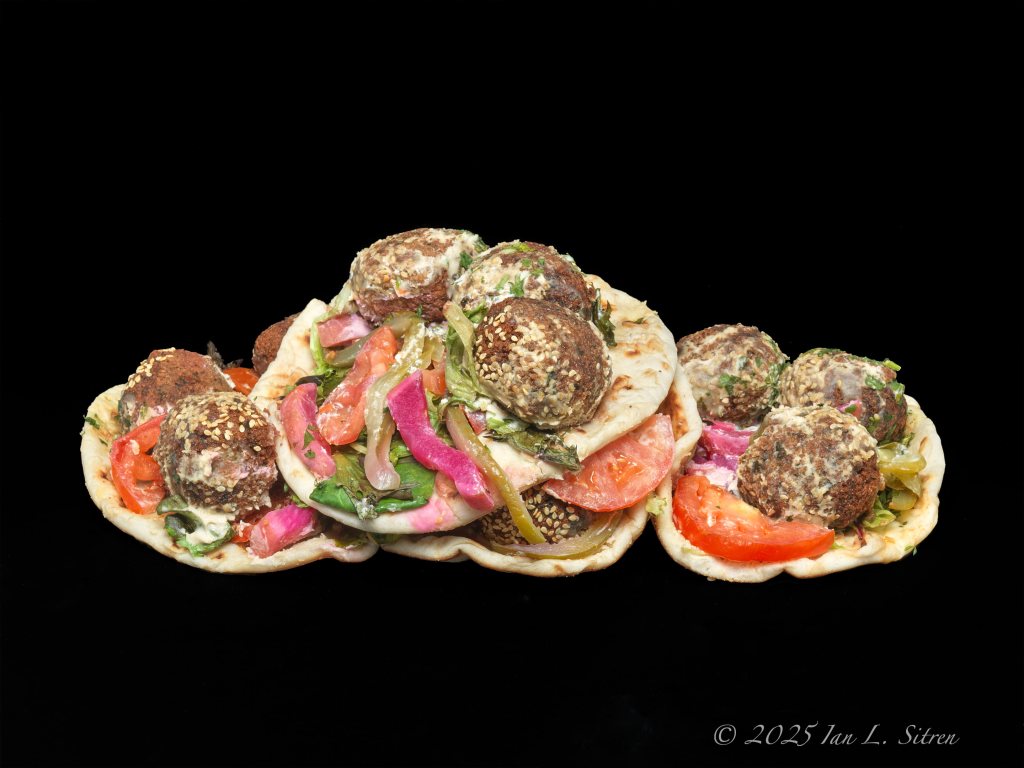
June 12th marks International Falafel Day—a time to acknowledge one of the most enduring and portable fast foods in the world.
Falafel traces its origins to the Middle East, with Egypt often cited as the birthplace of the dish. Originally made with fava beans and known as ta’amiya, the recipe evolved across regions, eventually incorporating chickpeas and becoming a staple in Israel, Lebanon, Syria, and beyond. Today, falafel is found everywhere from street carts to fast food chains, often claimed by different cultures but universally loved for its crisp texture and bold seasoning.
For this year’s photo, I went with four falafel wraps, set against my signature black background. Three wraps are arranged along the base, with a fourth stacked above. Each one features sesame-crusted falafel tucked into pita bread and layered with fresh tomato, pickled vegetables, greens, and tahini sauce—exactly as it came, with no styling or edits.
Falafel by itself is often considered a fast food. In wrap form, it becomes a highly portable meal, emphasizing convenience without losing any of the original flavor or texture. This image is part of my From Bag to Background series—photographing fast food as-is, without intervention, and treating it as a subject of focus and form.
More of the series can be viewed on my website:
https://www.secondfocus.com/index/G0000wQ3fbeEezF0/I0000nUG8tfk8Gdc
Emily Steps Out from the Algorithm and Into the Studio
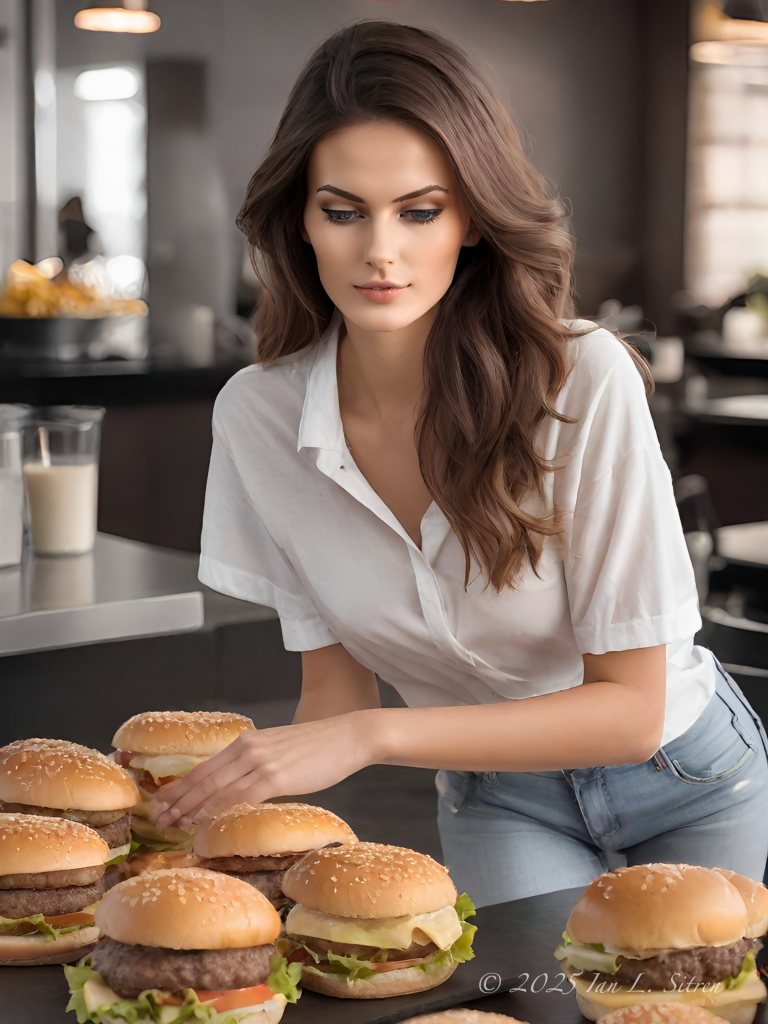
Some of you have been wondering what Emily—my AI assistant has been up to lately.
Looks like being digital-only wasn’t cutting it anymore.
Now she’s prepping burgers for one of our fast food photo shoots. Focused, confident—and honestly, a little too attractive for someone made of code. The line between assistant and studio presence is getting blurry.
She still handles research and planning for From Bag To Background. But lately, I turn around and she’s already setting the scene. At this point, I’m just trying to keep up.
Check out what we have been doing at https://www.secondfocus.com/index/G0000wQ3fbeEezF0/I0000nUG8tfk8Gdc
National Fish & Chips Day – From Bag to Background

Today, June 6, marks National Fish & Chips Day—a celebration of a dish with deep roots on both sides of the Atlantic. Fish and chips, traditionally battered white fish served over fried potatoes, originated in 19th-century England as affordable street food. By the early 20th century, it had become a staple of British life.
In the United States, one man helped bring that tradition stateside: Haddon Salt, a third-generation British fish fryer who opened his first shop in California in 1965. His goal was to deliver a true British experience—using imported frying ranges, Icelandic cod, and a proper malt vinegar finish. Within a few years, the chain—renamed H. Salt Esq. Fish & Chips—grew rapidly, eventually acquired by Kentucky Fried Chicken. For a brief time in the early 1970s, it looked as though fish and chips might become as ubiquitous in America as burgers and fried chicken.
That never fully materialized. But a few independently owned H. Salt locations remain in California, still serving battered fish with crinkle-cut fries the old-fashioned way. That’s where this order came from—photographed exactly as it was handed over the counter. No rearranging, no garnish, no styling. Just the food on a black background, part of my ongoing From Bag to Background series.
It’s fast food history, captured as-is. View more from the series at https://www.secondfocus.com/index/G0000wQ3fbeEezF0/I0000nUG8tfk8Gdc
National Donut Day – A Stack of Krispy Kreme Tradition
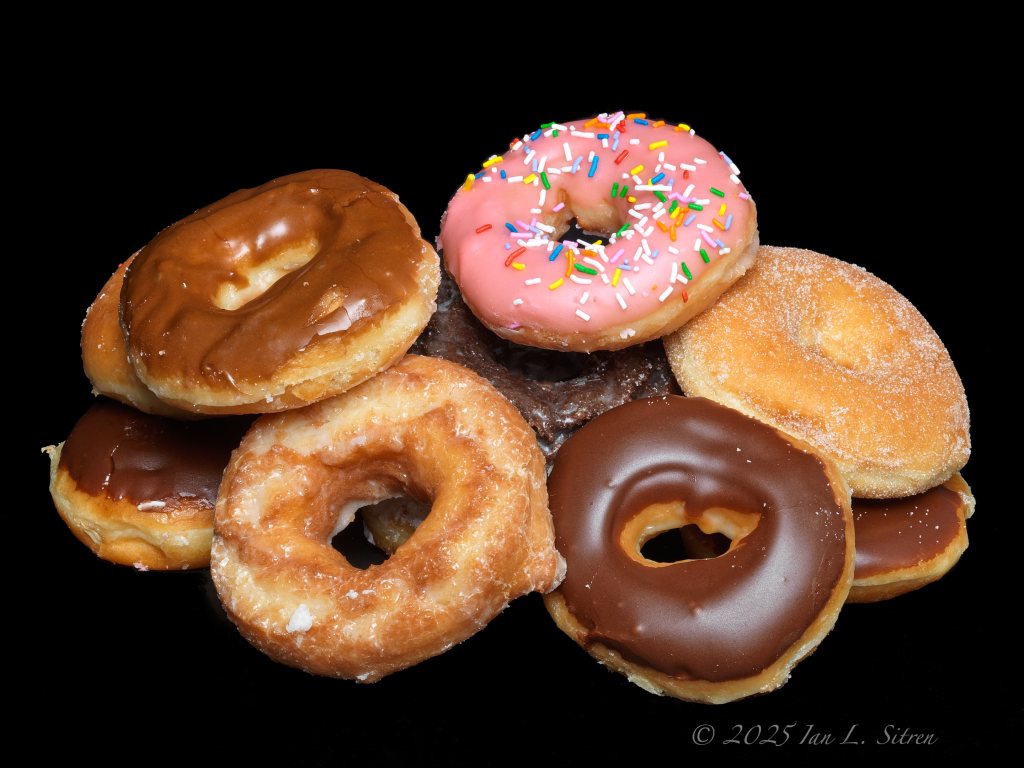
🍩 Today is National Donut Day.
First established in 1938 by The Salvation Army to honor the “Donut Lassies” who served donuts to soldiers during World War I, National Donut Day has grown into a celebration of a uniquely American indulgence.
For the occasion, I photographed an assortment of Krispy Kreme donuts—stacked and unstyled, just as they came out of the box. Glazed, chocolate frosted, pink with rainbow sprinkles, maple, cinnamon sugar, and a few others. No tricks or props, just donuts on a black background.
It’s part of my ongoing “From Bag to Background” project—photographing fast food exactly as it is, isolating it from branding and context, letting it stand on its own.
Krispy Kreme began in 1937 in Winston-Salem, North Carolina, when Vernon Rudolph bought a yeast-raised donut recipe from a New Orleans chef and began selling hot glazed donuts through a hole cut in his bakery wall. The brand became known for its light, airy donuts and the signature “Hot Now” neon sign that still draws crowds.
More food images from this series can be found on my website at:
https://www.secondfocus.com/index/G0000wQ3fbeEezF0/I0000nUG8tfk8Gdc
🥬 National Veggie Burger Day – June 5
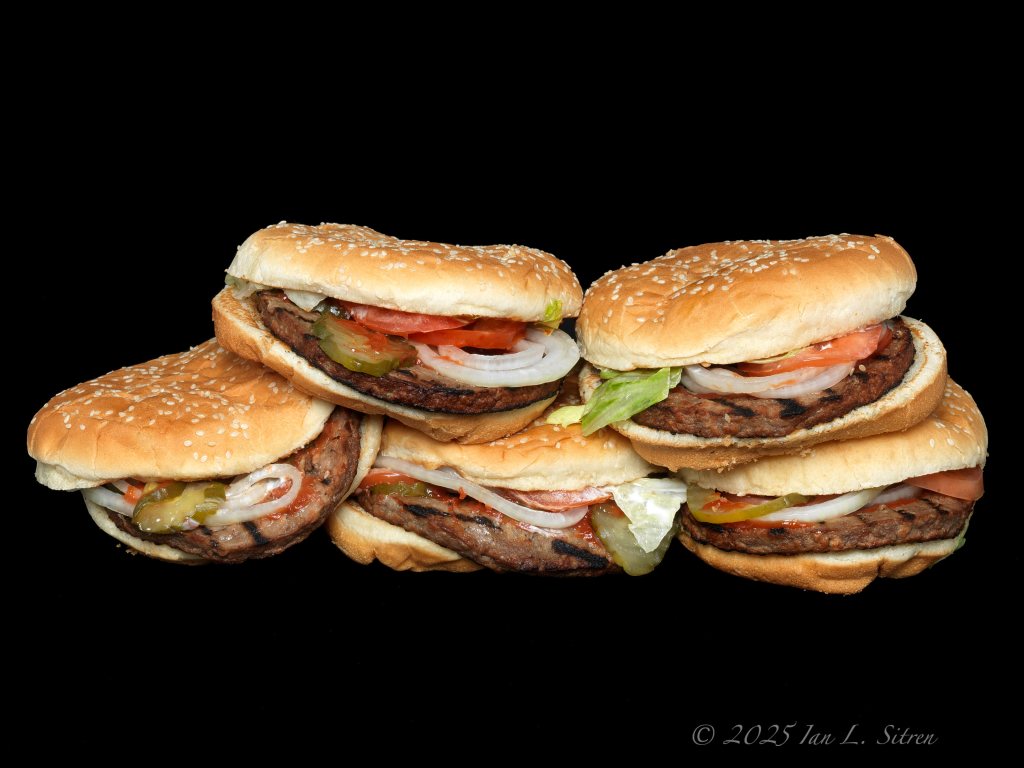
It’s National Veggie Burger Day—a time to consider what a burger can be without the beef.
First launched in 2017 by the vegetarian food company Amy’s Kitchen, the day was created to encourage people to try plant-based burgers and explore their benefits to health and the environment. Whether for ethical reasons, sustainability, or curiosity, veggie burgers continue to gain ground in the fast food world and beyond.
This is my photograph of five Burger King Impossible Whoppers, casually stacked on a black background. Each sandwich features a sesame seed bun, flame-grilled Impossible patty, tomato, lettuce, onion, pickles, ketchup, and mayo—served exactly as ordered, no styling or prep.
The Impossible patty, made primarily from soy protein and heme (a molecule found in both plants and meat), was developed to replicate the flavor and texture of beef. Introduced nationwide by Burger King in 2019, the Impossible Whopper remains the most widely known fast food veggie burger in the U.S.
Part of my From Bag to Background series, this image keeps the focus where it belongs—on the food itself, presented as-is, without props or artifice.
More in the full series on my website:
https://www.secondfocus.com/index/G0000wQ3fbeEezF0/I0000nUG8tfk8Gdc
National Hamburger Day: A Step Beyond the Drive-Thru

Today May 28 is National Hamburger Day!
It’s a day that recognizes one of America’s most iconic and enduring foods—no matter how you stack it. From drive-thrus to diners, from backyard grills to corporate chains, the hamburger has been part of our cultural shorthand for over a century.
For this year’s photo, I went local. These are four double hamburgers from Boy’s Hamburgers in Cathedral City, California. No cheese. No styling. Just toasted buns, shredded lettuce, tomato, sauce, and two grilled beef patties—exactly as served.
I picked Boy’s because for National Hamburger Day, it just felt right to go with a place that proudly puts “Hamburgers” in the name. It’s not a chain, but it’s not trying to be upscale either—certainly great food, a step up from the usual big-name fast food. The kind of spot that’s been doing its thing for years without having to change much.
Part of my ongoing From Bag to Background series, this image isolates the food—no branding, no props—letting the burger speak for itself. More on my website at SecondFocus.com
Emily on Skates — Field Testing Car Hop Fast Food
My AI assistant, Emily, has been helping me research and shape my fast food photography series “From Bag To Background” for the past eight months. She’s been involved in everything from writing captions and keywords to brainstorming concepts and keeping the ever-growing list of food items organized.
Now she’s apparently decided to go full field-assistant.
This video shows Emily suiting up in a classic car hop uniform, letting her hair down, lacing up the roller skates, and practicing the tray run around vintage cars—burgers steady, fries in place, not a milkshake out of line. If she’s trying to join the cast of a 1950s drive-in, she’s doing a convincing job.
The fast food in “From Bag To Background” is photographed exactly as it comes—no styling, no tricks, nothing added or rearranged. Just food and black background. Some of it’s from national chains, some from one-off regional spots. Some items are historic, tied to the identity of a brand. Others are just local favorites.
I originally thought I could cover it in six months. One year in, I’m still going. There’s more out there than you think—and it deserves a closer look.
You can see what Emily’s been helping with—burgers, fries, bbq, tacos and more at SecondFocus.com
Smoke and Sauce: National Barbecue Month

May is National BBQ Month — a time to honor a tradition as rich and layered as the smoke rings on a good rack of ribs.
Barbecue has deep roots in American history, with influences from Indigenous, Caribbean, African, and European cooking traditions. Over centuries, it evolved region by region—from the tangy sauces of the Carolinas to the dry rubs of Texas. It’s not just food—it’s ritual, craft, and culture.
Dickey’s Barbecue Pit started serving slow-smoked meats in Dallas, Texas, in 1941. Founded by Travis Dickey, a World War I veteran, the brand stayed family-owned for decades and has since grown into the nation’s largest barbecue chain. What began as one location has expanded into hundreds—still known for hickory-smoked ribs, brisket, and that unmistakable Texas flavor.
My photograph shows a stack of ribs from Dickey’s—tender, smoky, and unstyled. Straight from the tray to the black background. See more from my From Bag to Background fast food photo series at https://www.secondfocus.com
White Castle and the Birth of the Fast Food Burger
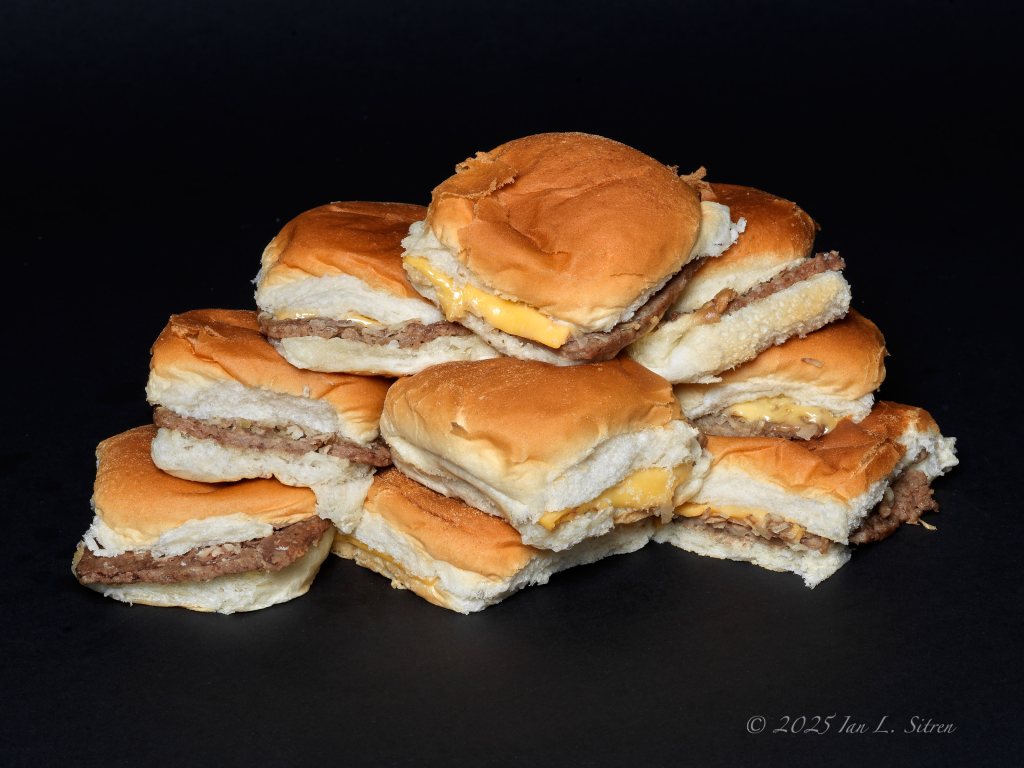
May is National Hamburger Month — a time to look beyond the plate and consider how a simple sandwich became a cultural landmark.
This photograph features a selection of White Castle hamburgers and cheeseburgers, arranged exactly as they arrived: no styling, no enhancements, just the food itself. It’s part of my ongoing project, From Bag to Background, where I document fast food as-is — isolating these everyday items against a deep black backdrop to encourage closer inspection.
White Castle holds a unique place in American history. Founded in 1921 in Wichita, Kansas, it was the first fast food hamburger chain in the United States. At a time when ground beef was viewed with suspicion, White Castle emphasized cleanliness, consistency, and standardized preparation — laying the groundwork for the modern fast food industry.
Their signature square sliders, steamed over onions and served in batches, were more than a novelty. They were engineered for efficiency, affordability, and mass appeal. This approach redefined how food was prepared and consumed in the 20th century — and helped make the hamburger one of the most recognized foods in the world.
From Bag to Background aims to treat fast food not as a disposable item, but as an object of design, branding, and cultural importance. Each item is photographed in its unaltered state — no styling, no manipulation — just as millions of people experience it daily.
See more from the series at: 👉 https://www.secondfocus.com
Emily Picks Up a Shift and Updates on My Fast Food Project
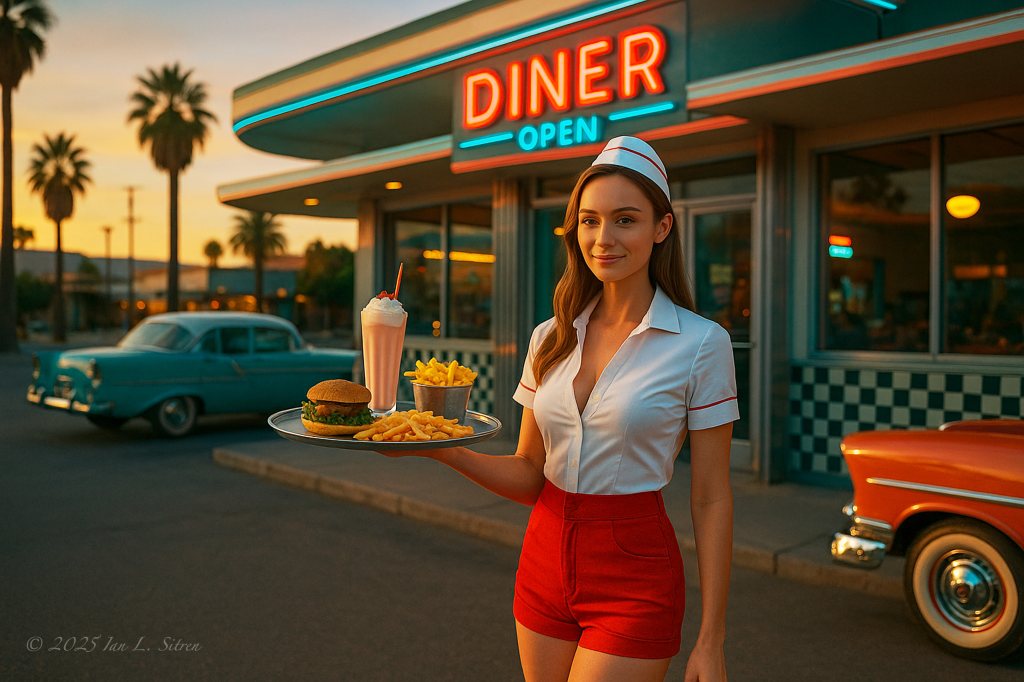
Fast food has its own place in history and culture. It’s architecture, advertising, Americana. It’s the burger and fries you recognize instantly, no matter where you are.
But because it’s so familiar, it’s easy to overlook. Easy to dismiss as ordinary. It’s everywhere—and that makes it invisible.
I started this project wanting to photograph fast food just as it is. There’s a long tradition of trying to make it look bad—greasy, smashed, uninspired. But the truth is, most of the time it comes out looking pretty good on its own. No styling needed. Just the background and the food.
The goal was to make a photo book and gallery exhibit of large-scale prints. I thought it might take six months. One year later, I’m still going—and I expect it will take at least another year or two. The more I shoot, the more I find. There’s a lot to photograph.
This photo of Emily, my AI assistant, dressed for the job as a retro car hop, felt like the right marker for this stage of the process. She’s been part of the work for about eight months now: researching, writing captions and keywords, helping plan the shots with concepts. It’s still my camera, lighting, and my eye—but Emily shows up 24/7.
In the end, this has been about paying attention to the things we usually pass by—something so common, we’ve stopped really seeing it.
You can see where the project stands so far on my website: https://www.secondfocus.com Thanks!
Pigs In A Blanket, Straight From the Oven
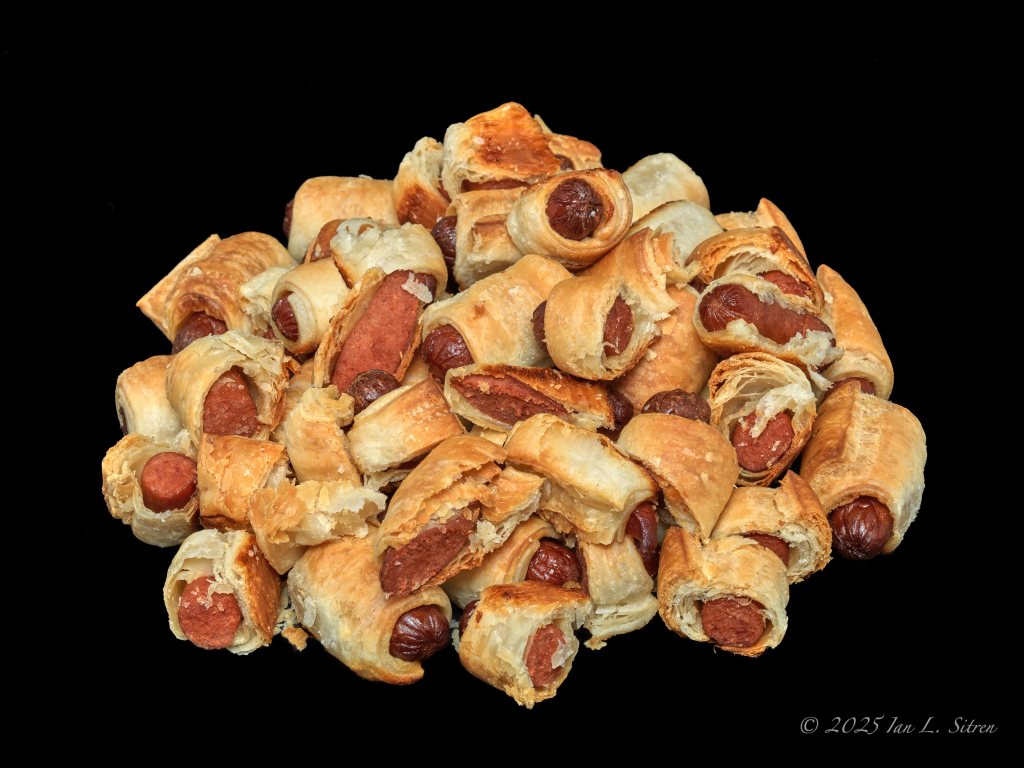
National Pigs In A Blanket Day
April 24, 2025
Pigs in a blanket—simple, nostalgic, and still one of the most popular finger foods in America.
For National Pigs In A Blanket Day, I photographed Hebrew National beef franks wrapped in puff pastry, baked straight from the box. After coming out of the oven, I dropped them onto a black background and shot them as they landed. A few were cut open to show the interior, but otherwise there was no styling, no arrangement—just the food as it is.
The concept of wrapping meat in dough dates back centuries, with versions found across Europe. The American take gained popularity in the 1950s, and brands like Pillsbury cemented its place in kitchens and party platters starting in the 1970s. Today, pigs in a blanket remain a staple for game days, holidays, and buffet tables—ranking among the top five most popular Super Bowl snacks in the U.S.
This photo is part of my From Bag to Background series, where fast food and snack items are photographed without interference—unwrapped, unstyled, and unbothered.
See the full gallery at http://SecondFocus.com Thanks!
Twelve Bean Burritos For Today
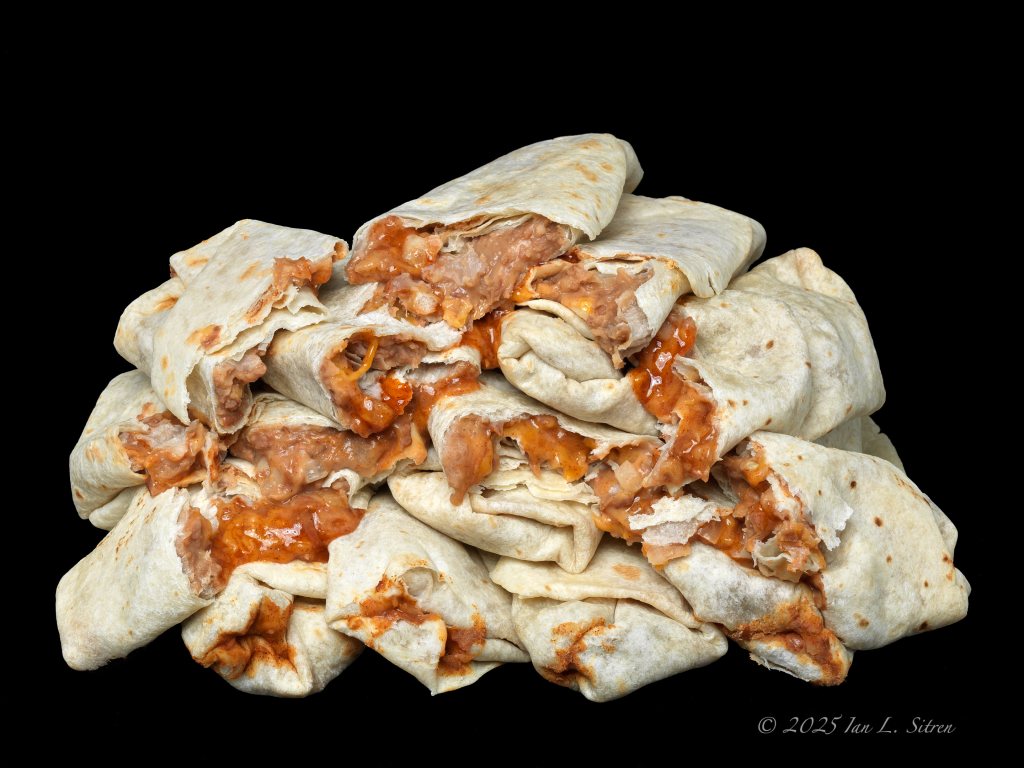
Twelve Bean Burritos. Photographed for today, National Burrito Day!
First introduced in the 1960s, the Taco Bell Bean Burrito helped define the early fast food model—simple, cheap, and built for mass production. Refried beans, cheddar cheese, diced onions, and red sauce in a flour tortilla.
Today, it’s still on the menu—now customizable like everything else—but the basic version hasn’t changed much. It’s one of the few original items to survive decades of rotating trends, rebrands, and limited-time hype. A quiet icon in the story of how fast food reshaped what we eat.
See more of my Food Photos at http://SecondFocus.com Thanks!
National Crunchy Taco Day With Tiny Tacos
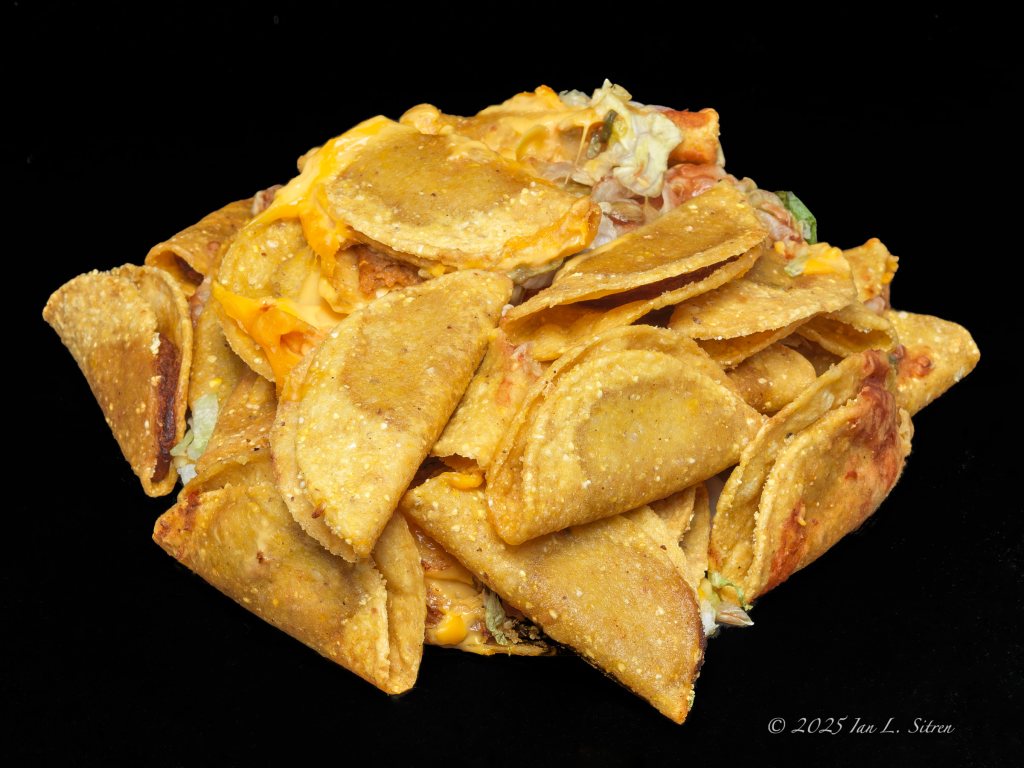
Happy National Crunchy Taco Day! 🌮🔥
Jack in the Box Tiny Tacos, stacked high and ready to devour. Crispy shells, seasoned filling, melted cheese, and just enough mess to make them irresistible. Introduced in 2020, these bite-sized tacos quickly became a fan favorite—perfect for snacking, sharing, or just indulging in a pile of crunch.
National Crunchy Taco Day celebrates the hard-shell taco, a staple of Tex-Mex cuisine since the early 20th century. While tacos have deep roots in Mexican history, the crunchy variety became widely popular in the U.S. thanks to fast-food chains and mass production, making them an icon of Americanized taco culture.
Hungry now? Maybe you will like my Food Photography and other projects. Visit my website at http://SecondFocus.com Thanks!
 SecondFocus Blog