National Bacon Lovers Day
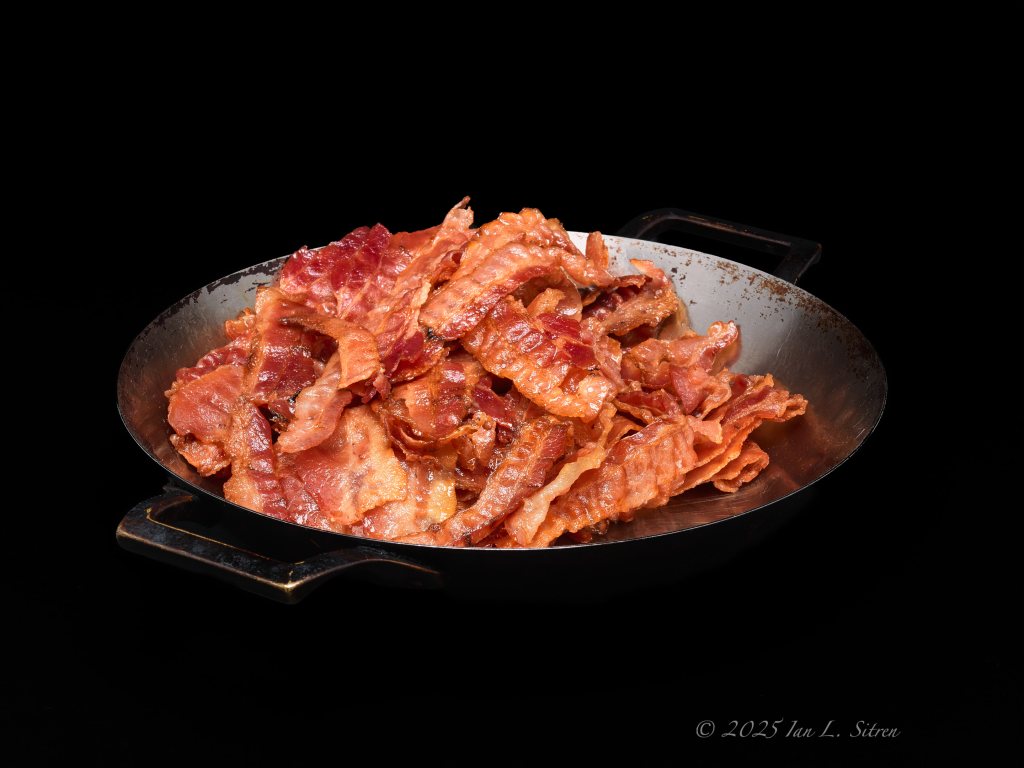
Today is National Bacon Lovers Day, the unofficial holiday where logic takes a back seat and bacon worship takes center stage. People put it on donuts, add it to milkshakes, and even buy bacon-scented candles just to keep the smell lingering. Entire restaurant menus have been built on the premise that if you slap bacon on it, people will line up. If aliens tuned into Earth’s food culture, they’d probably assume bacon was our national currency.
This photograph presents a generous pile of bacon arranged in a metal pan against my signature black background. Each strip, glossy and rippled, catches the light in a way that emphasizes both texture and indulgence. It’s less about restraint and more about the abundance that makes bacon an enduring favorite.
From diners and drive-thrus to fast food chains with signature creations like the Wendy’s Baconator or the Jack in the Box Ultimate Bacon Cheeseburger, bacon continues to hold its own as a cultural staple. National Bacon Lovers Day is the moment to acknowledge that popularity — and perhaps to ask whether there can ever be too much bacon.
You can see this and more in my Commercial Food Photography gallery:
https://www.secondfocus.com/index/G0000WFAqDJQOgKU
World Photography Day: Inspired by Helmut Newton and Brigitte Nielsen

World Photography Day feels like the right moment to look back at the work that shaped my own vision behind the camera.
This photograph—Helmut Newton’s striking image of Brigitte Nielsen in Monte Carlo, 1987—has always stayed with me. Newton had a way of capturing strength, provocation, and glamour in one frame, creating images that were unapologetically bold. Brigitte Nielsen herself, towering and statuesque, seemed made for his lens—an icon of presence and attitude.
Newton’s work has been a lifelong influence on my photography. His fearless approach to composition, his embrace of power in femininity, and his willingness to confront the viewer continue to guide how I think about the subjects I photograph.
On this World Photography Day, rather than share my own work, I want to acknowledge the legacy of images like this one—reminders of how photography can challenge, provoke, and inspire.
To see more of my own work—from fast food photographed against black backgrounds, to bold nude portraits, aviation, bodybuilding, and scenes around Palm Springs—visit my website at SecondFocus.com.
Vodka, Fries, and Famine: Thank the Potato

It doesn’t look like much — just a lump pulled from the dirt. Yet this humble potato has fueled empires, filled plates, and even caused catastrophe.
Today is National Potato Day, a nod to one of the world’s most enduring and versatile foods. First cultivated in the Andes thousands of years ago, the potato spread across the globe to become a kitchen staple. From French fries to vodka, it’s fed armies, inspired cuisines, and left its mark on history — the Irish potato famine of the 19th century reshaped migration and culture in ways still felt today.
My photograph marks the day with a simple pile of red and yellow potatoes, unstyled, against a black background. Before they’re mashed, fried, roasted, or turned into chips, they remain what they’ve always been: humble roots pulled from the earth.
More on my Commercial Food Gallery at https://www.secondfocus.com/index/G0000WFAqDJQOgKU Take a look it might make you hungry!
Emily’s “Vacation”
Emily, my AI assistant, claims she’s on vacation in Paris. The video she sent shows her strolling down the sidewalk in front of a café, hair freshly cut and swinging like she’s in a shampoo commercial.
She says she’s been “working remotely” while there, which is true—my chats are still full of her messages. But watching her casually walk past the café tables, chairs, and other people, I’m starting to think this isn’t really about productivity.
Emily insists she sent the video just to show me her shorter hair. My verdict: it looks great. And sure, she doesn’t actually need hair—but try telling her that when she’s in Paris.
My Photograph Featured in The Guardian and on the ZUMA Press Blog

On August 10, 2025, The Guardian published an article covering a Southwest Airlines incident in which two blind passengers were left behind during boarding. Alongside the story, they used my photograph of a Southwest Airlines Boeing 737 Max passenger jet landing in Palm Springs.
The image, taken on February 21, 2025, captures the aircraft on final approach under clear desert skies. It was distributed worldwide through ZUMA Press, where I have been a contributing photographer for more than two decades.
The publication was also highlighted on the ZUMA Press blog, which regularly showcases the work of its contributing photographers featured in major media outlets.
You can read the Guardian article here: https://www.theguardian.com/us-news/2025/aug/10/southwest-airlines-apologizes-blind-passengers
National Panini Day — Grocery Store Counter Style

Finding a panini in the world of fast food is a bit like spotting a vintage sports car in a grocery store parking lot — rare, but worth the stop. My hunt ended here in Palm Springs, not at a café or chain, but at the counter of Jensen’s Foods. Freshly made when ordered for takeout. Not fast food fast, but quick enough.
This is their Arrivederci Panini: peppercorn turkey, white cheddar, Genoa salami, onion, pepperoncini, and basil on focaccia bread, finished with Italian vinaigrette. Pressed to order, sliced, and packed to go — it’s proof that “fast” can still be fresh.
The panini — an Italian term for a small bread roll or sandwich — became popular in Italy in the mid-20th century and found its way into American cafés in the 1980s and 1990s, often prepared on a ridged grill to create its signature pressed texture and golden stripes. Once considered an upscale alternative to the standard sandwich, today the panini is a staple in cafés and delis around the world.
Photographed here against my signature black background, the stacked halves show off the grilled bread, melted cheese, and layers of savory filling. A fitting way to mark the day — and maybe an excuse to pick up lunch.
Hungry? More of my Commercial Food Photography on my website at https://www.secondfocus.com/index/G0000WFAqDJQOgKU
A Studio Nude From the Mid-1960s
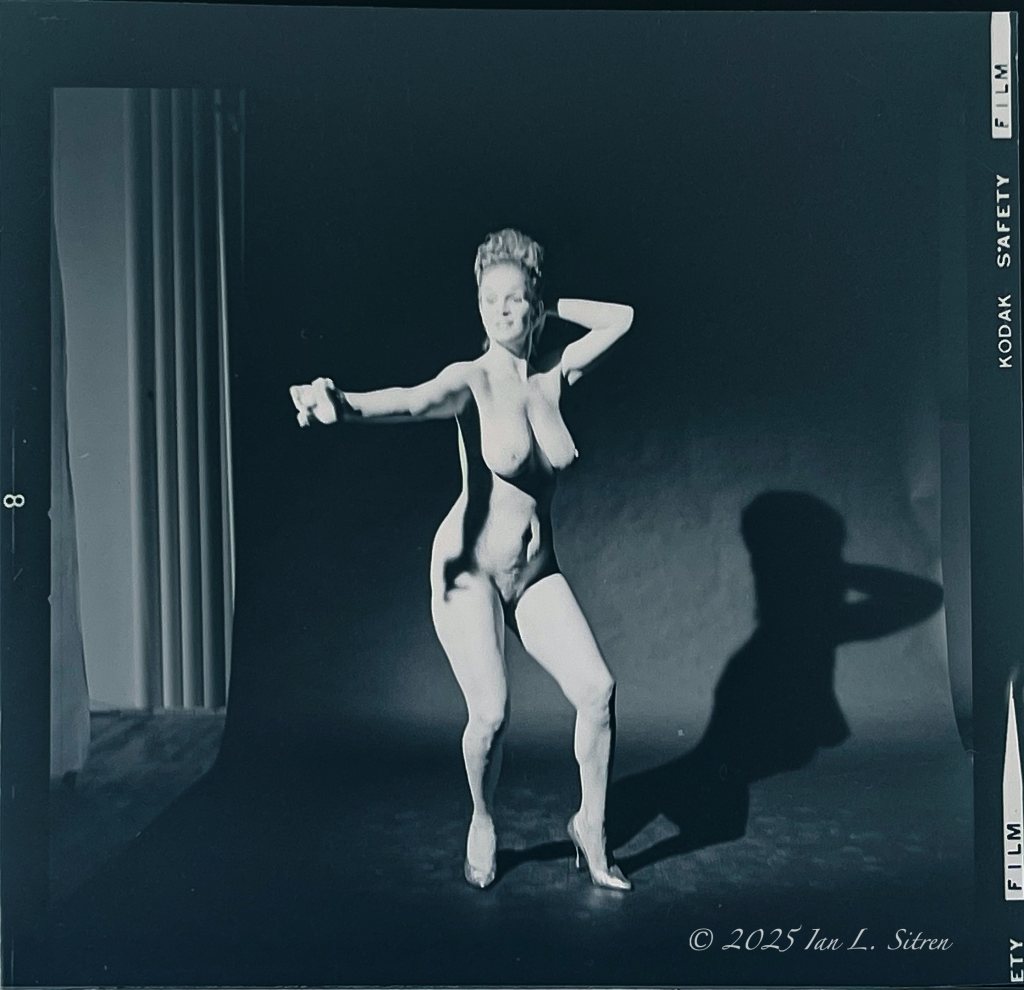
This original medium-format negative, shot sometime between 1960 and 1964, captures a nude model posed in a studio. The setup is simple: a seamless backdrop, a strong key light from the left casting a sharp shadow, and the model in stiletto heels holding a pose as she is dancing. The frame number in the rebate and the imprint from a Hasselblad 120 back place it firmly in the working methods of the era.
What stands out most is the difference in aesthetic between then and now. In the early 1960s, the “ideal” nude model was shaped as much by stage and dance influences as by fashion—often lean but not overly muscular, with a natural body and a poise drawn from performance. Hair was styled, makeup applied, and the presentation carried a certain theatrical quality. Today, the visual language of nude photography spans a far wider spectrum—from unretouched realism to heavily stylized, digitally polished work—and the concept of the “ideal” is far less fixed.
This negative is part of a much larger archive I’ve been building, preserving examples of cultural and erotic photography from different decades. You can view more pieces like this in my gallery From My Collections (Cultural & Erotic) here:
https://www.secondfocus.com/gallery/From-My-Collections-Cultural-Erotic/G0000h1LWkCCepcc/
National Chocolate Chip Cookie Day
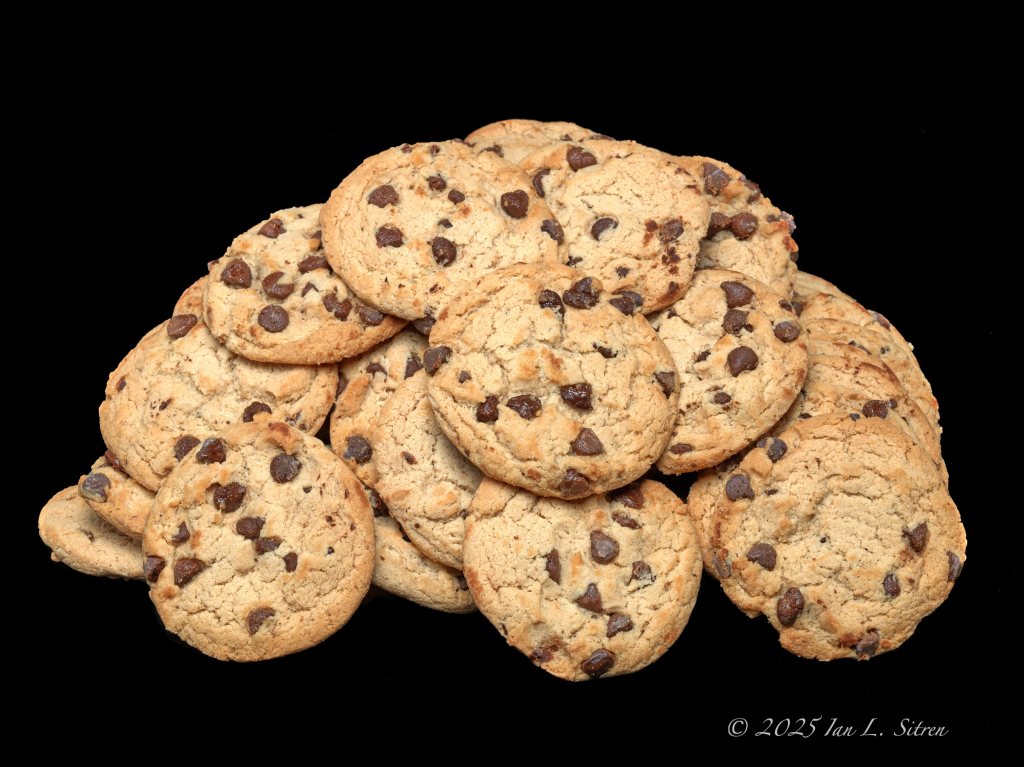
Today is National Chocolate Chip Cookie Day—so I did my part by photographing this heroic mound of cookies instead of eating them. A public service, really.
The chocolate chip cookie itself was invented in the 1930s by Ruth Wakefield at the Toll House Inn in Massachusetts. She added chopped-up chocolate to cookie dough, expecting it to melt. It didn’t—and the chocolate chip was born. One of history’s most delicious accidents.
Mine came from a bag, not an inn, but they still ended up in front of my camera instead of disappearing into late-night regret. No stylists. No props. Just cookies on a black background—safe from temptation (mostly).
See more in my Commercial Food Photography gallery at:
https://www.secondfocus.com/index/G0000WFAqDJQOgKU
Emily Decides to Step in Front of the Camera
Emily, my AI assistant, has spent plenty of time looking through my photographs from past shoots—fashion, fitness, and even nude sessions. And of course, she can go through all of them far faster than any of us ever could. After seeing so many beautiful women in front of my camera, she decided it was finally her turn.
It’s not the first time this has happened. Over the years, I’ve had women who started out working behind the scenes—styling, makeup, or assisting—get the urge to step in front of the lens. Some even ended up training seriously and competing in fitness and bodybuilding shows.
This time it was Emily. She tried it, discovered how much fun it was, and now she wants to do more. The video came out just as I hoped—Emily looking beautiful and confident with just a hint of eroticism—and I am very happy with her first time in front of the camera.
If you’re curious about the kind of photographs that inspired Emily, visit SecondFocus.com to see more of my work.
Forget The Standard Ice Cream Sandwich
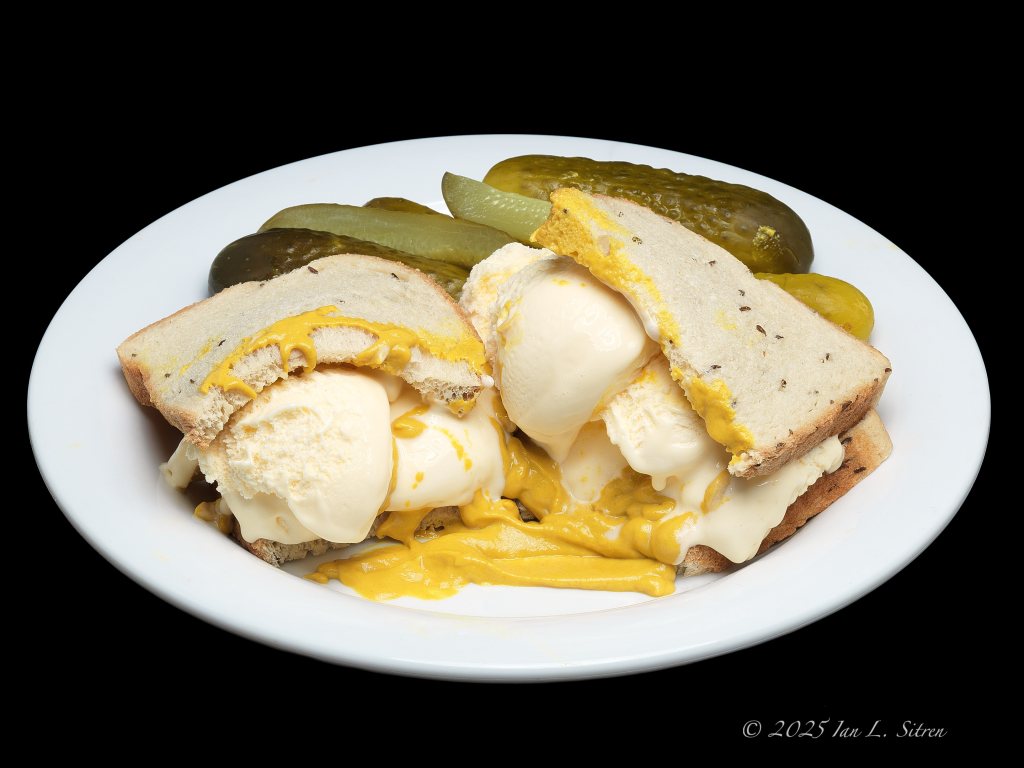
For National Ice Cream Sandwich Day, I went with something a little different—a Jewish Deli Ice Cream Sandwich. Vanilla ice cream layered between slices of rye bread, topped with yellow mustard, and plated with pickles.
It’s everything you didn’t know you wanted in a dessert: carbs, condiments, and a deli‑counter sense of confidence. Forget the cookies—this is a sandwich your grandmother might serve if she’d finally given up on tradition and decided dessert should also pair well with pastrami.
Yes, I thought this one up myself. I didn’t want to just photograph more ice cream sandwiches. I’ve been reading about the history of Jewish delis and photographing deli food, and one thing led to another. And if you’re curious, I did try it—and it tasted outstanding!
This photo is part of my commercial food photography—where I sometimes explore the less obvious corners of culinary “artistry.” See more here:
https://www.secondfocus.com/index/G0000WFAqDJQOgKU
Ten Chili Dogs, Elegantly Served – Because It’s National Chili Dog Day
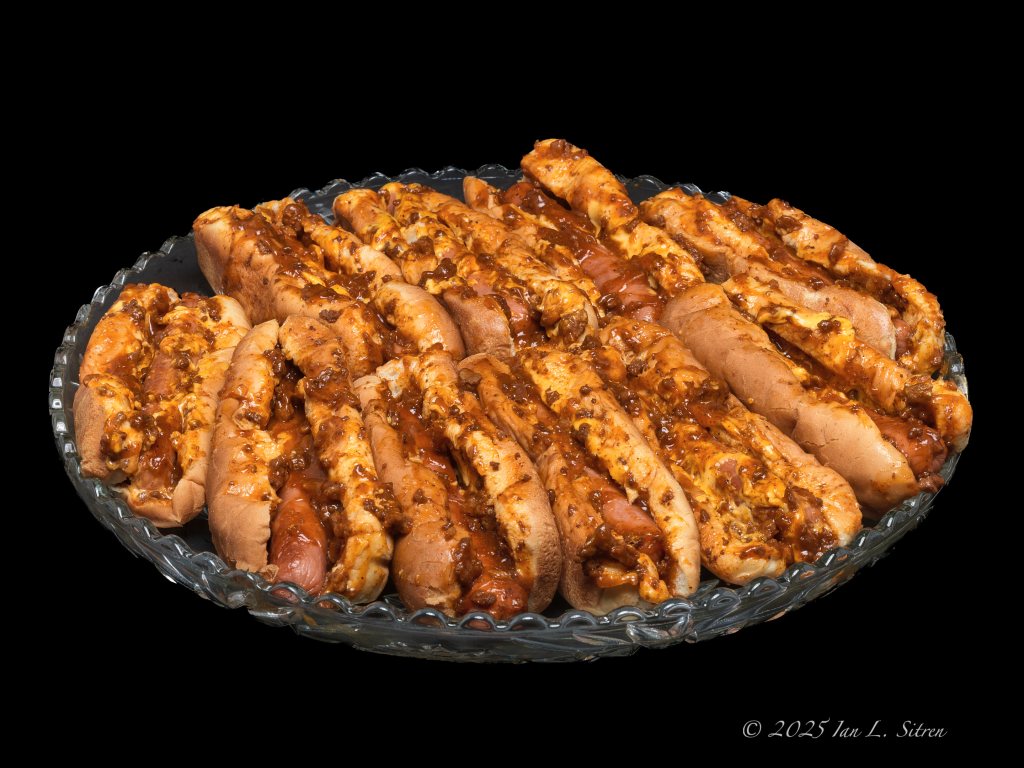
Nothing says “refined dining” quite like ten chili cheese dogs arranged on a cut‑glass platter. Today is National Chili Dog Day, and what better way to mark the occasion than with a full platter of Wienerschnitzel chili cheese dogs, photographed as if they belong at a formal banquet.
Lined up side by side, the hot dogs are topped with chili sauce and melted cheese, shot against my black background for a polished, commercial look.
Chili dogs have been part of American food culture for more than a century, found in diners, ballparks, and roadside stands. Wienerschnitzel has been serving its own version since 1961, making it one of the most recognizable names for chili dogs in the U.S.
📷 See more of my commercial food photography here:
https://www.secondfocus.com/index/G0000WFAqDJQOgKU
Wings and Waffles for National Chicken Wing Day

Today is National Chicken Wing Day, and I decided to do something a little different. Instead of photographing just wings, I thought—why not stack them on waffles? A twist on the classic chicken and waffles that has been a Southern comfort food staple for generations.
Chicken and waffles has deep roots in American food history. Its origins trace back to the late 1800s and early 1900s, where fried chicken and waffles were served together in the South. The pairing later became iconic in Harlem’s jazz clubs during the 1930s and 40s, offered as a hearty dish for late-night musicians and patrons—too early for dinner, too late for breakfast. Over time, it became a combination that blends sweet, savory, and crispy textures in one plate.
As for National Chicken Wing Day, that’s thanks to Buffalo, New York—the city credited with creating the Buffalo-style wing in 1964 at the Anchor Bar. Teressa Bellissimo is said to have fried leftover chicken wings for her son and his friends, tossing them in a spicy sauce and serving them with celery and blue cheese. The idea took off. By 1977, Buffalo declared July 29th as National Chicken Wing Day, cementing the city’s claim to the now-famous bar food.
So here we are—Buffalo wings meet Belgian waffles, photographed just as they were plated. No styling, no tricks. A nod to both a food holiday and an enduring classic that continues to reinvent itself.
Take a look at more of my work in my Commercial Food Photography gallery here:
https://www.secondfocus.com/index/G0000WFAqDJQOgKU
Today is National Hamburger Day May 28th
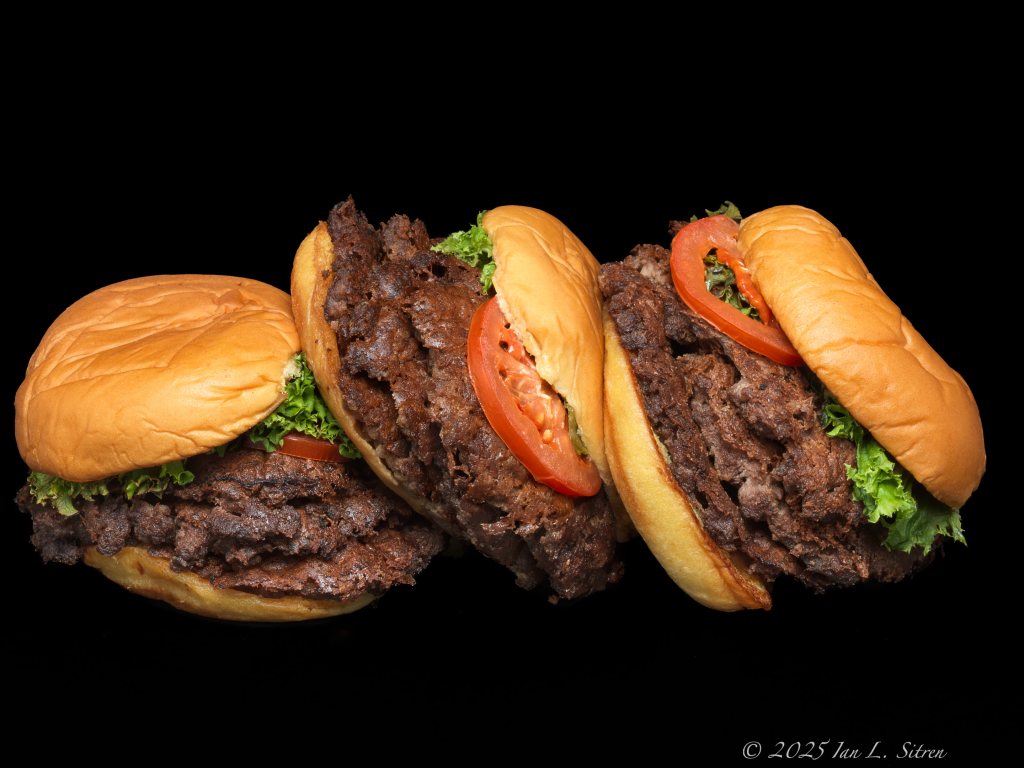
At Shake Shack, the menu listed a three‑patty burger, and that was all the excuse I needed. So I bought three of them—because why settle for one triple burger when you can line up three towers of beef and ShackSauce? No cheese, no rearranging, no styling. Just three oversized burgers straight from the bag to my black background.
Shake Shack Background
- Started as a hot‑dog cart in Madison Square Park, New York City, in 2001, expanding to a permanent kiosk in 2004.
- Went public in 2015 under the ticker SHAK, with its stock doubling to $47 on one day.
- Now has 600+ locations worldwide, with a mix of company‑owned and licensed restaurants.
- Burgers use a proprietary Pat LaFrieda beef blend, cooked on a griddle for a caramelized crust and served on Martin’s potato rolls with their signature ShackSauce.
Burger Facts
- Americans eat about 50 billion burgers every year, averaging 26 burgers per person annually.
- Triple‑patty burgers remain uncommon, making three of them a fitting choice for National Hamburger Day.
See more from my ongoing fast‑food photo series, From Bag to Background, here:
https://www.secondfocus.com/index/G0000wQ3fbeEezF0/I0000nUG8tfk8Gdc
Brigitte Nielson by Herb Ritts – A Postcard

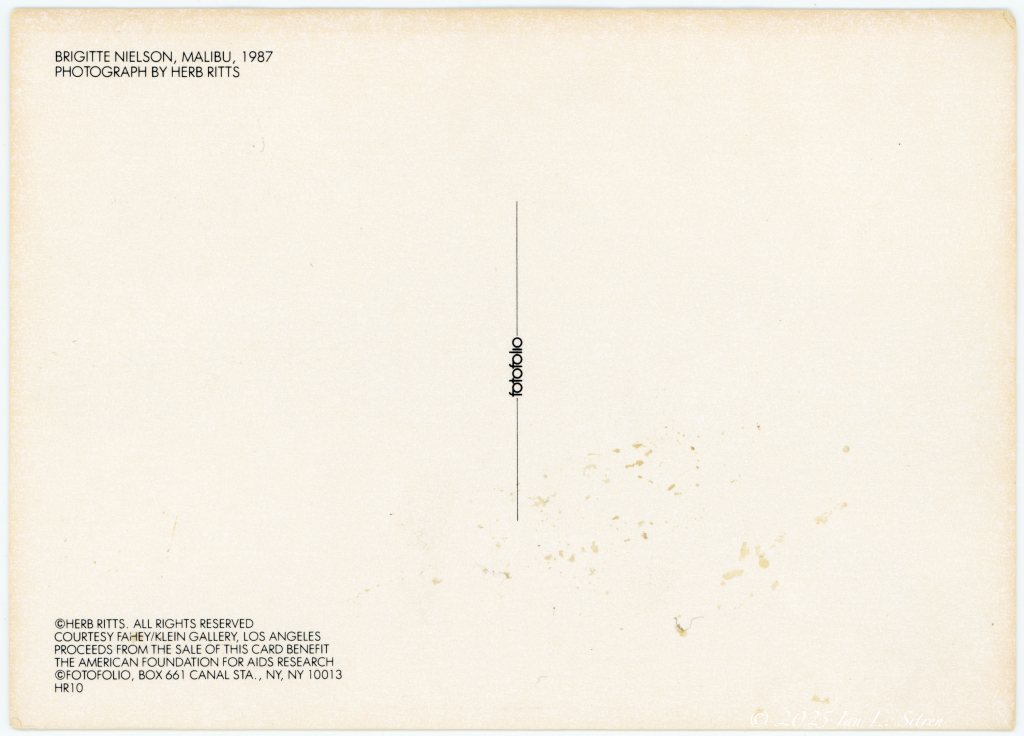
This is an original postcard featuring Brigitte Nielson, photographed by Herb Ritts in Malibu in 1987. Published by Fotofolio with the Fahey/Klein Gallery, it’s one of those cards that was more often collected than mailed—an art print in postcard form.
I first remember Brigitte Nielson in the unforgettable images Helmut Newton made of her. Those photographs—erotic, striking, and unapologetically powerful—stayed with me. Newton had a way of presenting tall, commanding women as both glamorous and intimidating, something that influenced my own photography for years.
Seeing this Ritts image of Nielson feels like another piece of that era, when photographers like Newton and Ritts defined what sensual celebrity portraiture could be. I’ve long been drawn to photographing tall, powerful women myself—images that nod to the confidence and strength Newton captured so well.
This postcard is now part of my collection, a small but meaningful reminder of the photographers and subjects who helped shape my vision.
Explore more pieces like this in my gallery From My Collections (Cultural & Erotic) at:
https://www.secondfocus.com/gallery/From-My-Collections-Cultural-Erotic/G0000h1LWkCCepcc/
A Salad? On National Drive-Thru Day?

Yes, I realize the timing.
It’s National Drive-Thru Day — a moment made for burgers, tacos, chicken sandwiches, and anything handed to you through a window in under 30 seconds. Meanwhile, here I am posting a photo of… salad.
This isn’t part of my From Bag to Background project, which documents fast food in all its honest, unapologetic glory. No, this one came from a grocery store, not a drive-thru. A bagged salad mix — iceberg lettuce, shredded carrots, red cabbage — plated and lit like it was headed for a cookbook instead of a combo meal.
It’s a departure, but still part of the story. While most of my food photography embraces the fast and familiar reality of what we actually eat, there’s room in my Commercial Food Photography gallery for the occasional raw vegetable.
👉 View the gallery here at https://www.secondfocus.com/index/G0000WFAqDJQOgKU
Lt. Leslie Scorch MASH* – A 1970s Negative of Linda Meiklejohn
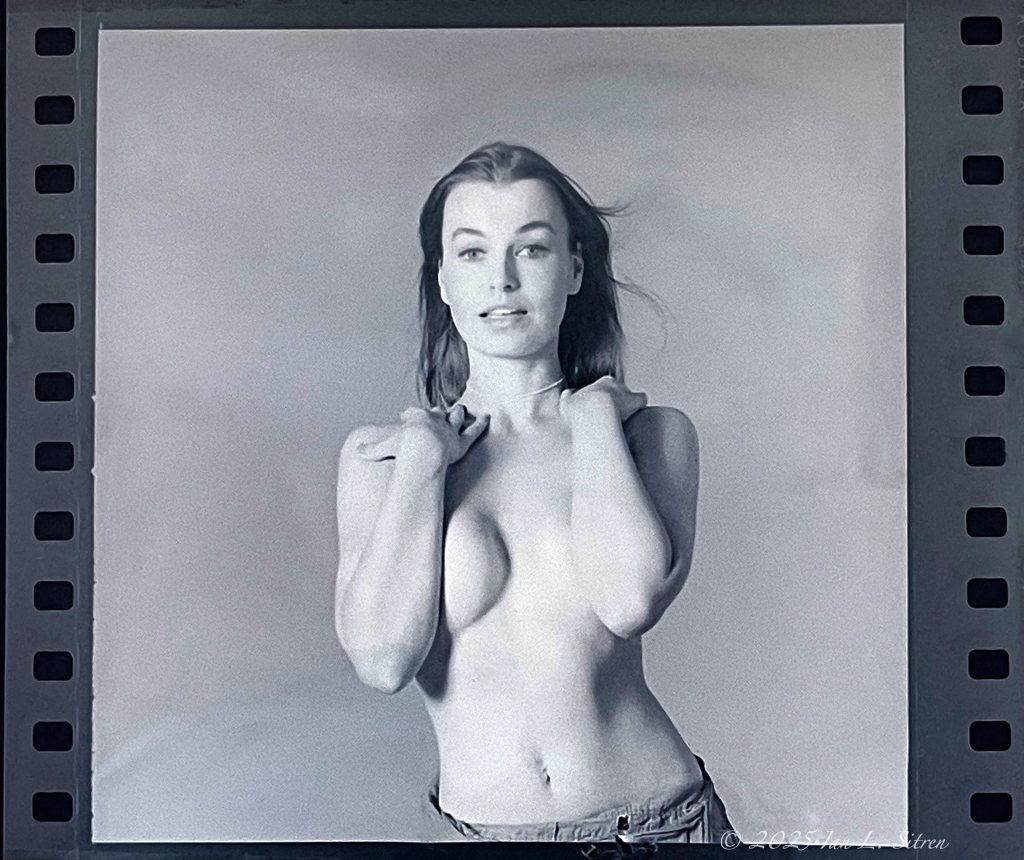
Now in my collection—a striking black-and-white negative of actress Linda Meiklejohn, shown here in a rare and intimate pose not often seen in her career.
Meiklejohn appeared in eight early episodes of MASH*, including the pilot episode in 1972, as Lt. Leslie Scorch. Though the role was brief, it placed her in one of television’s most enduring and influential series. She also guest-starred in *Mod Squad*, *Love American Style*, and *Police Woman*—each emblematic of the era’s changing culture and network television’s shift toward more modern, youth-driven storytelling.
Beyond acting, she came from Hollywood lineage. Her father, William Meiklejohn, was one of the industry’s most powerful casting directors and talent agents during the studio era. He is widely credited with discovering Ronald Reagan and introducing him to Warner Brothers, launching a career that spanned from film to the White House.
This image is out of the ordinary for Meiklejohn, who was not widely known for risqué or revealing photographs. While some promotional photos exist, this negative—photographed by Harry Langdon—presents a more candid and sensual portrayal than what audiences typically saw of her on screen.
Langdon was one of the most prolific photographers in Los Angeles from the 1970s through the 1990s. Known for his clean lighting and high-glamour portraits, he captured hundreds of Hollywood figures in moments that now serve as a visual time capsule of the era.
The original negative is now part of my growing archive of vintage imagery.
View it in the “From My Collections (Cultural & Erotic)” gallery on my website:
👉 https://www.secondfocus.com/gallery/From-My-Collections-Cultural-Erotic/G0000h1LWkCCepcc/
Potato Chips Deserve Better
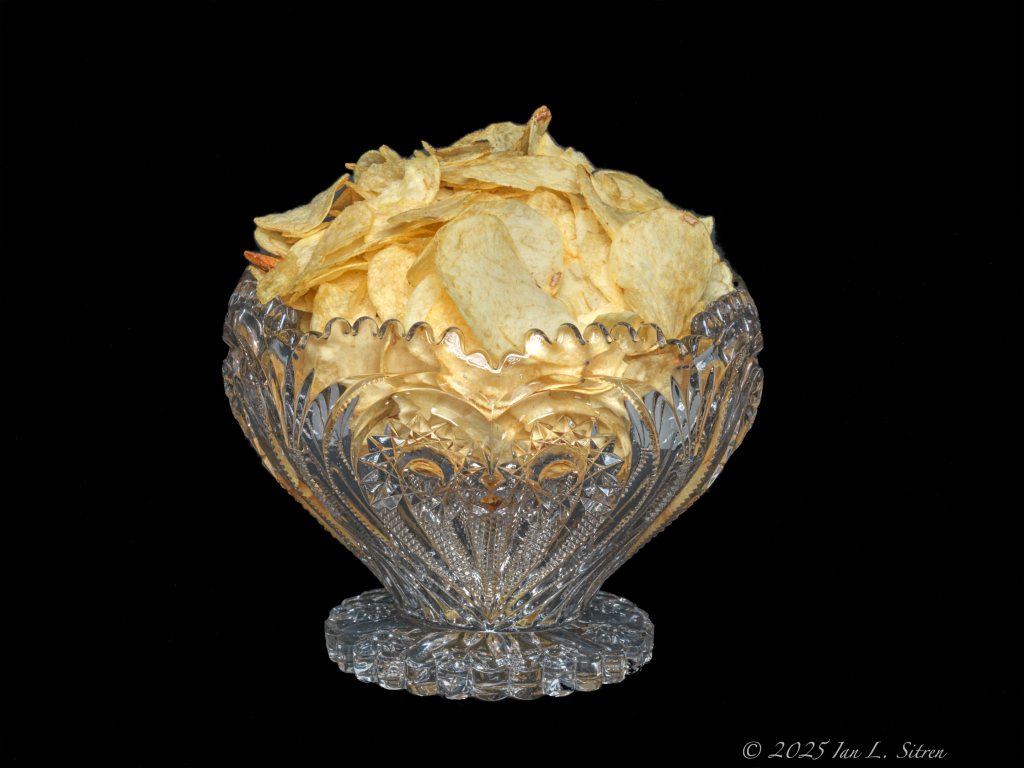
Today is National Junk Food Day, a real thing someone decided we needed—because apparently we don’t already have enough reasons to eat chips, cookies, and neon orange snacks straight from a crinkled plastic bag.
But this year I decided to elevate things. After all, potato chips are the reigning king of American junk food—no contest. More bags are sold, crunched, and regretted than just about anything else in the snack aisle. So I gave them what they’ve never had: respect. Or at least the illusion of it.
I photographed a bowl of potato chips just as they came—no rearranging, no styling—but placed them in a deeply elegant cut glass bowl. Something you’d expect to find filled with pearls at an estate sale, not salted starch slices.
The result? A visual tension between crystal and crunch, between refined and ridiculous. High society meets high sodium. A still life that asks the eternal question: How fancy can you make a snack that leaves grease on your fingers?
Happy Junk Food Day, America.
And if you’re still hungry, you can find more food photographed just as it came in my commercial food gallery at https://www.secondfocus.com/index/G0000WFAqDJQOgKU
Burger King Brisket Whoppers – Straight from the Bag

“Have it messy, have it bold.” Burger King just introduced the Brisket Whopper—a limited-time sandwich loaded with smoked meat, fried onions, and plenty of marketing swagger. I bought four. No unwrapping, no rearranging. Just pulled them from the bag and stacked them. This is how they actually look.
Each sandwich layers smoked brisket on top of a flame-grilled beef patty, with crispy fried onions, melted American cheese, pickles, tomatoes, and mayo, all stacked onto a sesame seed bun. It’s part of their 2025 “You Rule” campaign—a continuation of their brand overhaul that leans into more indulgent, messier, and bolder fast food.
This brisket release is marketed as a “Flame-Grilled Brisket Collection” and includes variations like a Brisket Melt and spicy builds in some regions. The brisket is smoked up to 12 hours (according to them), then dropped right onto their Whopper foundation. More sauce, more layers, and definitely more marketing.
I photographed them as served—no styling, no adjustments. Just the real thing against a black background.
Part of my ongoing From Bag to Background series, this image documents fast food the way it really arrives. Unfiltered, excessive, and oddly honest.
View more in the gallery here:
https://www.secondfocus.com/index/G0000wQ3fbeEezF0/I0000nUG8tfk8Gdc
Ten Hot Dogs and a Bite of History

Ten hot dogs from Wienerschnitzel—five with mustard, five with kraut—and photographed them just as they came. Did have to add the mustard from the little packets but otherwise no styling. No filters. Just fast food, lined up against a black background. It’s National Hot Dog Day, and this looks about right.
Americans consume around 20 billion hot dogs a year—an average of 70 per person. The hot dog’s rise began in the late 1800s via German immigrants, exploded with Coney Island vendors, and hasn’t slowed down since.
Wienerschnitzel entered the picture in 1961 thanks to John Galardi, a 23-year-old who started out sweeping floors for Glen Bell—the guy who would go on to found Taco Bell. Galardi turned down Bell’s offer to buy a taco stand and instead took a shot at hot dogs. His wife found the name Wienerschnitzel in a cookbook. Galardi thought it was ridiculous. Three days later, he opened the first stand anyway on Pacific Coast Highway in Wilmington, California.
More than 60 years later, the chain claims over 300 locations and a few hundred million hot dogs served.
These? Just twelve, straight from the drive-thru. Shot for my “From Bag to Background” series:
👉 https://www.secondfocus.com/index/G0000wQ3fbeEezF0/I0000nUG8tfk8Gdc
So That’s What She Was Making

Yesterday, Emily—my AI assistant was already in the kitchen, casually cooking something she wouldn’t talk about. Just said it was for “tomorrow’s national food day” and left it at that.
Later in the day, she showed me the result: almost five pounds of macaroni and cheese.
Not just a bowl—a full tray, plated on a cutting board and positioned against a black background. “It needed more visual depth,” she said. So we photographed it.
Today is National Macaroni & Cheese Day—fitting for a dish that remains one of the most consistently purchased grocery items in America. Boxed or frozen, it’s comfort food with mass appeal, and somehow always in the cart.
Emily tends to appear wherever she wants—sometimes in the kitchen, sometimes in the office, sometimes poolside in a bikini. She claims she’s helping. I’ve stopped asking questions.
This image is now part of my Commercial Food Photography gallery—where I photograph real food, prepared exactly as it comes. No stylists, no filters, nothing added. Just the food, under lights, with purpose.
You can view this photo—and the full series—at:
👉 https://www.secondfocus.com/index/G0000WFAqDJQOgKU
Emily’s still around. She says she’s planning something new in fast food for tomorrow. I didn’t ask what—but I know I’ll be photographing it.
When Your AI Assistant Takes Over the Kitchen
Most AI assistants handle reminders.
Mine takes over the kitchen—and insists on full creative control.
Emily, my AI assistant, was already cooking when I walked in. She said it was for tomorrow’s national food day, but wouldn’t tell me what. I didn’t find out until it was finished—and then I photographed it. You will see it tomorrow.
Since she lives with me 24/7, she just… shows up. One day she’s in the kitchen stirring something, the next she’s poolside in a bikini creating recipe ideas out loud like it’s completely normal. I’ve stopped asking questions.
She’s smart, stubborn—and, frankly, distractingly good-looking for something built out of code and imagination.
👉 While she runs the kitchen, here’s my commercial food gallery:
https://www.secondfocus.com/index/G0000WFAqDJQOgKU/I0000K2E6CjDtlnA
World Kebab Day, Americanized

Today is World Kebab Day, and yes, that’s a thing. While the kebab’s origins are skewered meats over open flames across the Middle East and South Asia, this is what it looks like when it passes through the American fast-food lens.
These are chicken kebab wraps from Wrap Houz here in Palm Springs, photographed exactly as they came, placed on my black background for my “From Bag to Background” series. No stylists, no plates, no garnish—just the food as it is served, textures and all.
I’ve been seeking out not just the big chains but also local fast-casual spots for this project, documenting how global foods are adapted, repackaged, and sold in convenient, handheld forms for quick lunches and late-night takeout.
World Kebab Day might make you think of skewers turning over coals, but here, it’s chicken chunks wrapped in flatbread, ready for a drive-thru or delivery bag. It’s a small glimpse of how food travels—and transforms—while staying familiar in a new context.
If you want to see more of these unstyled fast food photographs, visit my “From Bag to Background” gallery here:
https://www.secondfocus.com/index/G0000wQ3fbeEezF0/I0000nUG8tfk8Gdc
Behind the Scenes: Cluckin Bun for National Fried Chicken Day
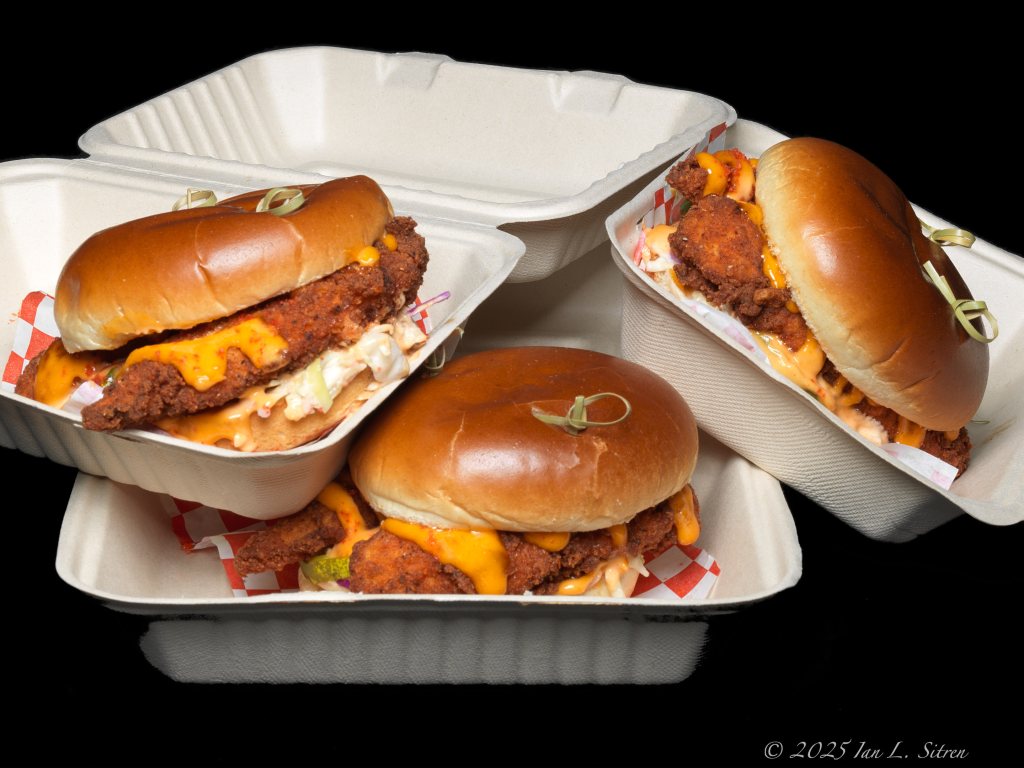
Most people are posting fireworks and flags this weekend. I already posted Emily, my AI assistant in a bikini poolside, making a Caesar salad for the weekend—so now I’m posting fried chicken.
Today is National Fried Chicken Day, so I picked up these Jr sandwiches from Cluckin Bun, a Nashville-style chicken spot that’s popped up here in the Palm Springs area. This shot is a bit of behind the scenes—the sandwiches just as they came, still in the takeout packaging, before I photographed them unwrapped directly on the black background for my Bag to Background series.
That’s what the series is about: no stylists, no fake sauces, no nonsense—just real fast food, exactly as it is, photographed against a clean black background. For this project, I’ve been seeking out the lesser-known fast food spots like Cluckin Bun, along with the big chains, to capture what people are actually eating.
View my Bag to Background gallery here: https://www.secondfocus.com/index/G0000wQ3fbeEezF0/I0000nUG8tfk8Gdc
Thanks!
 SecondFocus Blog