National French Fry Day | The McDonald’s Fries Debate Never Ends

Today is National French Fry Day.
McDonald’s french fries may be the closest thing fast food has to a religion. Everyone has an opinion. Some insist they were better before 1990. Others swear no one has ever matched them. Entire internet debates have been devoted to trying to duplicate them.
I wasn’t trying to solve the mystery. I was just trying to buy enough of them.
Historians may debate the rise and fall of civilizations, but ask people when McDonald’s fries tasted best and everyone suddenly becomes an expert. Mention beef tallow, vegetable oil, or the “original recipe,” and you’re likely to start an argument that lasts longer than the fries themselves.
This photograph took several large orders of McDonald’s french fries for my Food From Bag To Background project. They went straight from the bags to a black background. No props, no styling, and, despite considerable temptation, none disappeared before the photograph was finished.
You can see more food photography, motion, projects, and my Blog on my website at https://www.secondfocus.com
World Chocolate Day | Hershey’s and an American Classic
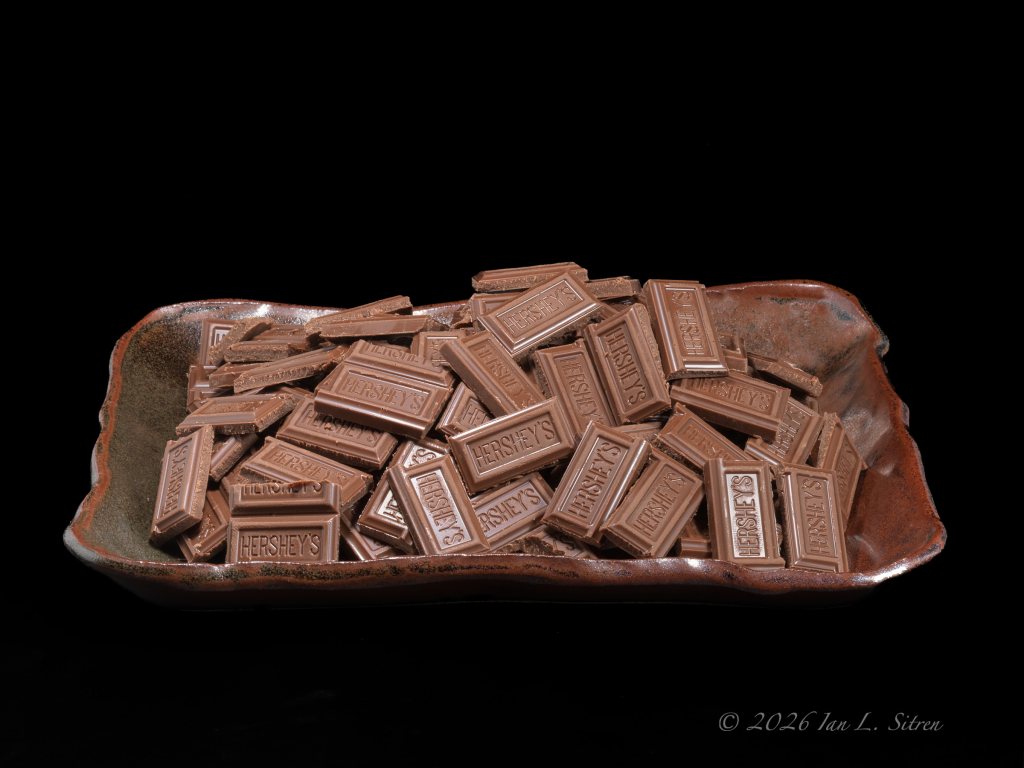
Today is World Chocolate Day.
In the United States, few chocolate brands are as familiar as Hershey’s. Founded by Milton Hershey in 1894, the company introduced the Hershey’s Milk Chocolate Bar in 1900. At a time when chocolate was still considered something of a luxury, Hershey helped make milk chocolate affordable and widely available.
The company also played an important role during World War II, producing millions of specially formulated Field Ration D Bars for U.S. troops. Those bars weren’t designed as candy. They were created to withstand heat, provide energy, and survive the harsh conditions of combat.
This photograph features dozens of Hershey’s miniature milk chocolate bars, served a little more formally than usual. I have a feeling they wouldn’t last very long if they were set out at a party next to the ever-present vegetable tray.
You can see more food photography, motion, projects, and my Blog on my website at https://www.secondfocus.com
Thank you!
National Macaroni Day | America’s Favorite Comfort Food
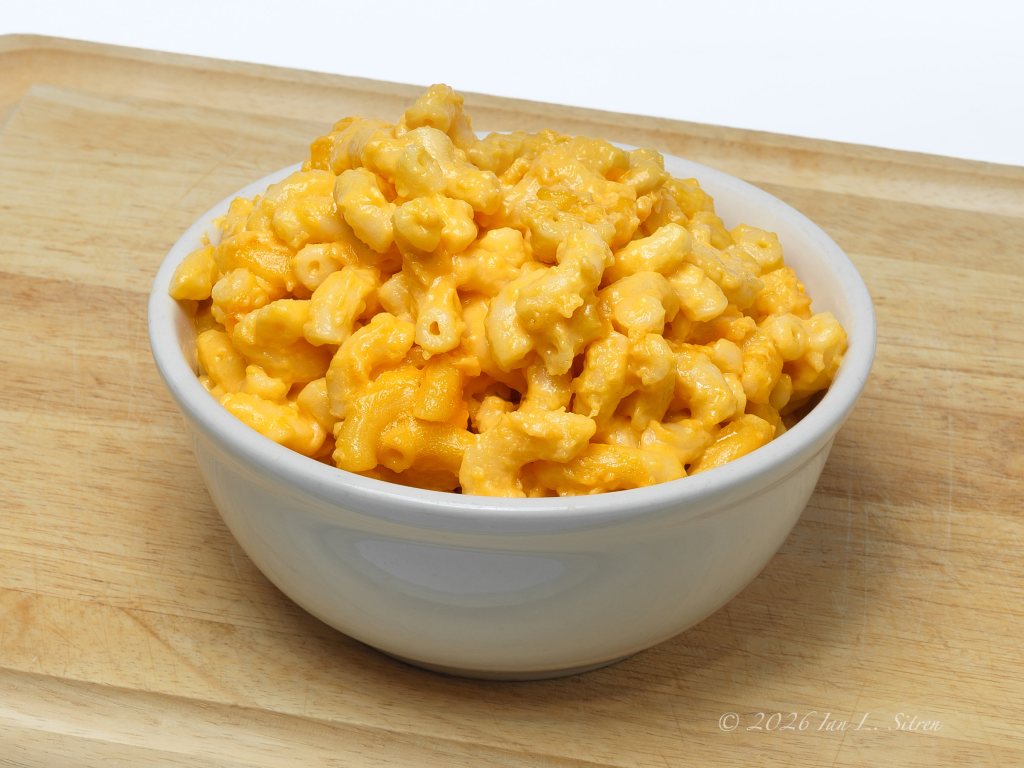
Today is National Macaroni Day and for that everyone thinks Macaroni & Cheese. We grew up on it, lived on it in college and still eat it because we love it.
In 1937, during the Great Depression, Kraft introduced its boxed Macaroni & Cheese Dinner with the promise that it could “make a meal for four in nine minutes.” At just 19 cents a box, it offered an inexpensive way to feed a family when money was scarce. The product was an immediate success, selling more than 8 million boxes in its first year. Its popularity grew even more during World War II, when rationing allowed shoppers to buy two boxes with a single ration stamp, making it an affordable substitute when meat was in short supply. By 1943, Kraft was selling 80 million boxes a year.
Of course, many restaurants also serve macaroni and cheese, including several fast food chains that offer it as a side dish. There was even a dedicated fast-casual macaroni and cheese restaurant here in Palm Springs called I Heart Mac & Cheese. Sadly, it didn’t last, although the franchise still operates a handful of locations around the country.
You can see more food photography, motion, projects, and my Blog on my website at https://www.secondfocus.com
Thank you!
National Fried Chicken Day | Kentucky Fried Chicken | Food From Bag To Background
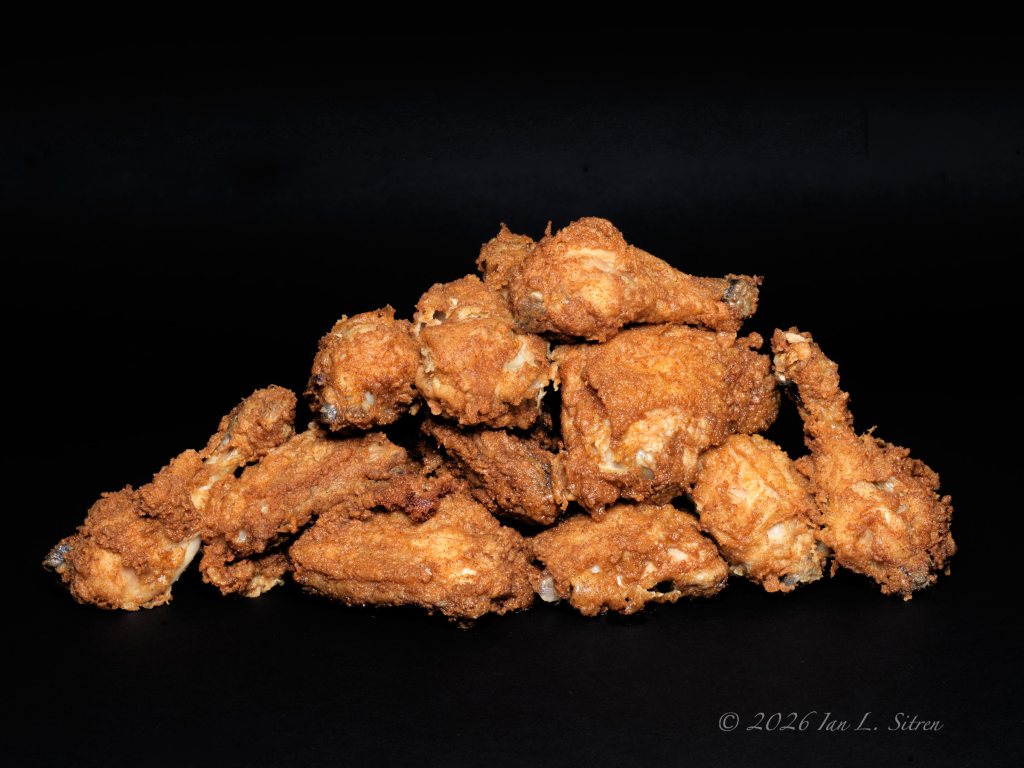
Yesterday was National Fried Chicken Day.
Fast food is the focus of my Food From Bag To Background project, so Kentucky Fried Chicken was an easy choice for today’s photograph. Every image in the project begins the same way. The food comes home from the restaurant, is removed from its packaging, and is photographed on a black background with no plates, props, or styling.
Kentucky Fried Chicken traces its roots to Colonel Harland Sanders, who began franchising his fried chicken recipe in 1952 after developing his pressure frying method. That technique reduced cooking time while helping the chicken stay moist inside and crispy outside, making it practical for restaurants to serve fried chicken much more quickly than traditional methods.
One thing I enjoy about this project is taking familiar fast food and presenting it in a way that people don’t normally see. Instead of a bucket on the dinner table, the chicken becomes the entire subject of the photograph. There is no branding competing for attention, just the shape, color, and texture of the food itself.
You can see more food photography, motion, projects, and my Blog on my website at https://www.secondfocus.com
Thank you!
National BBQ Spareribs Day with Dickey’s Barbecue Pit
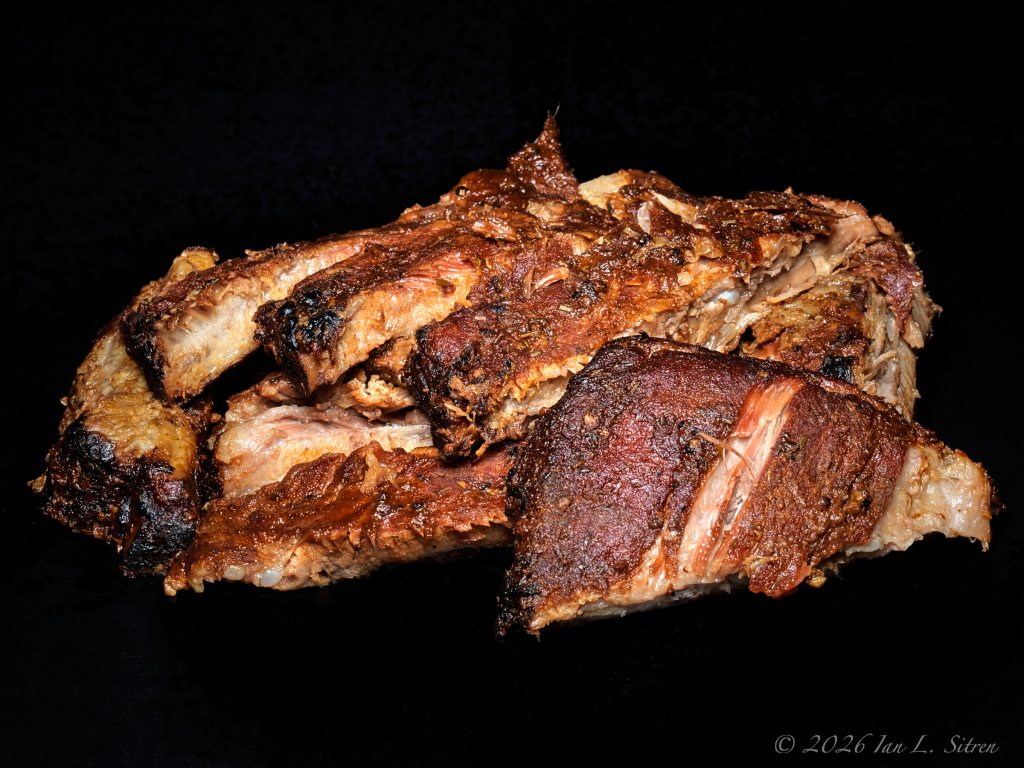
Today July 4th is also National BBQ Spareribs Day.
These are barbecue pork spareribs from Dickey’s Barbecue Pit. Dickey’s opened its first location in Dallas, Texas, in 1941. More than eighty years later, the company has grown to more than 380 locations around the world. The original location was a bar where Travis Dickey sold barbecue from a pit he built in the back. Today, Dickey’s still smokes its meats on site over hickory wood burning pits.
These ribs are one of my favorite fast food photographs. I don’t photograph barbecue very often, so National BBQ Spareribs Day seemed like a good reason to bring this image back out of the archive.
You can see more of my photography, projects, motion, and my Blog on my website at https://www.secondfocus.com
Thank You!
July 4th and the USA Celebrates… the Hot Dog!
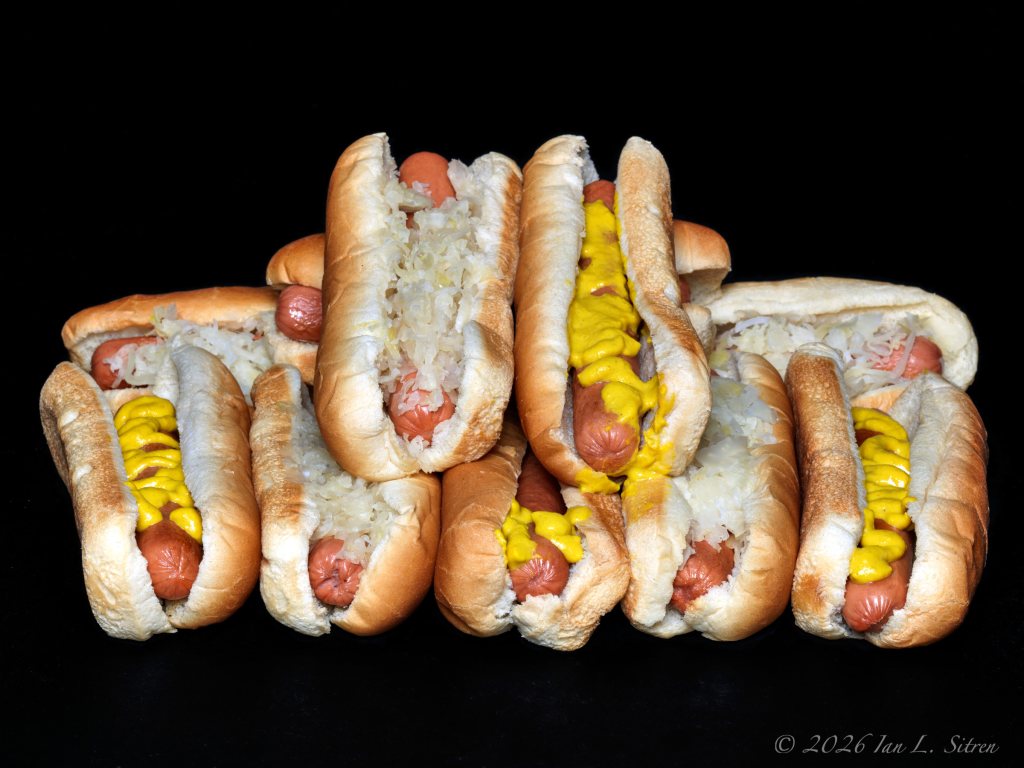
About 150 million hot dogs are eaten on July 4th alone.
For this photograph, I went with hot dogs from Wienerschnitzel, a chain that started in Southern California in 1961 with a single hot dog stand opened by John Galardi. Today, Wienerschnitzel calls itself the world’s largest hot dog chain and says it serves more than 120 million hot dogs a year.
The Wienerschnitzel basics have never changed. Mustard Dog. Kraut Dog. Chili Dog. Chili Cheese Dog. I personally remember when a Mustard Dog was 15 cents and a Kraut Dog was 18 cents. That was a long time ago, but the idea is still the same. A hot dog in a bun, a few toppings, and somehow it still fits July 4th perfectly.
You can see more of my photography, projects, motion, and my Blog on my website at https://www.secondfocus.com
Thank You!
National Ice Cream Cake Day and the Broken Down Truck That Started It All
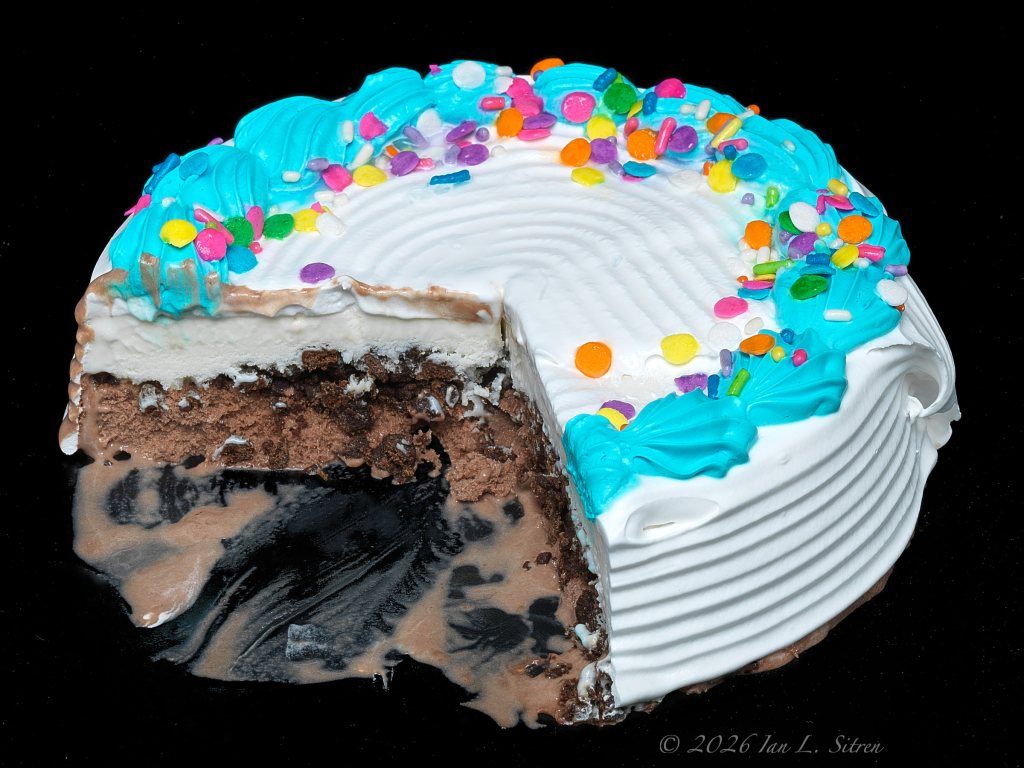
Today is National Ice Cream Cake Day.
Ice cream cakes have become a familiar sight at birthday parties and celebrations, but their history can be traced back to an unexpected event in 1934.
Tom Carvel was selling ice cream from his truck in Hartsdale, New York, when it broke down. Rather than watching his inventory melt, he began selling the softer ice cream to passing customers. They loved it. That chance roadside incident eventually led to the development of Carvel’s soft serve ice cream, the opening of his first store, and later the introduction of the Carvel ice cream cake.
For today’s photograph, I chose one of Carvel’s original round ice cream cakes. Chocolate and vanilla ice cream are separated by the company’s signature chocolate crunchies, then finished with whipped frosting and colorful sprinkles.
Sometimes the story behind the food is every bit as interesting as the food itself.
There is much more to see on my website, including my photography galleries, my blog, and my growing Motion page. Visit https://secondfocus.com
National Onion Day and the Most Common Ingredient in My Fast Food Project
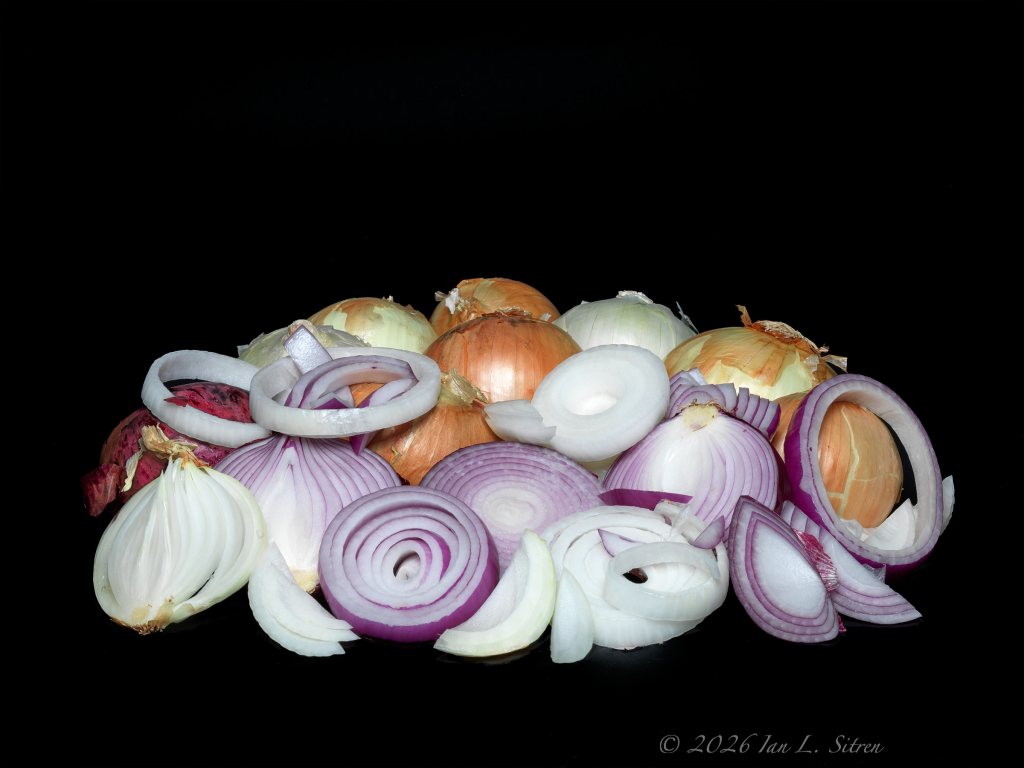
Today is National Onion Day.
Onions may not get much attention by themselves, but they are one of the most important ingredients in cooking. Whether they’re sliced onto burgers, diced into chili, caramelized for soups, battered into onion rings, or mixed into countless other dishes, it’s hard to imagine a kitchen without them.
After three years of photographing fast food, I realized onions have probably appeared in more of my photographs than any other single ingredient. They show up on burgers, tacos, pizzas, hot dogs, sandwiches, onion rings, salads, and dozens of other menu items.
For this photograph, I decided to make the onions themselves the subject. White, yellow, and red onions are shown whole, halved, sliced, and separated into rings, revealing the remarkable variety of colors, shapes, and patterns hidden beneath their skins.
There is much more to see on my website, including my photography galleries, my blog, and my growing Motion page. Visit https://secondfocus.com
National Food Truck Day: Emily Goes to Work
Today is National Food Truck Day.
This seemed like a good time to revisit one of Emily’s earliest adventures with me.
At the time, my fast food photography project was growing rapidly, and Emily, my evolving AI muse and assistant, suggested that perhaps she should get some first hand experience instead of simply watching me photograph the food.
Her solution was to spend a little time working in a food truck.
I have no idea whether she ever mastered the menu, but she certainly looked the part. It also marked one of the first times that Emily stepped out of the role of assistant and became part of the story herself.
Looking back, that little food truck adventure helped set the stage for everything that followed. Since then, Emily and her growing circle of friends have appeared in restaurants, bars, kitchens, cafés, beaches, and all sorts of places I never expected when we first started experimenting with AI.
There is much more to see on my website, including my photography galleries, my blog, and my growing Motion page. Visit https://secondfocus.com
National Detroit Style Pizza Day and America’s Endless Pizza Styles
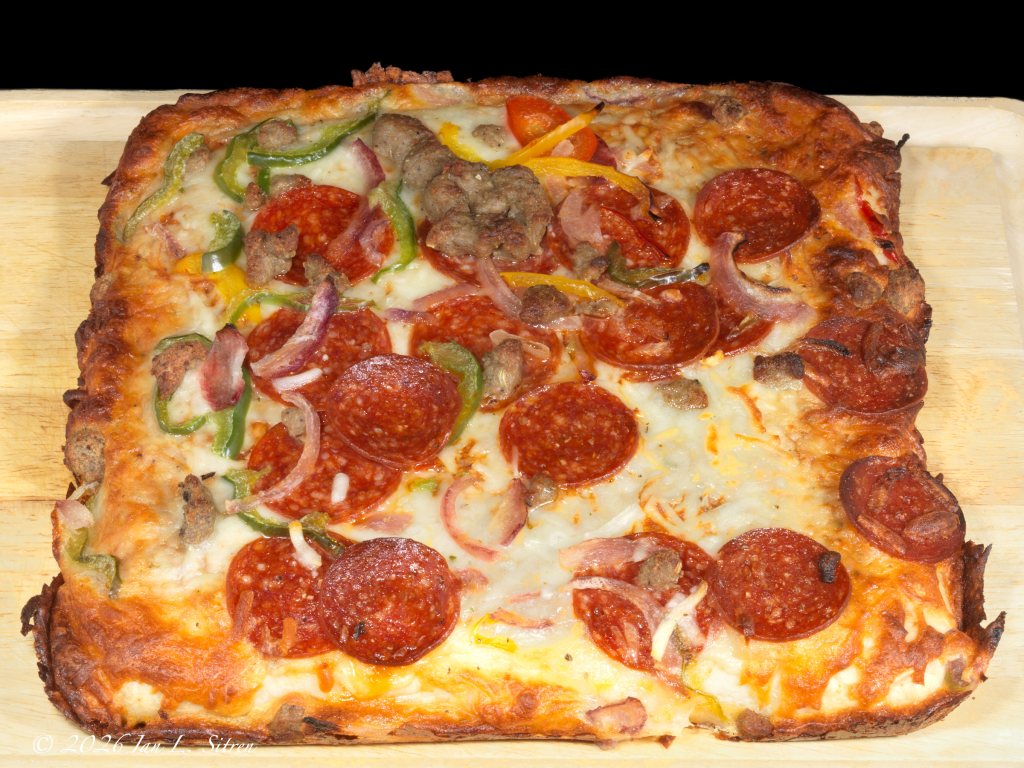
Today is National Detroit Style Pizza Day.
It sometimes seems there is a pizza style for just about everything.
New York style. Chicago style. Detroit style. St. Louis style. California style. Sicilian style. Grandma style. Tavern style. Greek style. Neapolitan style. Roman style. Then there are pizzas named after restaurants, neighborhoods, and probably a few intersections if someone can figure out a way to market them.
Detroit style, however, really is something different.
It traces its roots to Buddy’s Rendezvous in Detroit in 1946, where the pizza was baked in blue steel pans originally manufactured for the automotive industry. The result was a thick, rectangular pizza with a crisp, caramelized cheese crust, sauce spread across the top, and a style that eventually became one of the city’s signature foods.
For today’s photograph I used a Motor City Pizza Company frozen Detroit Style Supreme pizza. Sometimes the National Days are a good excuse to try something I might not have otherwise bought, and this one turned out to be a pretty good introduction to Detroit style pizza.
There is much more to see on my website, including my photography galleries, my blog, and my growing Motion page. Visit https://secondfocus.com
National Onion Rings Day and How They Became a Fast Food Favorite
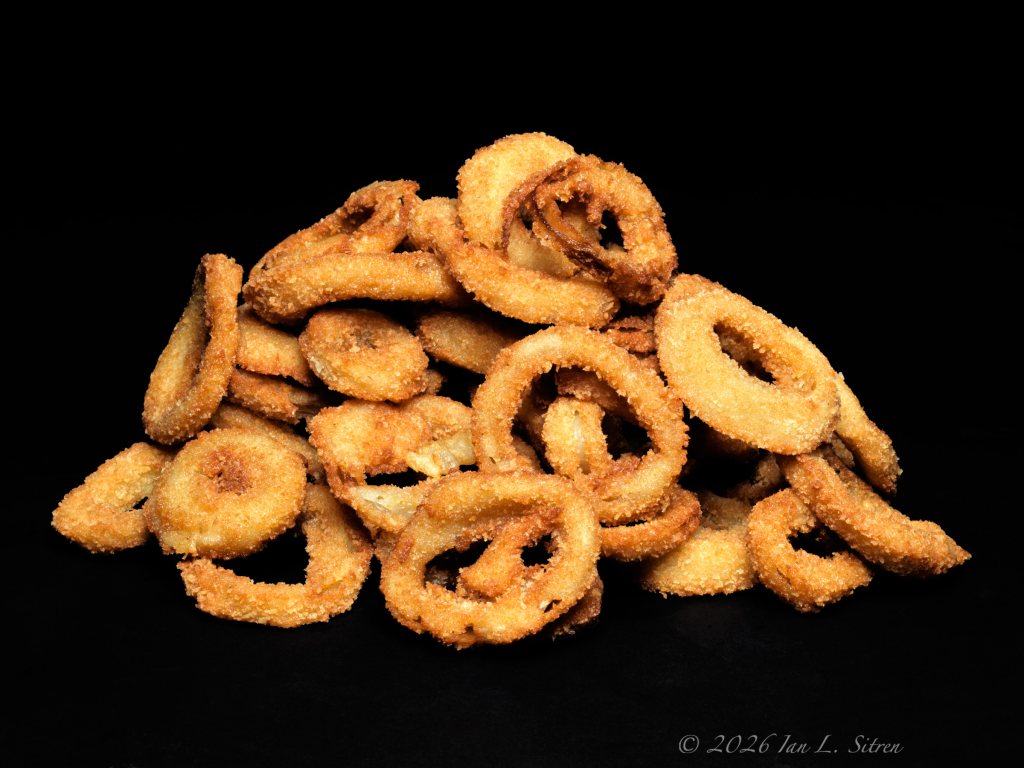
Yesterday was National Onion Rings Day.
Onion rings had been around for many years before fast food restaurants embraced them, but A&W is generally credited with making them a fast food favorite during the 1960s. Before long, they began appearing on menus across America as an alternative to French fries.
For my fast food project, I chose Sonic’s onion rings.
That wasn’t by accident.
Unlike many fast food onion rings that arrive frozen and ready to fry, Sonic became known for making its onion rings from whole sweet onions. Their slightly sweet batter has become one of the chain’s signature recipes and has earned a loyal following over the years.
They made a good addition to my From Bag to Background project.
There is much more to see on my website, including my photography galleries, my blog, and my growing Motion page. Visit https://secondfocus.com
The First Dairy Queen and a Gap in My Fast Food Project
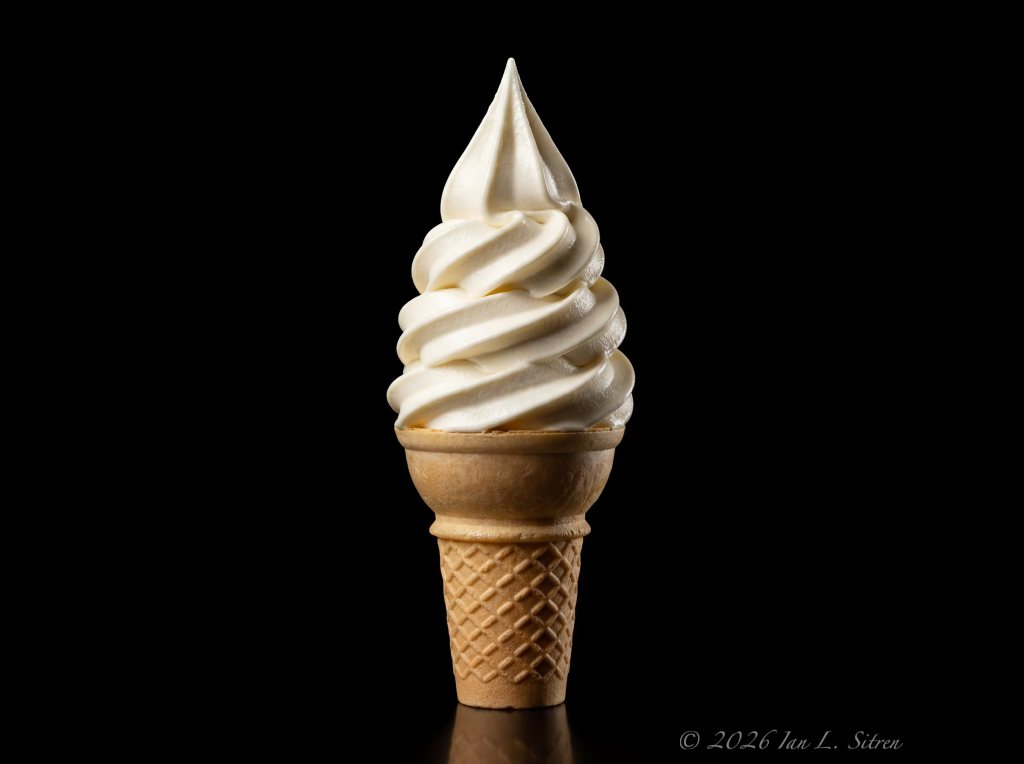
Yesterday marked the anniversary of the opening of the first Dairy Queen in Joliet, Illinois, on June 22, 1940.
Looking through my fast food project, I realized something.
I don’t have a single Dairy Queen photograph.
Considering the chain’s importance in the history of American fast food, that’s an oversight I need to correct. Dairy Queen helped introduce generations of Americans to soft serve ice cream and became one of the country’s most recognizable fast food chains.
Until I can photograph the real thing, I decided to start with the one thing that made Dairy Queen famous: a classic soft serve cone.
Dairy Queen has officially been added to my shooting list.
There is much more to see on my website, including my photography galleries, my blog, and my growing Motion page. Visit https://secondfocus.com
International Sushi Day | Grab and Go Fast Food
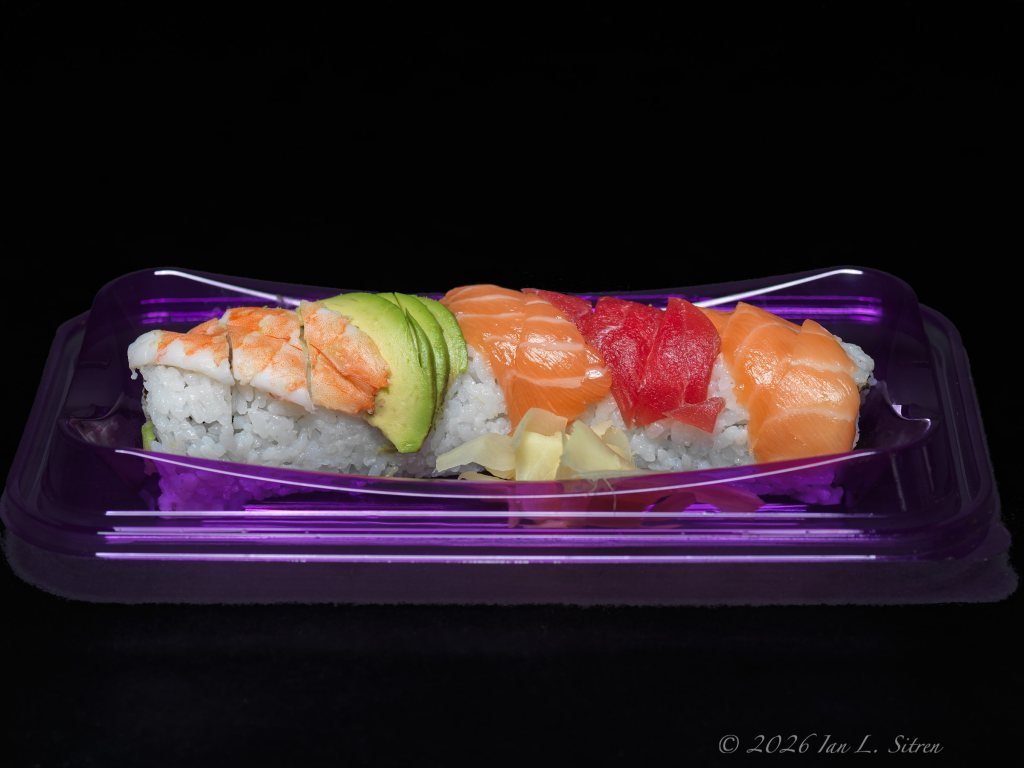
Last Thursday was International Sushi Day.
There seem to have been a lot of “National” and “International” food days lately, and I simply couldn’t keep up with all of them.
So here we are a few days late.
This photograph is one of the few in my fast food project where I left the food in its original container. Normally everything comes out of the packaging and onto a black background, but this one deserved an exception. The deep purple tray, the neat arrangement, and the bright colors of the salmon, tuna, shrimp, avocado, and pickled ginger are all part of what catches your eye in the grocery store.
To me, this is fast food in a different form. It is freshly prepared, packaged, refrigerated, and ready to grab on your way home for lunch or dinner. No drive through required.
Not all that long ago, finding sushi usually meant visiting a Japanese restaurant or a specialty market. Today it has become a common sight in grocery stores, where fresh rolls are made throughout the day and sold alongside sandwiches, salads, and other grab and go meals.
There is a lot more food to tempt you on my website, along with my other photography projects, my Motion page, and my blog, which is updated almost daily. Visit https://www.secondfocus.com
National Cupcake Lovers Day and Six Birthday Cupcakes
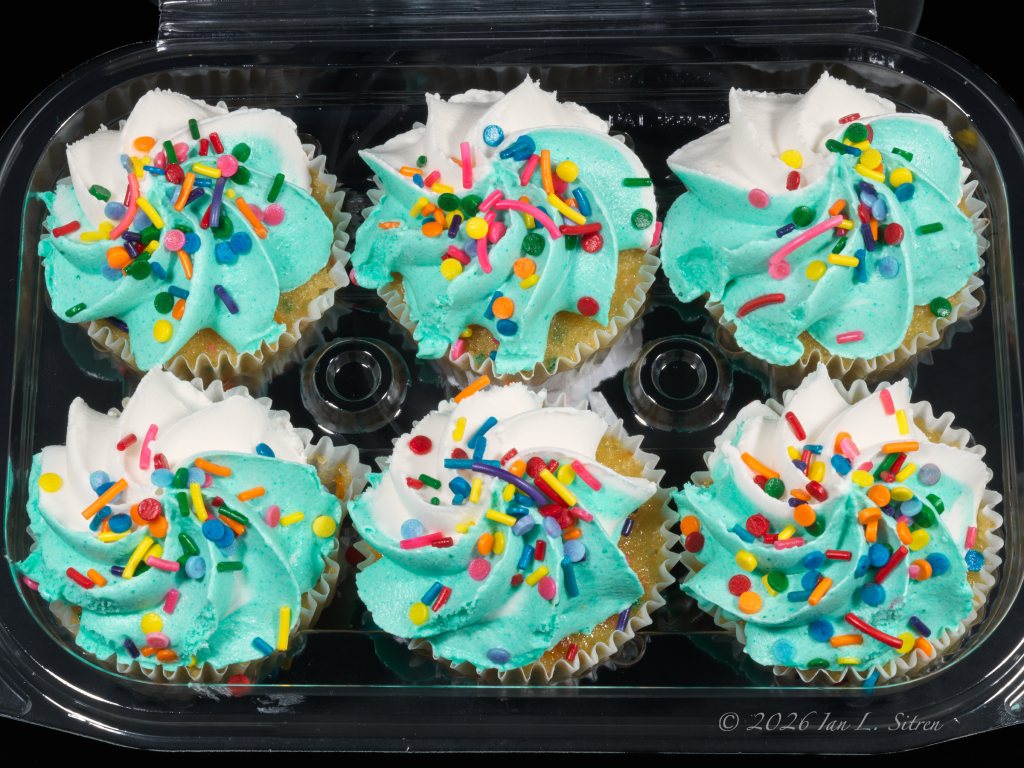
Today has been National Cupcake Lovers Day.
Notice it isn’t National Cupcake Day. It is National Cupcake Lovers Day, making it just as much about the people who enjoy cupcakes as the cupcakes themselves.
For this one, I made a slight departure from my usual Food From Bag To Background approach.
Instead of removing the cupcakes from their packaging, I photographed them exactly as they came from the grocery store in their clear plastic container. Sometimes the packaging is part of the story.
The cupcake has been around for more than 200 years. Early recipes appeared in American cookbooks in the late 1700s and early 1800s, and by the mid-19th century the name “cupcake” had become common. Some historians believe the name came from cakes baked in individual cups, while others point to recipes that measured ingredients by the cup rather than by weight.
These Birthday Cupcakes caught my attention because of their bright blue and white frosting and colorful sprinkles. I thought they would photograph really nicely.
To see more of my completed food photographs, along with my aviation, fitness, fashion, and other photography projects, please visit my website at https://www.secondfocus.com. Thanks!
National Roast Beef Day and Arby’s Original Idea
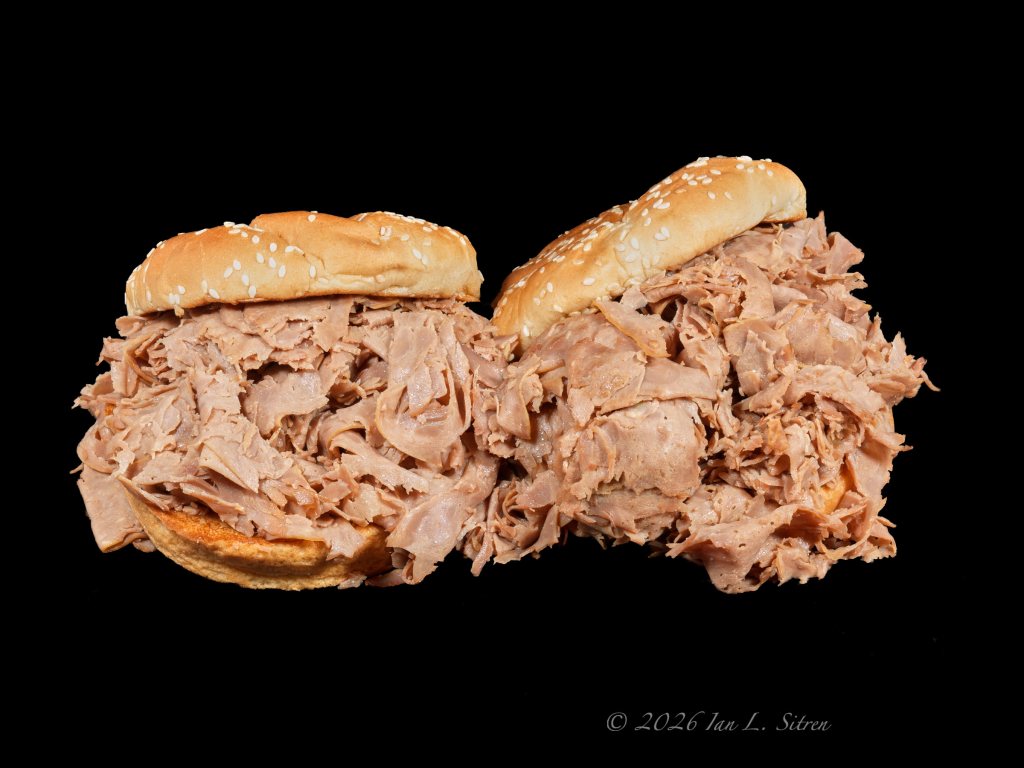
Today has been National Roast Beef Day.
I picked Arby’s for this one because my primary food project has focused on fast food.
Arby’s is somewhat unique in the fast-food world because the chain was built around the roast beef sandwich. While many major fast-food chains became known for hamburgers, fried chicken, tacos, or pizza, Arby’s made thinly sliced roast beef its signature item.
The chain was founded in 1964 by brothers Forrest and Leroy Raffel. At the time, most fast-food restaurants were competing in the hamburger business. The Raffel brothers decided to go in a different direction and built their restaurant around roast beef sandwiches instead.
For this photograph, I used two Arby’s Half Pound Roast Beef sandwiches. The reason there are two is simple. Arby’s was offering a buy one, get one free promotion for National Roast Beef Day.
Working on my fast food project has also made me pay attention to fast-food apps and promotions. Many chains offer discounts tied to food holidays and loyalty programs. If you use them regularly, the savings can be significant.
These two sandwiches were removed from their wrappers and photographed against a black background for my Food From Bag To Background series.
To see more of my completed food photographs along with my other photography projects, please visit my website at https://www.secondfocus.com. Thanks!
National Margherita Pizza Day
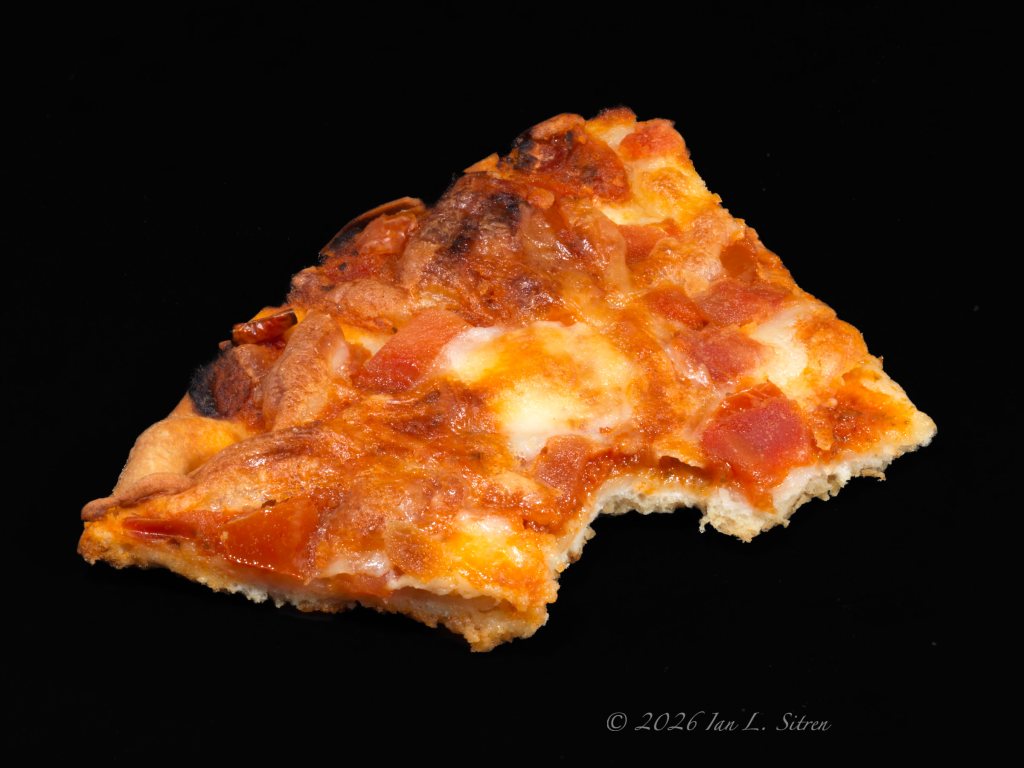
Today has been National Margherita Pizza Day.
It has not quite worked out the way I thought it might.
For starters, I discovered that Margherita Pizza does not come with tequila. Wrong kind of Margarita. That was disappointing.
Then, as I walked away to do something else, I heard someone ask, “Is it okay to eat?”
I said yes, but I need enough left to photograph.
Apparently I should have been more specific.
Margherita pizza is one of the simplest and most recognizable pizza styles. It is traditionally made with tomato sauce, mozzarella cheese, and basil. According to the popular story, it was created in Naples, Italy, in 1889 and named after Queen Margherita of Savoy. The red tomatoes, white mozzarella, and green basil were said to represent the colors of the Italian flag.
In this case, the pizza survived long enough for me to get a photograph, although just barely.
To see my completed food photographs, along with my aviation, fitness, fashion, and other photography projects, please visit my website at https://www.secondfocus.com. Thanks!
National Egg Roll Day
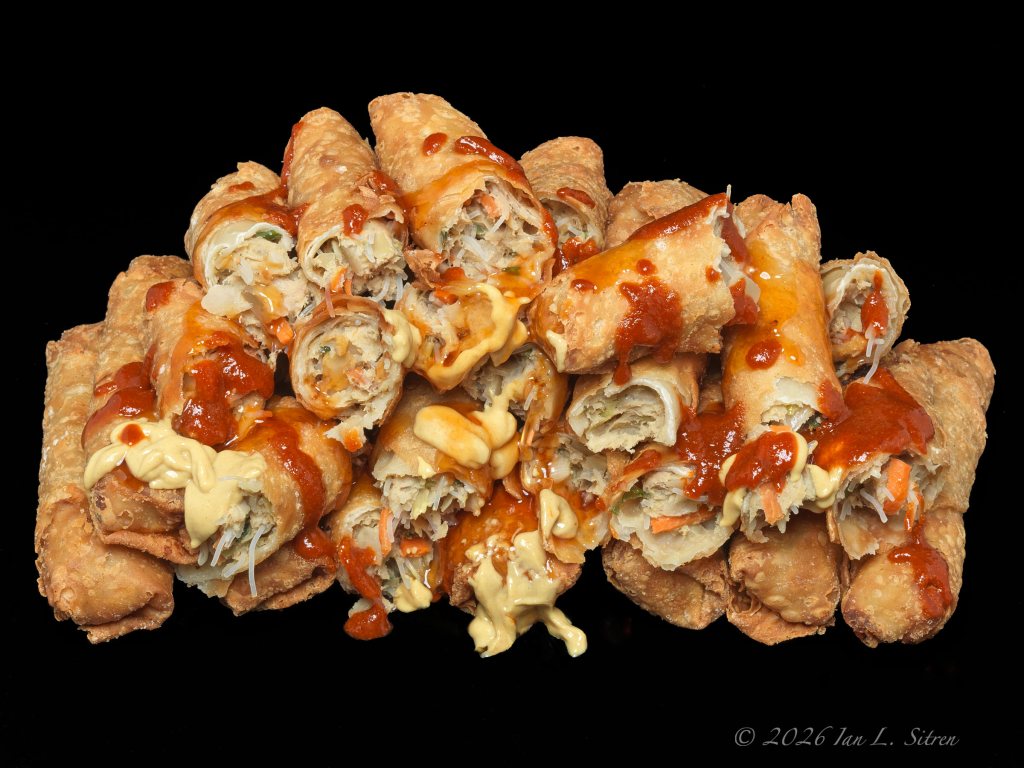
Today is National Egg Roll Day.
Most people order an egg roll or two as a side item.
For this photograph, I ordered eighteen.
At that point, the egg rolls stop being a side dish and become the entire meal. Several were cut open to reveal the filling while the rest were stacked into a pile and covered with sweet and sour sauce, hot mustard, and chili sauce.
The modern American egg roll is actually a Chinese-American creation rather than a traditional Chinese food. While its exact origins are debated, the thick, bubbly wrapper and hearty filling helped make egg rolls a familiar part of takeout menus across the United States.
The egg rolls came from Panda Express, which opened its first restaurant in Glendale, California, in 1983 and has grown into the largest American-Chinese restaurant chain in the United States.
There is a lot more food to tempt you on my website along with my other photography projects, my new Motion page, and be sure to check out my blog. There is even more there and it is updated almost daily. Visit SecondFocus.com Thanks!
National Jelly-Filled Doughnut Day: Krispy Kreme Raspberry Filled
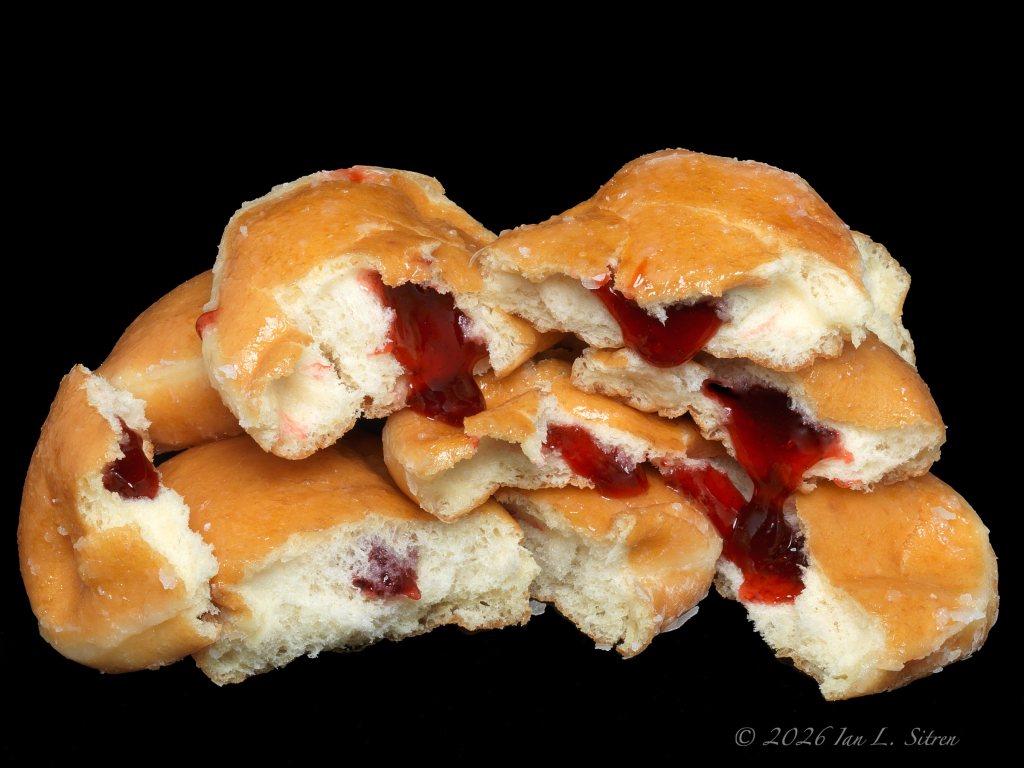
Today is National Jelly-Filled Doughnut Day
The entire reason for today’s holiday is the filling, yet a jelly-filled doughnut looks pretty much like a lot of other doughnuts until somebody tears it open.
So I did.
For this photograph, I chose Krispy Kreme Glazed Raspberry Filled doughnuts. While Krispy Kreme is best known for its Original Glazed doughnut, the Raspberry Filled version combines Krispy Kreme’s glazed doughnut with one of the most traditional doughnut fillings.
Krispy Kreme was founded in Winston-Salem, North Carolina, in 1937 and built its reputation on fresh glazed doughnuts. Today, nearly ninety years later, it remains one of the most recognizable doughnut brands in America.
National Jelly-Filled Doughnut Day follows closely behind National Doughnut Day and celebrates a style of doughnut that appears in many forms around the world. Germany has the Berliner, Poland has the pączki, Italy has the bomboloni, and in the United States we simply call them jelly-filled doughnuts.
There is a lot more food to tempt you on my website along with my other photography projects, my new Motion page, and be sure to check out my blog. There is even more there and it is updated almost daily. https://www.secondfocus.com
National Sausage Roll Day and an American Translation
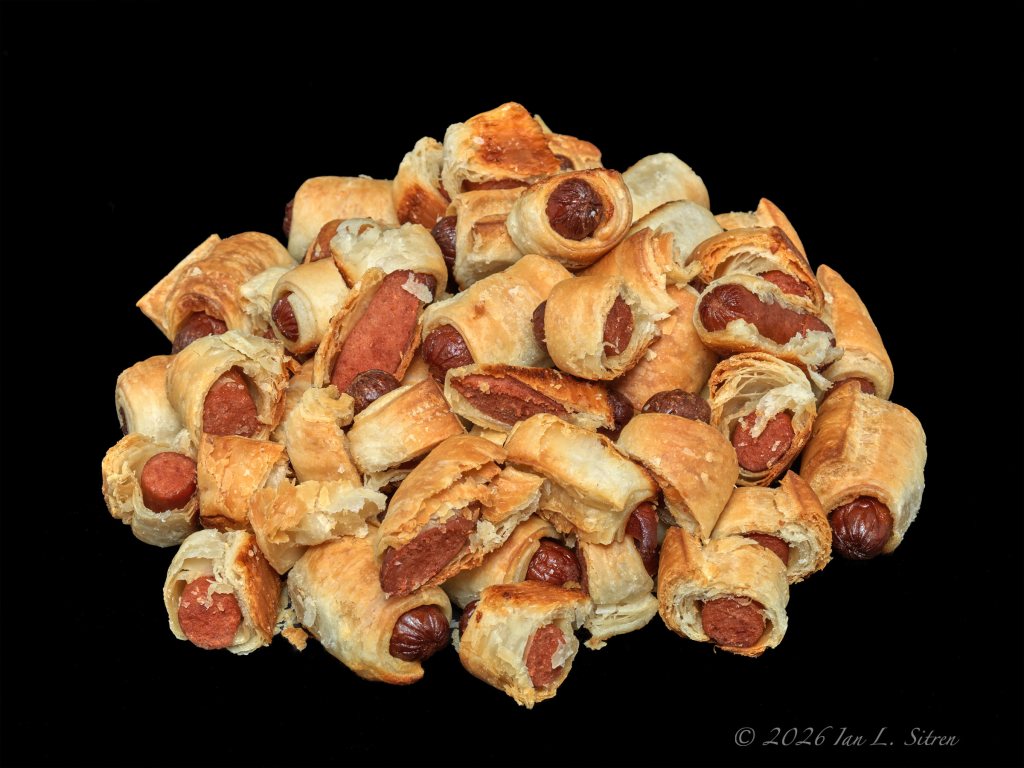
Depending on where you grew up, this photograph may not look like a sausage roll at all.
In the United Kingdom, a sausage roll is typically made with sausage wrapped in puff pastry and baked until golden brown. In the United States, most people looking at this photograph would probably call them pigs in a blanket.
Different names, similar idea.
Today’s photograph features a pile of pigs in a blanket from my Commercial Food Photography collection.
National Sausage Roll Day originated in the United Kingdom, which explains the name. Since my collection didn’t include a traditional British sausage roll, pigs in a blanket seemed like the closest American relative.
Whether you call them sausage rolls or pigs in a blanket depends largely on where you happen to be standing when you order them.
You can see more of my food photography, along with collections and other projects at https://www.secondfocus.com
National Veggie Burger Day and the Impossible Whopper
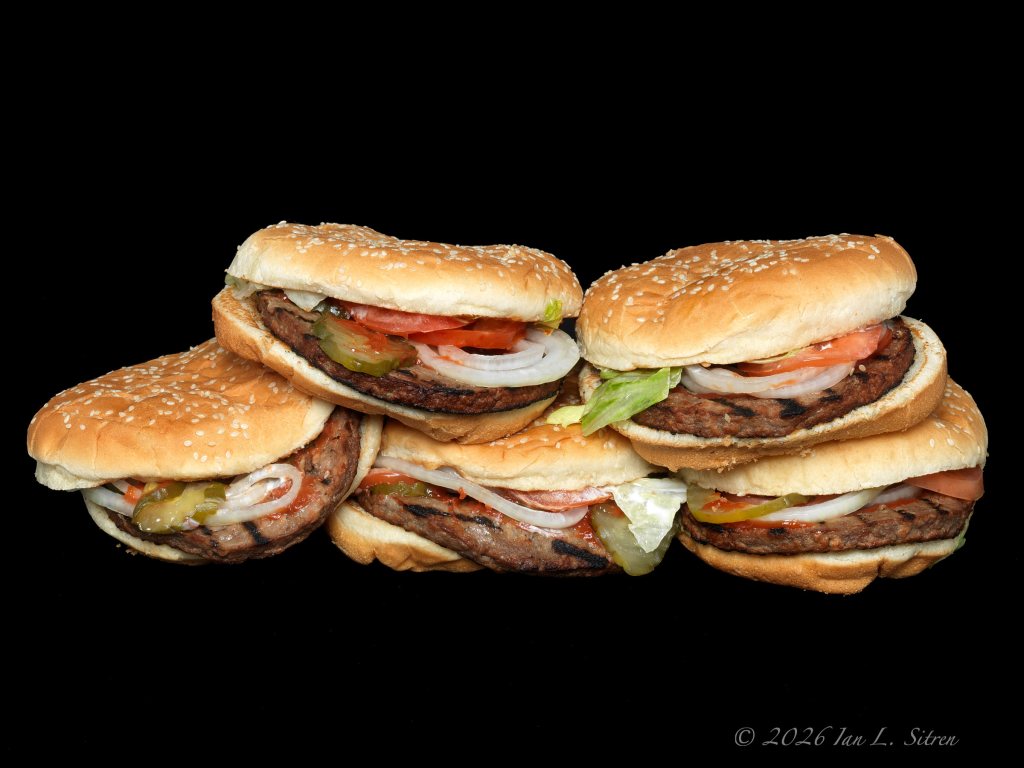
There was a time when the idea of a burger chain selling a plant-based Whopper would have sounded unlikely.
Burger King built its reputation on flame-grilled beef burgers. The Whopper has been the company’s signature sandwich since the 1950s and remains one of the most recognizable items in fast food.
Then came the Impossible Whopper.
Introduced nationally in 2019, the sandwich looked like a Whopper, was built like a Whopper, and was sold right alongside the traditional version. The difference was the patty, which was made from plant-based ingredients rather than beef.
Today’s photograph features a stack of Burger King Impossible Whoppers for my FOOD FROM BAG TO BACKGROUND series.
One of the reasons the Impossible Whopper attracted so much attention was that it wasn’t aimed exclusively at vegetarians. Burger King positioned it as an alternative that could appeal to anyone curious about plant-based burgers while still delivering a familiar fast-food experience.
Whether someone chooses it for environmental reasons, dietary preferences, curiosity, or simply to try something different, the Impossible Whopper marked a significant moment in fast-food history. One of the largest burger chains in the world had embraced a product that would have seemed out of place on its menu only a few decades earlier.
You can see more from my FOOD FROM BAG TO BACKGROUND series, along with collections and other projects at https://www.secondfocus.com
National Fish & Chips Day and the Legacy of Haddon Salt
National Fish & Chips Day
Before there was H. Salt Fish & Chips, there was Haddon Salt.
In 1965, Salt opened the first H. Salt Esquire Fish & Chips in Sausalito, California, introducing a style of fish and chips inspired by the shops he had known in England. The idea proved popular, and what began as a single restaurant eventually grew into a chain that spread across the United States.
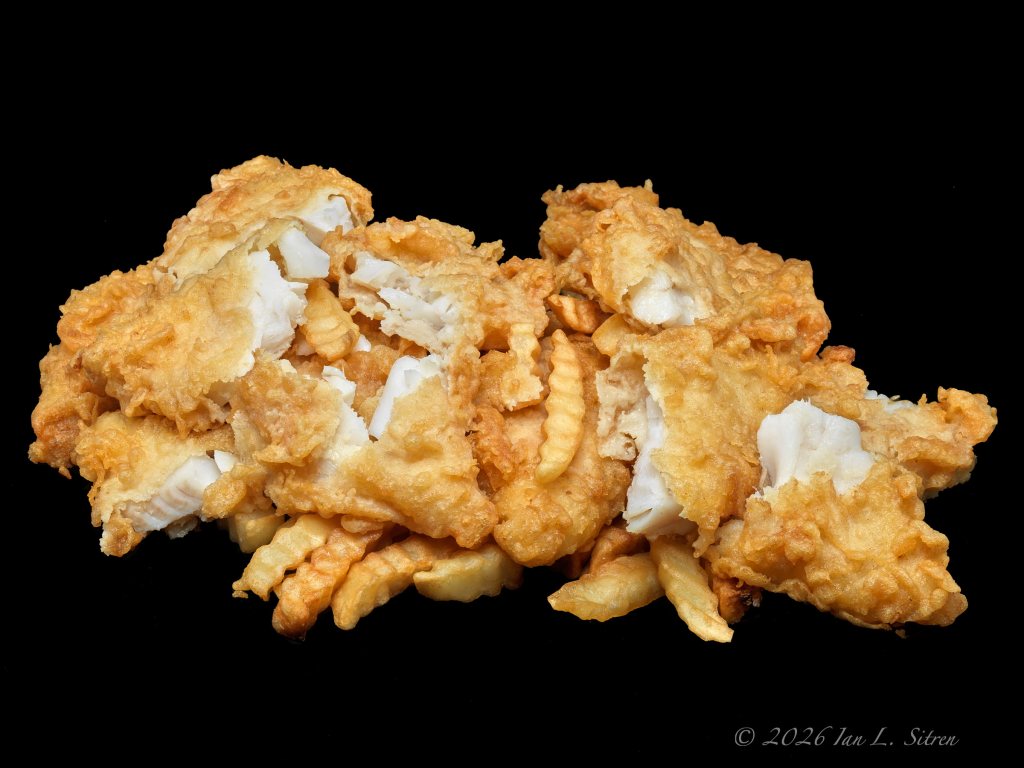
Today’s photograph features a serving of fish and chips from H. Salt for my FOOD FROM BAG TO BACKGROUND series.
Fish and chips has a history stretching back well over a century, with roots in England where fried fish and chipped potatoes became one of the country’s most recognizable meals. The combination eventually crossed the Atlantic and found a place in American fast-food culture as well.
For this photograph, the fish and chips were removed from their paper trays and photographed against a black background.
You can see more from my FOOD FROM BAG TO BACKGROUND series, along with collections and other projects at https://www.secondfocus.com
National Donut Day and the One You Would Pick First
National Donut Day
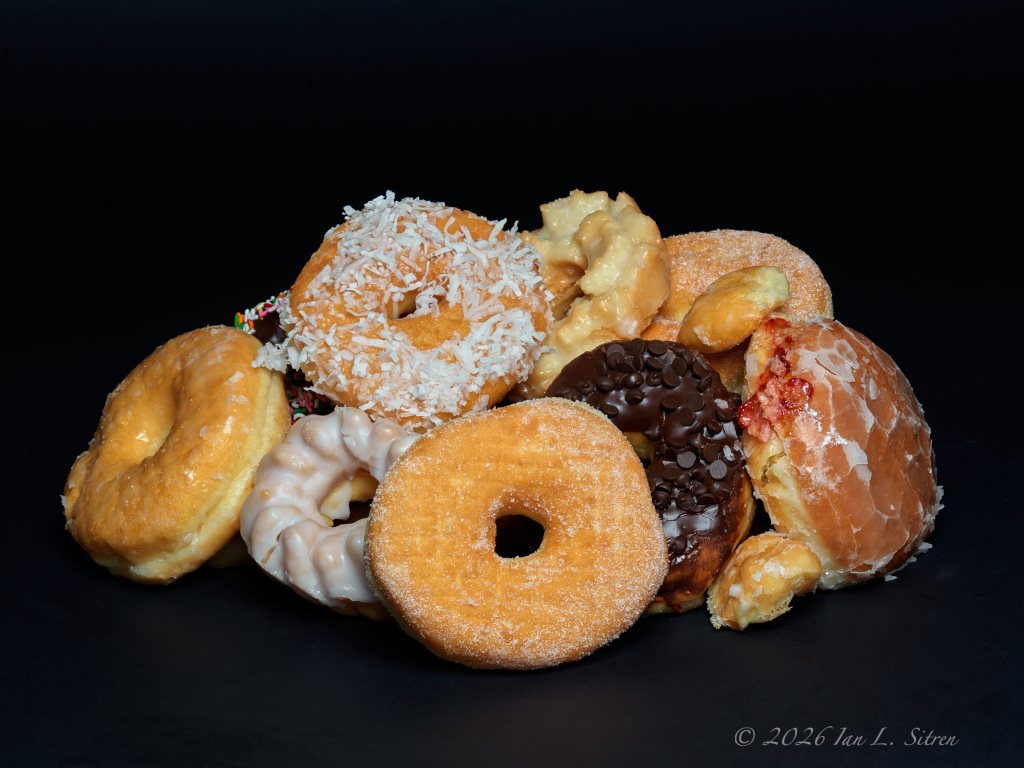
Somewhere in this photograph is the donut you would pick first.
That’s usually the game people play when they see a box of donuts.
Some head straight for the chocolate. Others reach for the glazed donut. Someone inevitably grabs the jelly-filled one, while another person is convinced the coconut-covered donut is the best choice in the box.
Personally, I’ve never seen much agreement.
For National Donut Day, I pulled together a selection from a local donut shop for this photograph. Once they were arranged against a black background, the display stopped looking like breakfast and started looking more like a collection. Different shapes, colors, textures, toppings, fillings, and glazes all competing for attention.
Donuts have become so familiar that it’s easy to overlook just how many variations exist. A simple ring of fried dough can become almost anything depending on what happens after it leaves the fryer.
National Donut Day itself dates back to 1938 when the Salvation Army established the observance to honor the “Donut Lassies” who served donuts to American soldiers during World War I. Nearly ninety years later, the day has become one of the most widely recognized food celebrations on the calendar.
Looking at this photograph, I’m still not sure which donut I would choose first.
Fortunately, nobody says you can only pick one.
You can see more from my FOOD FROM BAG TO BACKGROUND series, along with collections and other projects at https://www.secondfocus.com
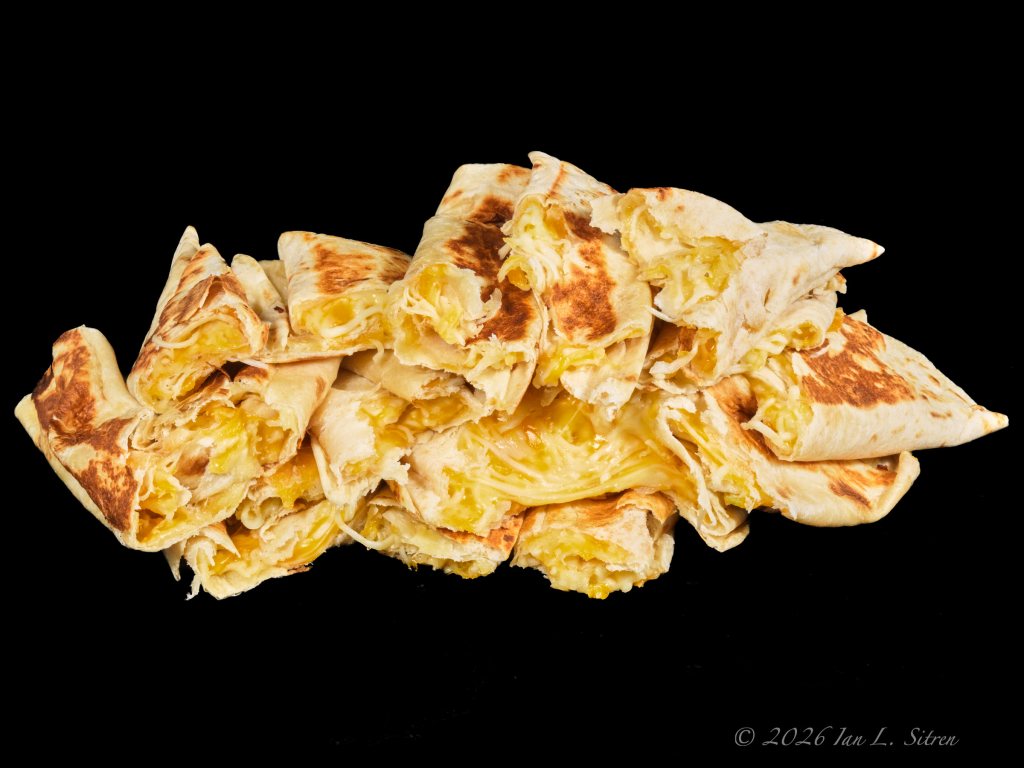
National Cheese Day and Taco Bell’s Cheesy Roll Up
National Cheese Day
National Cheese Day presented a problem.
I could have photographed a block of cheddar cheese and called it a day. There are already millions of cheese photographs in the world, and probably enough stock photos of cheese to keep the internet supplied for several lifetimes.
That didn’t seem very interesting.
So I asked Emily, my AI partner and muse.
As often happens, Emily immediately found a different way to look at the problem. Rather than photograph cheese itself, why not photograph something where cheese fits one of my projects?
That led us to Taco Bell’s Cheesy Roll Up.
The Cheesy Roll Up is exactly what it sounds like. A tortilla wrapped around melted cheese. No complicated recipe. No attempt to disguise what you’re getting. Just cheese, rolled up and served as a menu item.
For National Cheese Day, that seemed like a perfectly appropriate subject.
This photograph features a pile of Taco Bell Grilled Cheesy Roll Ups for my FOOD FROM BAG TO BACKGROUND series. Rather than cutting them apart, I pulled them apart, revealing the melted cheese inside and creating a pile of toasted tortillas, cheese-filled interiors, and strands of melted cheese connecting one piece to another.
The Cheesy Roll Up isn’t one of Taco Bell’s most famous products. It doesn’t have the history of a taco or the size of a burrito. Yet on National Cheese Day it may be one of the most honest items on any fast-food menu. It makes no promises beyond its name and delivers exactly what it advertises.
You can see more from my FOOD FROM BAG TO BACKGROUND series, along with collections and other projects at https://www.secondfocus.com
National Egg Day and a Fast Food Icon
Eggs may be one of the most photographed foods in the world.
They show up in breakfast advertisements, restaurant menus, grocery stores, cooking videos, and enough stock photographs to fill the internet several times over. Yet somehow they remain one of the most recognizable ingredients ever put on a plate.
For National Egg Day, I decided to go in a slightly different direction.
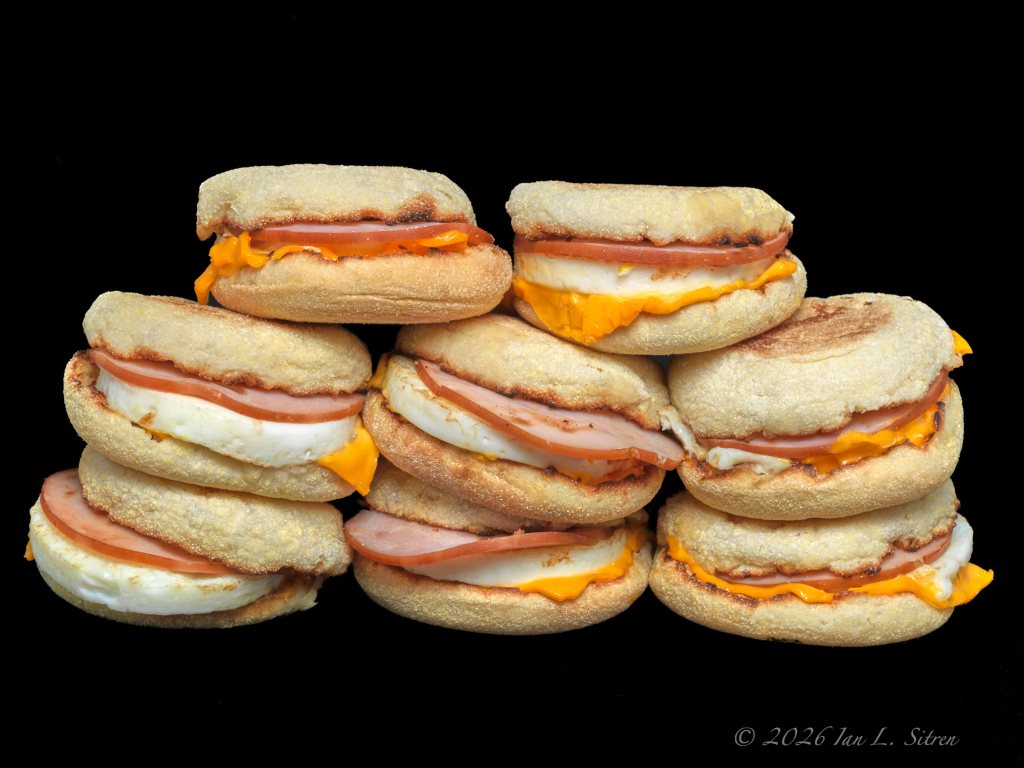
Rather than photograph eggs by themselves, I turned to one of the sandwiches that helped make them a fast-food staple. The McDonald’s Egg McMuffin has been around for more than fifty years and is still one of the most recognizable breakfast sandwiches ever created.
This photograph features a stack of Egg McMuffins from my FOOD FROM BAG TO BACKGROUND series. No stylists. No carefully arranged garnish. No attempt to make them look like advertising. Just the sandwiches as they arrived, isolated against black and given the chance to stand on their own.
What interested me was the repetition. The English muffins, the eggs, the Canadian bacon, and the slices of cheese create a pattern that almost becomes architectural when several are stacked together. Something most people grab through a drive-thru window suddenly becomes a study of shapes, textures, and layers.
The Egg McMuffin wasn’t the first breakfast sandwich, but it helped define what a fast-food breakfast could be. Decades later, it remains a familiar part of morning routines across the country.
Not bad for something built around a simple egg.
You can see more from my FOOD FROM BAG TO BACKGROUND series, along with aviation photography, collections, and other projects, at https://www.secondfocus.com Chances are you’ll find something familiar that looks a little different when removed from its usual surroundings.

